Samyukta Polumohanti

CFP001

UBD24096

The CEPT Foundation Programme studio is an introduction for students fresh out of school to the rigour and work habits required by an undergraduate degree at CEPT University. The studio is conceptualized as a series of sequentially planned modules and exercises, through which students develop skills and abilities, falling into four broad categories: visualize and draw, make and learn, analyze and interpret and conceptualize and represent, which are then deployed to address increasingly complex problems. The modules are structured to equip students across disciplines at CEPT with a well-rounded foundation of skills, ensuring a balanced learning experience in a multidisciplinary environment. The studio is taught through intensive weekly modules, focusing on a particular skill or ability, and a process that emphasizes ongoing discussion and feedback in addition to expert faculty lectures.

View Additional Work
Report Content

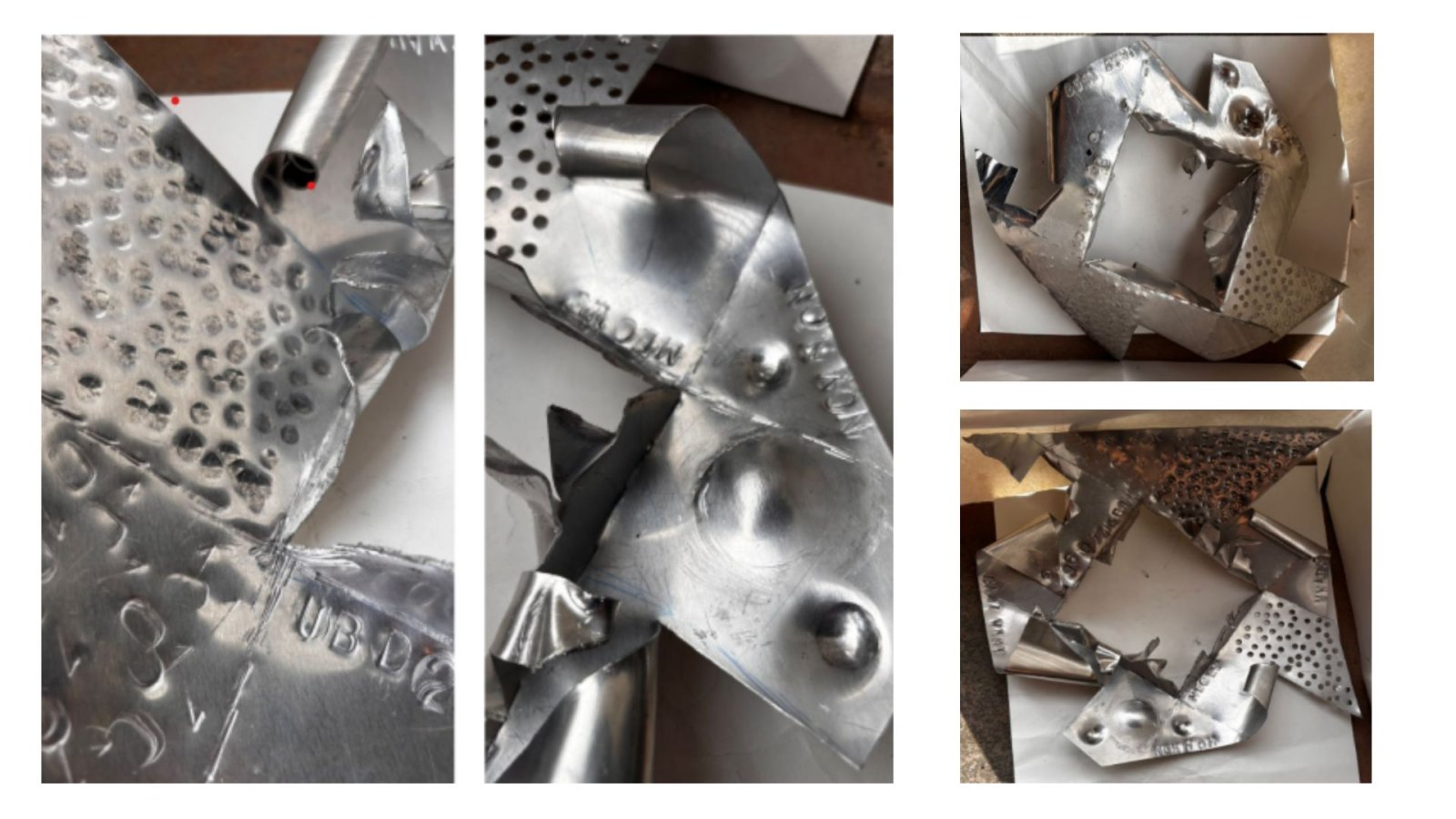
This exercise allowed me to experience the quiet joy of discovering new interests, and helped me explore the limits and possibilities of working with sheet metal. It was especially interesting to see how the hodgepodge of techniques- drilling, embossing, stamping, cutting, bending- applied to the metal came together.

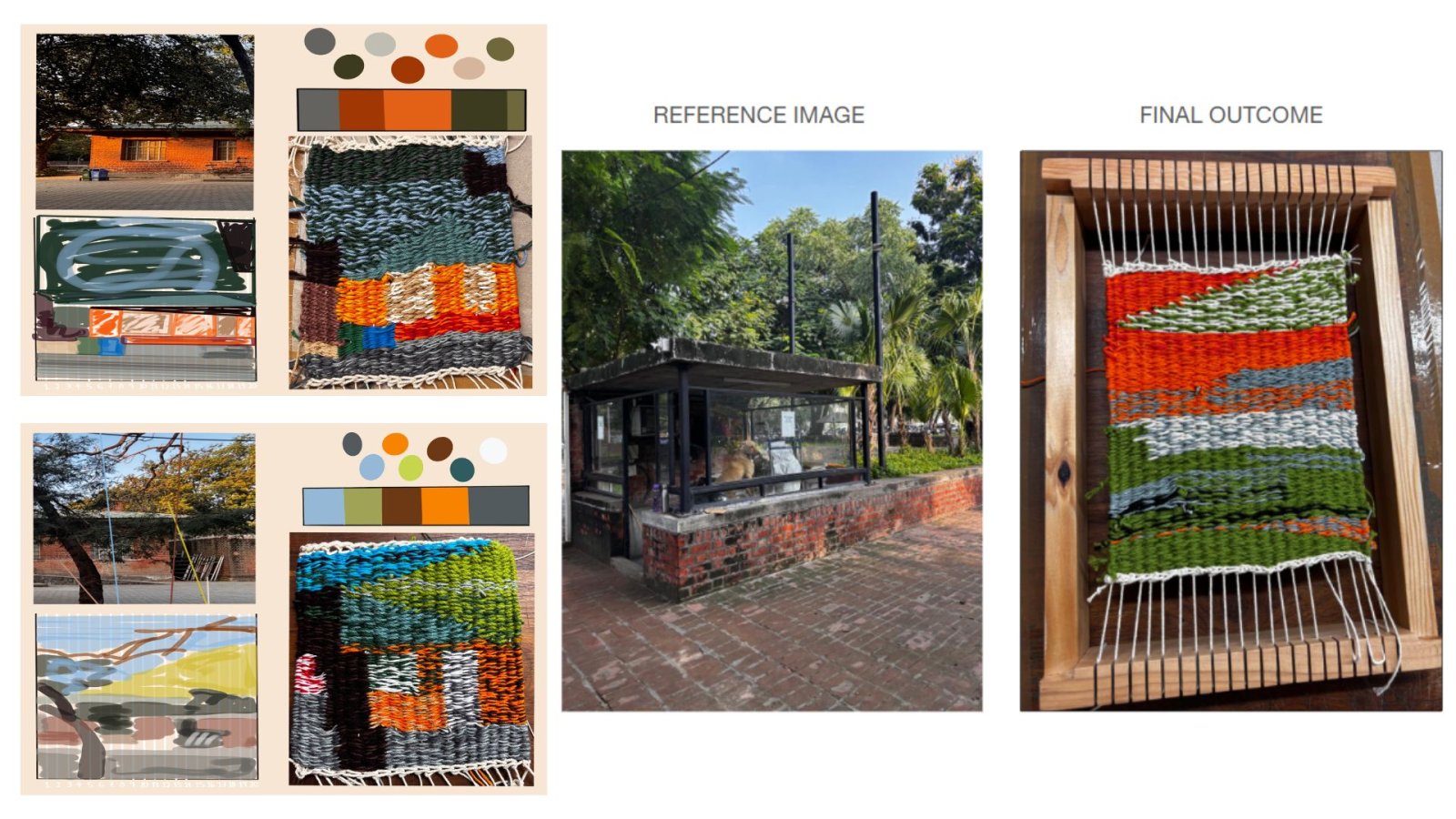
As textiles and cloth have always interested me, the process of weaving for purposes of representation felt like it opened up a world of possibilities. Here, I’ve included samples where I attempted to represent images through cloth, with varying levels of abstraction.

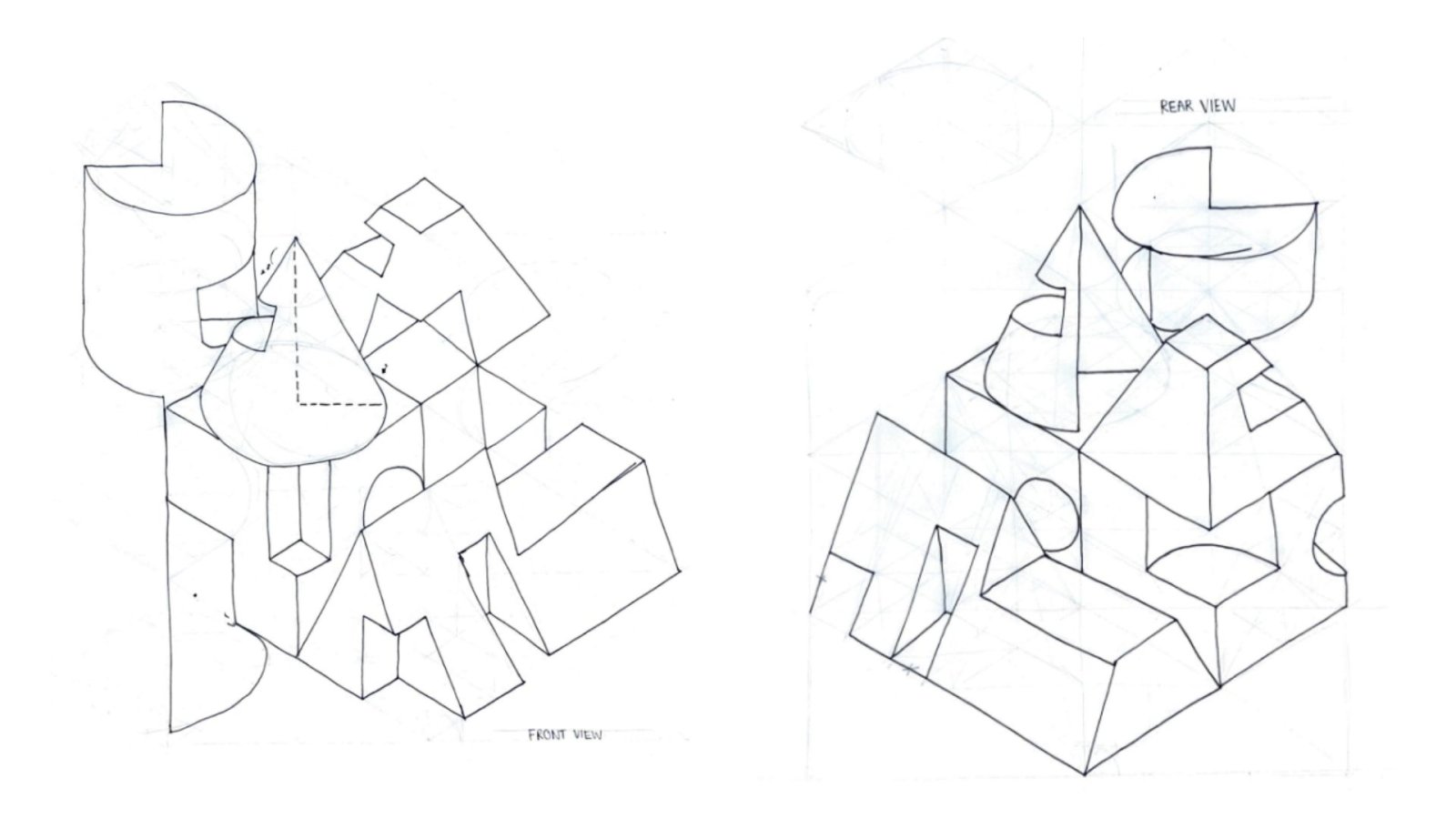
For this assignment, I put together two cubes, a cone, a cylinder, a square base pyramid and a triangular prism and then proportionately subtracted from them to create the below composition.

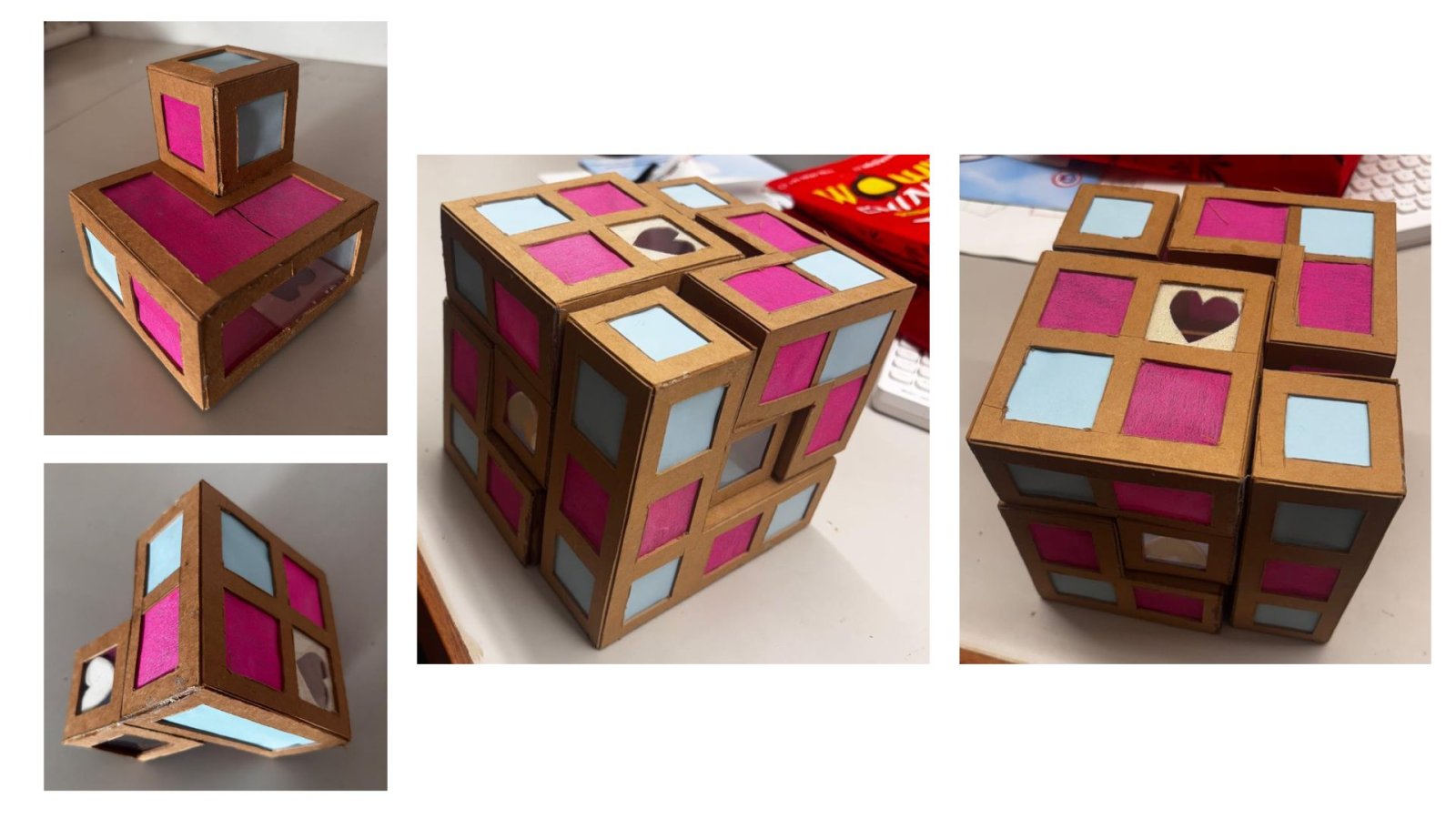
While drafting and and cutting out juteboard, OHP sheets and felt paper for this soma cube felt incredibly tedious, it was worth the satisfaction I felt in seeing it all come together. My components don’t make up a perfect cube, but I was able to refine my quality of work through this project.

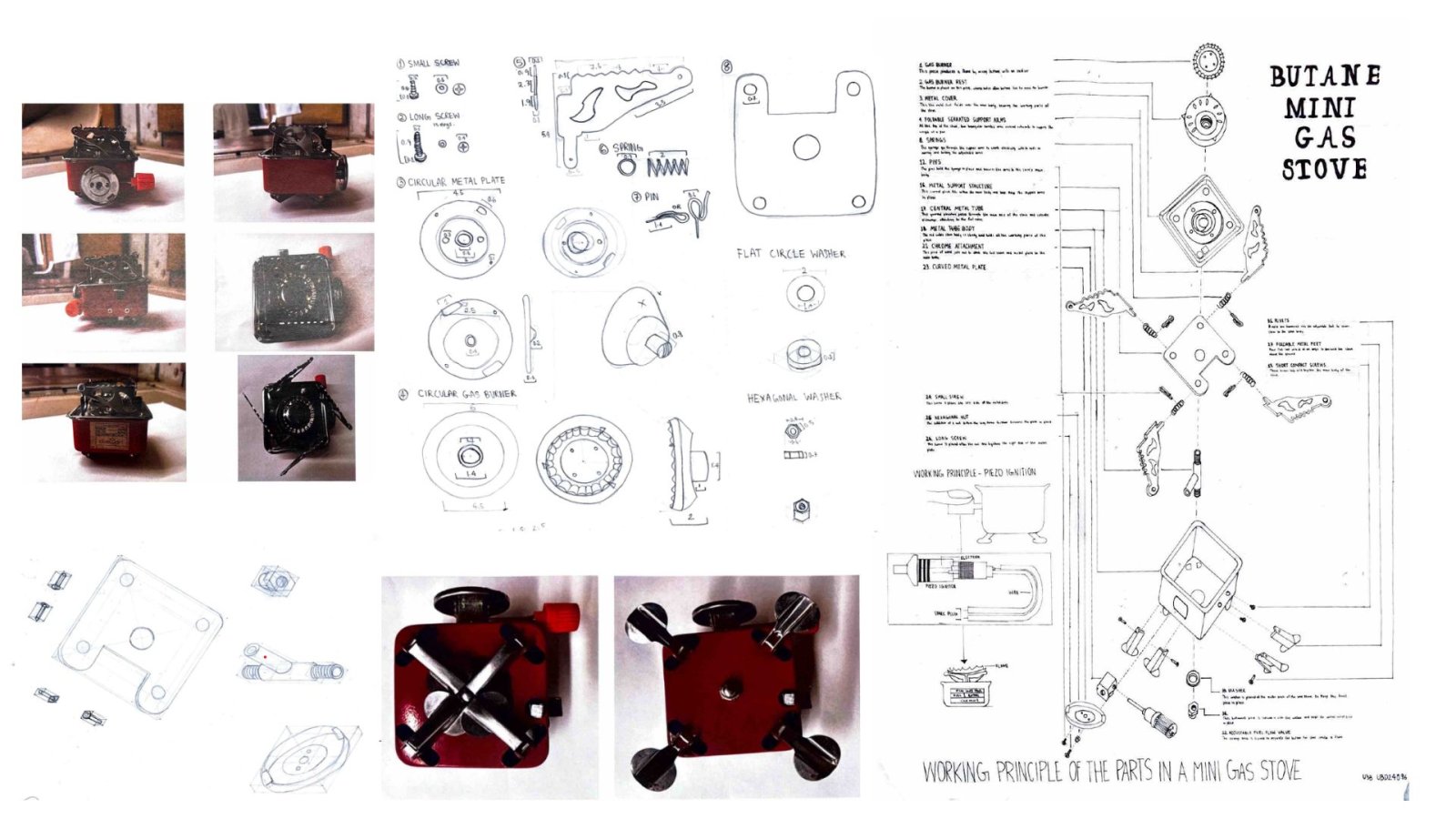
Unexpectedly, I really enjoyed working on this module- taking apart an object with forty pieces, drafting each and depicting in an vertical axonometric exploded view. The quality of my inking leaves much to be desired, but I gained insight into the working principle and dozens of tiny pieces that made up my object, as well as a better grasp on drafting in different views.

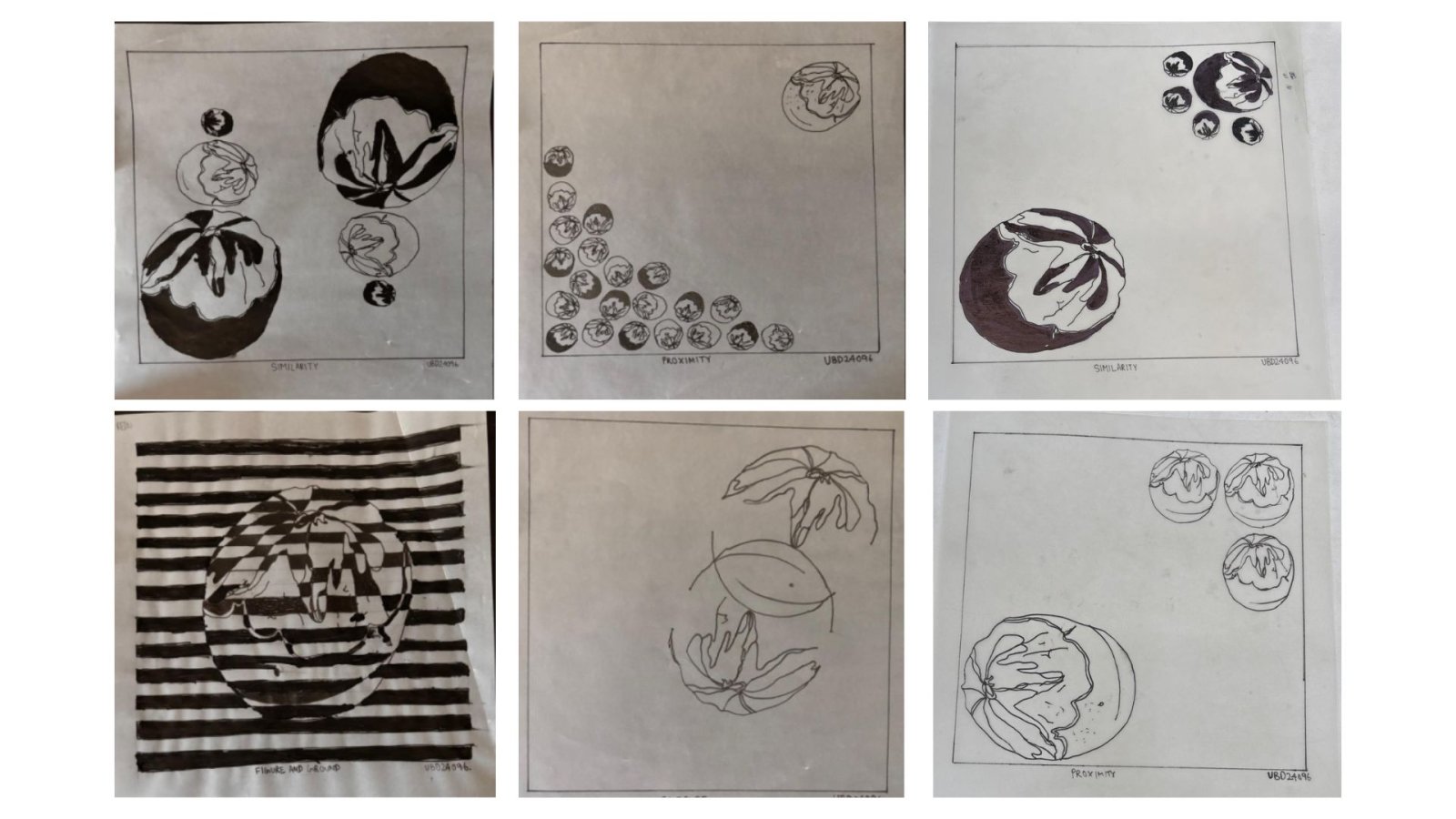
Here, four of Gestalt’s Laws- similarity, figure and ground, proximity and closure- are represented using different sized of my sketched fruit and ink on tracing paper. While achieved with varying success, this assignment was imperative to my understanding of placement and the extent to which interaction between different elements shapes one’s understanding of a 2D piece.

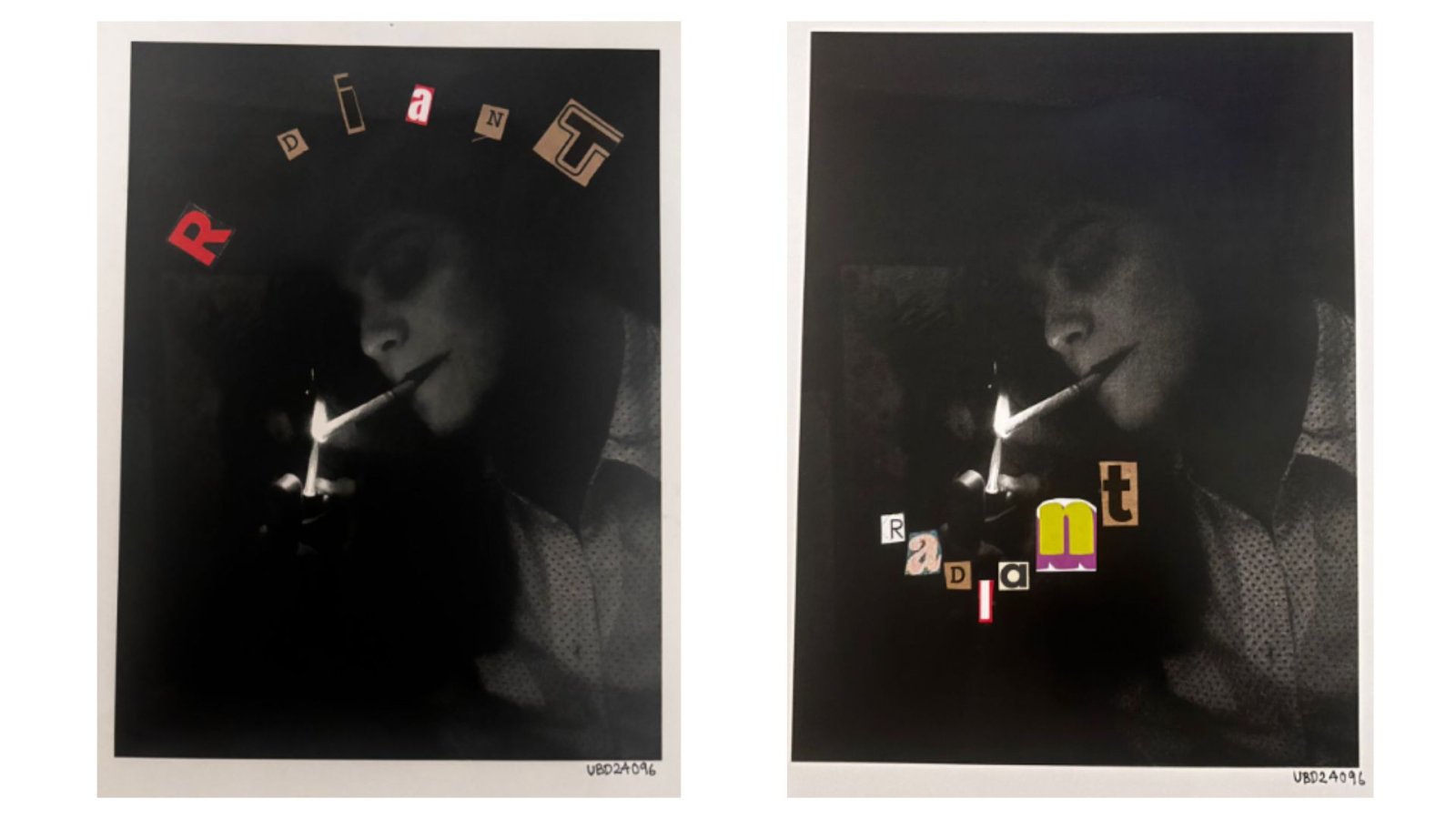
This assignment challenged me to use photography and typography to depict a person in the way I saw them. I was able to play with lighting, composition, angles and poses- countless images filled my camera roll until a pair of them screamed ‘radiant’. Afterwards, arranging the letters that make up radiant on my photos helped me understand how placement affects perception.

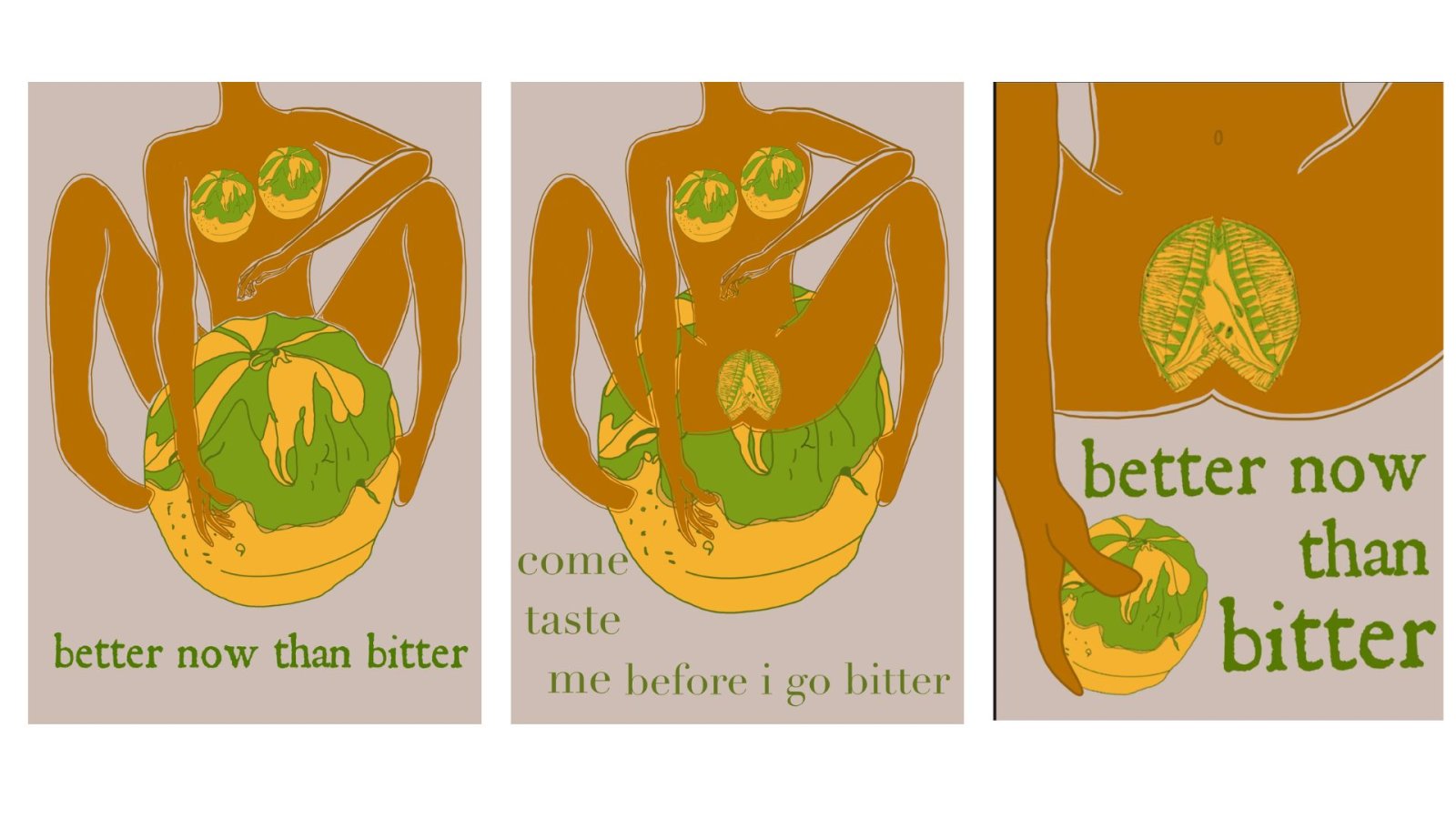
This piece is meant to be a metaphor for succumbing to desire; a mosambi is sweet when first cut into, but tastes bitter upon prolonged exposure to air. I enjoyed playing around with different ideas before settling on this one, and the depicted experimentation with each element felt crucial to a satisfactory final poster