Niharika Sudhir Sathe

CFP001

UBD25242

The CEPT Foundation Programme studio is an introduction for students fresh out of school to the rigour and work habits required by an undergraduate degree at CEPT University. The studio is conceptualized as a series of sequentially planned modules and exercises, through which students develop skills and abilities, falling into four broad categories: visualize and draw, make and learn, analyze and interpret and conceptualize and represent, which are then deployed to address increasingly complex problems. The modules are structured to equip students across disciplines at CEPT with a well-rounded foundation of skills, ensuring a balanced learning experience in a multidisciplinary environment. The studio is taught through intensive weekly modules, focusing on a particular skill or ability, and a process that emphasizes ongoing discussion and feedback in addition to expert faculty lectures.
Report Content

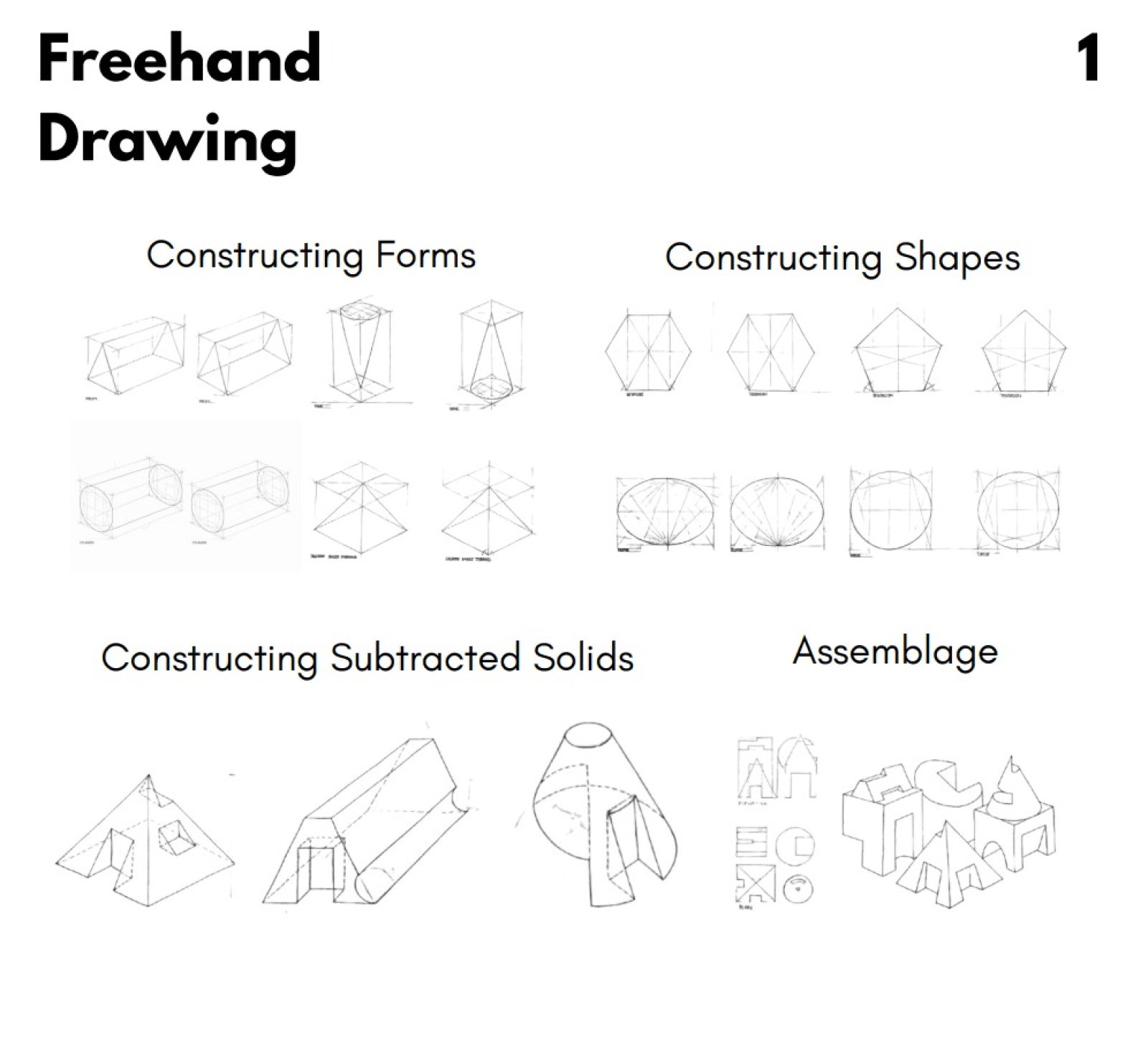
This module builds foundational freehand drawing skills by training the eye and hand to construct accurate shapes, volumes, and complex forms through geometric construction, subtraction, and assemblage.

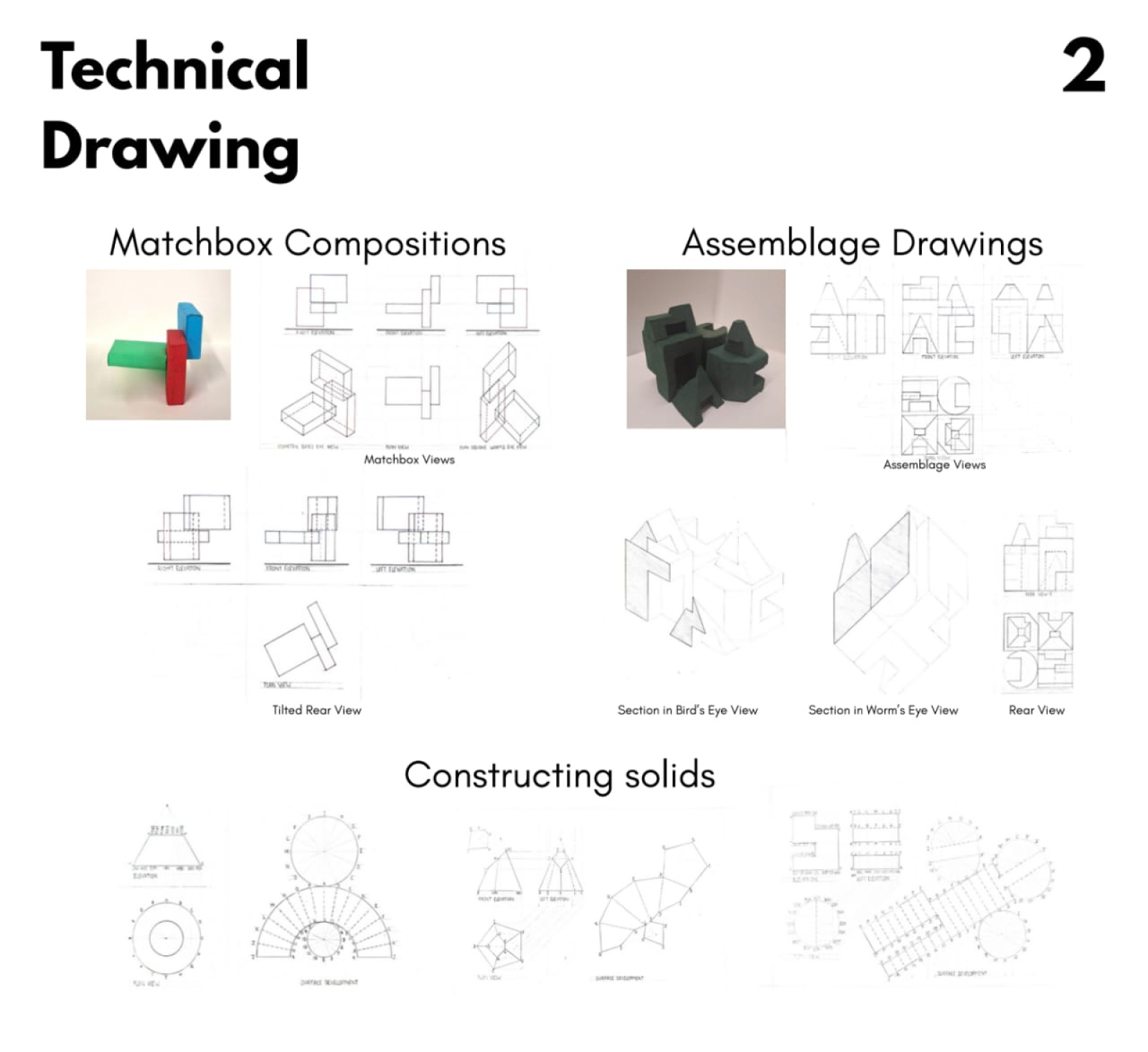
This exercise focuses on technical drawing through precise construction of matchbox and assemblage compositions, using orthographic views, sections, and axonometric projections.

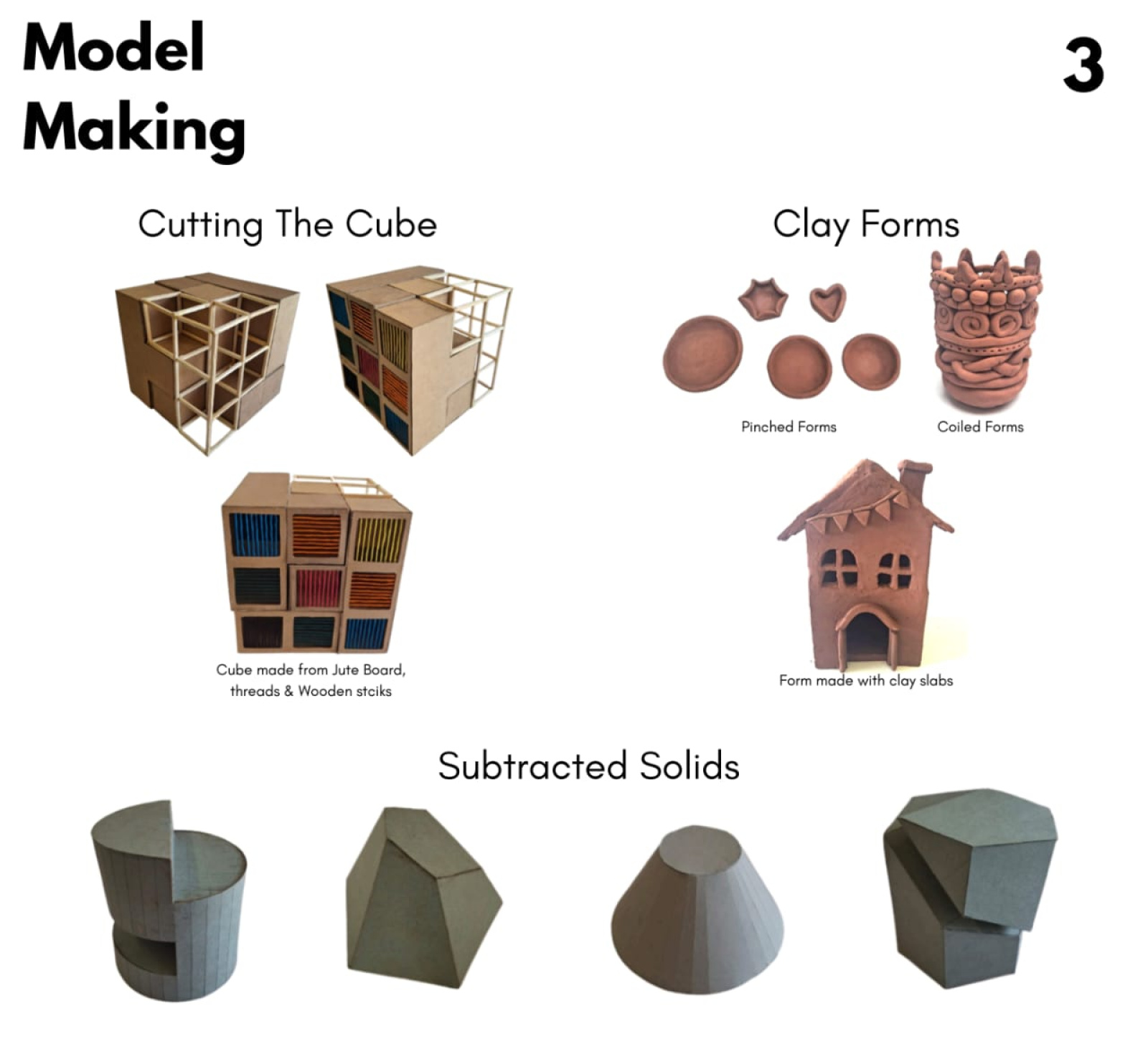
This exercise explores model making through hands-on learning with cutting, subtracting, and shaping solids and using materials like board and clay.

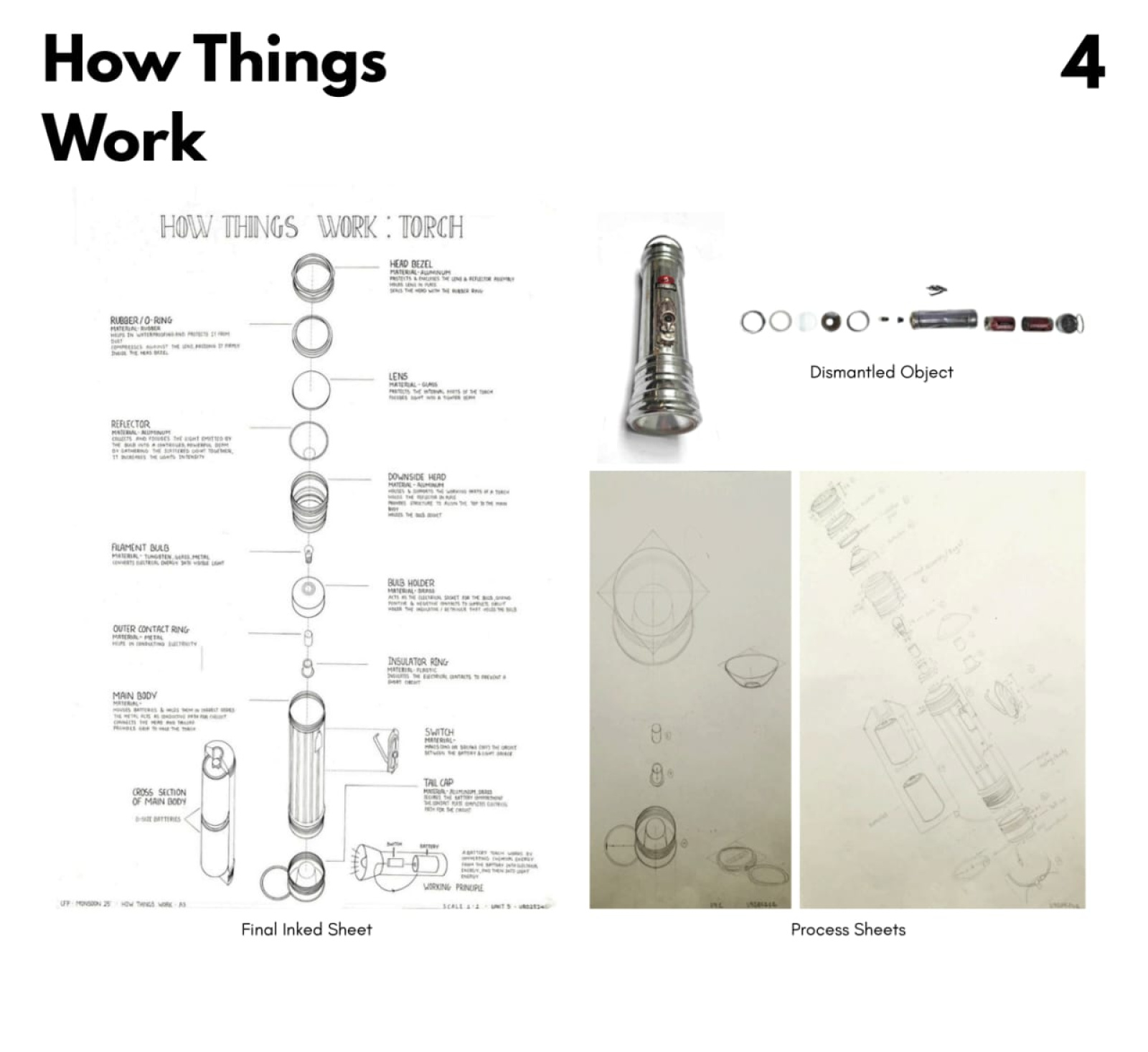
This exercise studies the internal working of an everyday object through dismantling, analysis, and detailed exploded drawings. It builds an understanding of components and assembly of the object.

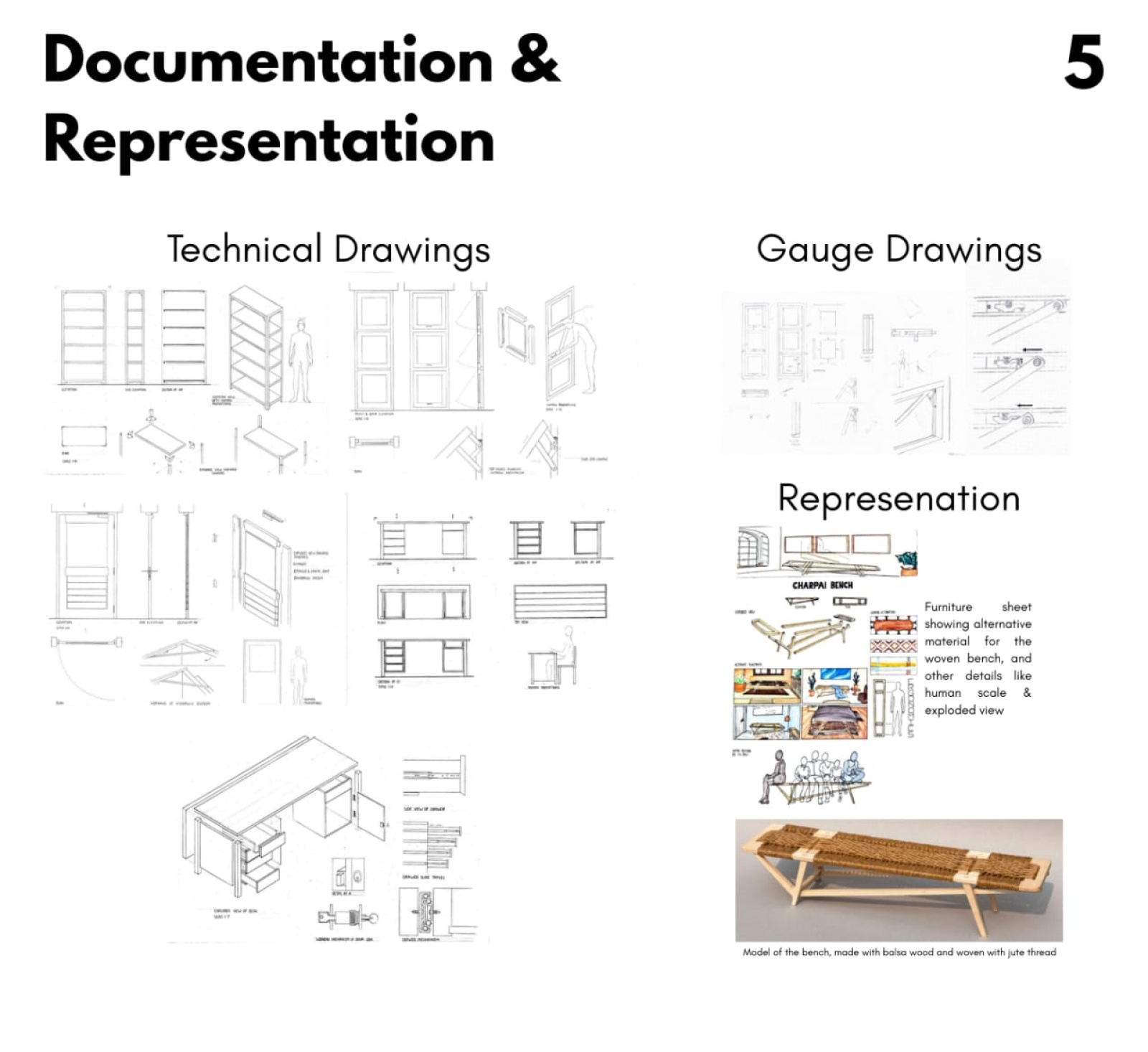
his module emphasizes on-site observation and gauging of elements, translating real-world details into accurate technical and representation drawings through careful measurement and documentation.

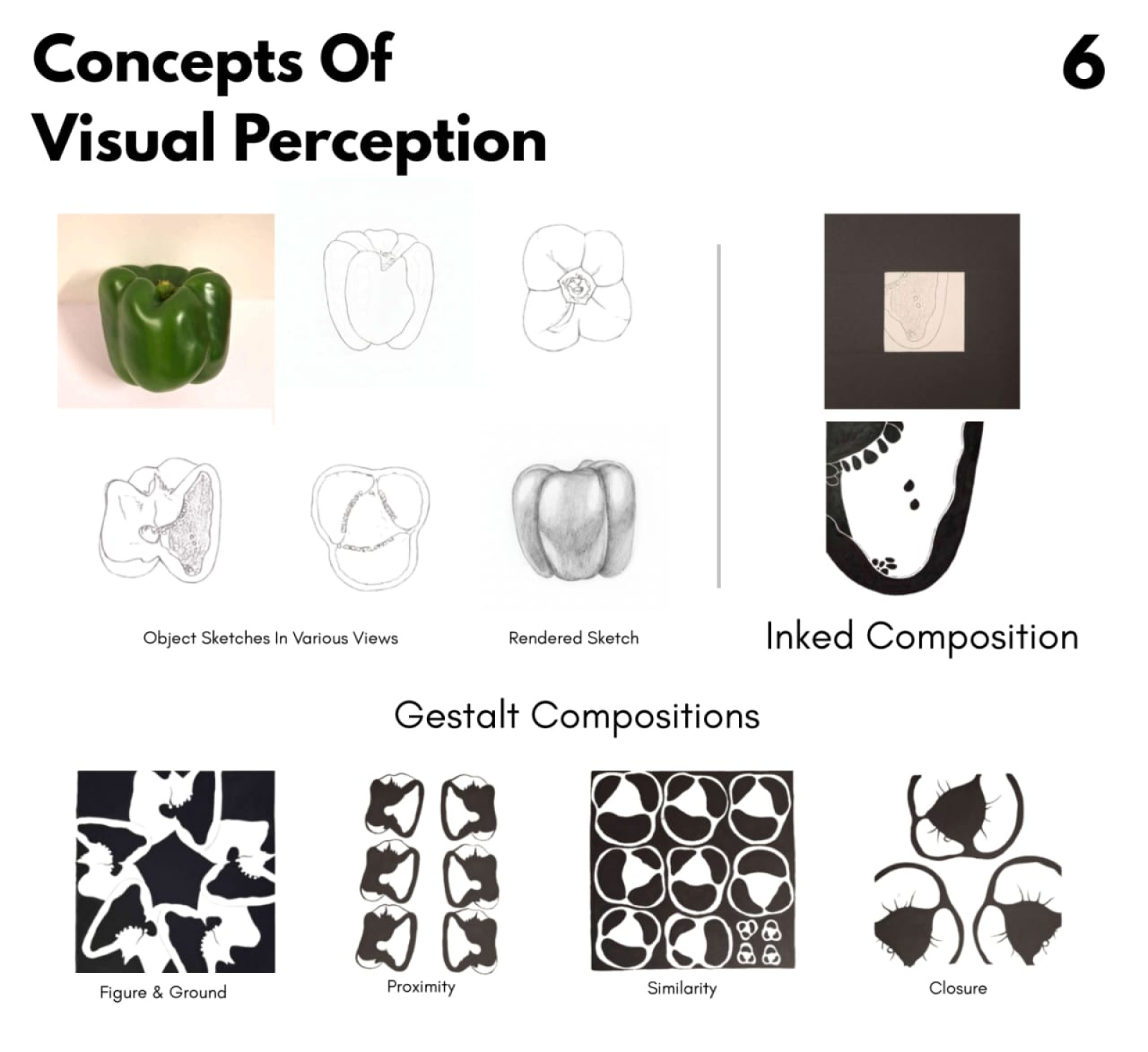
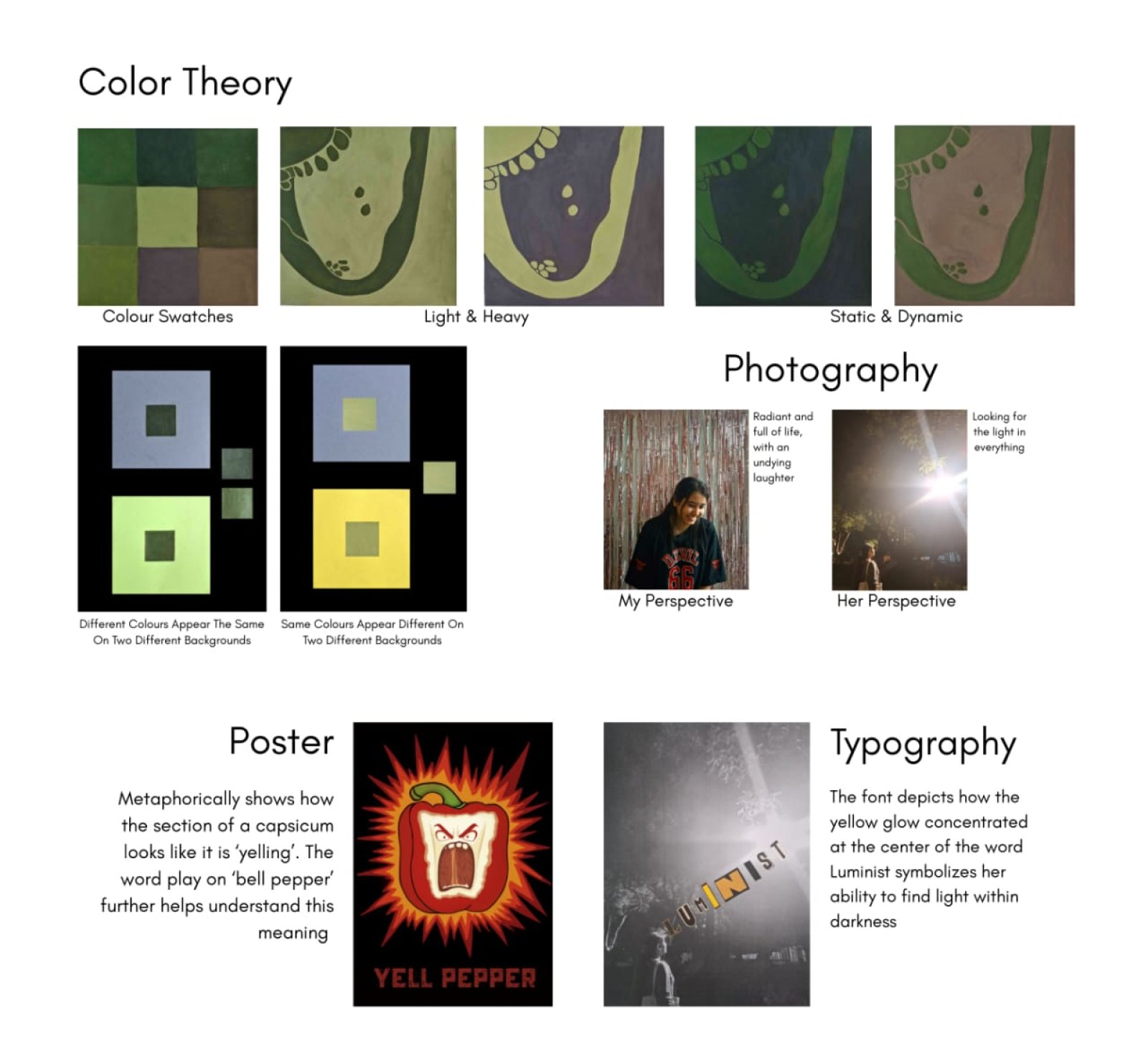
This module explores how visual perception works through observation, Gestalt principles, colour theory, photography, and typography.

This module explores how visual perception works through observation, Gestalt principles, colour theory, photography, and typography.

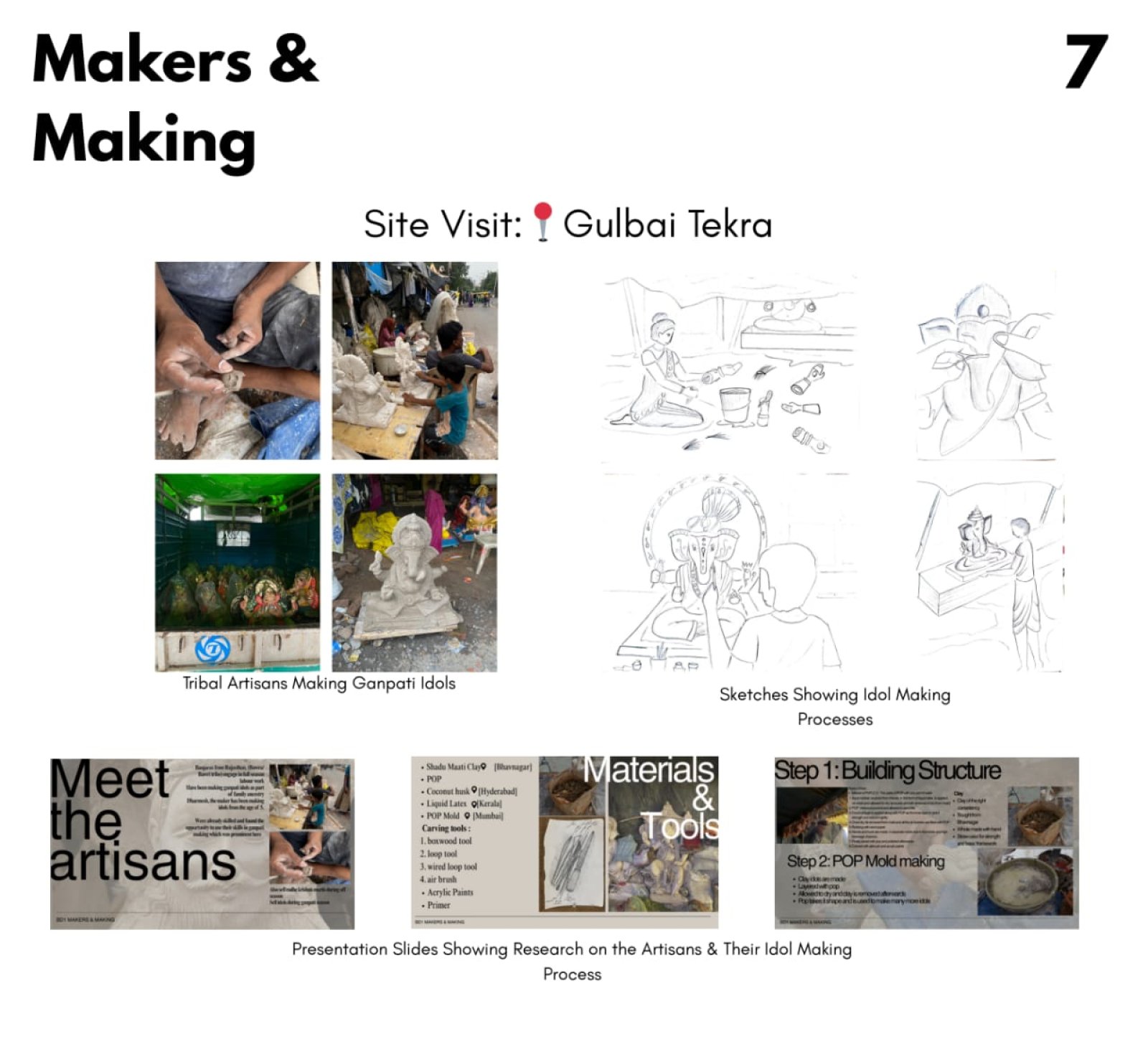
This module examines making as a situated practice through a site visit, documenting artisans, materials, and processes to understand how craft knowledge is shaped by context, labour, and tradition.

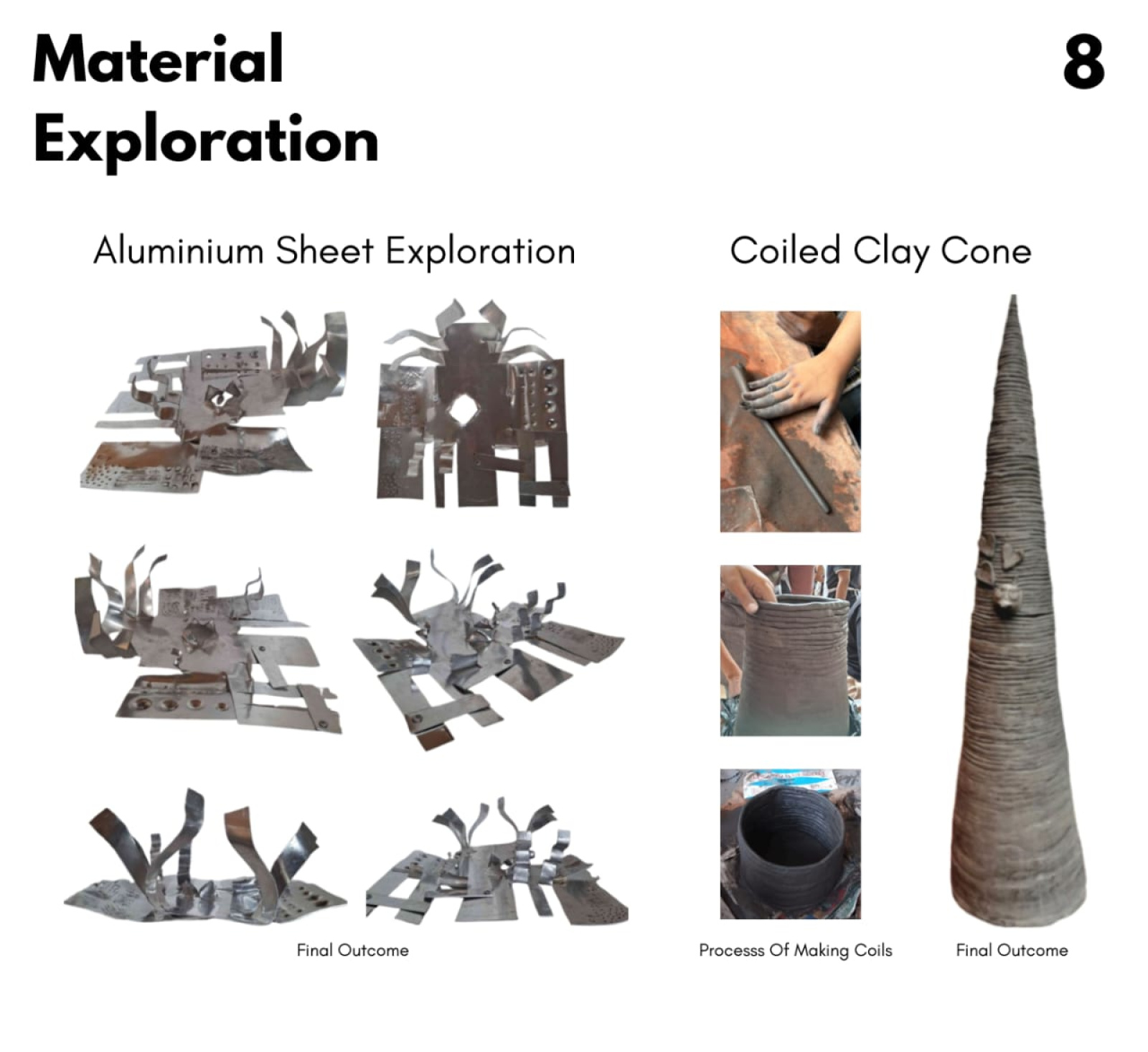
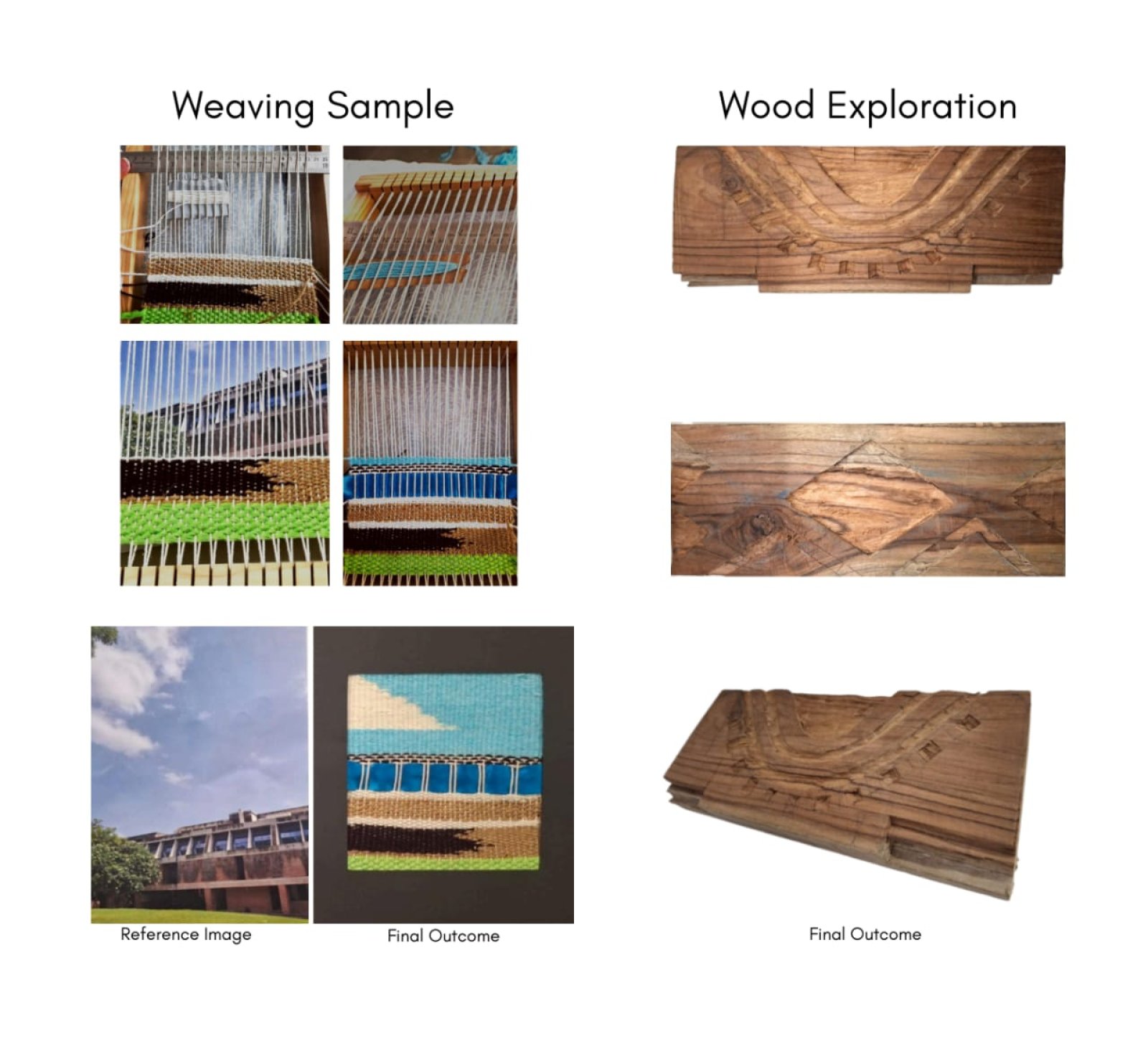
This module focuses on hands-on material exploration across metal, clay, textile, and wood to understand how form, texture, and process emerge from the material’s inherent properties and methods of making.

This module focuses on hands-on material exploration across metal, clay, textile, and wood to understand how form, texture, and process emerge from the material’s inherent properties and methods of making.