Mukti Prajapati

CFP009

UAR24190

The CEPT Foundation Programme studio is an introduction for students fresh out of school to the rigor and work habits required by an undergraduate degree at CEPT University. The studio is conceptualized as a series of sequentially planned exercises, through which students develop skills and abilities, which are then deployed to address increasingly complex problems falling into four broad categories: visualize and draw, make and learn, analyze and interpret and conceptualize and represent. The exercises are designed to provide common and allied foundational skills and abilities for students across disciplines at CEPT, between which they maintain a balance. The studio is taught through intensive and incremental weekly modules, focusing on a particular skill or ability and a process that emphasises ongoing discussion and feedback in addition to expert faculty lectures.

View Additional Work
Report Content

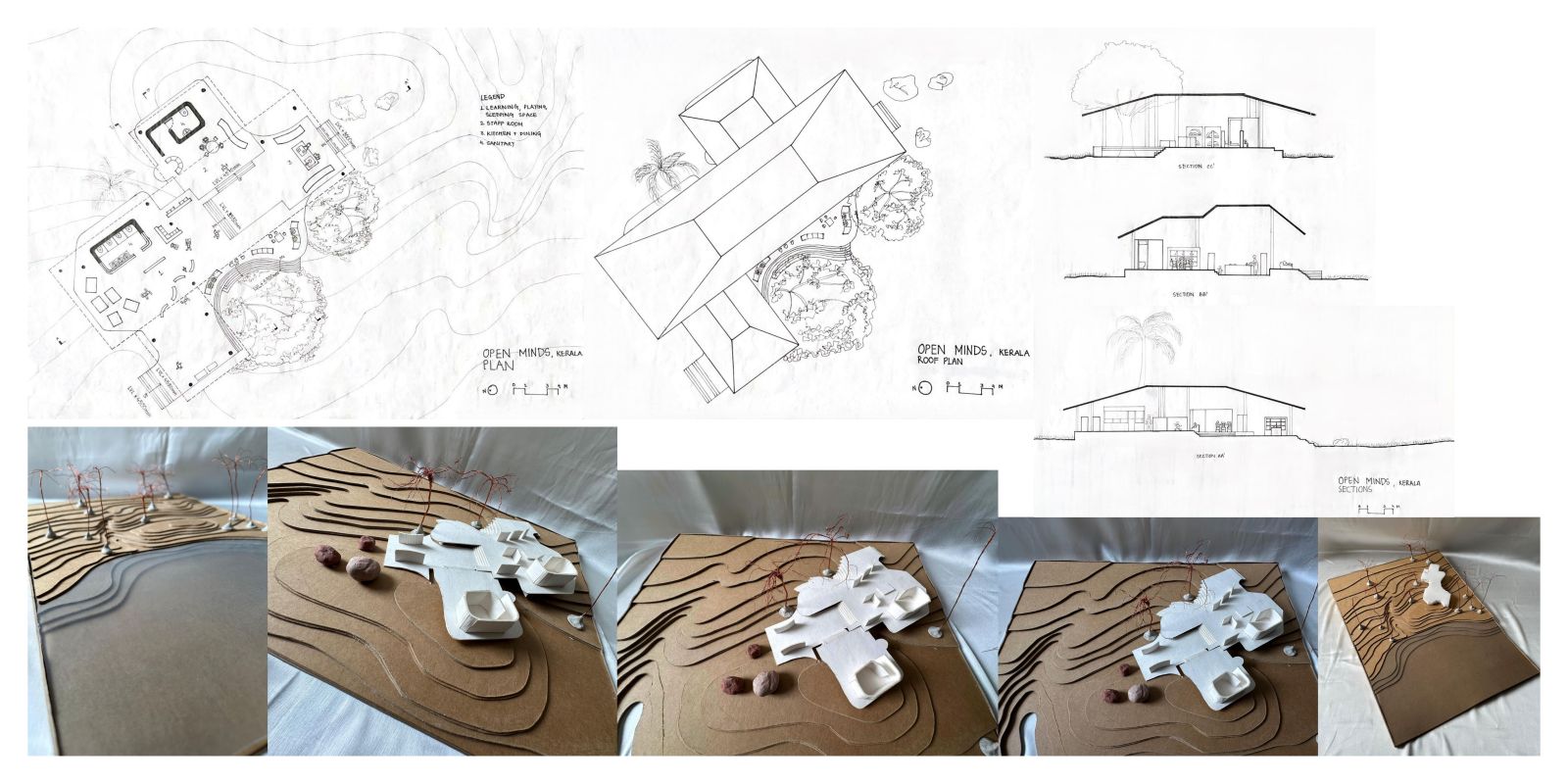
Design Module - Plans, sections and physical models of an Aanganwadi situated in Kerala (hypothetical site).

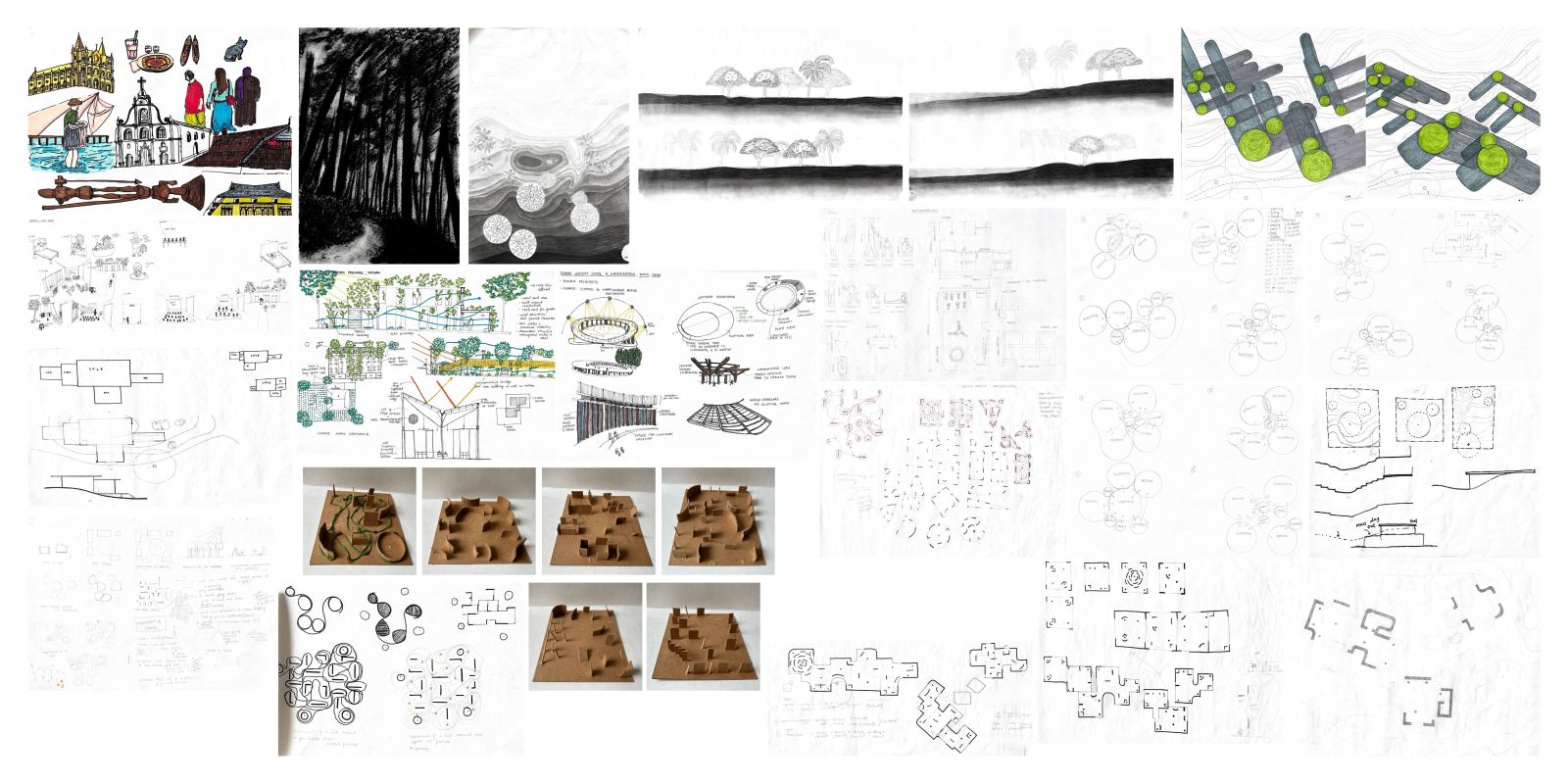
Design Module - The process work which includes the impressions of Kerala, rendered plan and sections of the site, site analysis, case-studies and design development through parti diagrams and conceptual models.

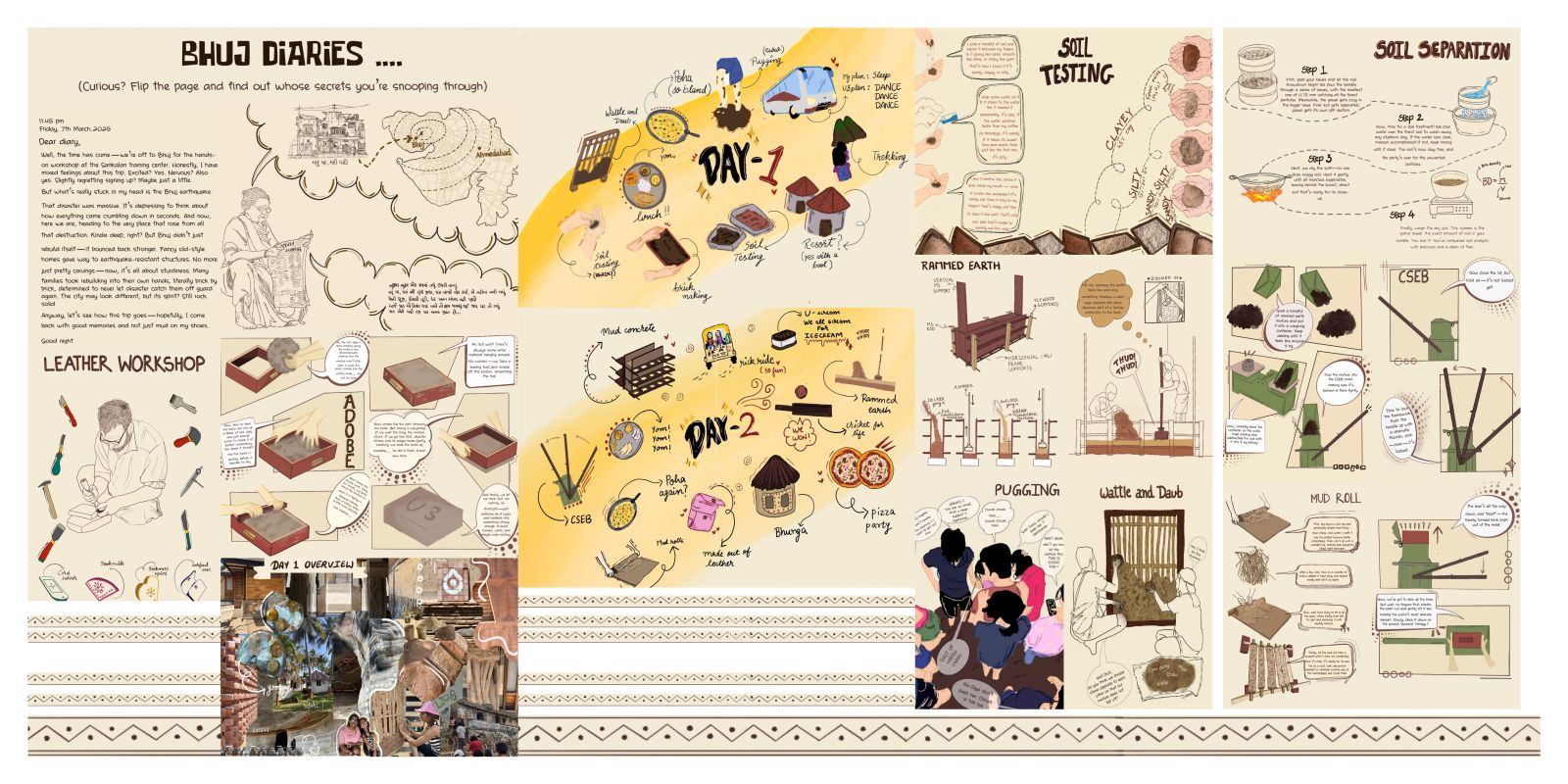
Hands-On workshop at Sankalan-Hunnarshala, Bhuj - A personal diary entry of first two days which represents soil analysis and separation, pugging, wattle & daub, making of adobe and CSEB bricks, mud rolls, rammed earth and leather artifacts.

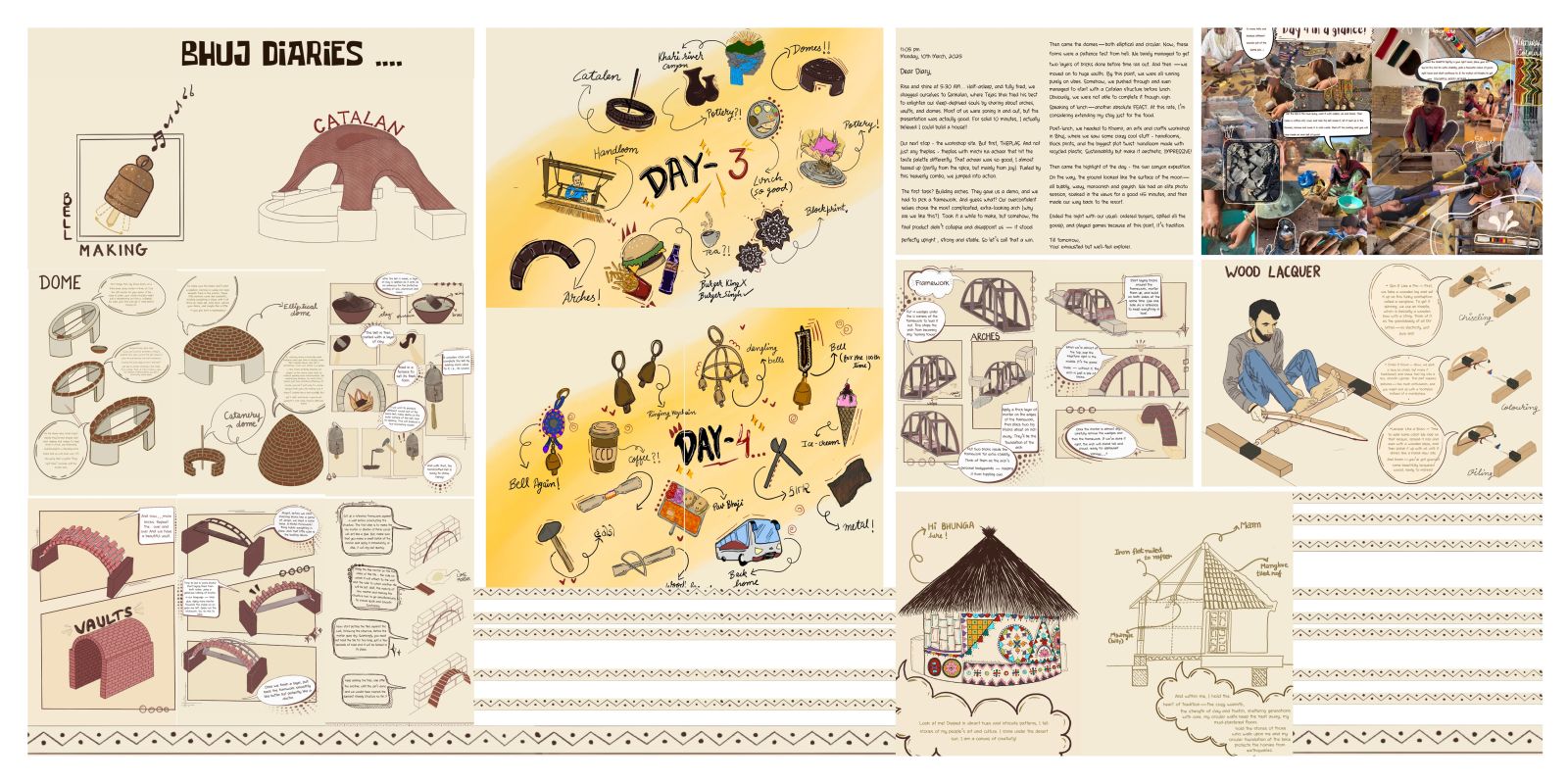
The diary entries of third and fourth days at Sankalan include construction of arch, vault, circular and elliptical domes, making copper bells and wood lacquering.

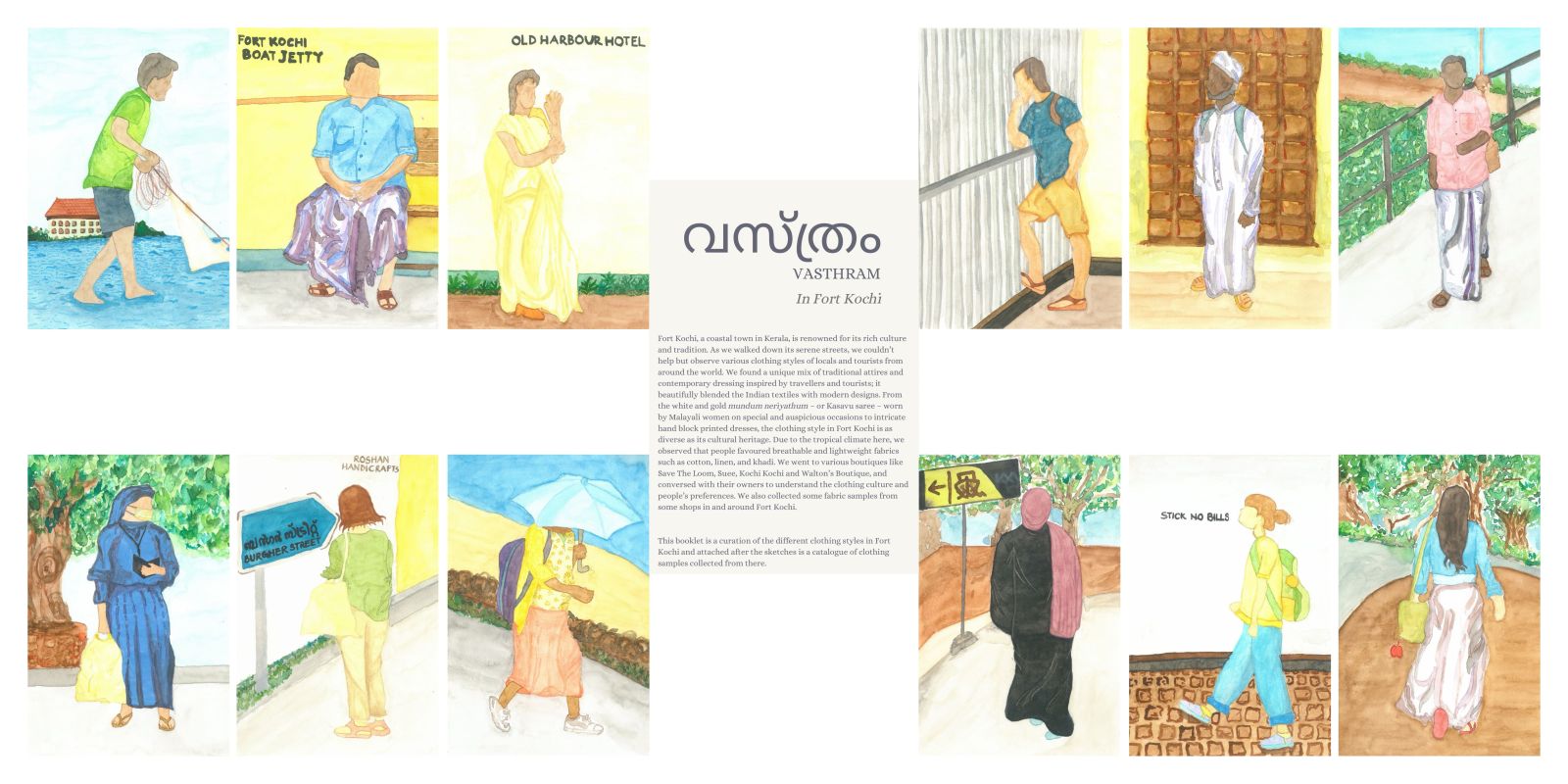
Field Studio - An exploration to Fort Kochi, Kerala. 'Vasthram' represents different clothing styles of the tourists and the locals, and also a combination of clothing inspired by people from around the world belonging to different cultural backgrounds.

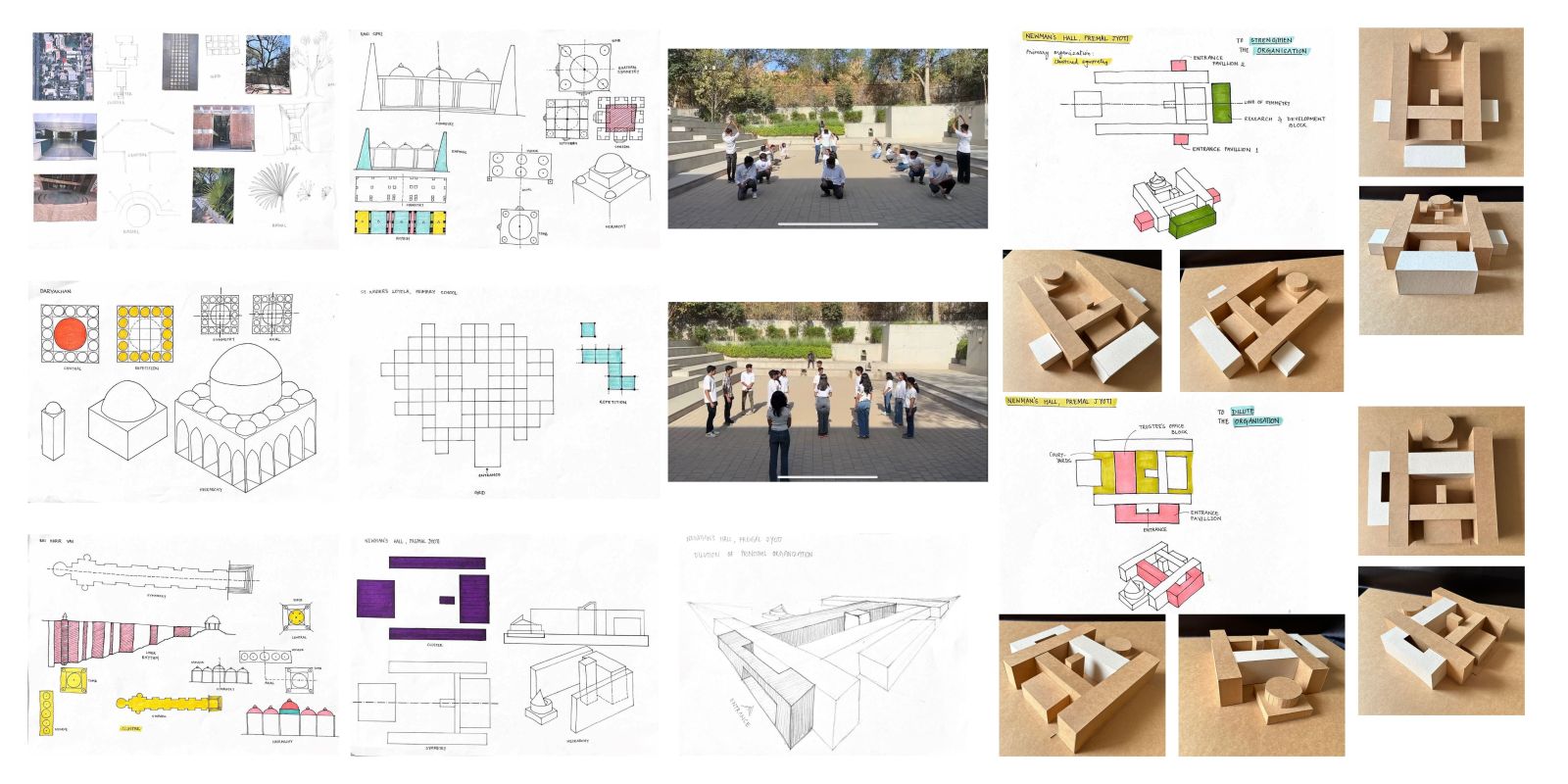
Organization and Ordering Principles - Identifying and deciphering different types of organizations and ordering principles in and around the campus and other buildings through diagrams. Then, enacting buildings based on their organization principles. At last, making a physical model of the building by adding a component or two to strengthen and/or weaken its principle organization.

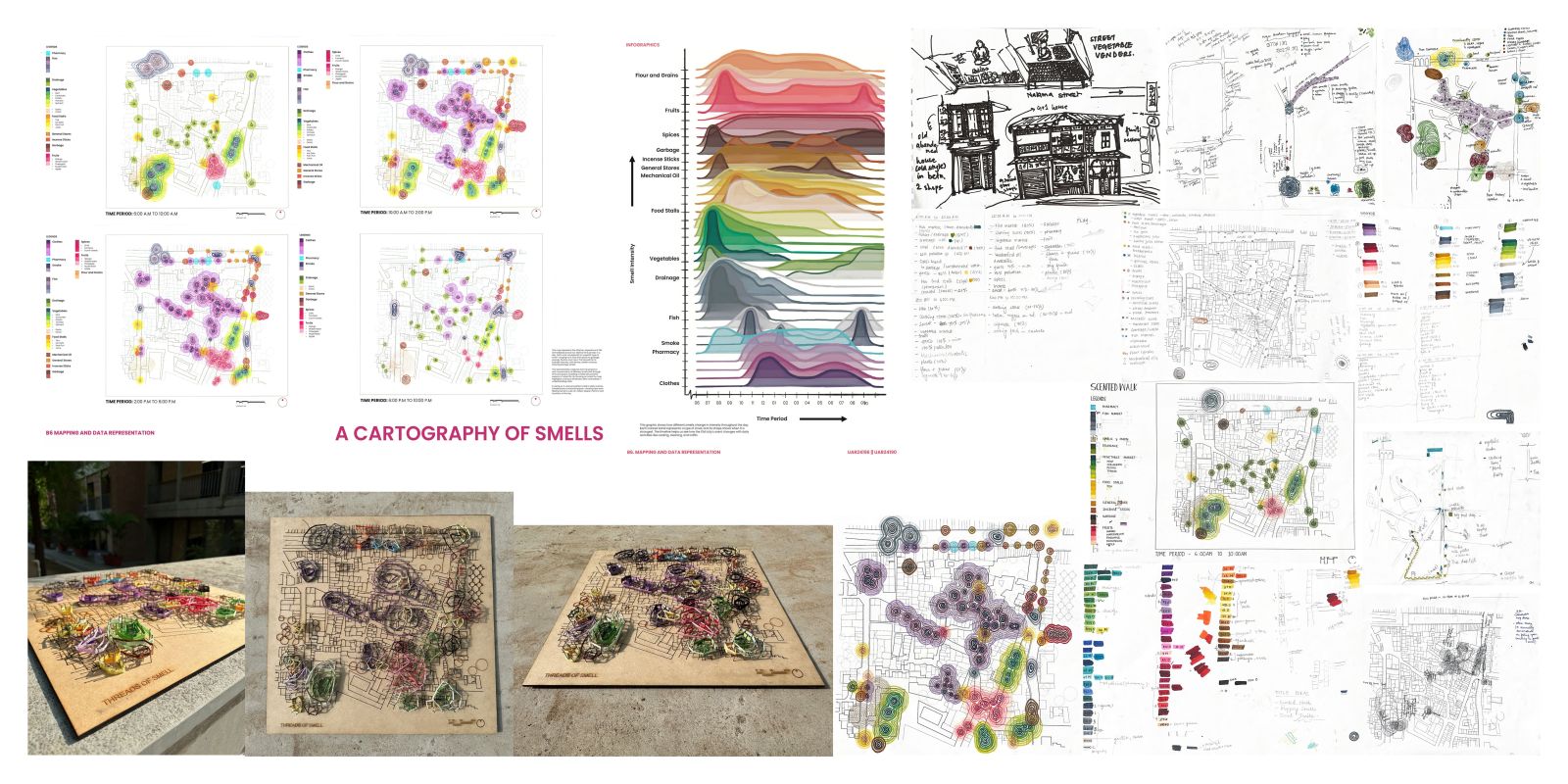
Mapping and Data Representation - Capturing the smells of the Old City, Ahmedabad, neighbouring Teen Darwaza. Each smell is represented using dark to light gradients of colour which corresponds to high to low intensity of the smell throughout the day in different time periods. The data on the map, infographics and the physical model represent different smells in the area and how they mix with each other in the atmosphere.

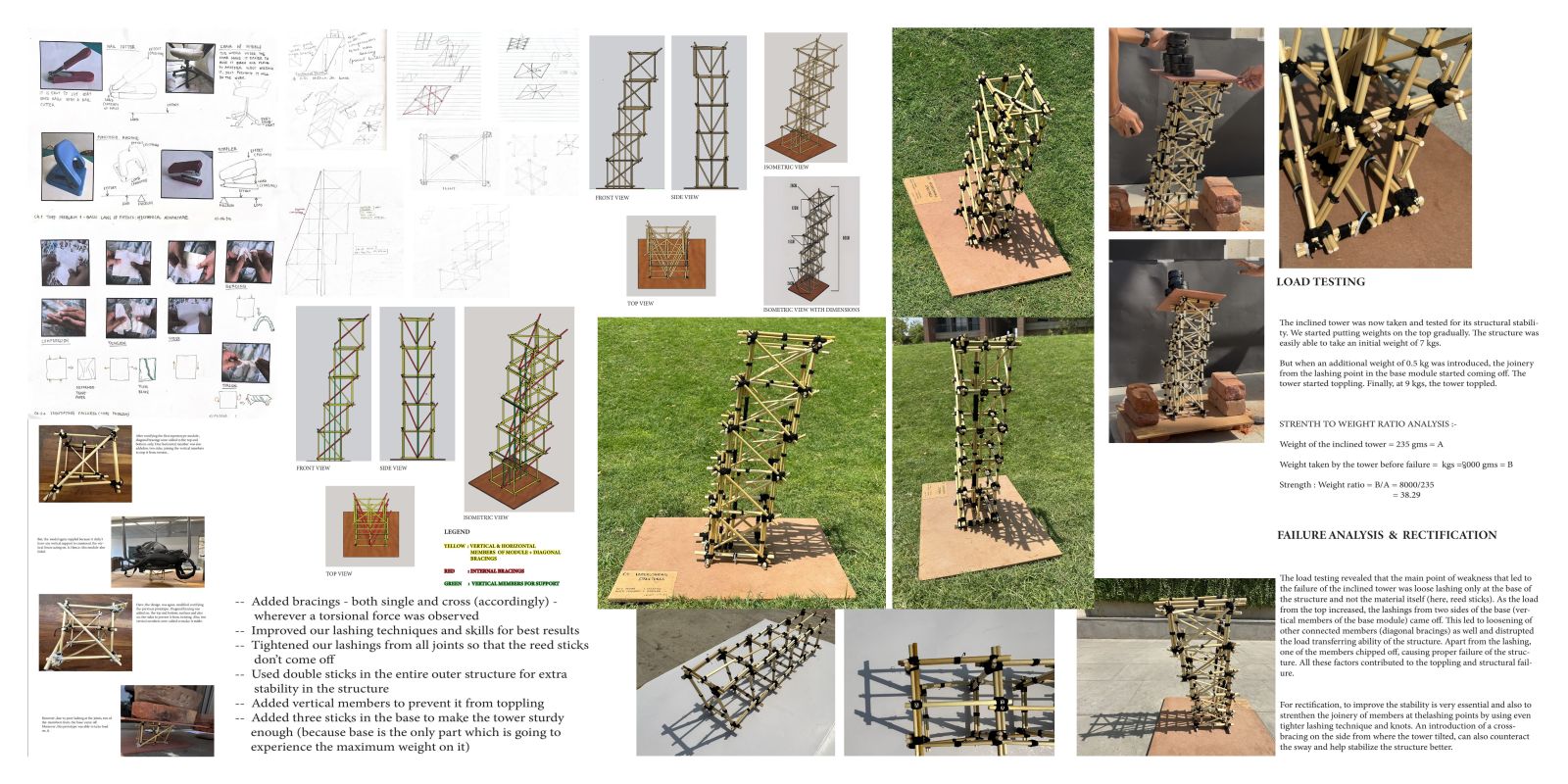
Understanding Structures - Learning through Failure. Building an 'Inclined Tower' using reed sticks and lashing techniques. Then, performing a load test for failure analysis and rectification.

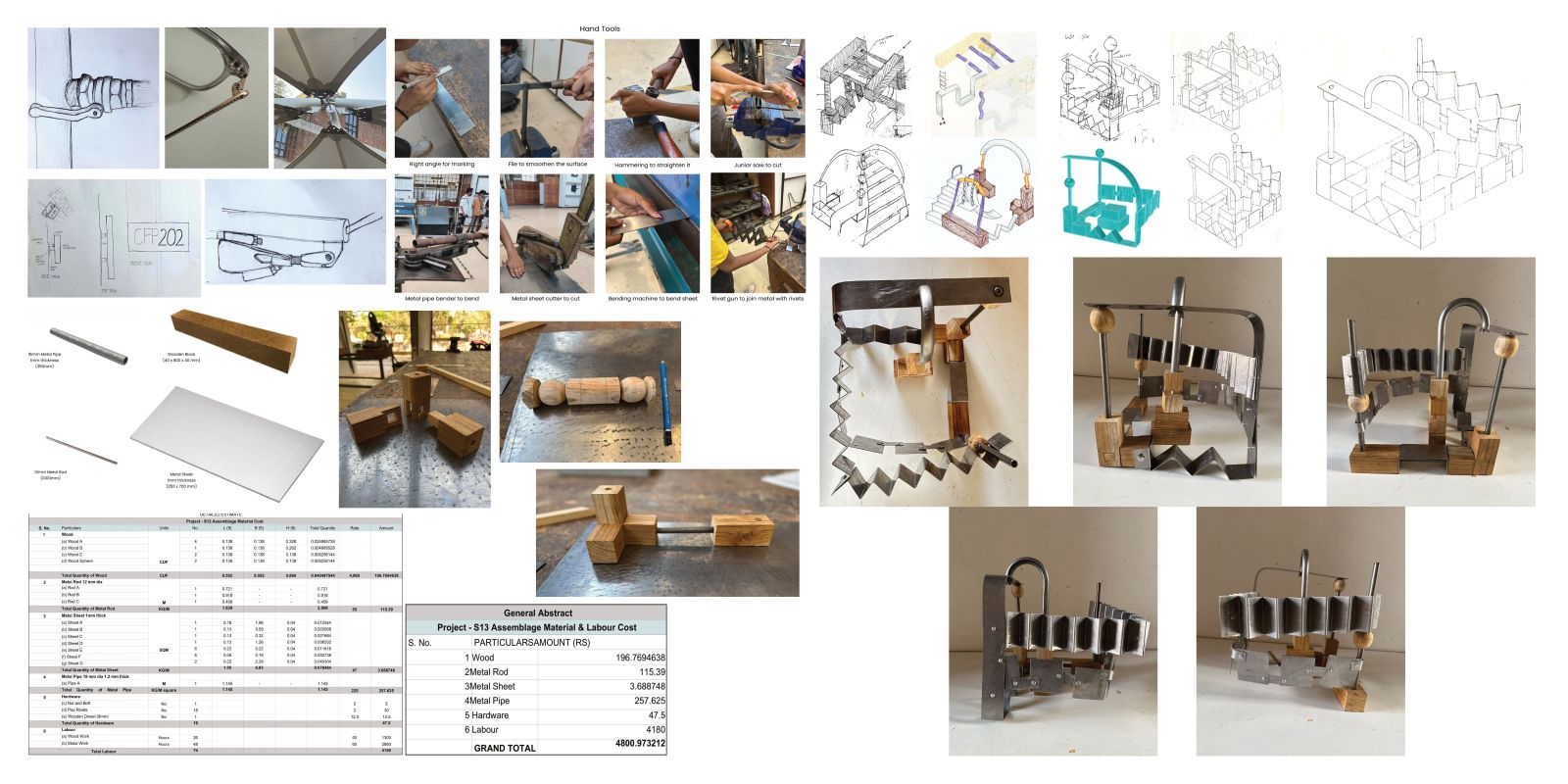
Joining Elements - Designing an assemblage using metal sheet, wood, metal pipe and metal rod with the help of different joineries and hardware.

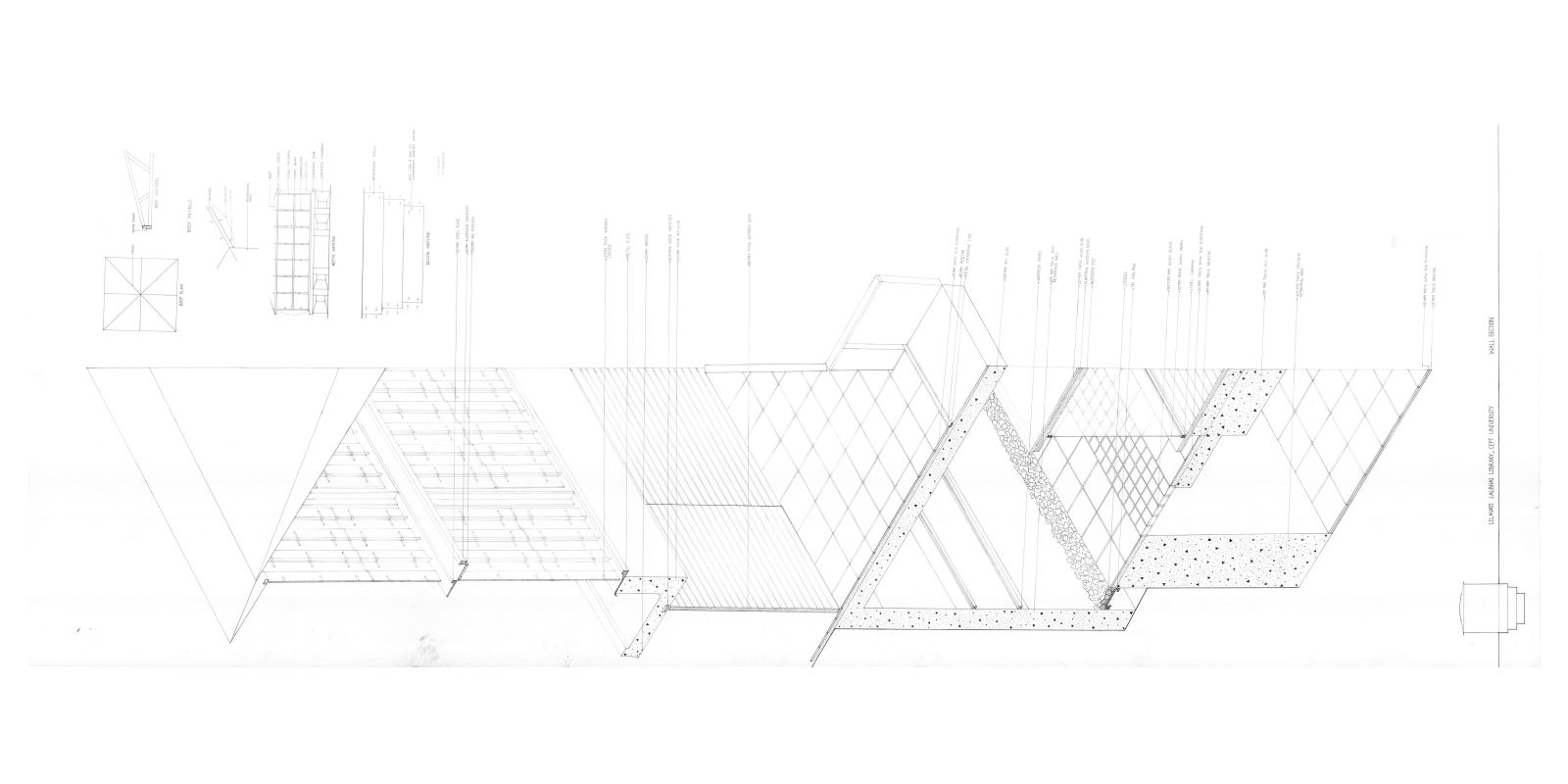
Detailed wall section of Lilavati Lalbhai Library at CEPT University, Ahmedabad, along with force diagrams.