Khorakiwala Batul Adnan

CFP009

UAR24256

The CEPT Foundation Programme studio is an introduction for students fresh out of school to the rigor and work habits required by an undergraduate degree at CEPT University. The studio is conceptualized as a series of sequentially planned exercises, through which students develop skills and abilities, which are then deployed to address increasingly complex problems falling into four broad categories: visualize and draw, make and learn, analyze and interpret and conceptualize and represent. The exercises are designed to provide common and allied foundational skills and abilities for students across disciplines at CEPT, between which they maintain a balance. The studio is taught through intensive and incremental weekly modules, focusing on a particular skill or ability and a process that emphasises ongoing discussion and feedback in addition to expert faculty lectures.
Report Content

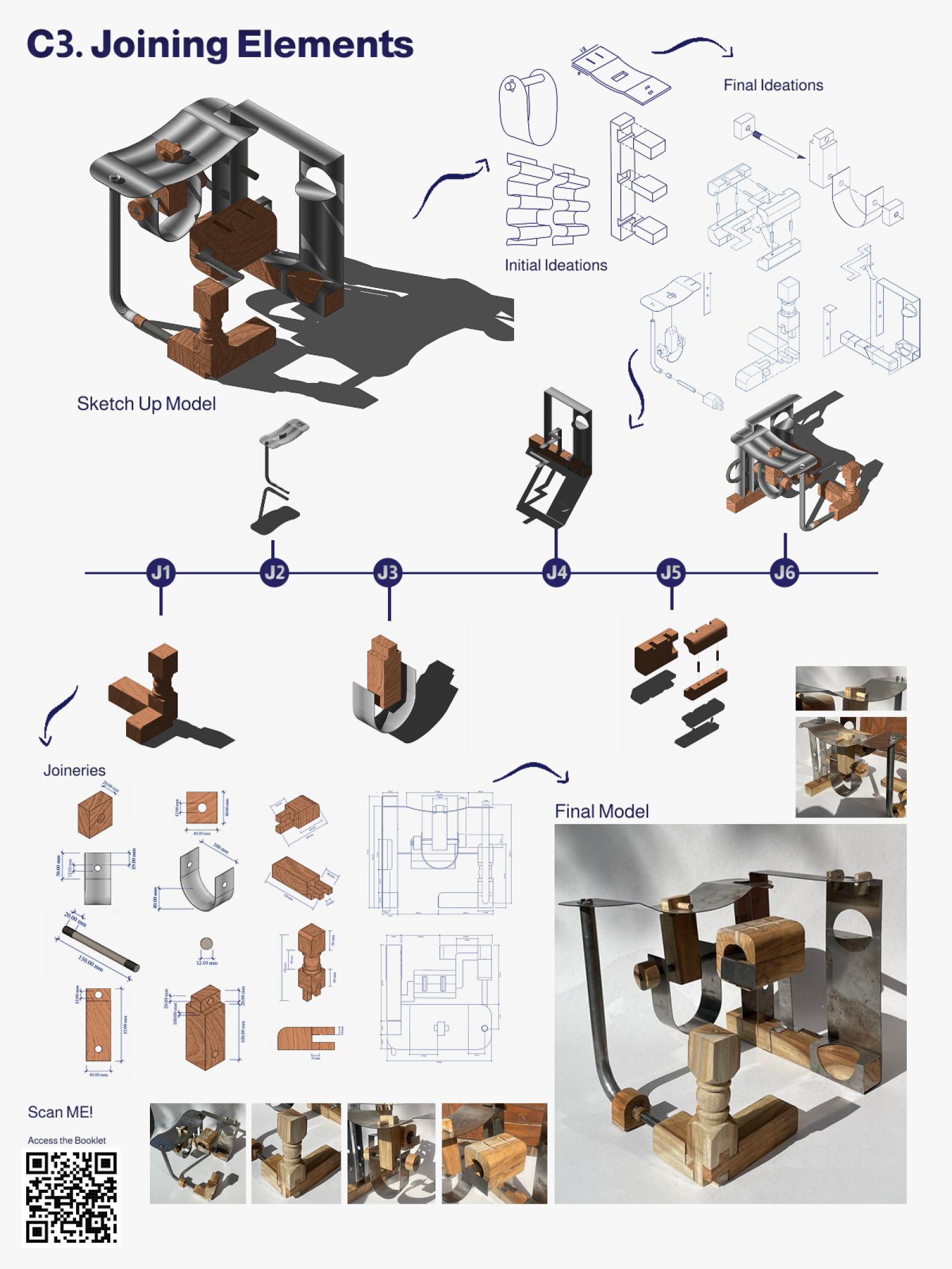
The Joining Elements module explores the fusion of wood and metal through hands-on workshop experimentation. Using metal and wood joineries we developed and refined connection techniques, resulting in a sculptural final model that balances craft and structure.

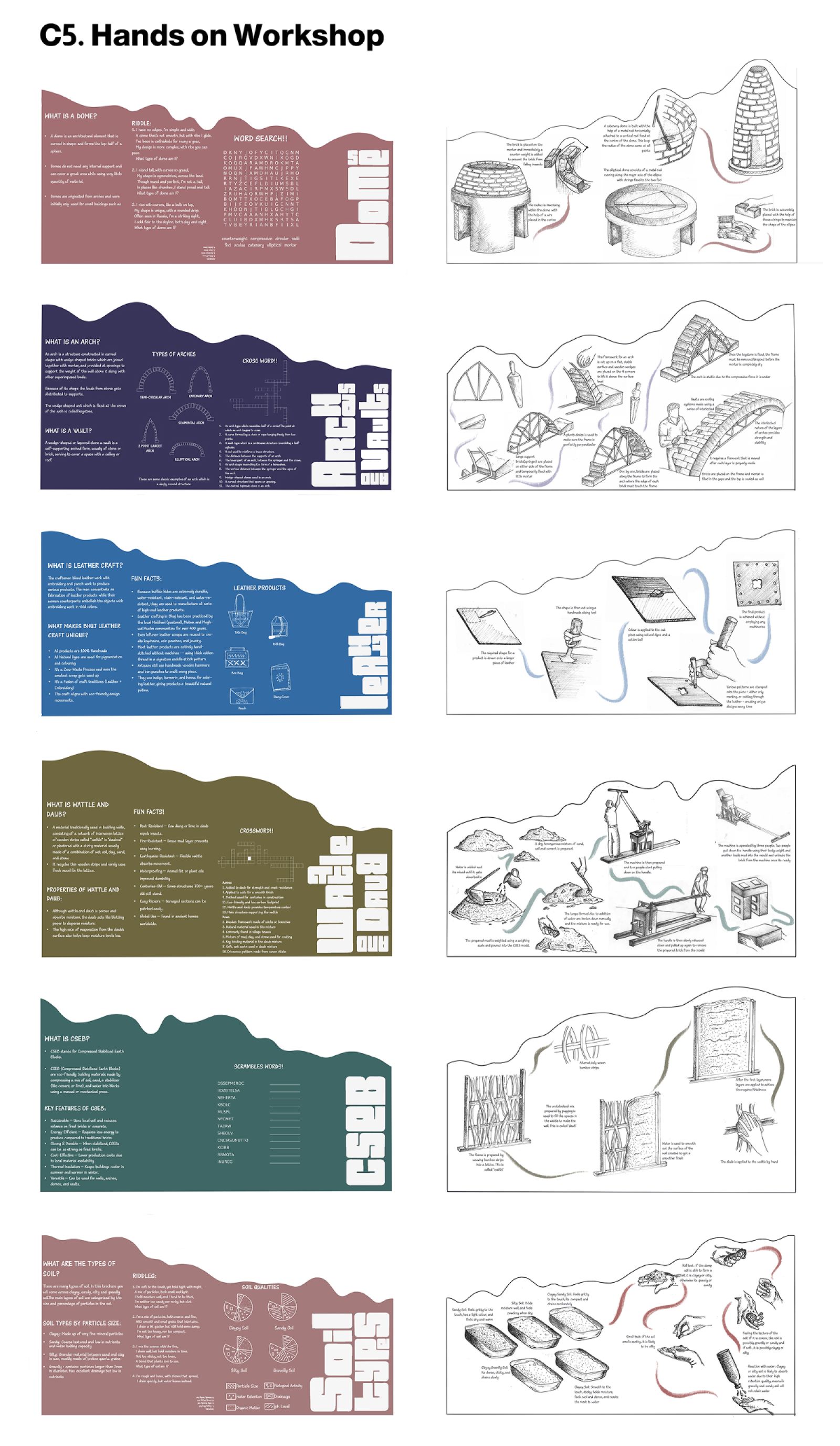
The Bhuj hands-on workshop focused on documenting and experiencing traditional crafts such as rammed earth, brick arches and domes, leatherwork, and CSEB. Through on-site learning and interaction with local artisans, we created detailed brochures for each craft, capturing their techniques, tools, and cultural significance.

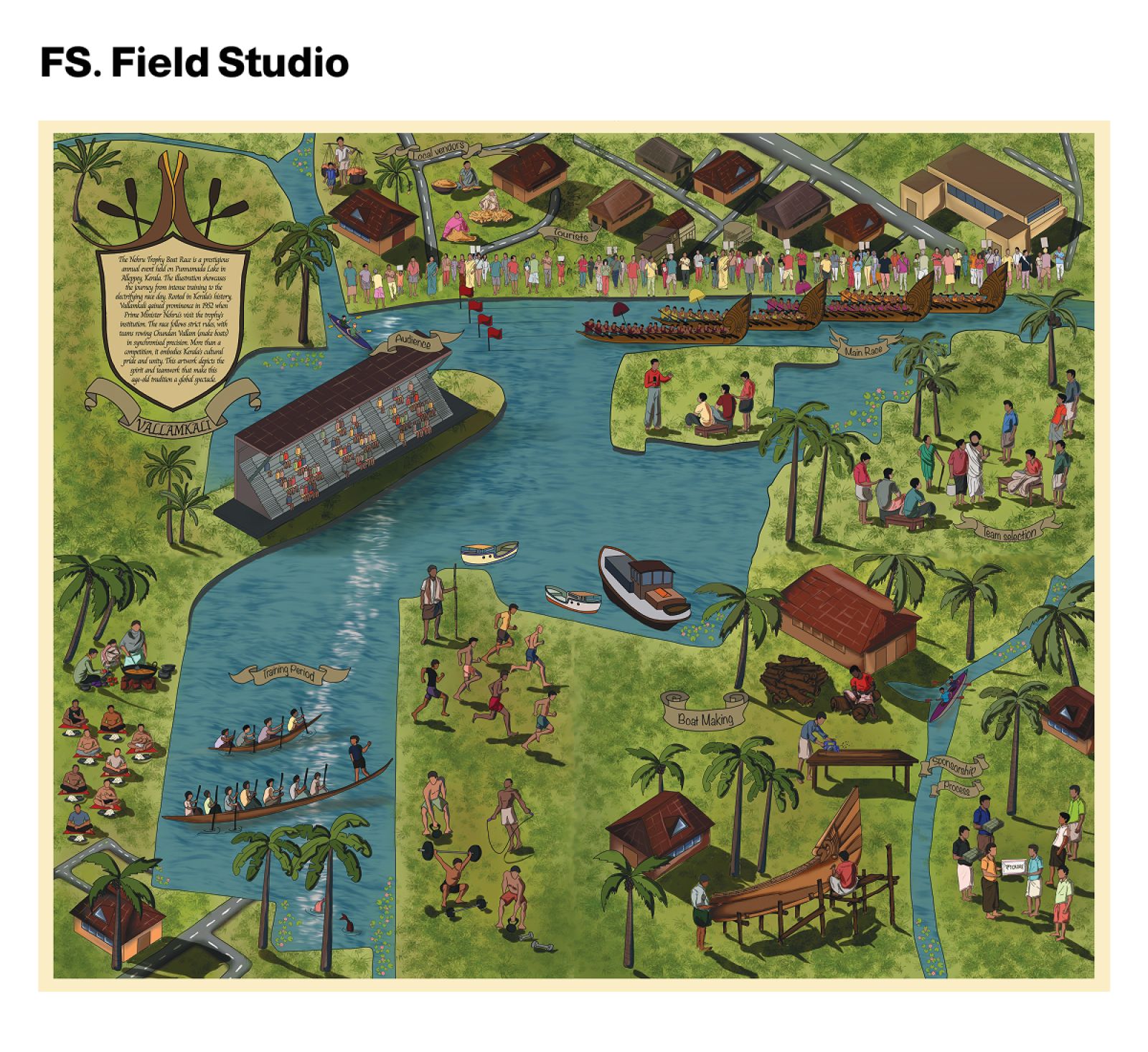
In the Alleppey Field Studio, we chose to document Vallamkali—the iconic snake boat festival of Kerala. Through immersive observation and interaction with the local community, we illustrated the entire event, capturing the rituals, boat-making, festivities, and cultural vibrancy that surround this annual celebration.

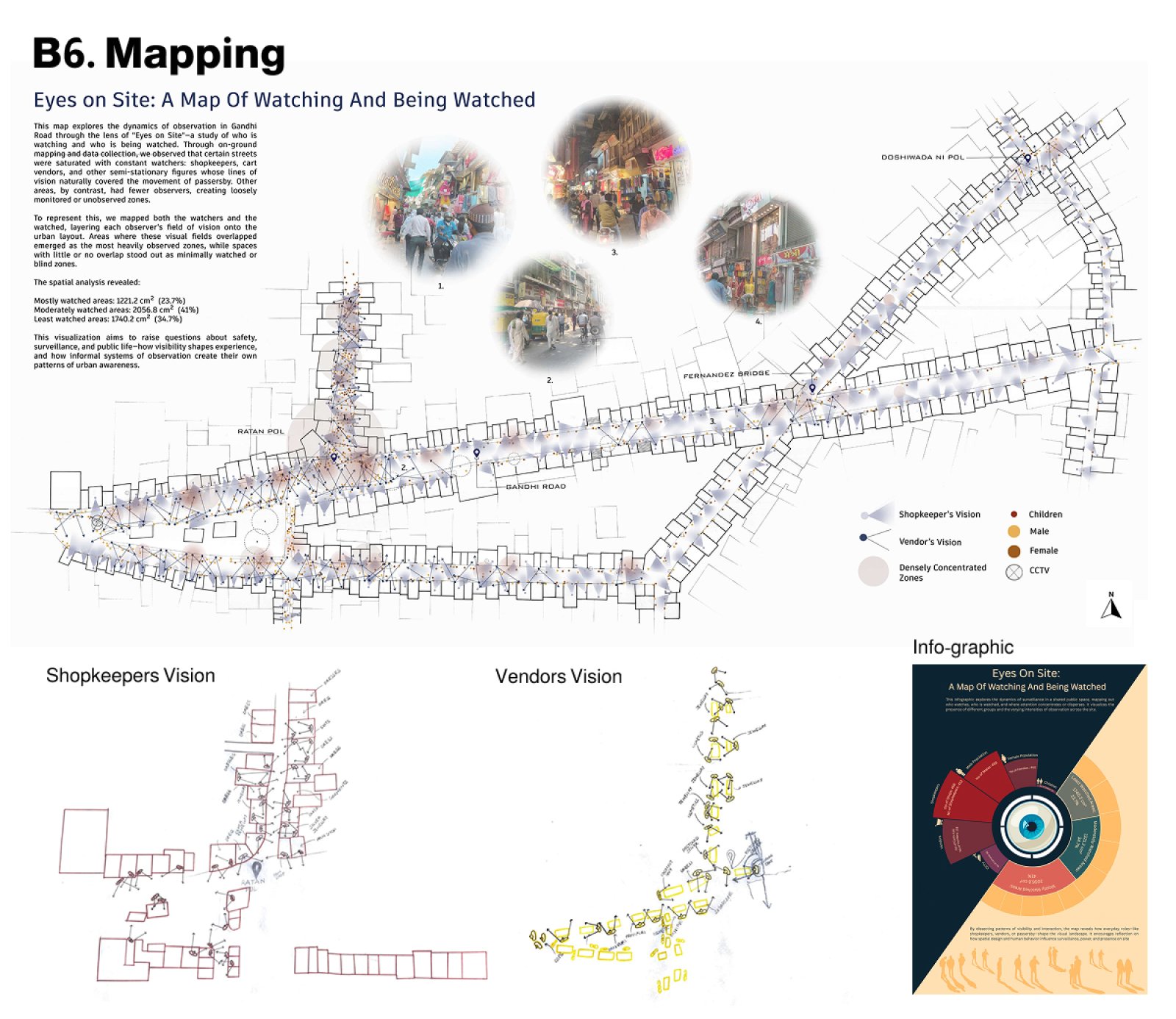
In this mapping exercise, we studied the dynamics of watching and being watched in the bustling streets of Ratanpole and Gandhi Road. By documenting the visual fields of shopkeepers, vendors, CCTV cameras, and passersby, we mapped how public visibility and informal surveillance shape urban behavior. The map reveals zones of high observation and blind spots, offering insight into how everyday interactions and movement patterns are influenced by constant mutual awareness in dense commercial areas.

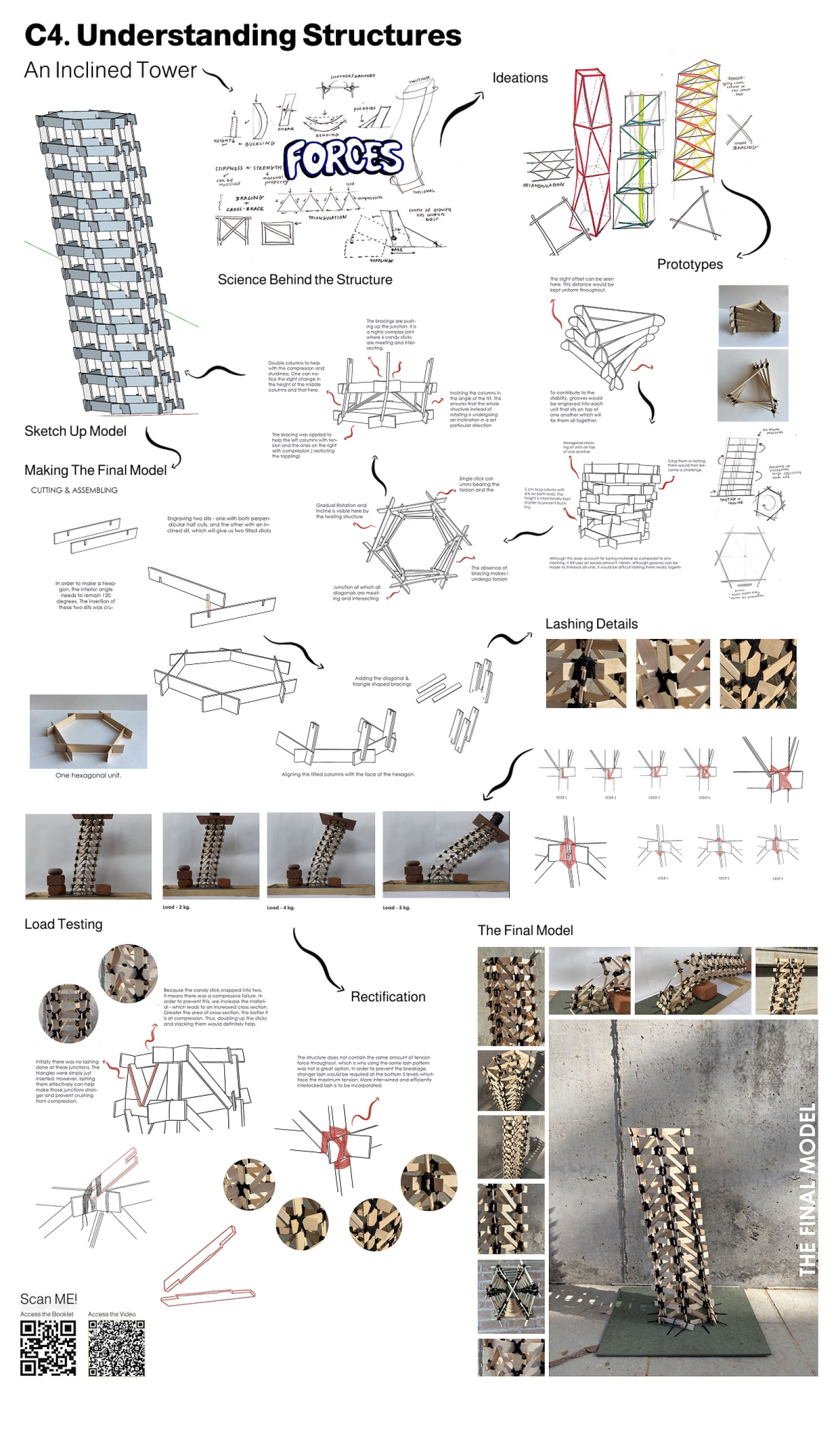
In the Understanding Structures module, we designed and built an inclined tower using candy sticks to explore structural stability and force distribution. Through ideation, prototyping, and studying structural principles, we developed a hexagonal system joined by lashed connections that stands firm despite its tilt.

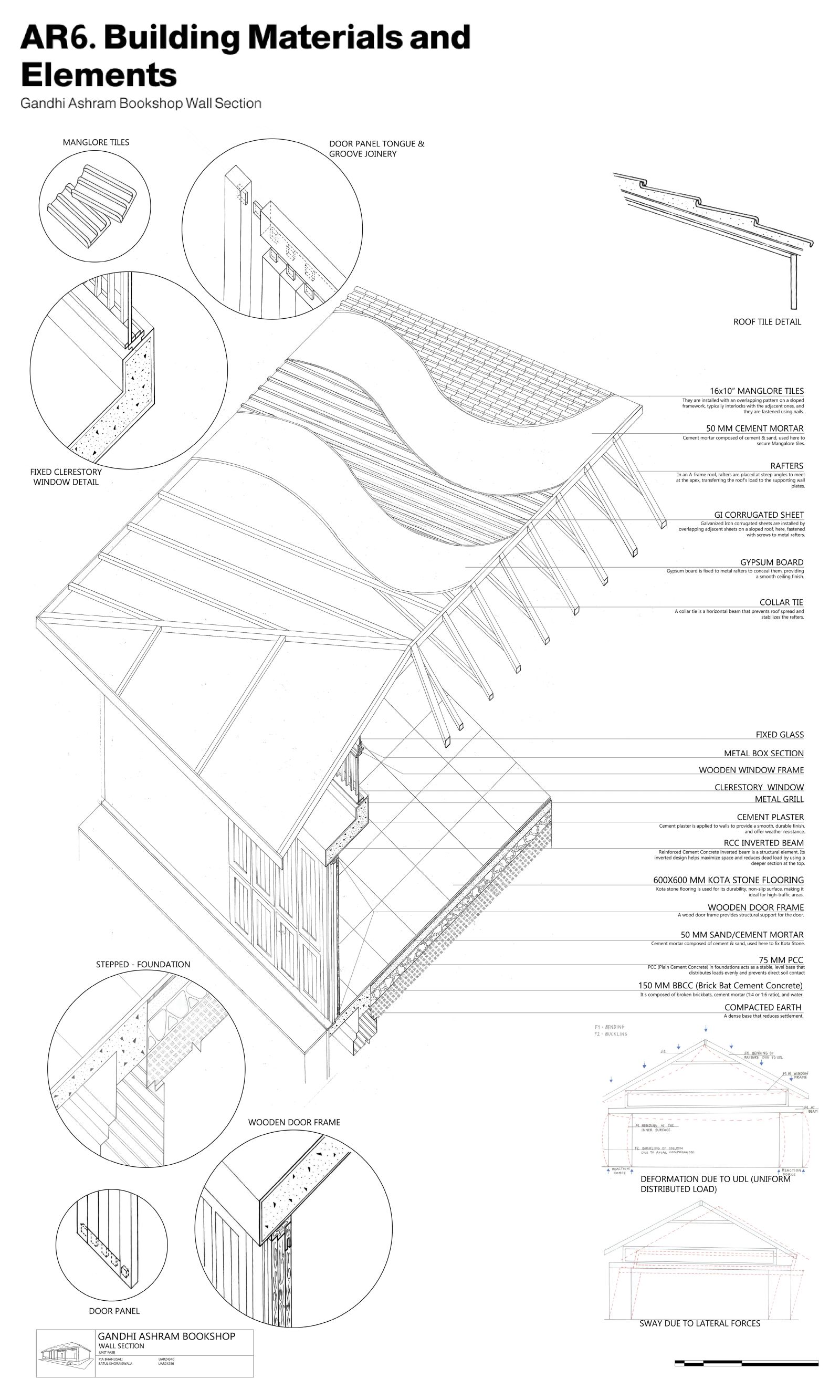
This is a wall section of the Gandhi Ashram Bookshop that illustrates the detailed building materials, structural elements, and forces at play, providing a clear understanding of the construction techniques and services involved in the structure.

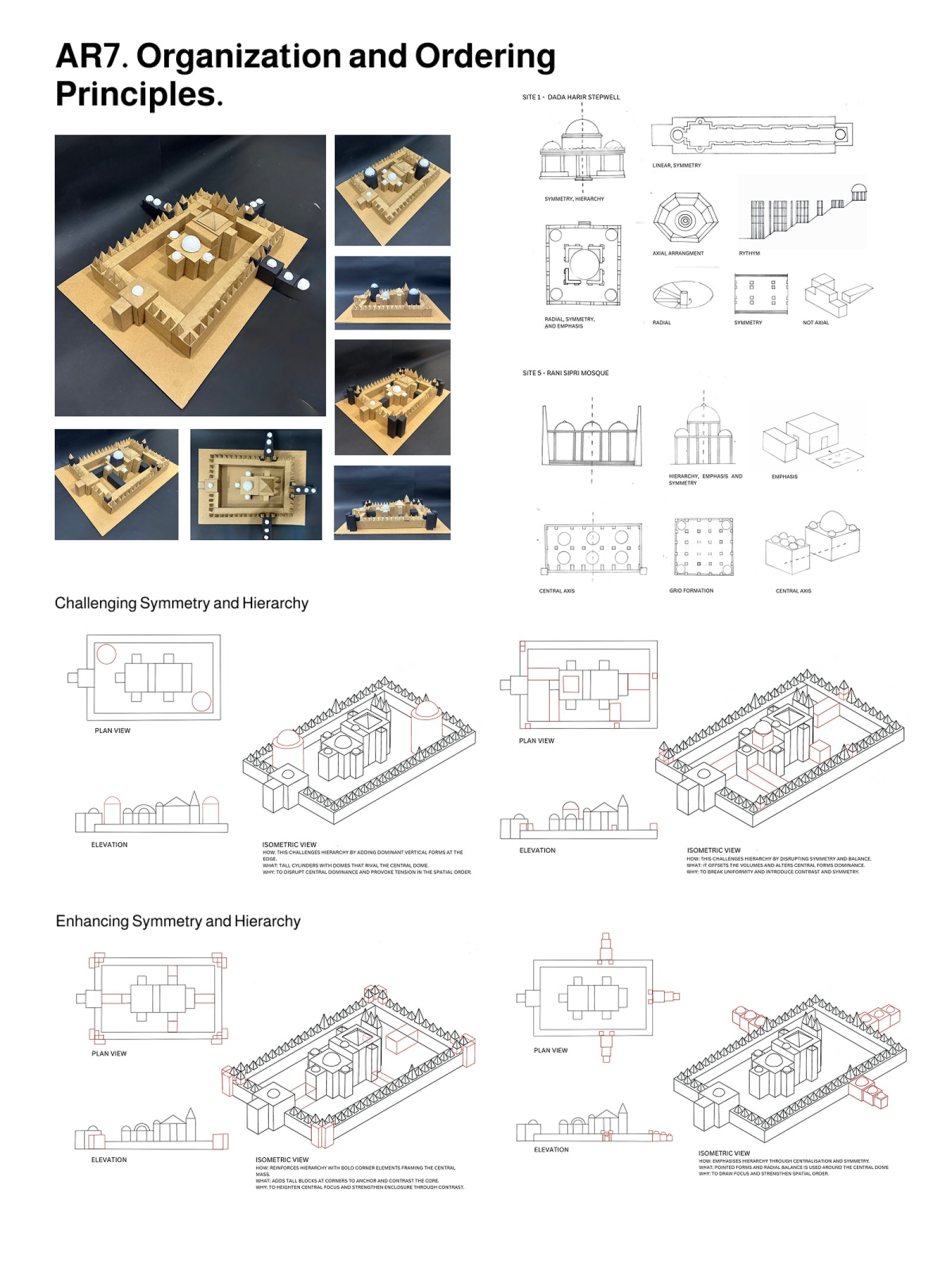
Study of spatial organization and ordering principles through analytical diagrams and physical models, exploring symmetry, hierarchy, axis, and rhythm. The exercise investigates how spatial interventions can challenge or enhance compositional order.

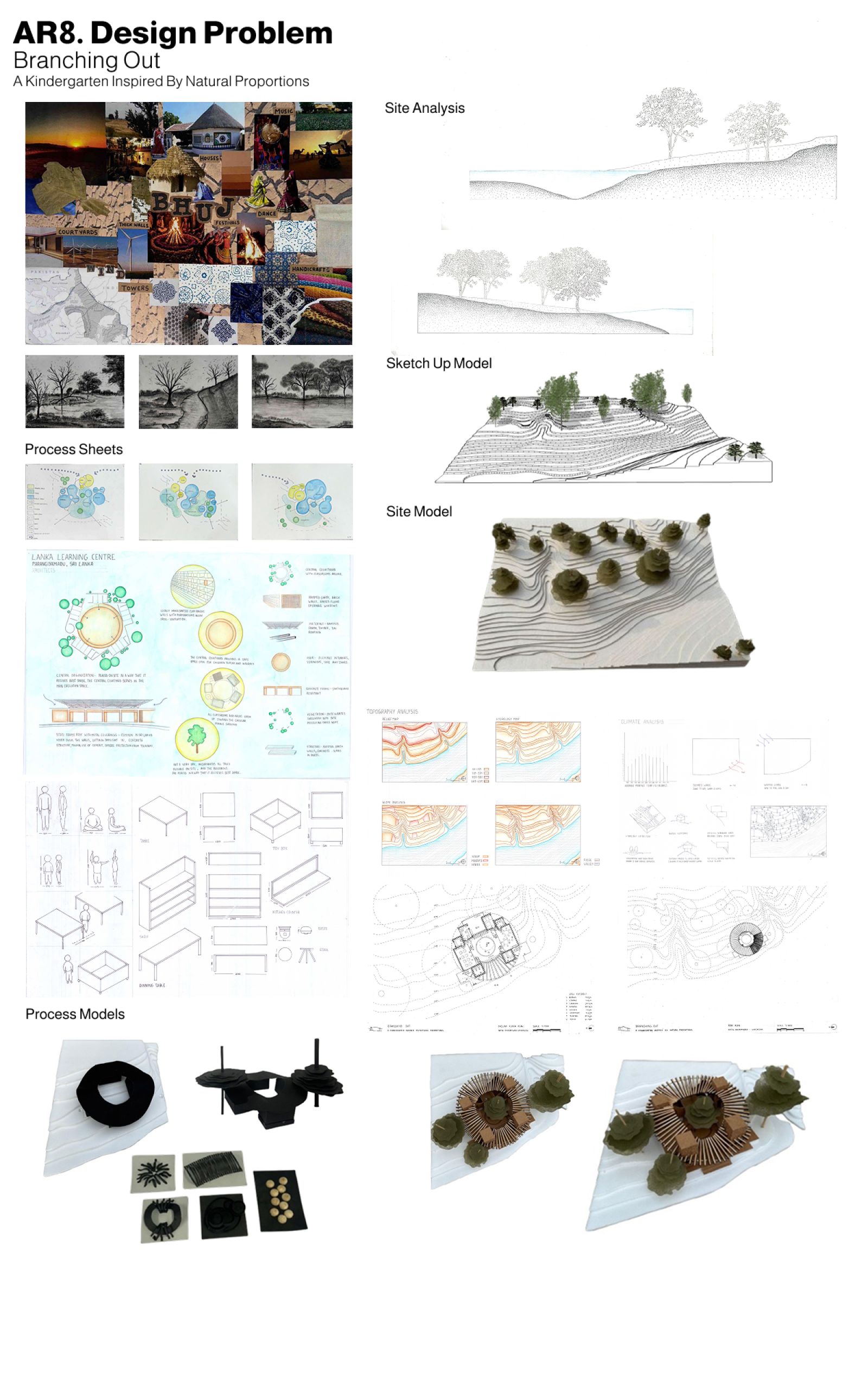
Design exploration for a kindergarten inspired by natural proportions, beginning with site analysis, iterative conceptual development and spatial exploration through diagrams and models.

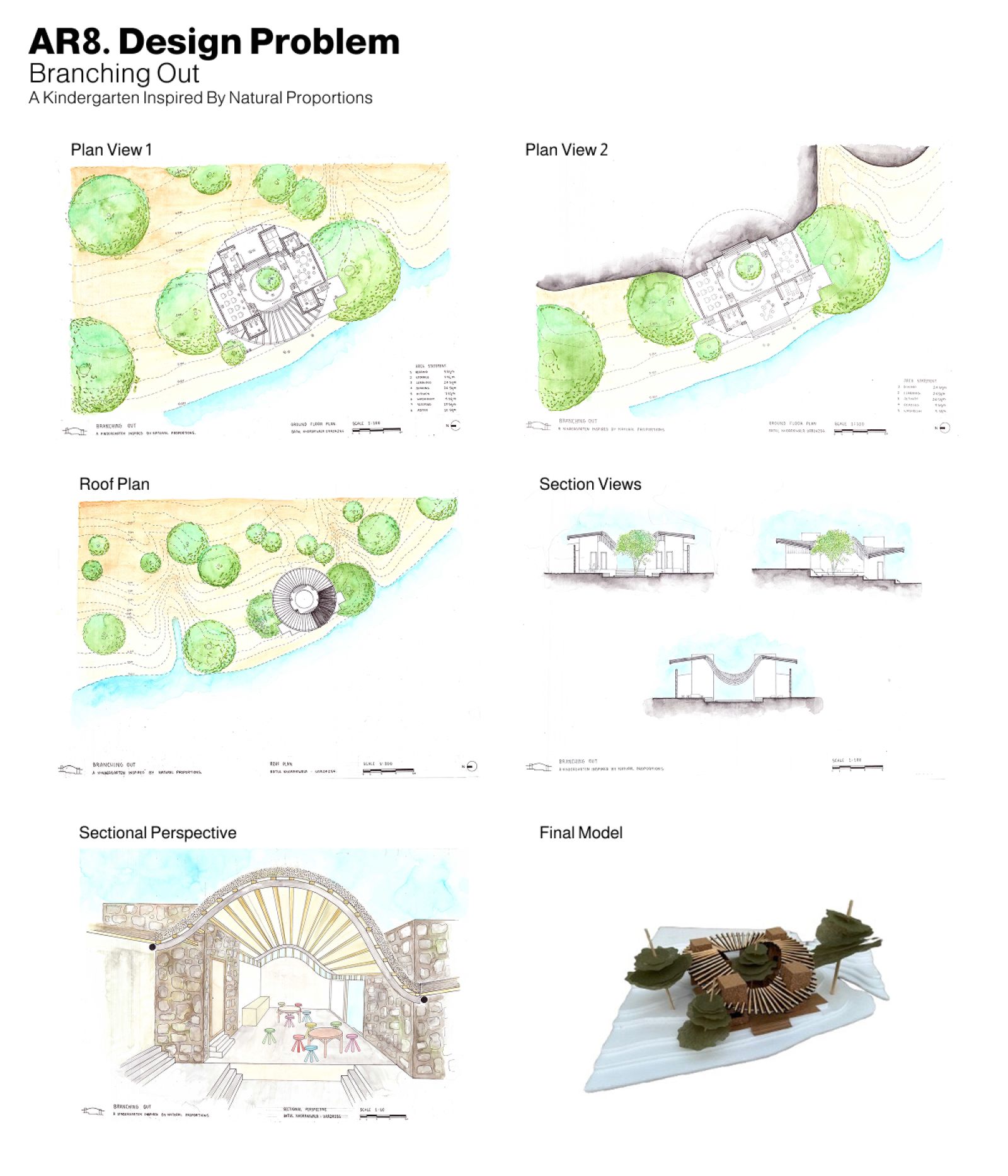
Final design drawings and model for a nature-inspired kindergarten, developed through careful site integration, spatial planning, and material expression.