Dhwiti Darji

CFP009

UAR24261

The CEPT Foundation Programme studio is an introduction for students fresh out of school to the rigor and work habits required by an undergraduate degree at CEPT University. The studio is conceptualized as a series of sequentially planned exercises, through which students develop skills and abilities, which are then deployed to address increasingly complex problems falling into four broad categories: visualize and draw, make and learn, analyze and interpret and conceptualize and represent. The exercises are designed to provide common and allied foundational skills and abilities for students across disciplines at CEPT, between which they maintain a balance. The studio is taught through intensive and incremental weekly modules, focusing on a particular skill or ability and a process that emphasises ongoing discussion and feedback in addition to expert faculty lectures.

Report Content

The Spring semester of 2025 focused on group work, which included field trips to Fort Kochi and Bhuj, as well as exploring new ideas through exciting modules.

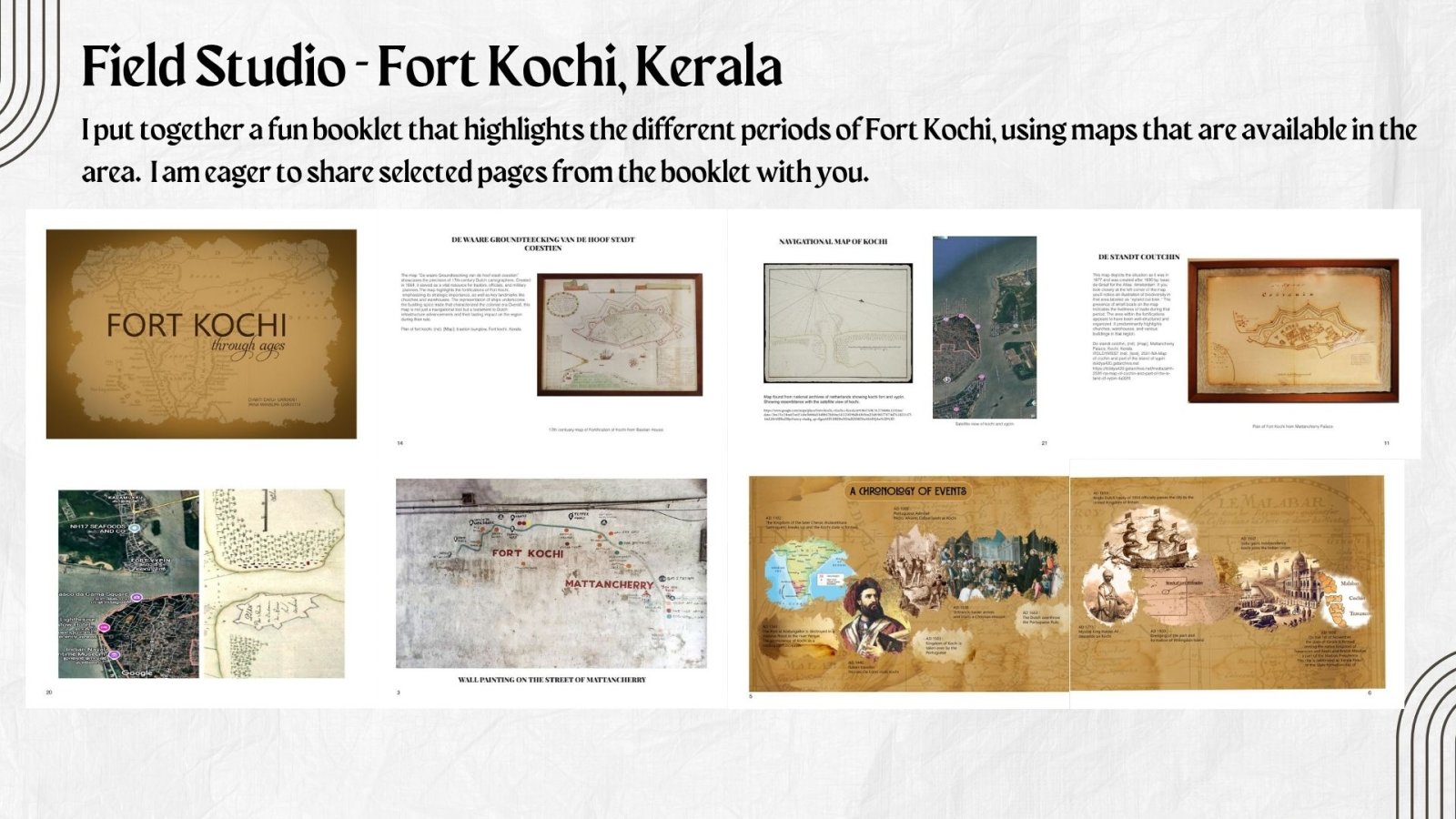
Our Semester 2 begins with a field studio in Fort Kochi. With three site locations—Fort Kochi, Vypeen, and Mattancherry—we explored these areas over the course of 2-3 days to gain a better understanding of them. We also paid close attention to the maps found in the museum and even on the streets. After our exploration, we decided to create a booklet about Fort Kochi, in which we explained the history of various places using maps from different eras. The assistance of the locals and their stories greatly simplified our task, allowing us to create something meaningful.

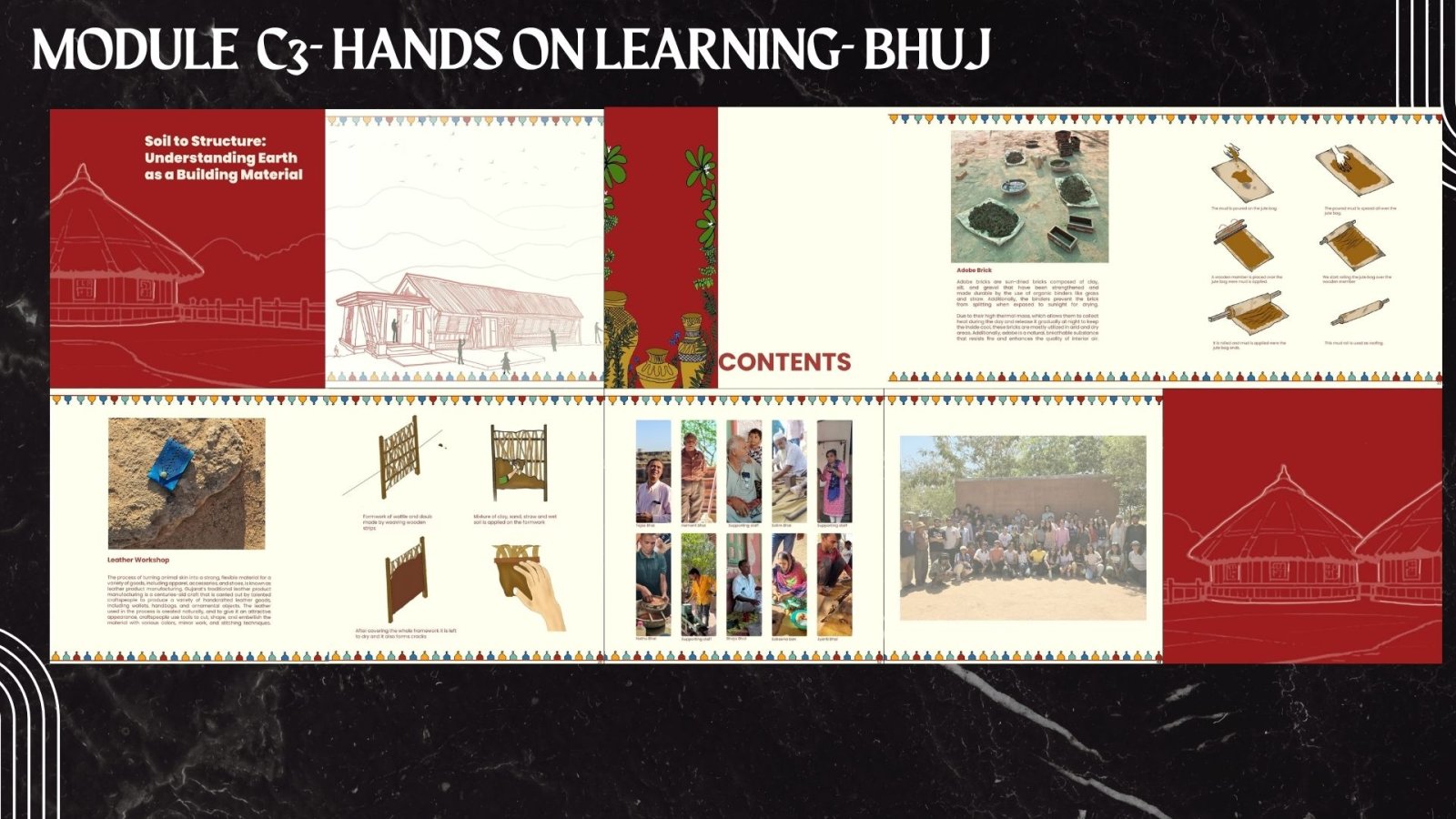
Bhuj was a place where we truly felt like laborers, yet we enjoyed it even more than Fort Kochi. This module focused on hands-on learning, highlighting the importance of using naturally and locally available materials. It allowed us to gain a better understanding of the area and explore various building construction methods, which we compiled into one booklet.

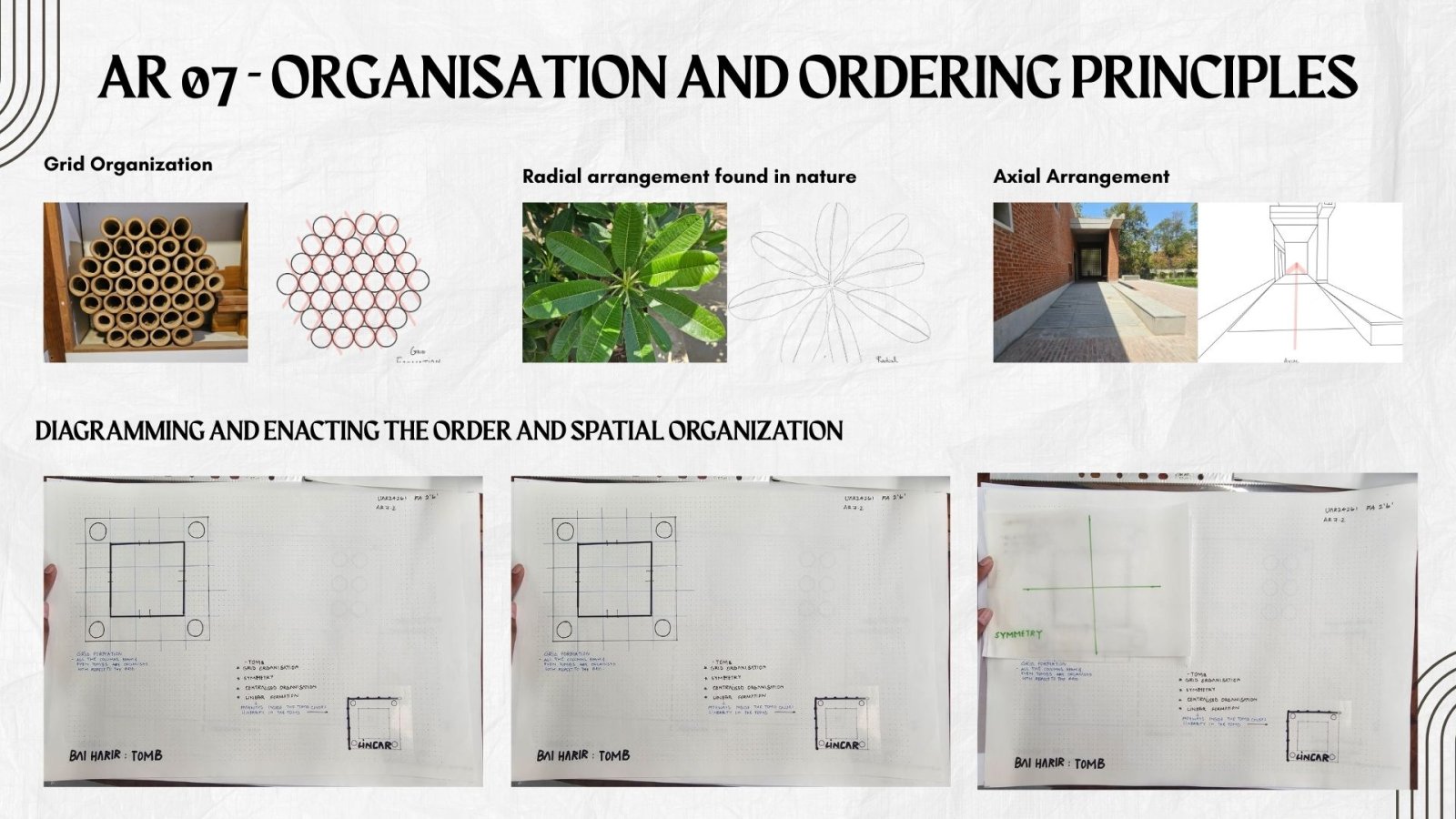
The module focused on understanding design principles and identifying designs and patterns on campus.

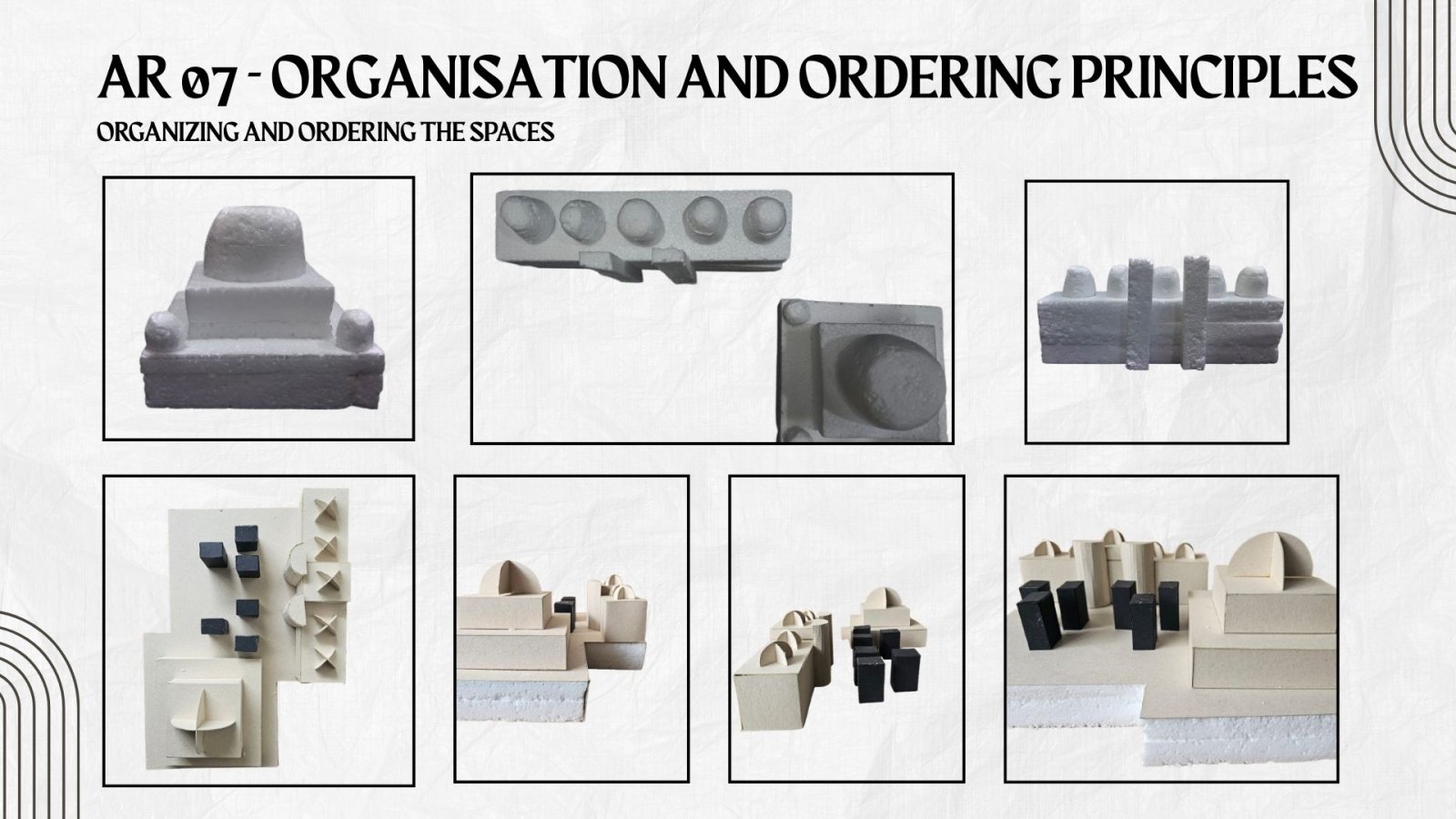
In addition to the previous image and caption, the next task involved recognizing the design principles in the various monuments we see around us. This experience fascinated me, as it highlighted how innovative thinking existed centuries ago. Later, the exercise focused on either breaking or strengthening the existing design principles by adding 30% to the mass volume in relation to the site.

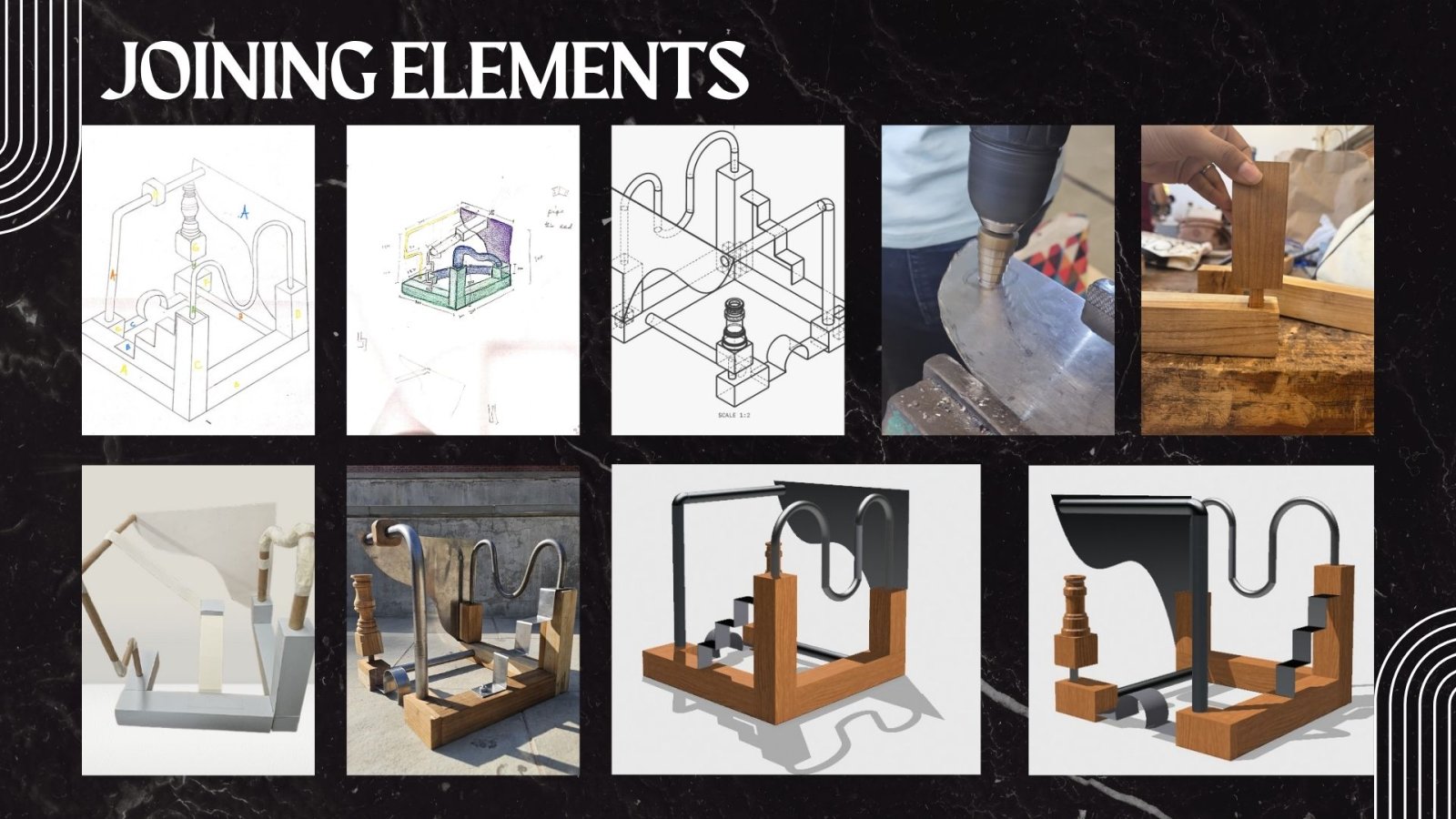
In this module we gained and explored the various types of joinery techniques applicable to different materials. This experience helped us understand the unique properties of each material. Most exciting aspects was working with different tools to achieve our desired outcomes.

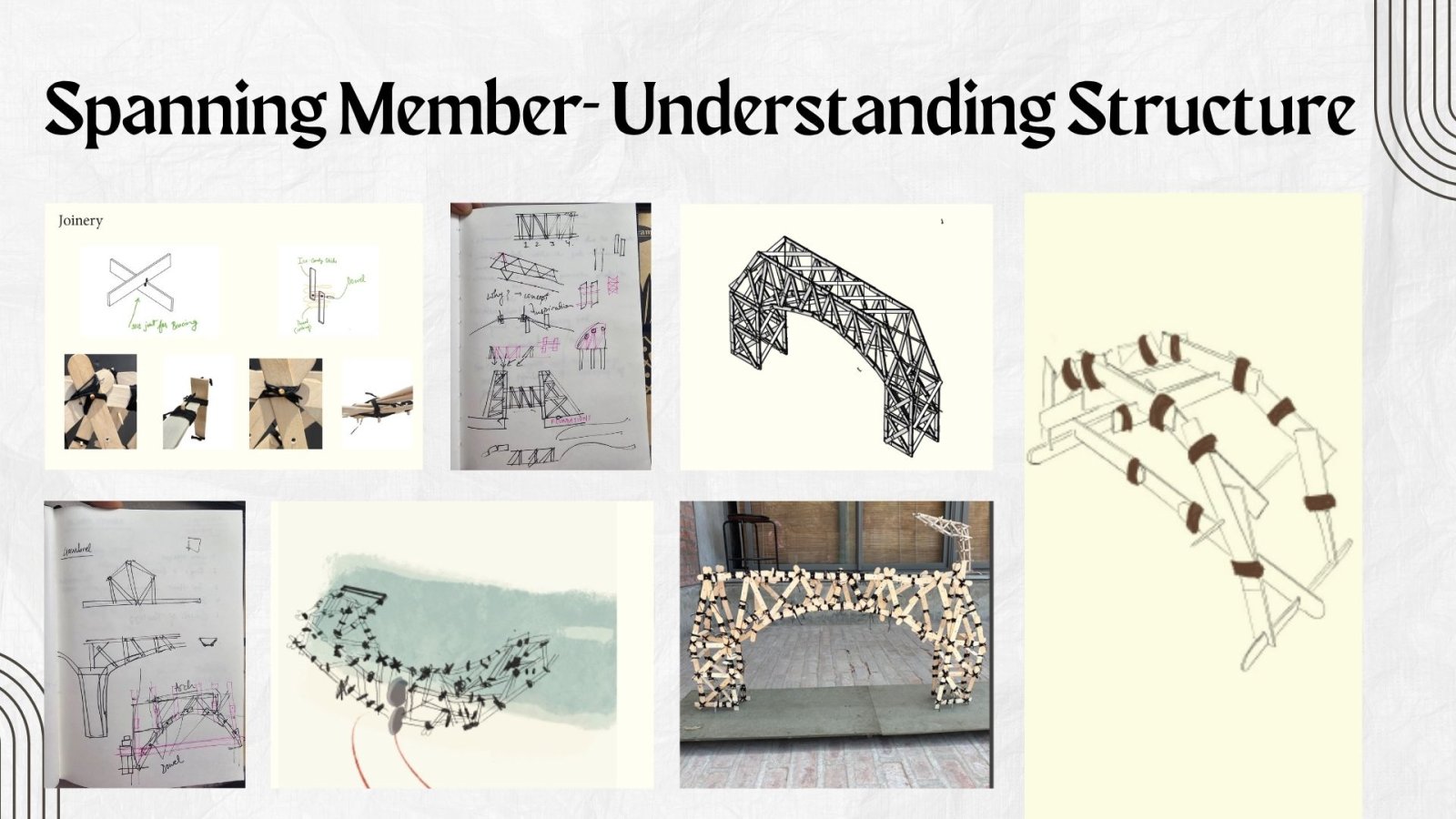
We explore spanning members using sketches, joinery techniques, digital modeling, and physical prototypes. This helps us understand structural integrity, load distribution, and material behavior. It also encourages hands-on experimentation and teamwork in architectural design.

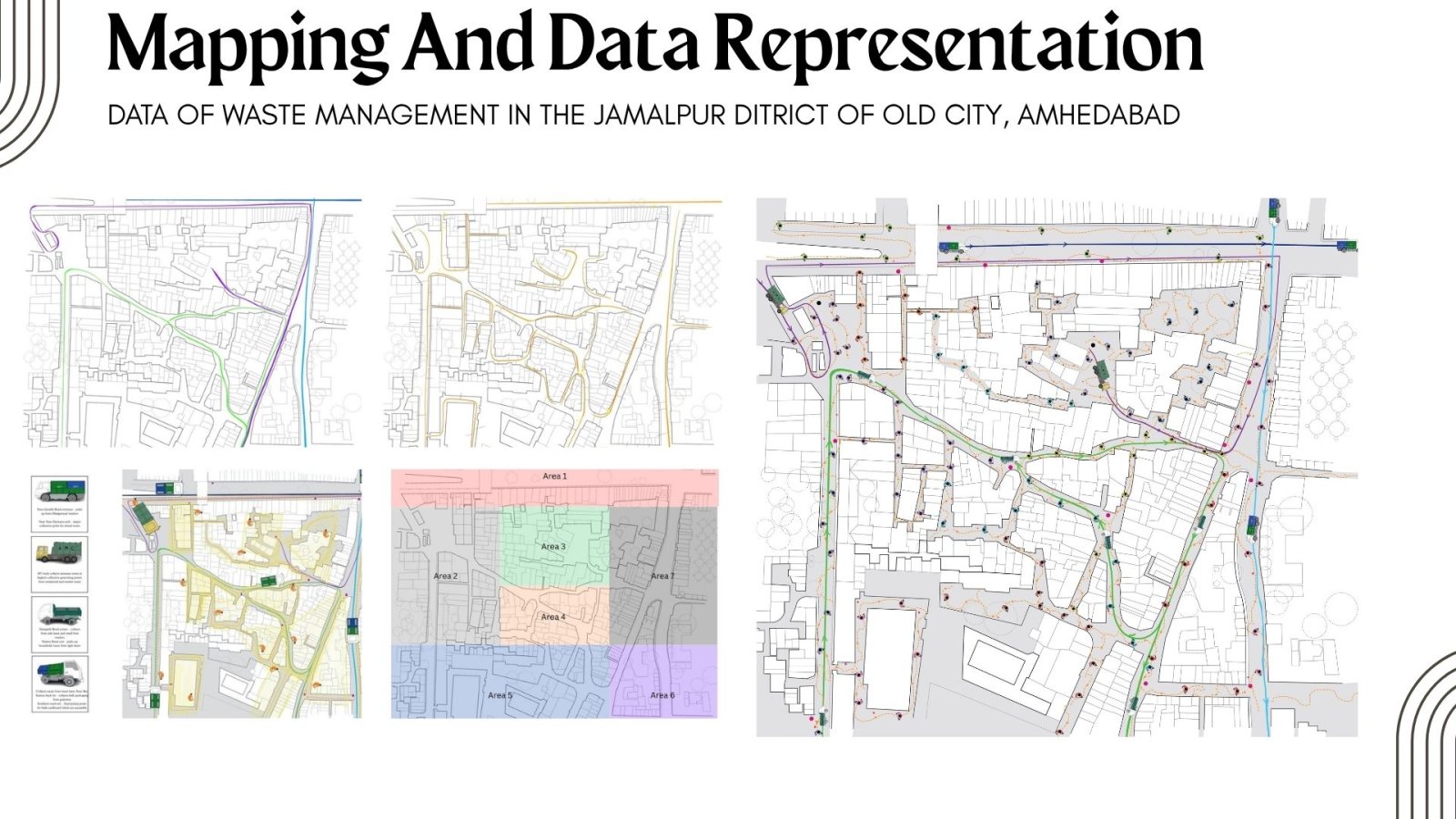
This image illustrates the waste management system in the Jamalpur area of Old Ahmedabad. It includes maps of garbage collection routes, the types of vehicles used, and the division of the area. The study provides insights into how waste is transported throughout the city and identifies potential improvements for the system.