Aabha Swapnil Jagtap

CFP009

UBD24001

The CEPT Foundation Programme studio is an introduction for students fresh out of school to the rigor and work habits required by an undergraduate degree at CEPT University. The studio is conceptualized as a series of sequentially planned exercises, through which students develop skills and abilities, which are then deployed to address increasingly complex problems falling into four broad categories: visualize and draw, make and learn, analyze and interpret and conceptualize and represent. The exercises are designed to provide common and allied foundational skills and abilities for students across disciplines at CEPT, between which they maintain a balance. The studio is taught through intensive and incremental weekly modules, focusing on a particular skill or ability and a process that emphasises ongoing discussion and feedback in addition to expert faculty lectures.

Report Content

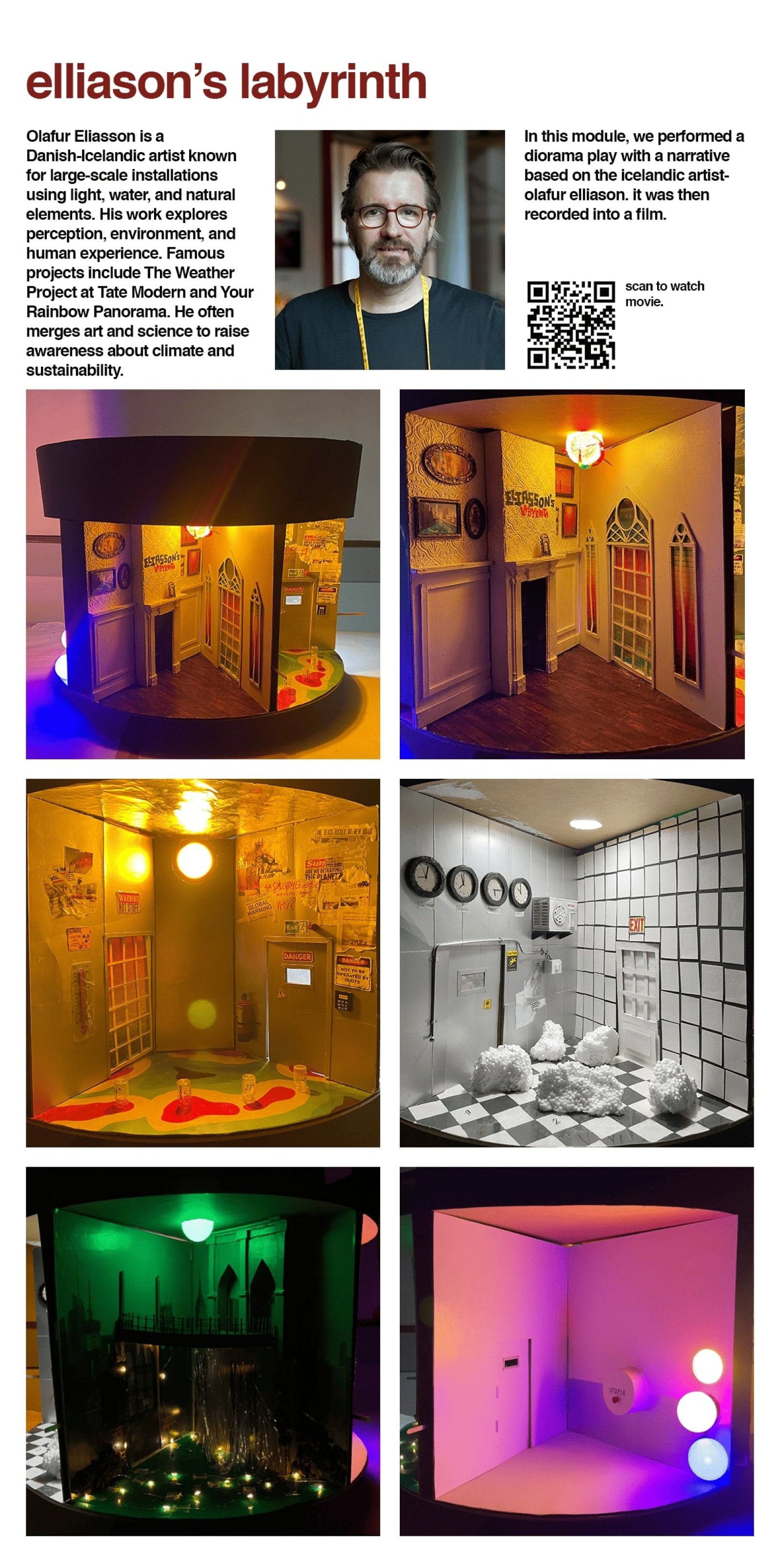
We created a diorama inspired by Olafur Eliasson, presenting it as a play set in an escape room. It explored environmental themes, urging the audience to reflect on climate responsibility. Like Eliasson’s work, it was immersive and thought-provoking, ending with the question: What will you do now?

We redesigned the CFP Studio with the goal of improving focus, interaction, and a stronger sense of community. Our aim was to make the space more adaptable to the changing needs of students and the evolving curriculum. We wanted the studio to support more than just academic work — so we designed it to blend “work, play, and rest,” staying true to CFP’s original vision. In the end, we created a space where users can feel comfortable and motivated to do their best.

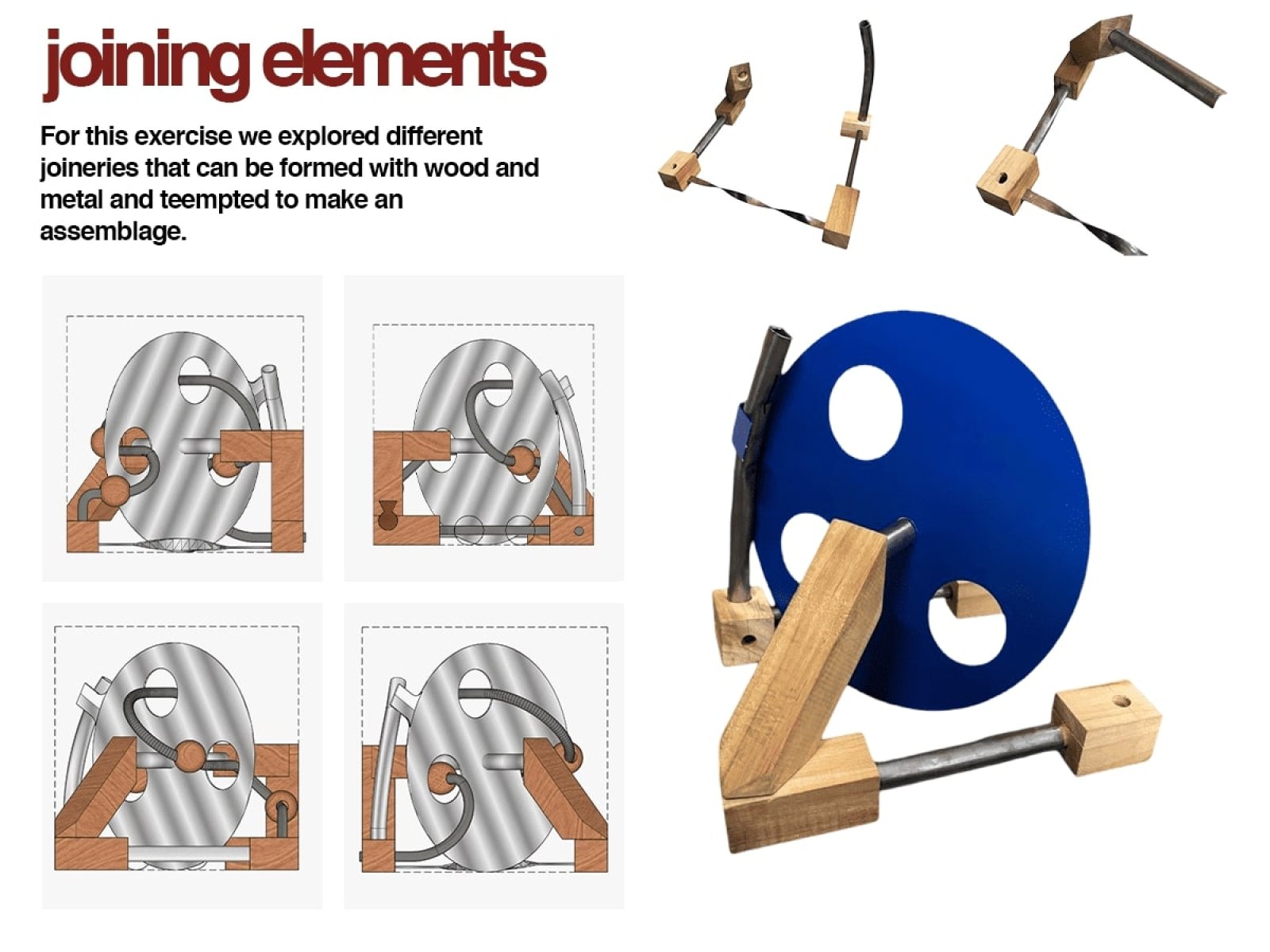
We explored joineries using wood, metal rods, pipes, and plates, experimenting with how these materials could come together. Through this process, we built a structure that we tried to make interactive

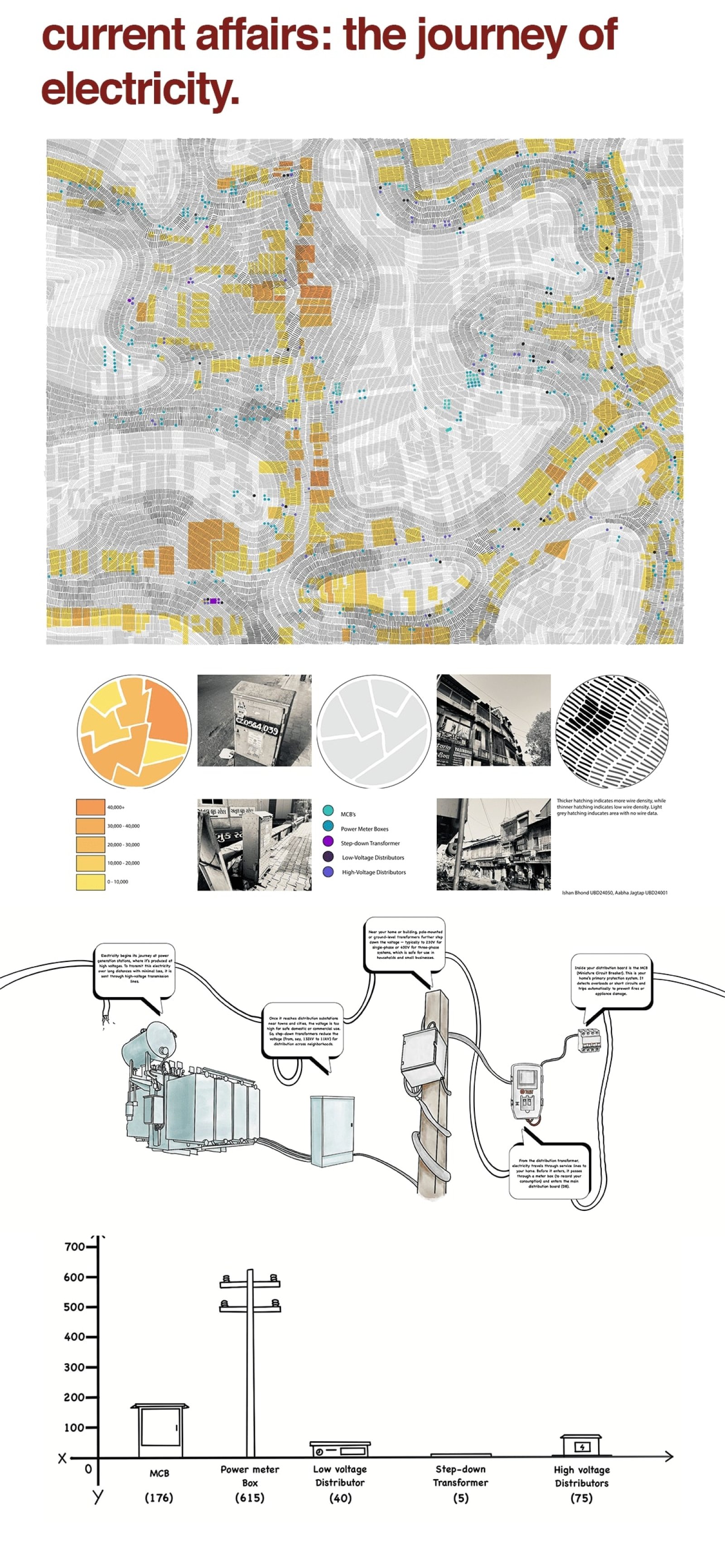
We visited the Old City of Ahmedabad and mapped all the visible components of its electrical system. Our goal was to understand how the network functions by identifying and analyzing the ratio of different components required to build and maintain the electricity infrastructure.

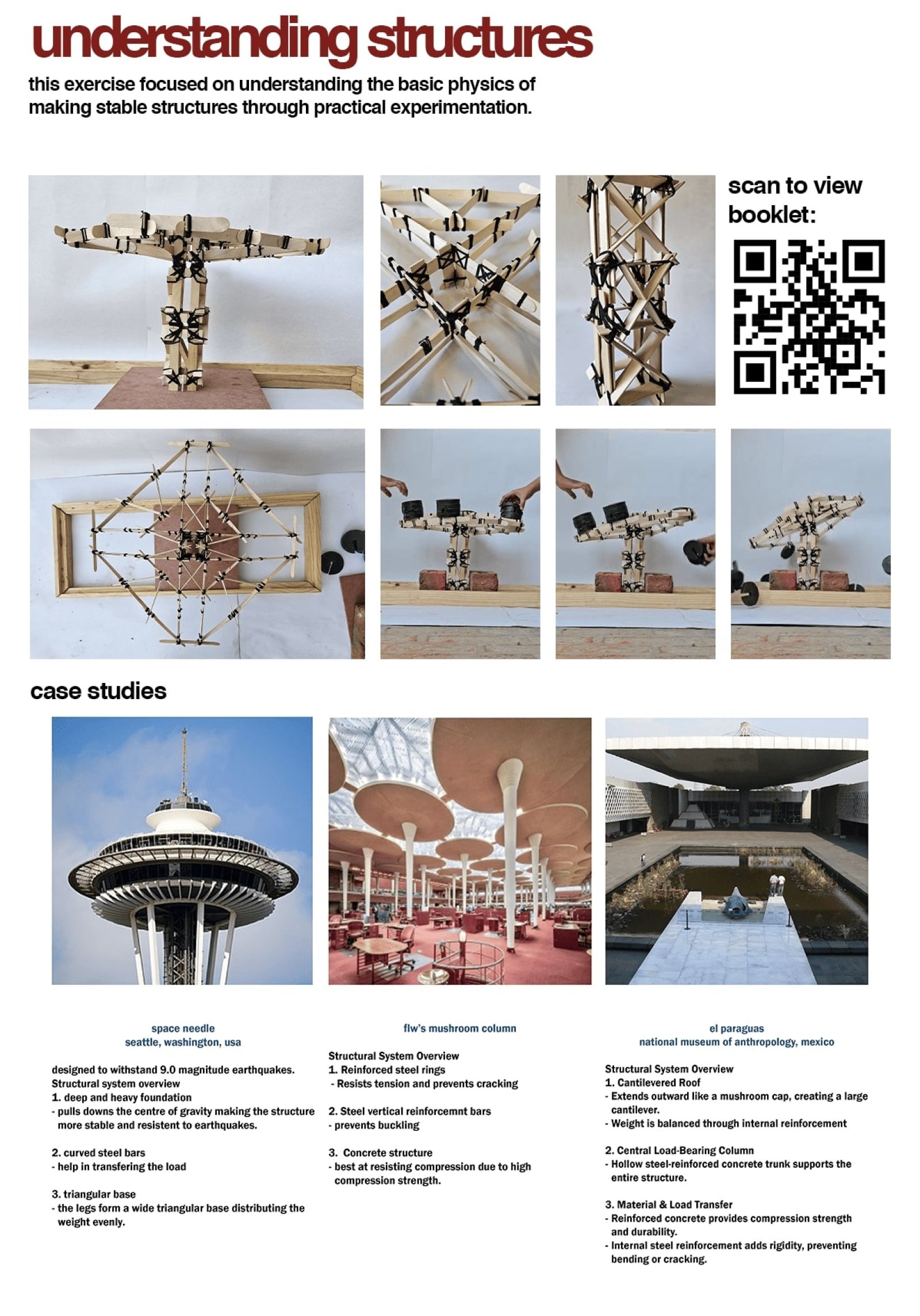
Through this assignment, we learned the basic physics behind structural design and experimented with multiple iterations of a cantilever plate. We studied real-world case studies to understand how cantilevers work, and then built our own versions using ice cream sticks. Each version was tested for load-bearing capacity, allowing us to compare our final structure with earlier prototypes.

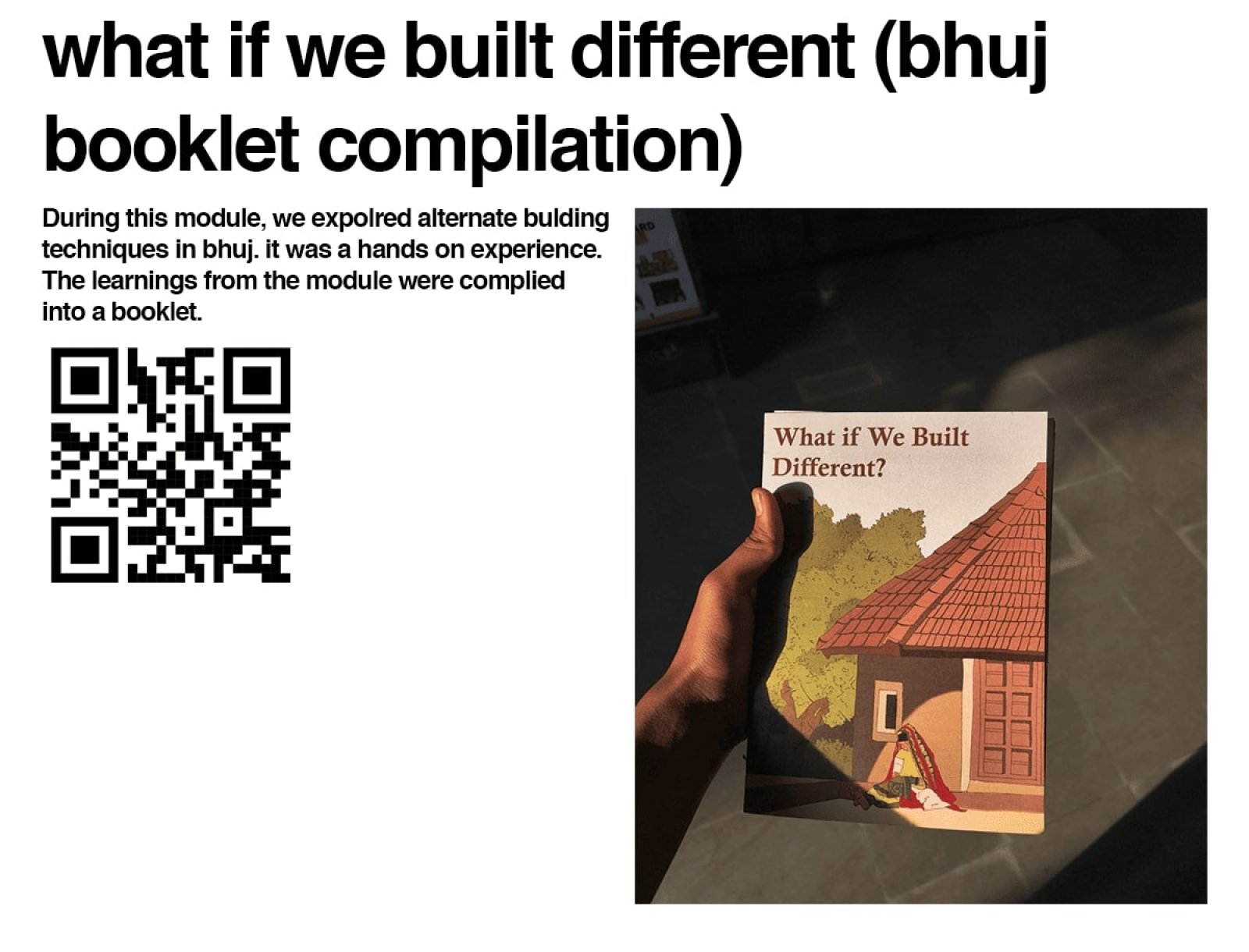
We explored alternative building techniques during our visit to Bhuj and had the opportunity to try some of them hands-on. Alongside this, we also learned about local crafts such as leatherwork and bell making. All our learnings and observations were compiled into a comprehensive booklet.