Aanya Saraf

CFP009

UBD24003

The CEPT Foundation Programme studio is an introduction for students fresh out of school to the rigor and work habits required by an undergraduate degree at CEPT University. The studio is conceptualized as a series of sequentially planned exercises, through which students develop skills and abilities, which are then deployed to address increasingly complex problems falling into four broad categories: visualize and draw, make and learn, analyze and interpret and conceptualize and represent. The exercises are designed to provide common and allied foundational skills and abilities for students across disciplines at CEPT, between which they maintain a balance. The studio is taught through intensive and incremental weekly modules, focusing on a particular skill or ability and a process that emphasises ongoing discussion and feedback in addition to expert faculty lectures.

View Additional Work
Report Content

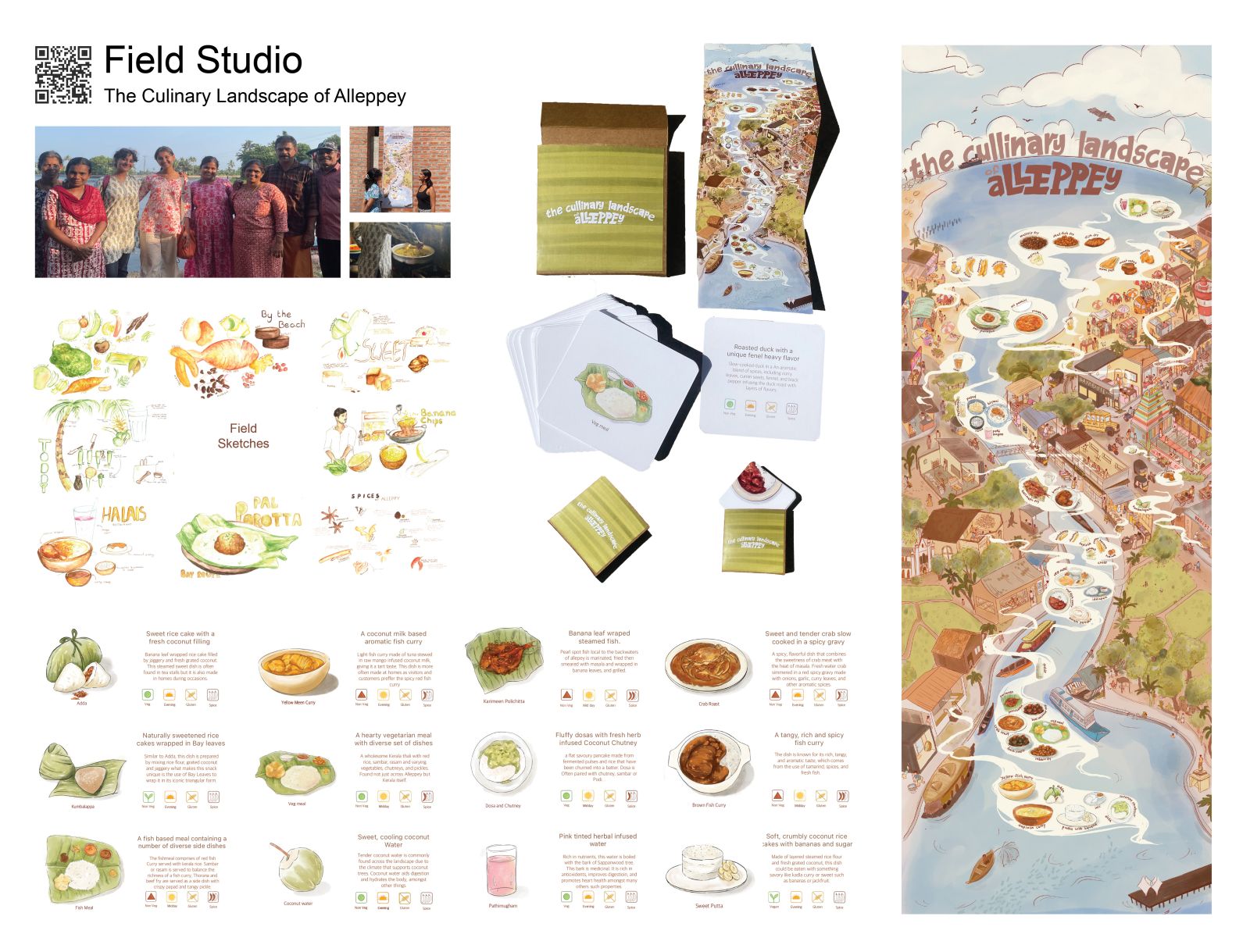
Alleppey’s food reflects its geography, culture, and daily rhythms. We’ve created an illustrated food map that captures this culinary landscape—from beachside snack stalls and canal-side tea shops to toddy shops tucked into the backwaters. Complementing the map are food cards that explore each dish’s flavors, preparation, and cultural significance, with icons denoting spice levels, dietary info, and ideal eating times. Together, the map and cards offer a sensory journey through Alleppey’s food culture.

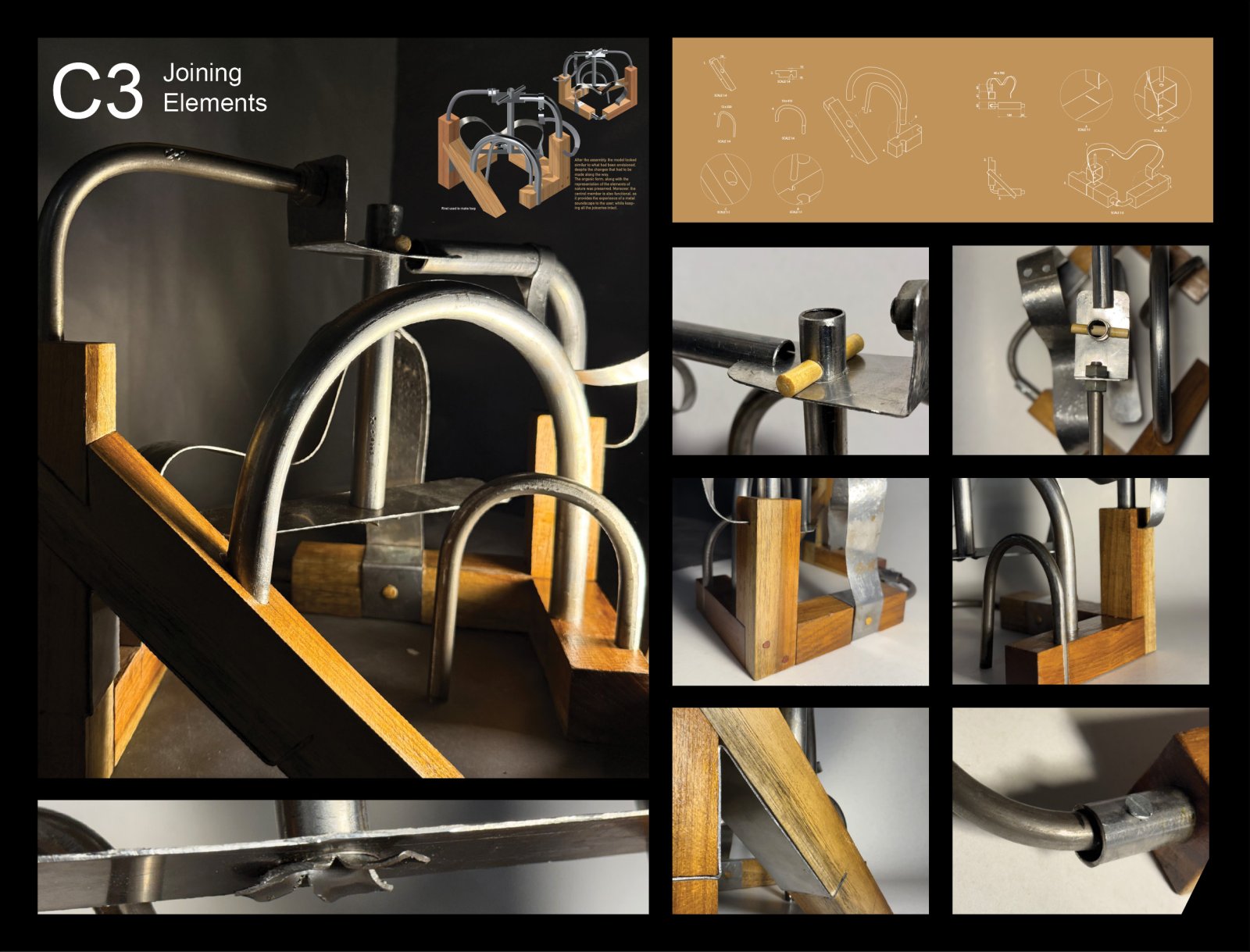
nspired by the elements, the model uses organic forms like curves, bends, and helices to evoke their essence. A central rotating joinery was designed to explore sound through material interaction, adding a dynamic, soundscape.

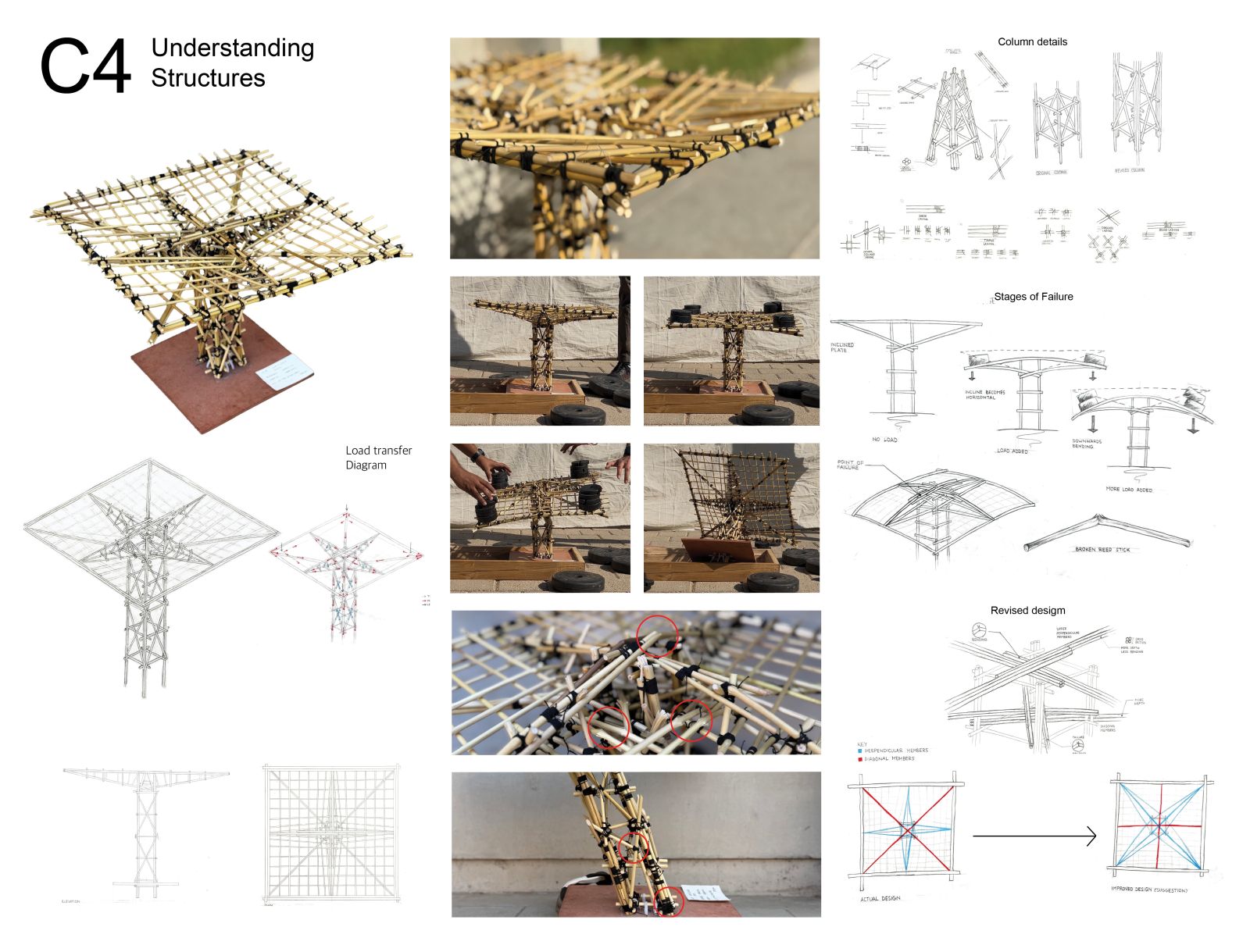
Through trial and error, we gained a hands-on understanding of structural forces and design. Challenges with material behavior and last-minute flaws led to key refinements, resulting in a cantilever plate that met the brief and held up to 10 kg.

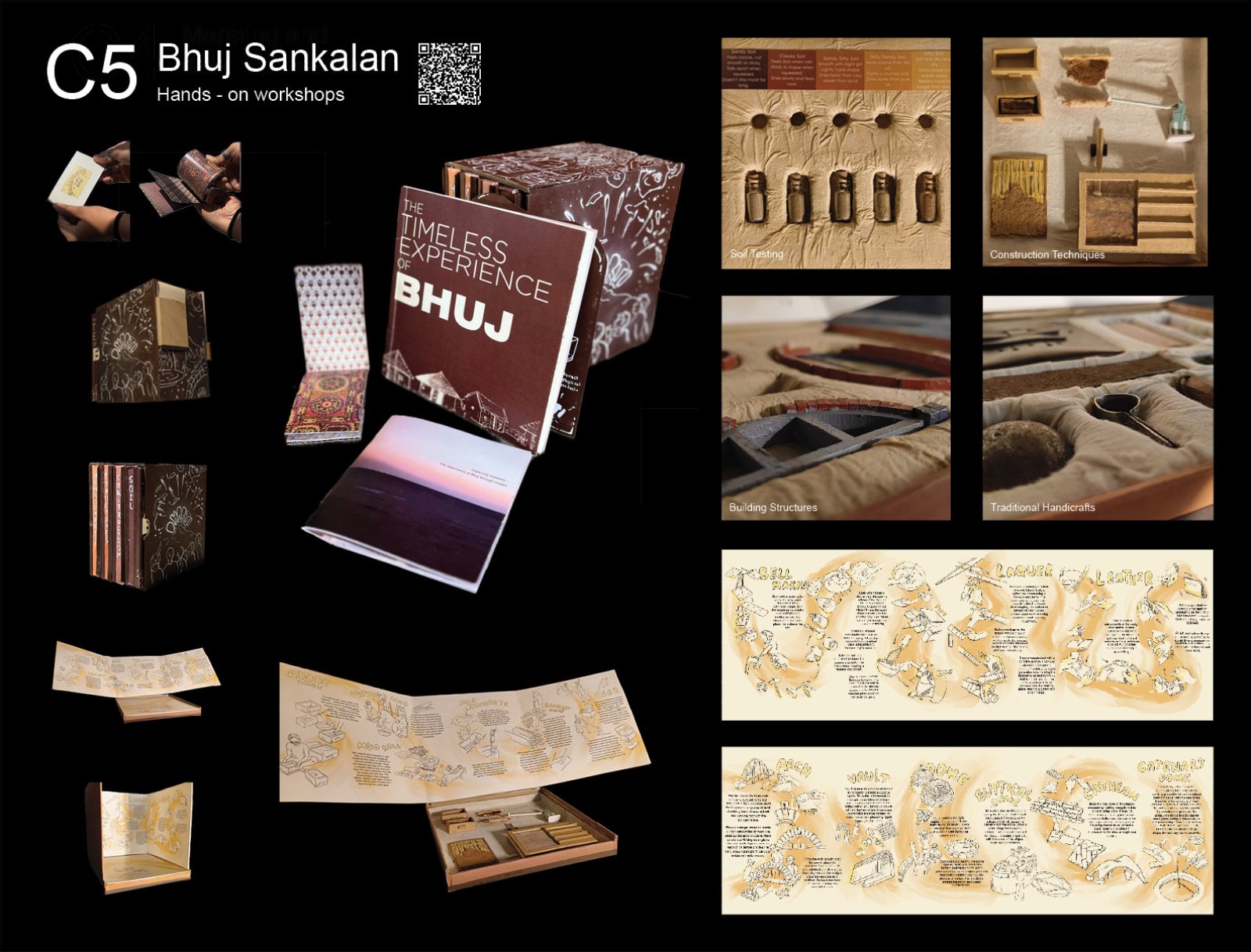
This book set invites you into our journey of exploring Bhuj’s rich vernacular. Each compartment houses a tactile kit designed to inform and engage, featuring interactive elements alongside a booklet, a photo bank, and a flipbook. Together, these components offer layered narratives that spark curiosity through texture, form, and material exploration.

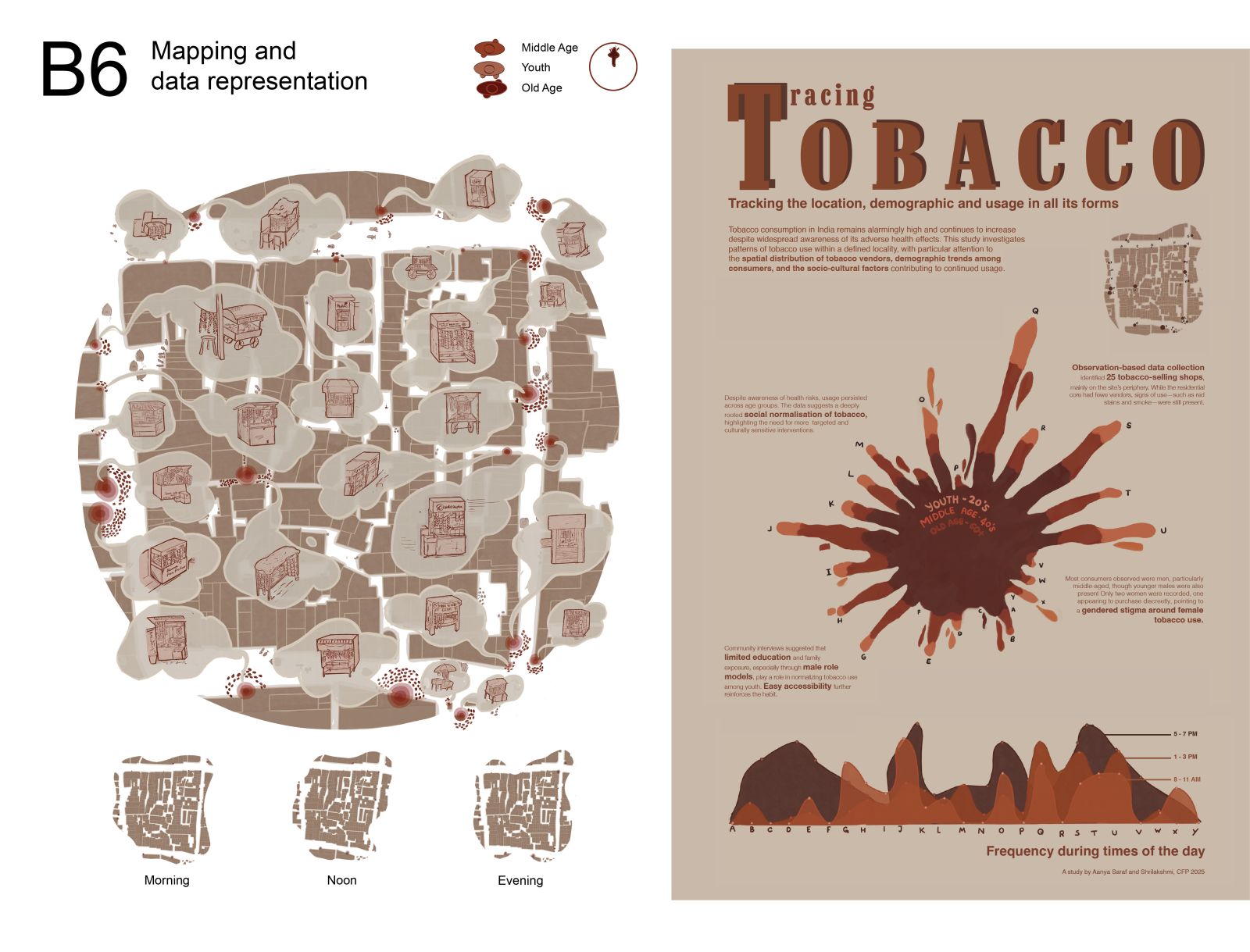
This map charts 25 tobacco vendors and age-based consumer patterns in a 250×250m area of Ahmedabad’s old city. Through timed observations, it reveals spatial clustering, vendor types, and socio-demographic trends linked to tobacco use and public health.

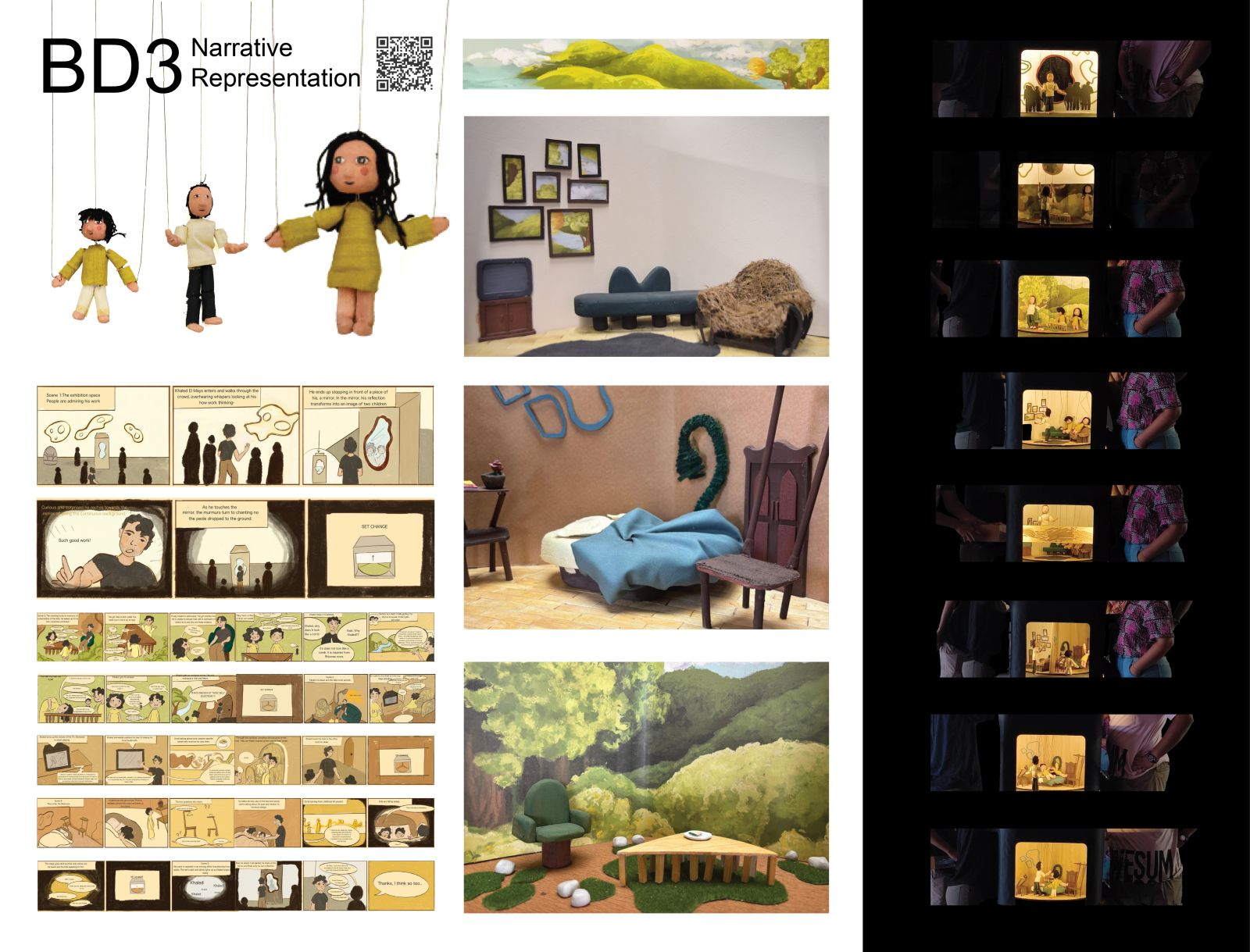
In this whimsical puppet show, Khaled El Mays- a known furniture designer from Lebanon- drifts into a quiet dialogue with himself, guided by two playful children who represent facets of his inner voice. Through their exchanges, questions of creativity, craft, and purpose unfold, offering glimpses into the designer’s inspirations and philosophy. The performance reflects both personal and universal moments of doubt, leaving space for open-ended interpretation

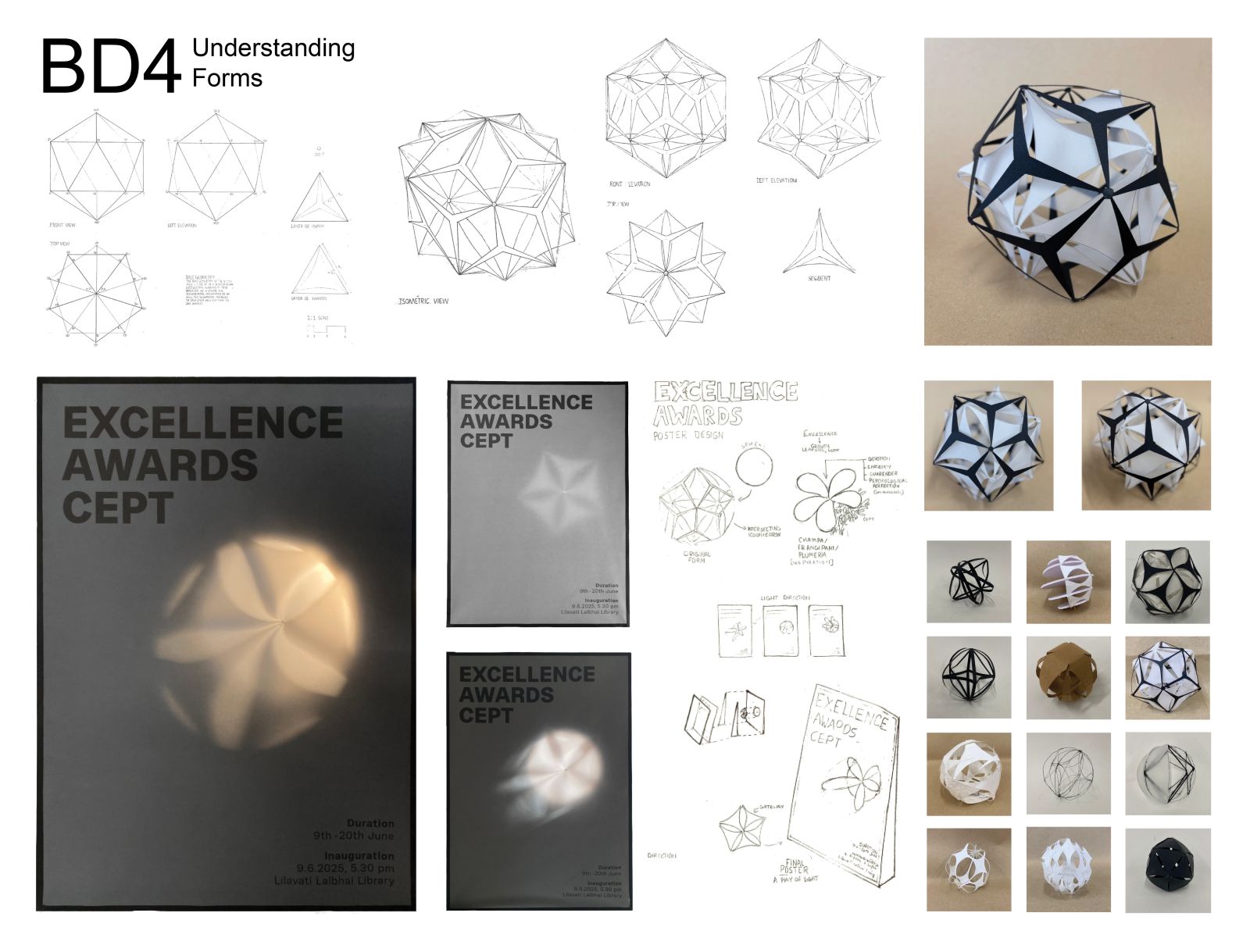
Designed for the CEPT Excellence Awards, this poster explores themes of sincerity, persistence, growth, and progress—qualities tied to the idea of excellence. The form draws from a sphere created by intersecting icosahedrons, generating a flower-like geometry inspired by the Champa, a symbol of these values and a familiar presence on campus. Light and shadow were used to evoke the Champa’s organic softness and the quiet strength it represents.

This project encouraged a process-oriented approach to design, grounded in reflection, collaboration, and continuous learning. Working within a diverse group helped refine my role and perspective, while hands-on exploration revealed that work evolved best through iteration. It became clear, through this process that neither design nor learning as a whole can be considered a linear process.

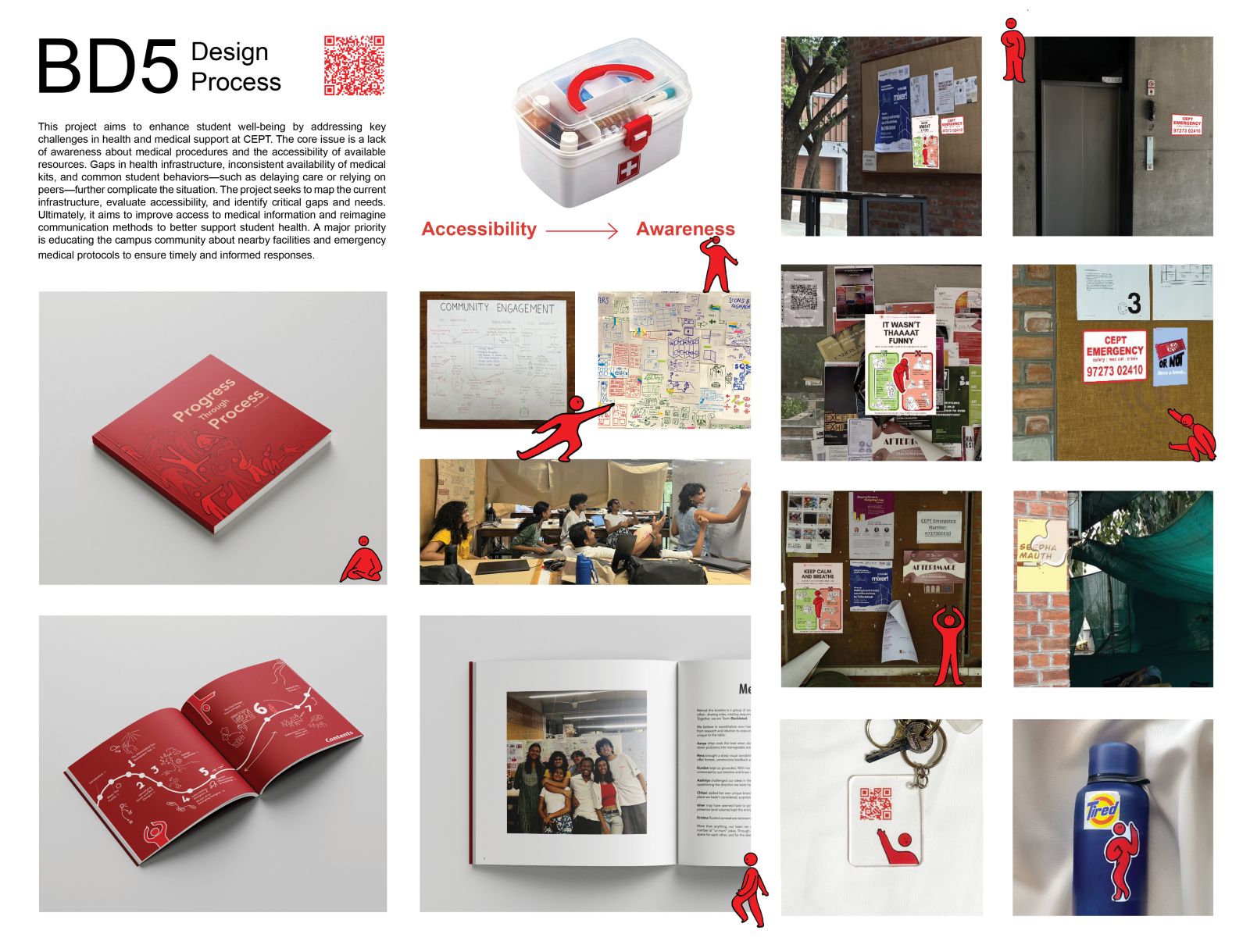
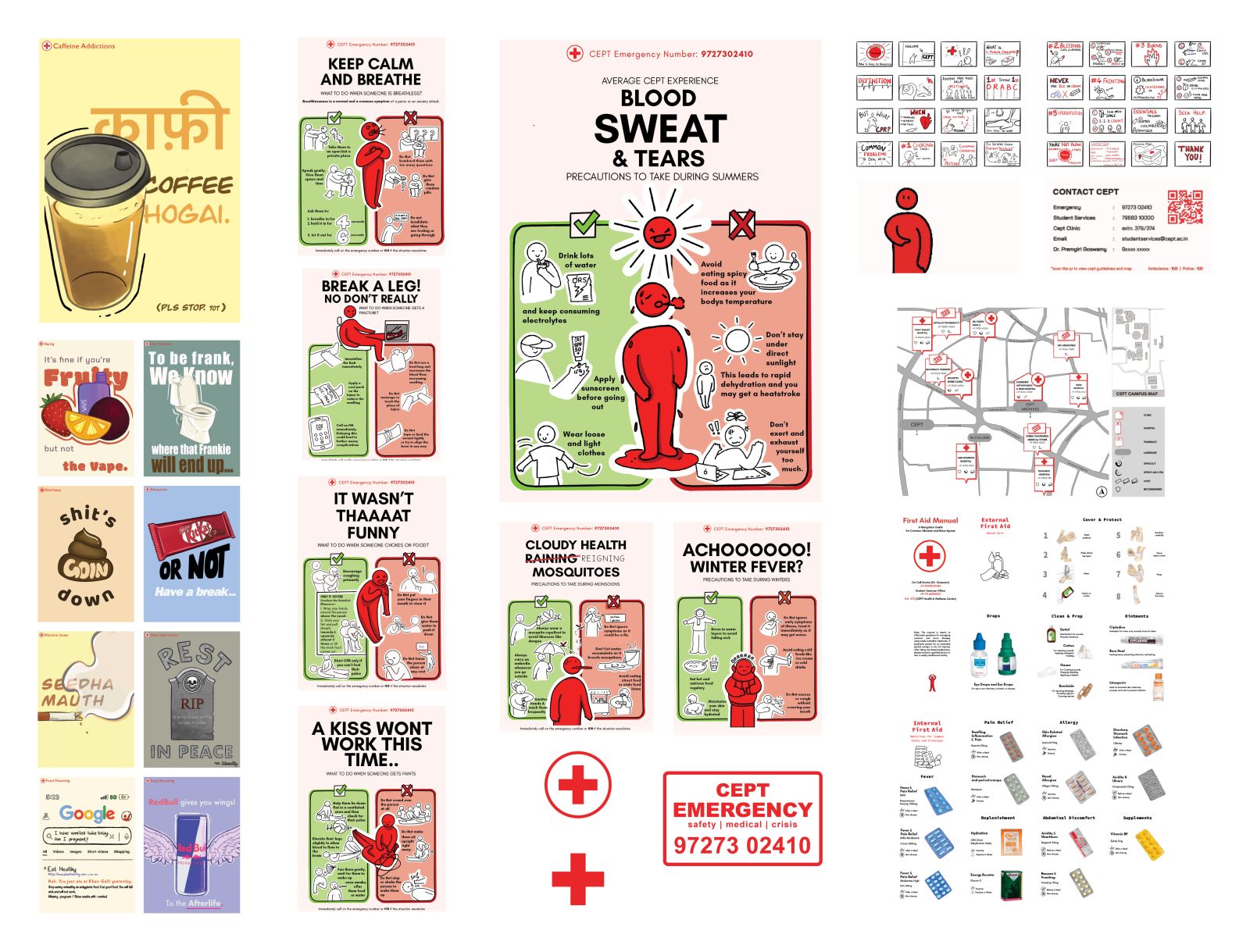
Despite available health facilities at CEPT, many students lack awareness of medical procedures and resources, leading to delayed care and underused infrastructure. To address this, we propose a set of interconnected solutions focused on awareness, accessibility, and preparedness. These include improved medikits with visual guides and clinic maps, engaging pre-arrival training and certified volunteer programs, clear signage led by a mascot named SpotMan, and bold, informative posters. Together, these interventions aim to build a safer, more informed campus culture around health and wellness.