Samriddhi

CFP009

UBD24094

The CEPT Foundation Programme studio is an introduction for students fresh out of school to the rigor and work habits required by an undergraduate degree at CEPT University. The studio is conceptualized as a series of sequentially planned exercises, through which students develop skills and abilities, which are then deployed to address increasingly complex problems falling into four broad categories: visualize and draw, make and learn, analyze and interpret and conceptualize and represent. The exercises are designed to provide common and allied foundational skills and abilities for students across disciplines at CEPT, between which they maintain a balance. The studio is taught through intensive and incremental weekly modules, focusing on a particular skill or ability and a process that emphasises ongoing discussion and feedback in addition to expert faculty lectures.
Report Content

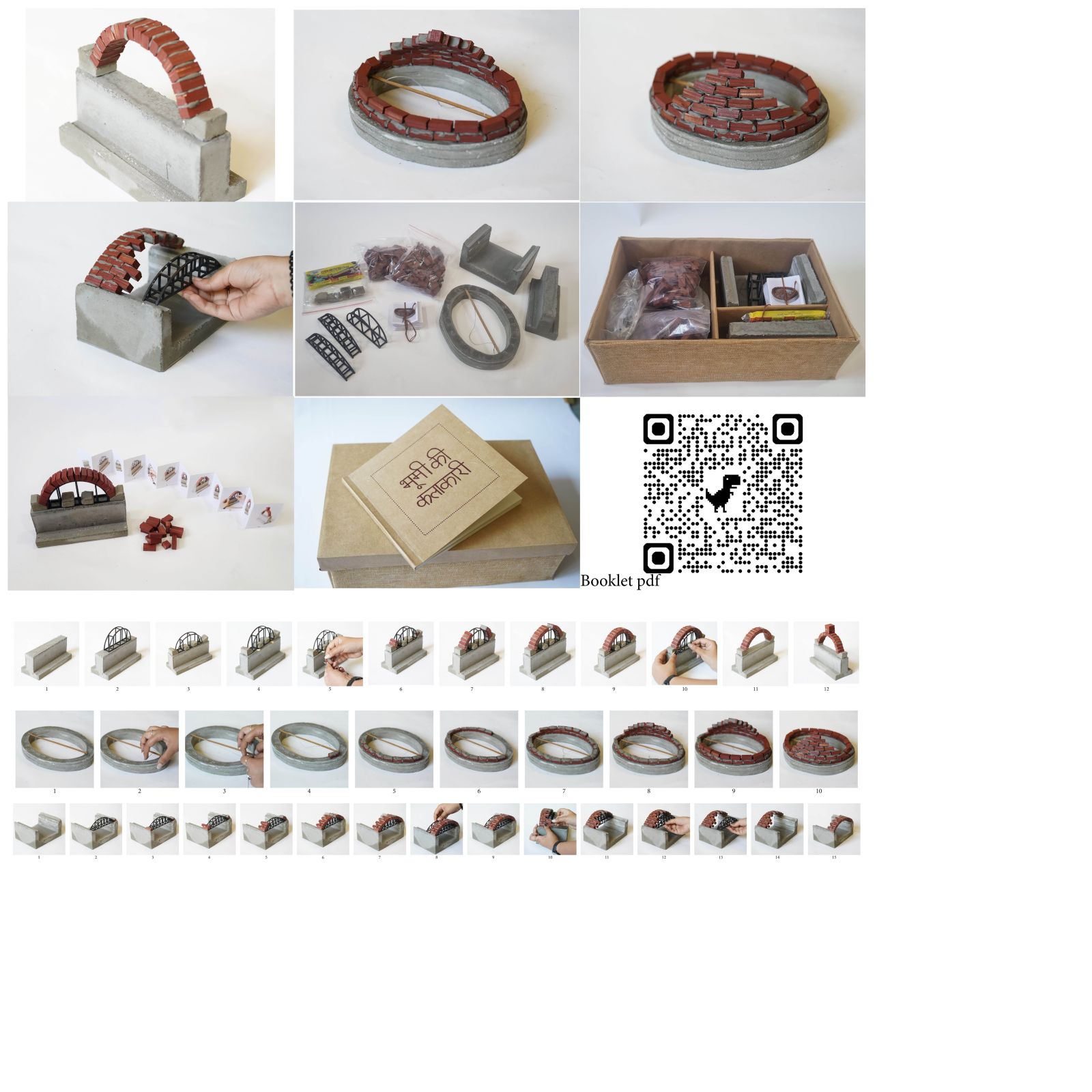
A 1:10 scale DIY kit developed to recreate the hands-on experience of building in Bhuj. Assembled brick by brick, it captures the essence of traditional masonry techniques through playful, tactile engagement and the process of learning through making.

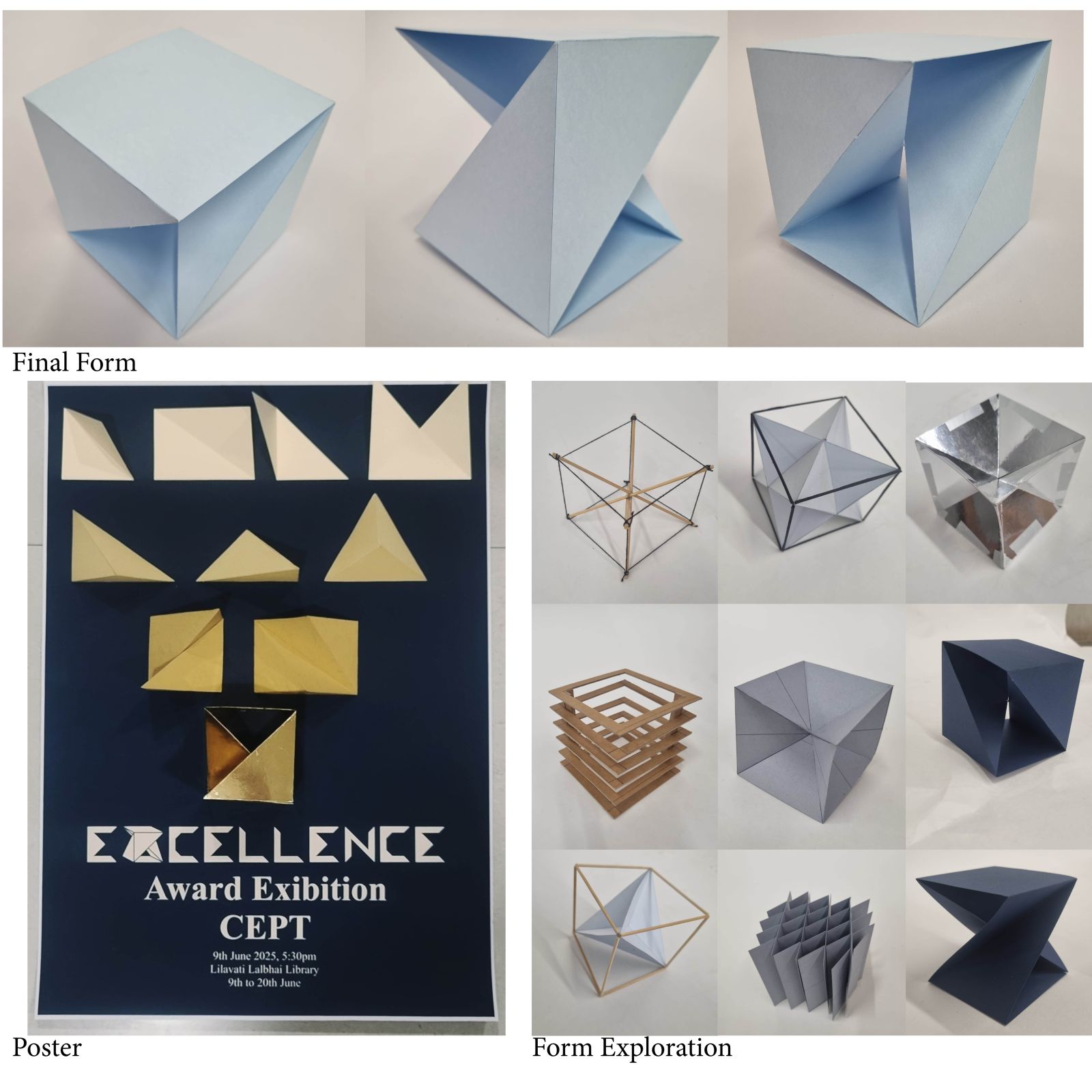
The final form is a modified version of a cube, created by twisting a single rectangular sheet of paper. After exploring many different directions, this simple yet dynamic geometry stood out. The process of exploration and the final form were also brought together visually in the Excellence Award Exhibition poster

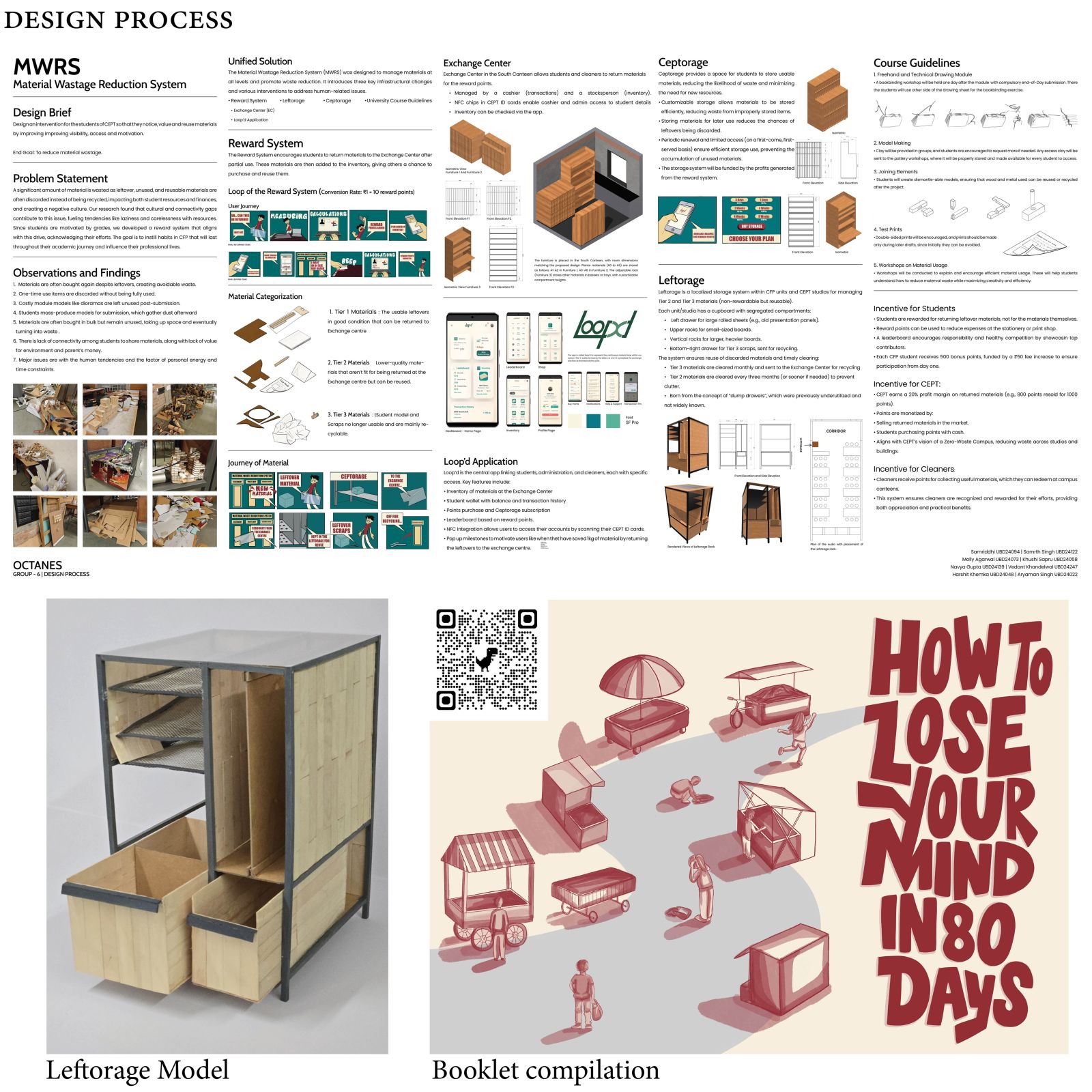
In the allied module ‘Design Process,’ we chose to address the issue of material wastage in design and architecture colleges. Our aim was to create a system that encourages reuse and responsible disposal through practical solutions like the Leftorage unit, reward-based incentives, and a digital exchange platform. The full process and outcome are captured in the model and the compiled booklet.

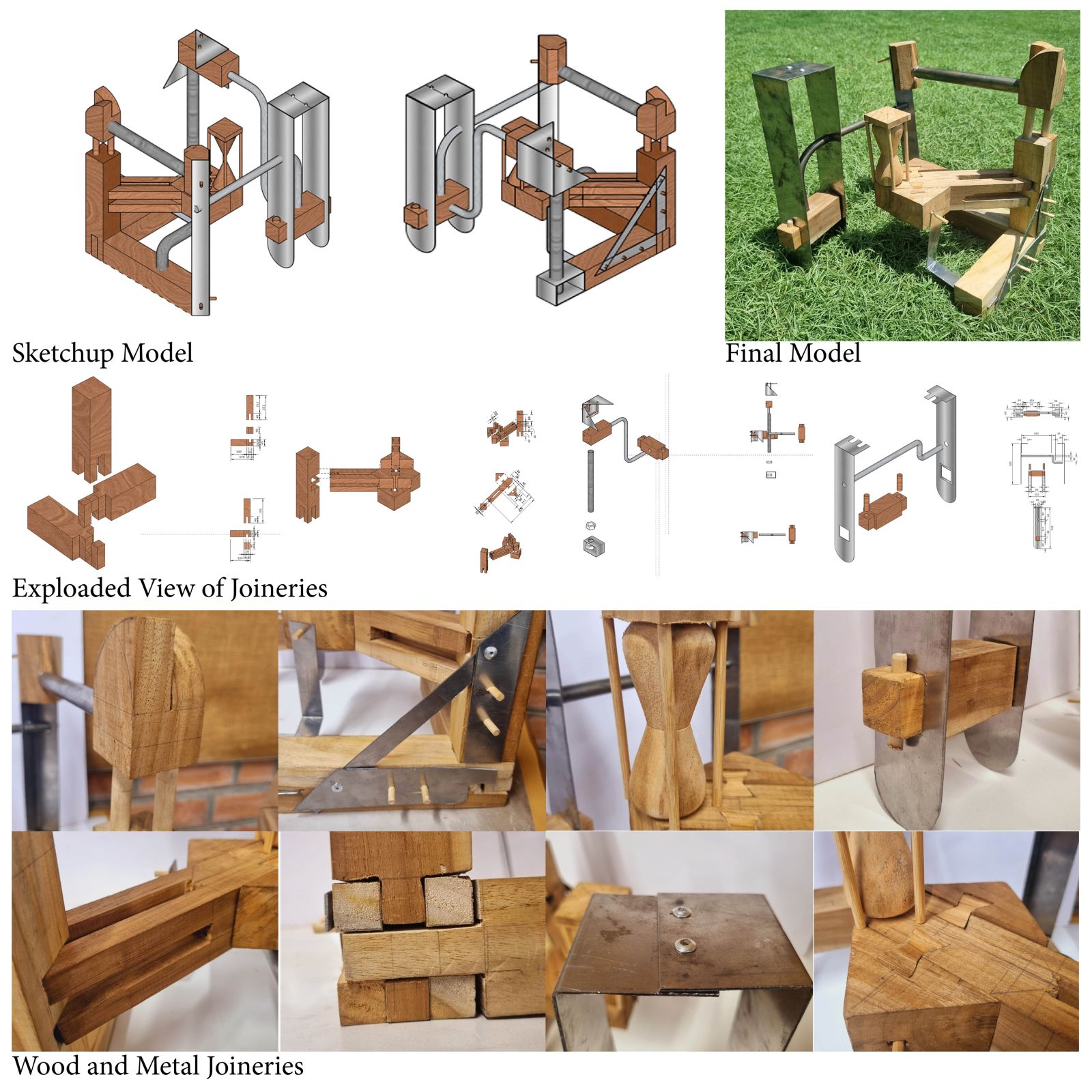
Explored a variety of wood and metal joineries, understanding how different materials connect both structurally and visually. The hands-on experience in the workshop made the process a valuable learning, from sketchup to final model—each detail carefully crafted and assembled.

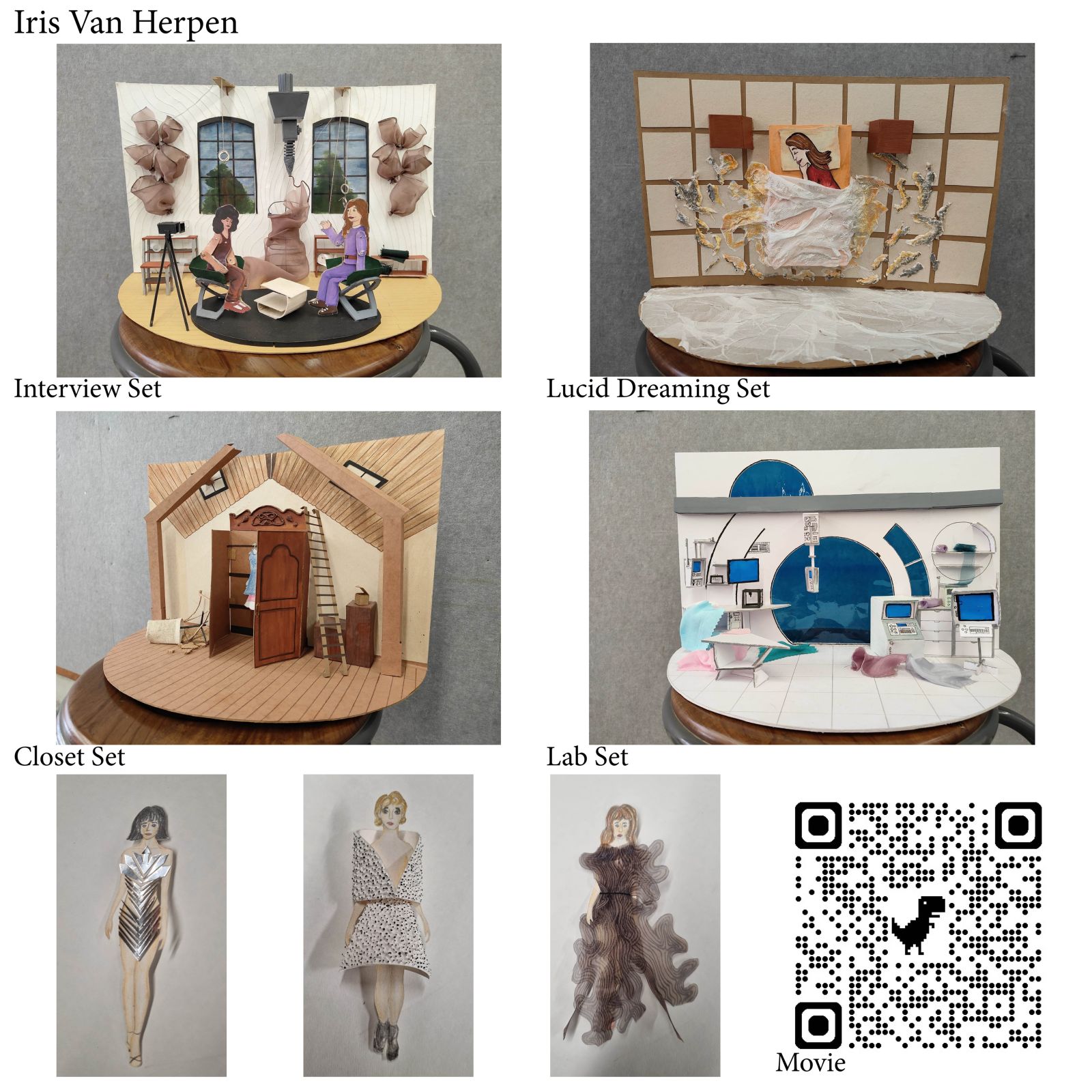
The design process and inspiration behind Iris Van Herpen’s work deeply resonated with us. This was expressed through a fictional interview narrative that offers a glimpse into her imaginative world. Each set reflects a part of that journey from lucid dreaming to experimentation, grounded by her distinctive design philosophy

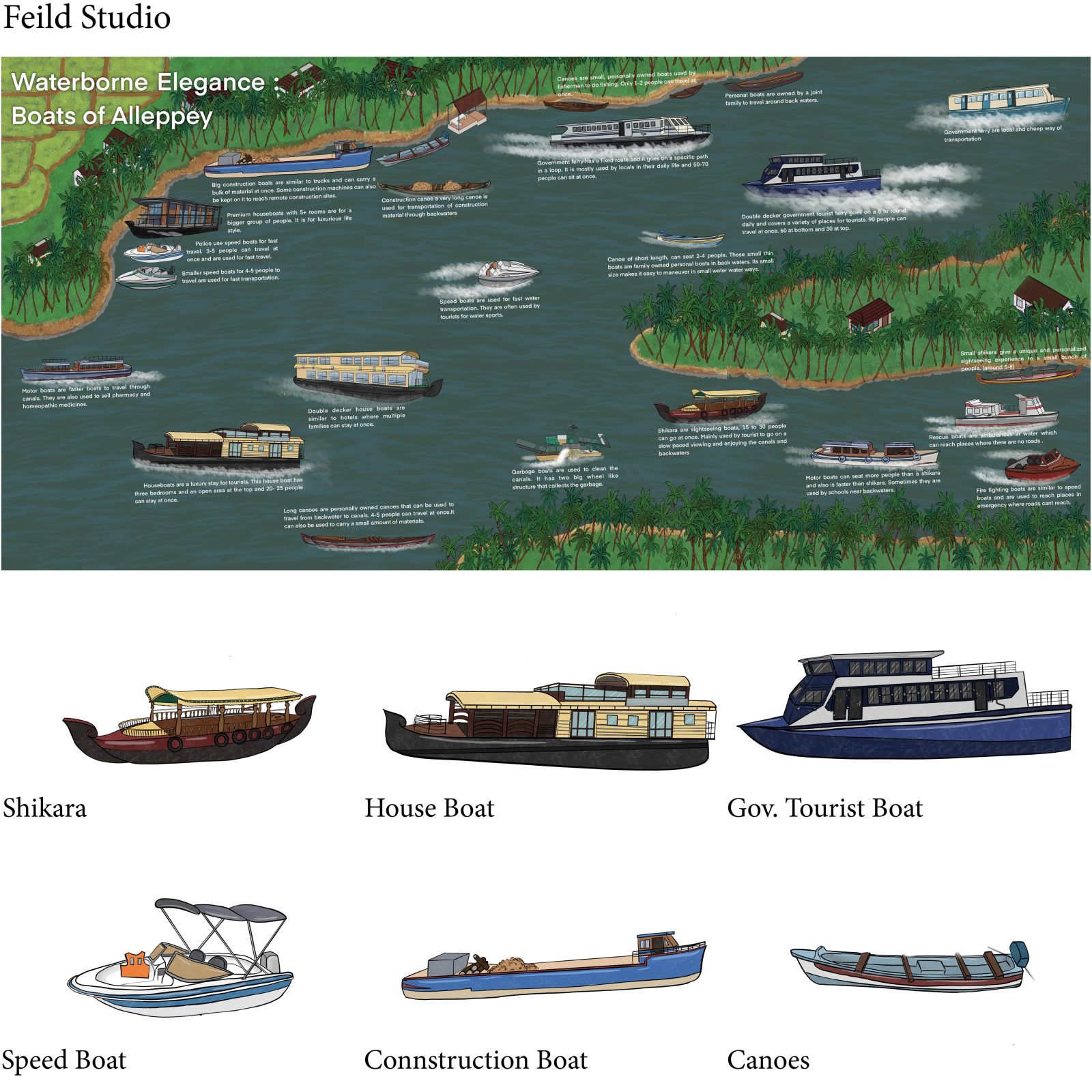
Inspired by the field trip to Alleppey, this work showcases the wide variety of boats seen in the region. From traditional canoes to modern tourist boats, it highlights the rich and adaptive waterborne transport culture of the backwaters.