Uttara Sham Gharate

CFP009

UBD24112

The CEPT Foundation Programme studio is an introduction for students fresh out of school to the rigor and work habits required by an undergraduate degree at CEPT University. The studio is conceptualized as a series of sequentially planned exercises, through which students develop skills and abilities, which are then deployed to address increasingly complex problems falling into four broad categories: visualize and draw, make and learn, analyze and interpret and conceptualize and represent. The exercises are designed to provide common and allied foundational skills and abilities for students across disciplines at CEPT, between which they maintain a balance. The studio is taught through intensive and incremental weekly modules, focusing on a particular skill or ability and a process that emphasises ongoing discussion and feedback in addition to expert faculty lectures.
Report Content

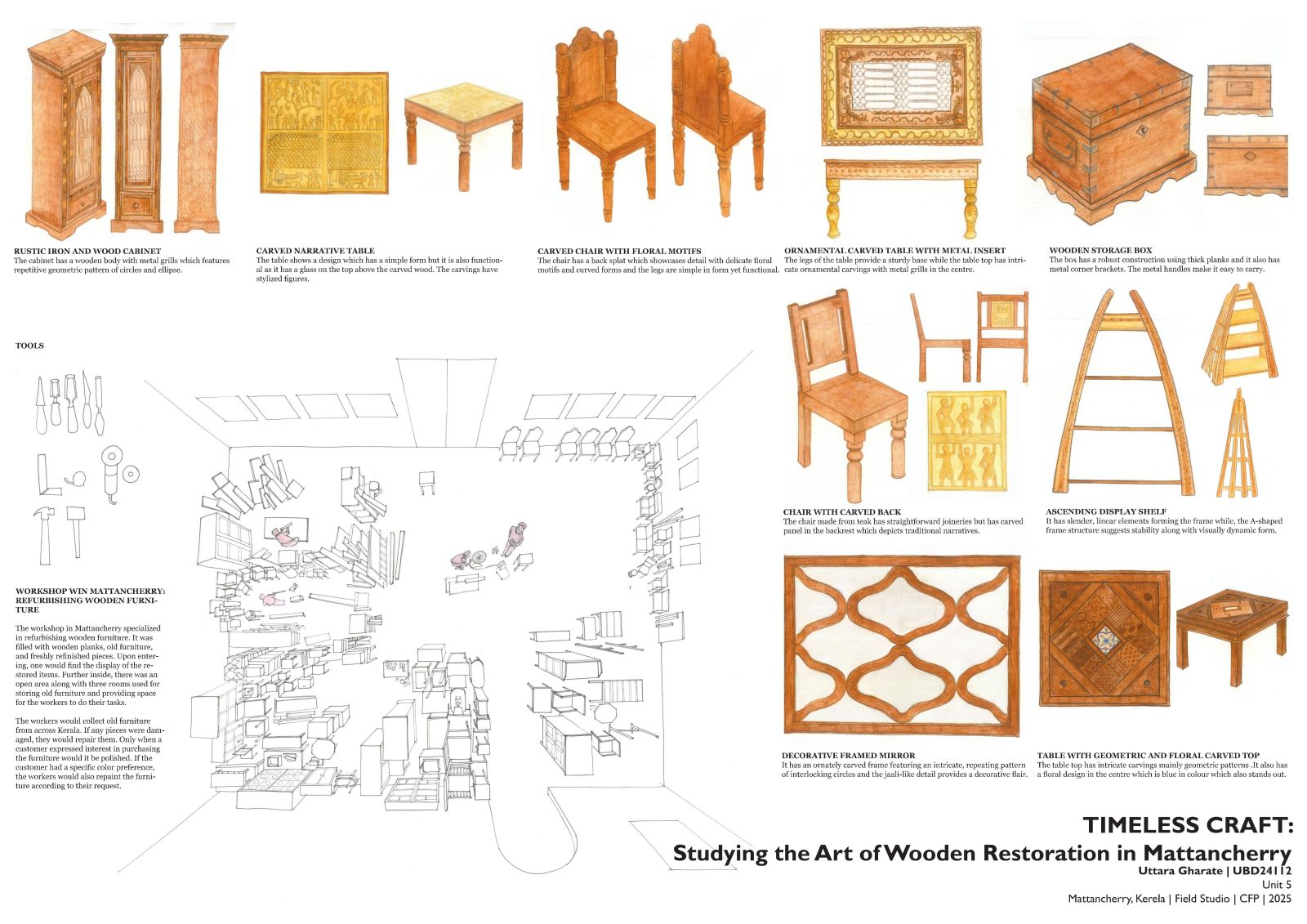
Field Studio- Kochi Observing and recording the place of refurbishing old wooden furniture, including material storage, repair workflows, and customization for clients. Documentation of old, wooden furniture in Kerala focusing on its details represented through colored sketches

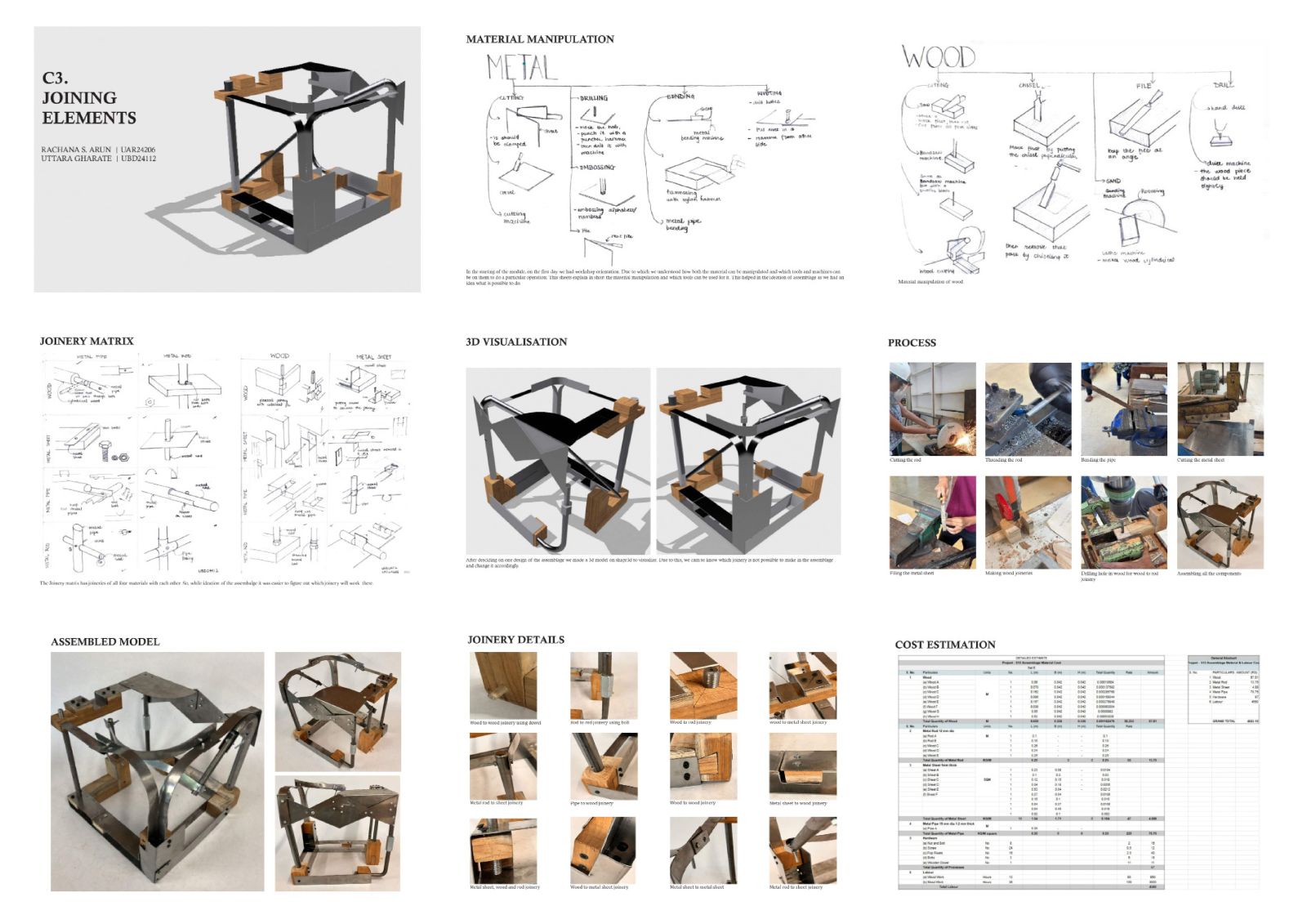
C3. Joining elements A hands-on exercise exploring the integration of wood and metal through detailed joinery design. We ideated an assemblage, developed construction drawings and 3D visualizations, fabricated the model, and estimating material and hardware costs.

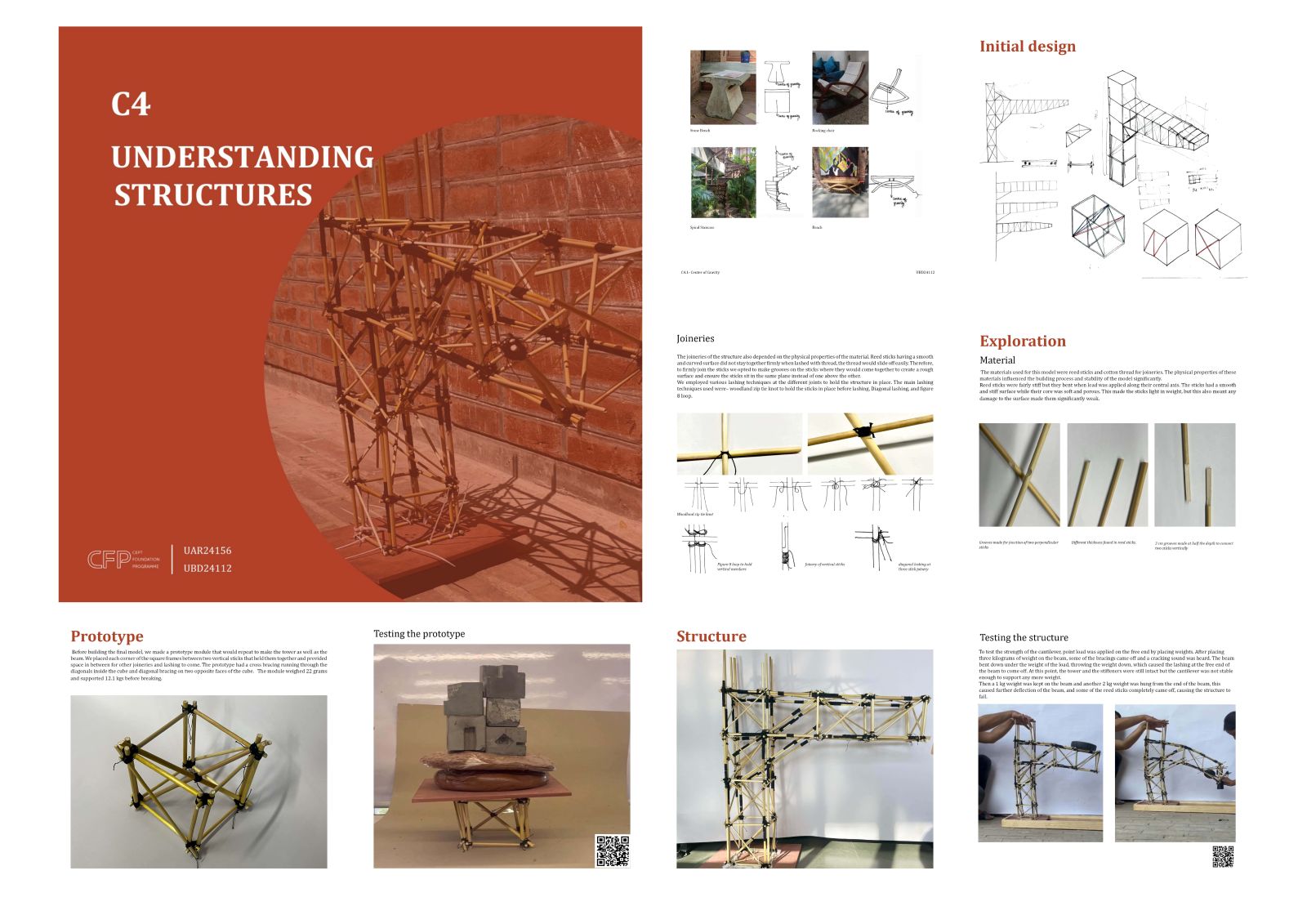
C4. Understanding structures In this module, we explored the material, joineries and the lashing techniques. Our structure was cantilever beam. I worked on the designing, lashing techniques and joineries of the structure.

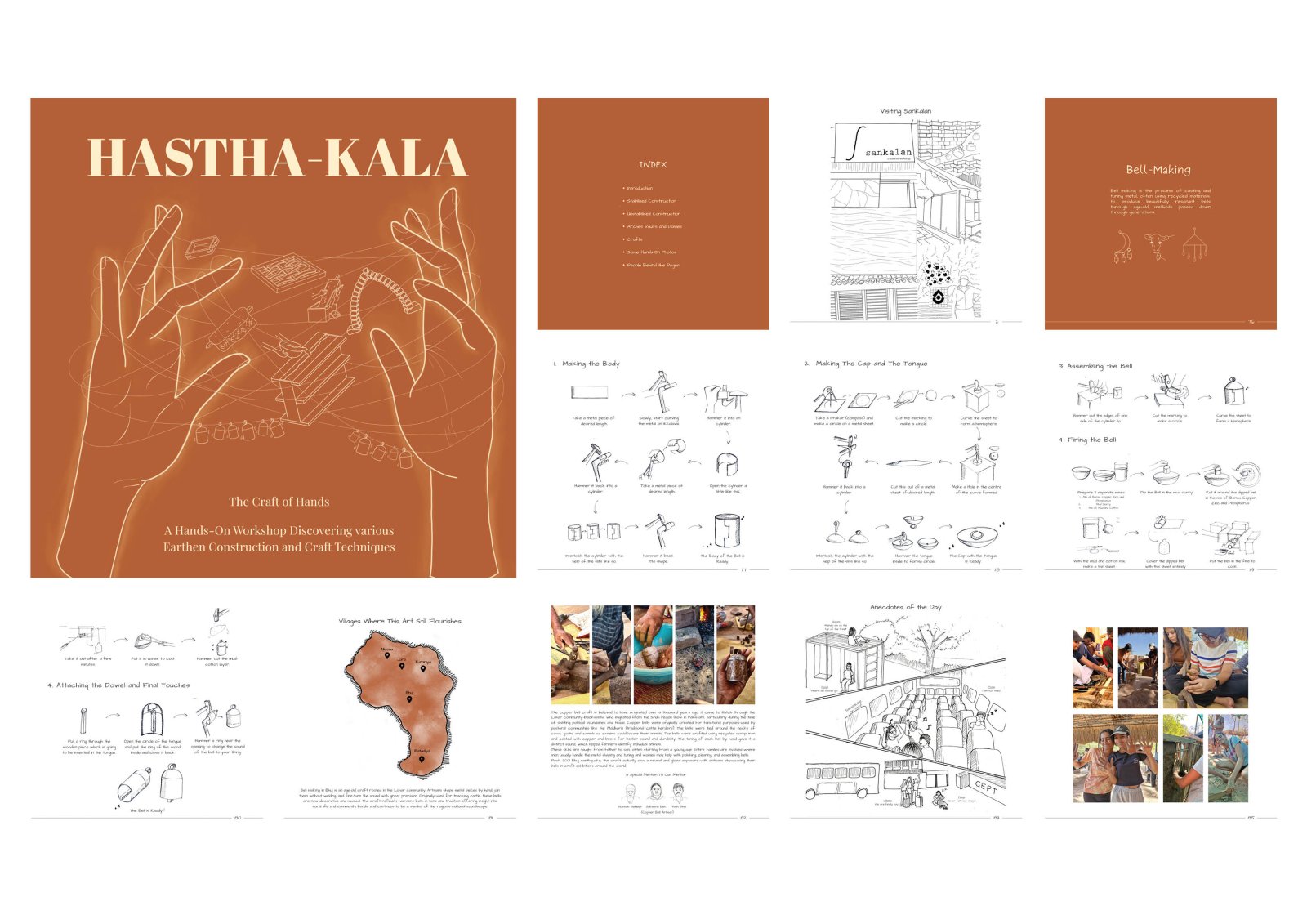
C5. Sankalan A four day hands-on workshop exploring traditional earthen construction and local crafts. The module involved on site learning, process documentation, and the creation of a visual booklet capturing each step of techniques.

B6. Mappin and representing A study mapping pause points along Gandhi Road, Ahmedabad, to understand how informal spaces—near vendors, shaded areas, and raised platforms enable people to stop, rest, and interact. The mapping process revealed how built environments and human improvisation shape rhythms of public life.

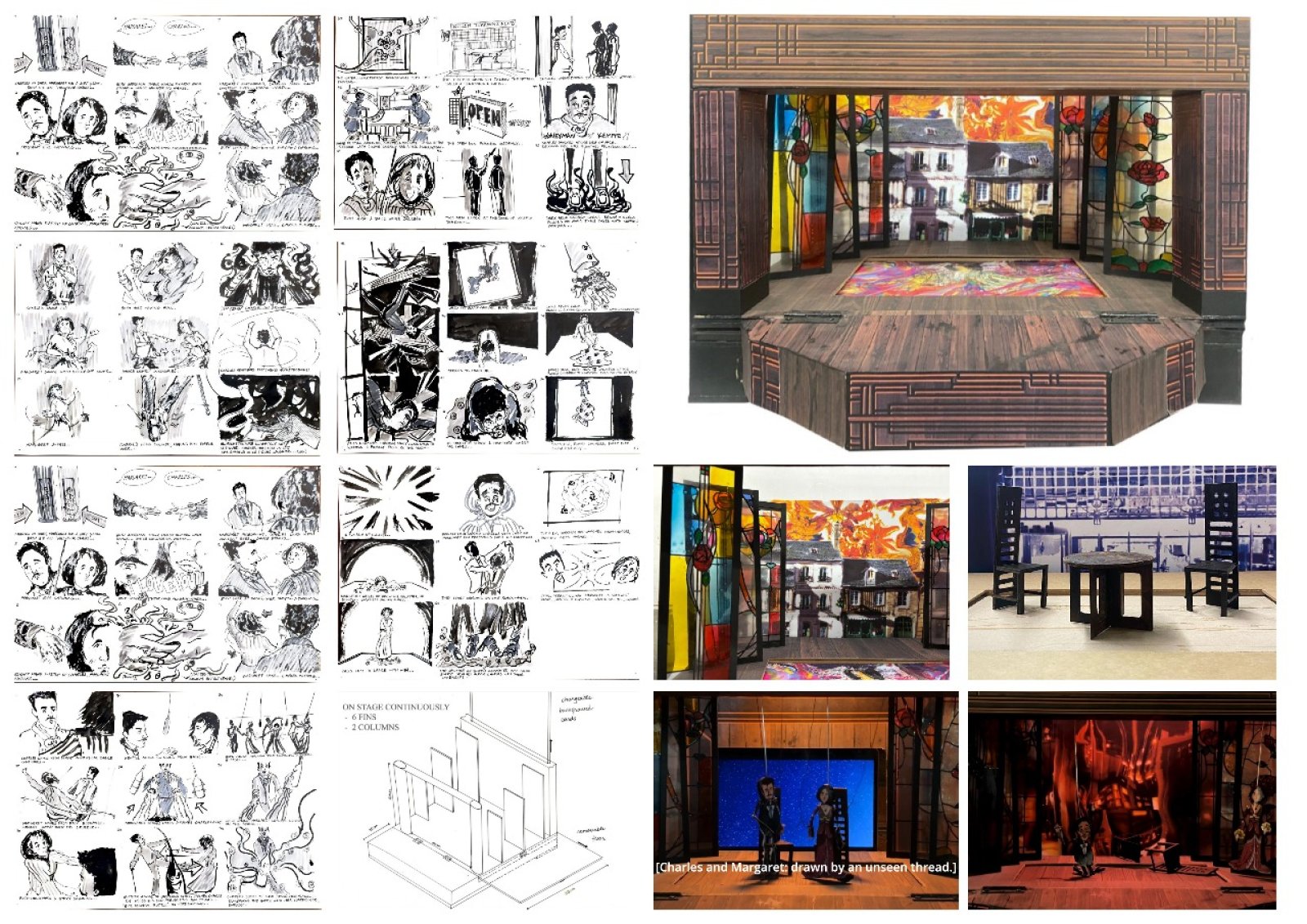
BD3. Concepts of narrative representation This project in narrative representation involved storyboarding, building a diorama, practicing a play with music and lights, and creating a final film.

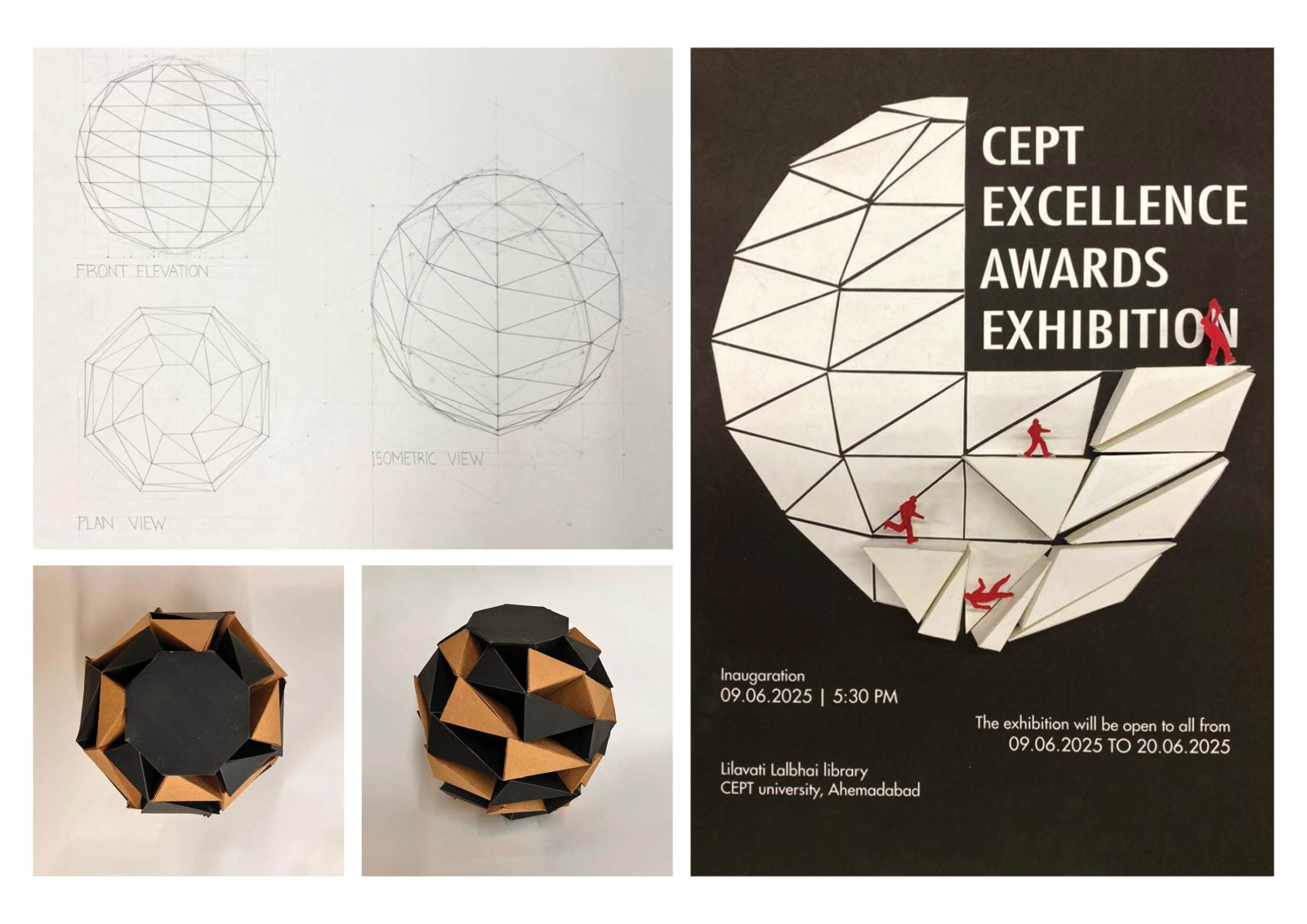
BD4. Form, Structure and Geometry This project explores form, structure, and geometry, from initial sketches and models to the final exhibition poster.

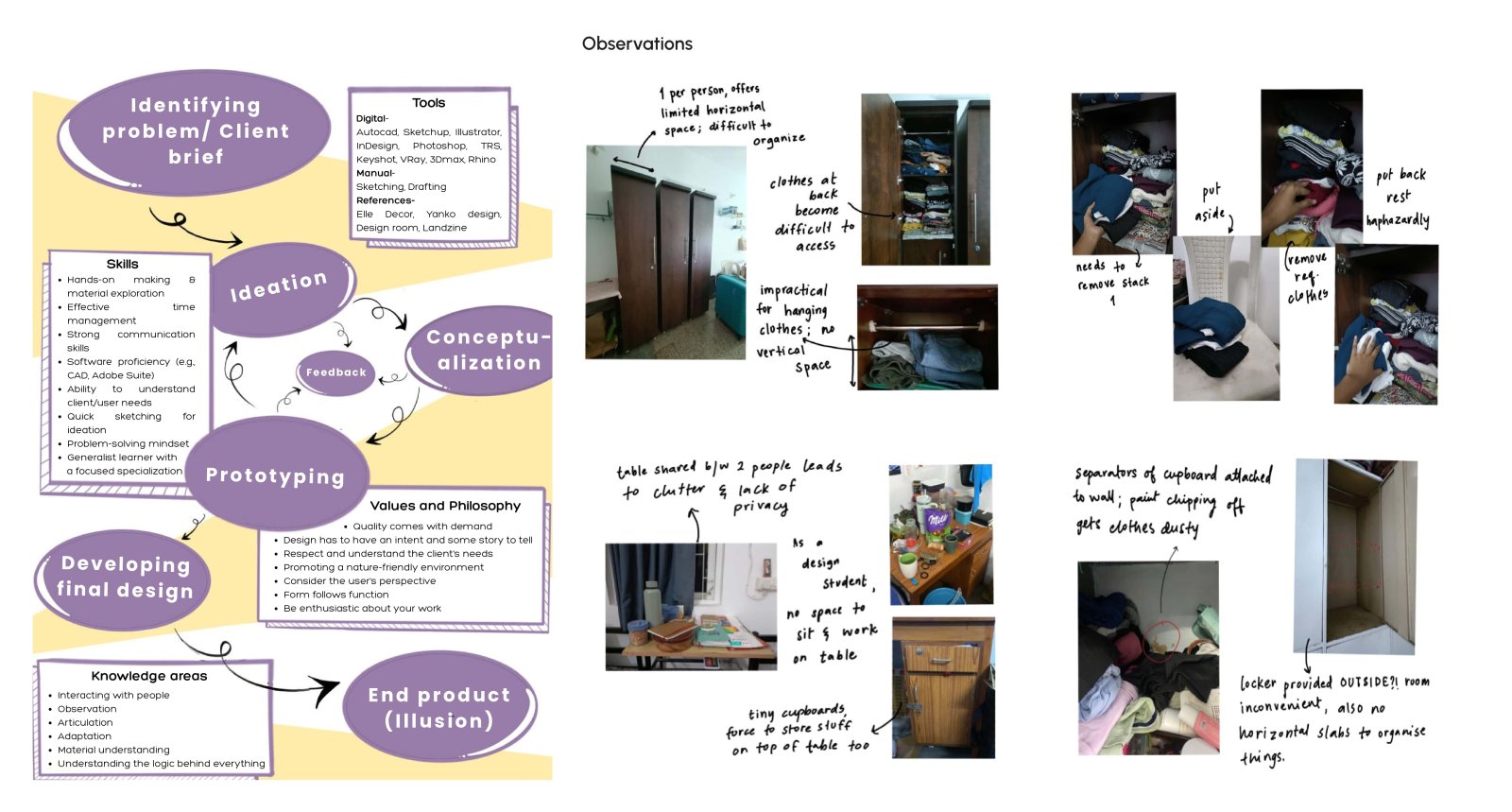
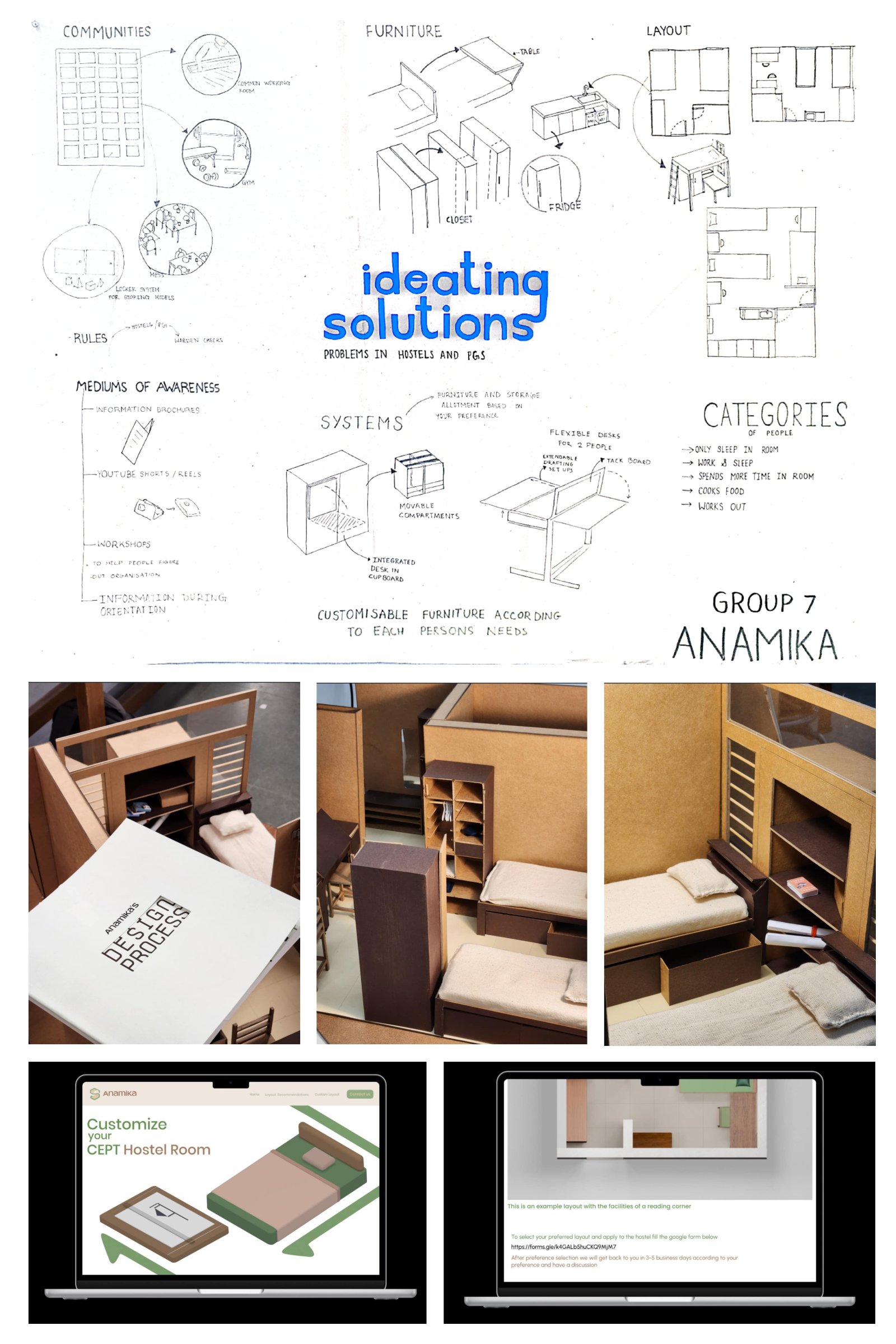
BD5.Design process The module involved identifying real-life problems, conducting user observations and stakeholder interviews, drawing insights, and framing a design brief. Through iterative ideation and evaluation, one final solution was developed, addressing a specific opportunity area within the problem space.

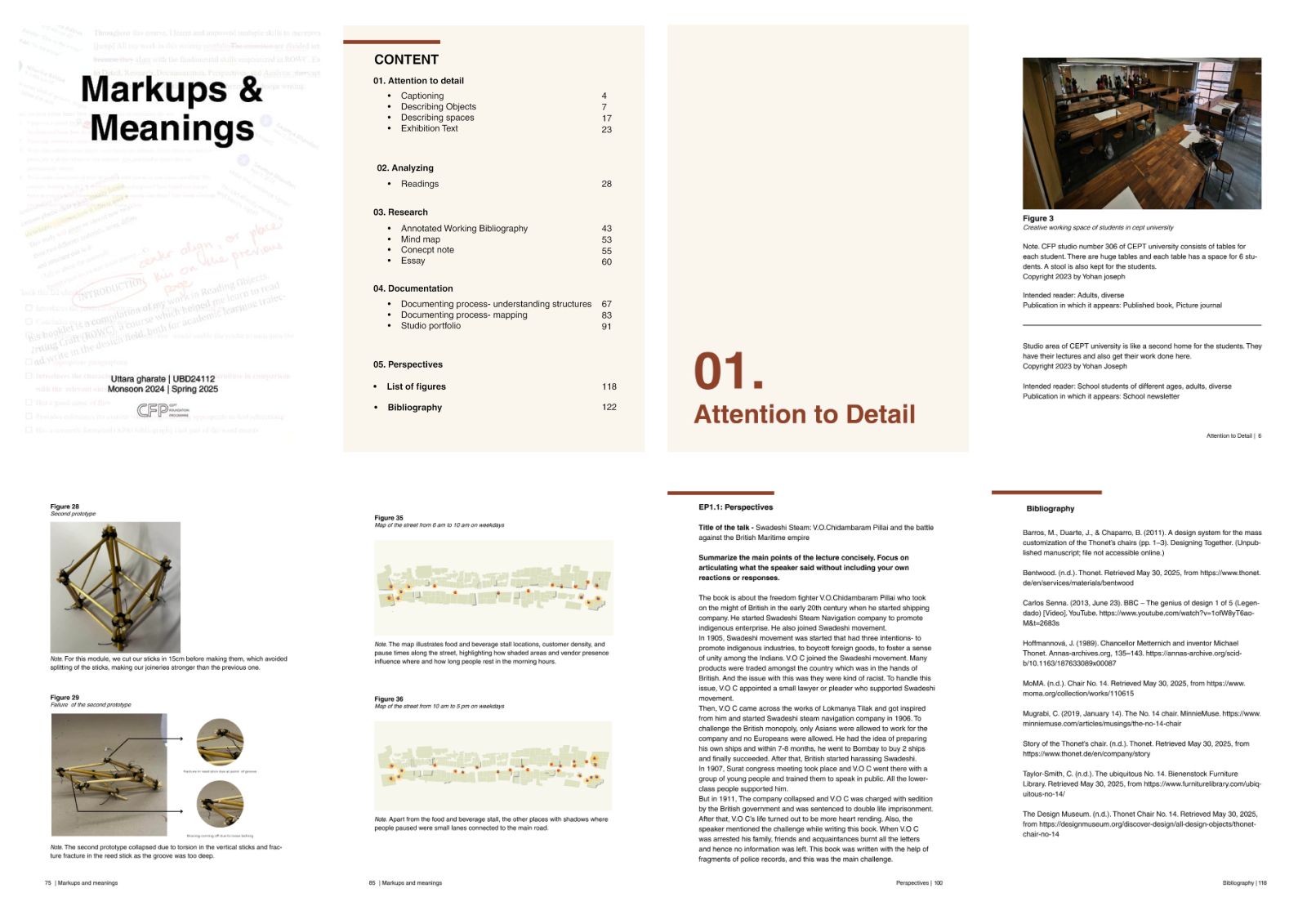
This portfolio brings together the work in the Reading objects and writing Craft (ROWC) course during CFP. It shows how i've grown as a writer and thinker through different types of writing like description, research, analysis and reflection.

BD5. Design Process Multiple solutions were ideated by us finalizing one of it which contained physical model of the room layouts and a website.