Madhavi Mangapoti

CFP009

UBD24133

The CEPT Foundation Programme studio is an introduction for students fresh out of school to the rigor and work habits required by an undergraduate degree at CEPT University. The studio is conceptualized as a series of sequentially planned exercises, through which students develop skills and abilities, which are then deployed to address increasingly complex problems falling into four broad categories: visualize and draw, make and learn, analyze and interpret and conceptualize and represent. The exercises are designed to provide common and allied foundational skills and abilities for students across disciplines at CEPT, between which they maintain a balance. The studio is taught through intensive and incremental weekly modules, focusing on a particular skill or ability and a process that emphasises ongoing discussion and feedback in addition to expert faculty lectures.

View Additional Work
Report Content

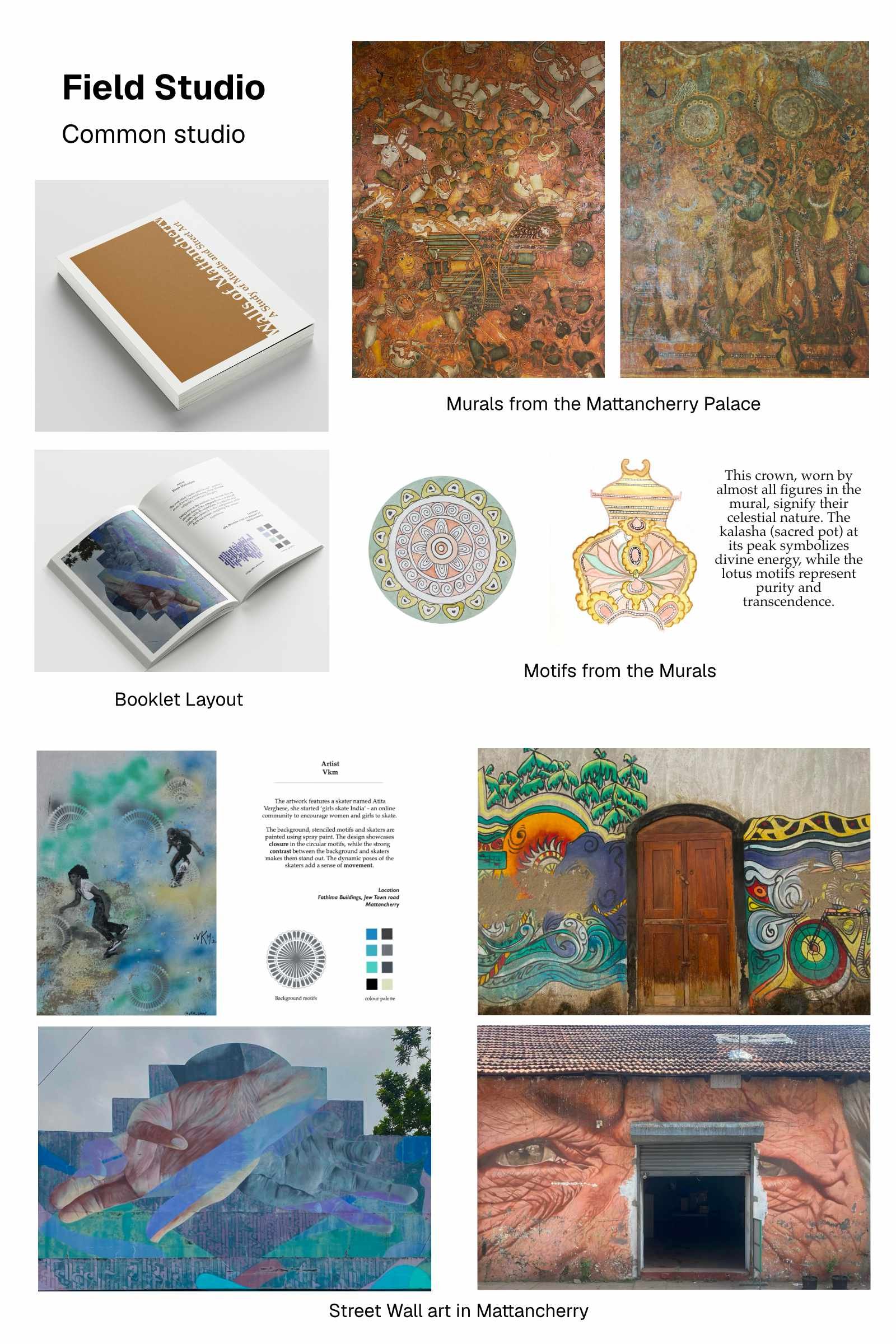
In this module, I documented some of the motifs found in the Ramayana murals of the Mattancherry palace, Kochi and found out their meanings related to the motif. Along with this I also documented some of the Street artworks in the area and found their artist, why they were probably done, the year they were done in and did a little analysis of them.

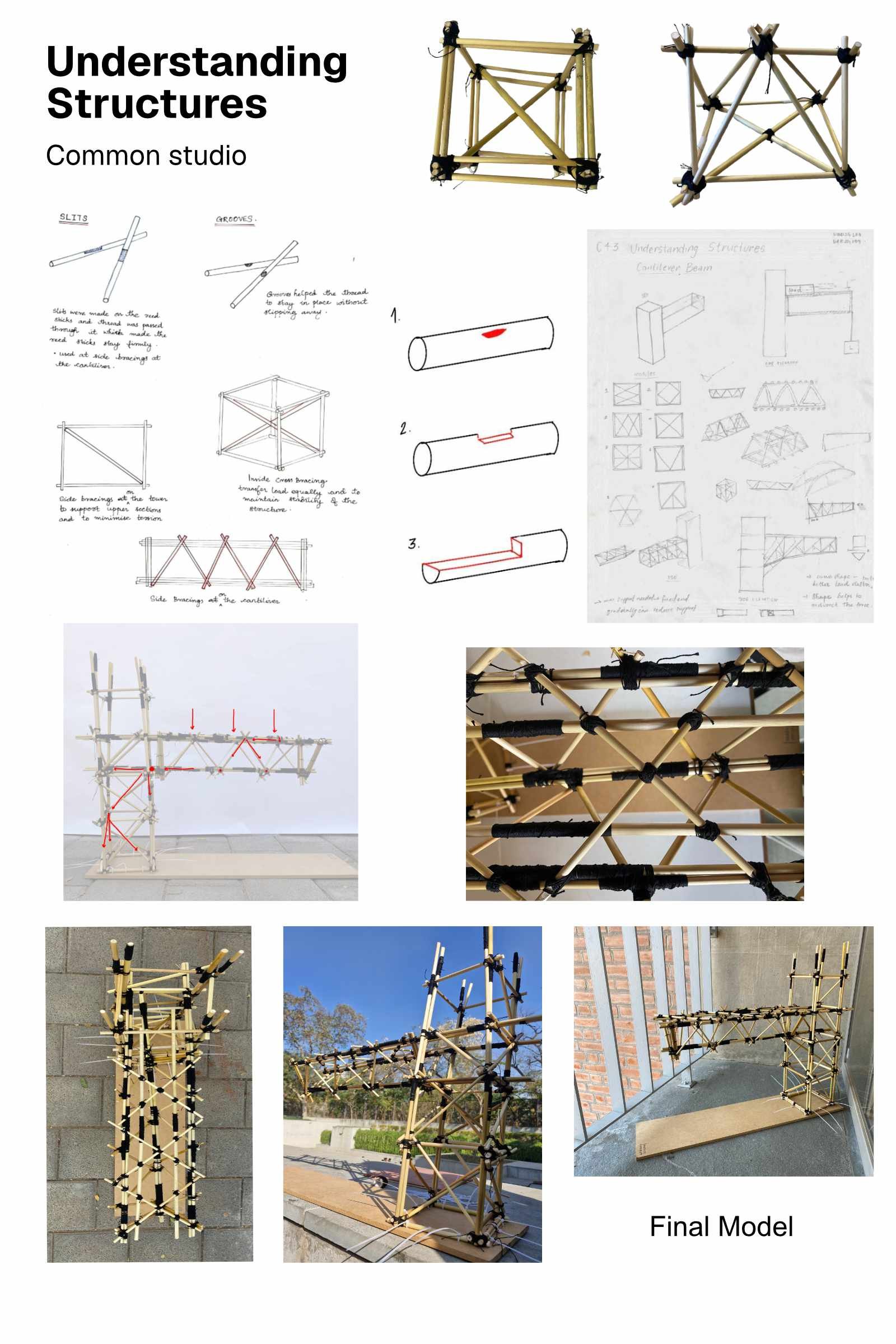
In this module, we explored how structures behave under load by designing and testing a cantilever beam system—using only reed sticks, without adhesives. Inspired by Bridges and Triangular geometry, our goal was to create a structure that distributed loads evenly. The weight of the structure was 201g while the weight it held was 2000g; therefore, the strength to weight ratio is 9.95. Collaborator - Pooja Ashith : UAR24199

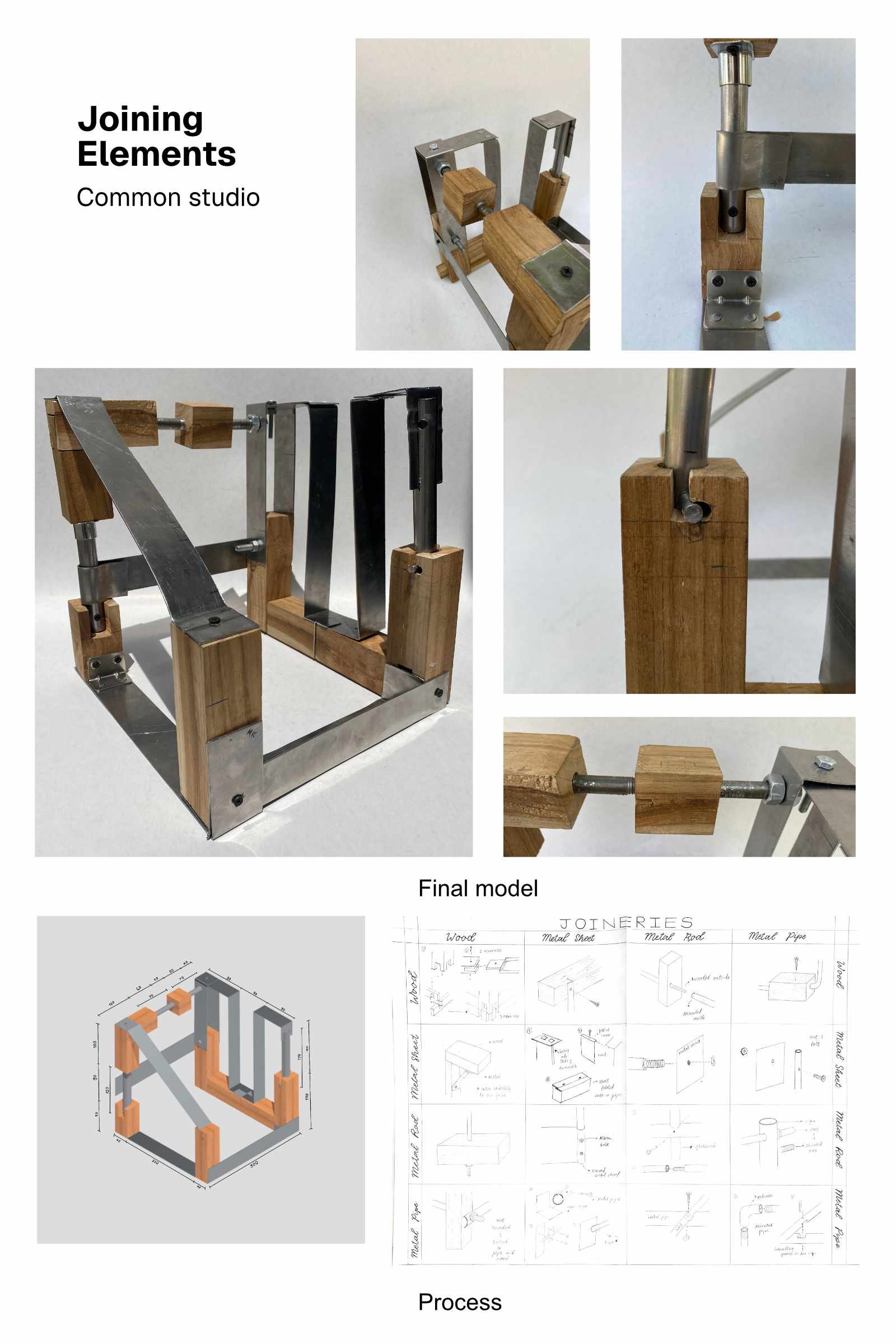
In this hands-on module, I co-developed a 300 × 300 × 300 mm assemblage exploring how wood and metal interact through various kinds of joineries. Conceptually, we aimed to use the least amount of external joining material. However, as we progressed through the process of building the assemblage, we ended up using more joining elements than expected. Collaborator - Kundan Vobbilisetty : UBD24063

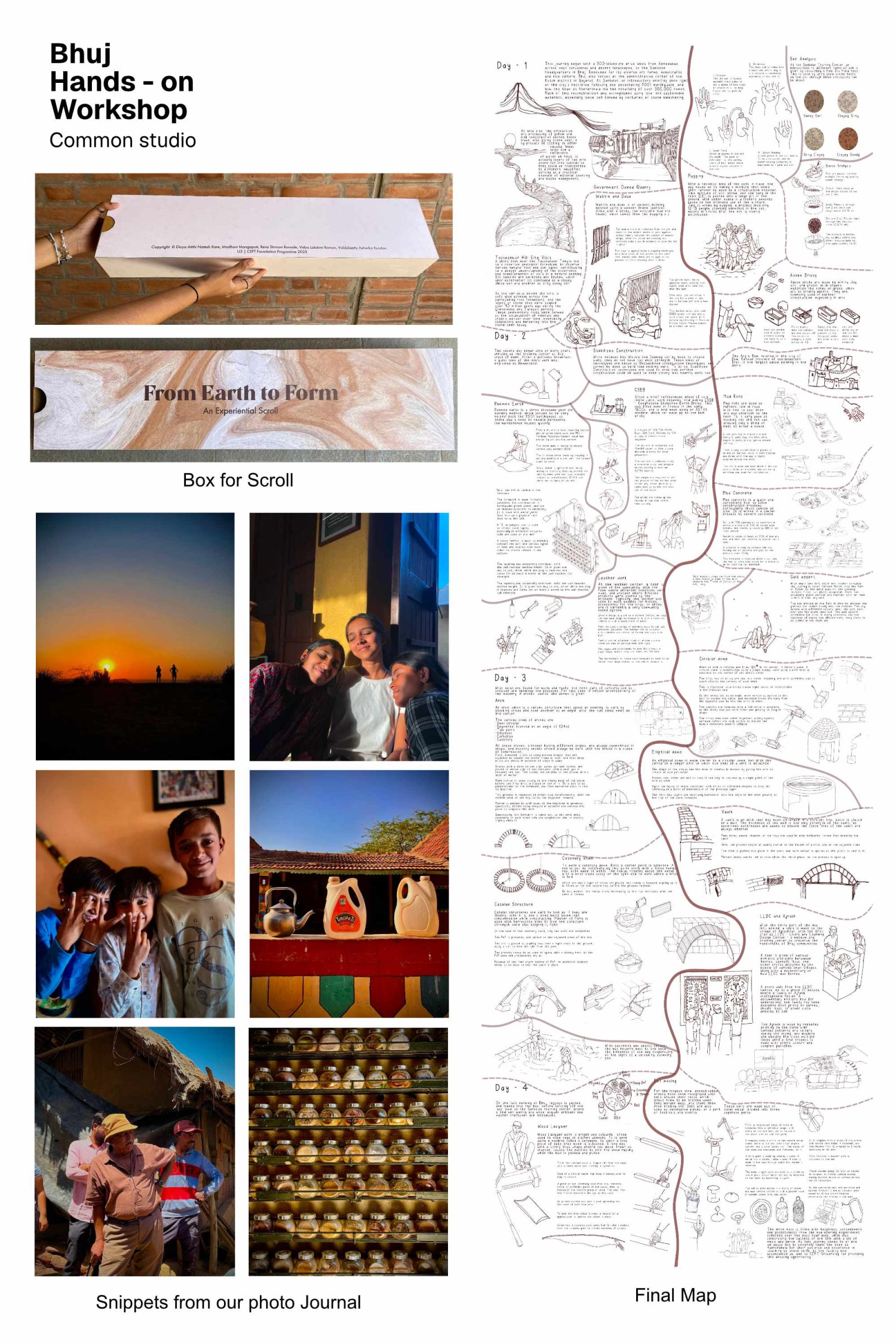
This module was all about representing our 5-day learning experience in Bhuj. Since it was kind of a journey, we decided the way that made most sense to us to represent it would be a map, We created a 1680 X 594 mm scroll which reads as a map from day 1 to day 4 including all our experiences. We also included a photo journal of the whole trip as a booklet. Collaborators - Reva: Photo journal credits, Vidya, Kundan, Divya

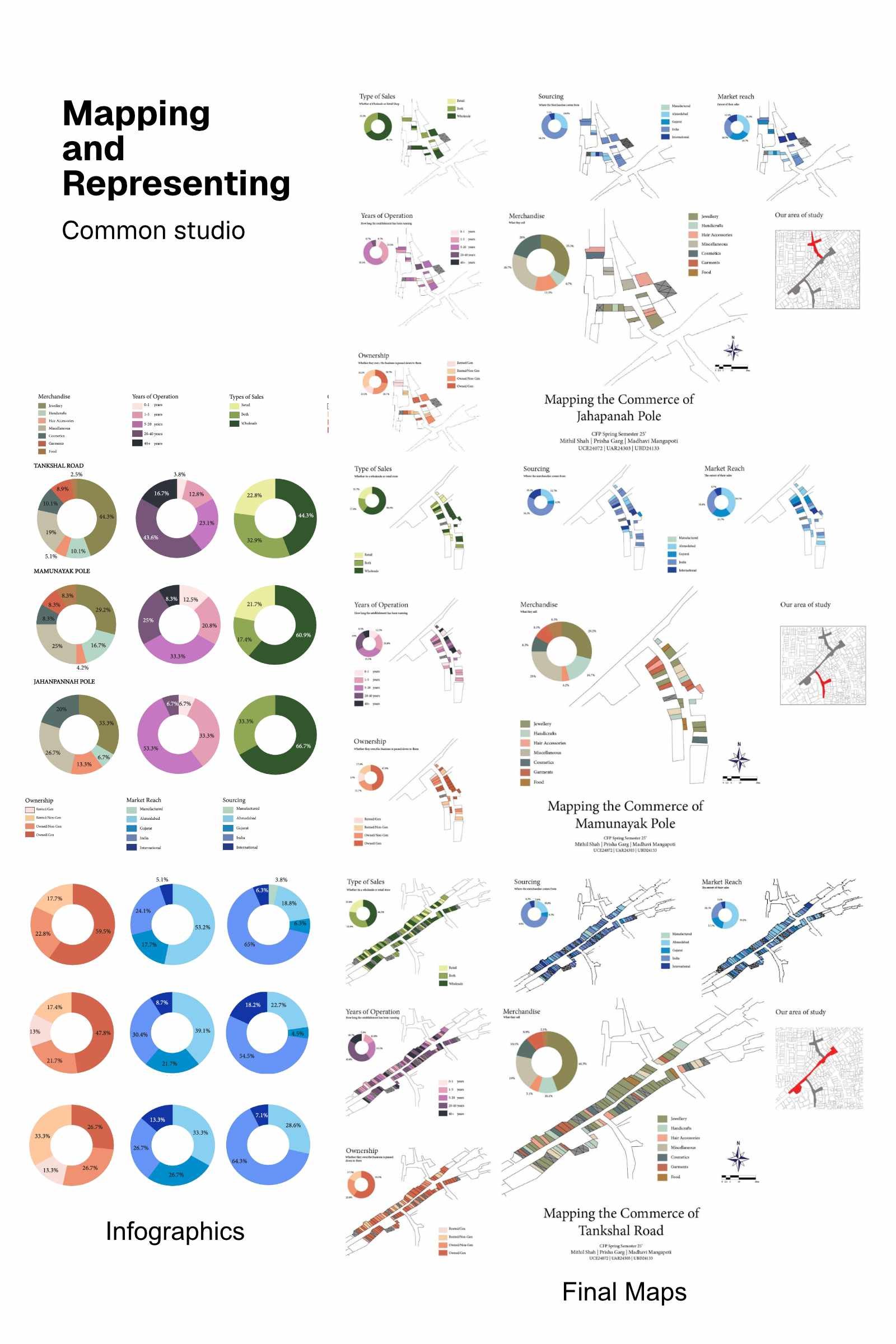
In this module, we mapped A 150m stretch and two 50m stretches in terms of every shop/ vendor that is present there. We created a questionnaire with questions related to the shop like how old it is, if they sell wholesale, what they sell etc. and went to each shop asking the same. Then we made 3 Sheets one for each street and each of the maps in each sheet represents a certain set of data that we collected. Collaborators - Mithil Shah: UCE24072, Prisha Garg : UAR24303

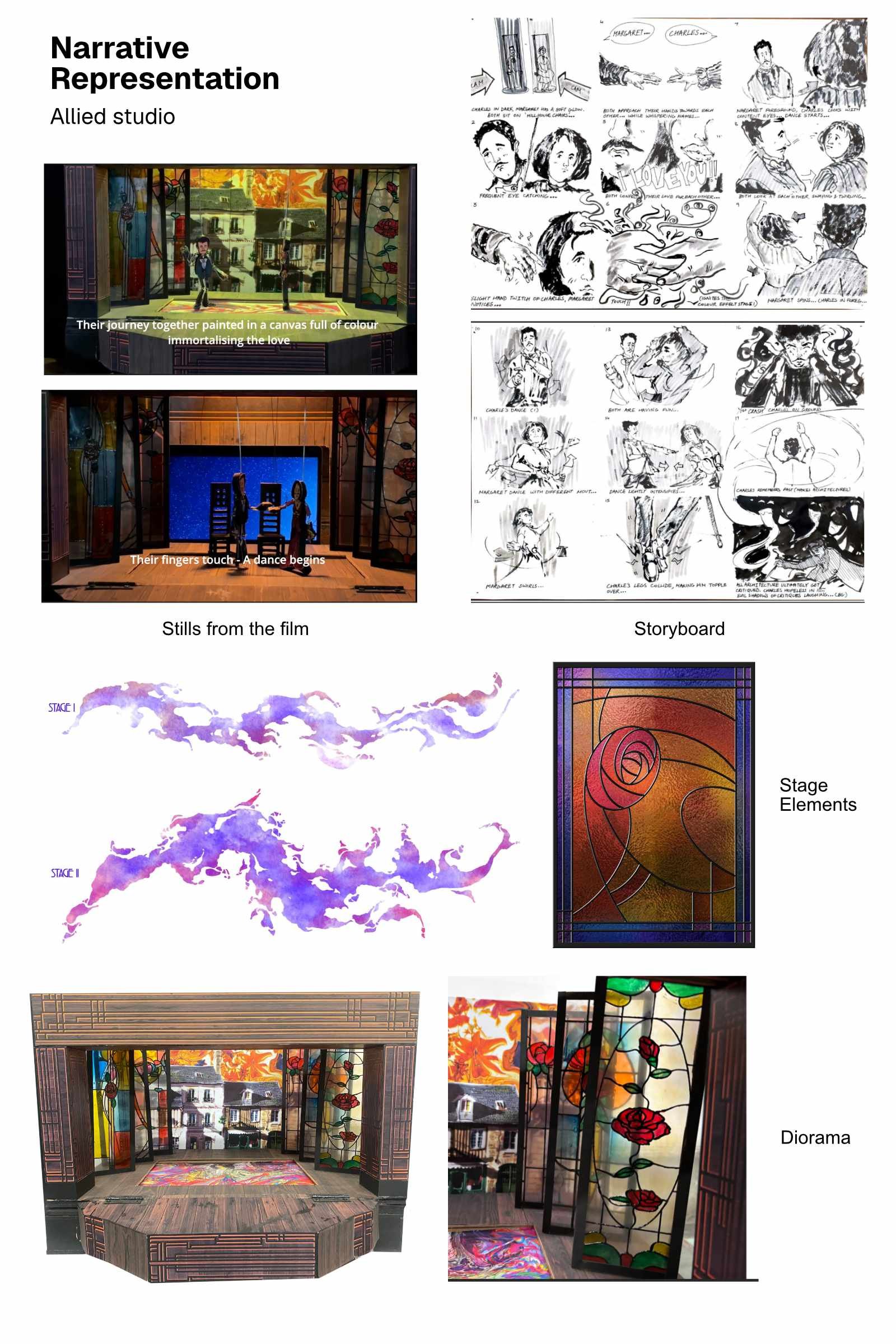
This module had us using all different kinds of skills from building the diorama to storytelling. The main character of our story was Charles Rennie Mackintosh, and through research, it was noted that he and his wife shared a very close relationship, which we highlighted throughout the play through a waltz. Through this dance, we represent the story of his life. Collaborators - Kunal: Storyboard credits, Soham, Sanvi, Uttara

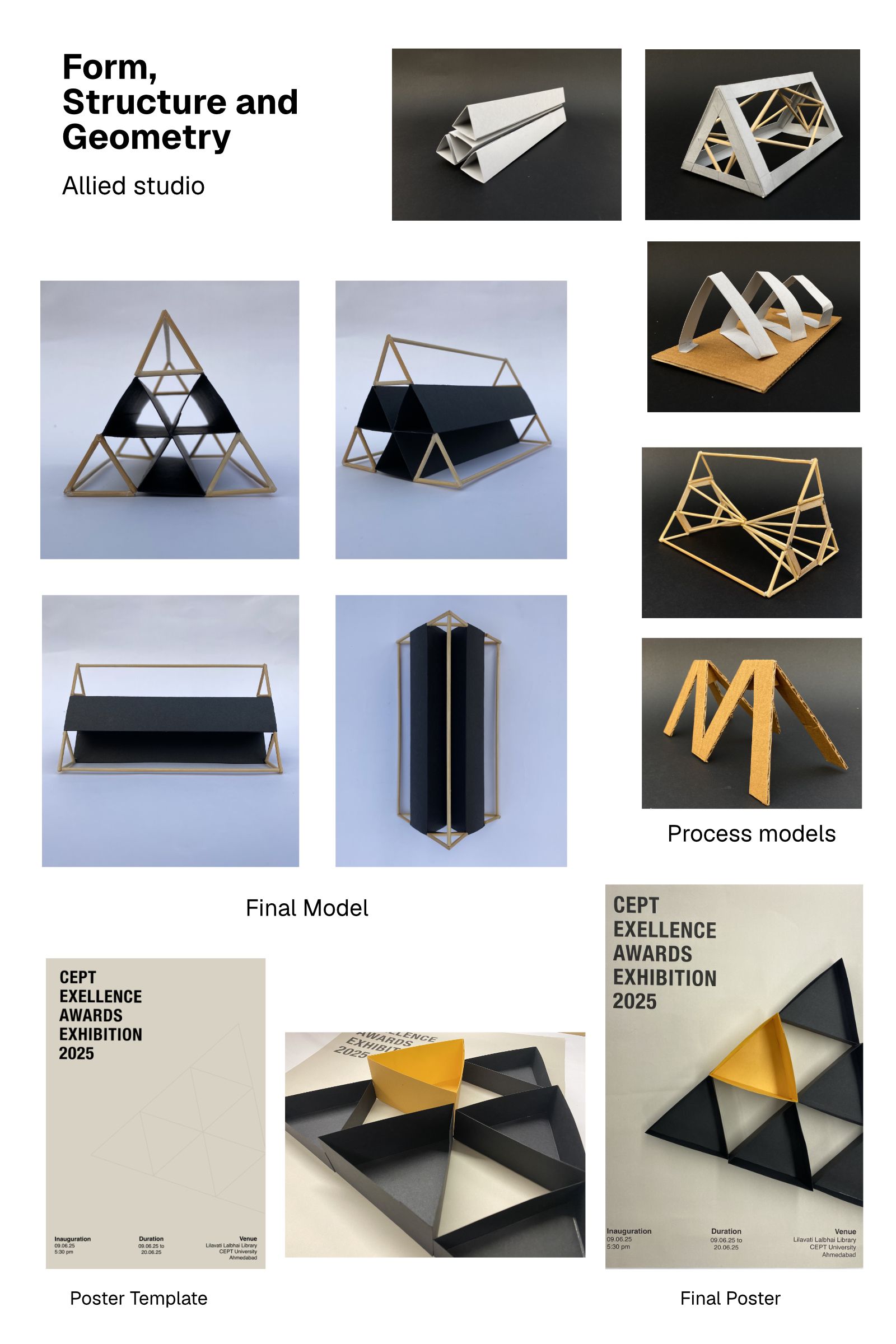
Starting with the prism as the base form, I explored how it could evolve through multiple iterations and material experimentation. After sketching over 30 variations that maintained the core characteristics of the original form, Started developing forms that seemed the most developable into 3D from 2D. My final form is consists of 6 inner prisms, which together form a hexagonal prism, and this, along with the outer three prisms forms a larger final prism. This involves the gestalt law of closure since in the hexagon I didn't make all the 6 prisms but with three the eye forms a hexagon. The poster was made for the cept excellence awards exhibition and my concept was ‘Students of varying skill level together make a batch, but only the one who has excelled the most gets recognised.’

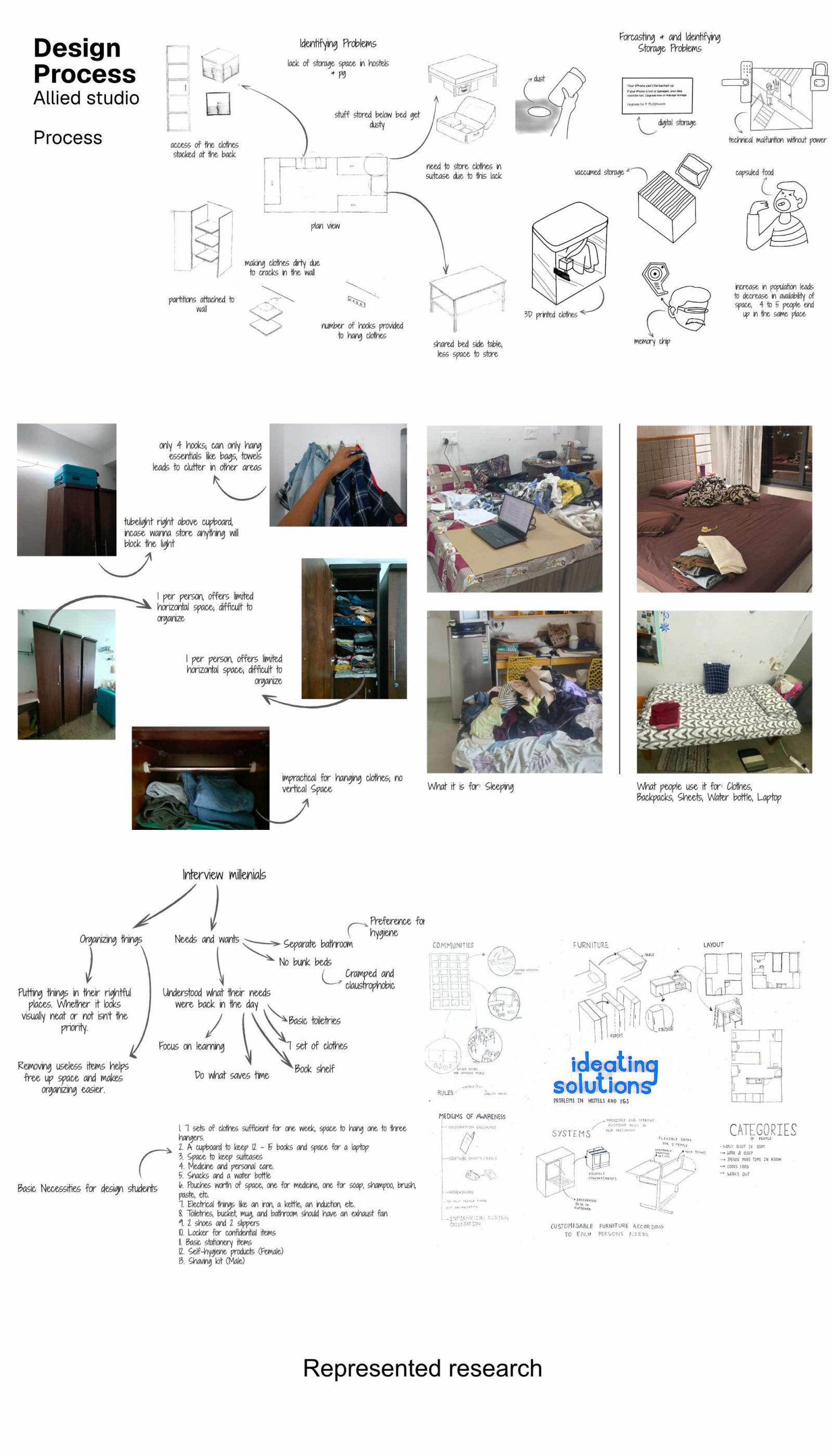
The Initial part of this module was spent in acquiring skills necessary for the final project. The final project started with choosing a real world problem existing around us. After which, we did multiple observations related to the problem, took various interviews and had multiple discussions in order to understand the problem not just at the surface level but in a lot more depth. We even forecasted the problem 25 years down the lane in order to figure out what problems/solutions might exist in the future and after all this research finally, came to ideating a few solutions out of which we narrowed down to our final ones. Collaborators - Abhinav, Pari, Abhinandh, Divya, Anisha, Uttara

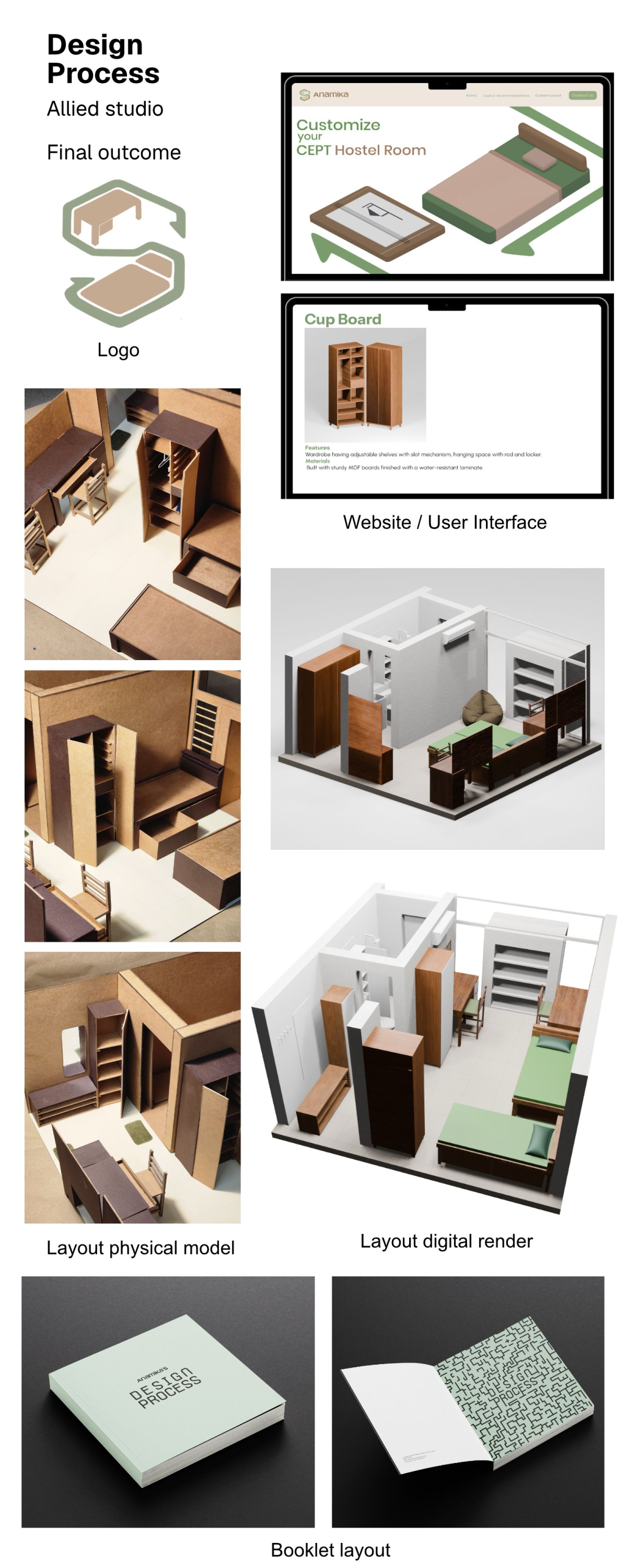
The problem our team of 7 decided to tackle was the problem of Storage in Hostels and PG’s. Our solution included varied layout recommendations for the students along with customisable layouts and furniture, and a user interface that informs the student about all the facilities available for their hostel room before they reach campus during the admission process. Collaborators - Abhinav, Pari, Abhinandh, Divya, Anisha, Uttara