Hridaya Milind Pohokar

CFP009

UBD24140

The CEPT Foundation Programme studio is an introduction for students fresh out of school to the rigor and work habits required by an undergraduate degree at CEPT University. The studio is conceptualized as a series of sequentially planned exercises, through which students develop skills and abilities, which are then deployed to address increasingly complex problems falling into four broad categories: visualize and draw, make and learn, analyze and interpret and conceptualize and represent. The exercises are designed to provide common and allied foundational skills and abilities for students across disciplines at CEPT, between which they maintain a balance. The studio is taught through intensive and incremental weekly modules, focusing on a particular skill or ability and a process that emphasises ongoing discussion and feedback in addition to expert faculty lectures.
Report Content

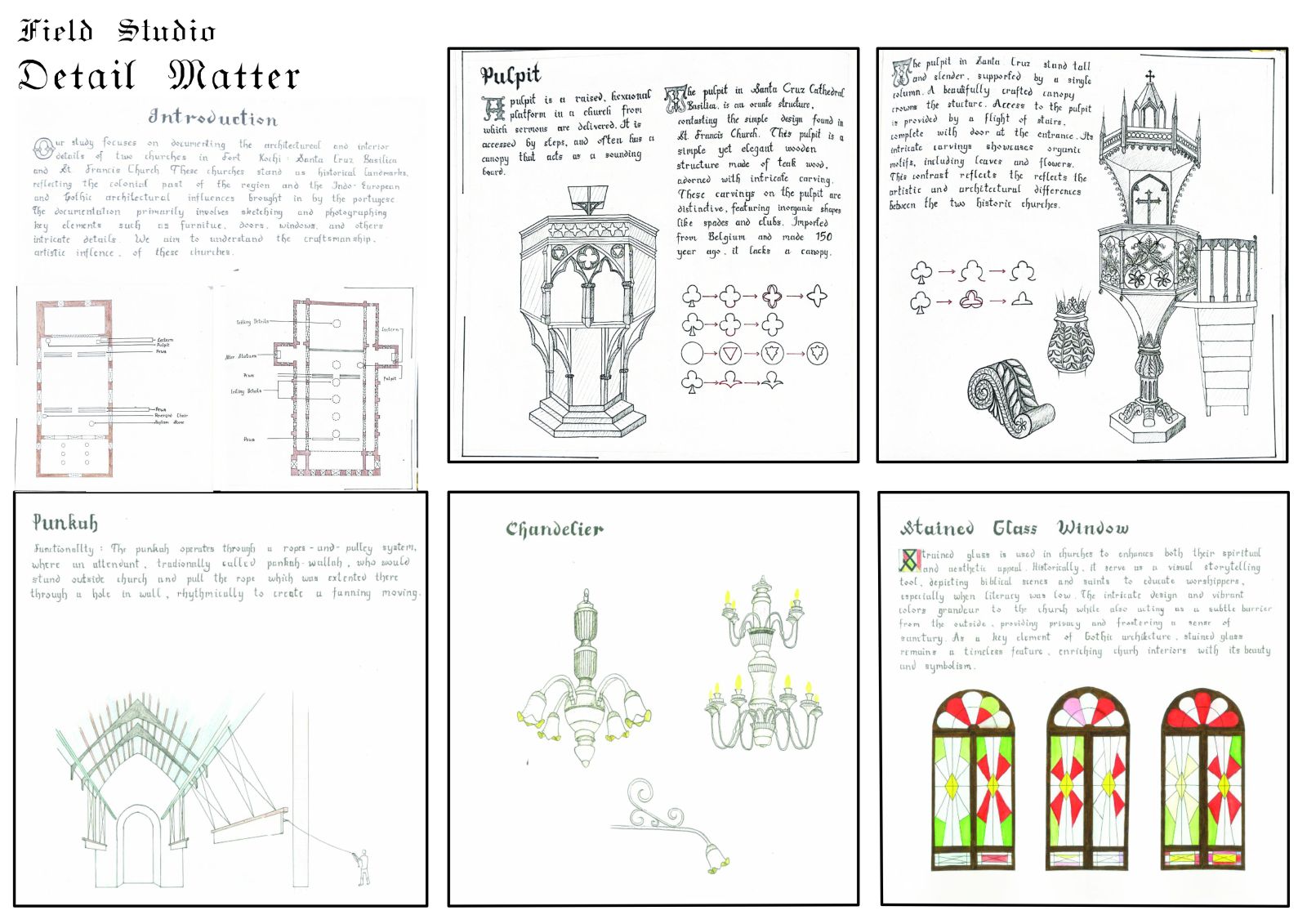
A visual study of Santa Cruz Basilica and St. Francis Church in Fort Kochi, capturing their colonial heritage, contrasting interiors, and shared handcrafted details from vibrant stained glass to humble relics.

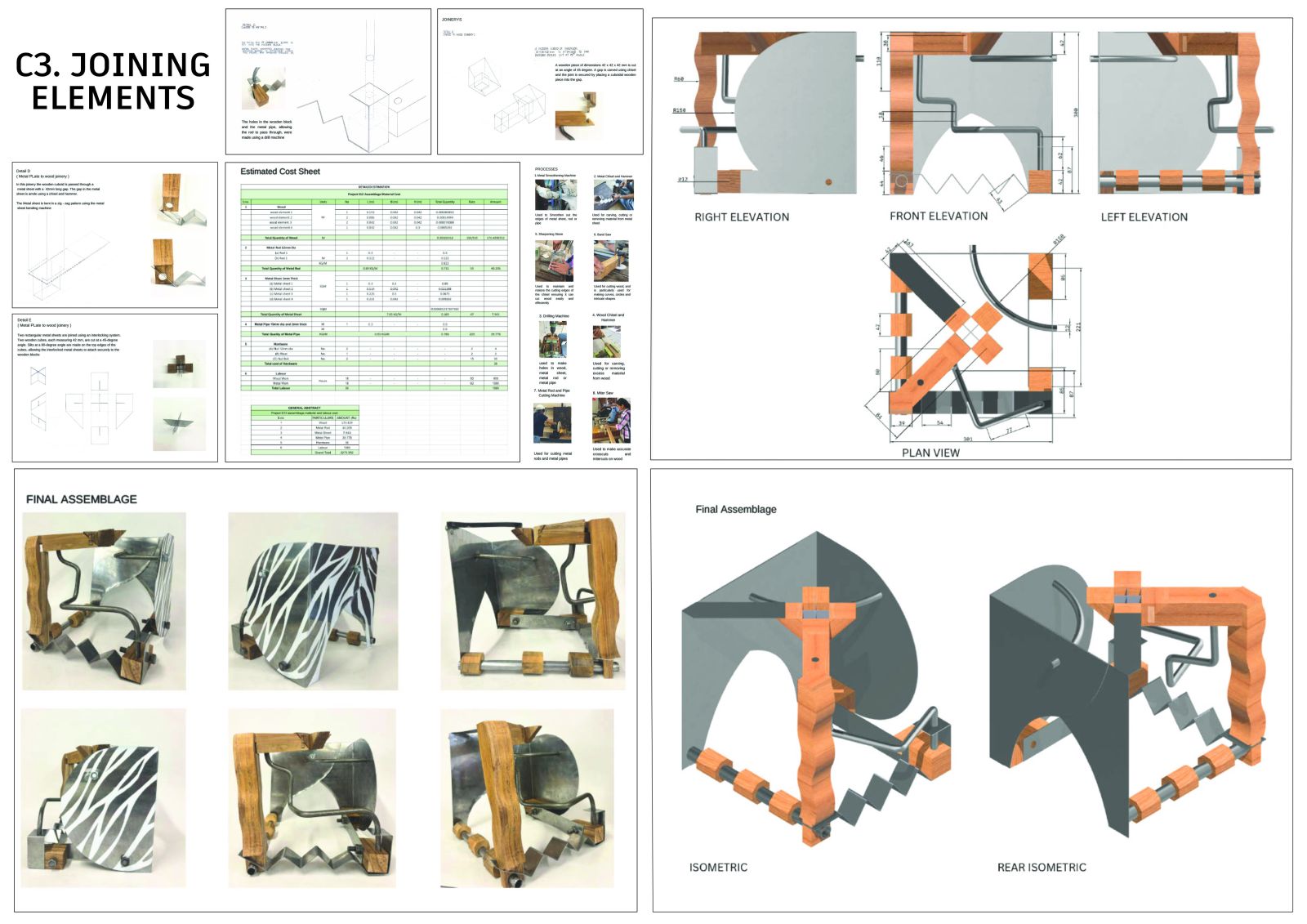
This 300 × 300 × 300 mm assemblage showcases a hands-on exploration of diverse joinery techniques using wood, metal rods, sheets, and pipes. Built through cutting, drilling, bending, and riveting, the process involved both hand and power tools—chisels, files, jigsaws, hammers, and more. Designed to learn the fundamentals of wood-to-wood, metal-to-wood, and metal-to-metal connections. The process helped us understand how materials behave and connect, turning practice into a thoughtful piece of craftsmanship.

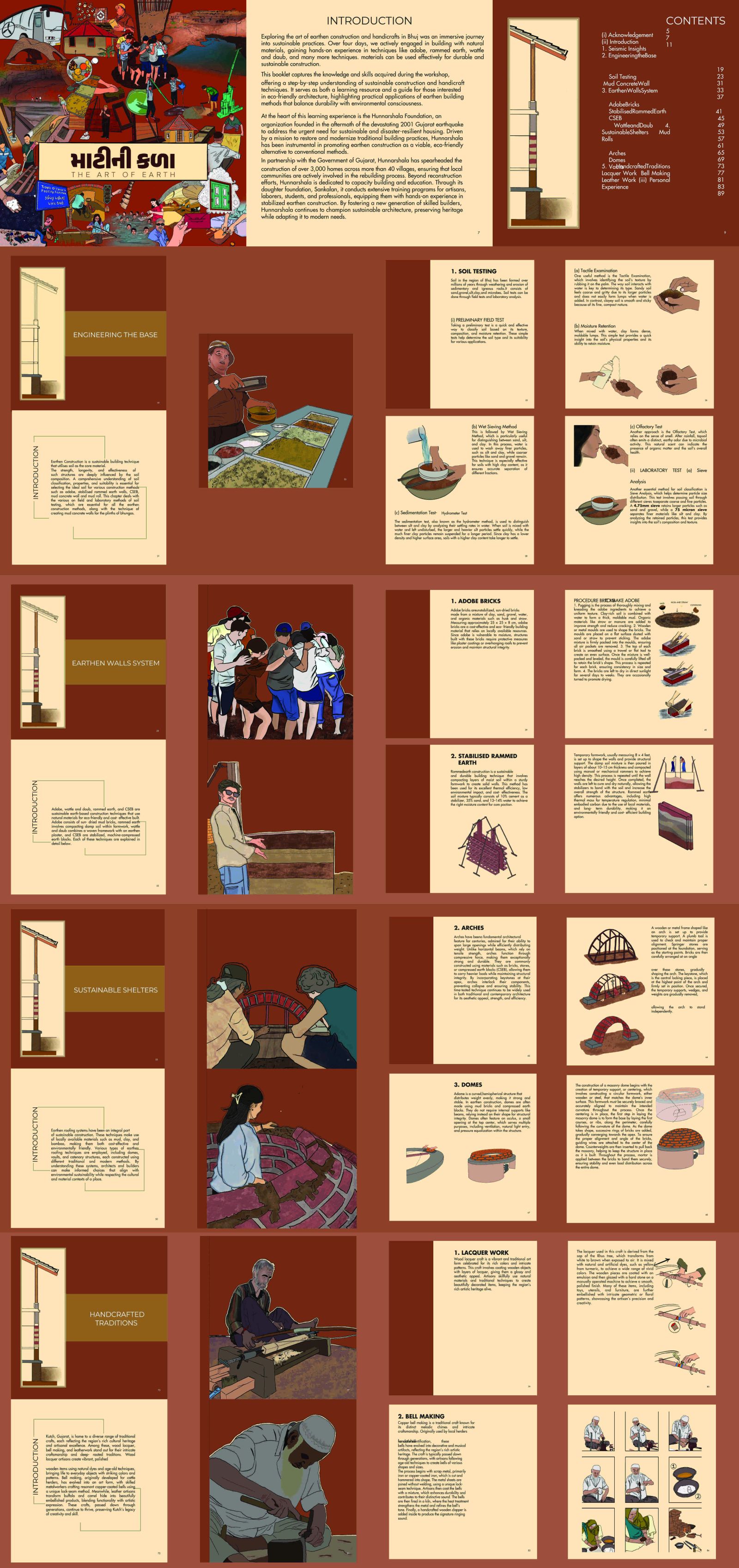
This booklet documents four days of learning through making exploring sustainable building practices with natural materials. From adobe to wattle and daub, it offers insights into eco-friendly construction techniques rooted in tradition and designed for a resilient future.

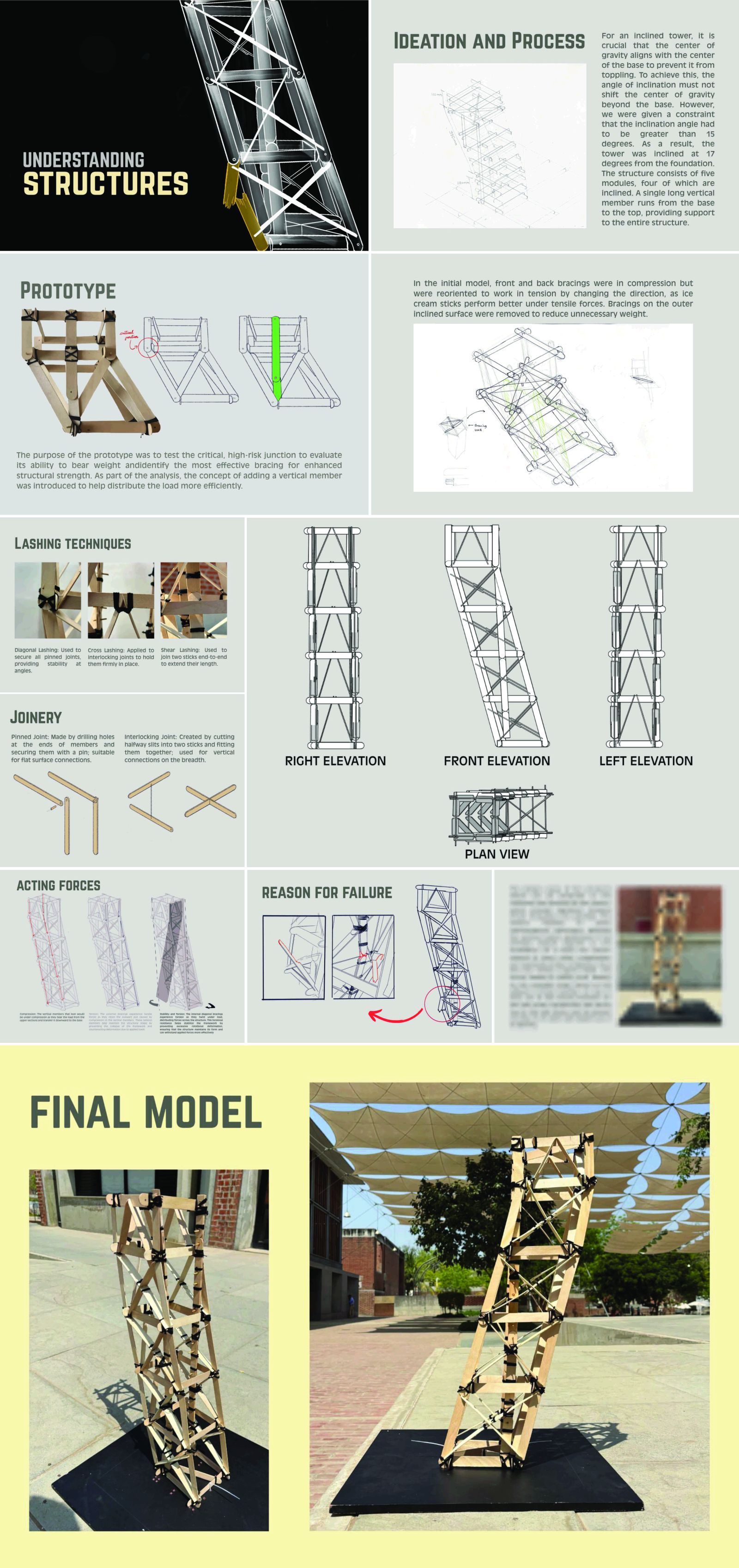
This model applies concepts like triangulation, stress distribution, and centre of gravity to design a strong, stable structure. By experimenting with material properties and joinery, it reflects a hands-on understanding of structural performance and failure analysis.

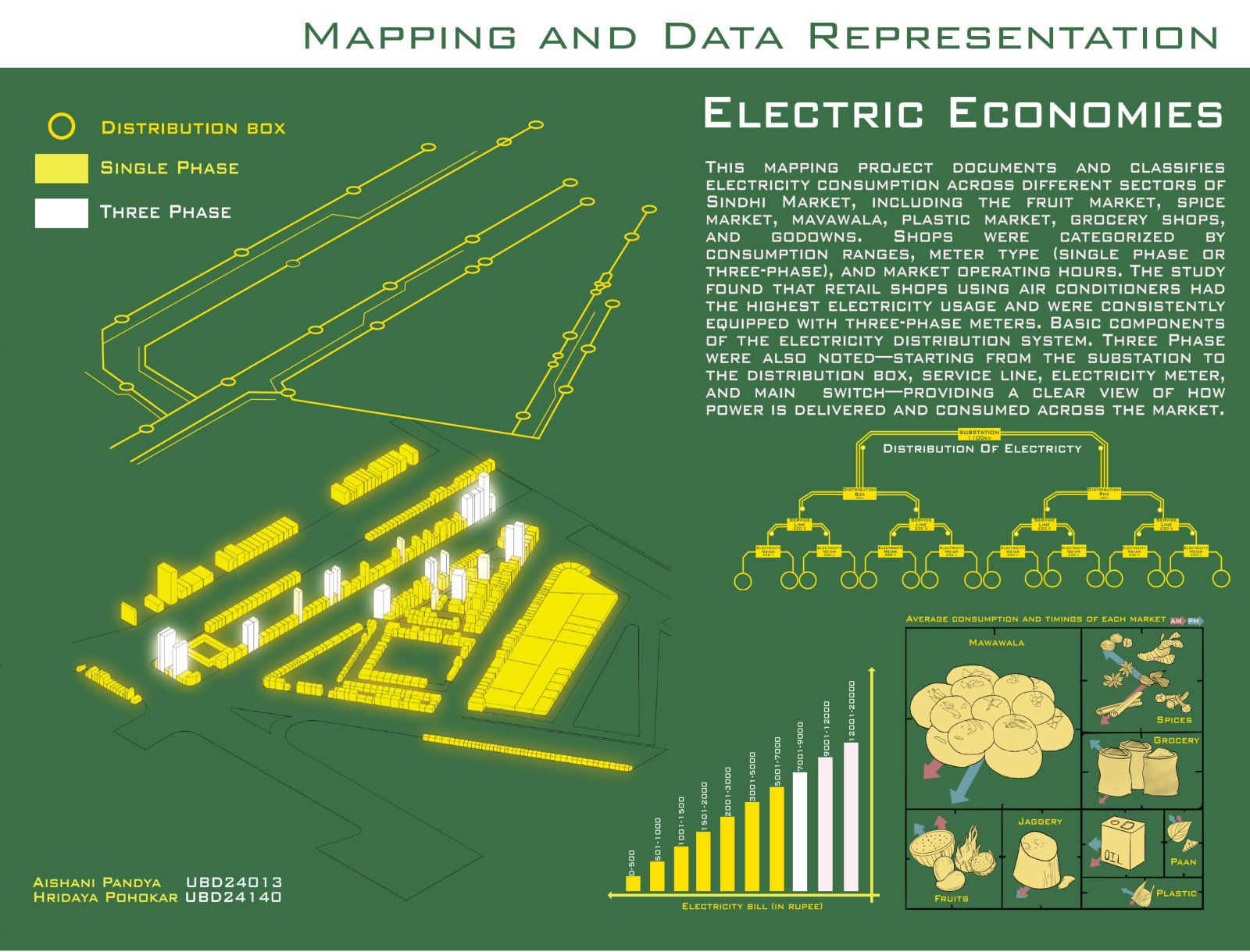
Mapping electricity usage across Sindhi Market highlighting sector-wise consumption patterns, meter types, and the three-phase power distribution system.

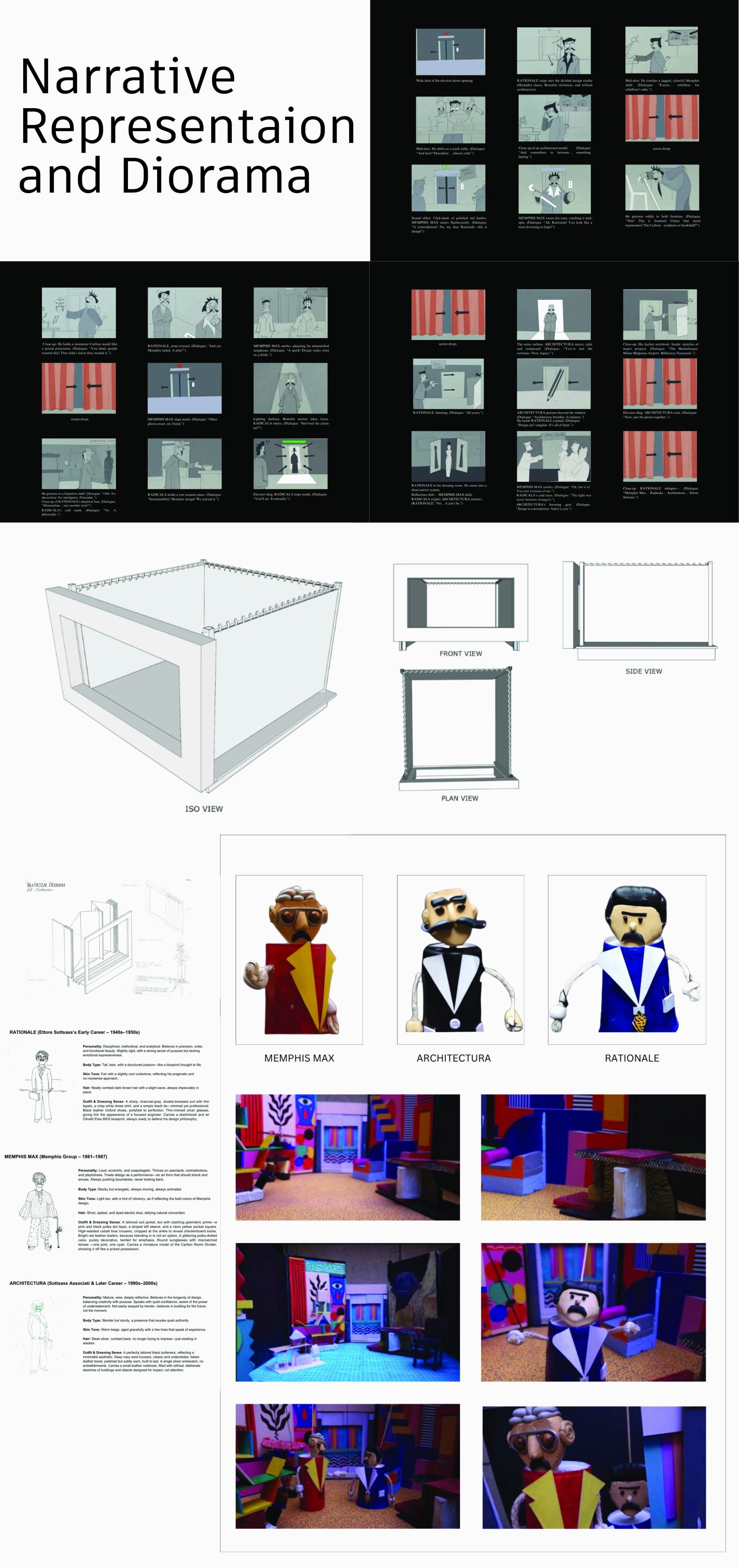
This project traces the full arc of narrative representation starting with a written story and evolving through storyboard development, detailed set and character design, a diorama-based puppet performance, and finally, a short film.

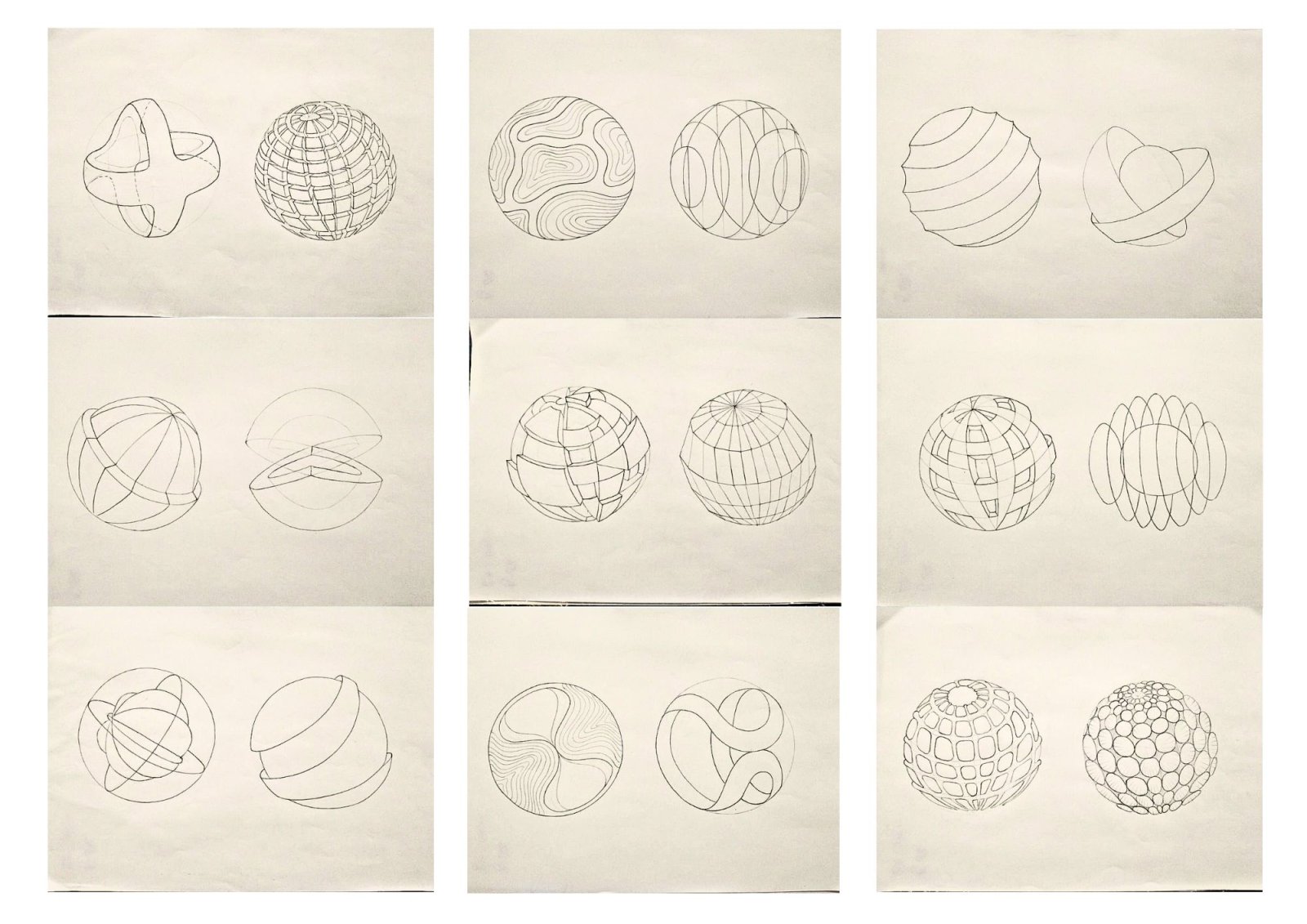
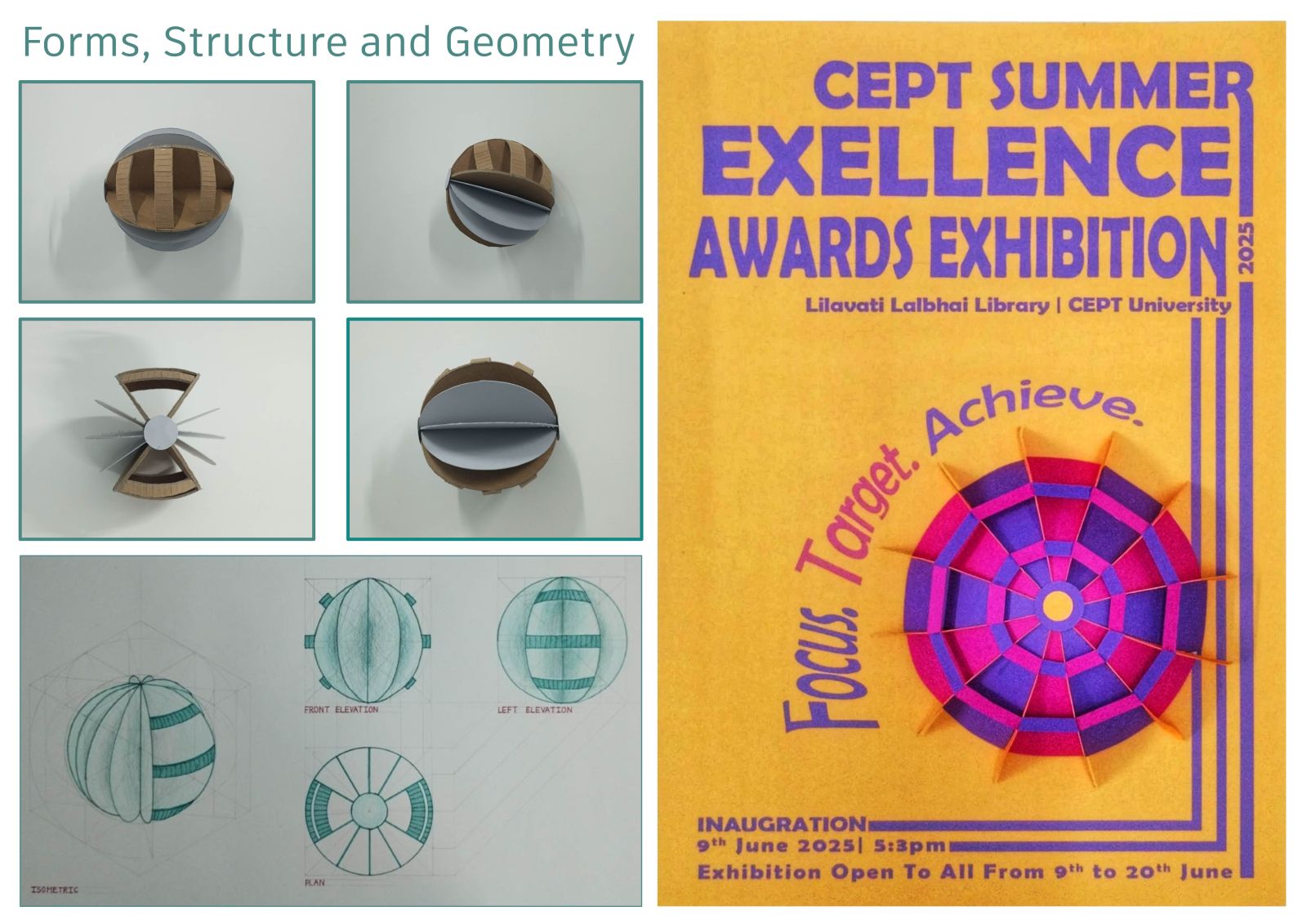
Form, Structure And Geometry. Exploring form through freehand iterations constructing the structure of a sphere.

I made a physical model of a sphere and then drafted and rendered it at full scale. Finally, I designed a poster featuring the sphere as a dartboard a metaphor for focus and achieving one’s target created for the CEPT Excellence Award Exhibition.

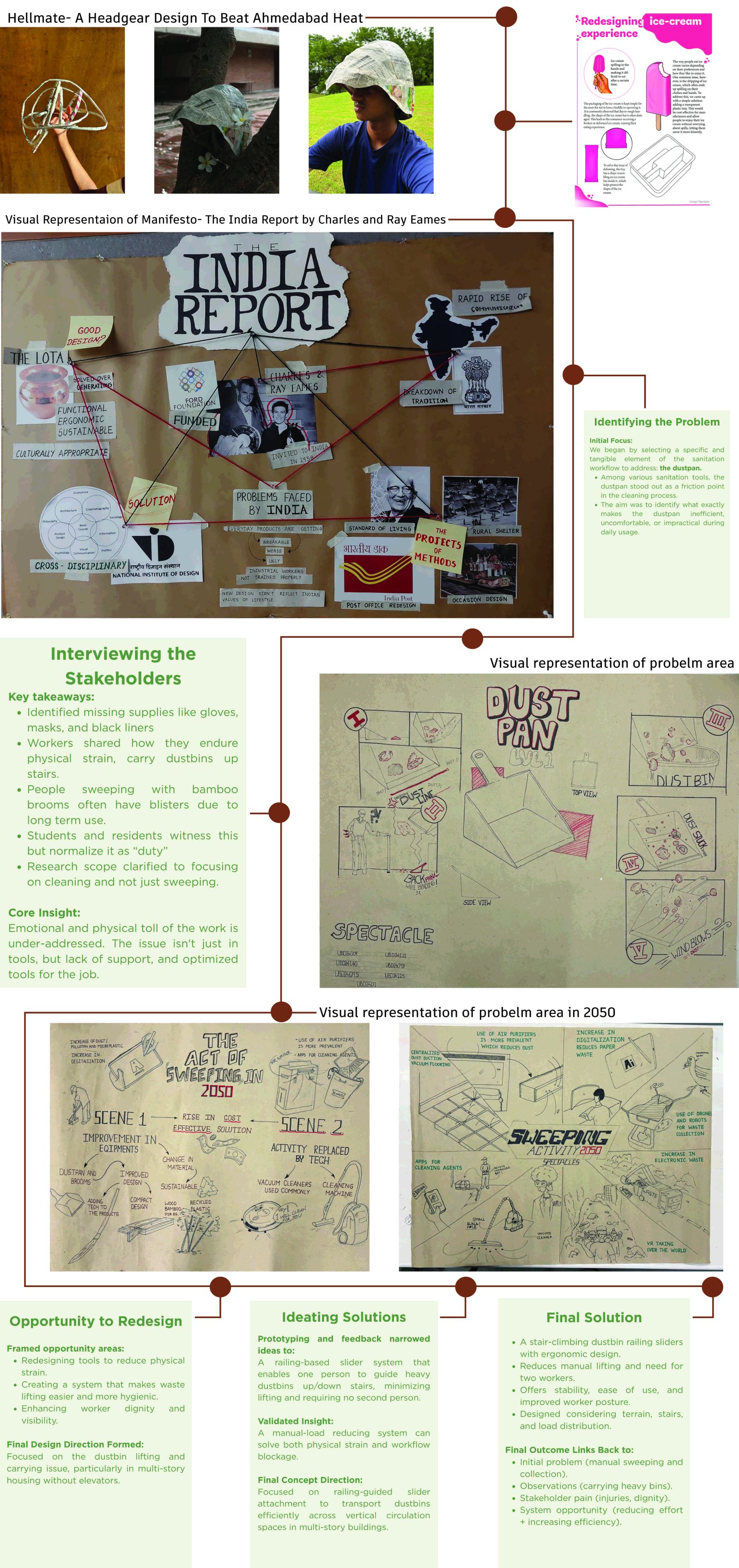
Design process was project which explored the essence of good design through diverse experiences: creating a headgear, studying The India Report manifesto, and engaging in interviews with design students, faculty, and professionals. It concluded with reimagining the everyday experience of eating ice cream turning thoughtful insights into creative design solutions.

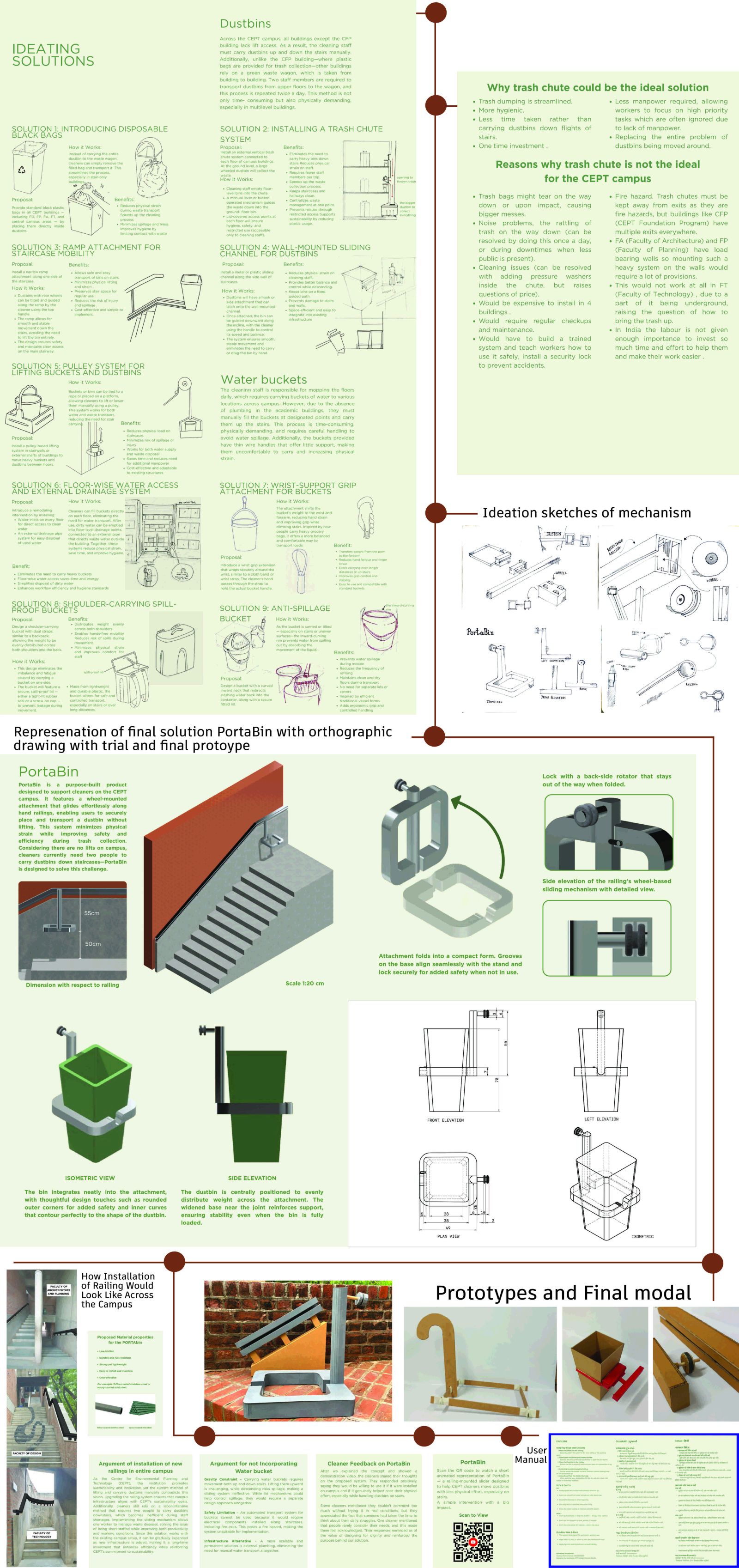
The project began with a focus on the dustpan, but evolved into a broader investigation of sweeping practices across the CEPT campus. Through on-ground observations and stakeholder interviews, we identified a major issue: the lack of lift access made moving dustbins across levels difficult. This led to the design of PortaBin—a portable utility product aimed at reducing physical strain and improving mobility for cleaning staff.

Project Video