Priyansh Singh

CFP009

UCE24297

The CEPT Foundation Programme studio is an introduction for students fresh out of school to the rigor and work habits required by an undergraduate degree at CEPT University. The studio is conceptualized as a series of sequentially planned exercises, through which students develop skills and abilities, which are then deployed to address increasingly complex problems falling into four broad categories: visualize and draw, make and learn, analyze and interpret and conceptualize and represent. The exercises are designed to provide common and allied foundational skills and abilities for students across disciplines at CEPT, between which they maintain a balance. The studio is taught through intensive and incremental weekly modules, focusing on a particular skill or ability and a process that emphasises ongoing discussion and feedback in addition to expert faculty lectures.

View Additional Work
Report Content

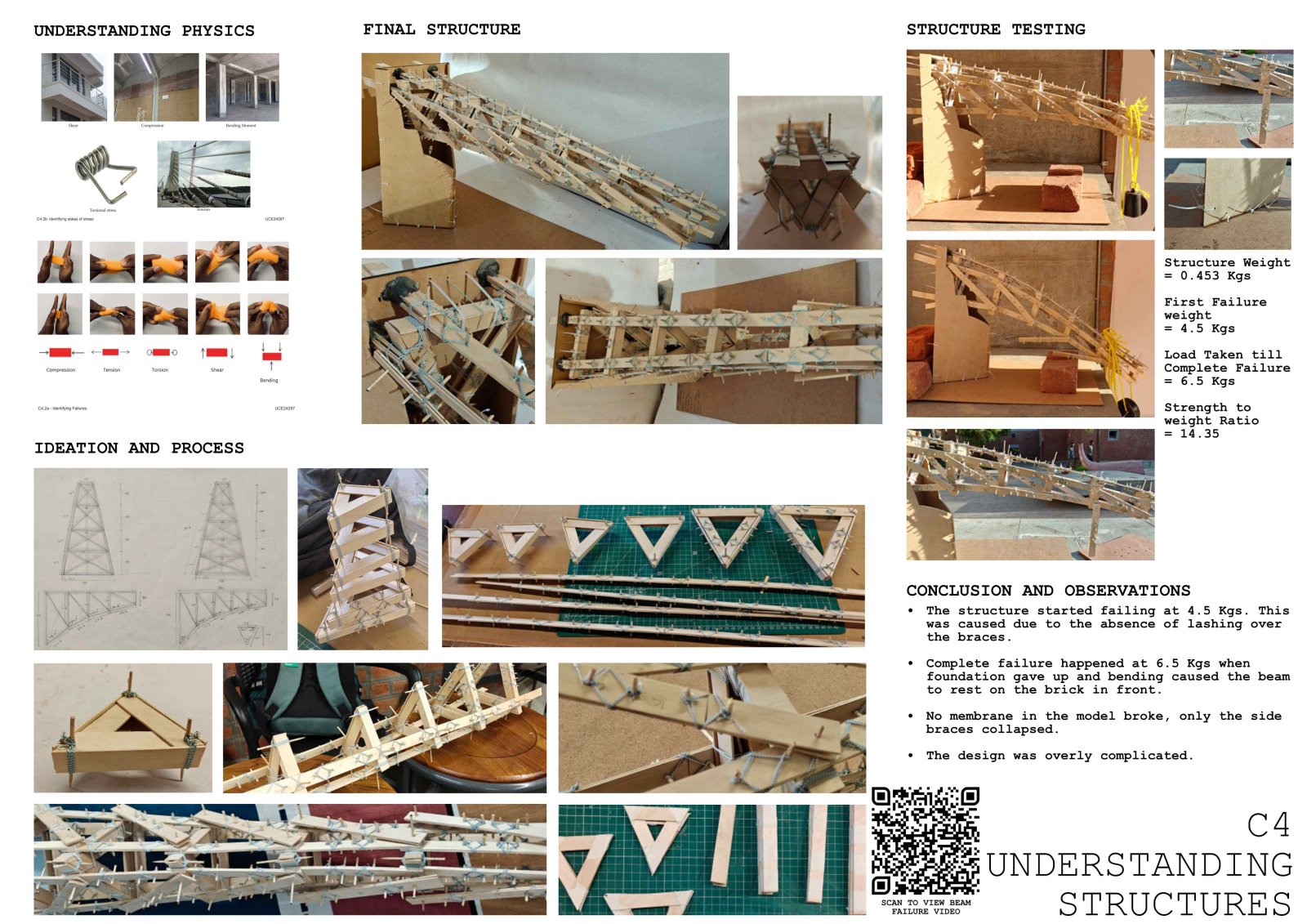
Understanding Structures- Designing and testing a cantilever beam made from candy sticks. | This work was done together with Harshit Khemka (UBD24048)

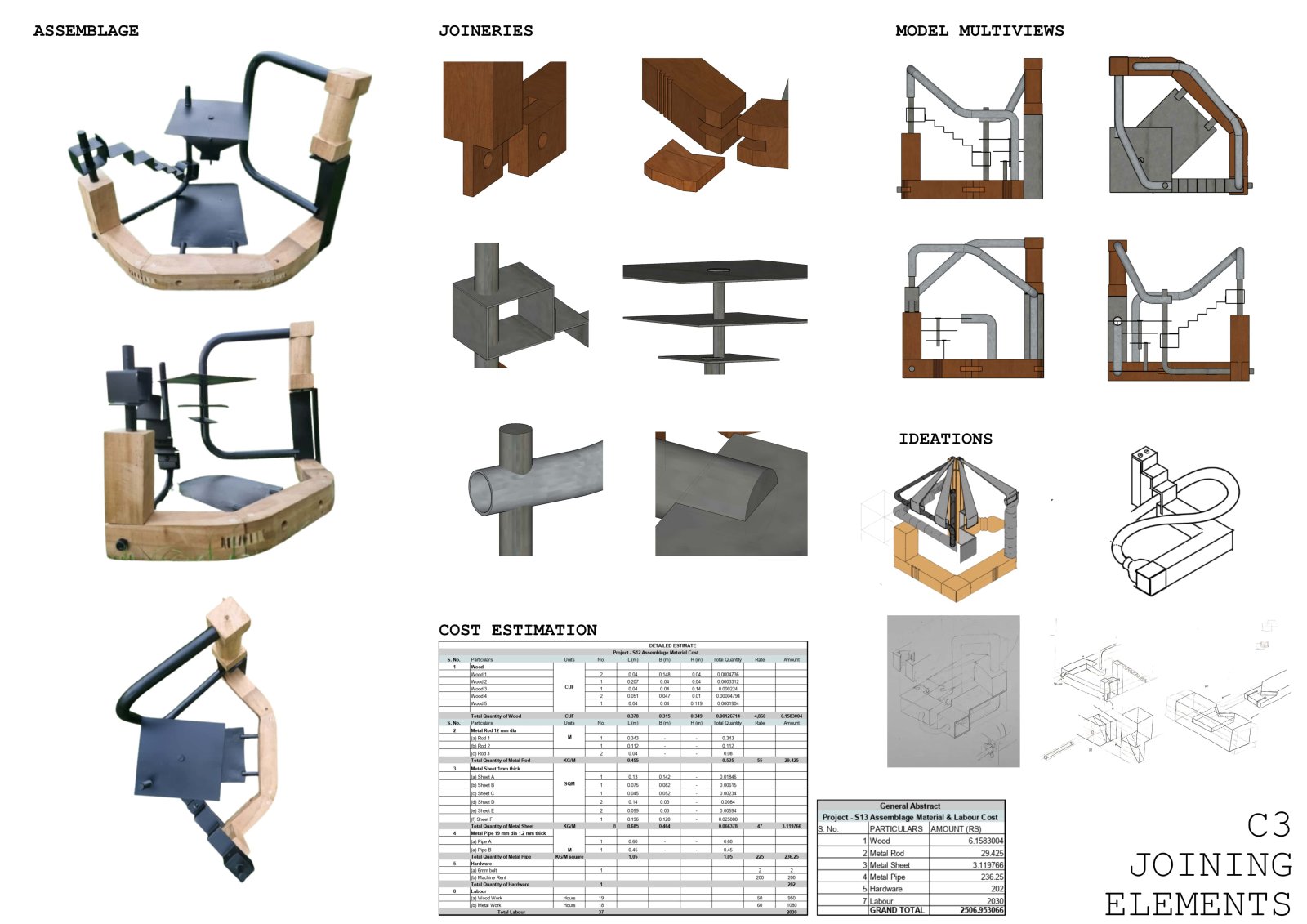
Joining Elements- Designing and making an assemblage using wood, metal sheets, pipe and rod. | This work was done together with Swastik Sharma (UBD24109)

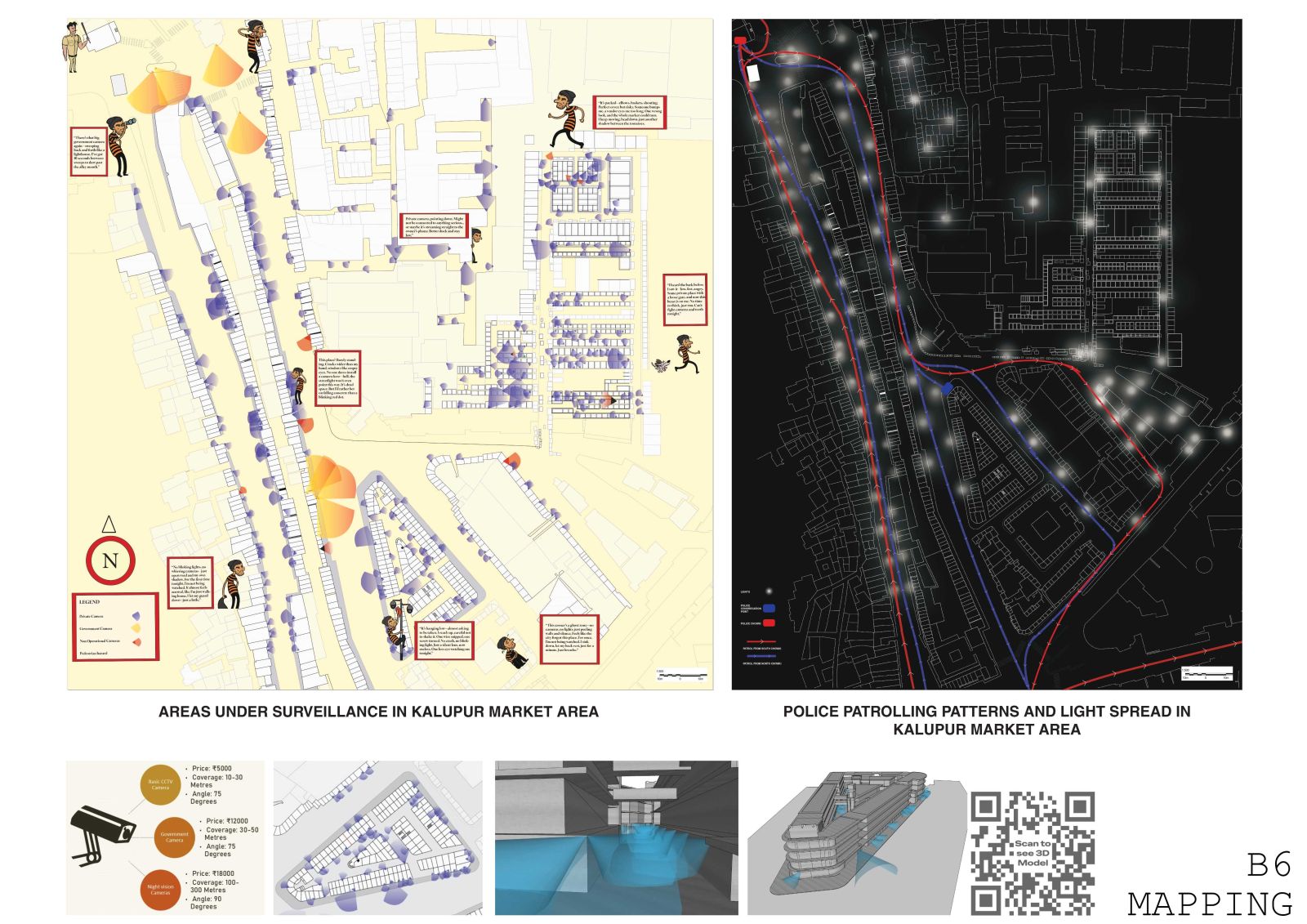
Mapping- Surveying and collecting information on CCTVs in Kalupur market Area. | This work was done together with Vedant Khandelwal (UBD24247) | Nehal More (UBD24120)

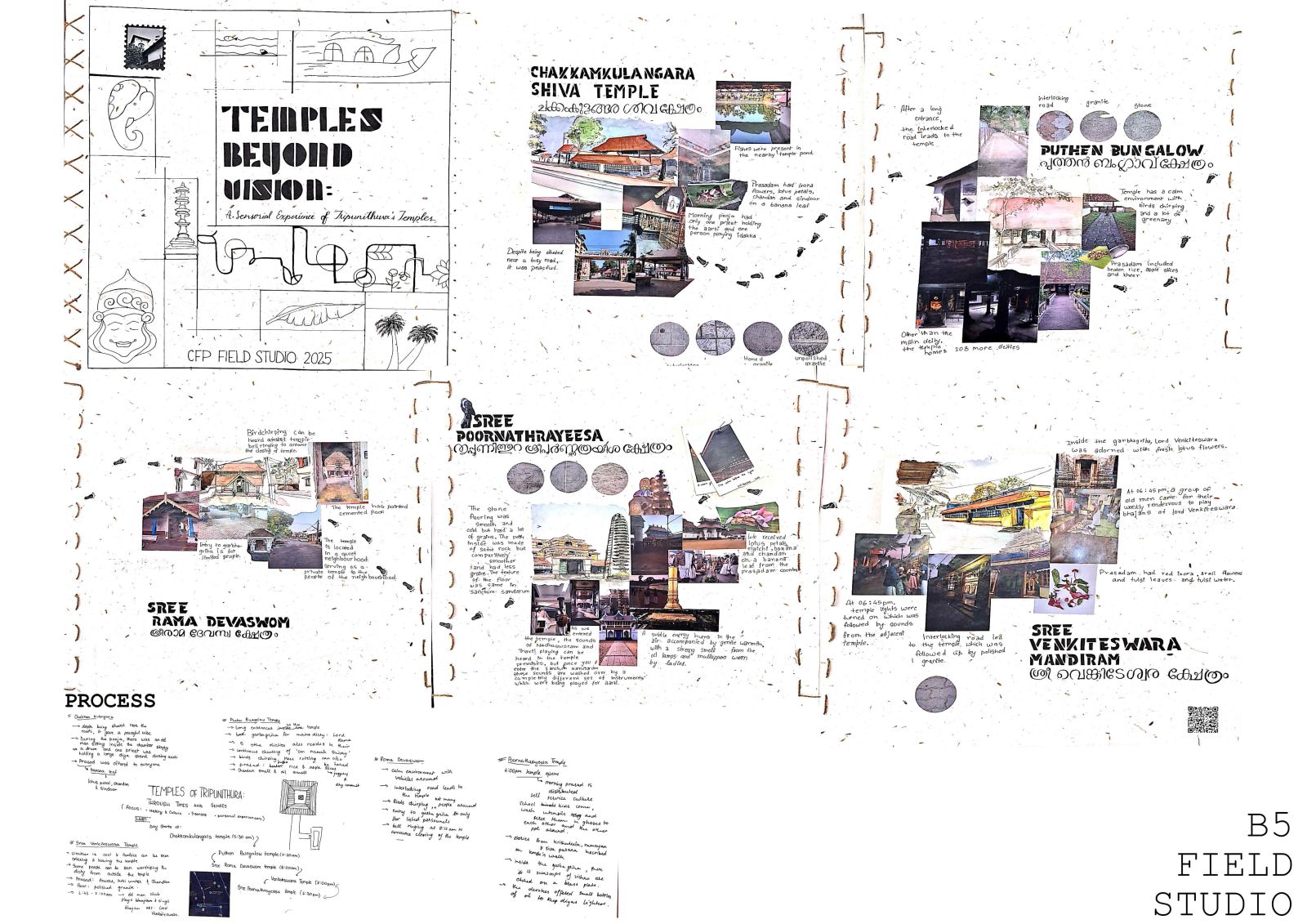
Field Studio- “Temples beyond vision”, explores the temples of Tripunithura, Kerala through sensory experiences across time. It focuses on recording all the observations that were made during the temple visits ranging from sounds of the temple bells, smell of diyas, taste of prasad. The study aims to offer understanding beyond sight, capturing the temple’s essence through all senses. | This work was done together with Tanisha Gupta (UAR24237)

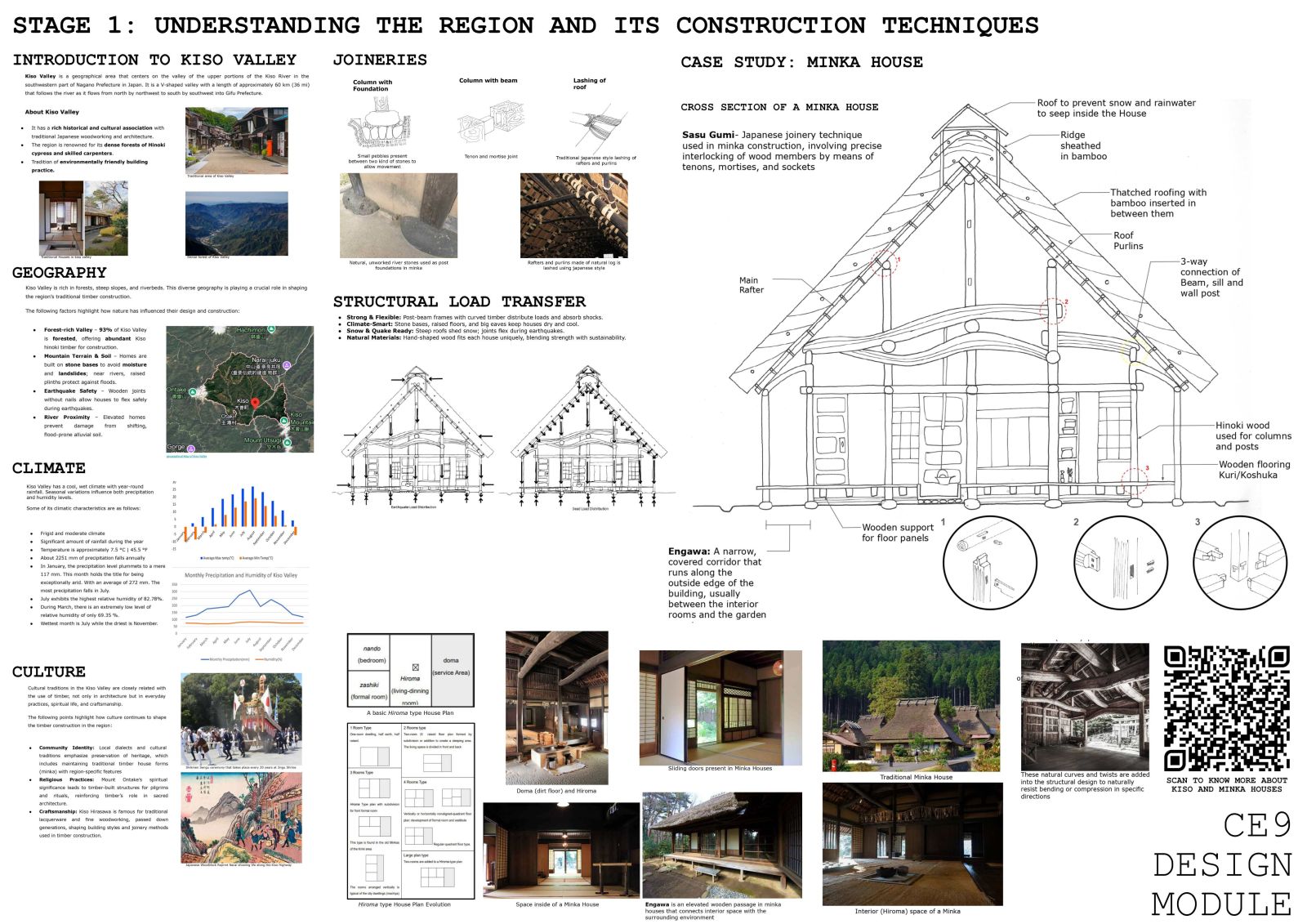
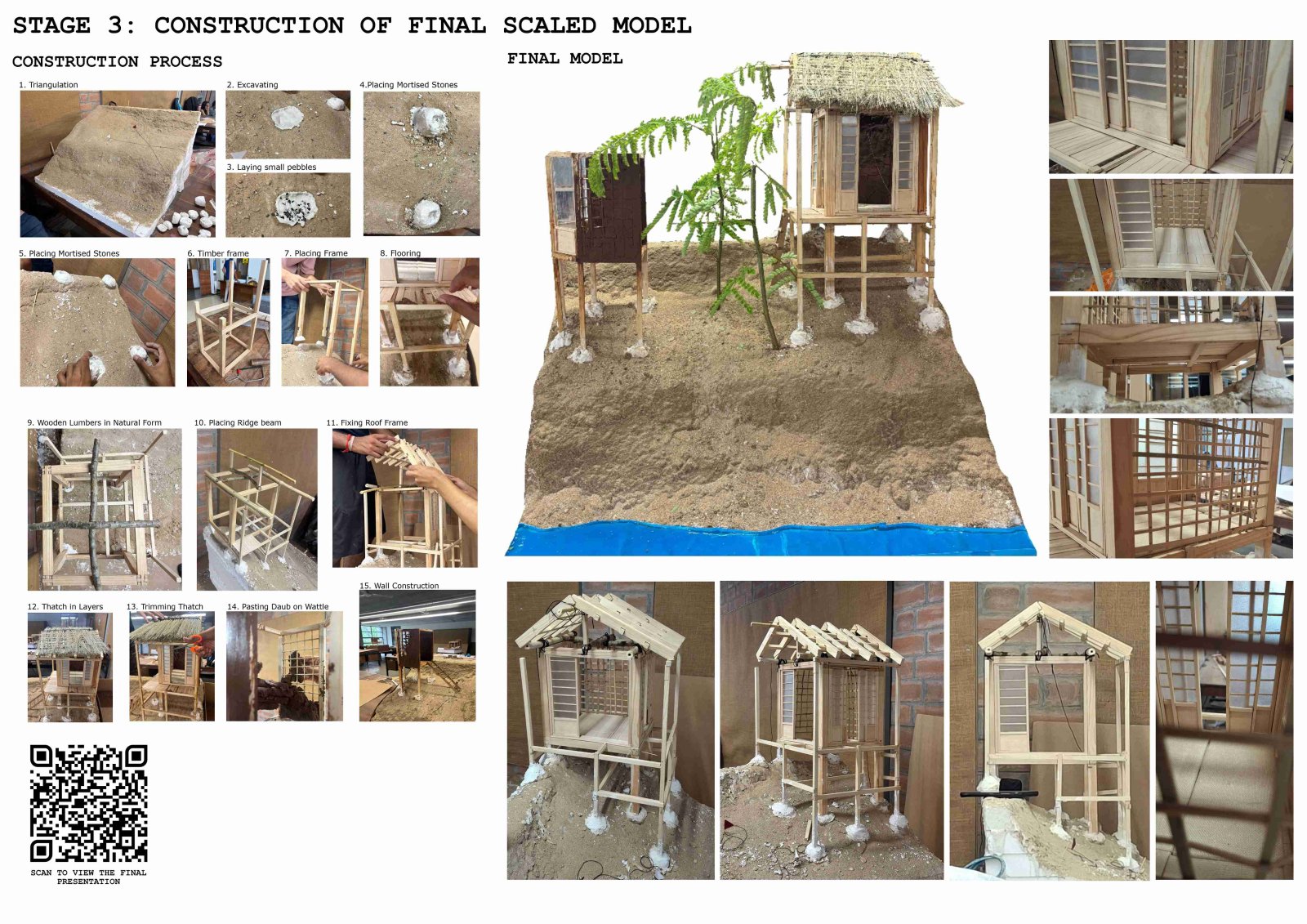
Design Module- Designing and constructing a structure in Kiso Valley, Japan. Stage 1 includes researching and establishing context about the site, along with case studies of traditional building techniques in the region. | This work was done together with Varun Mistry (UCE24143) | Dev Choudhary (UCE24118) | Kenil Shah (UCE24056)

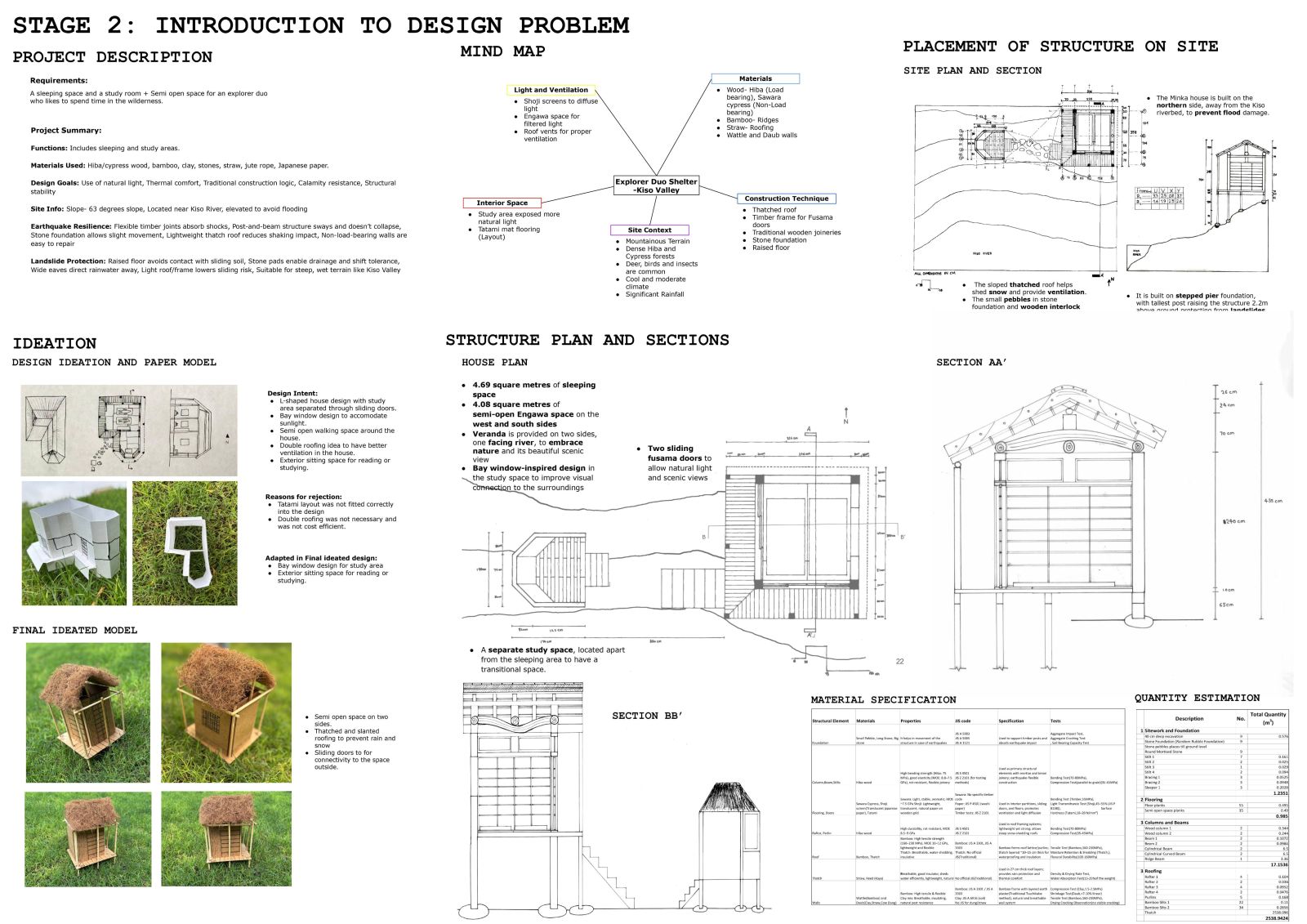
Stage 2 includes the design challenge, ideation, and development of the structure design as per the project requirements.

Stage 3 involved making a 1:10 scale model of the designed structure, incorporating all on-site practices. The materials used in the model were chosen to resemble the properties of traditional construction materials used in the region.

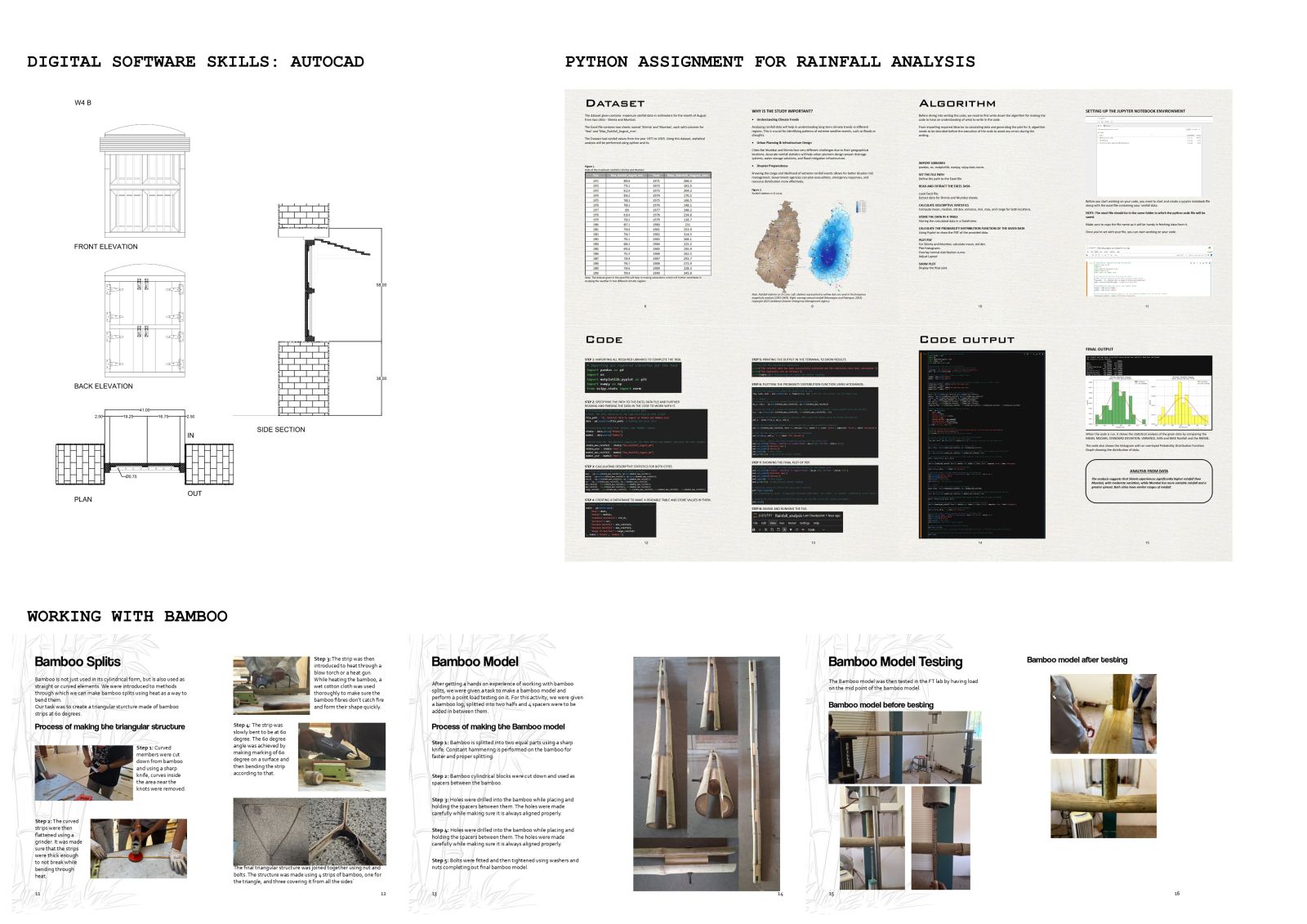
Digital Software Skills, Python assignment and Working with Bamboo.