Virjaa Viral Shah

CFP009

UUR24307

The CEPT Foundation Programme studio is an introduction for students fresh out of school to the rigor and work habits required by an undergraduate degree at CEPT University. The studio is conceptualized as a series of sequentially planned exercises, through which students develop skills and abilities, which are then deployed to address increasingly complex problems falling into four broad categories: visualize and draw, make and learn, analyze and interpret and conceptualize and represent. The exercises are designed to provide common and allied foundational skills and abilities for students across disciplines at CEPT, between which they maintain a balance. The studio is taught through intensive and incremental weekly modules, focusing on a particular skill or ability and a process that emphasises ongoing discussion and feedback in addition to expert faculty lectures.
Report Content

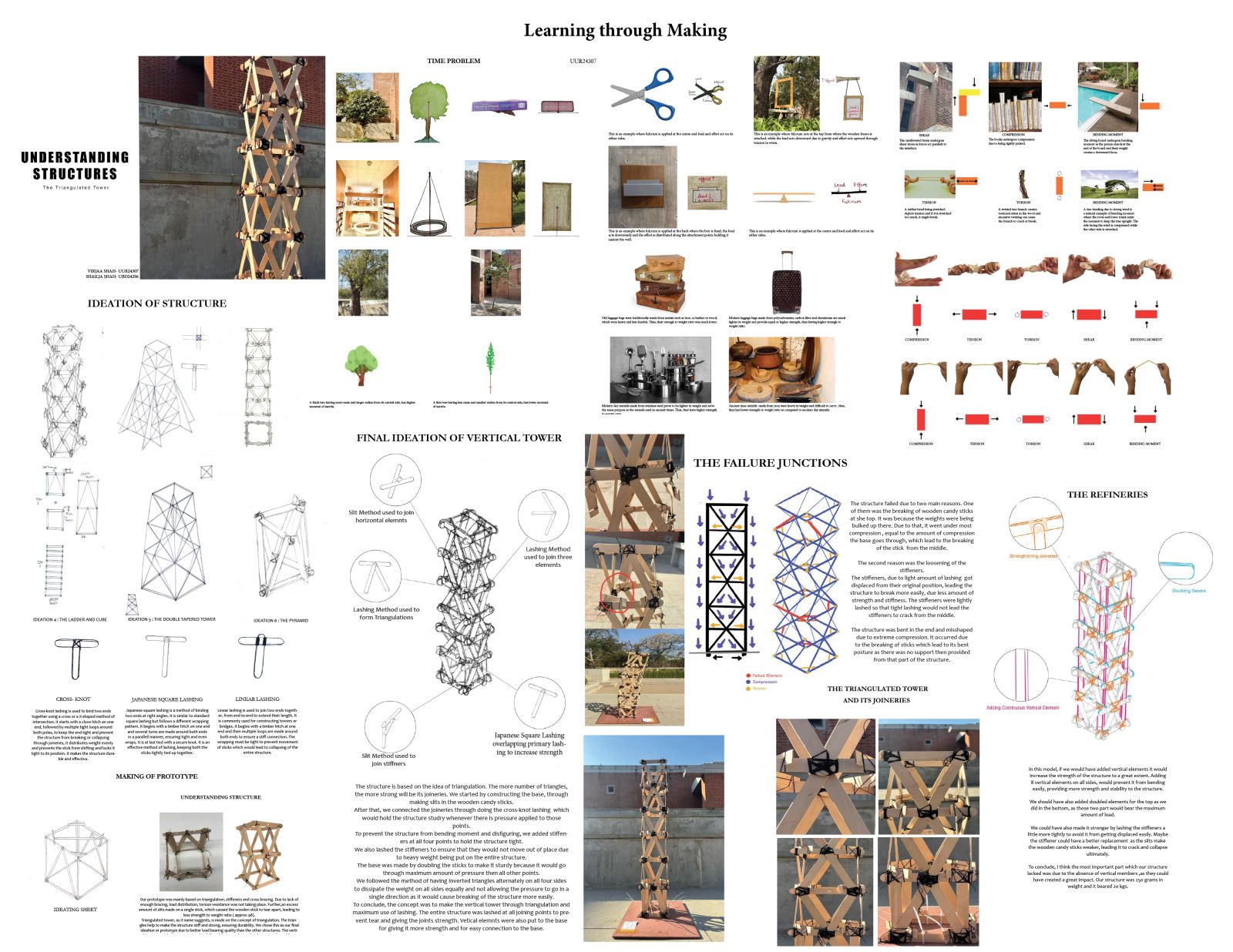
Load testing the triangulated tower and analyzing points of failure for design improvement.

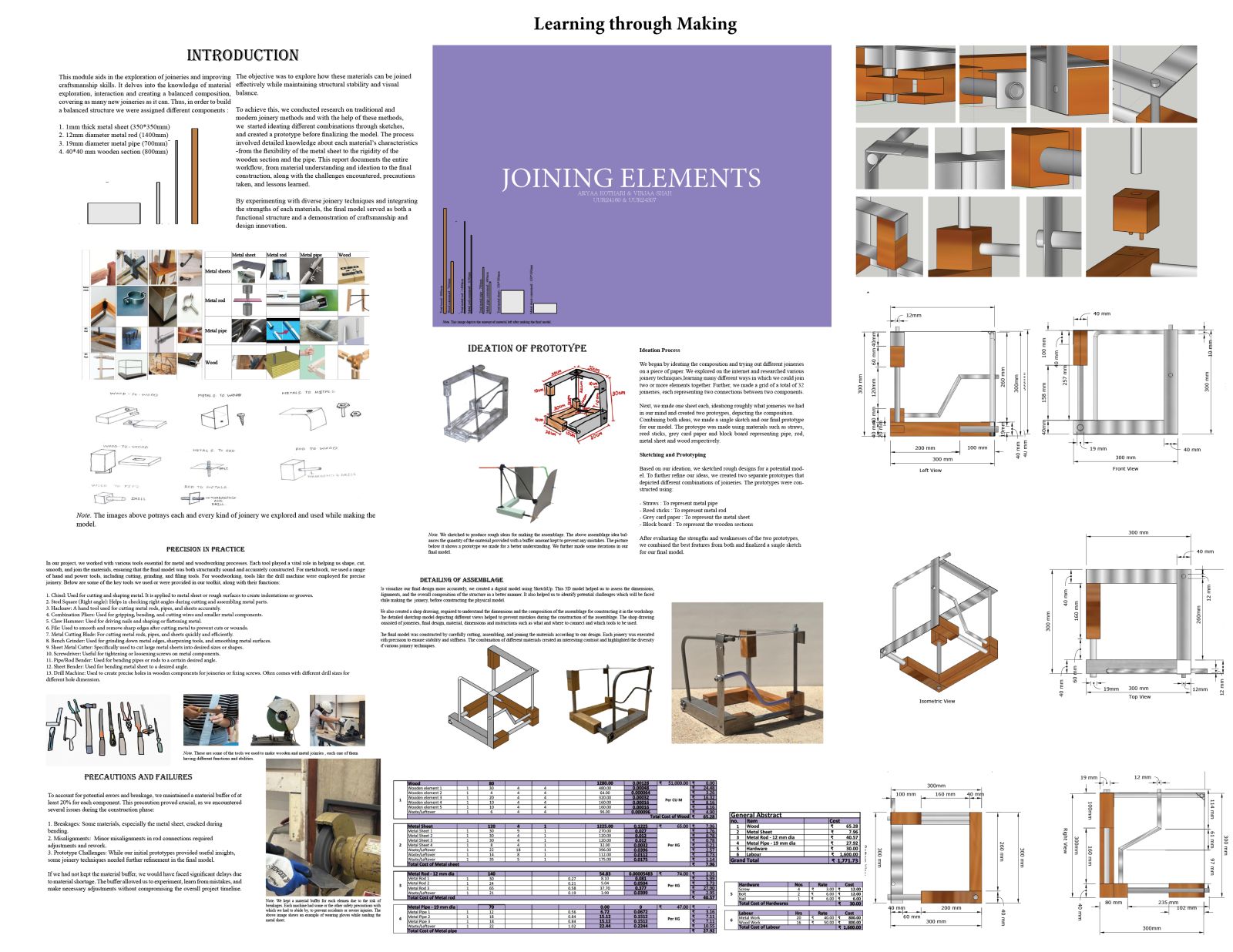
This section documents the process of understanding materials through hands-on joinery techniques, developing prototypes and final structure models, along with analyzing material efficiency through detailed cost and quantity estimation tables.

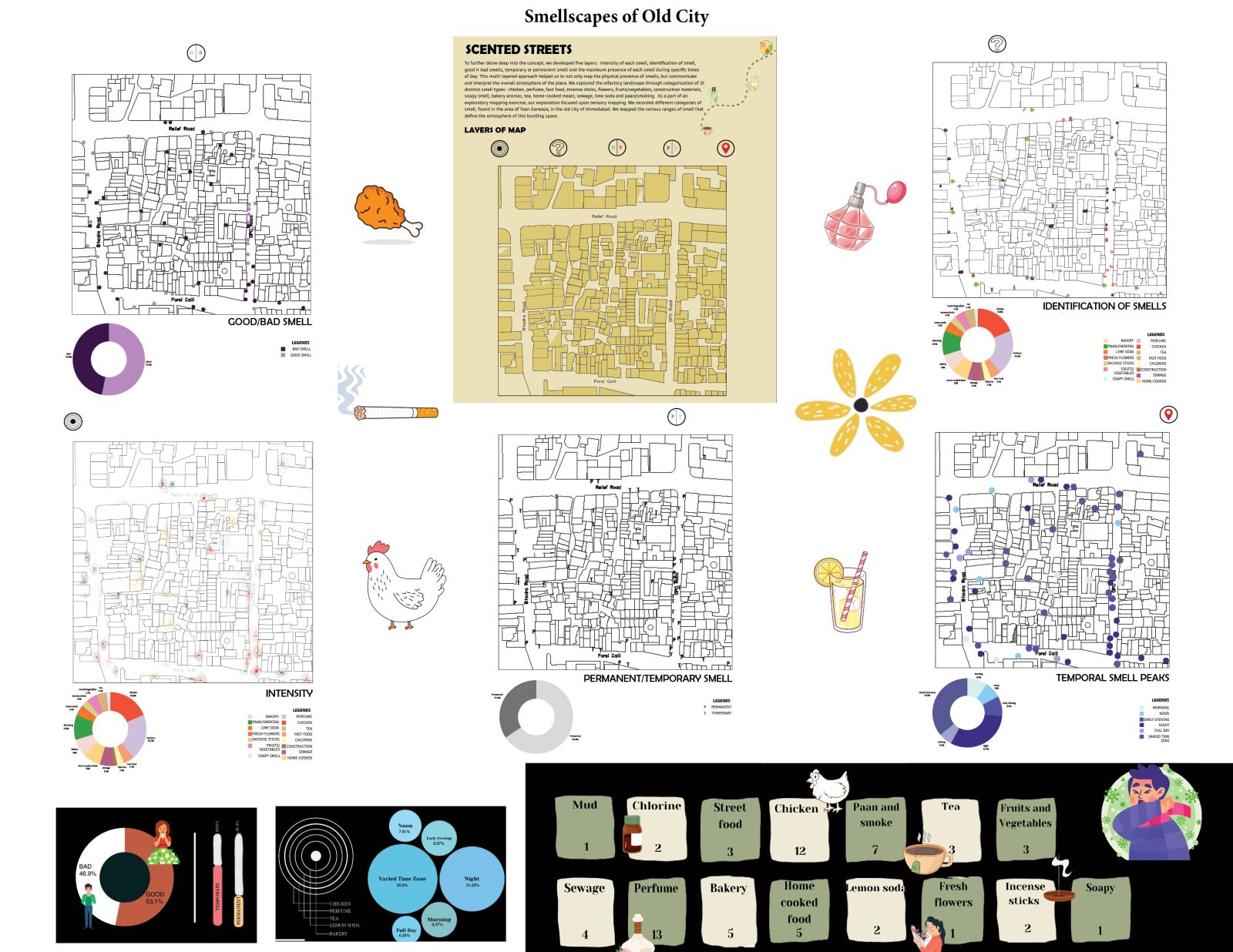
Mapping olfactory experiences in the old city using different layers such as intensity, type and time-based smellscapes.

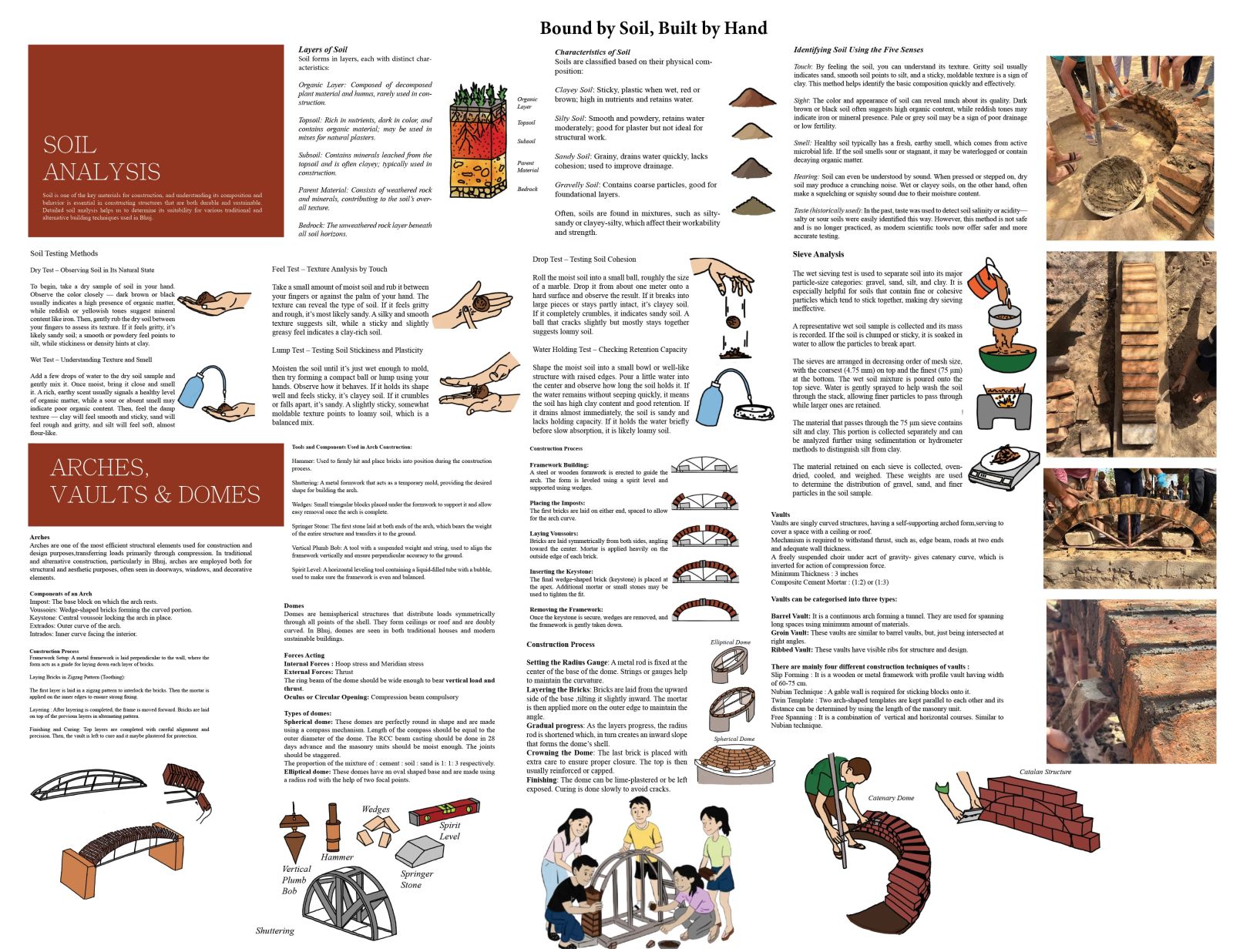
This section introduces the construction techniques used in Bhuj, through studying the role of local soil and traditional structural forms in Bhuj, focusing mainly upon behavior, soil testing and the geometry of earthen construction.

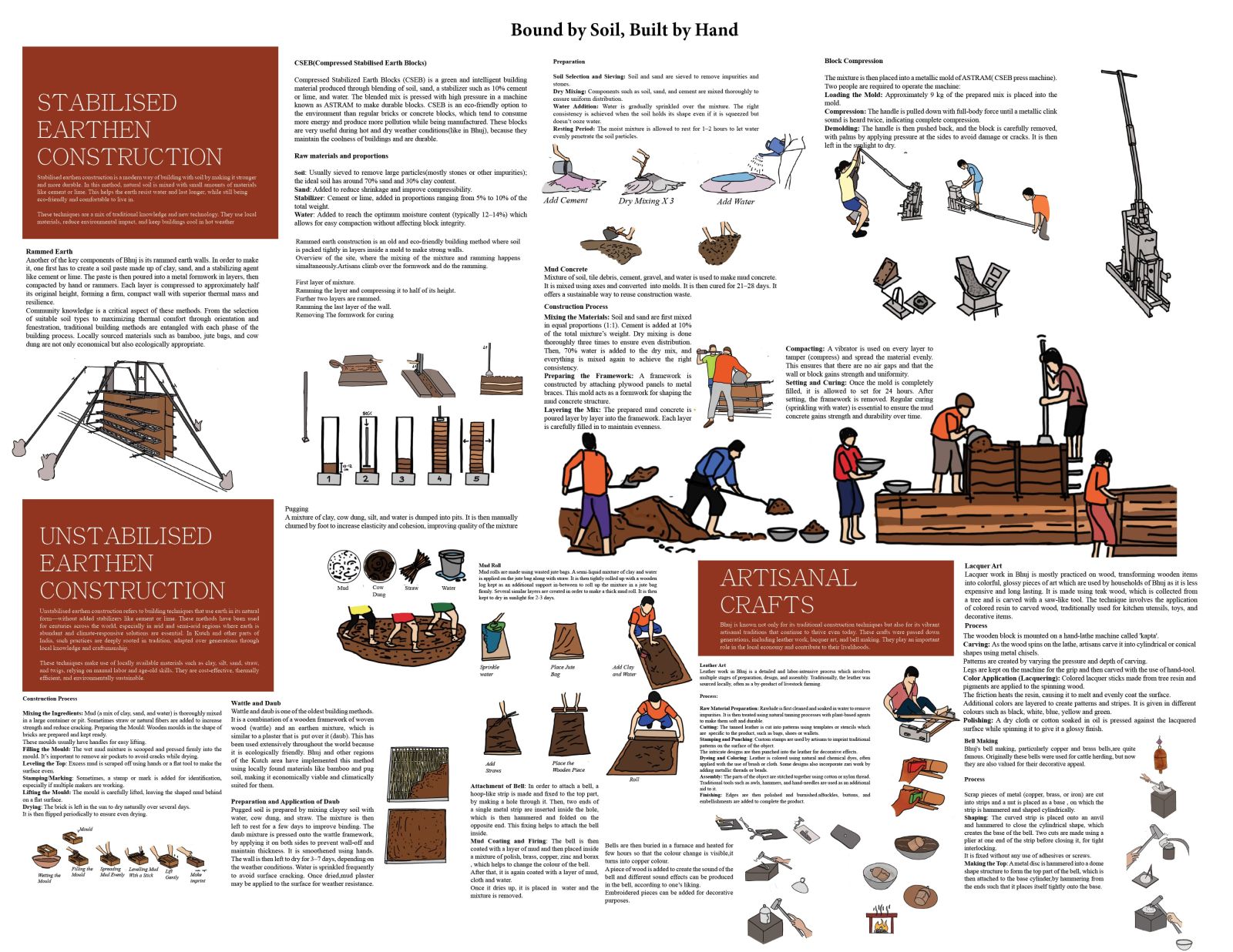
This section depicts a detailed continuation of the construction techniques explored in Bhuj, focusing on the processes of stabilized and unstabilized earthen construction - ranging from rammed earth to CSEBs, highlighting material preparation, construction methods and the tools involved in each technique.

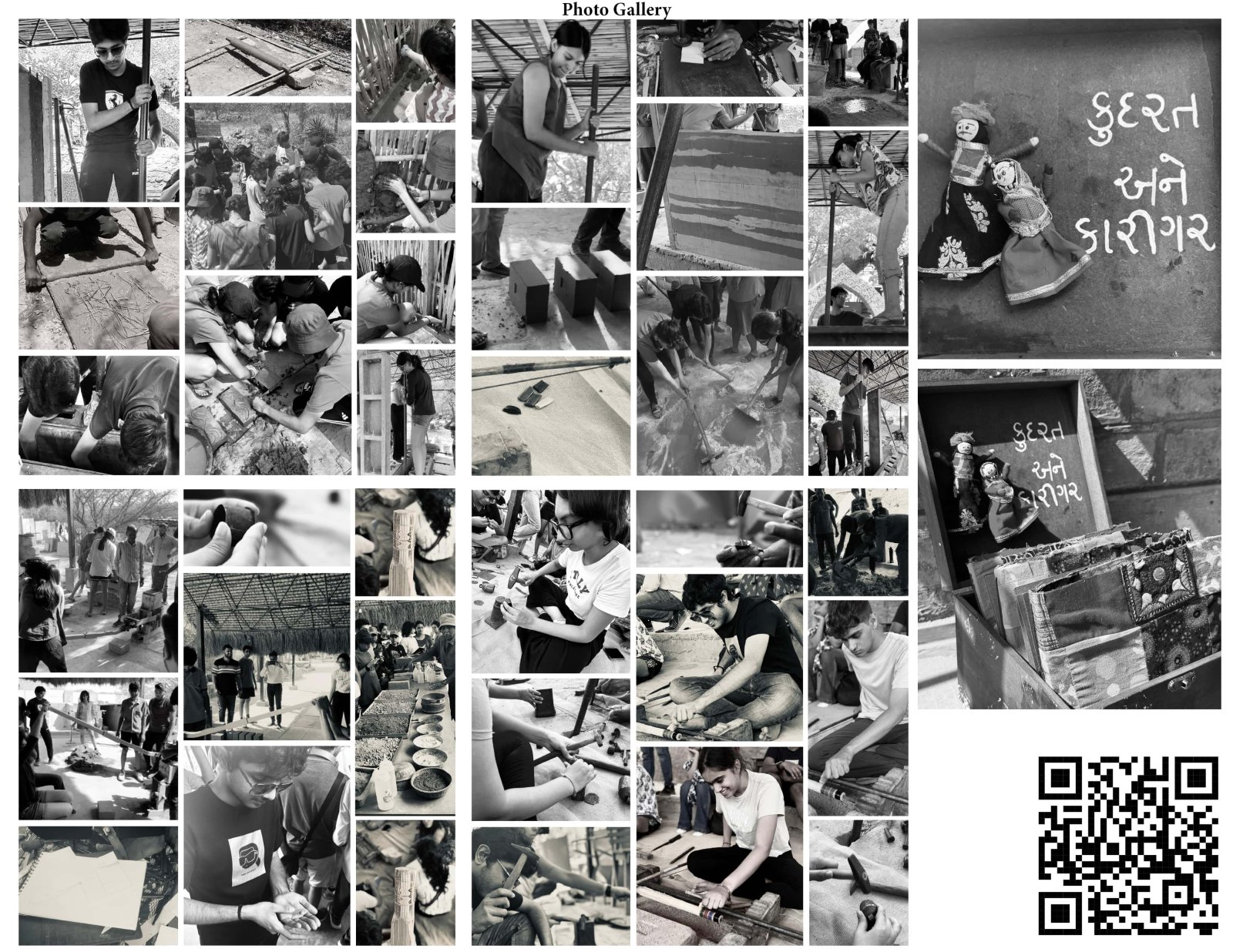
This section showcases local craftsmanship like bell-making and leatherwork, and hands-on building experience with traditional materials and techniques in Bhuj.

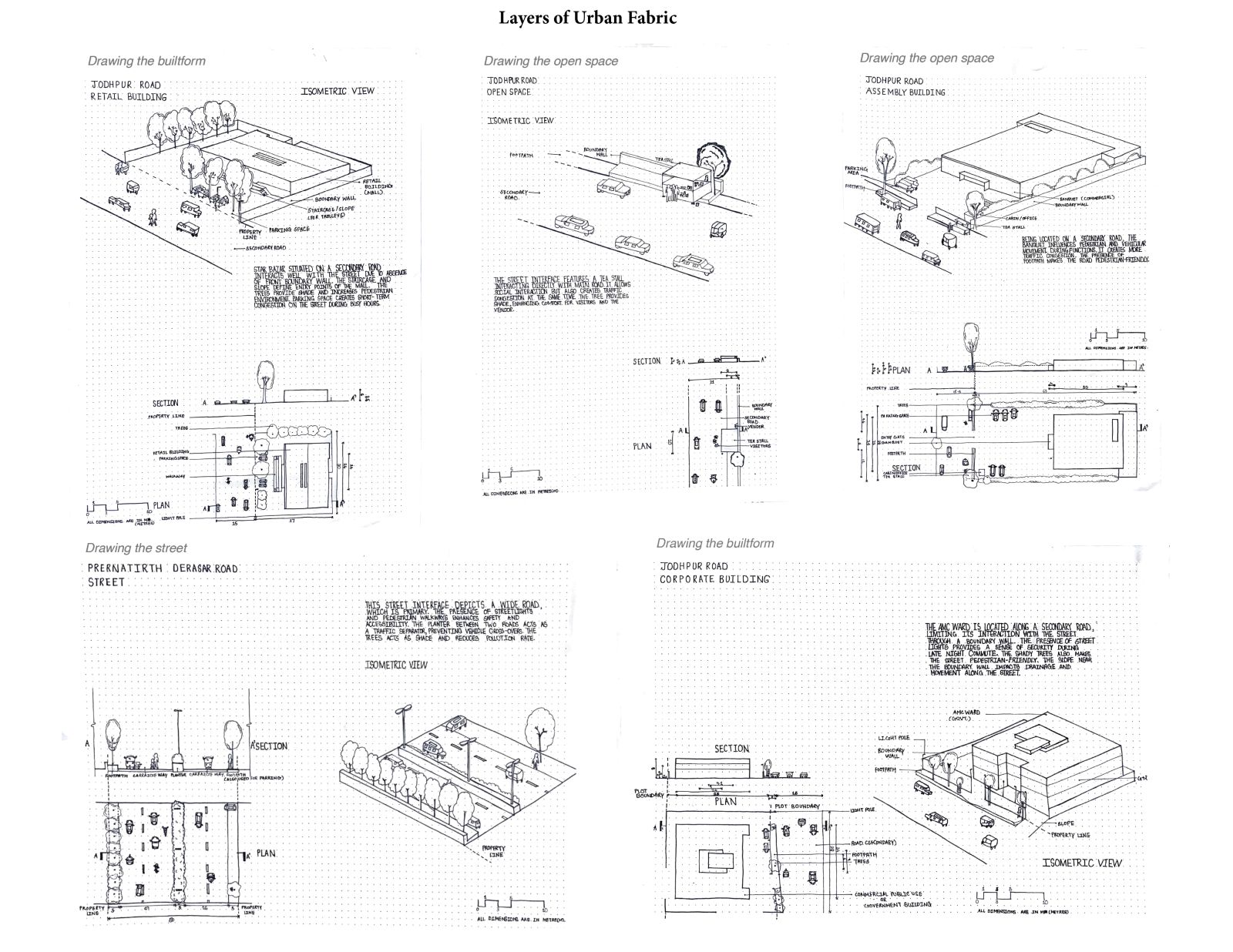
Representing urban fabric through analytical drawings of built forms, public spaces and streetscapes.

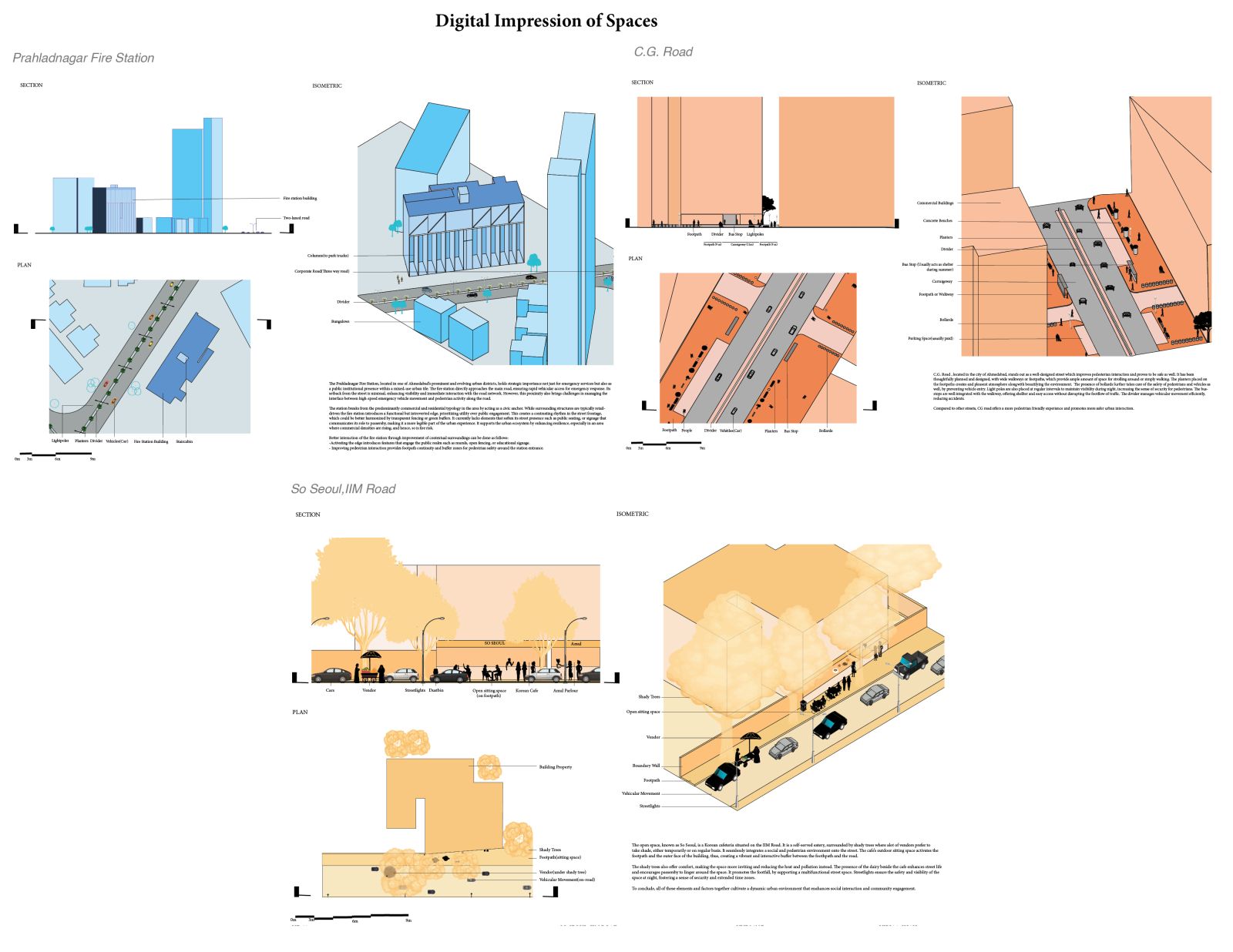
Translating spatial experiences into digital form through drawings and representation of buildings, streets and open spaces, along with capturing the essence of urban environment.

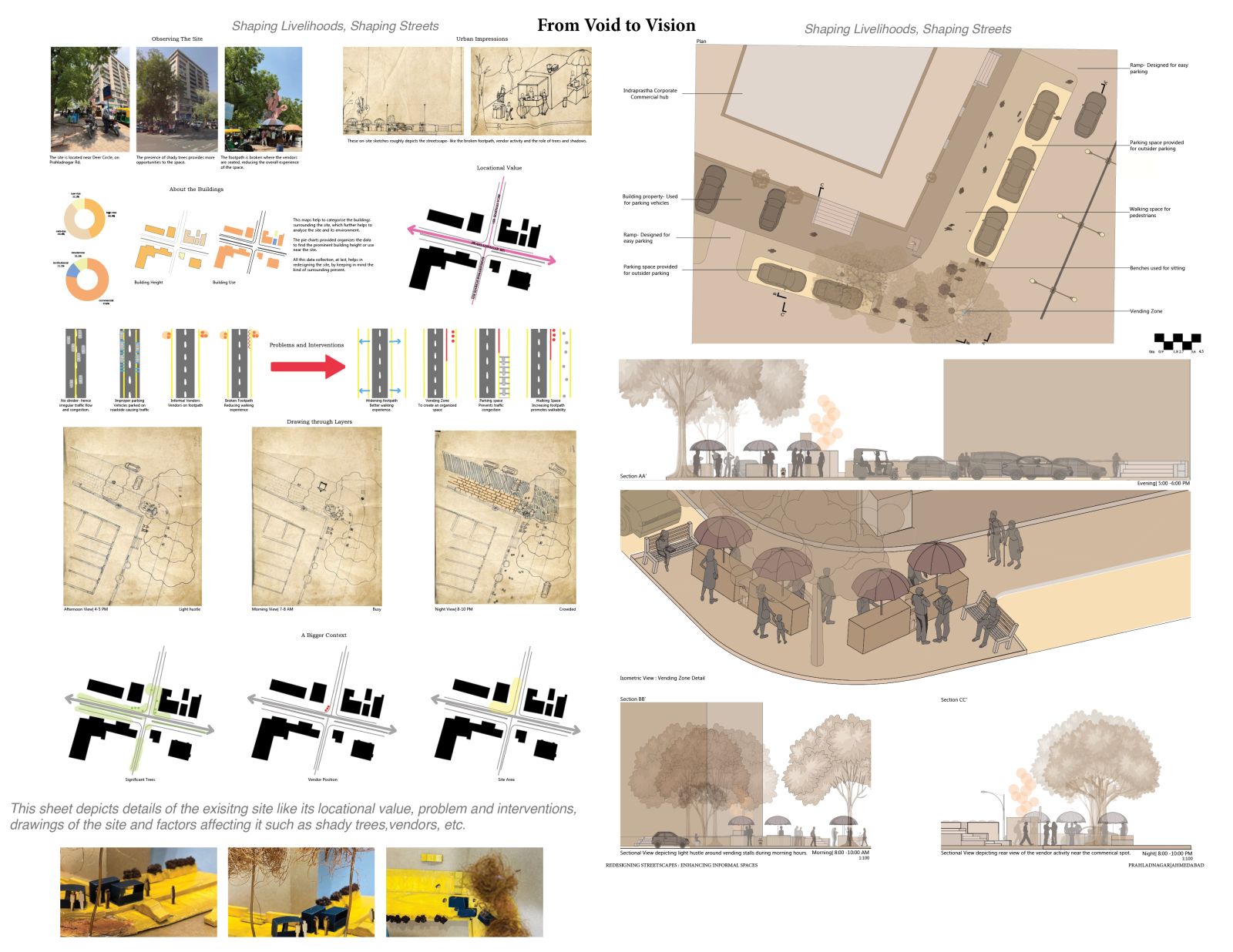
Analyzing the existing site conditions, spatial dimensions and user behavior for a context-sensitive redesign, followed by a detailed proposal that reimagines the street as a more inclusive, vibrant and accessible urban space.

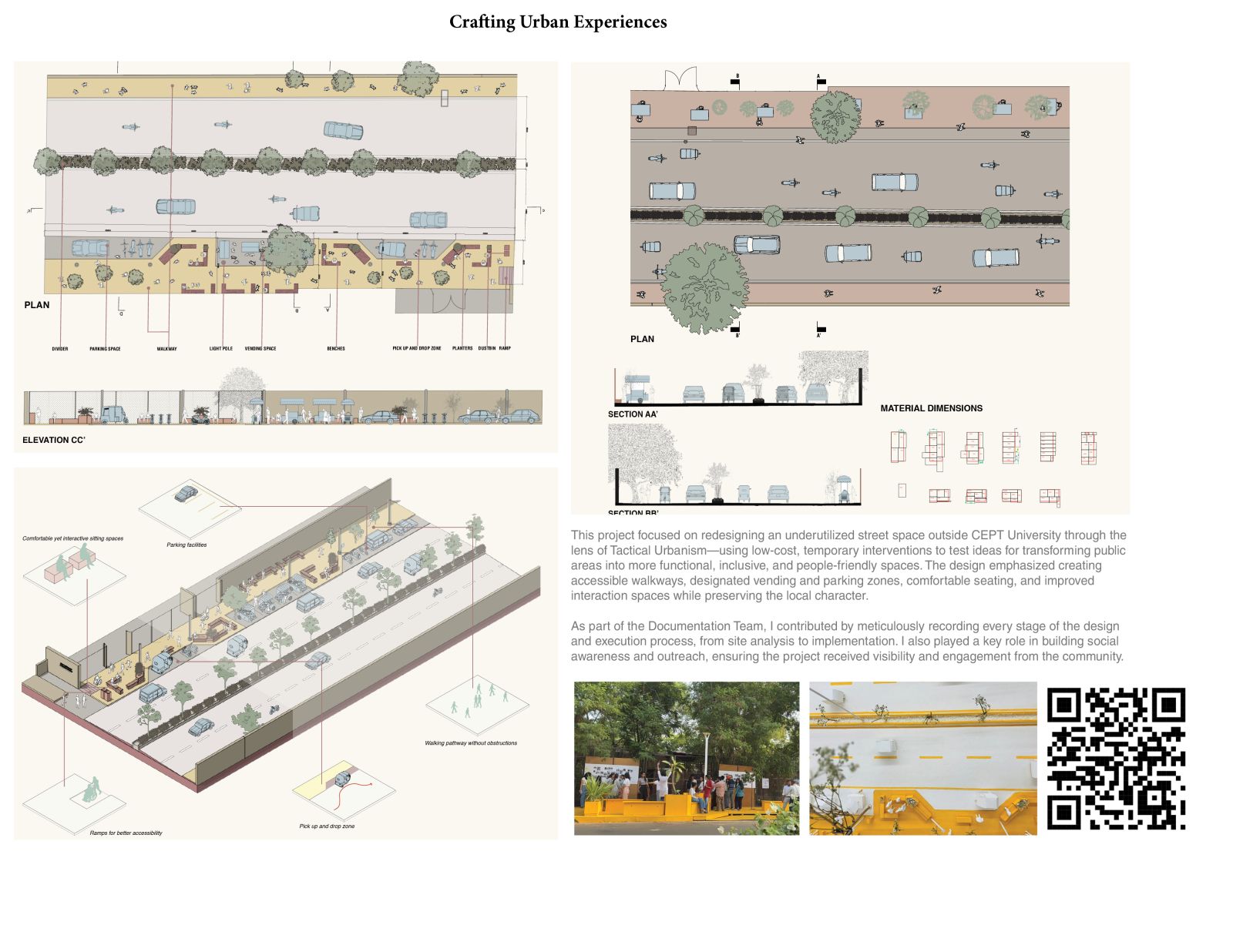
Redesigning an underutilized street near CEPT University using tactical, low-cost interventions for better accessibility and public use.