Patel Jhanvi Daxesh

CFP009

UUR25256

The CEPT Foundation Programme studio is an introduction for students fresh out of school to the rigor and work habits required by an undergraduate degree at CEPT University. The studio is conceptualized as a series of sequentially planned modules, through which students develop skills and abilities, which are then deployed to address increasingly complex problems falling into four broad categories: visualize and draw, make and learn, analyze and interpret and conceptualize and represent. The exercises are designed to build skills that are foundational and relevant across design, architecture, planning, and technology disciplines, as well as those that are specific to each individual field. The studio is taught through intensive and incremental weekly modules, focusing on a particular skill or ability and a process that emphasises ongoing discussion and feedback in addition to expert faculty lectures.
Report Content

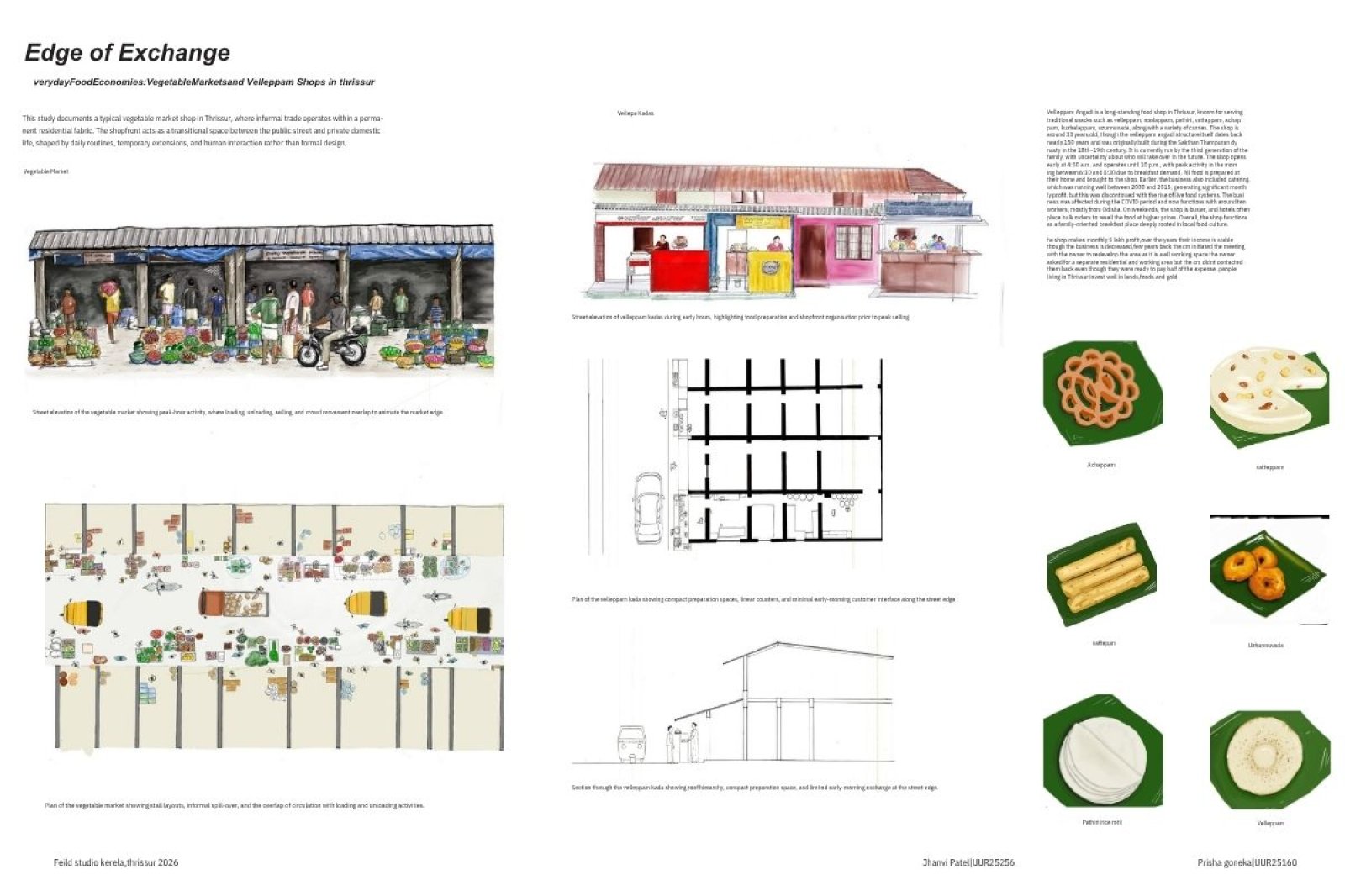
Documenting the vibrant exchange of people, produce, and activity within a shared urban space.

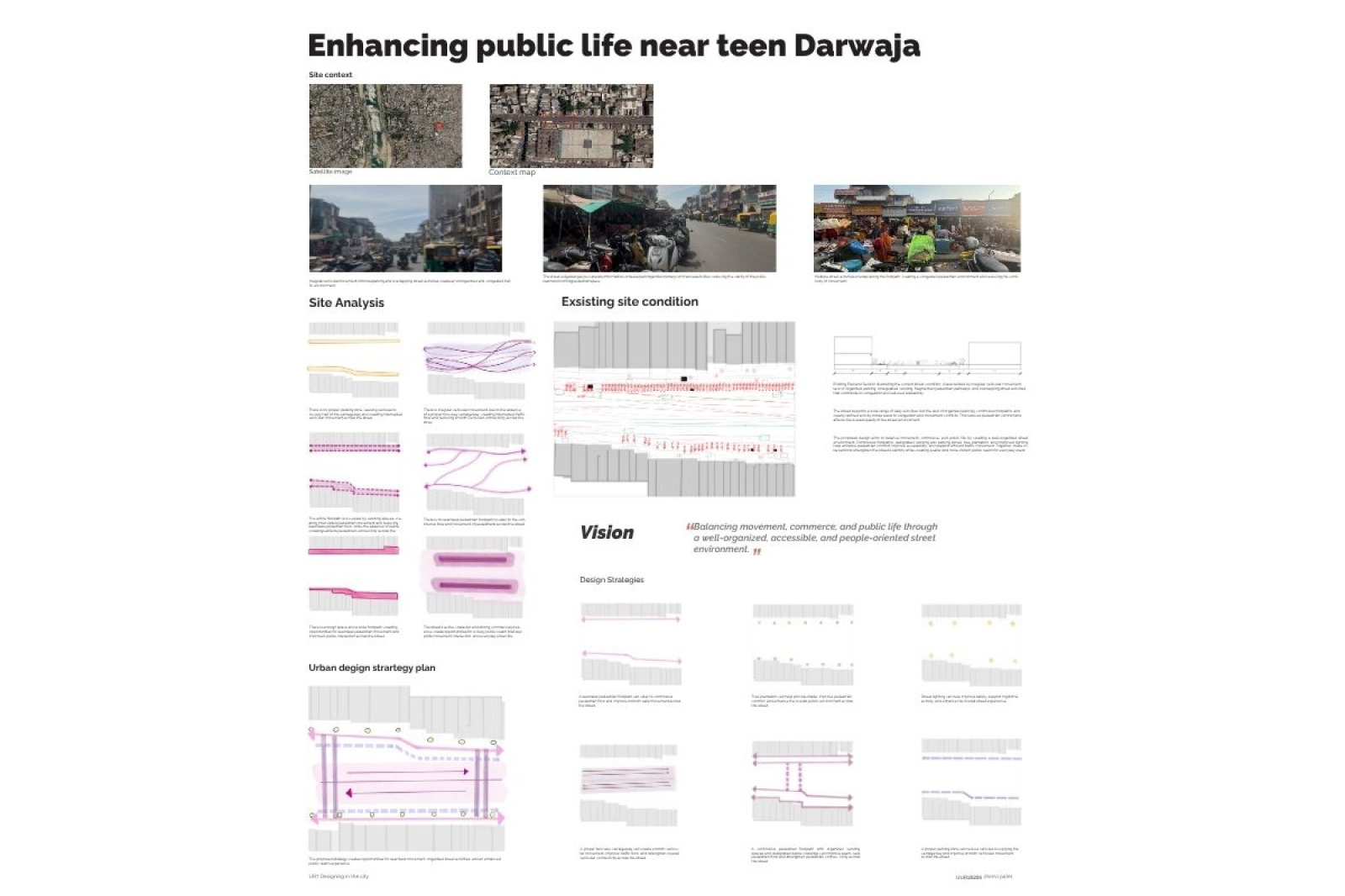
This field studio project examines the existing street conditions around Teen Darwaja and proposes urban design strategies to improve pedestrian comfort, organize movement, support vending activities, and strengthen the quality of public space. The proposal aims to create a more accessible, active, and people-oriented street environment while balancing mobility, commerce, and everyday urban life.

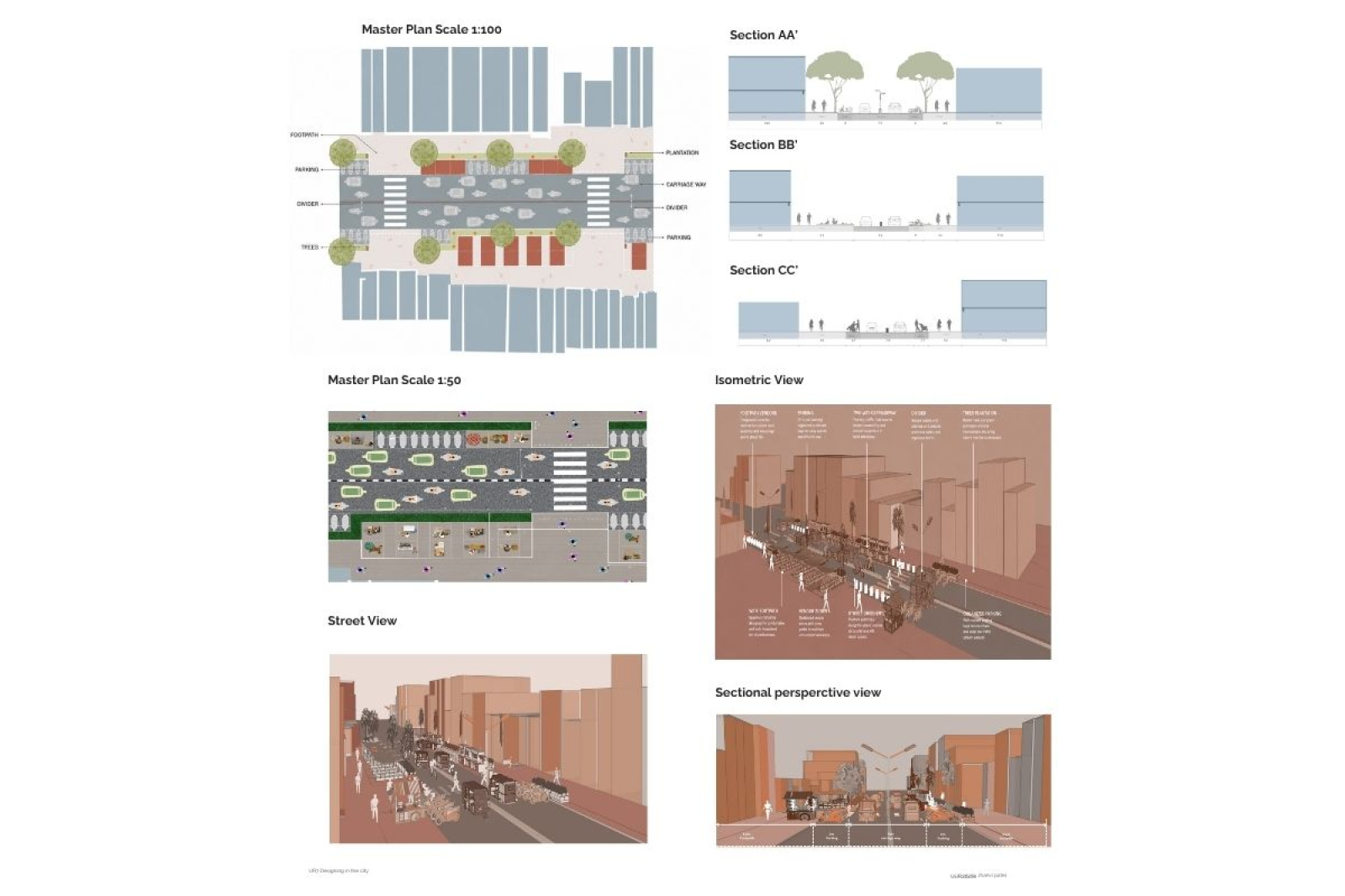
Master plan, sections, and perspectives illustrating a street redesign that enhances pedestrian experience, organizes vending activities, and creates a more vibrant and accessible public environment.

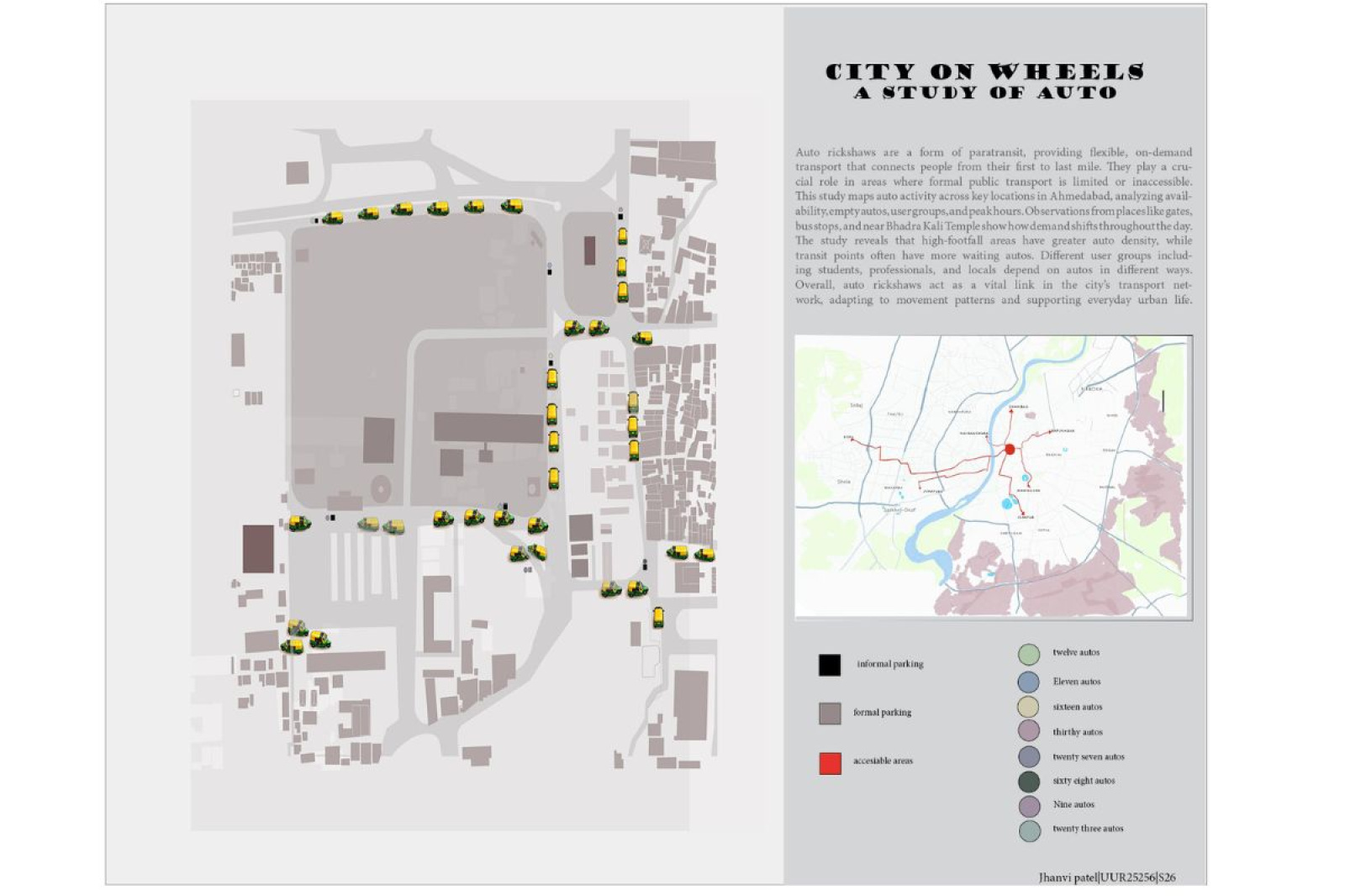
This mapping exercise documents the location and concentration of auto-rickshaws across the study area, identifying key parking zones, movement corridors, and activity nodes. The study provides insights into how informal transport systems support accessibility and everyday urban movement.

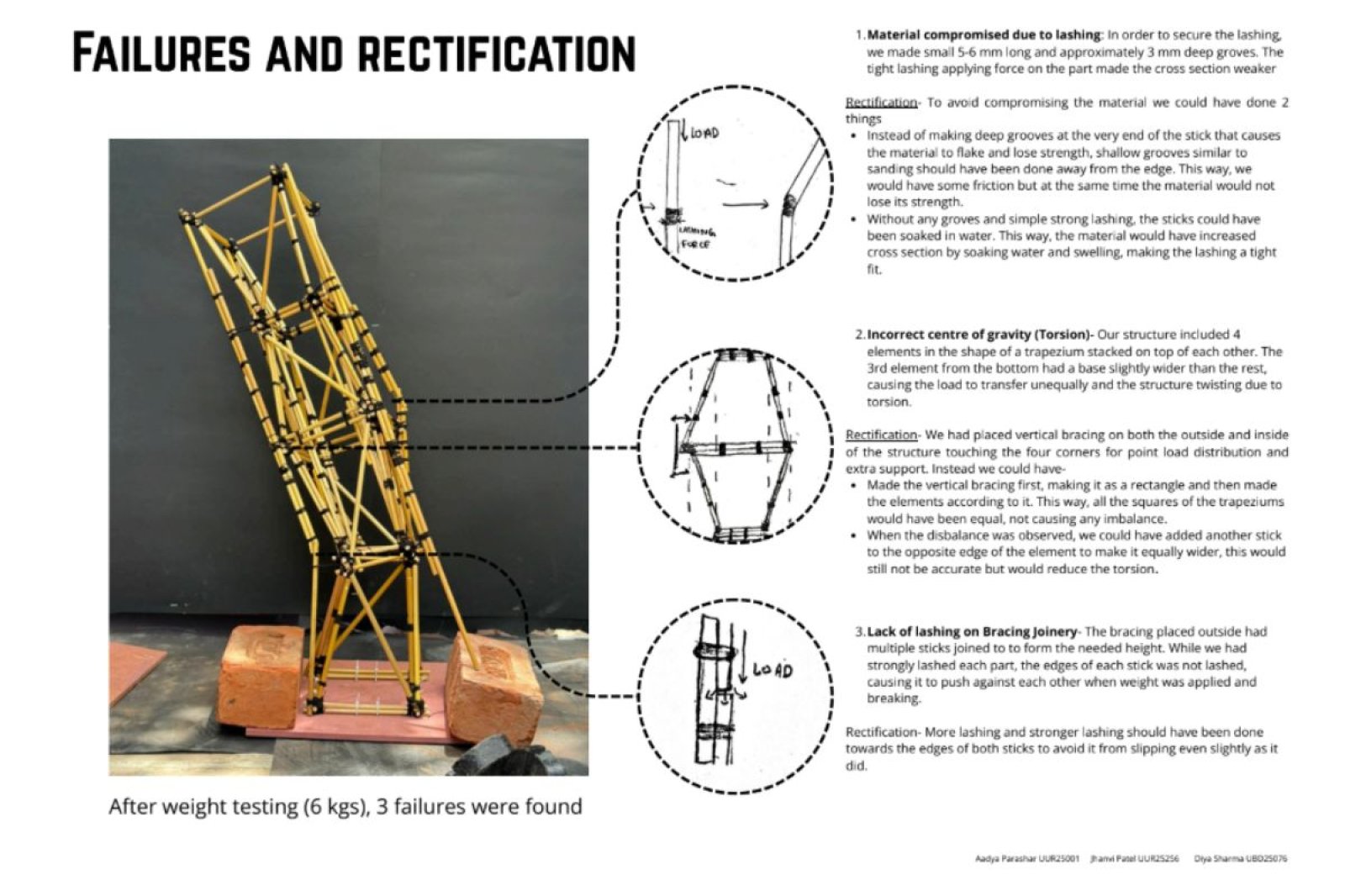
An evaluation of failures observed during load testing, highlighting key weaknesses and the design modifications required to enhance structural performance.

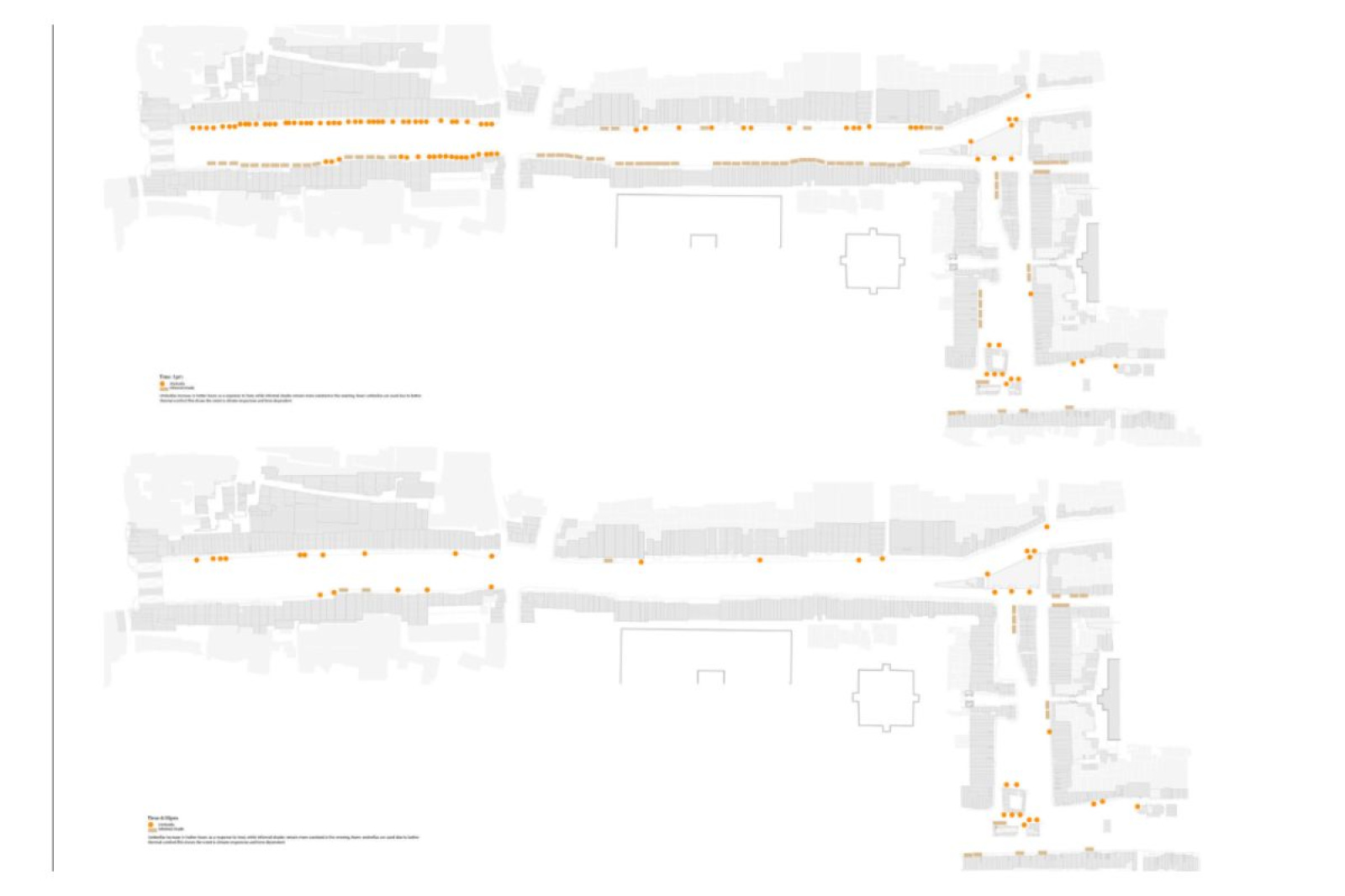
Umbrellas increase in hotter hours as a response to heat, while informal shades remain more constant. In the evening, fewer umbrellas are used due to better thermal comfort. This shows the street is climate-responsive and time-dependent

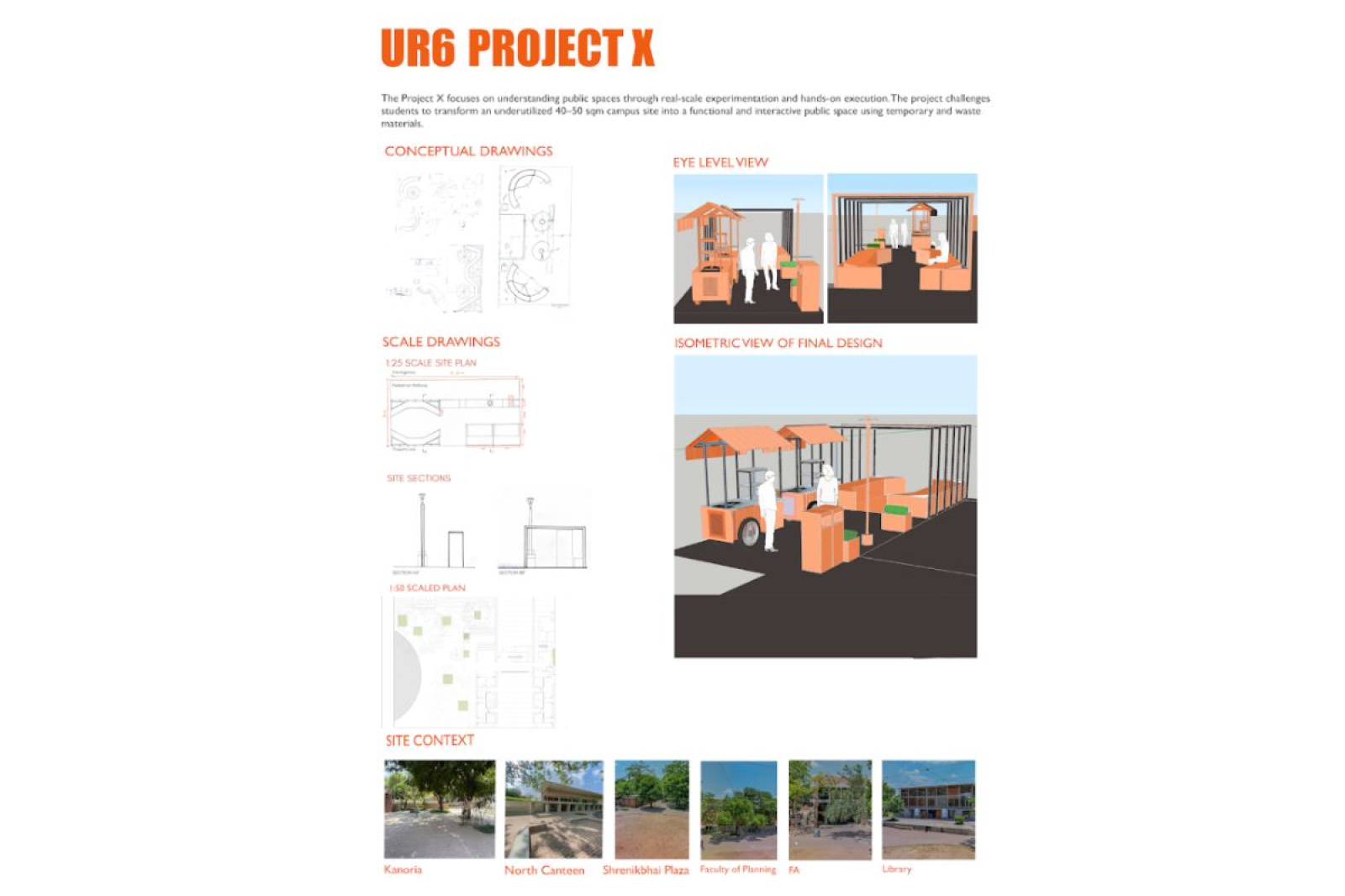
We designed and executed a 1:1 scale installation in the given site, transforming an unused space into a functional, interactive, and community-oriented public environment.

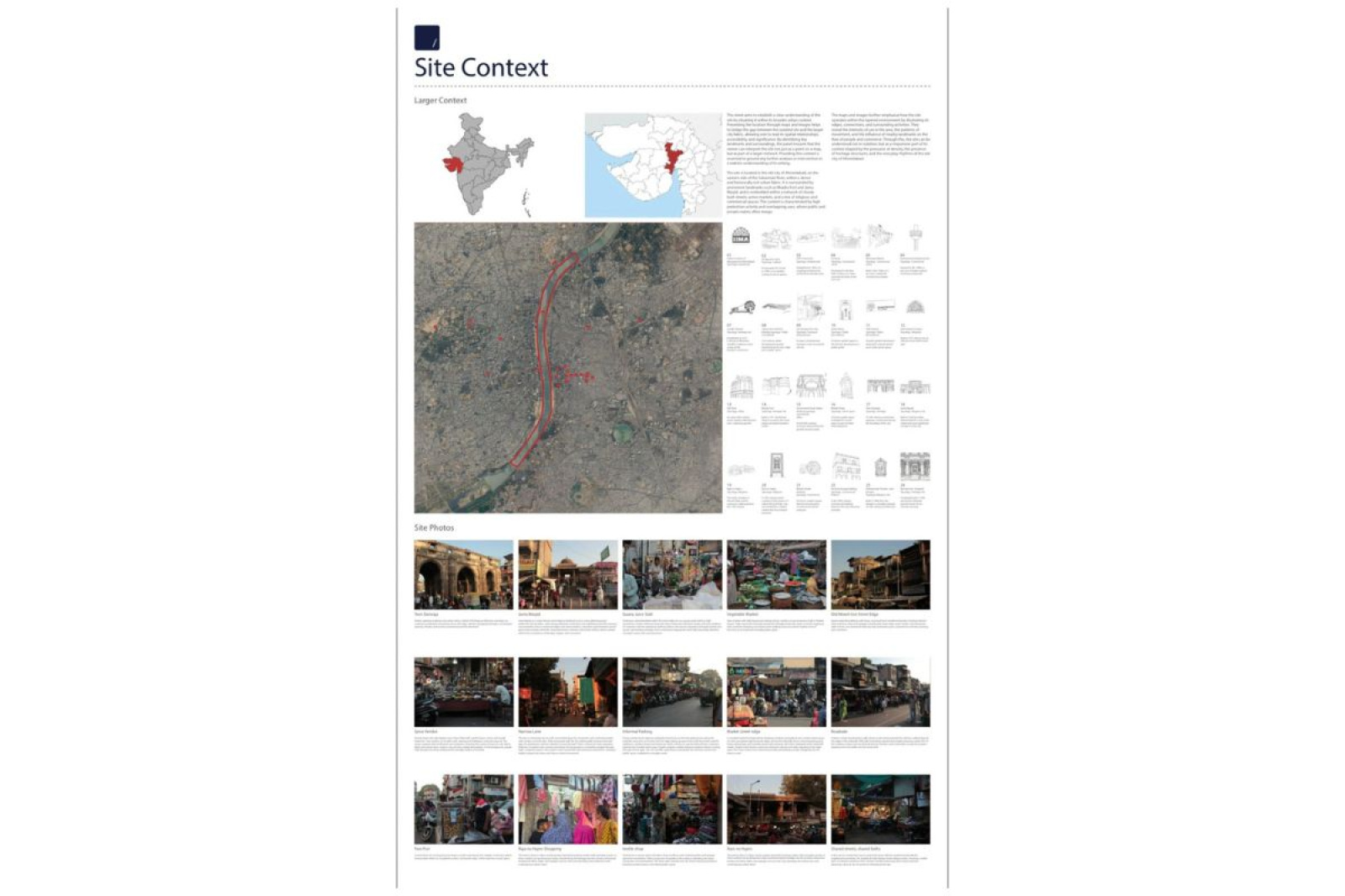
This site context study investigates the relationship between the selected site and its surrounding urban environment through mapping, documentation, and field observations. By analyzing spatial patterns, circulation networks, landmarks, commercial activities, and public life, the study establishes a foundation for informed design intervention.

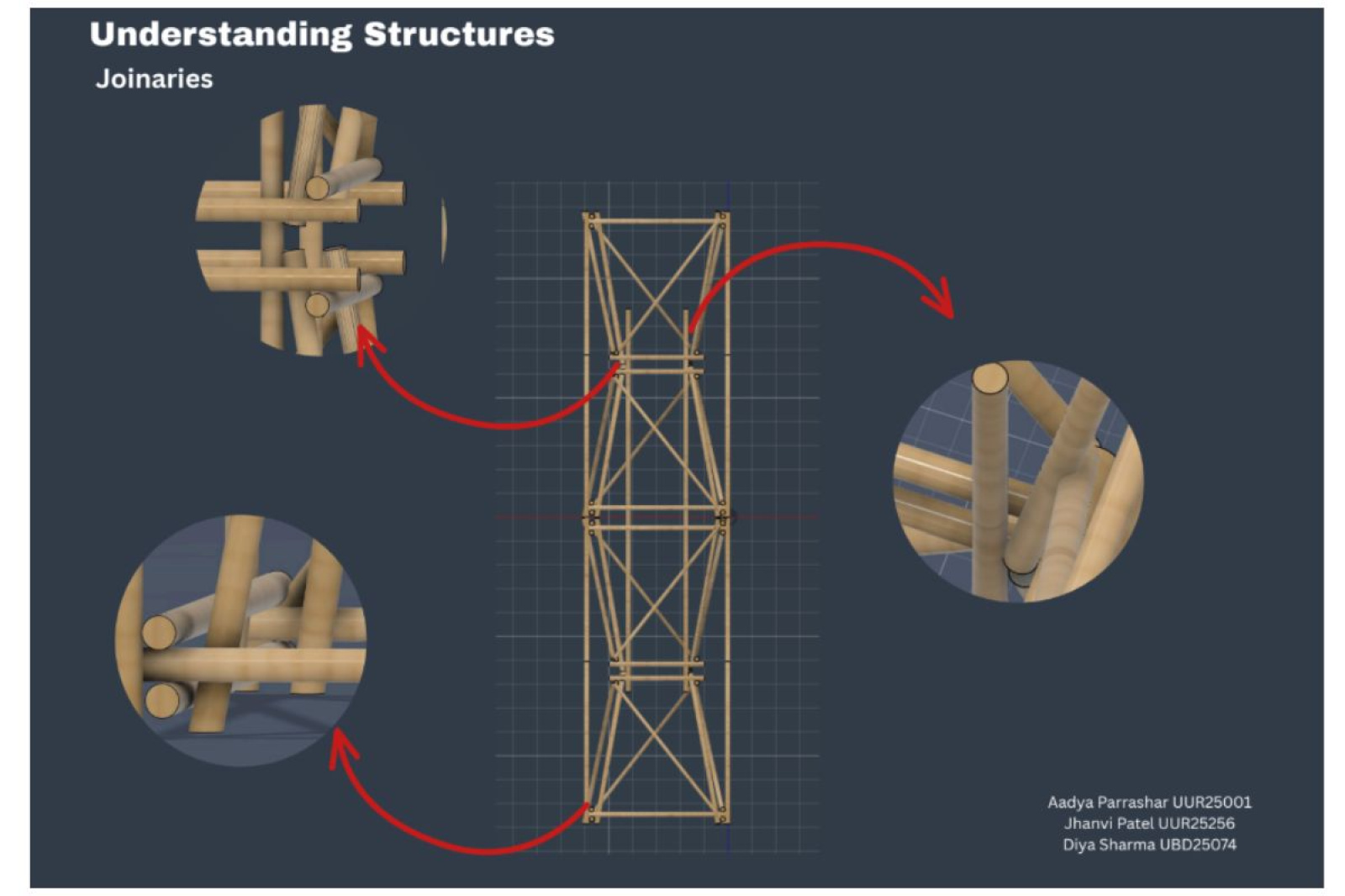
An investigation of structural connections, bracing systems, and load transfer through a reed stick tower model.

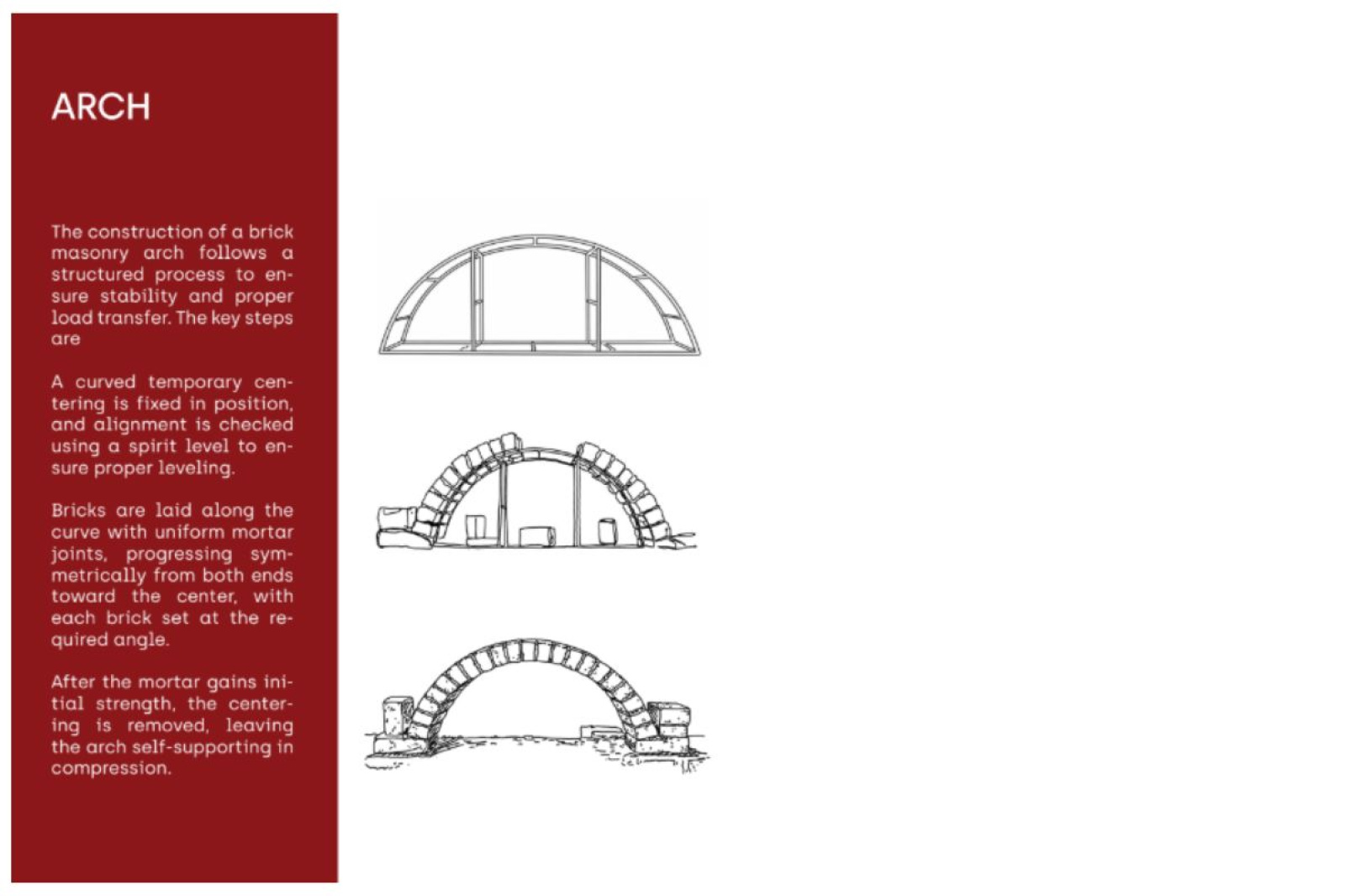
An exploration of traditional arch construction, demonstrating principles of compression, load transfer, and structural stability through hands-on making.