Om Alpesh Toprani

CFP001

UAR24196

The CEPT Foundation Programme studio is an introduction for students fresh out of school to the rigor and work habits required by an undergraduate degree at CEPT University. The studio is conceptualized as a series of sequentially planned exercises, through which students develop skills and abilities, which are then deployed to address increasingly complex problems falling into four broad categories: visualize and draw, make and learn, analyze and interpret and conceptualize and represent. The exercises are designed to provide both common and allied foundational skills for students across disciplines at CEPT, between which they maintain a balance.The studio is taught through intensive weekly modules, focusing on a particular skill or ability, and a process that emphasizes ongoing discussion and feedback in addition to expert faculty lectures.
Report Content

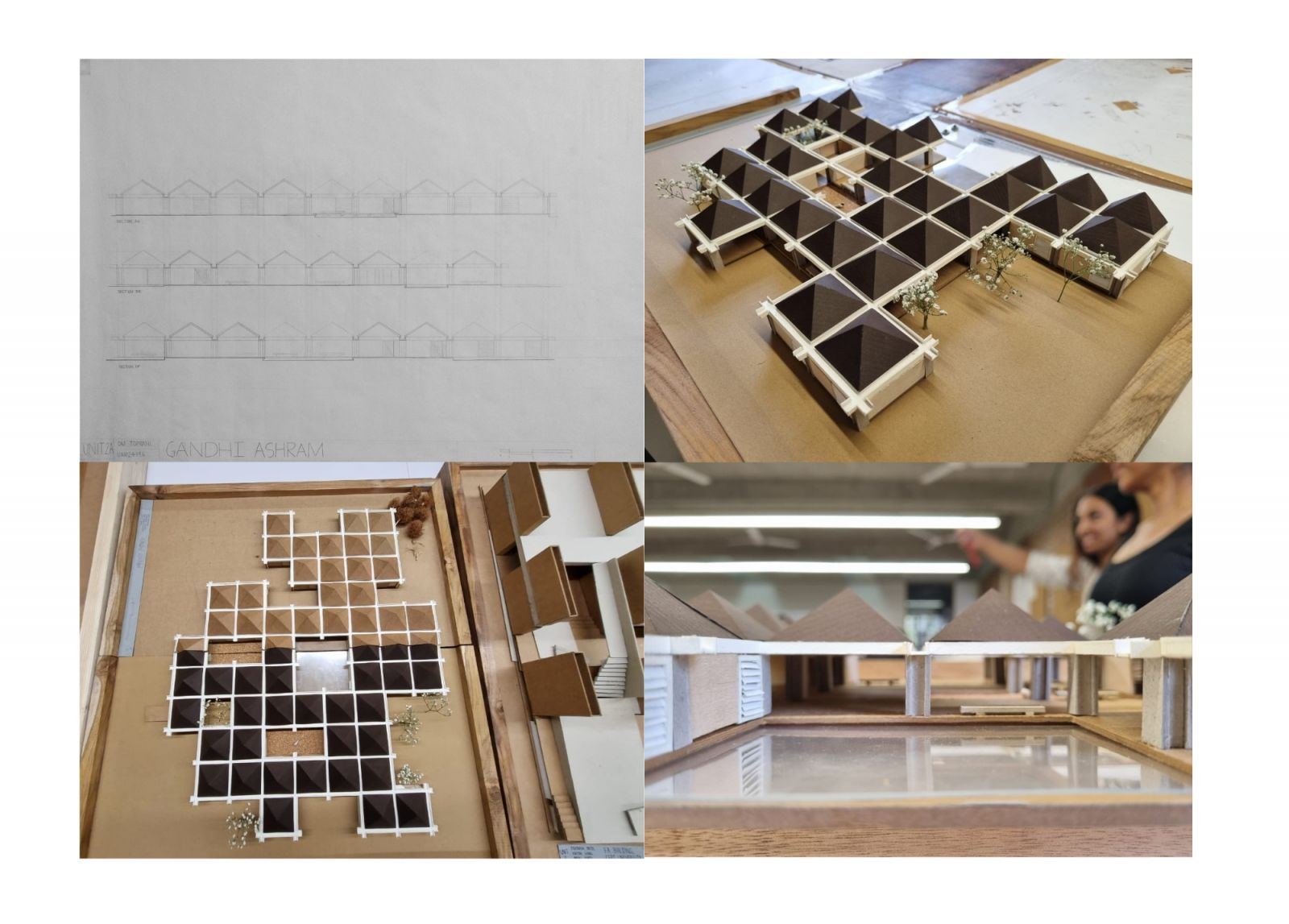
This project focused on constructing a half-model of the Gandhi Ashram, and indivisually draft three sections, one plan, and an axonometric drawing . The design highlights the Ashram’s grid-like layout and pitched roof structures. We used buff board, card paper, grey board, jute board, and baby’s breath flowers to represent different architectural elements and trees. The model helped in visualizing the spatial arrangement, scale, and materiality of the Ashram, providing a clearer understanding of its structure and open spaces.

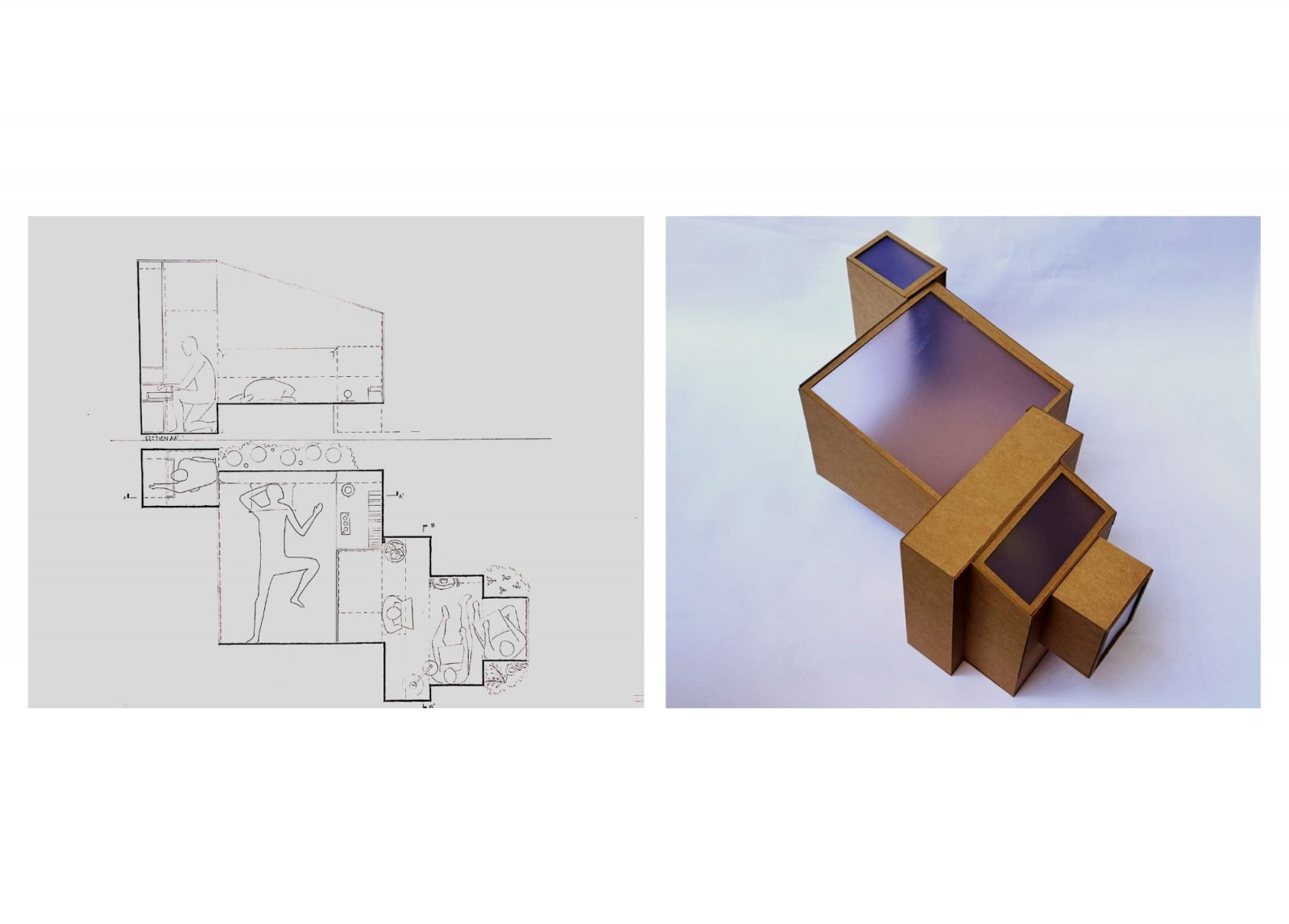
This project explored the movement of people and their interaction with spaces, focusing on designing around movement. I created metal wireframe models to represent different activities, helping to visualize human motion. The final space was constructed using jute board, translating these movements into a physical form. A plan and section drawing were also made to study the layout and structure of the design.

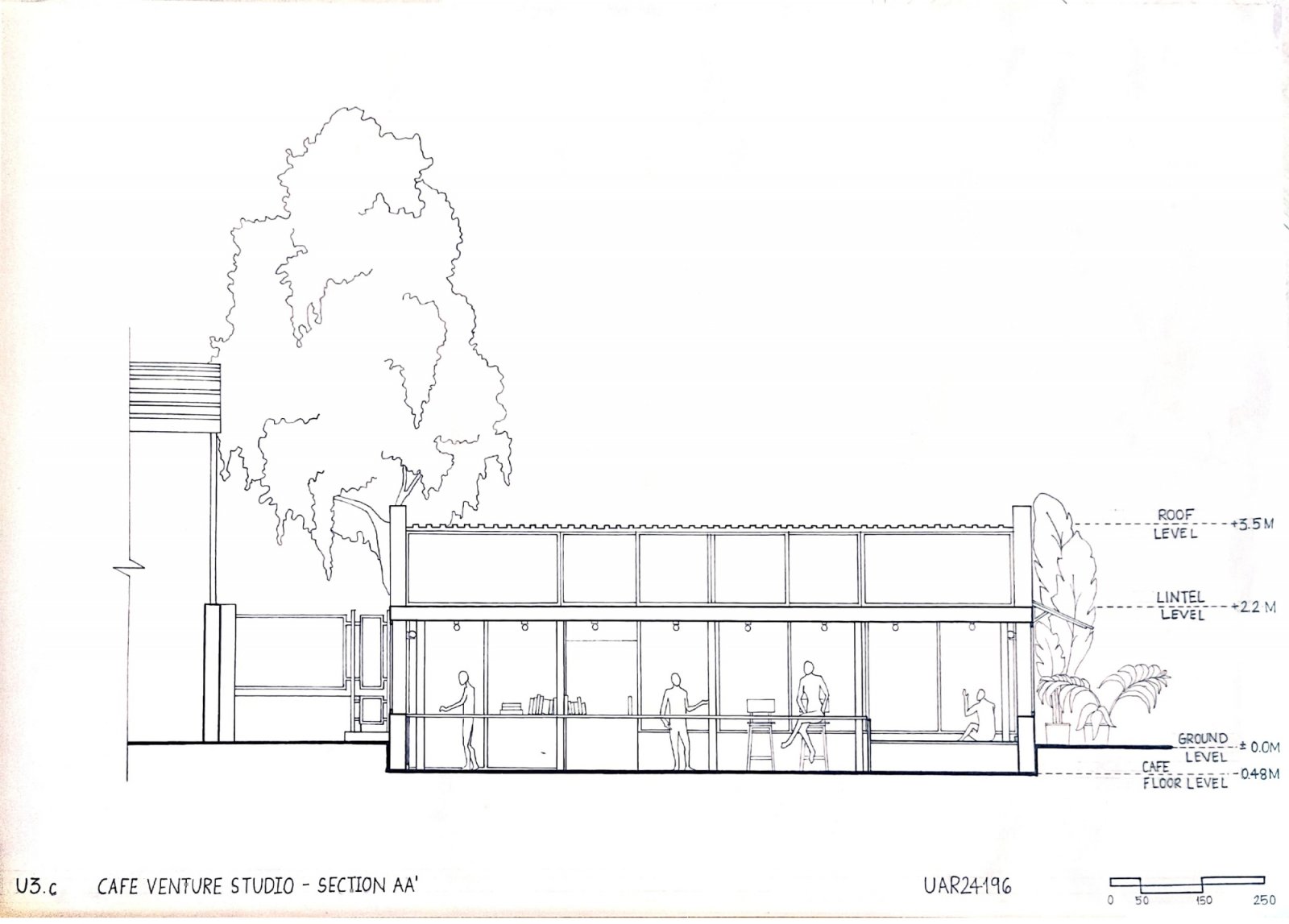
As part of a documentation and representation exercise, this sectional drawing of Cafe Venture Studio was drafted by me, to capture its spatial organization and structure. The drawing highlights key architectural elements, proportions, and material divisions while incorporating human figures to show scale and functionality.

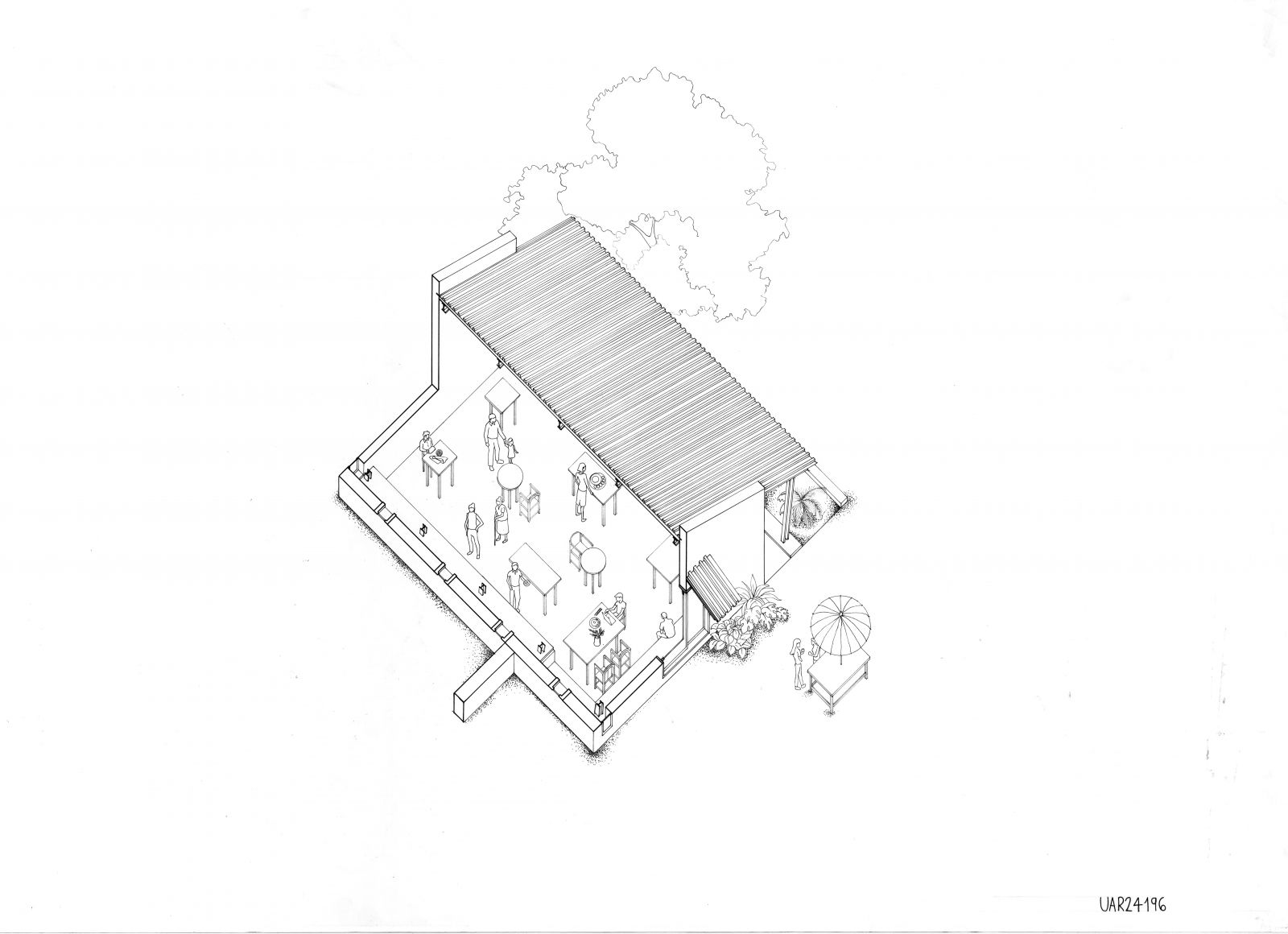
This axonometric drawing of Cafe Venture Studio emphasizes human activities within the space. It represents the cafe's layout, furniture arrangements, and interactions in a dynamic way. The drawing helped me visualize the relationship between architecture and its users, making the space feel more alive and engaging.

This drawing is part of a "How Things Work" exercise, where I created a drafted exploded view of a manual strapping tensioner. It details how each component is assembled and functions within the device, with labeled parts and their respective roles. The mechanism is illustrated through a step-by-step drawing, visually explaining how the tensioner operates.

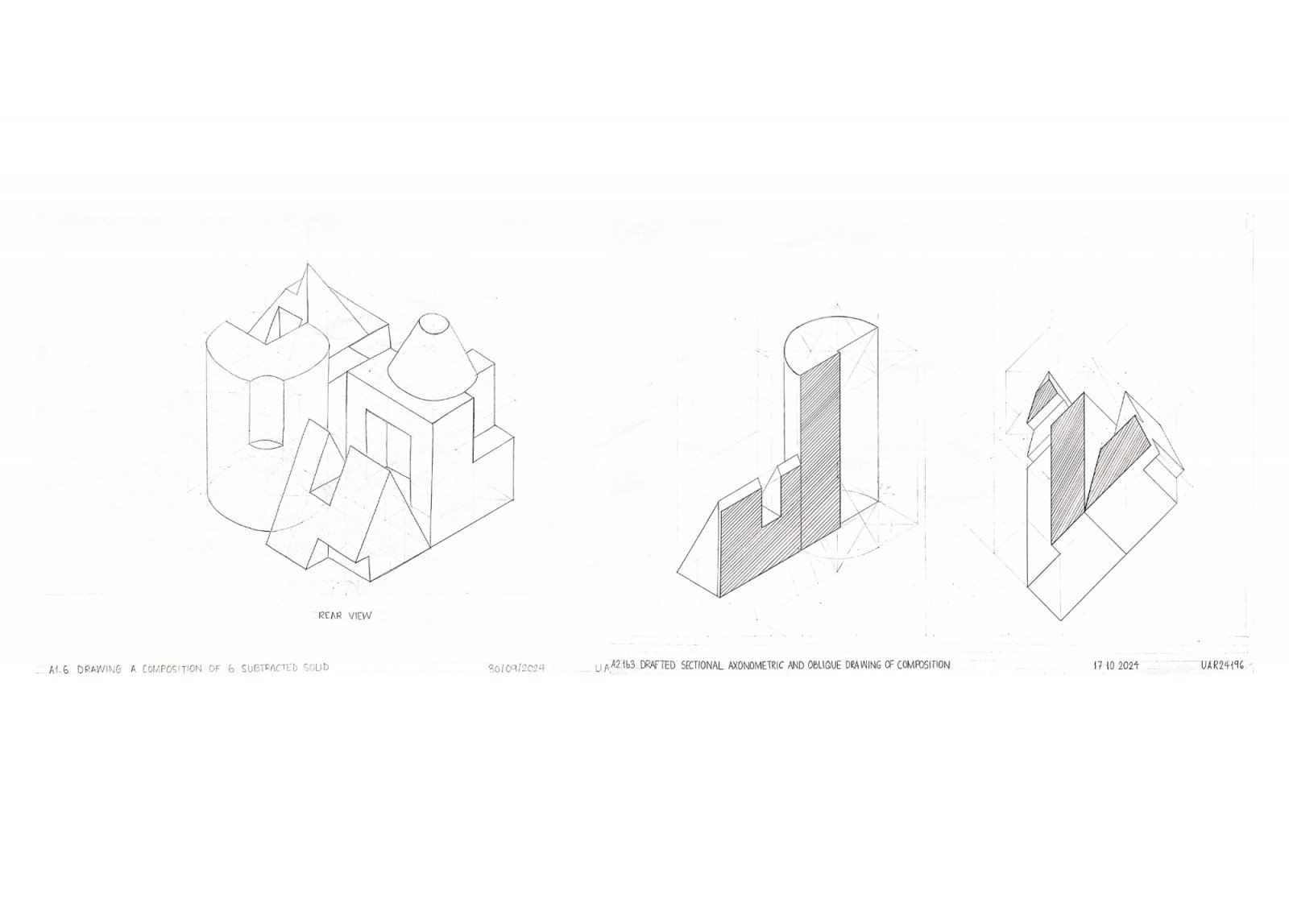
This exercise focused on developing basic freehand and technical drawing skills. The first drawing is a freehand composition of constructed solids with subtractions, exploring form and spatial relationships. The second is a drafted sectional drawing of the same composition, emphasizing precision and technical representation. This exercise helped in building a strong foundation in visualizing and representing three-dimensional forms accurately.

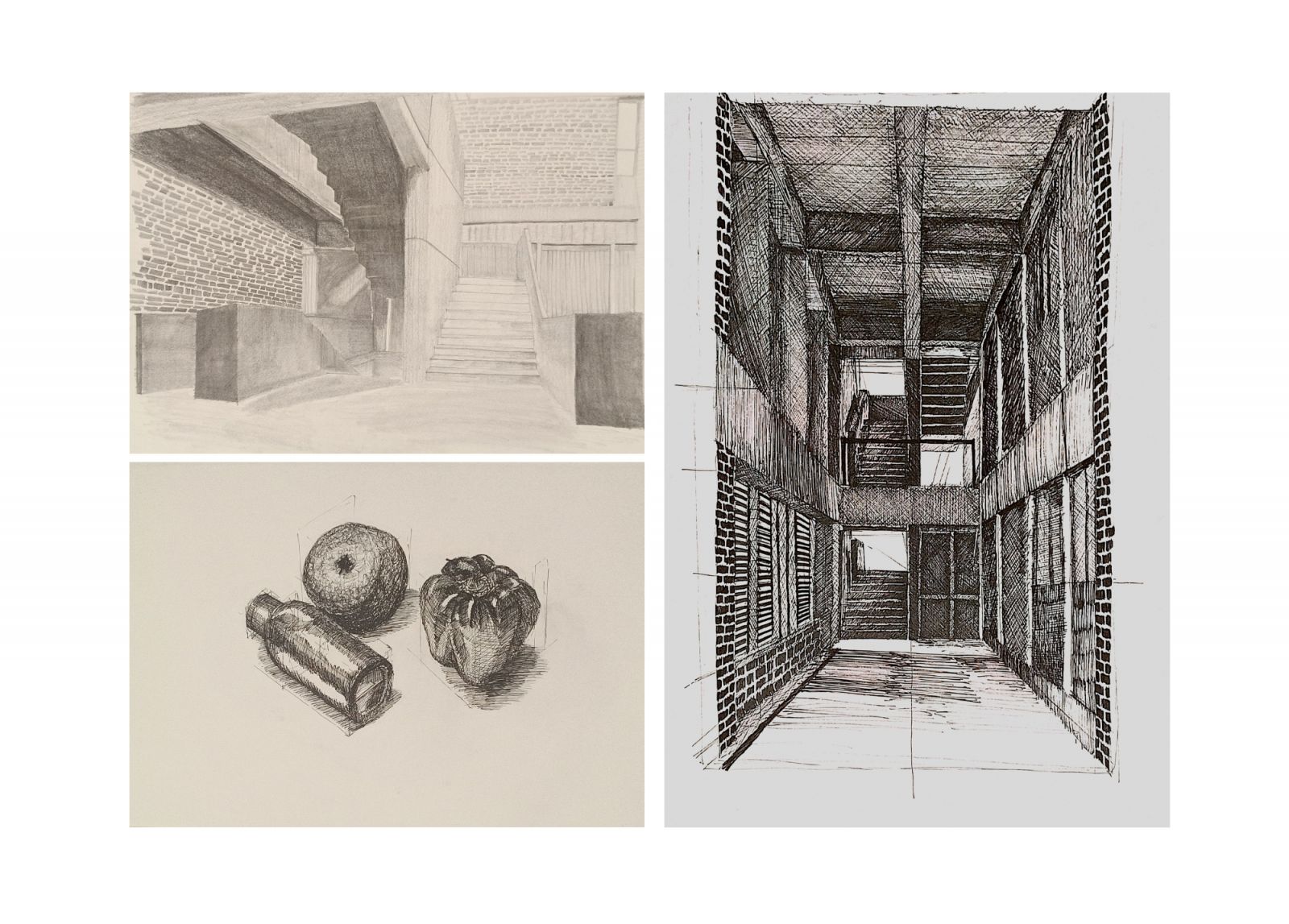
This exercise focuses on observing and sketching spaces and objects using pencil and pen. The architectural drawings capture depth, texture, and perspective, while the still-life sketch explores form and shading through hatching. It allows experimentation with different techniques to represent different forms.

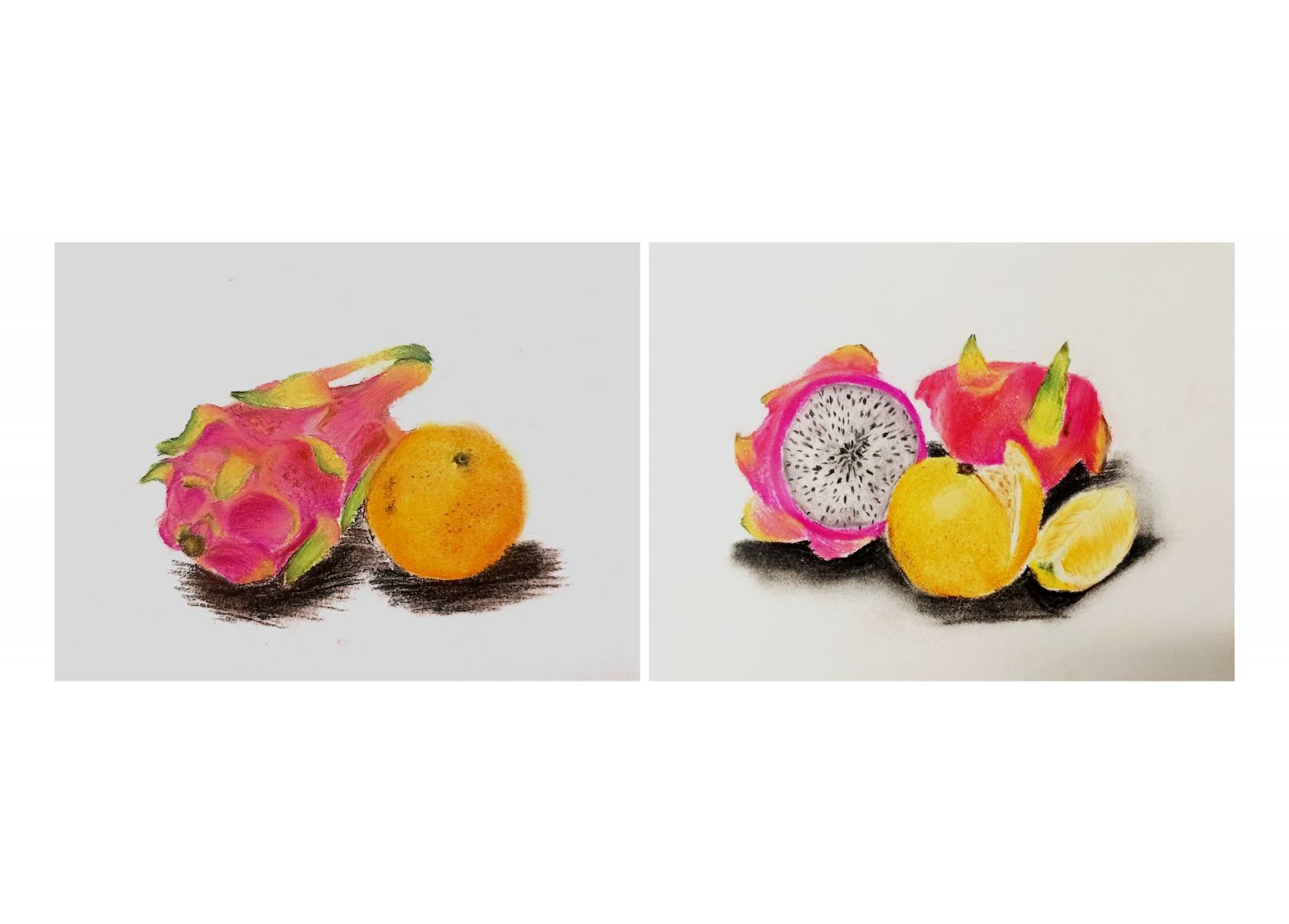
This exercise focuses on observing and rendering fruits using soft pastels to capture texture, color, and form. The drawings of a dragon fruit and an orange explore blending techniques, light, and shadow to create depth and realism. It allows experimentation with pastels to enhance observation and shading skills

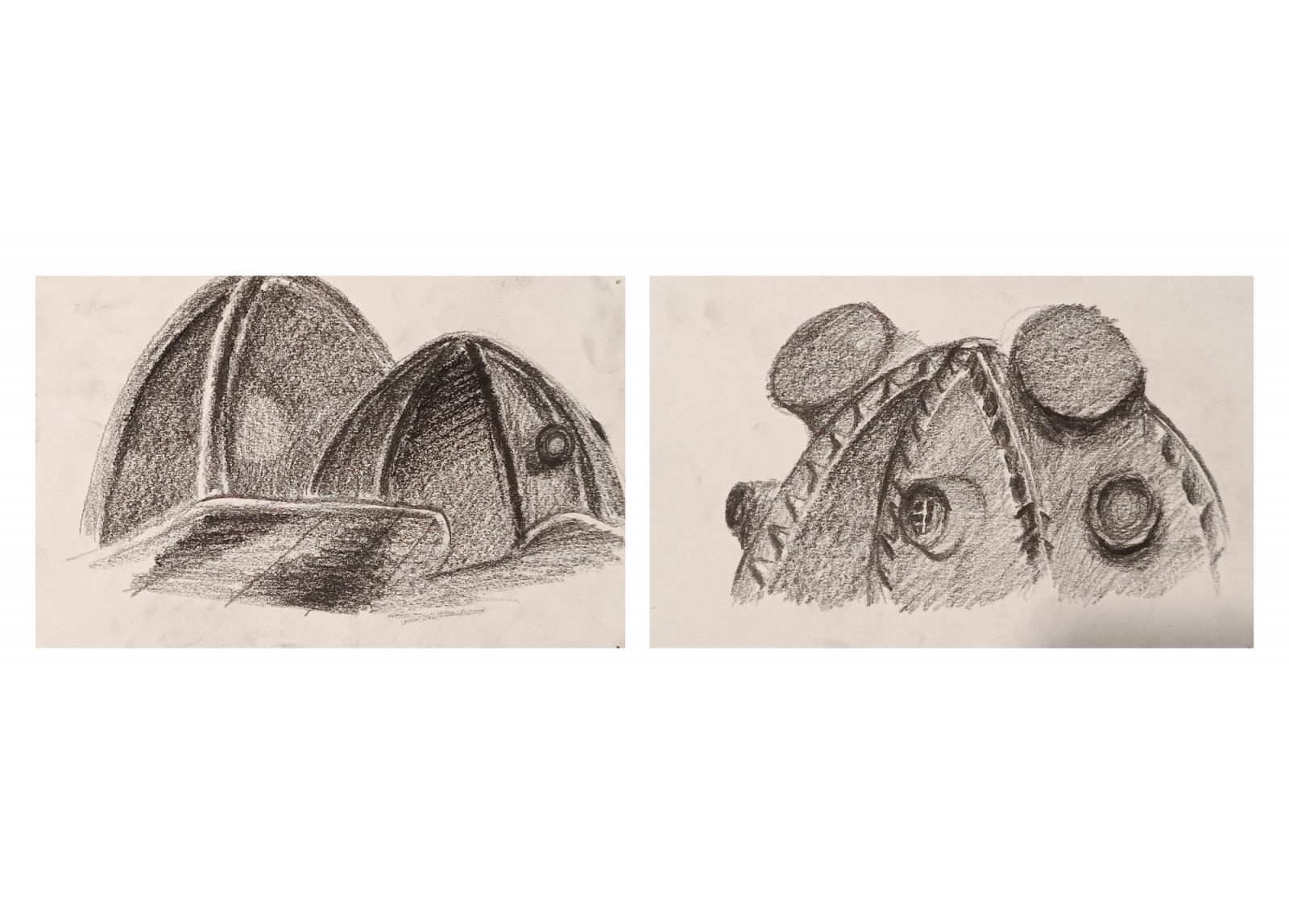
This quick sketching drawing focuses on observing and capturing the essence of Ahmedabad Gufa through charcoal drawing. The sketch explores the cave-like forms, light, and shadows, emphasizing texture and spatial depth. Using charcoal allows for rich contrasts and expressive strokes, enhancing the organic and sculptural quality of the space.

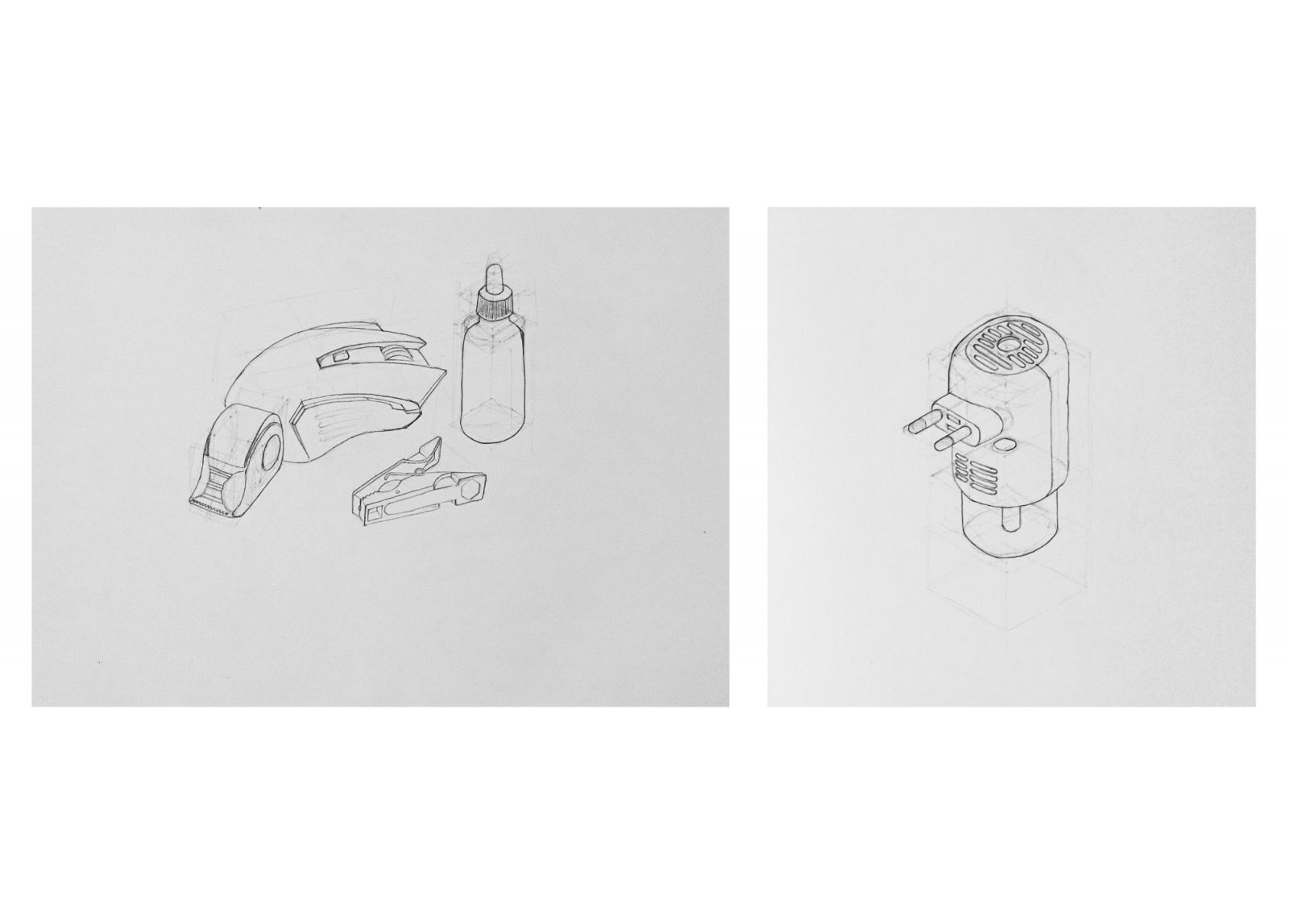
The exercise focuses on quick sketching of objects using precise lines to capture their form. By carefully constructing shapes and proportions, the drawings emphasize clarity and accuracy without shading. Varied line weights help define each object and enhance the overall composition.