Aditi Ajit Kulkarni

CFP001

UBD24009

The CEPT Foundation Programme studio is an introduction for students fresh out of school to the rigor and work habits required by an undergraduate degree at CEPT University. The studio is conceptualized as a series of sequentially planned exercises, through which students develop skills and abilities, which are then deployed to address increasingly complex problems falling into four broad categories: visualize and draw, make and learn, analyze and interpret and conceptualize and represent. The exercises are designed to provide both common and allied foundational skills for students across disciplines at CEPT, between which they maintain a balance.The studio is taught through intensive weekly modules, focusing on a particular skill or ability, and a process that emphasizes ongoing discussion and feedback in addition to expert faculty lectures.
Report Content

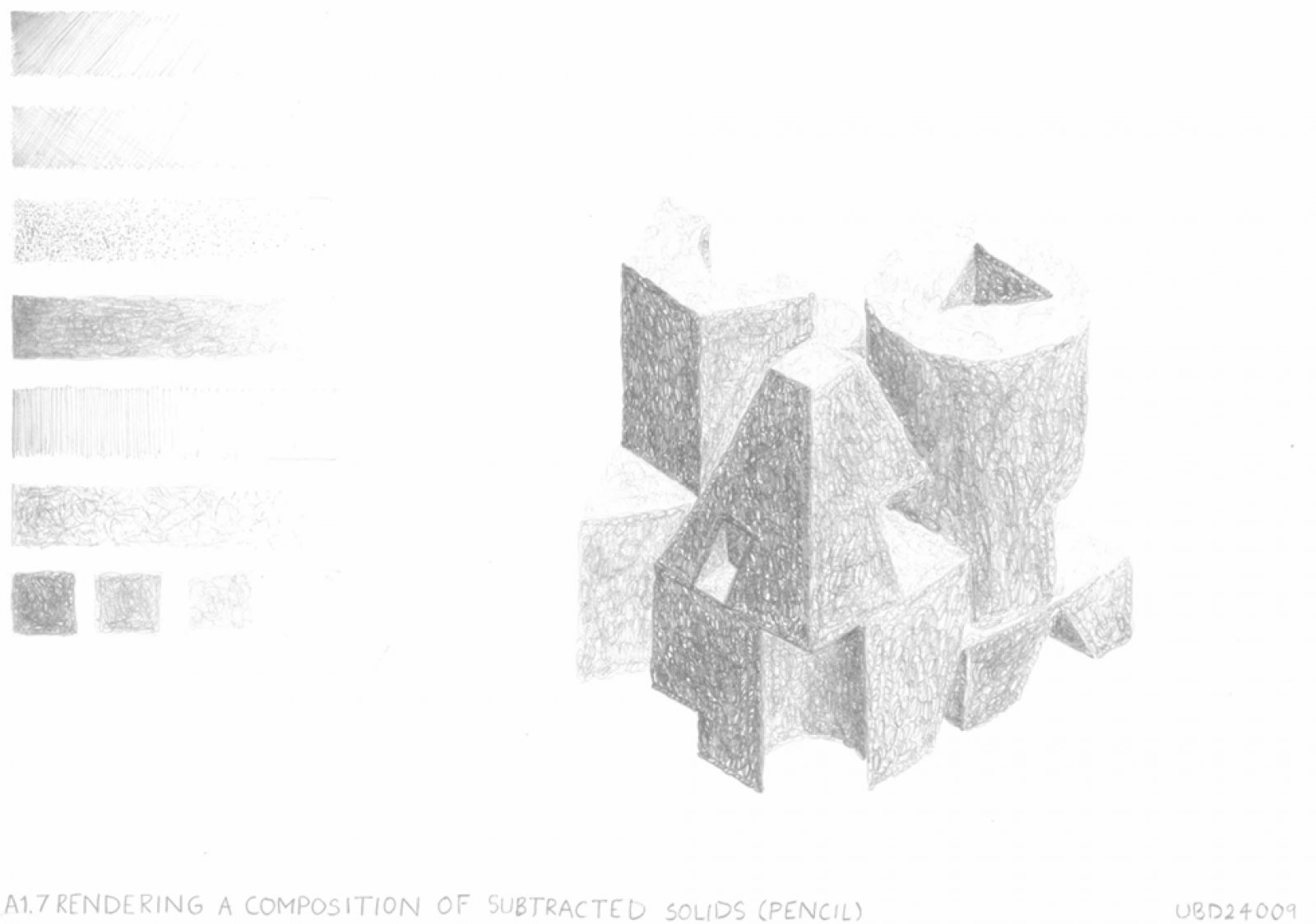
A pencil rendering of a composition made up of subtracted solids. Around 6 geometric solids with a minimum of 3 subtracted forms are arranged in a composition which is drawn freehand. On the left are swatches testing out different rendering styles and boxes that show gradients of the chosen rendering style: scribble.

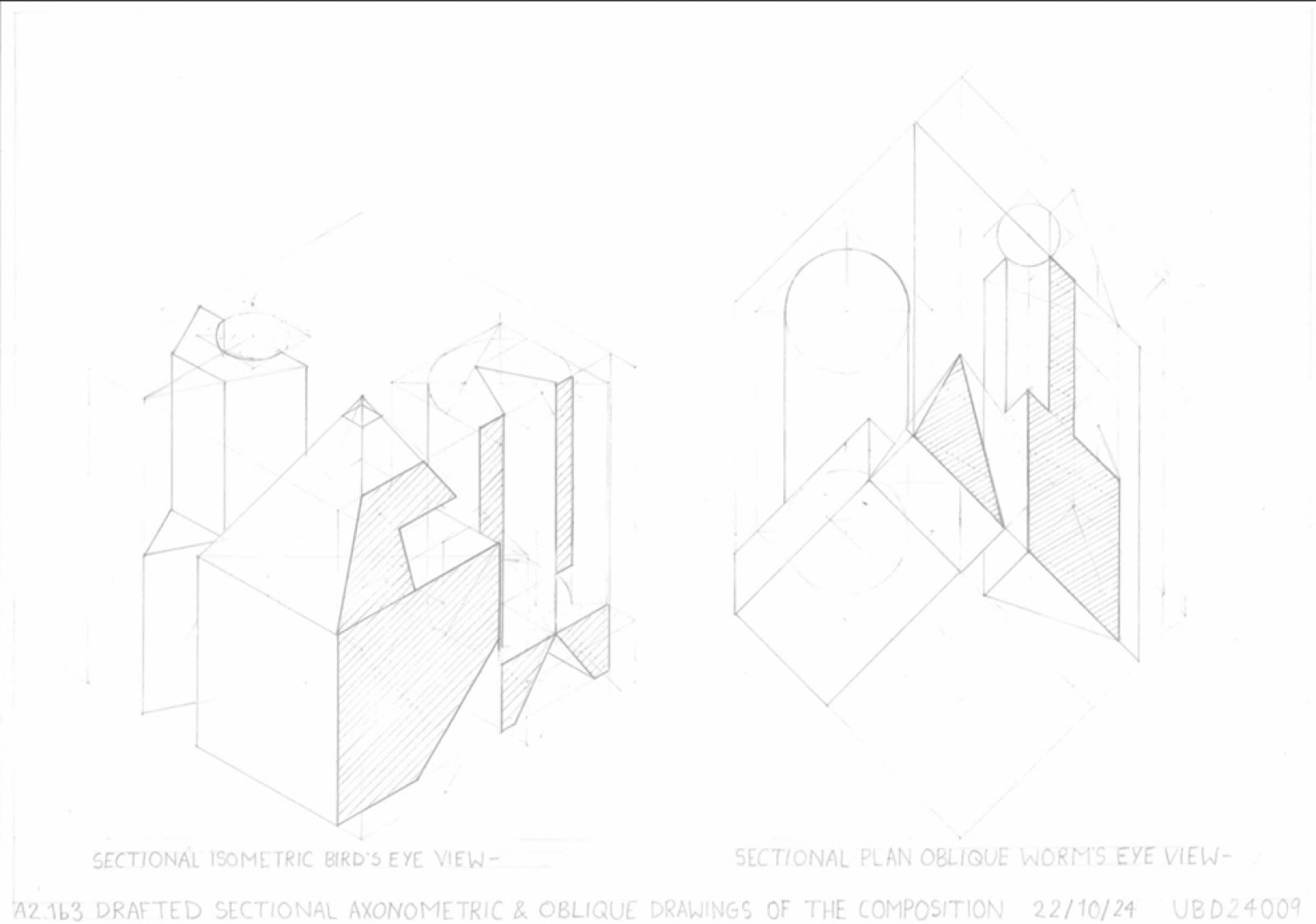
Sectional views of a composition. This exercise carries on from the previous module. The freehand composition is given a tangible form through green florists foam to use as a reference, and then is drawn technically. it is then sliced in two different places and drawn is isometric and oblique views. Using different line weights to highlight the sections, it is a complex task combining all the lessons from the Freehand and Technical Drawing modules.

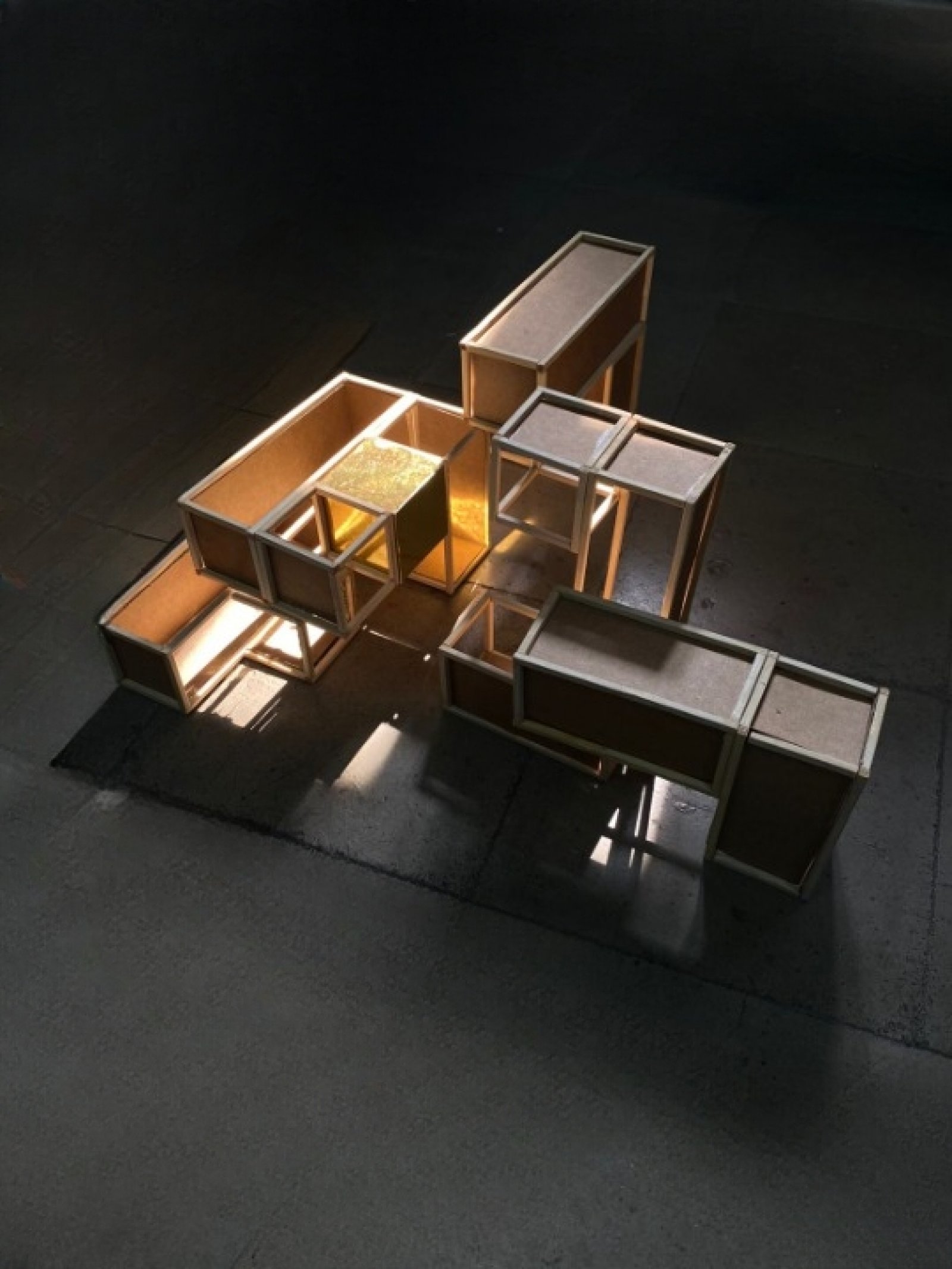
A Soma Cube opened up to highlight its inner parts. A main part of the Model Making module, the Soma Cube is an exploration in materials and skills. For this cube, the structure itself is made from bamboo skewers meticulously cut and stuck to form components, with the outer faces being cladded in brown jute board. The inner faces are left plain, to showcase the heart of the cube, a singular box made of gold paper. The idea was to create something unassuming and plain on the outside, with a flashy and unexpected interior.

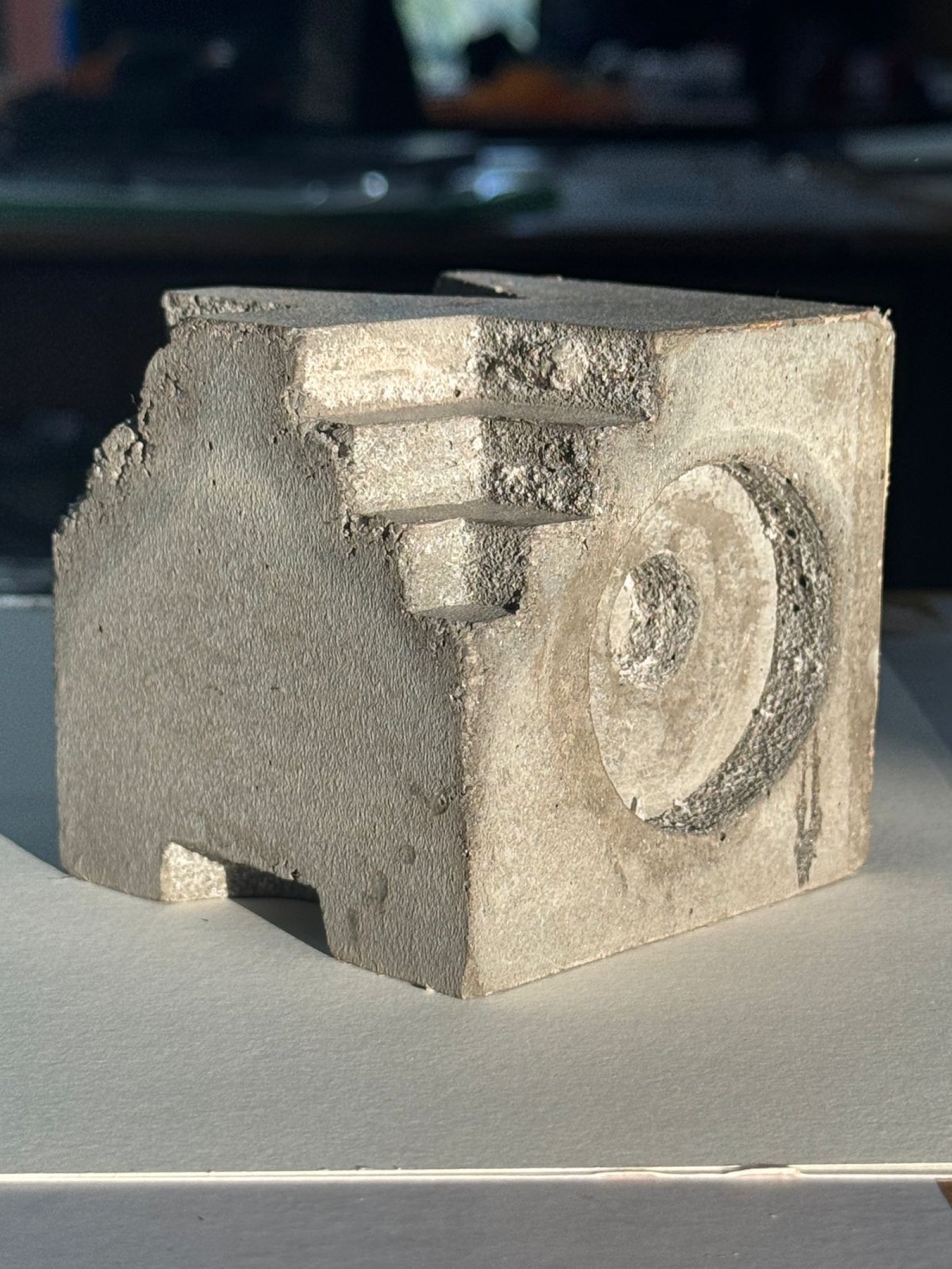
A micro concrete cube casted into a Styrofoam mold. To create this, a square mold of Styrofoam was made, and differently shaped protrusions were glued. After pouring the concrete, the Styrofoam is peeled away from the set concrete to show a unique cube with distinctive cutouts.

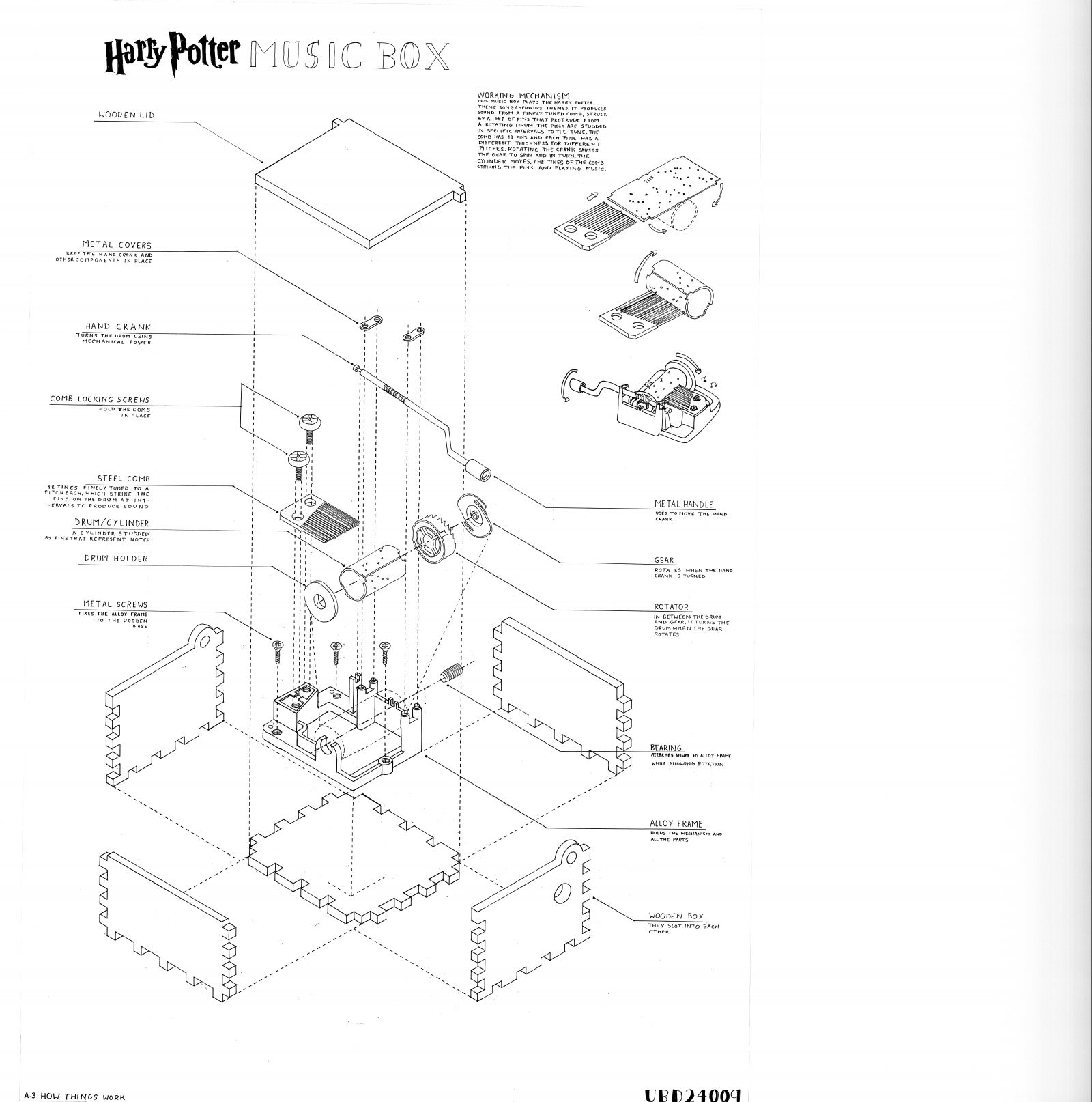
An exploded view of a Harry Potter music box. Each piece is carefully dismantled and drawn with precision and placed in a vertically exploded view with explanations for the corresponding parts. On the right, a detailed explanation of the working mechanism is written along with 3 different diagrams to give a visual representation.

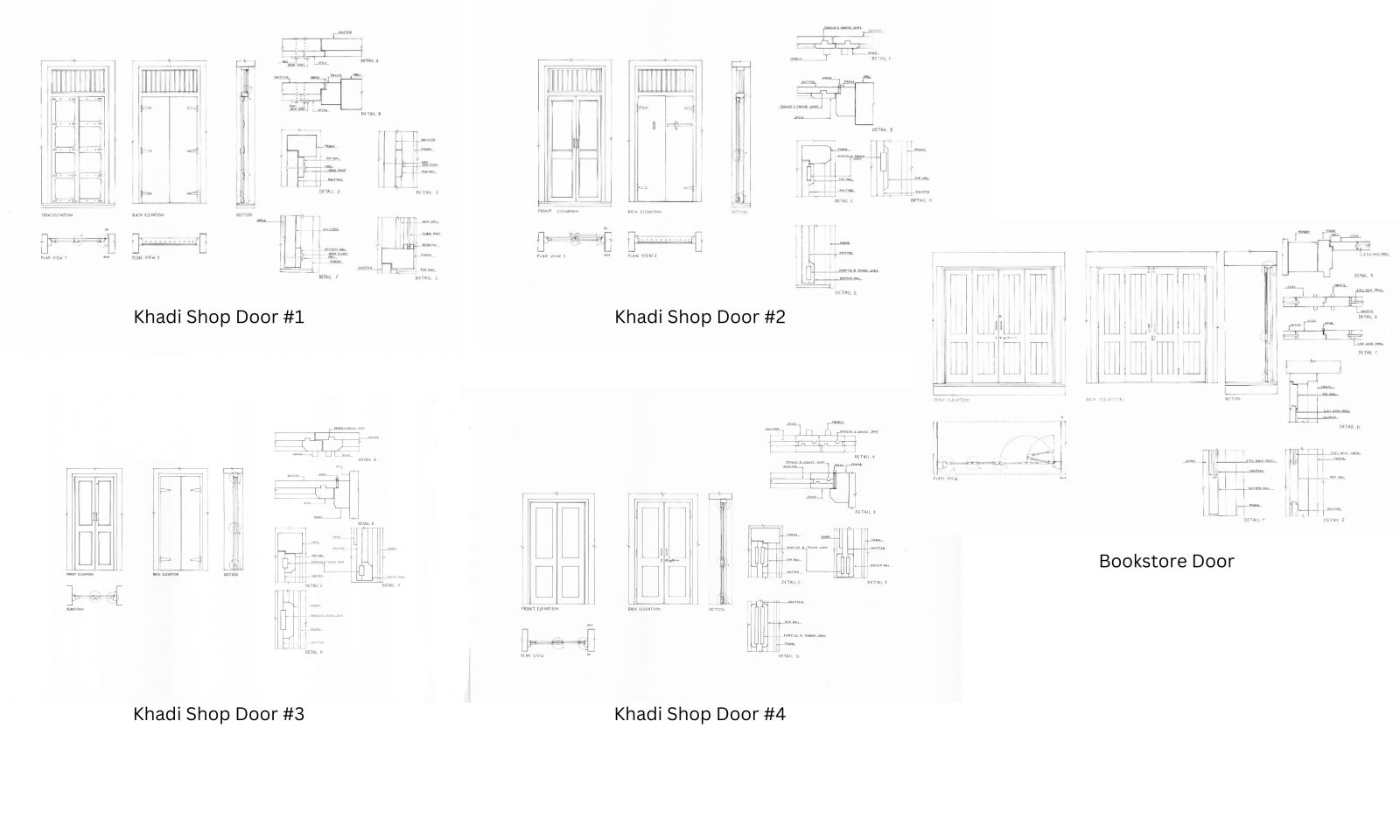
Documetation of all the doors found in Gandhi Ashram's Khadi Shop and Book Store. A group exercise, the task was to document the bookstore and khadi shop at Gandhi Ashram. With 1 door in the bookstore and 4 unique doors in the khadi shop, each door had to be studied and measured accurately, then drafted and inked. There are two elevations, 1 plan view, 1 section and 5 detailed views of the joinery. The doors were a part of a booklet made for the site, encompassing all the work done by the sub-unit into a detailed report.

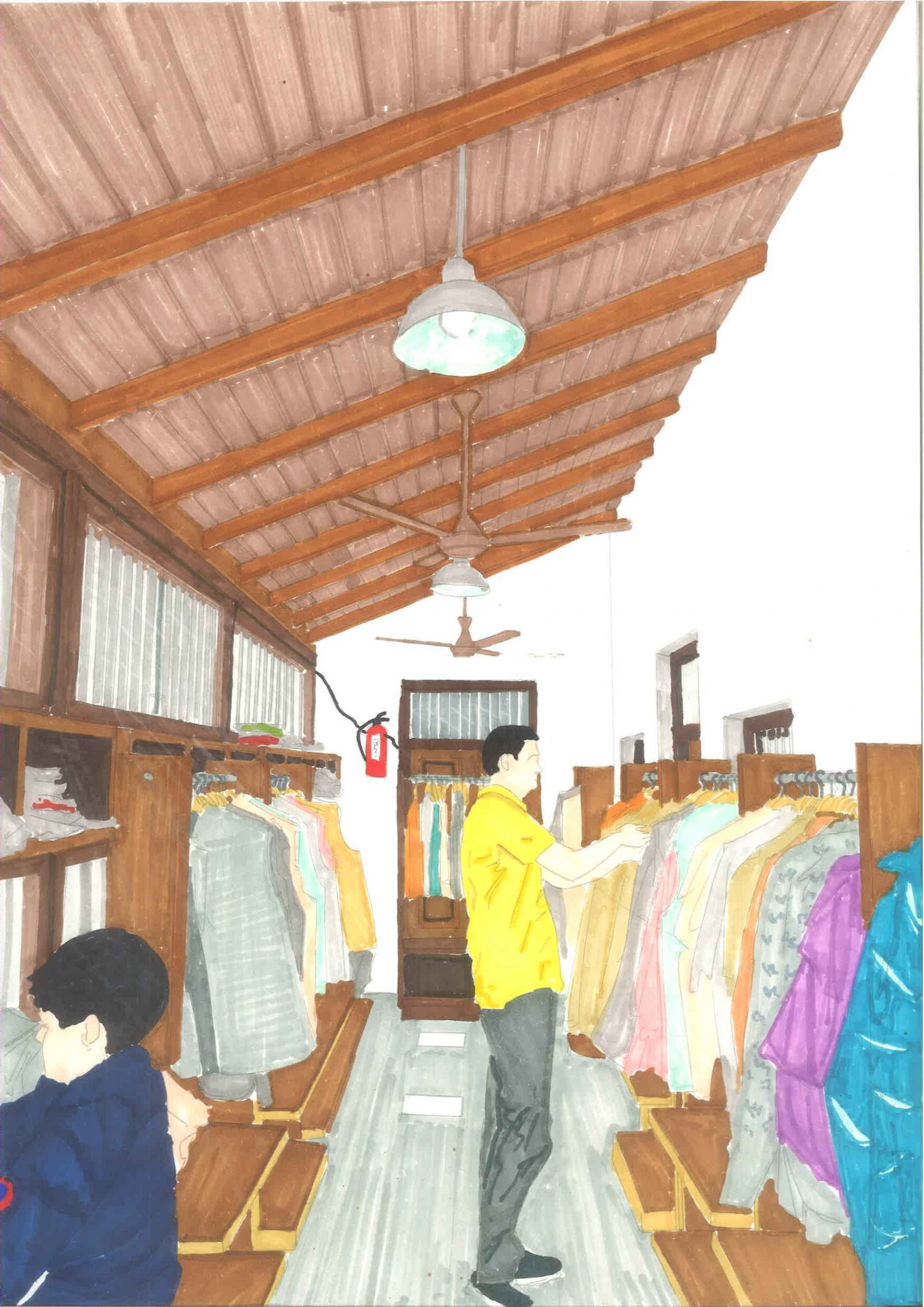
A part of the same exercise as the doors in Gandhi Ashram, this is the representation part. It is a drawing of the display room in the khadi shop. A photo reference was used and the final drawing was inked with alcohol markers

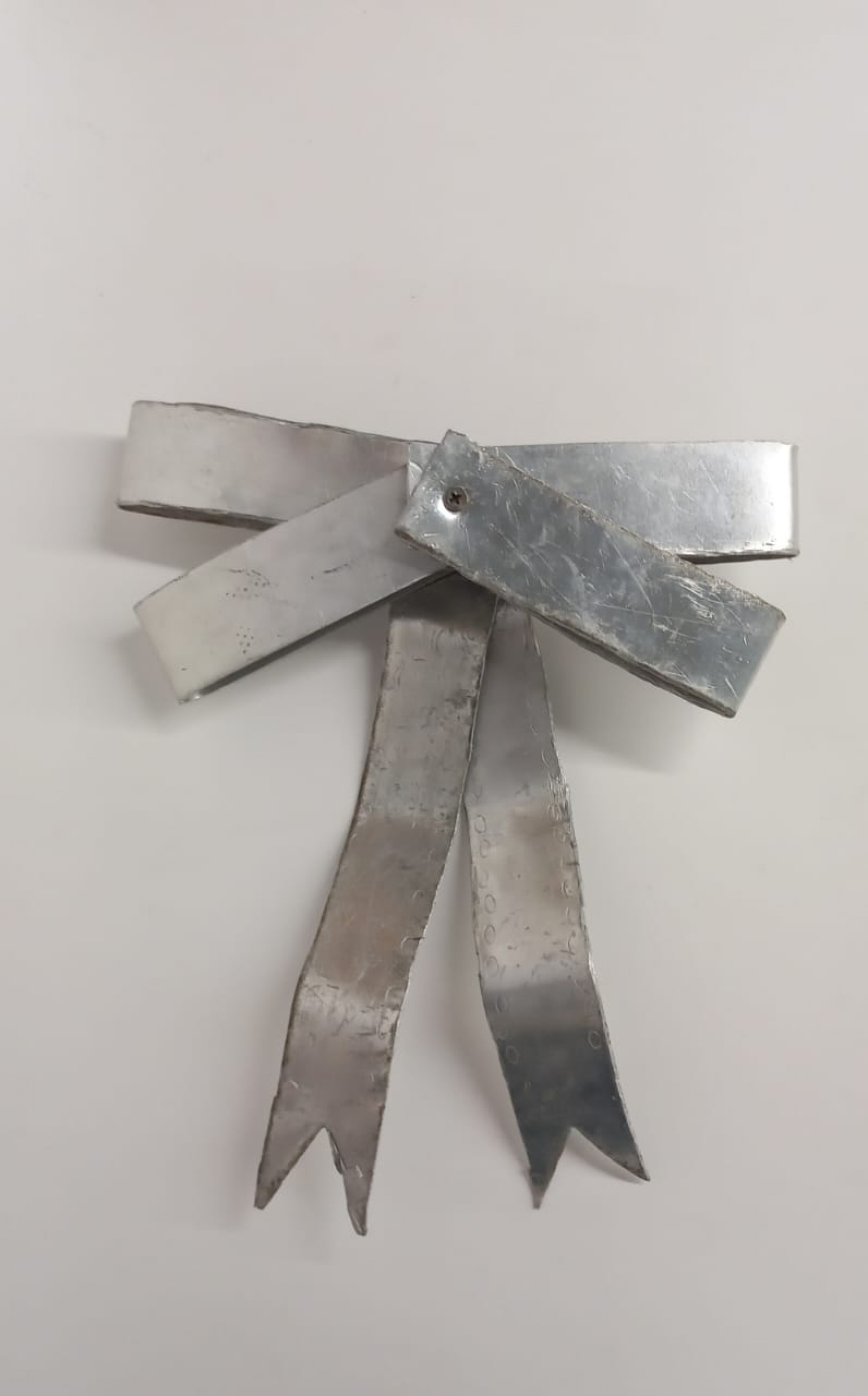
This is an exploration of metal where a square sheet of aluminum with 2mm thickness was cut, filed and shaped to form a bow. The intention was to experiment with different techniques while working with aluminum and understand the properties of the metal. The bow was made using techniques like cutting and chiseling to create individual strips, filing down sharp edges, embossing initials and hole punching to create the “knot”. An extra long rivet is used to hold close to 7-8 layers of metal in the centre. Each process uses a different tool to test out ways to manipulate the material. The intent behind choosing a bow as the exploration was to use as many processes as possible and also have a product that is inherently a paradox: a dainty concept made tangible through something tough.

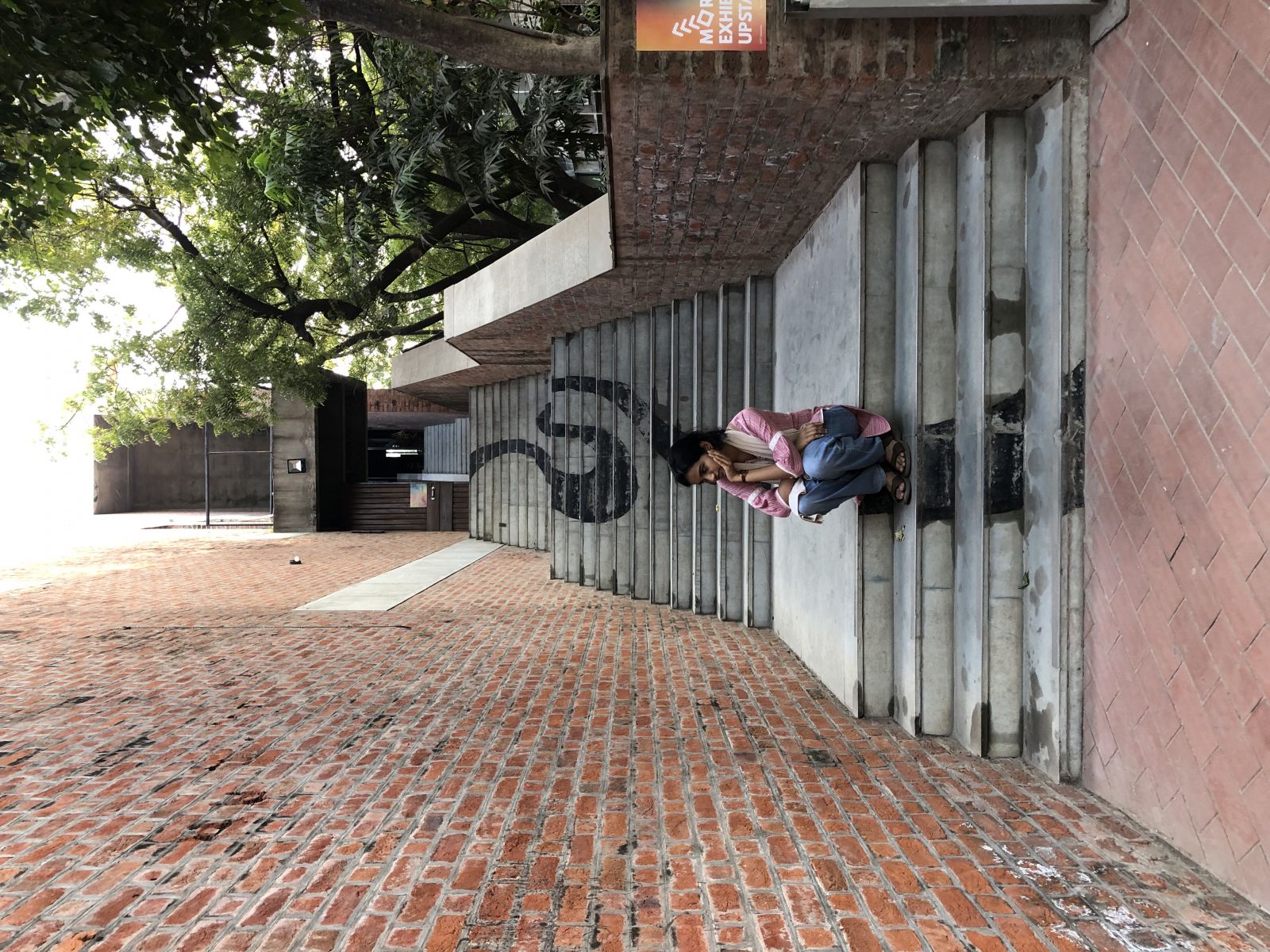
A photography exercise where, in this specific photo, the subject specifies how they wish to be perceived in the picture. The subject in this case asked for: "Wanted to be perceived in a way that doesn't “label” her immediately. Calm, going with the flow and thoughtful." This photo was taken in the Faculty of Design building in front of the iconic staircase that uses an optical illusion. The subject looks of the left pondering something, adding a sense of mystery while her body aligns perfectly with the illusion painted on the stairs. the environment is calm and empty, and the subject loved the final photo.

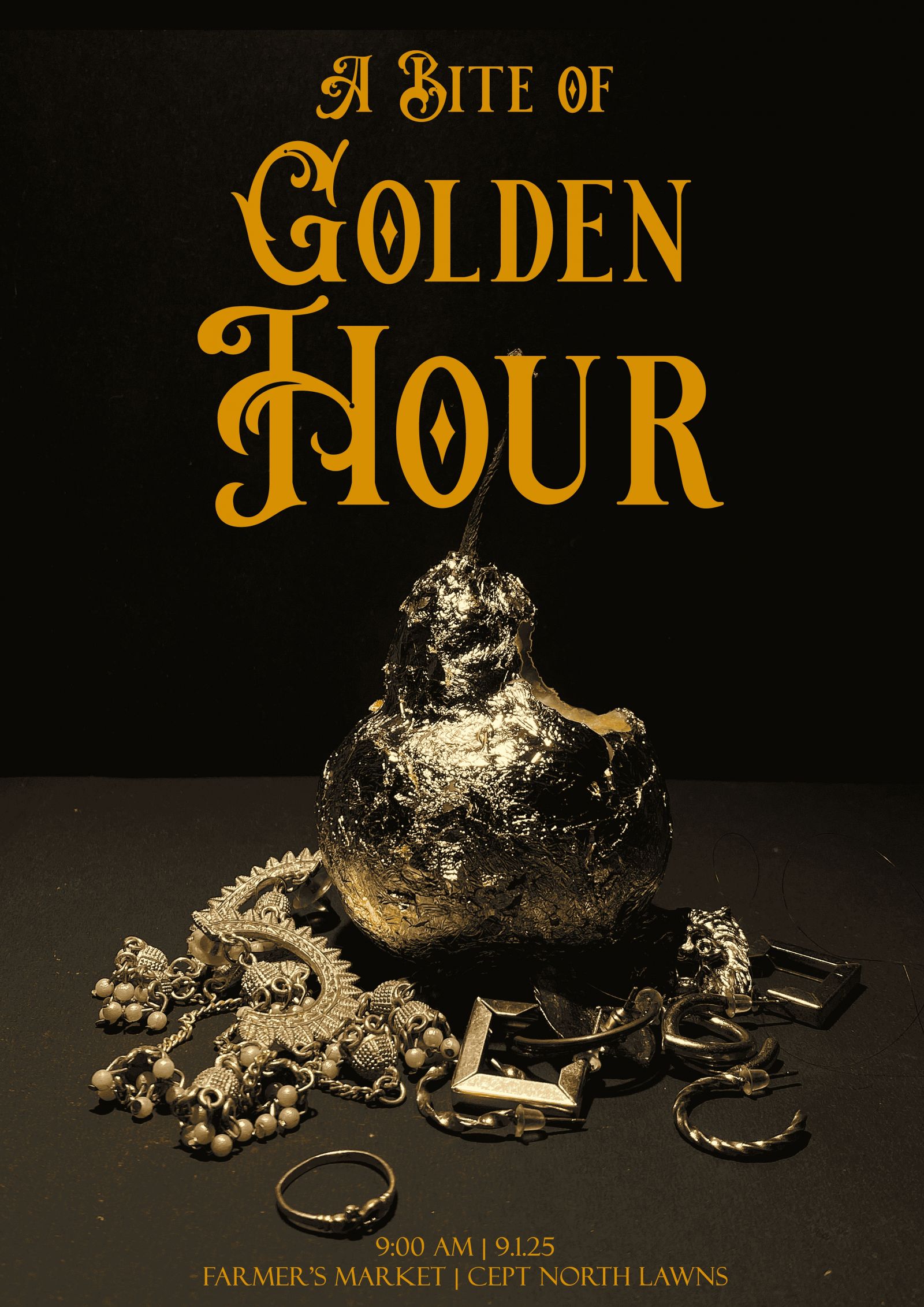
A poster designed to "sell" a fruit or vegetable. The intention was to use a metaphor (in this case, a pear) and use visual appeal to make a convincing poster. Here, the metaphor "A Bite of Golden Hour" is a play on the golden skin of the pear. The pear is covered in gold foil to highlight the "gold aspect" with a bite taken out of it, and is photographed amidst gold jewelry to accentuate the feeling of luxury even more.