Vobbilisetty Ashwika Kundan

CFP001

UBD24063

The CEPT Foundation Programme studio is an introduction for students fresh out of school to the rigor and work habits required by an undergraduate degree at CEPT University. The studio is conceptualized as a series of sequentially planned exercises, through which students develop skills and abilities, which are then deployed to address increasingly complex problems falling into four broad categories: visualize and draw, make and learn, analyze and interpret and conceptualize and represent. The exercises are designed to provide both common and allied foundational skills for students across disciplines at CEPT, between which they maintain a balance.The studio is taught through intensive weekly modules, focusing on a particular skill or ability, and a process that emphasizes ongoing discussion and feedback in addition to expert faculty lectures.
Report Content

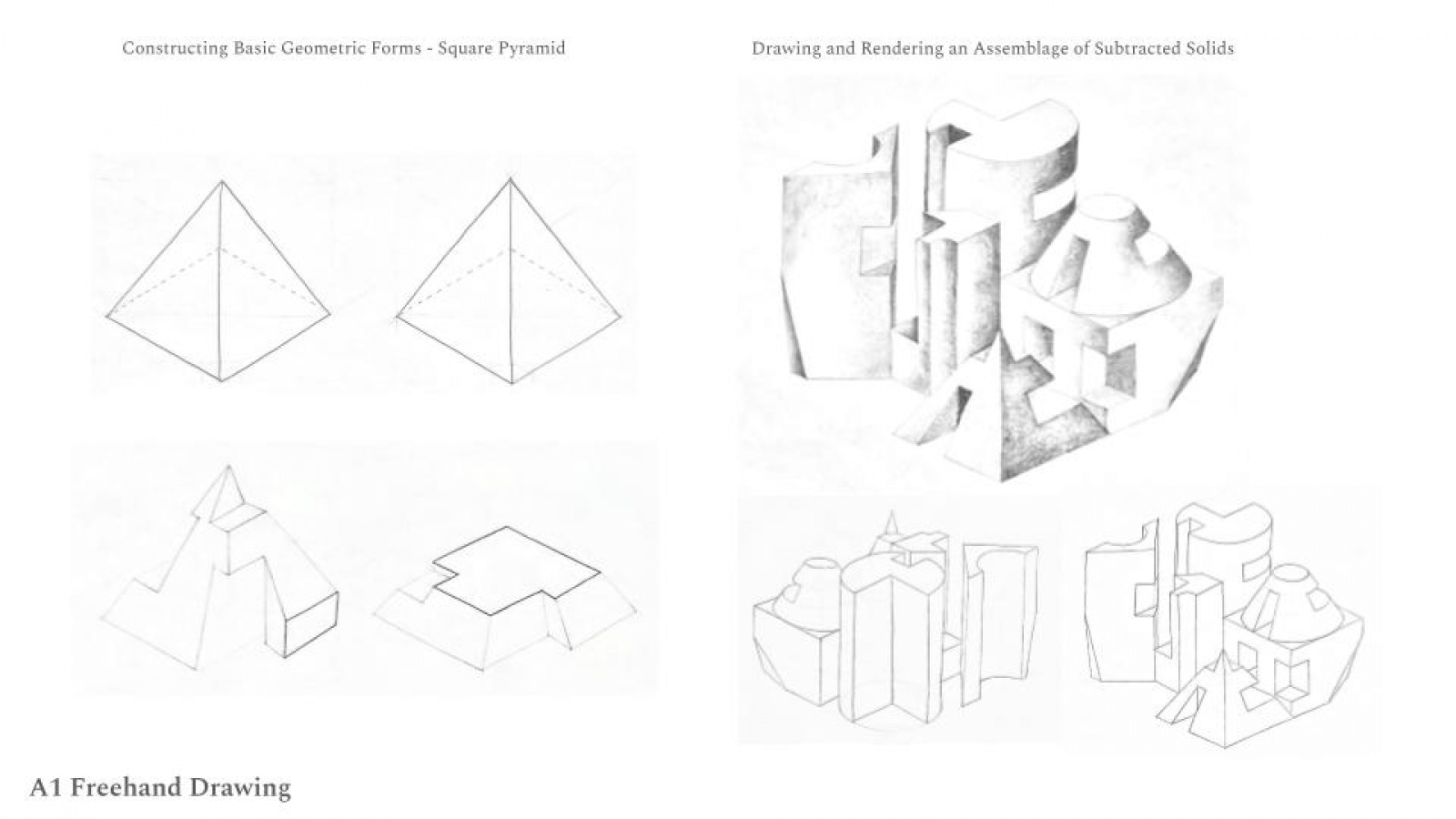
Freehand drawing enhanced hand control and coordination, emphasizing precise lines, angles, and depth. The sliced square pyramid uses darker slice lines for depth, while lighter construction lines ensure clarity. The rendered assemblage of six subtracted forms showcases depth, shadows, and texture with pencil rendering techniques.

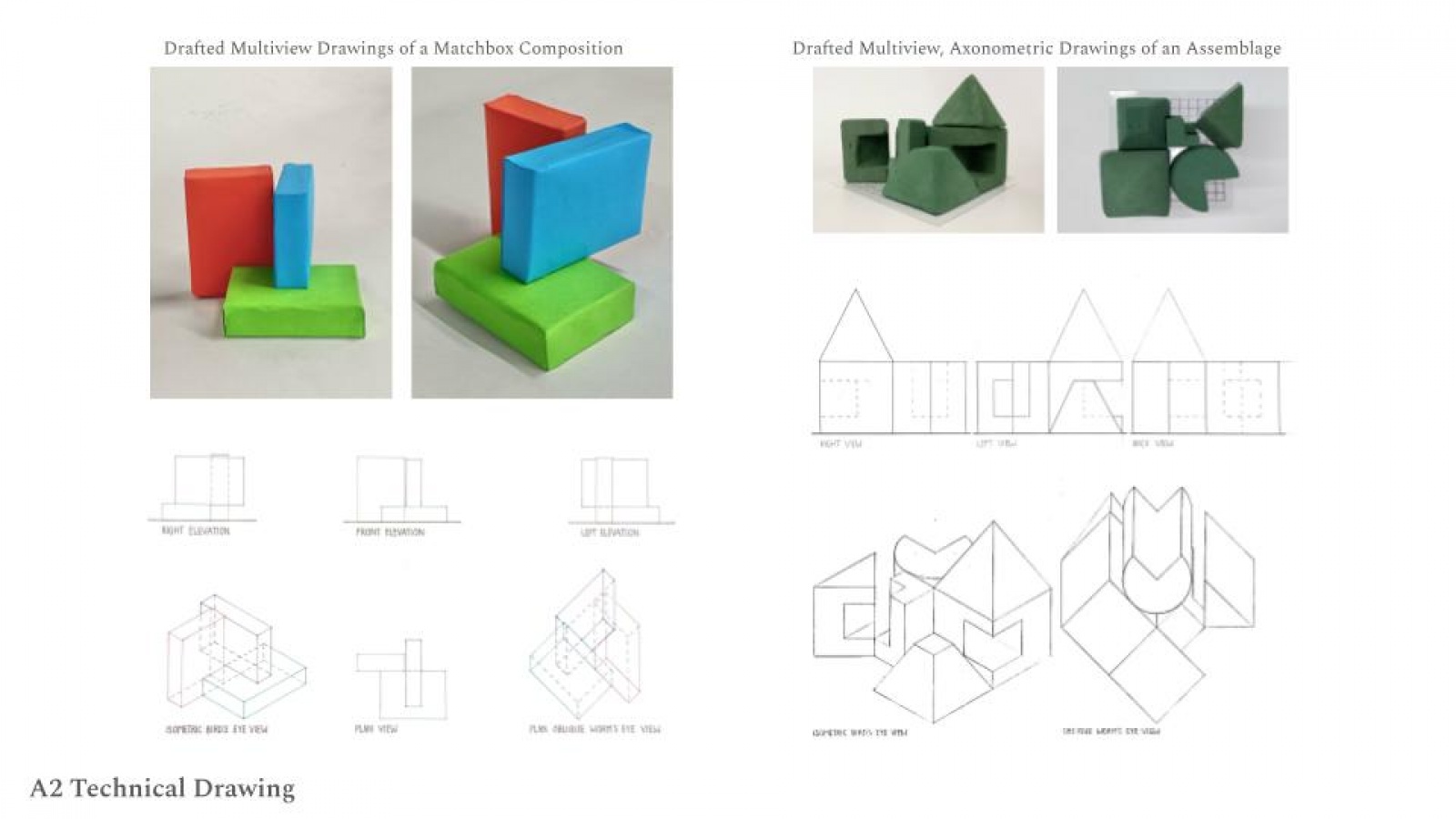
This module required drafting various views of compositions based on matchboxes and assemblage models. Depth is conveyed through varying line intensities, distinguishing foreground from background. In matchbox compositions, solid lines define visible elements, while dotted lines indicate hidden details.

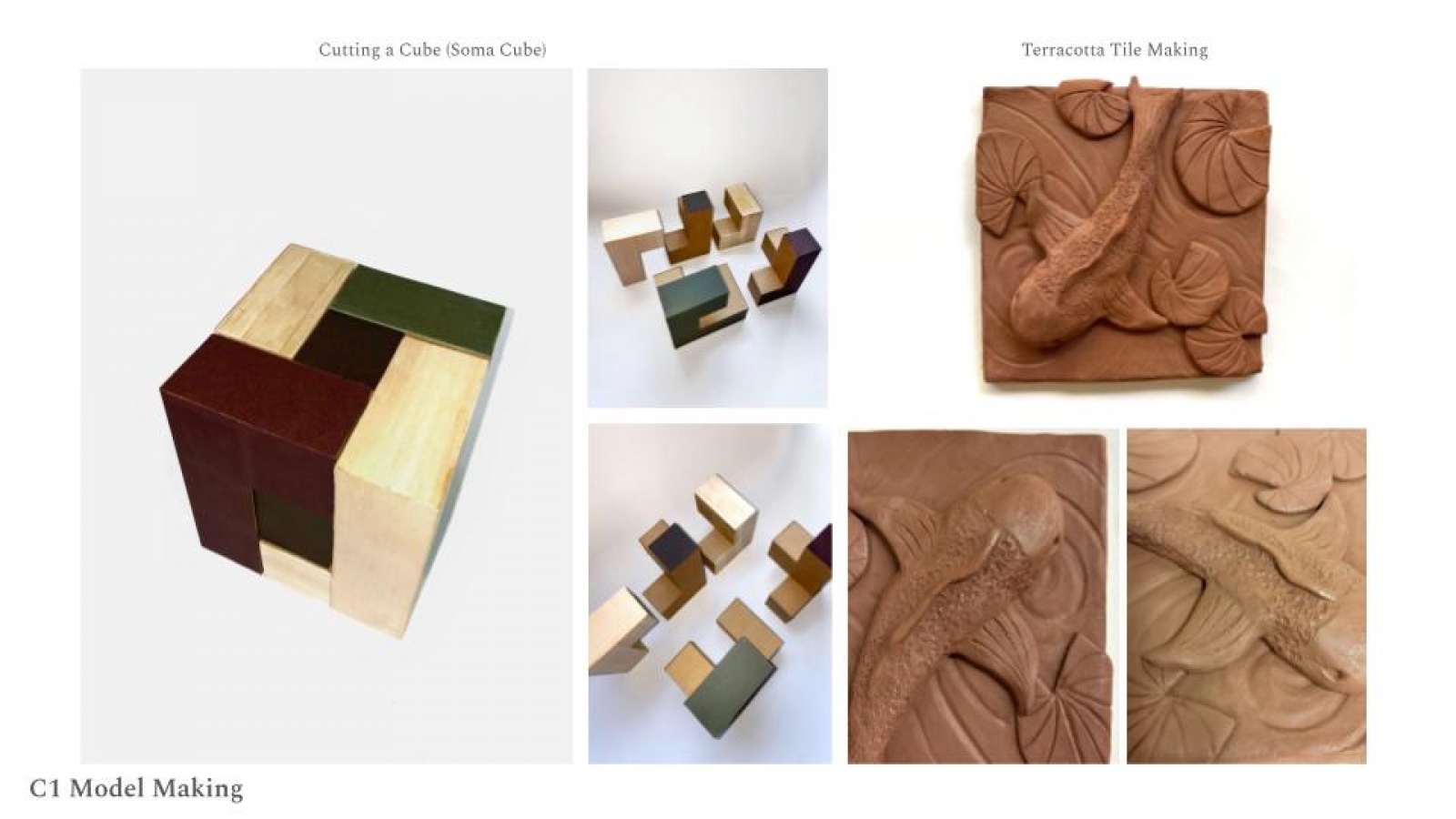
The Soma Cube, measuring 15x15x15 cm, comprises of smaller interlocking cubes. Using materials like jute board, ice cream sticks, balsa wood, and card paper, I adhered to an earthy color palette. The terracotta tile depicts a koi fish in a pond. It was made using the method of addition of clay to depict the fish, leaves and subtraction of clay to depict the ripples of the water, detailing of the leaves and fish.

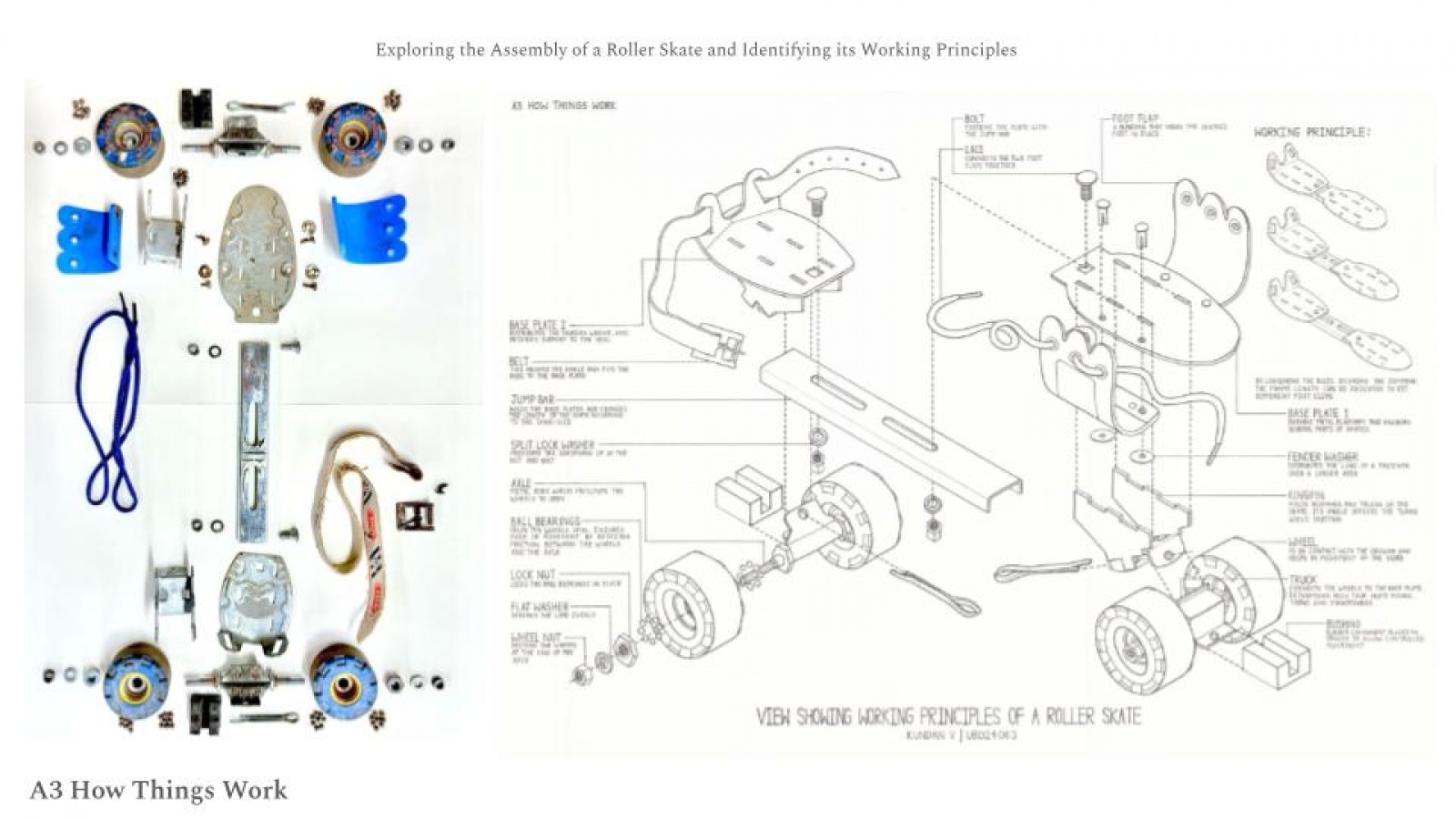
This exercise focused on understanding the design of a mechanical roller skate. Dismantling each part and understanding its purpose in the skate helped understand the working principles of the roller skate.

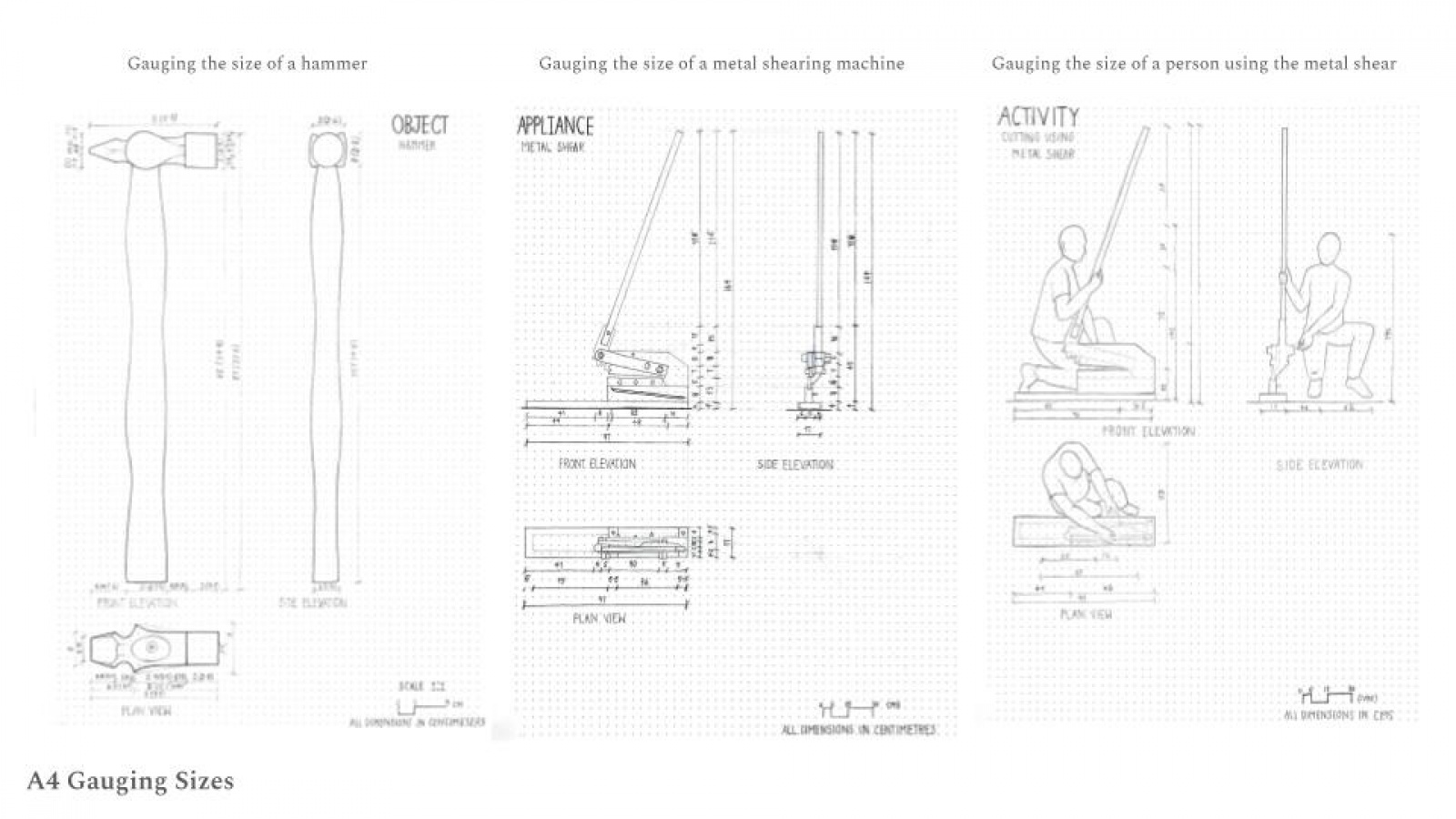
This module focused on gauging objects and activities in CEPT Workshops using the body as a reference. It involved observing and sketching 2D views from different angles to develop spatial awareness.

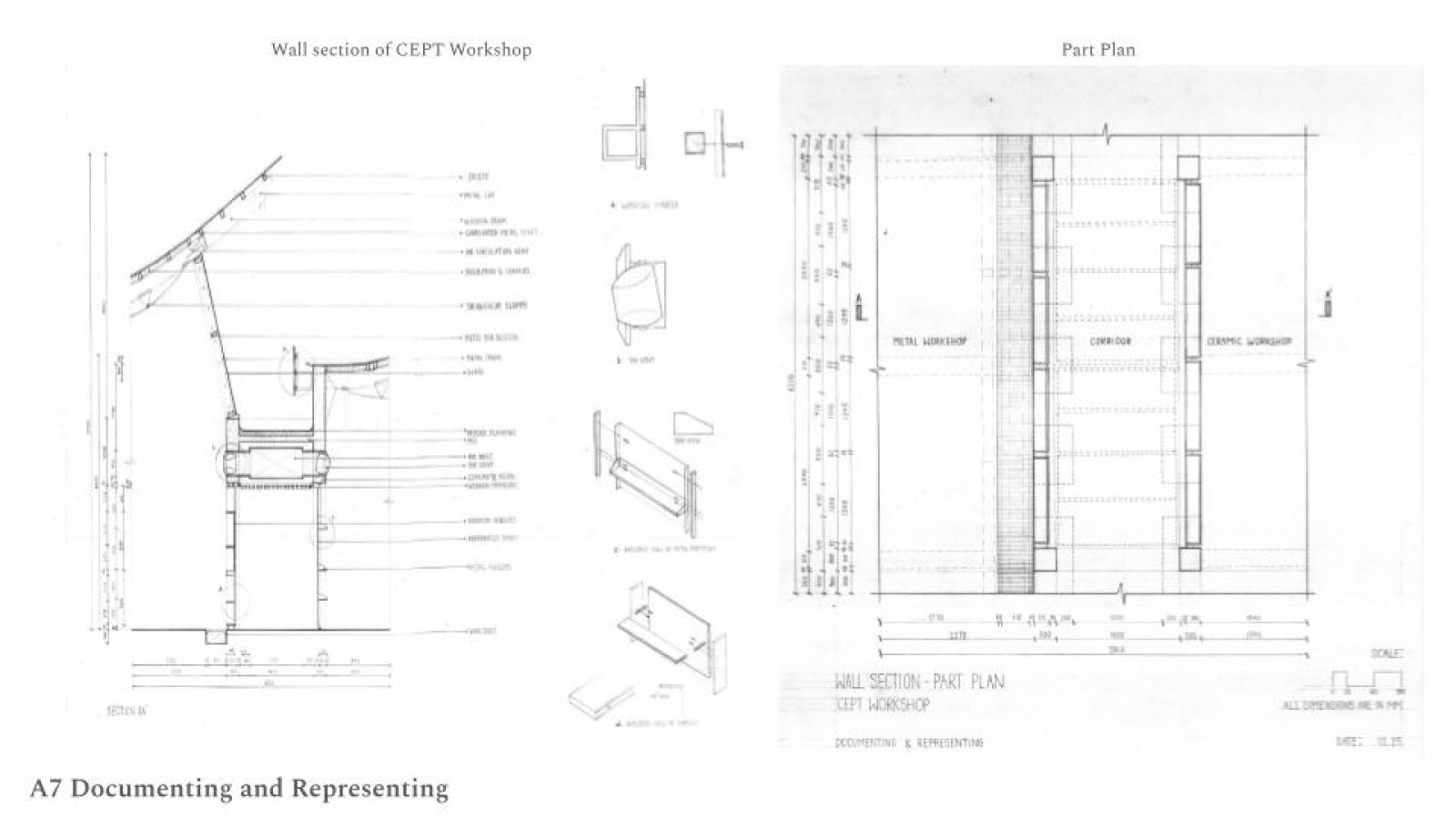
Documenting the wall section at CEPT Workshops involved measuring the passage between the metal and ceramic workshops. Sketching sections and plans provided insight into the wall’s structure.

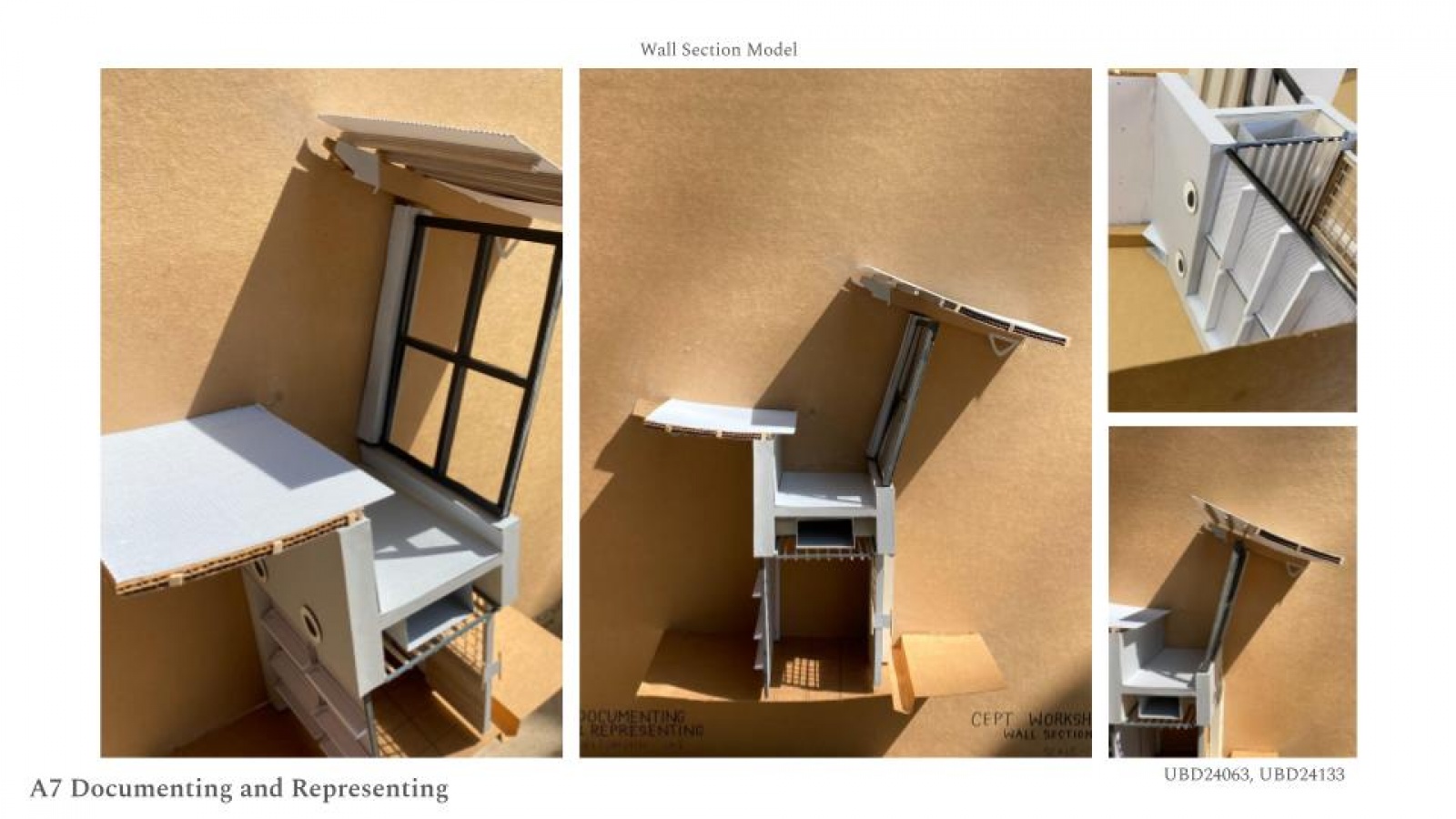
A model of the measured wall section was created using materials like jute board, card paper, balsa sticks, cardboard, etc.

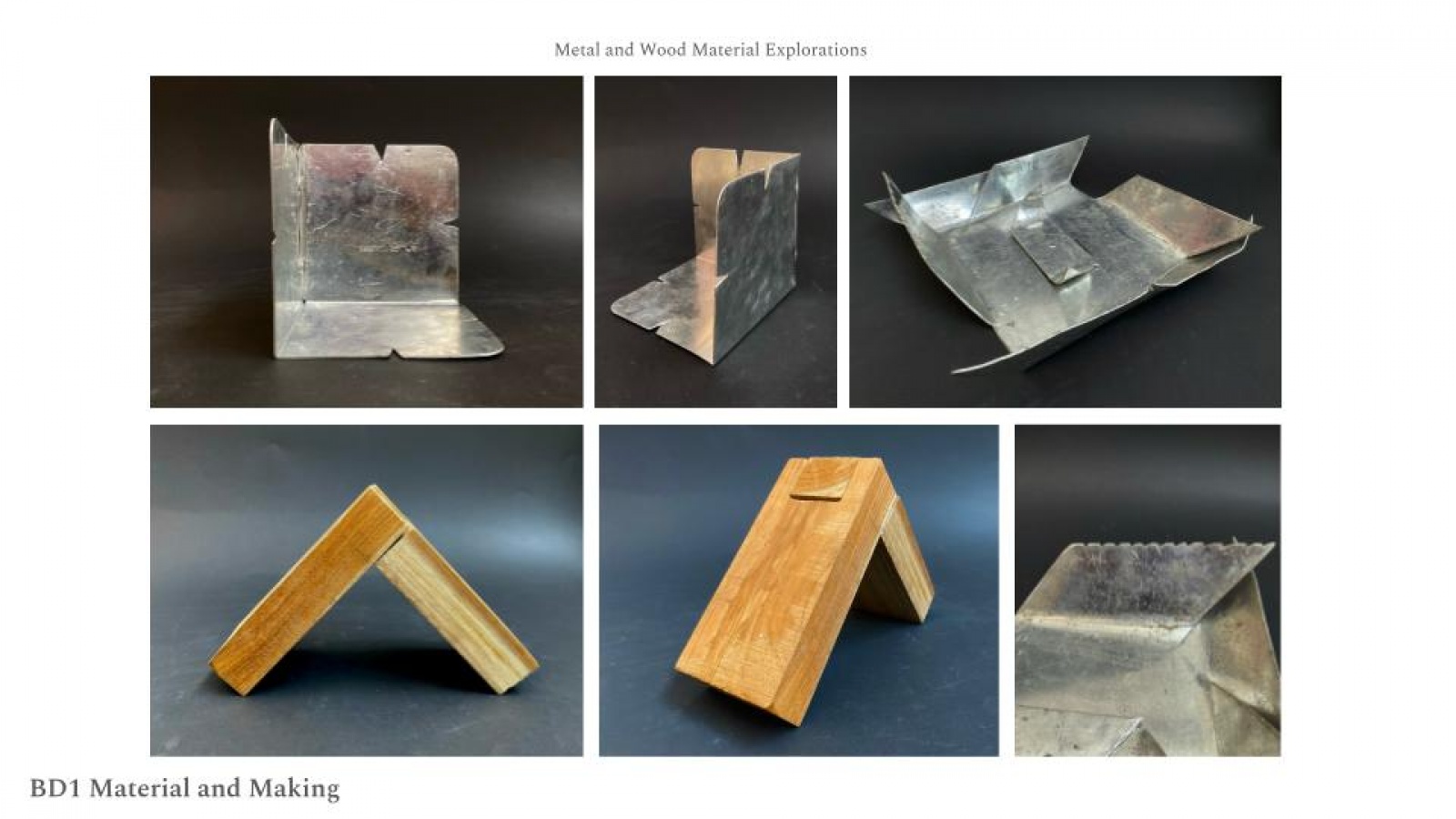
This module focused on understanding and working with materials like thick metal sheets and wood blocks, along with their relevant tools. It involved creating wood joinery and metal forms while exploring material properties and the effects of various cutting and bending techniques.

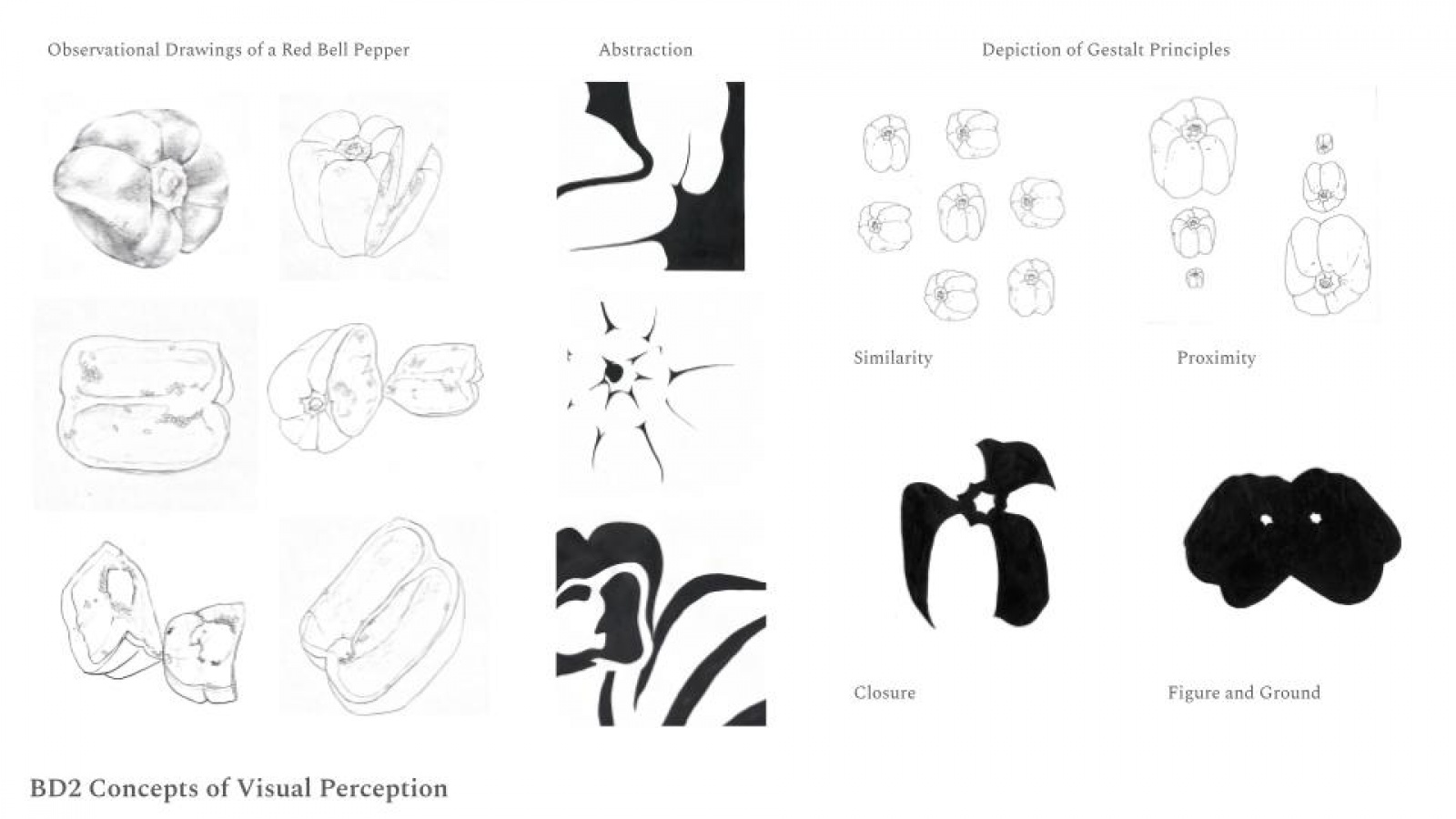
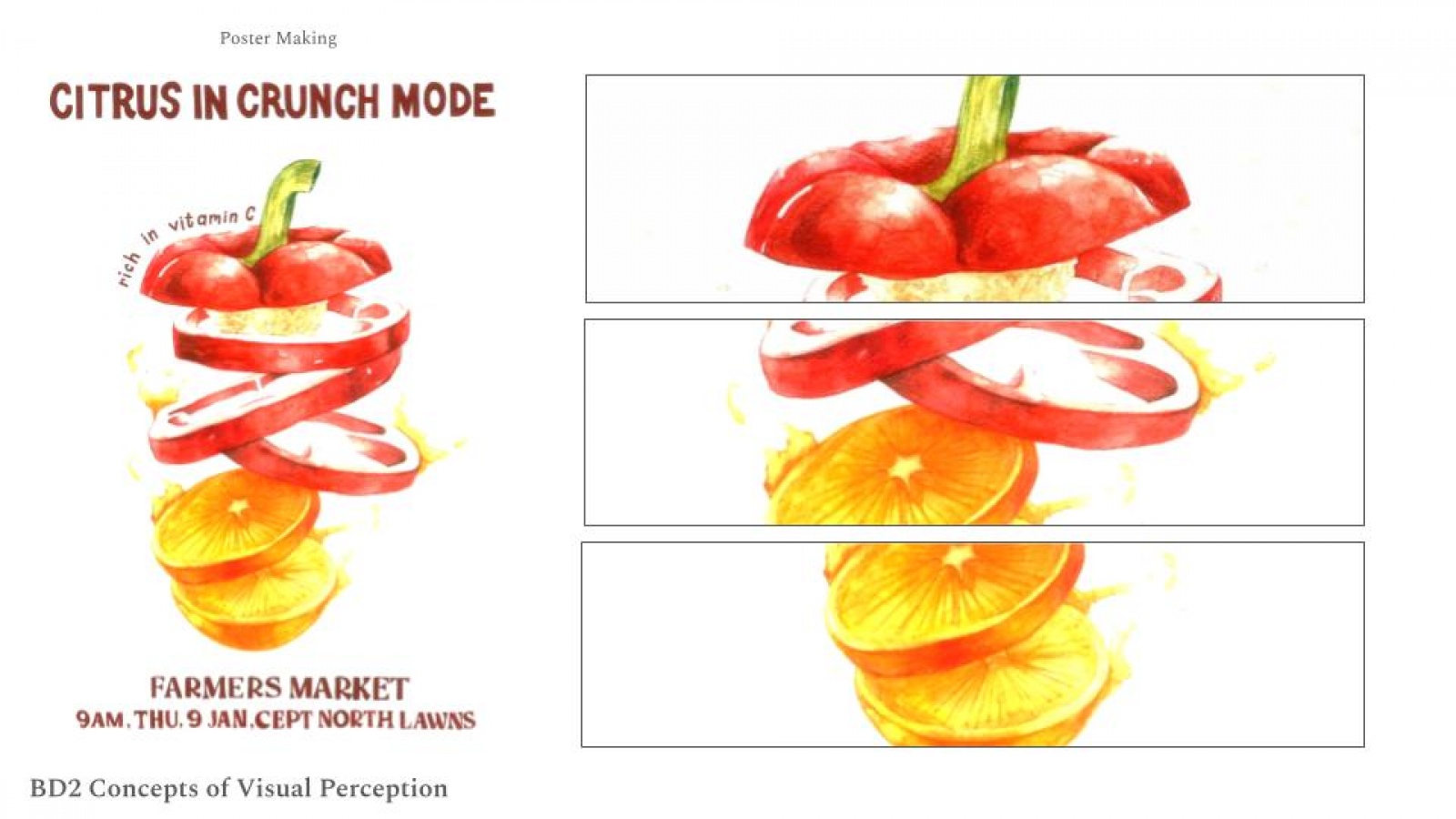
This module focused on creating compositions and posters from observations of a red bell pepper. Sketches evolved into minimal abstractions and Gestalt principle depictions.

Insights from color theory, typography, and design principles led to a final poster with a harmonious palette inspired by the pepper’s shades.