Aysha Shaziya

CFP001

UBD24127

The CEPT Foundation Programme studio is an introduction for students fresh out of school to the rigor and work habits required by an undergraduate degree at CEPT University. The studio is conceptualized as a series of sequentially planned exercises, through which students develop skills and abilities, which are then deployed to address increasingly complex problems falling into four broad categories: visualize and draw, make and learn, analyze and interpret and conceptualize and represent. The exercises are designed to provide both common and allied foundational skills for students across disciplines at CEPT, between which they maintain a balance.The studio is taught through intensive weekly modules, focusing on a particular skill or ability, and a process that emphasizes ongoing discussion and feedback in addition to expert faculty lectures.
Report Content

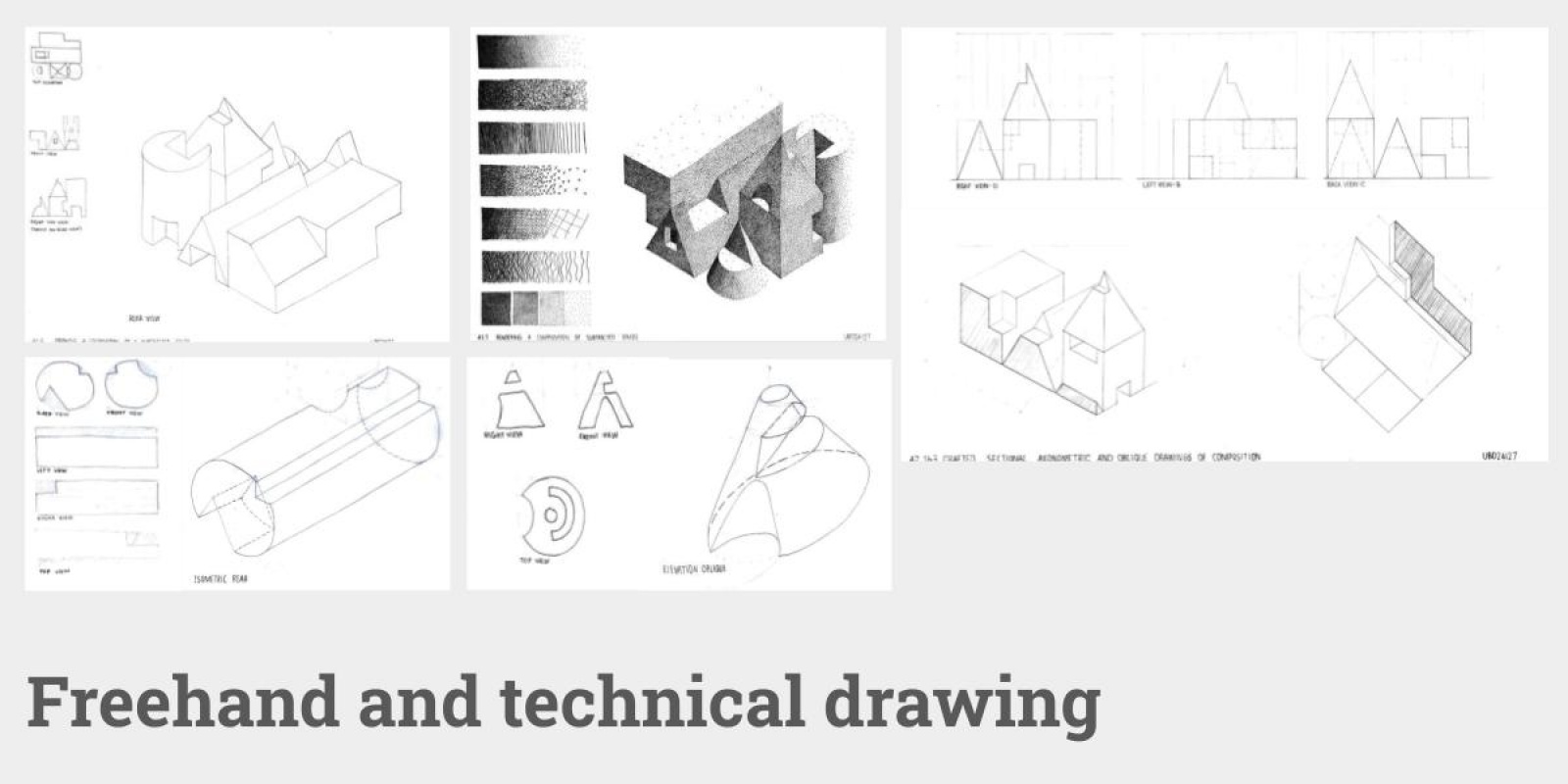
These sheets shows my understanding of forms and spatial awareness from freehand to technical drawing. By varying line weights, I differentiated foreground from background, improving visual perception.

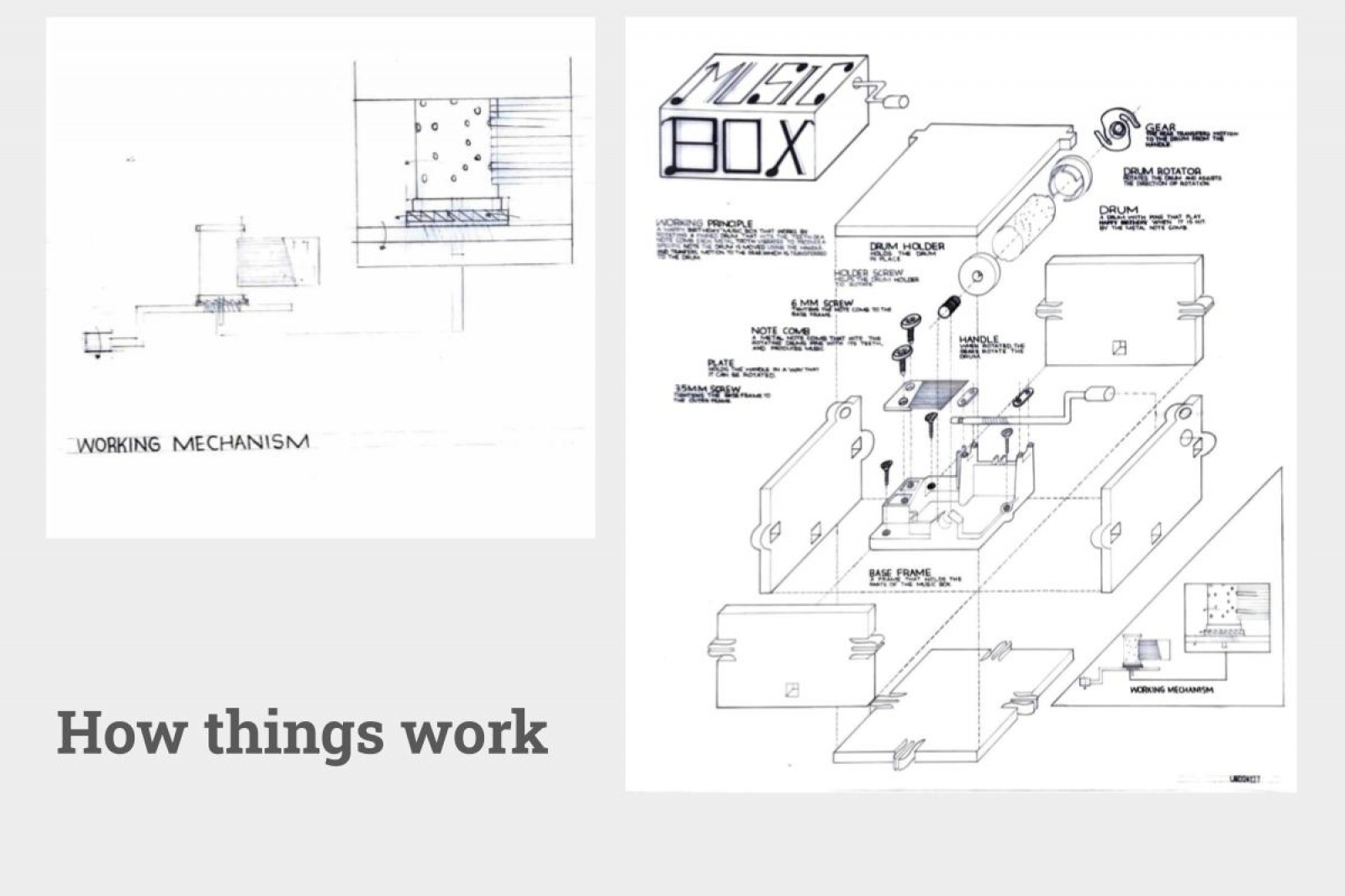
This is an exploded view of the music box along the X, Y, and Z axes. The working parts, including the note comb, handle, and drum, are exploded from the base frame along the Y-axis. The circular drum is further exploded on the Z-axis, while the plates of the box are separated across all three axes. After repeated iterations, I chose an elevation oblique view for the final representation, as it offers clarity in illustrating the working principle and ensures a clean, organized layout.

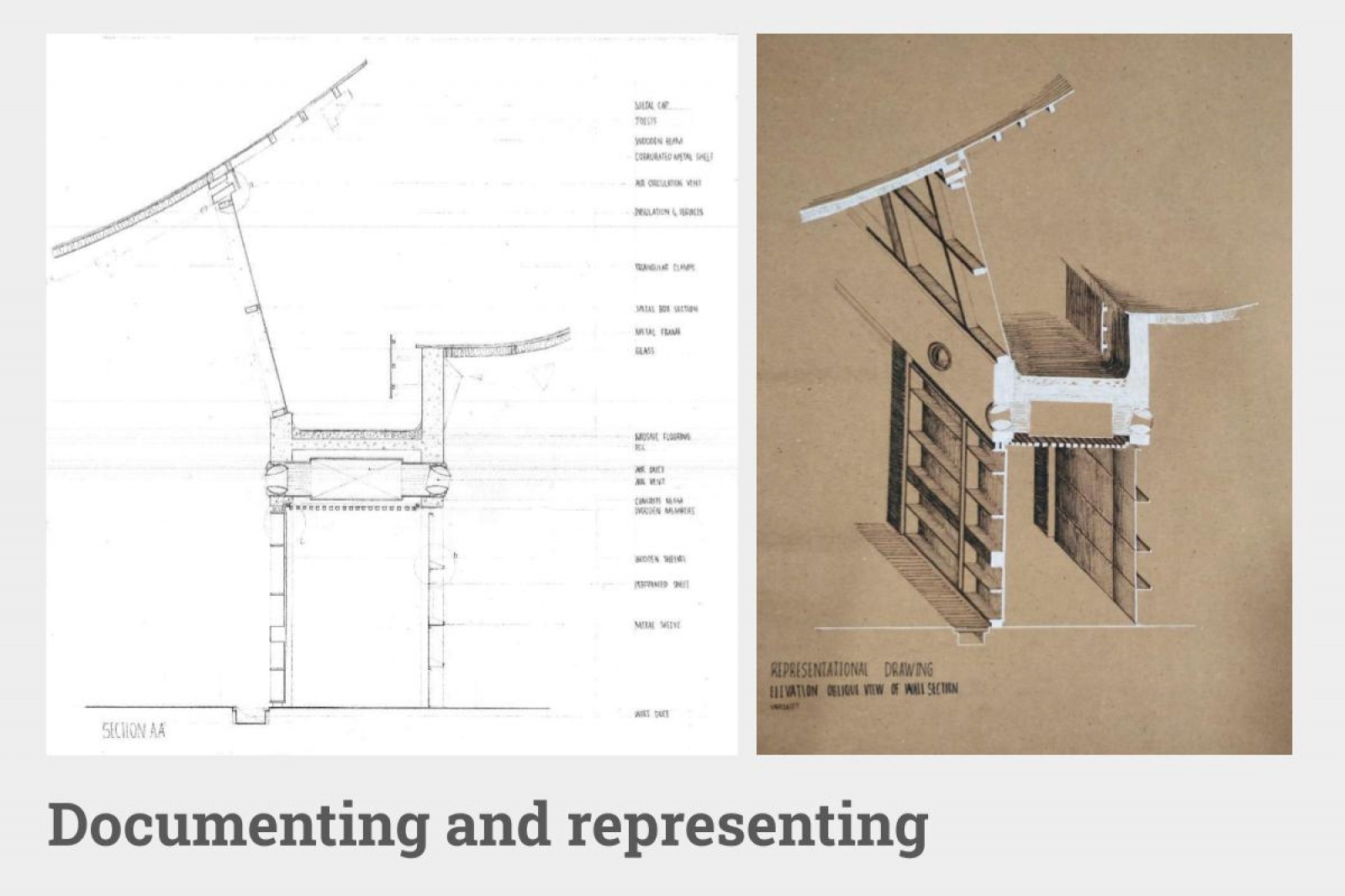
An axonometric representation of a workshop wall section, paired with a labeled sheet detailing its components

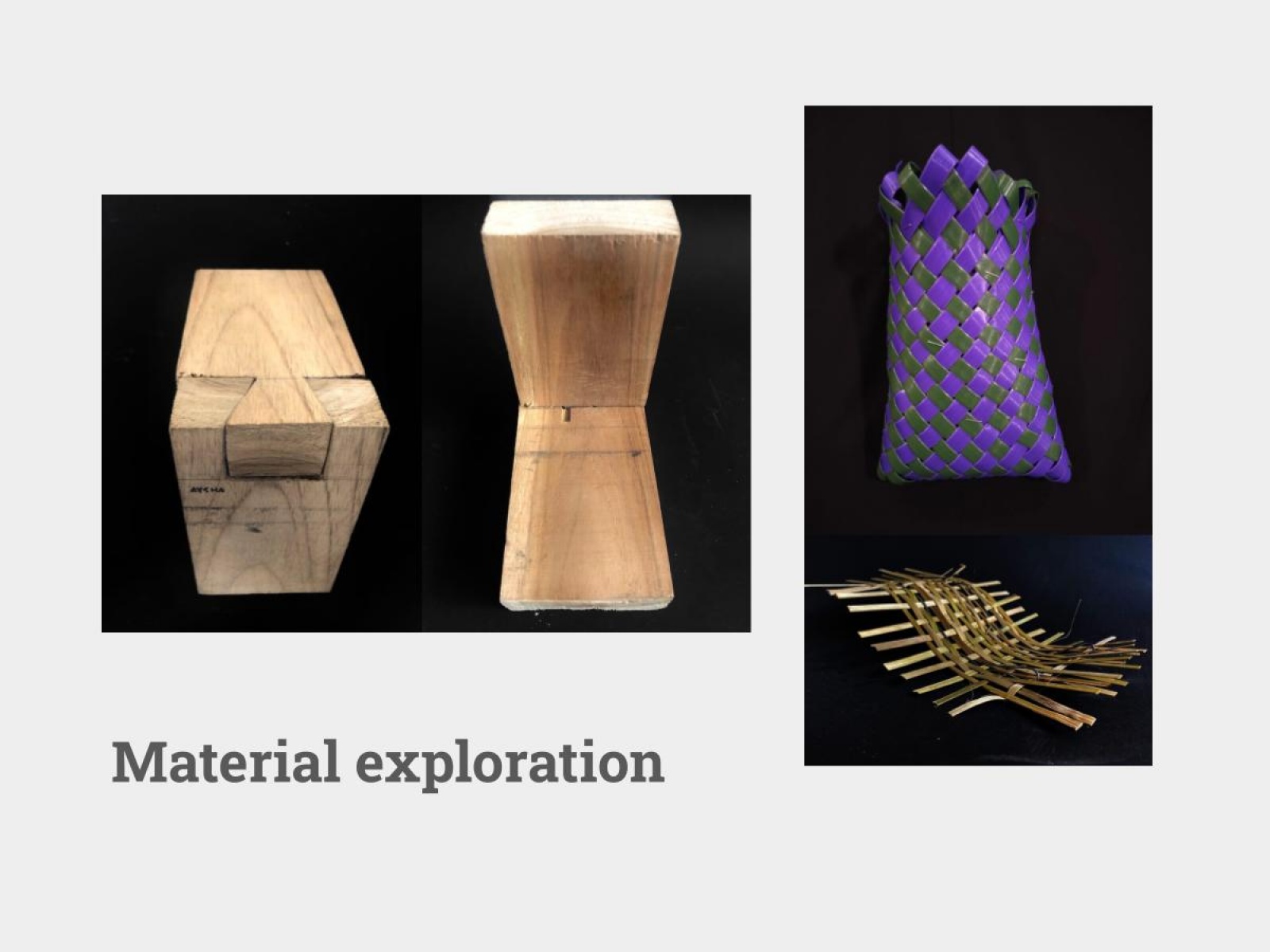
Each material required a distinct approach precision in joinery, adaptability in plastic weaving, and controlled tension in bamboo weaving.

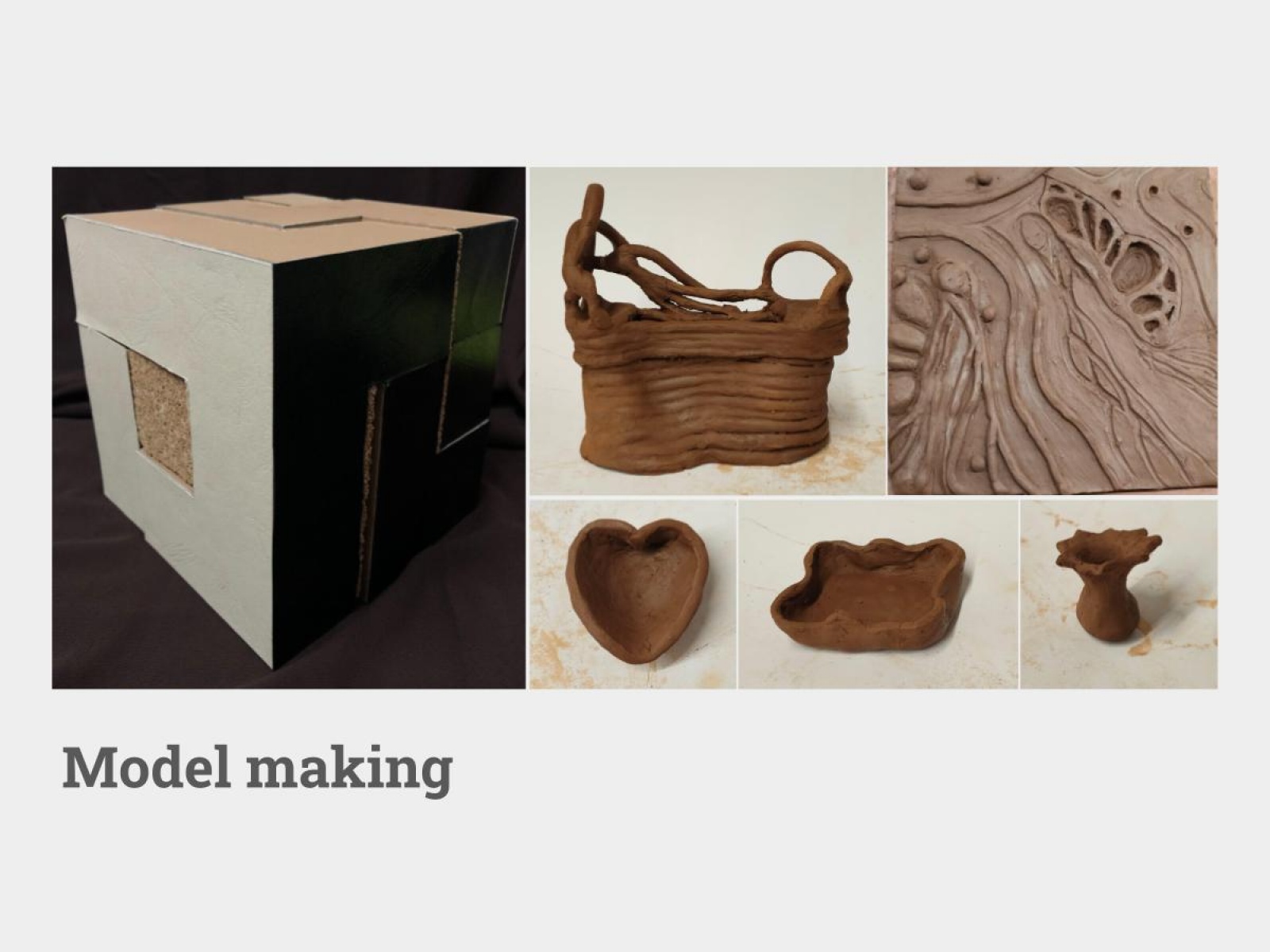
Model making deepened my understanding of form, structure, and material interplay. The soma cube exercise emphasized precision, while clay modeling allowed for intuitive shaping and iteration.

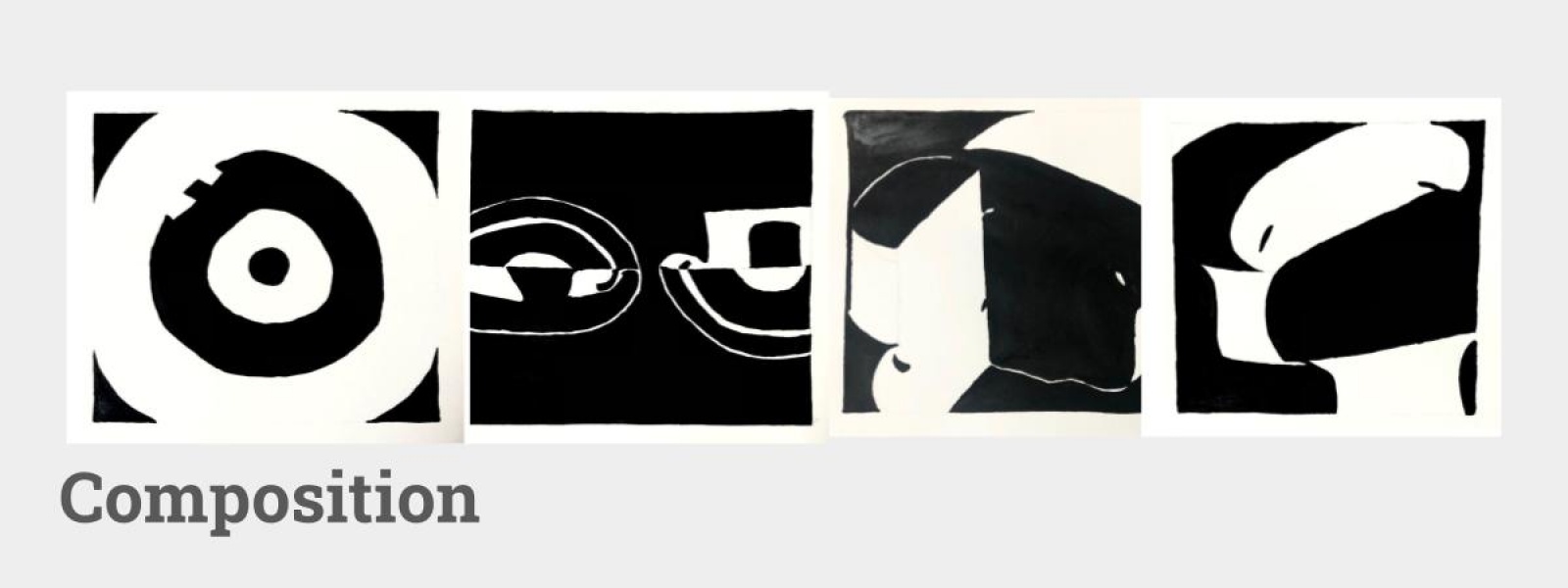
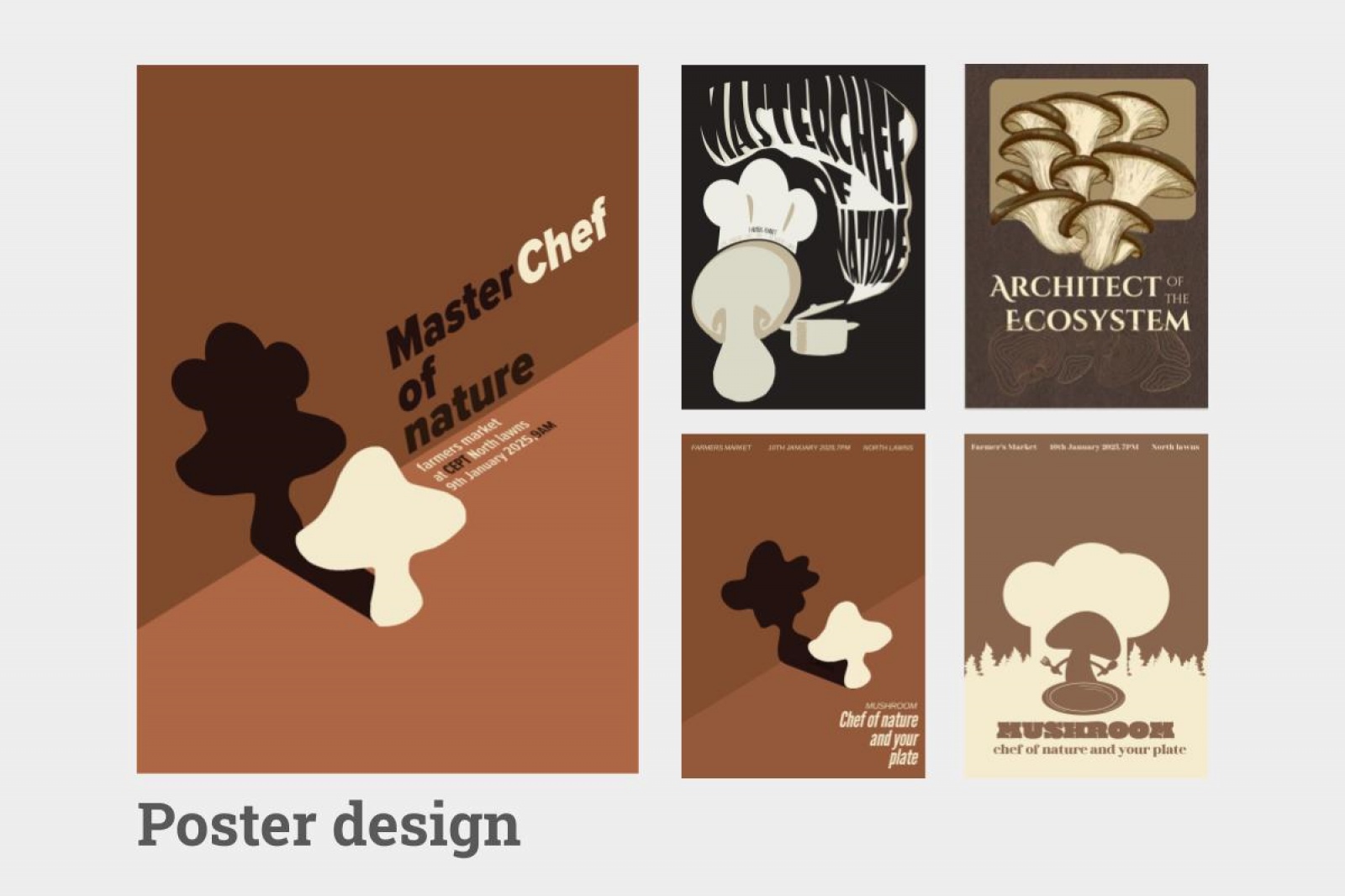
Blacking out spaces in mushroom compositions led to interesting visuals, playing with perception and figure-ground relationships.

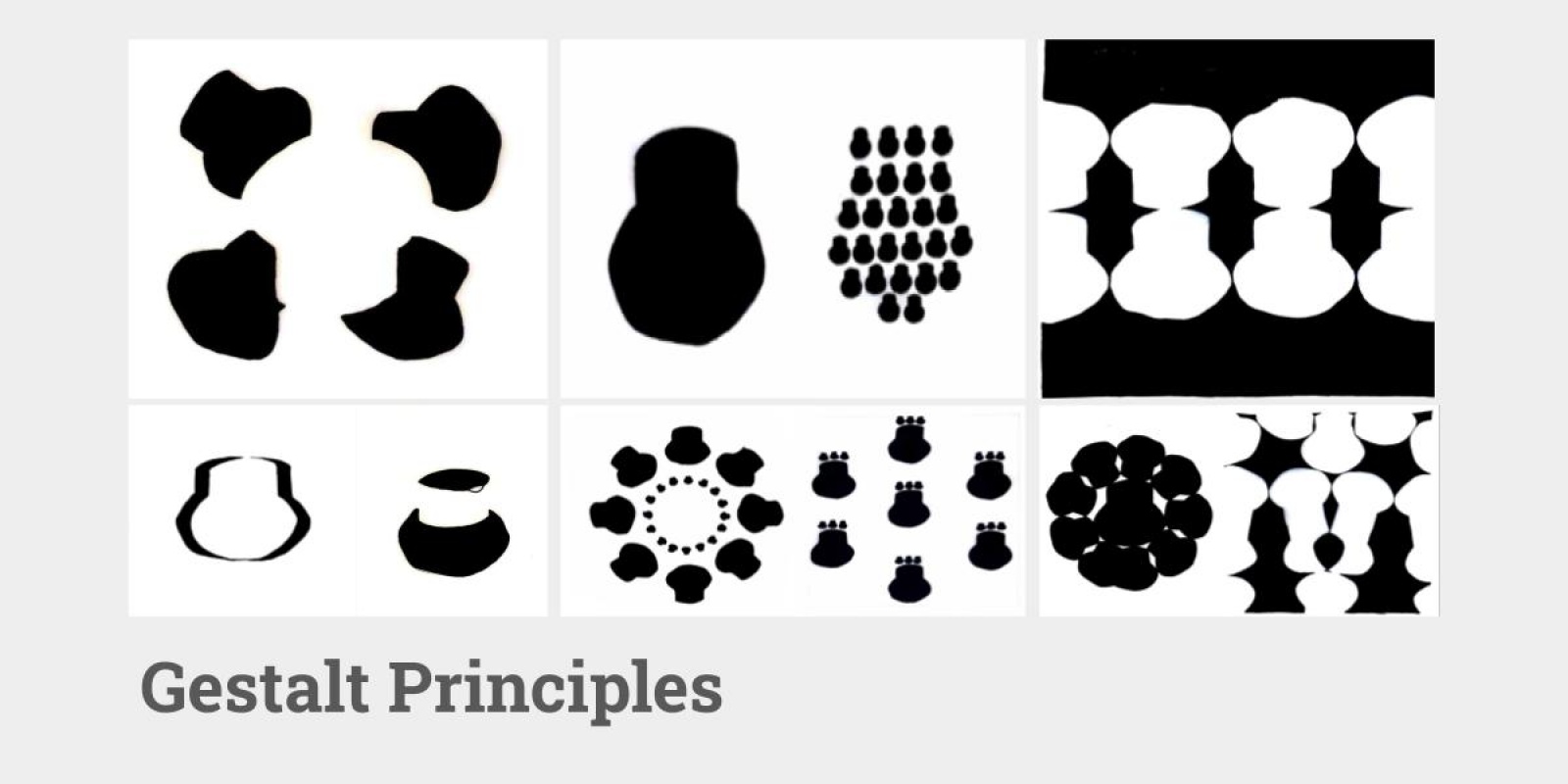
Using the mushroom’s silhouette to explore how shape and composition influence perception through Gestalt principles like closure, proximity and figure-ground.

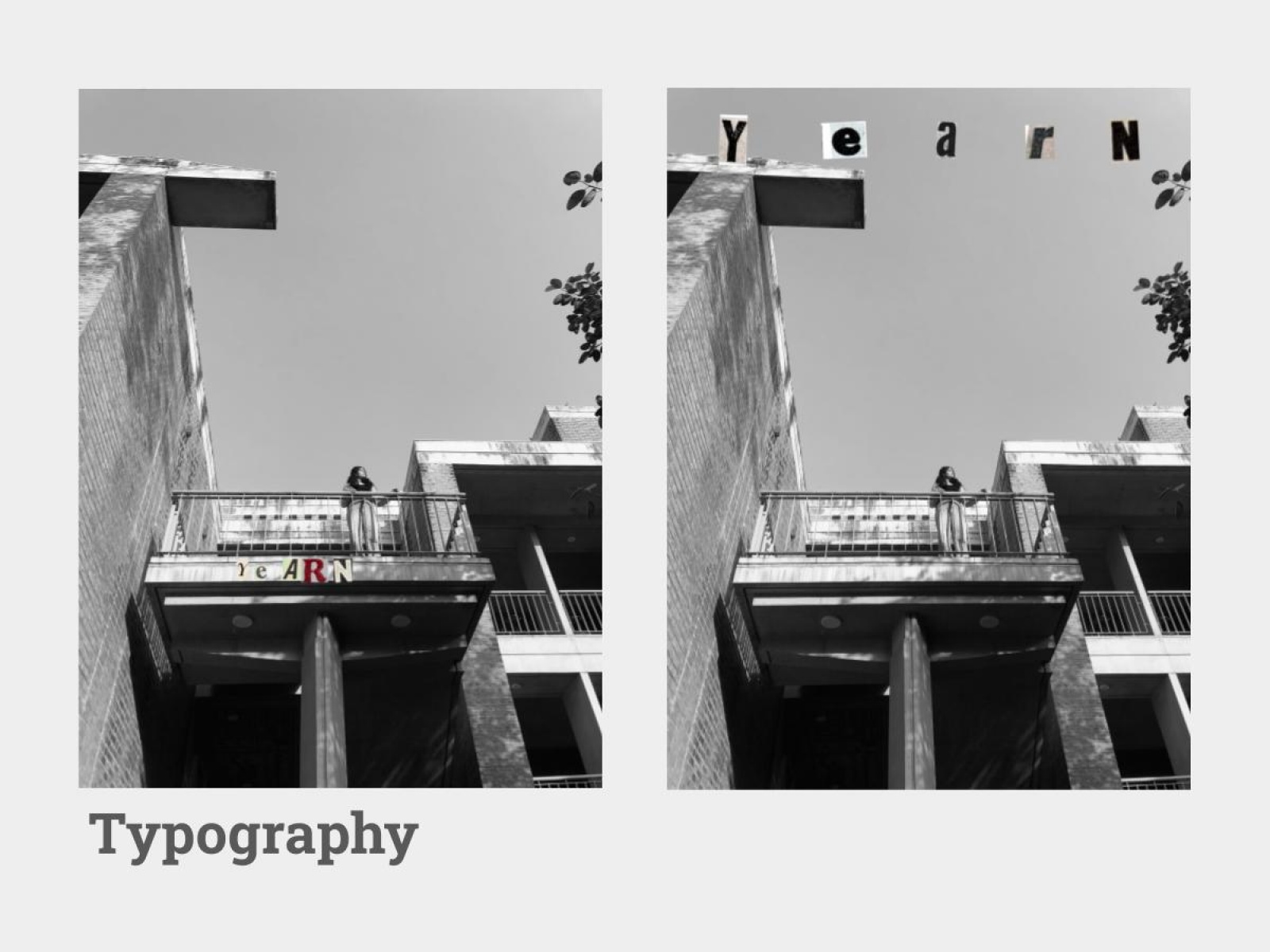
The shift from the picture on the left to the right, helps to guide the viewer's attention from the word to the image, creating a stronger connection between the two. The changes improved the legibility, made the layout feel more intentional, and strengthened the emotional impact of the design.

The large image is the final version of the poster design and the ones on the right are the process designs. Through this process, I realized how important it is for all elements to work together instead of standing out on their own.