Dhyey Dhaval Vora

CFP001

UBD24128

The CEPT Foundation Programme studio is an introduction for students fresh out of school to the rigor and work habits required by an undergraduate degree at CEPT University. The studio is conceptualized as a series of sequentially planned exercises, through which students develop skills and abilities, which are then deployed to address increasingly complex problems falling into four broad categories: visualize and draw, make and learn, analyze and interpret and conceptualize and represent. The exercises are designed to provide both common and allied foundational skills for students across disciplines at CEPT, between which they maintain a balance.The studio is taught through intensive weekly modules, focusing on a particular skill or ability, and a process that emphasizes ongoing discussion and feedback in addition to expert faculty lectures.
Report Content

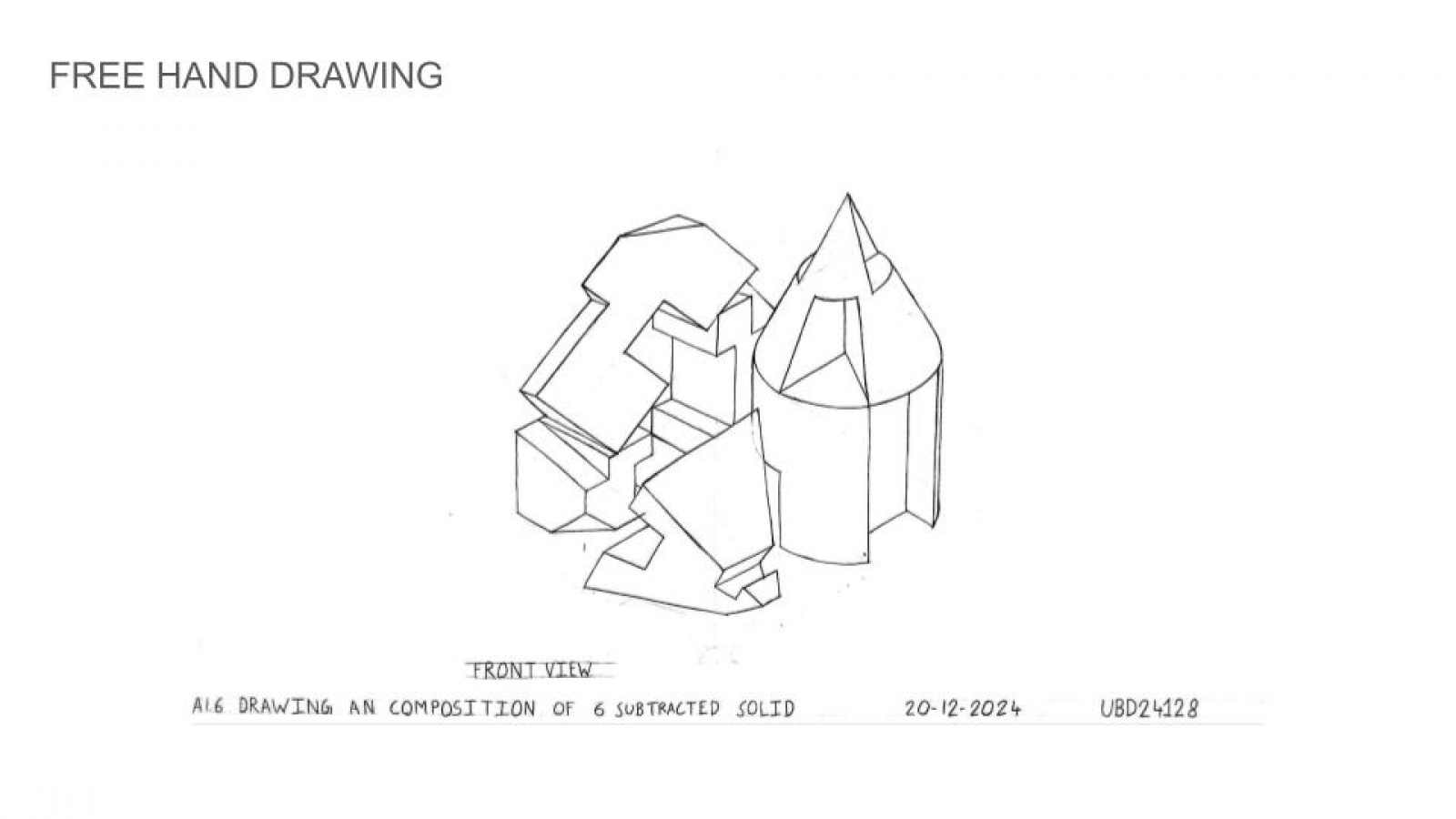
The freehand module was my introductory module to the CEPT Foundation Programme. It focused on inculcating basic drawing skills required for the programme. Starting from lines I gradually achieved a level at which

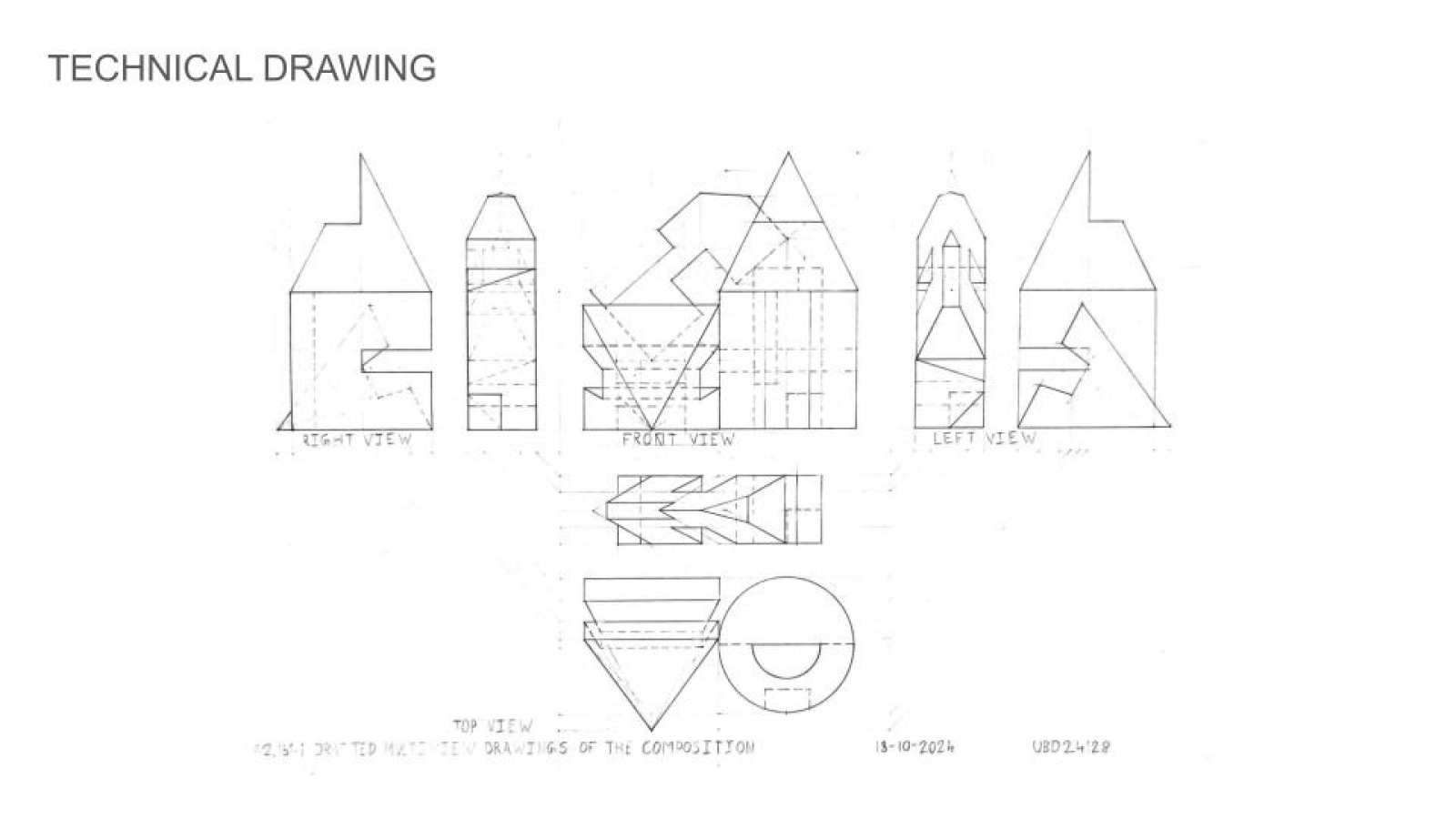
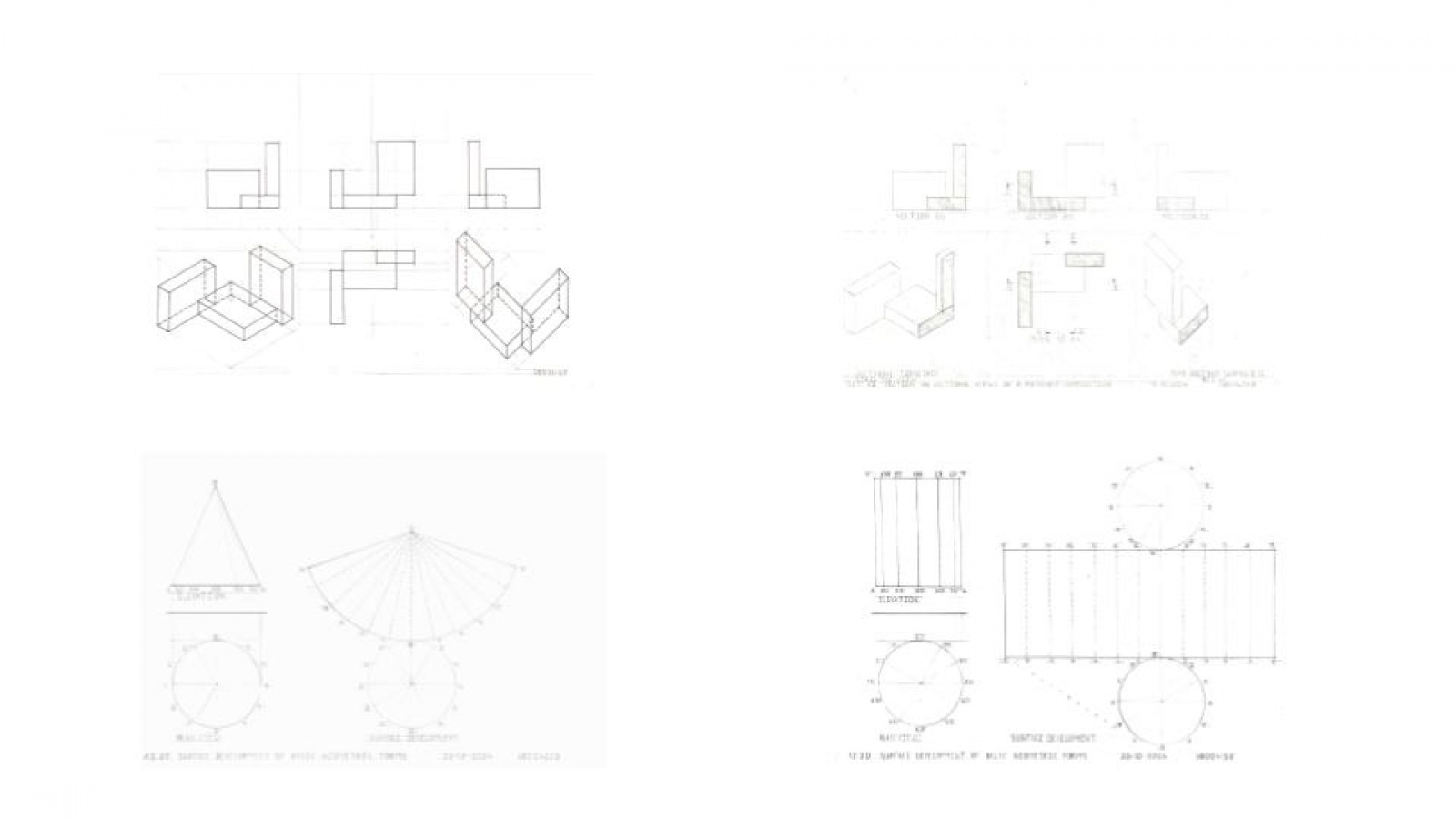
The Technical Drawing module is a continuation of the free hand module where we learned how to draft. All the skills and methods of constructing solids, and shapes made drafting easier for me. I Drafted a composition made out of 3 matchboxes, my freehand assemblage. I also learned surface development, in this part of the module, I learned how to draw solids in such a way that all sides are visible in a plan form and the entire solid can be constructed by joining the sides.

.

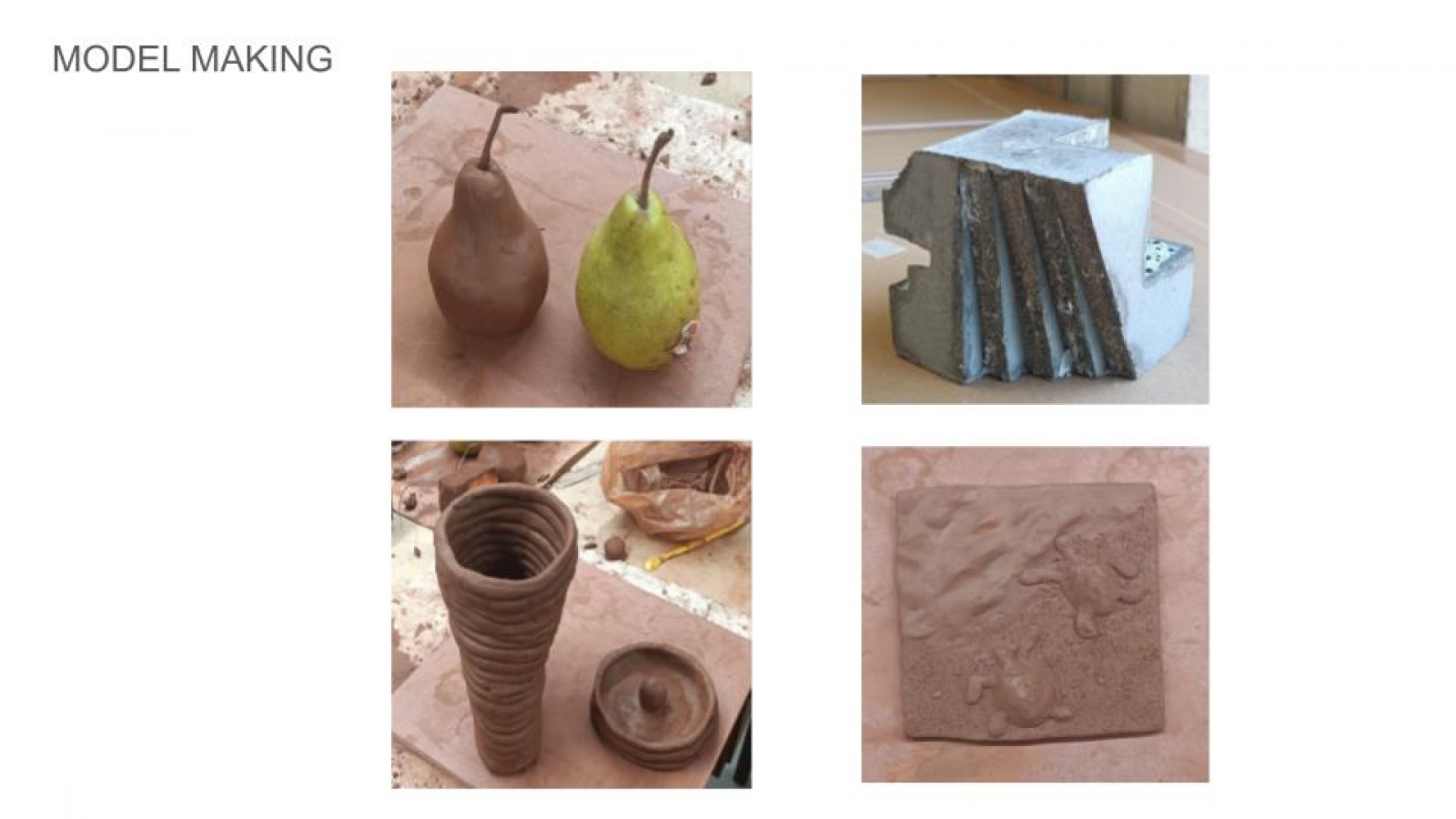
The model-making module introduced me to various materials like concrete, clay, acrylic, and various types of boards. While exploring different materials I learned how each material reacts differently to a certain process. During clay modelling, I realised that time is an essential aspect of working with clay and I needed to be delicate and follow a process where I had to use water and slip to prevent the clay from drying and cracking. I learned to inculcate patience as it is an essential thing to achieve near-perfect models.

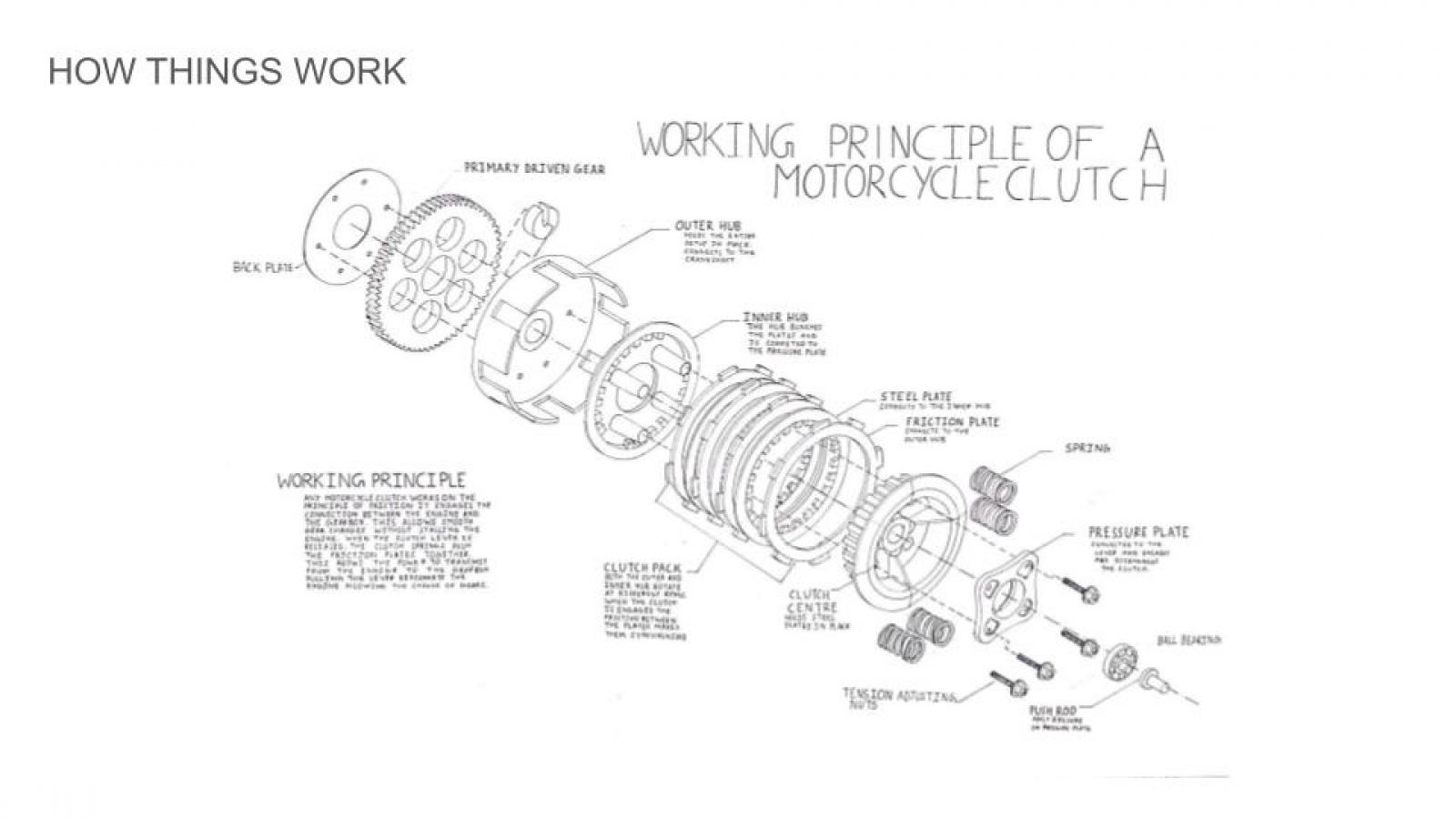
How things work is a module in which I went through a process of selecting a mechanical object, dismantling it and in the process of dismantling, figuring out how the object functions. I chose a bike clutch and based on the skills I had acquired in the earlier modules I made an exploded view of the object and described the working principle of the clutch.

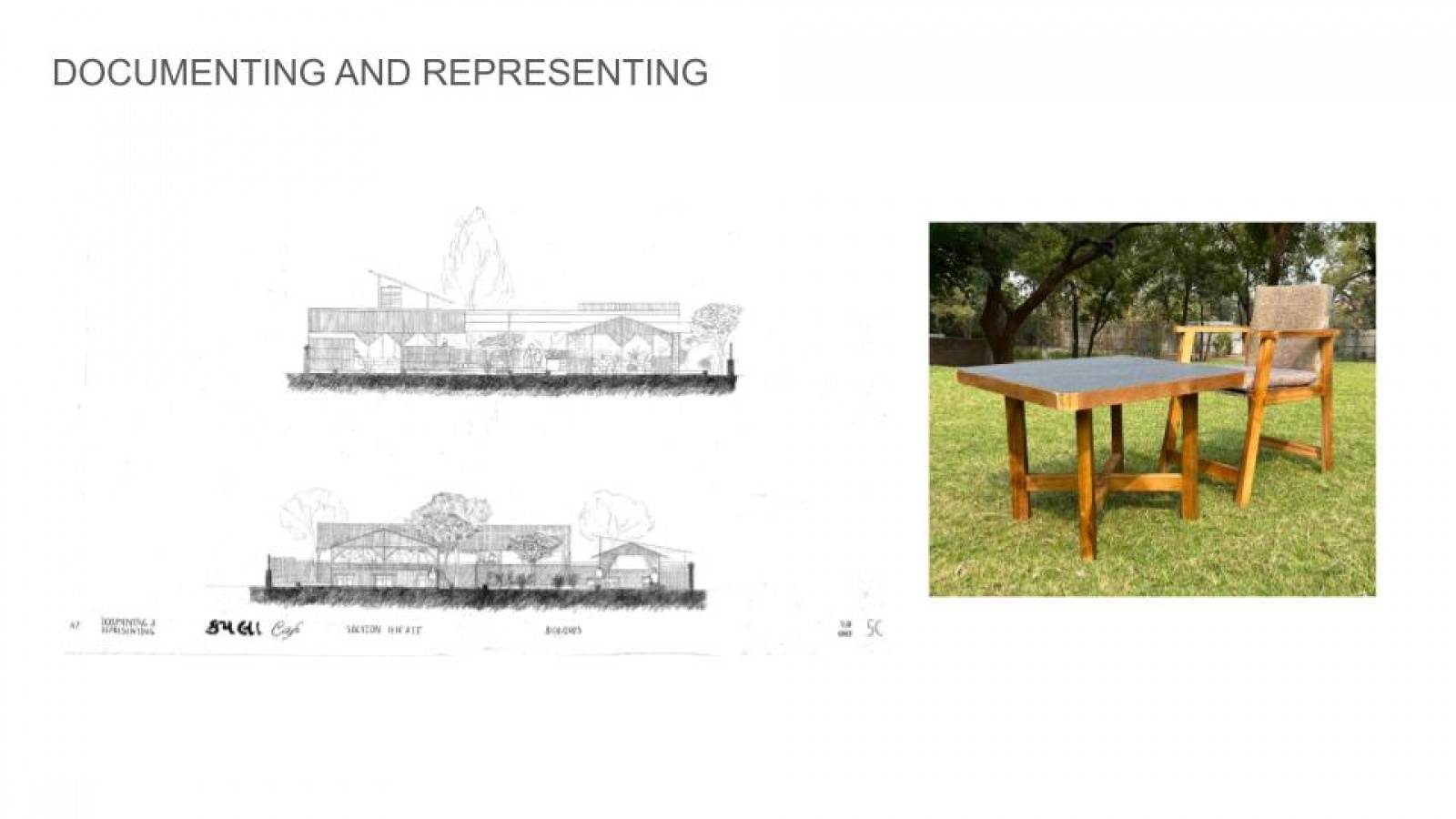
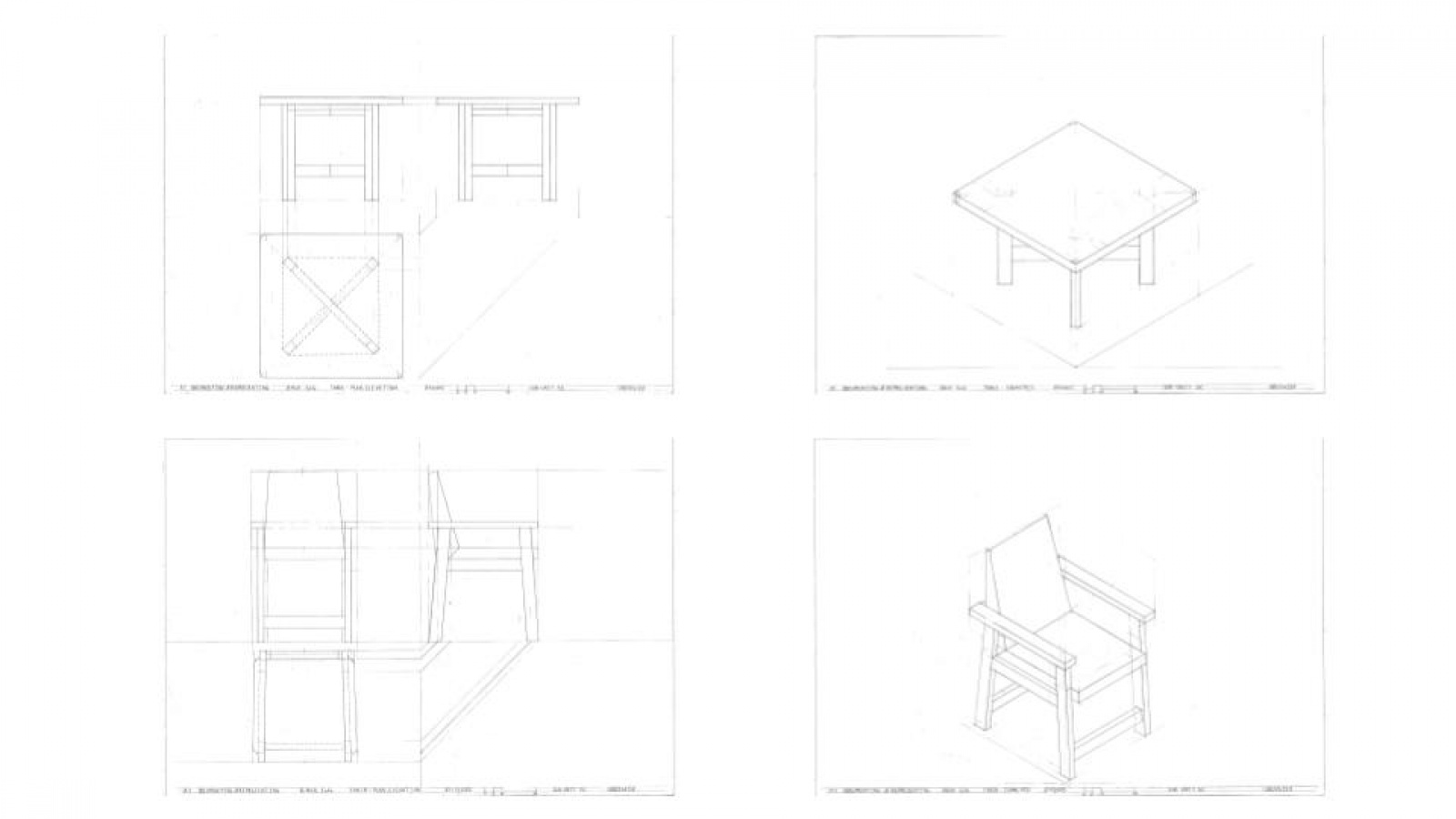
In this module, my entire unit was allotted kamla cafe as a site for documentation. The entire unit made a booklet compilation of the plan, sections, site plan, representative drawings and models of the cafe. I made two sections and made plans and elevations of the furniture at the cafe, I also made a 1:2 scale model of the furniture using wood with joinery.

.

.

.