Sanchi Agarwal

CFP001

UUR24220

The CEPT Foundation Programme studio is an introduction for students fresh out of school to the rigor and work habits required by an undergraduate degree at CEPT University. The studio is conceptualized as a series of sequentially planned exercises, through which students develop skills and abilities, which are then deployed to address increasingly complex problems falling into four broad categories: visualize and draw, make and learn, analyze and interpret and conceptualize and represent. The exercises are designed to provide both common and allied foundational skills for students across disciplines at CEPT, between which they maintain a balance.The studio is taught through intensive weekly modules, focusing on a particular skill or ability, and a process that emphasizes ongoing discussion and feedback in addition to expert faculty lectures.
Report Content

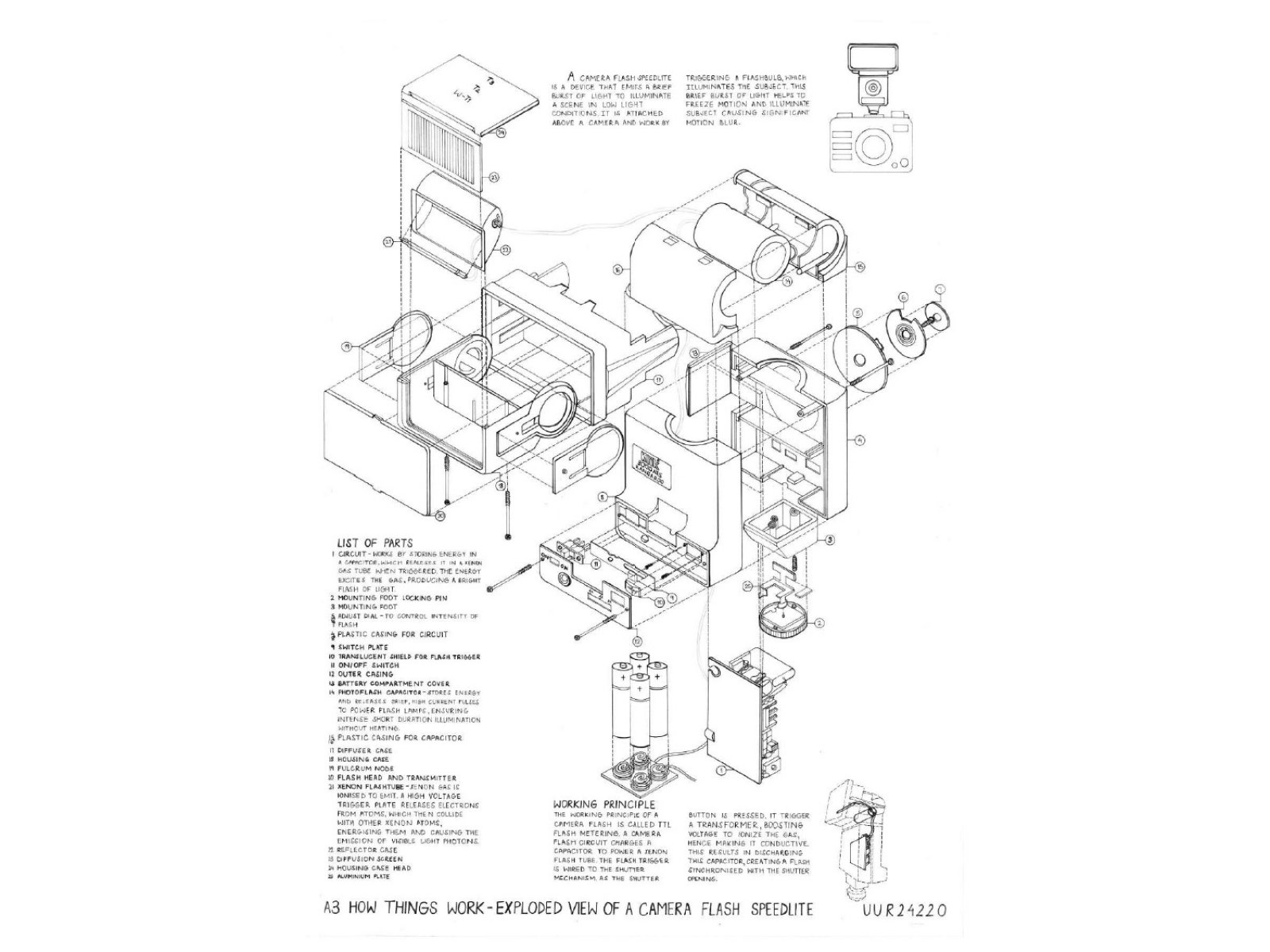
A3 How Things Work Common Studio This module was based on exploring the assembly of daily-life objects by dismantling it. I have chosen a camera flash speedlite as my object. During this exercise, we studied about their application through exploded drawings and their working mechanisms. We also learnt how to neatly compose a sheet with all our drawings and research information, which can be seen in the final draft of my sheet.

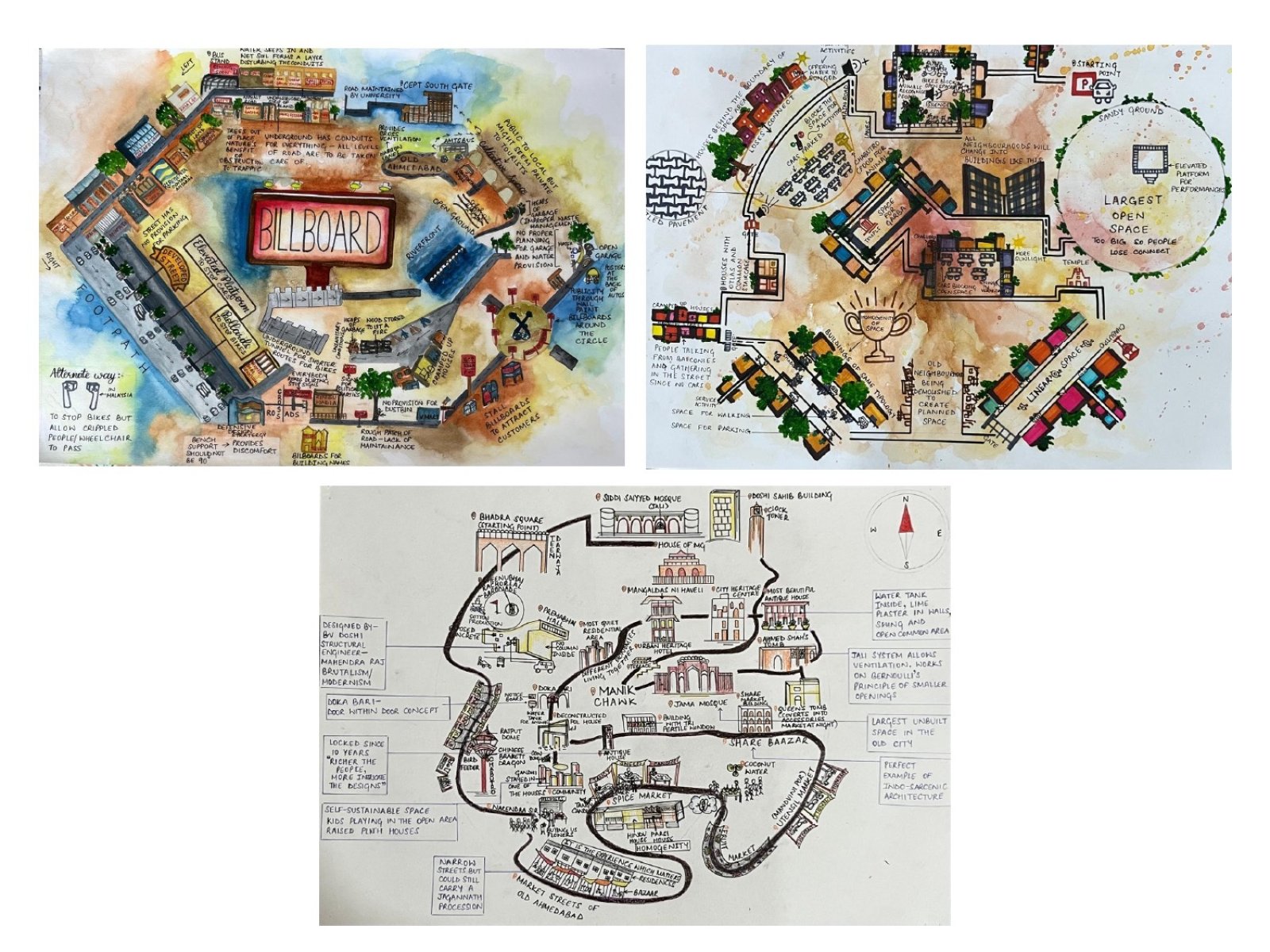
UD02- City Excursion Allied Studio In this module, we crafted mind maps by walking in different areas of Ahmedabad to understand and capture various important landmarks, open spaces and public activities. Our city excursion included the respective areas- CEPT University to Lal Darwaja, Parasnagar Society to Shastrinagar ground and Sidi Saiyyed Mosque to Manek Chowk.

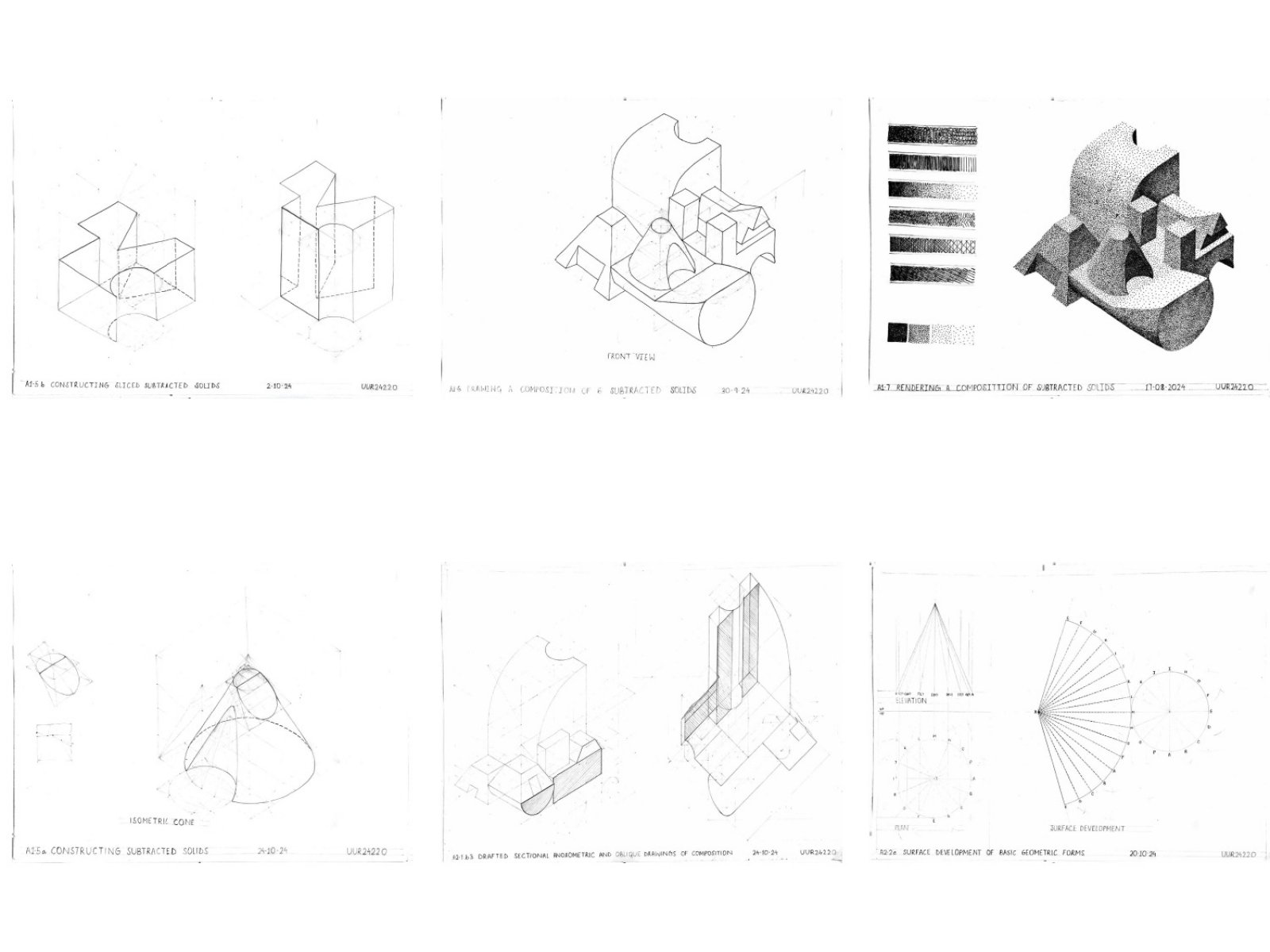
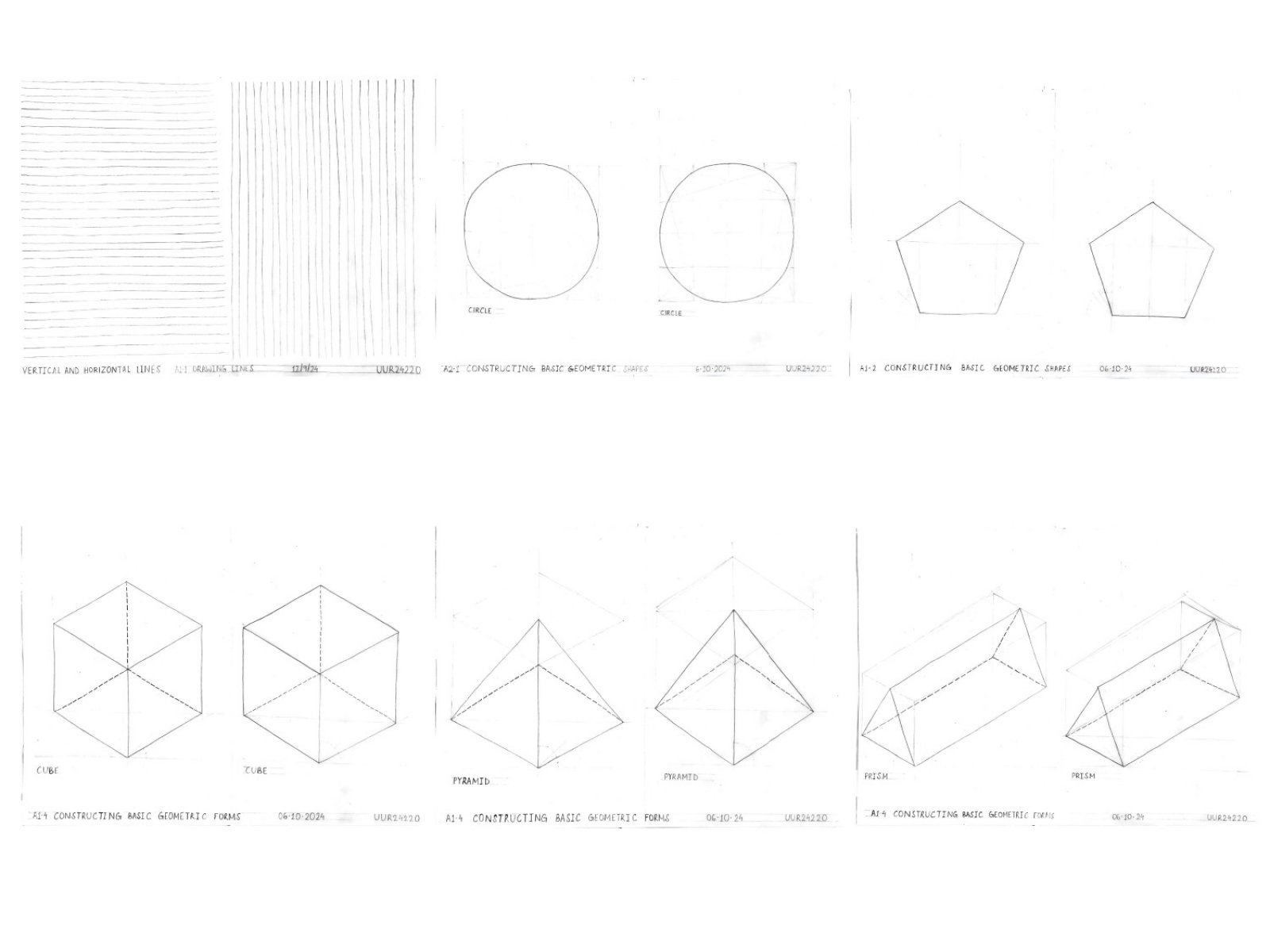
A1 Freehand Drawing Common Studio In this module, we learnt to visualise and construct shapes and geometric forms.

A1 Freehand Drawing and A2 Technical Drawing Common Studio In this module, we also understood drawing operations with drawing tools to get various line types and produce readable drawings. This significantly refine the clarity and precision of my work, particularly in terms of flying quality and the representation of shapes and complex forms. Moreover, the process of drafting the assembly of the same forms from the free hand exercises refined my attention to detail as technical drawings required, clear and precise lines, hence cultivating a sense of professionalism in my approach.

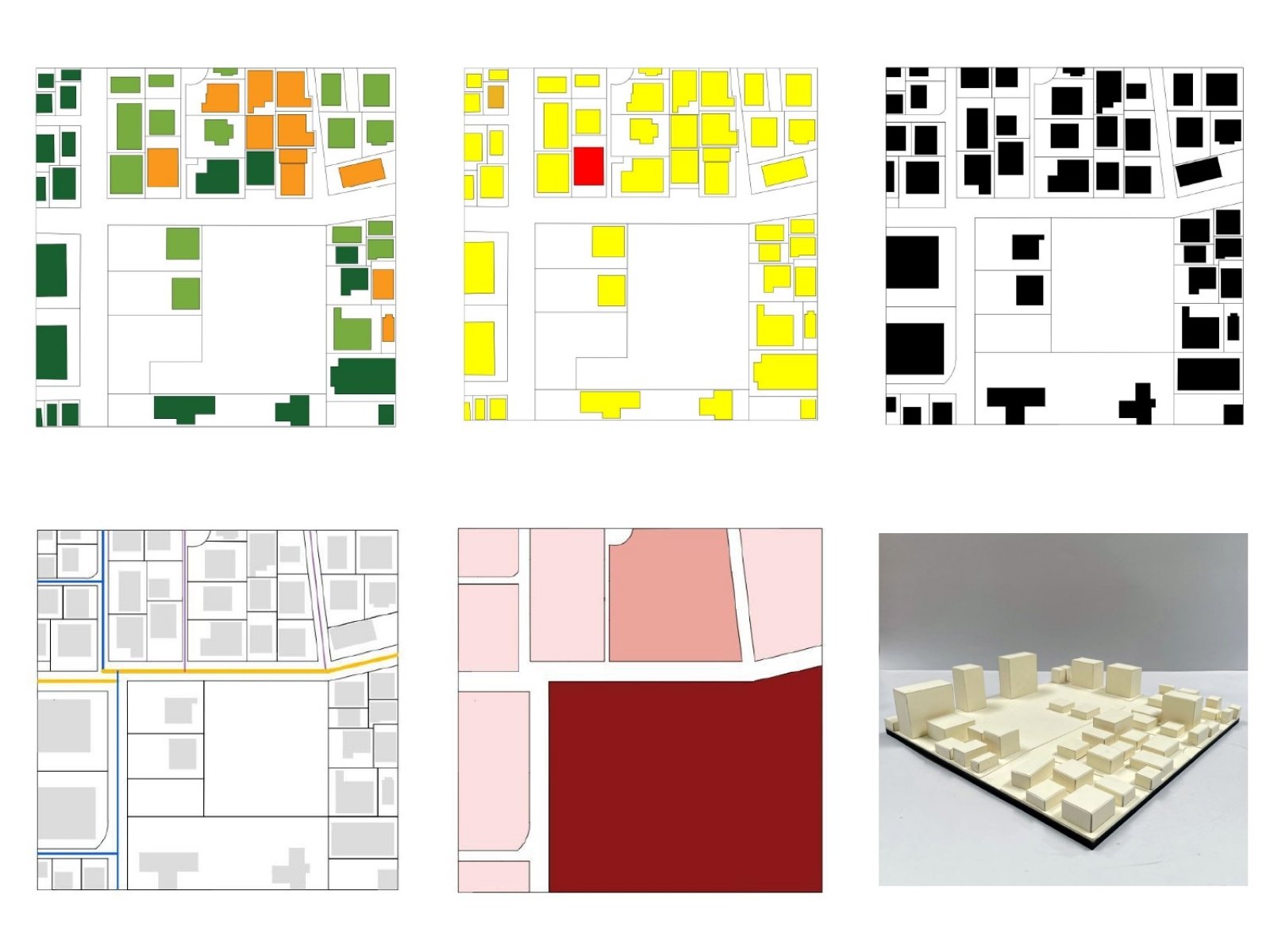
UD06 Preparing Layers of Built Allied Studio This module taught us how to scale down and comprehend a space based on factors such as areas of built, land use, building typologies etc. This process emphasise the importance of scale, making it easier to comprehend spaces when adjusted to a manageable size. Meanwhile, creating 3-D models of these spaces helped us observe how elements around us maintain proportionality, fostering a sense of special harmony.

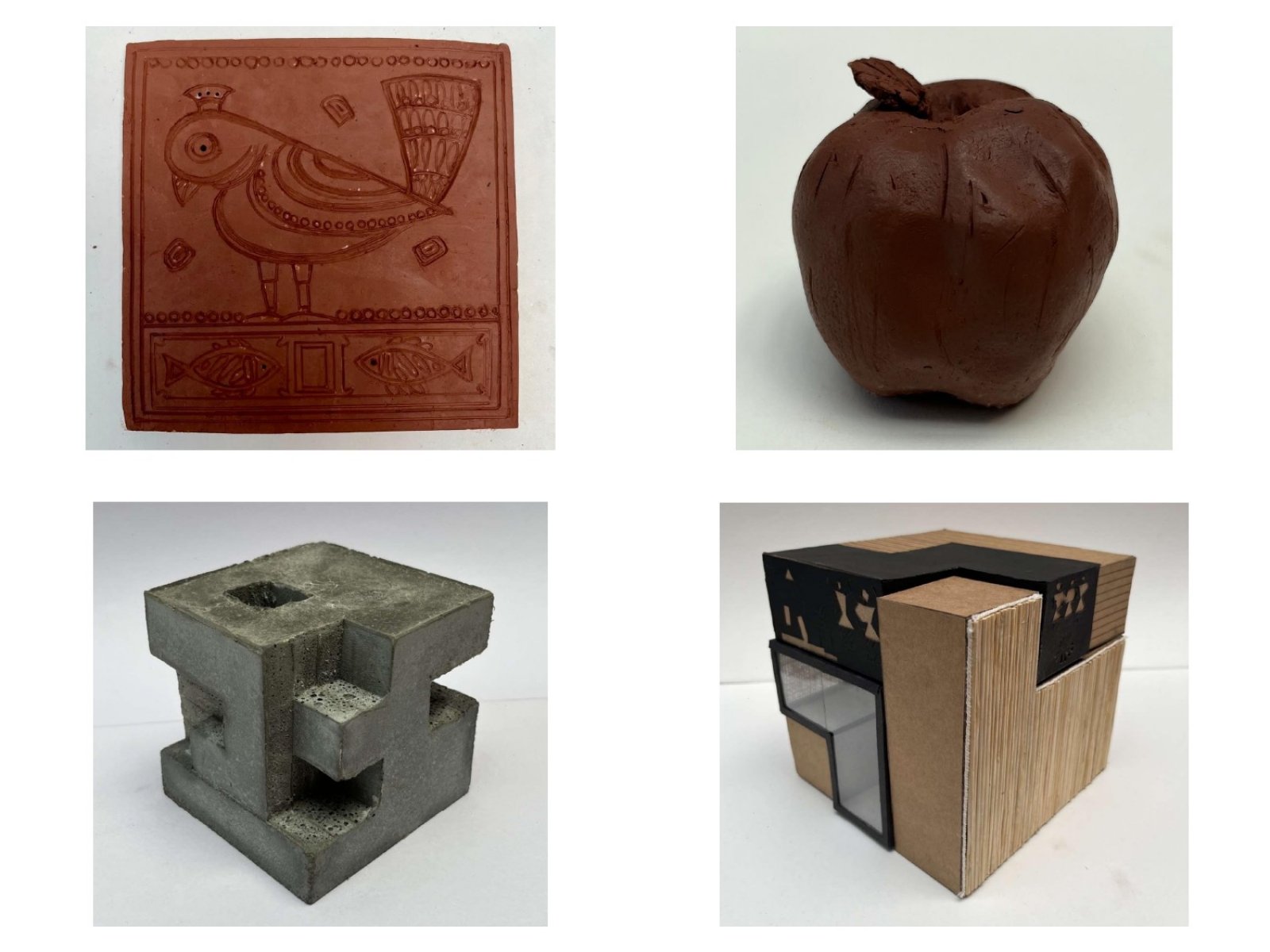
C1 Model Making Common Studio This exercise aided in transforming our ideas beyond the boundaries of a two dimensional space, such as paper into reality in the form of models, allowing for a height and comprehension of the same form. This module mainly concentrated in developing whole and subtracted models and crafting them with the use of different materials. Drafting these models was essential for learning precise drawing techniques as even millimetre level errors became evident in these models. Additionally, through the process of material experimentation, we learnt about various textures and how each material interacts with different kind of adhesives.

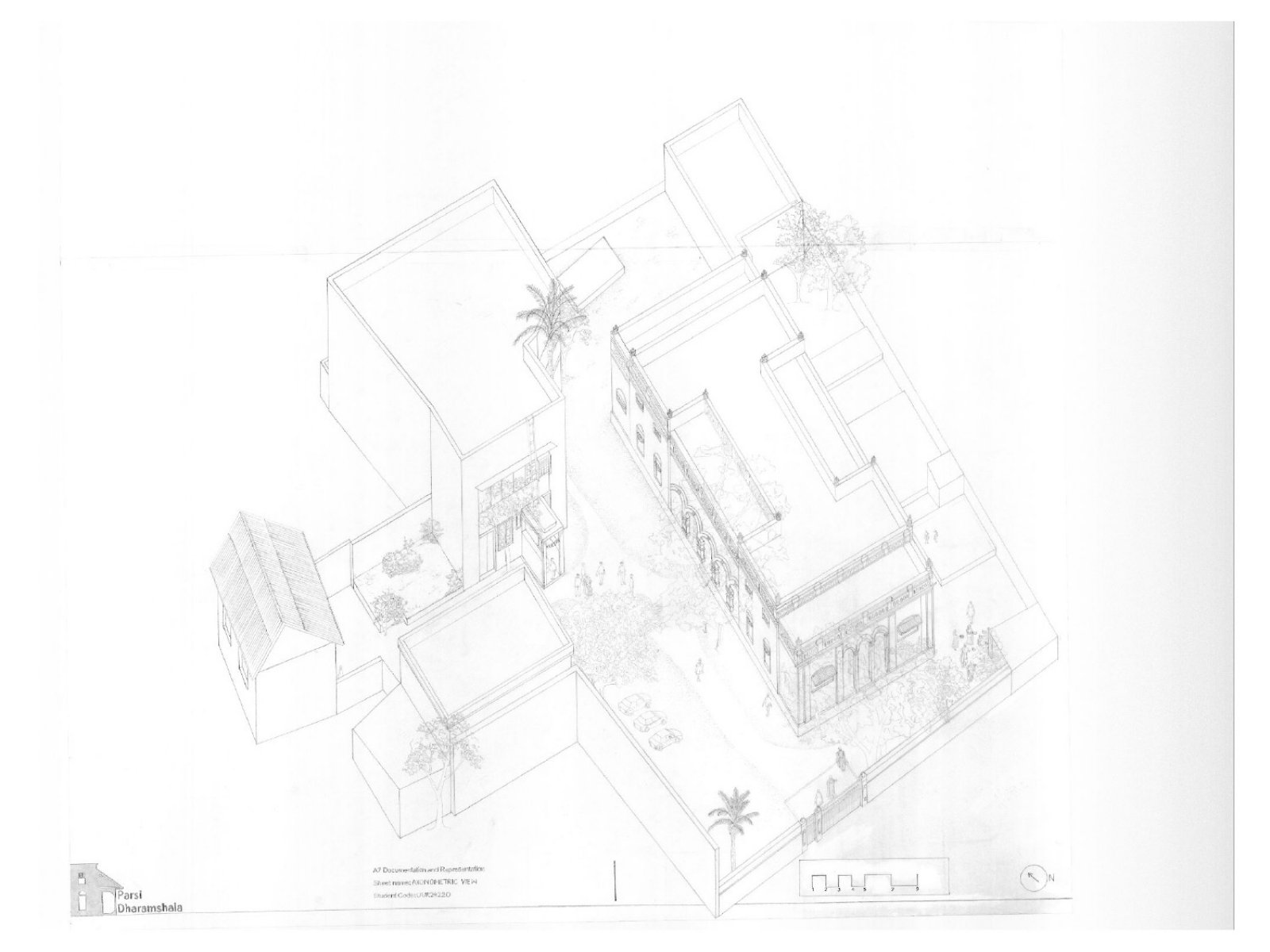
A7 Documenting and Representing Representation drawing of Parsi Dharamshala

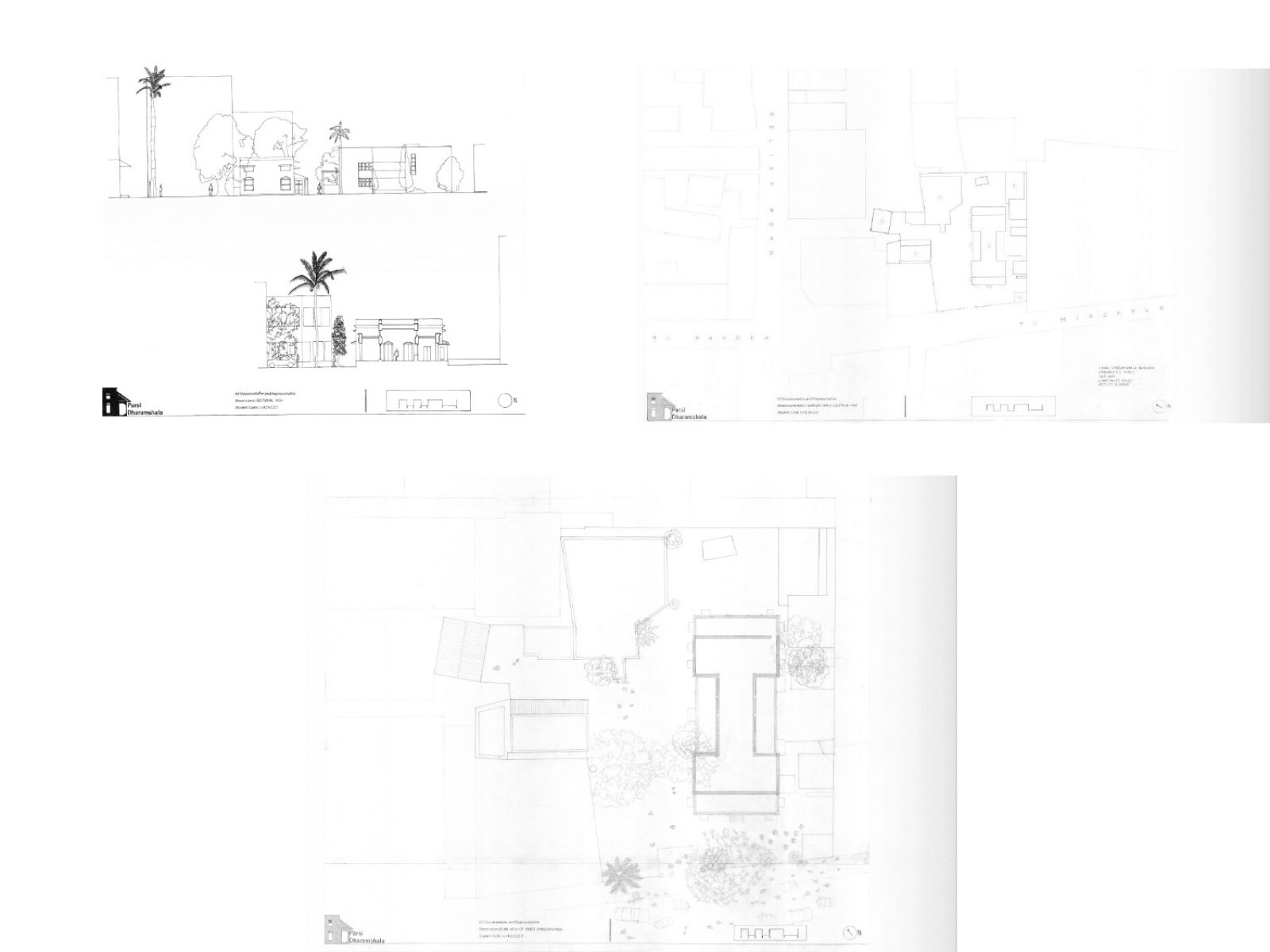
A7 Documenting and Representing Common Studio Documentation of Parsi Dharamshala site through its plan, section and location map.

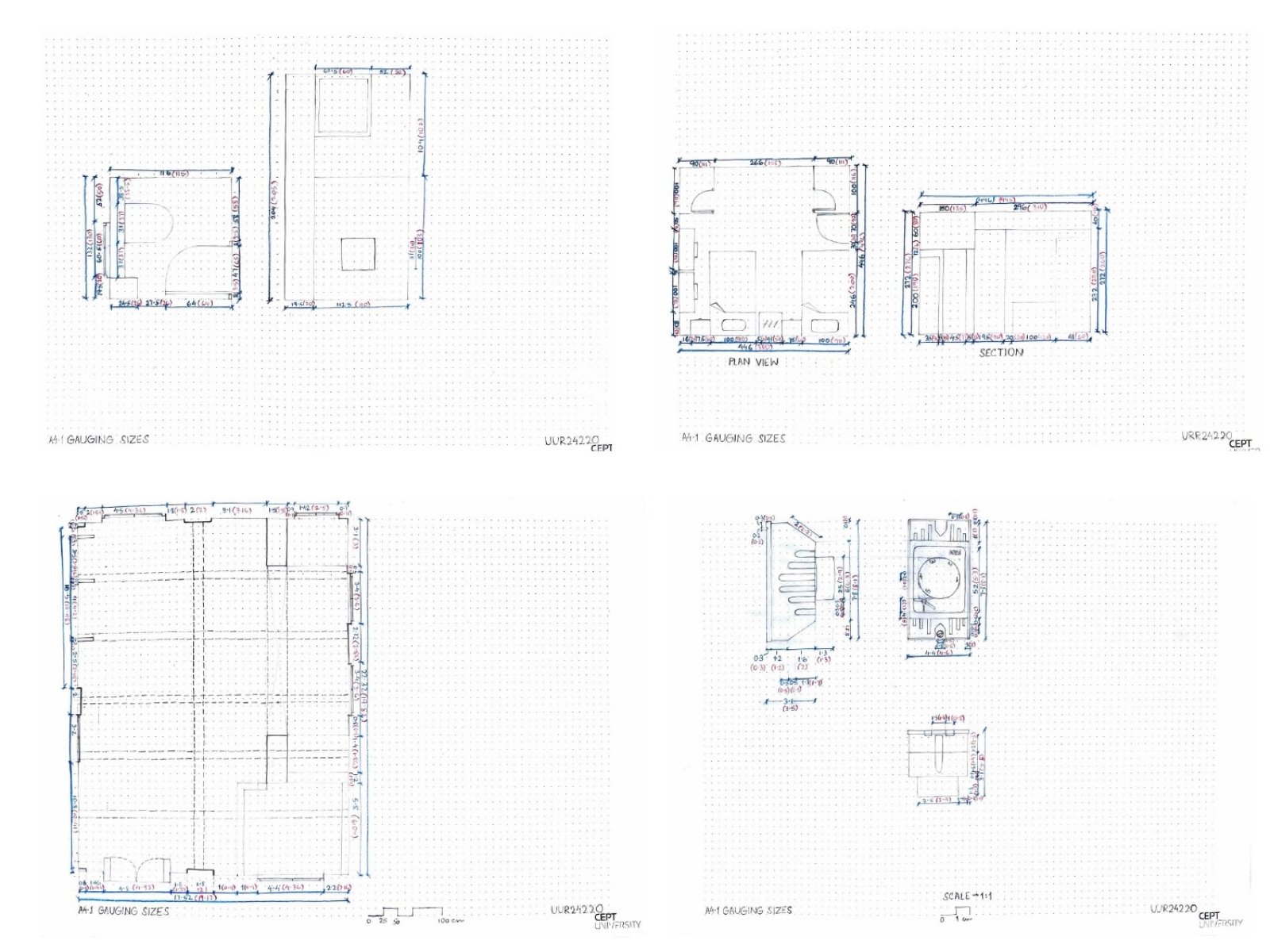
A4 Gauging Sizes Common Studio In this module, we developed the ability to gauge sizes, which relied on a clear understanding of scale and proportion. Here we explore the principle of anthropometrics by using our bodies as measuring tools to assess objects, spaces, and activities around us.

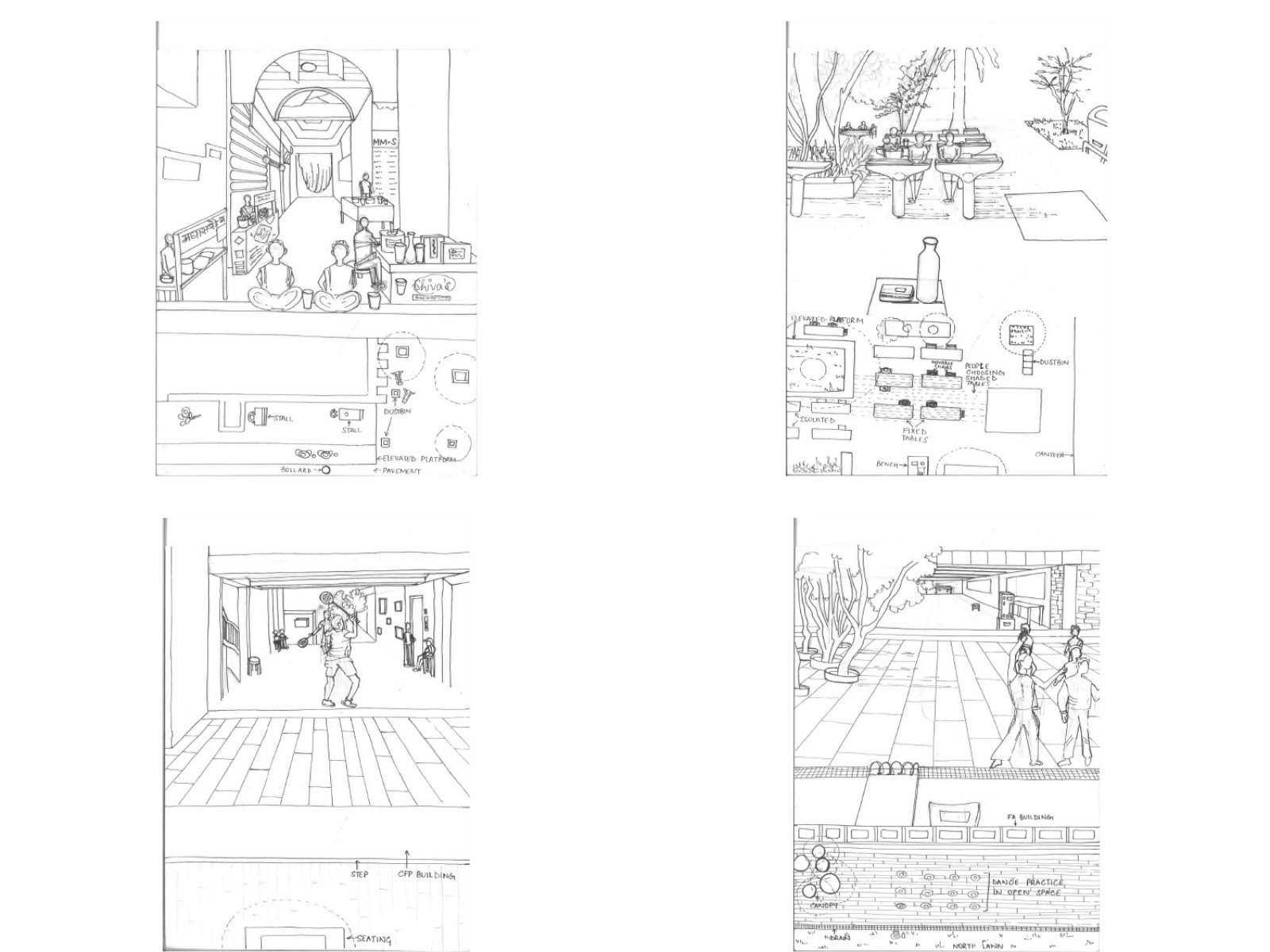
UD04 Urban Observation Allied Studio Observation is a vital skill that allows us to uncover the intricate details of objects, spaces, and interactions in the world around us, leading to a deeper understanding of the structure, purpose and design. In this module, we honed our ability to observe and analyse the details in daily life, objects and surroundings. This practice not only enhanced our attention to detail, but also encouraged a more thoughtful and intentional approach to understanding our environment.