Nair Haripriya Sasikumar

CFP001

UUR24336

The CEPT Foundation Programme studio is an introduction for students fresh out of school to the rigor and work habits required by an undergraduate degree at CEPT University. The studio is conceptualized as a series of sequentially planned exercises, through which students develop skills and abilities, which are then deployed to address increasingly complex problems falling into four broad categories: visualize and draw, make and learn, analyze and interpret and conceptualize and represent. The exercises are designed to provide both common and allied foundational skills for students across disciplines at CEPT, between which they maintain a balance.The studio is taught through intensive weekly modules, focusing on a particular skill or ability, and a process that emphasizes ongoing discussion and feedback in addition to expert faculty lectures.
Report Content

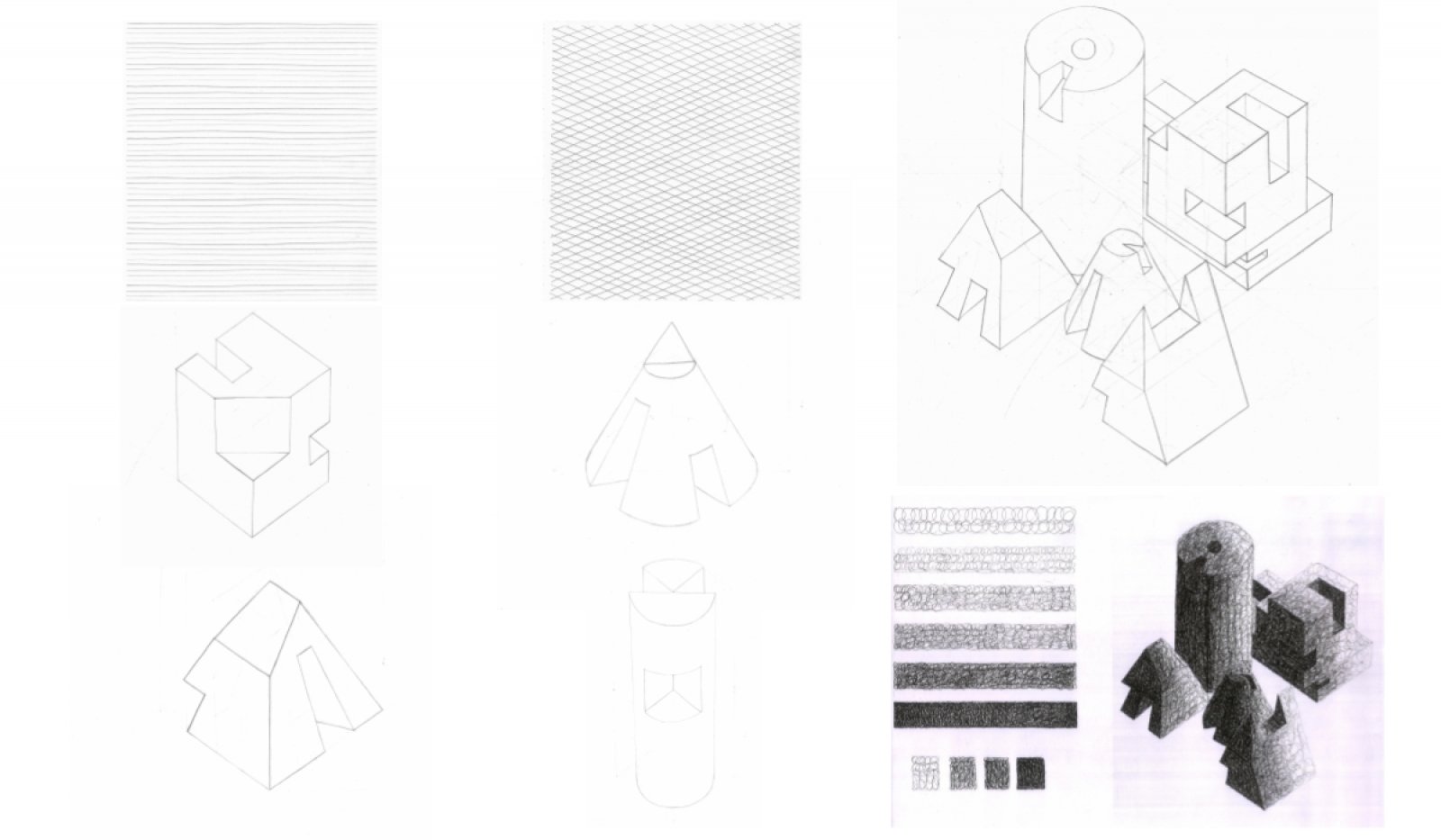
I started by training my hands and eyes with basic line work, intensity, and shape construction routines. As I built subtracted forms and made assemblages, what at first glance appeared to be simple activities turned out to be essential building blocks that helped me build my observational abilities, by focusing on turning precision into clarity. While the foam brick models showed me the crucial link between sketching and physical form, I also learned how these fundamental abilities directly affected my capacity to envision and depict three-dimensional structures.

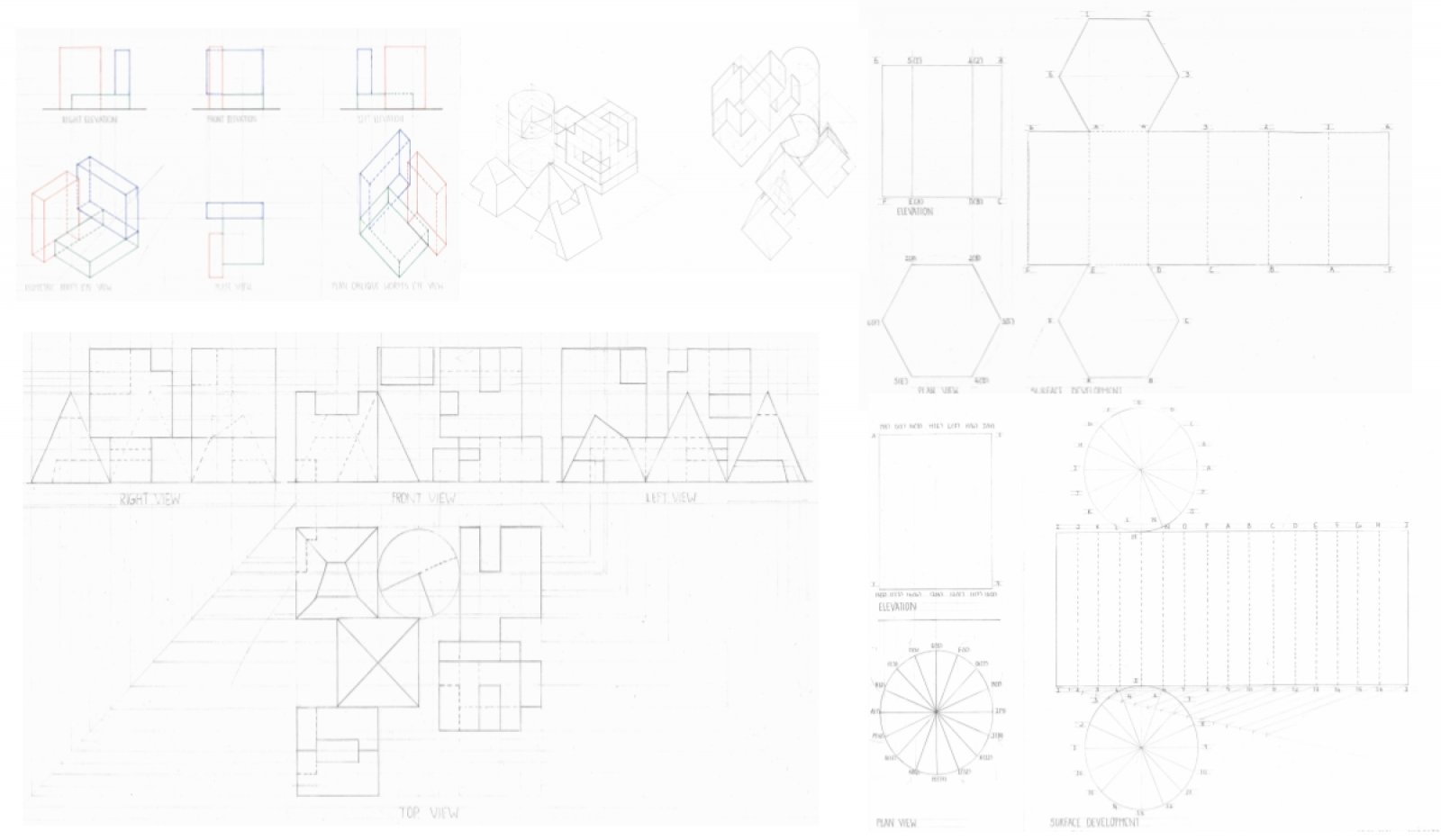
The development of my spatial awareness from the hand-building skills of subtracted forms, is seen by the shift from drafting basic matchbox orthographic projections to intricate five-view drawings of an assemblage. I identified that my ability to produce accurate technical representations of solids improved by using the observing abilities I had acquired from freehand drawing. Building cardpaper models using projections of drafts of these solids further highlighted how surface development bridges the gap between 2D and 3D representations and how shapes change into forms, solidifying my grasp of spatial relationships.

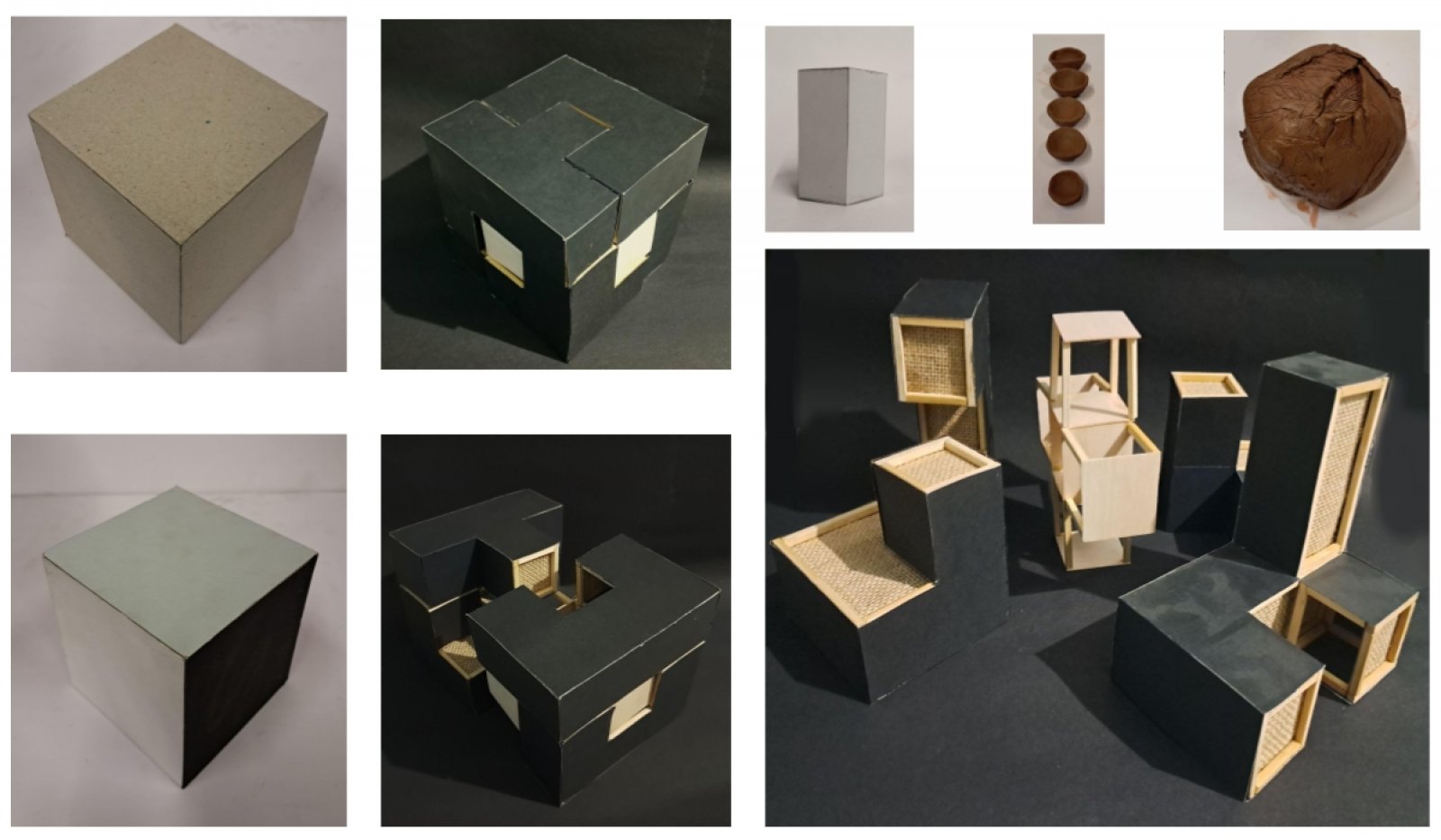
Exploring diverse materials from bamboo and jute to balsa wood and clay; enhanced my ability to observe and comprehend material properties. Building the Soma cube and clay models demonstrated the interplay between observation, clarity, and craftsmanship while showcasing tactile understanding of intricate textures and forms. By teaching me to make deliberate choices, model making improved my comprehension of the characteristics, constraints, and conceptual potential of materials.

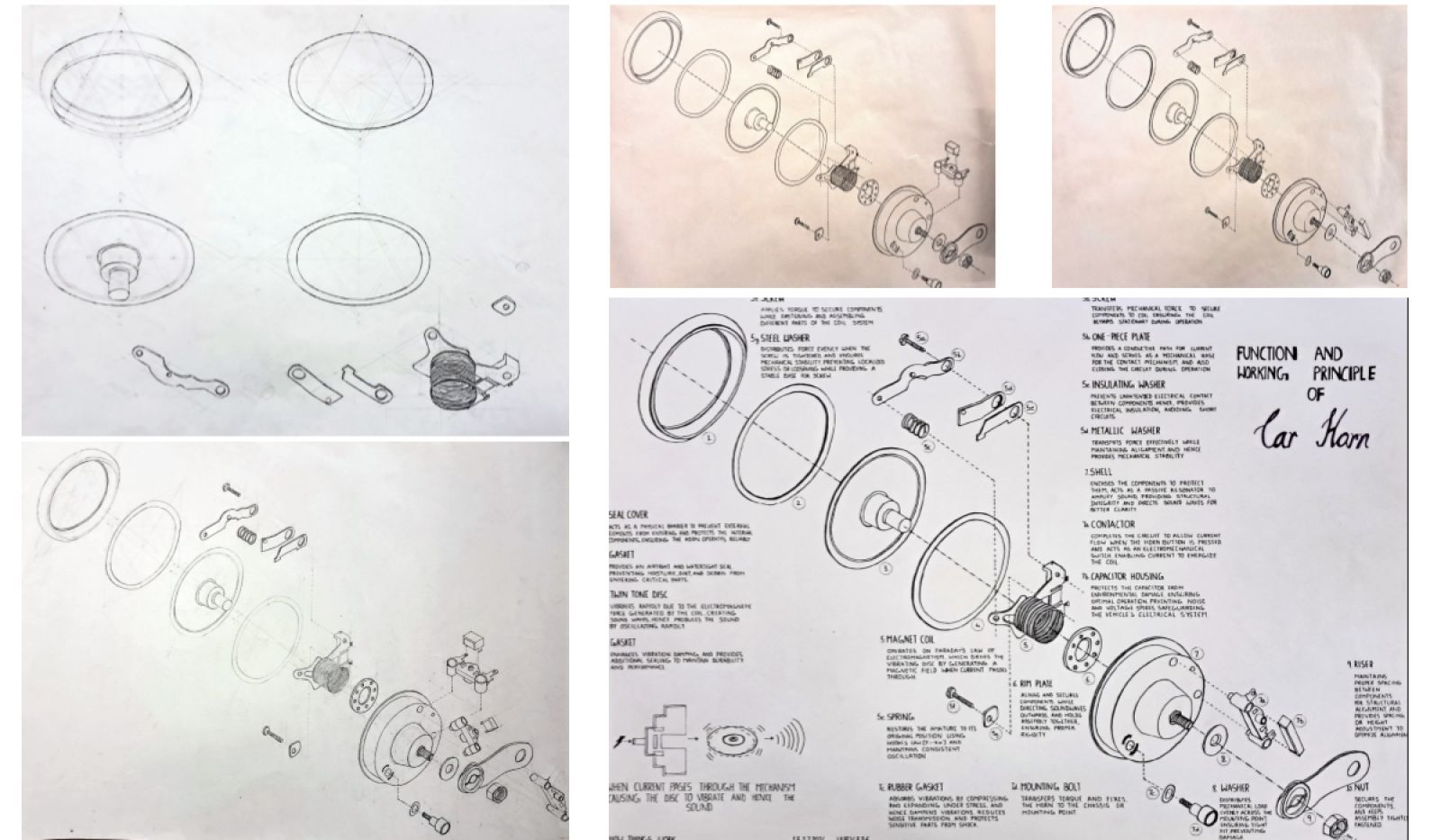
Dismantling a car horn shifted my observational focus from aesthetics to function. Drafting exploded isometric drawings allowed me to represent and understand mechanical relationships with clarity, by combining my knowledge of technical drawing skills with material insights. This enabled me to understand and convey the interdependence of design components by observation coupled with analytical reasoning.

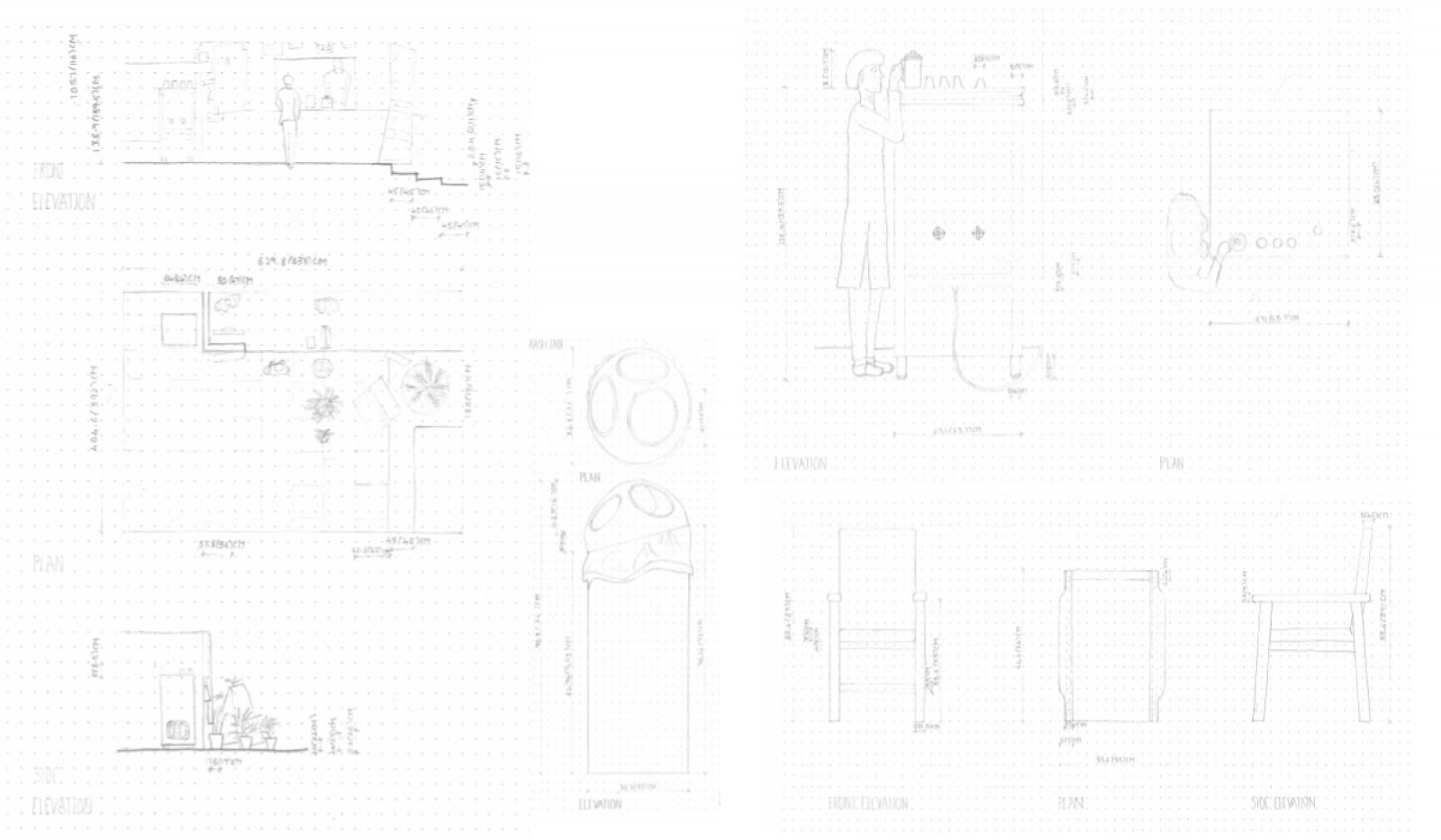
I gained an instinctive grasp of scale and proportion by gauging sizes and comparing body measurements to space dimensions. Examining a water cooler's ergonomics , as an example, demonstrated human-centric design, a skill I applied to my allied modules that favored comparing and analyzing spatial elements, which helped me with my site mapping and assessments.

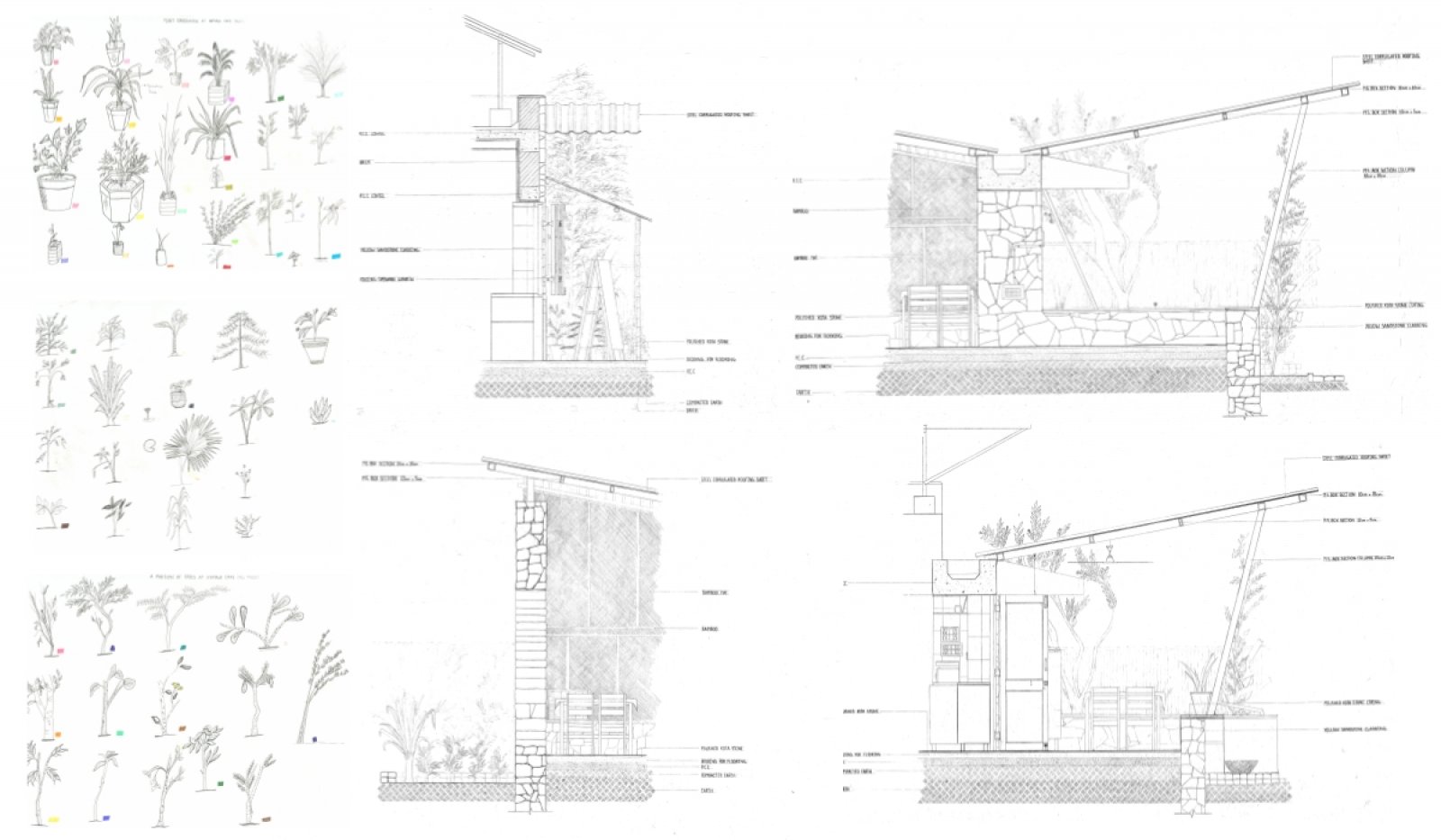
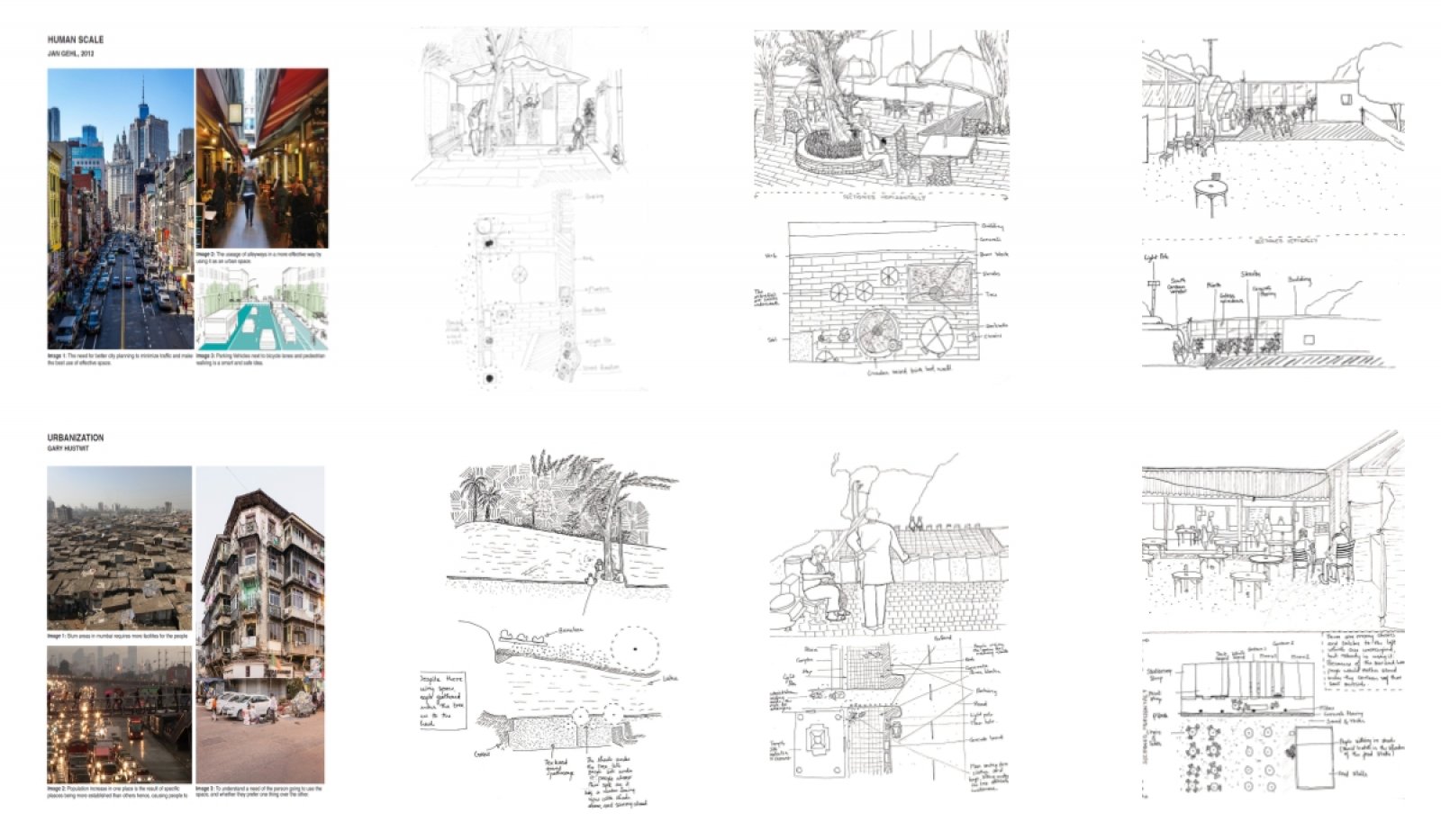
For my documentation and representation work at Kamala Cafe, I observed the variety of plants, noting their types and arrangement. I further created four detailed wall sections to illustrate the cafe's architectural interaction with its greenery, capturing textures, layers, and the ambiance created by this integration.

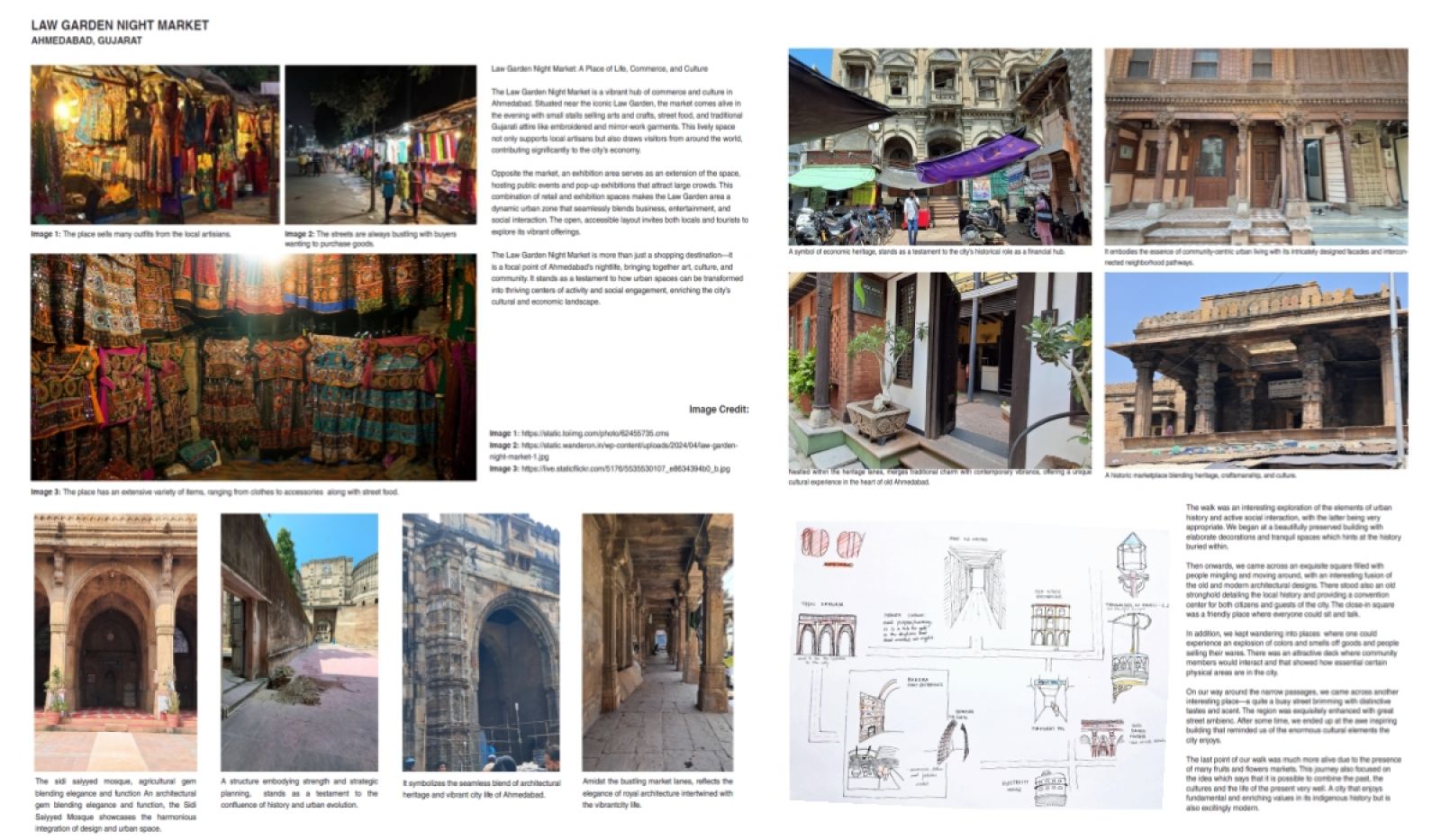
Challenging me to define what constitutes a 'urban place', I selected Law Garden as an exemplar, which helped me get clarity in my thoughts by articulating my thoughts on what I felt about urban design to later knowing what it actually means. It taught me to identify and articulate the complex characteristics that define urban environments and allowed me to study the dynamic interplay of public, commercial, and residential spaces. Additionally, the guided walks through Ahmedabad enabled me to actively engage with a range of urban contexts by highlighting the differences in housing density, vehicular movement, and public space usage. My ability to identify minute elements and connections within the urban fabric improved as a result, and I was able to use mind maps to capture my observations. For example, noting the differences in the types of homes in Old Ahmedabad and Naranpura, parking facilities, or crowd control.

I learned a critical theoretical framework for understanding urban phenomena. Summarizing the films enriched my insights and allowed me to contextualize my previous observations. This experience refined my ability to critically evaluate spatial relationships and human interactions, emphasizing the importance of human observation. Further the theoretical work assisted me in finding observations, where I engaged in sketching and annotation in public spaces like CG Road, Parimal Garden, and the CEPT campus. By observing things like shade, activities, or what happens when you let people have the freedom to choose where to sit (which was also mentioned in the documentary) all gave me an idea of people's needs in an urban setting.

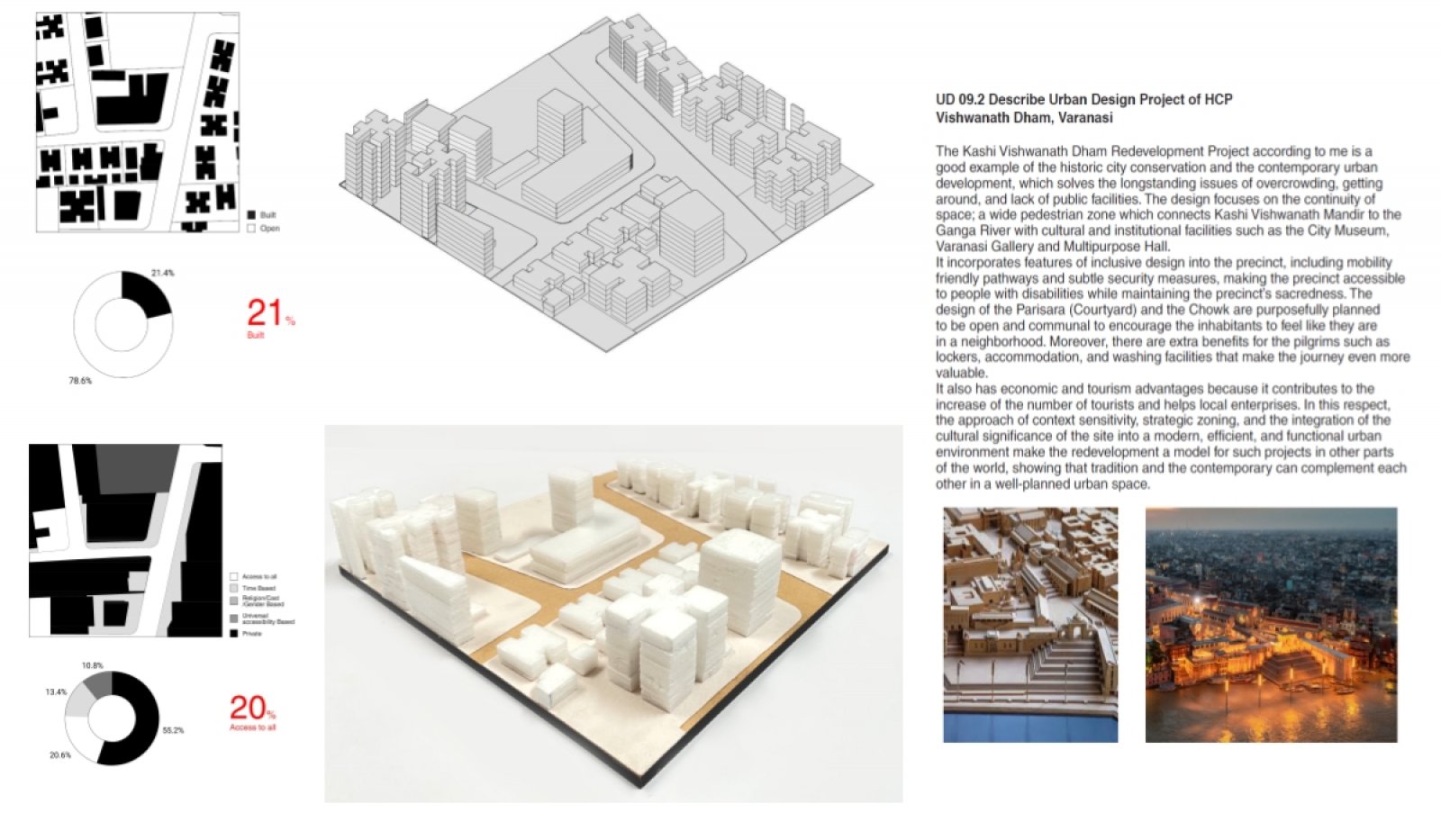
By making various layers of the precinct and comparing them, I was able to analyze and challenge the notion of a "city built for all" by highlighting the contrast between apparent openness and actual accessibility, as illustrated visually in my maps and charts. This process enhanced my technical skill sets and demanded a shift from qualitative understanding to quantitative analysis. I further developed a 3D model using SketchUp and constructed a physical representation with styrofoam, synthesizing all my previous learning into a cohesive visual of my urban analysis. This culmination of my progression, showcased my ability to integrate diverse design elements, demonstrating a comprehensive understanding of urban design principles and the critical relationship between theory and practice. These clusters of learnings not only built upon one another but also formed a comprehensive framework for my progression.