Your browser is out-of-date!
For a richer surfing experience on our website, please update your browser. Update my browser now!
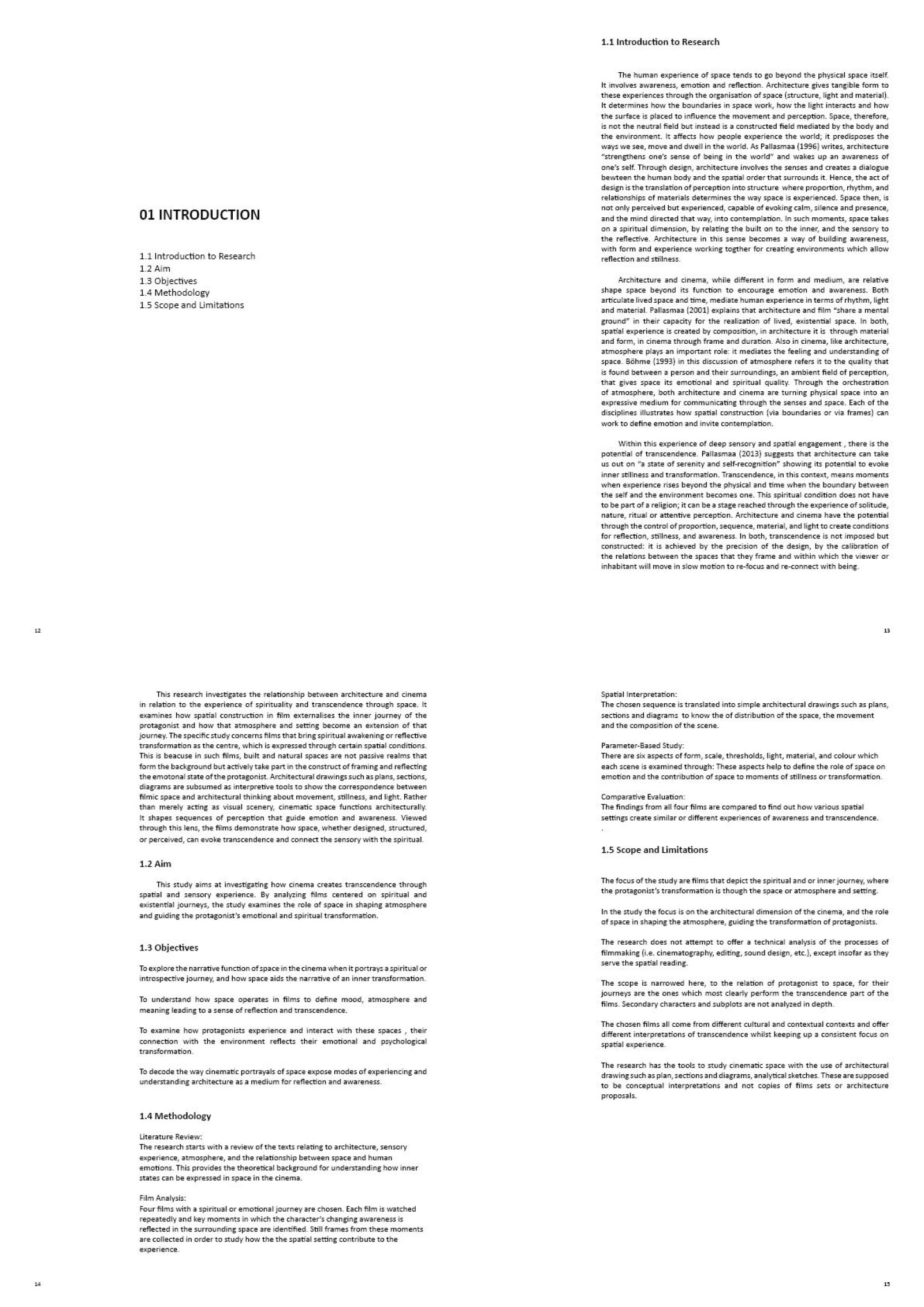
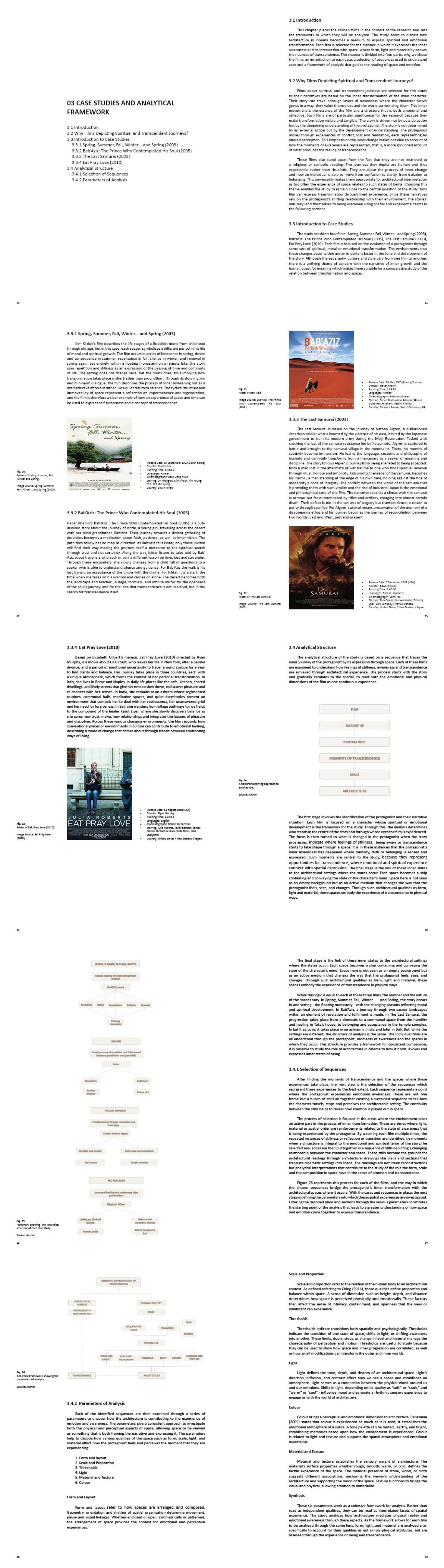
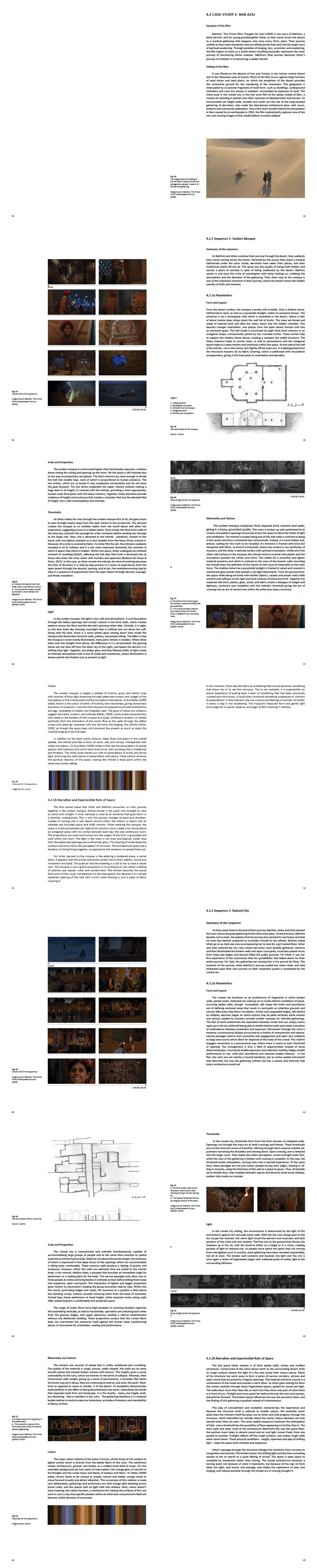
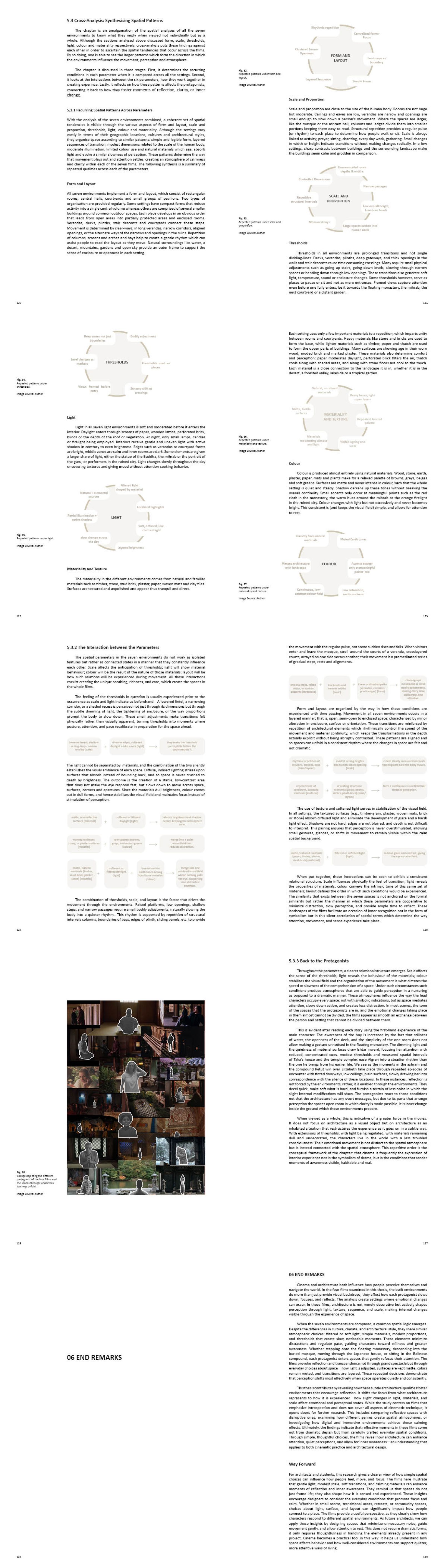
This study examines how architecture and cinema shape experiences of awareness, reflection, and transcendence through space. It explores how films use spatial settings, light, material, and atmosphere to express the inner journeys of their protagonists, showing how built and natural environments become active agents rather than passive backgrounds. By analysing key sequences from Spring, Summer, Fall, Winter… and Spring (2003), Bab’Aziz (2005), The Last Samurai (2003), and Eat Pray Love (2010), the research shows how space can evoke calm, stillness, and spiritual presence, and how atmosphere mediates the connection between the sensory and the emotional. Using simple architectural readings such as plans, sections, and diagrams, the study demonstrates how cinematic space can embody and reveal states of contemplation and transcendence.