Your browser is out-of-date!
For a richer surfing experience on our website, please update your browser. Update my browser now!
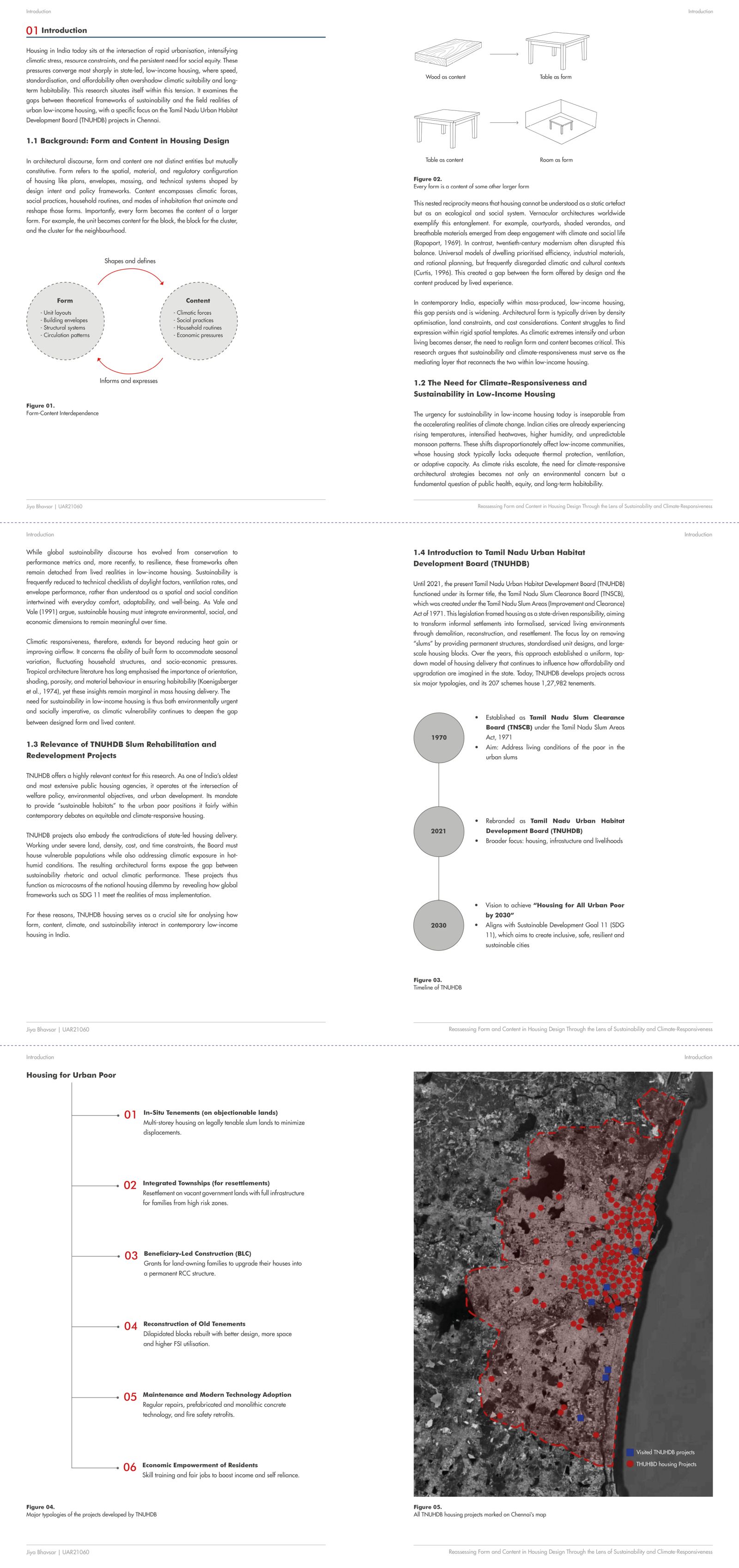
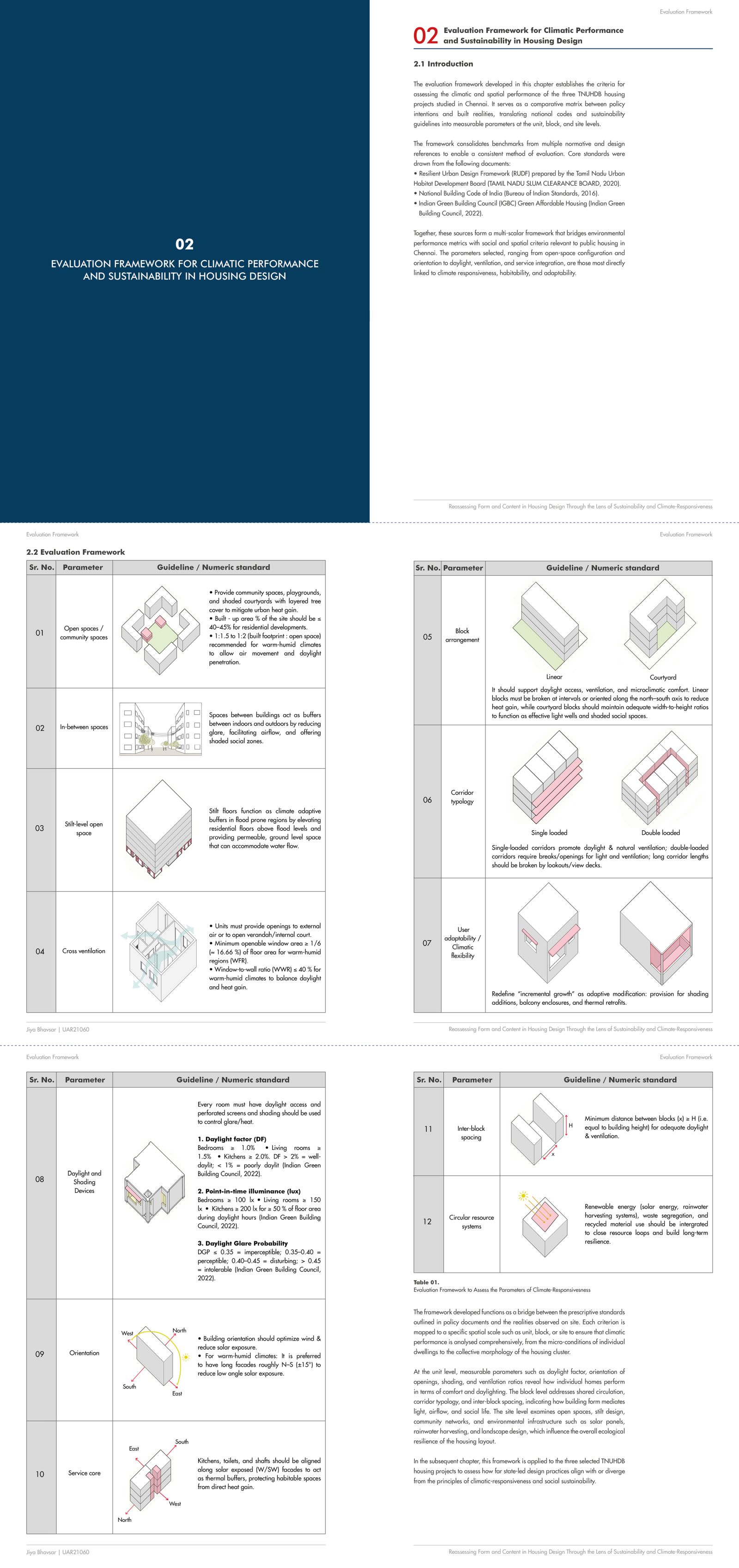
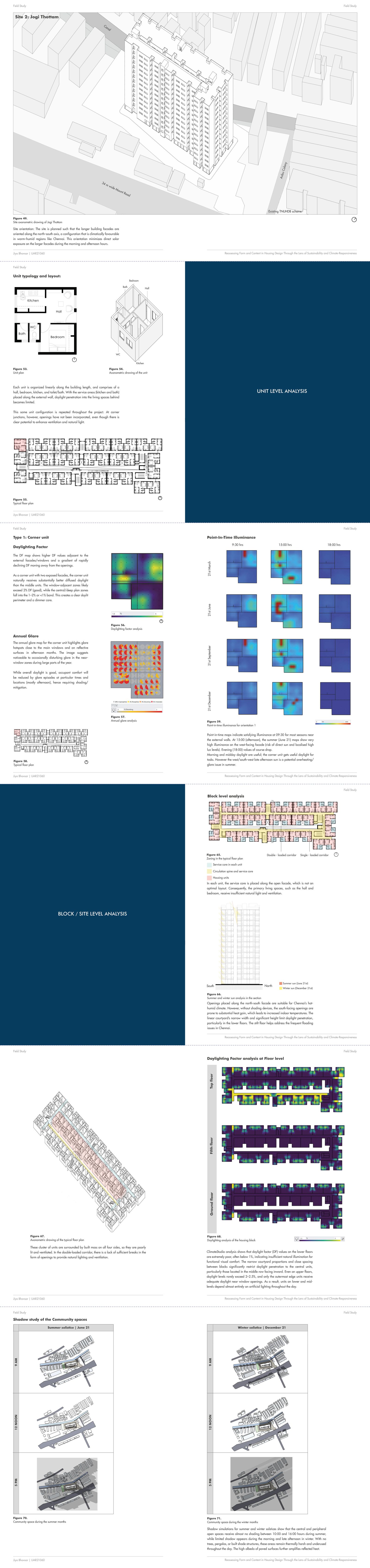
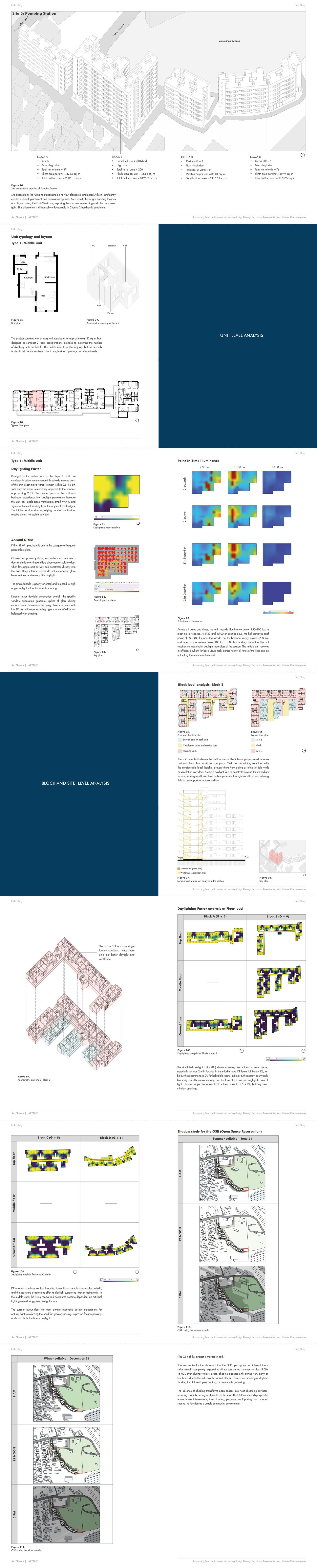
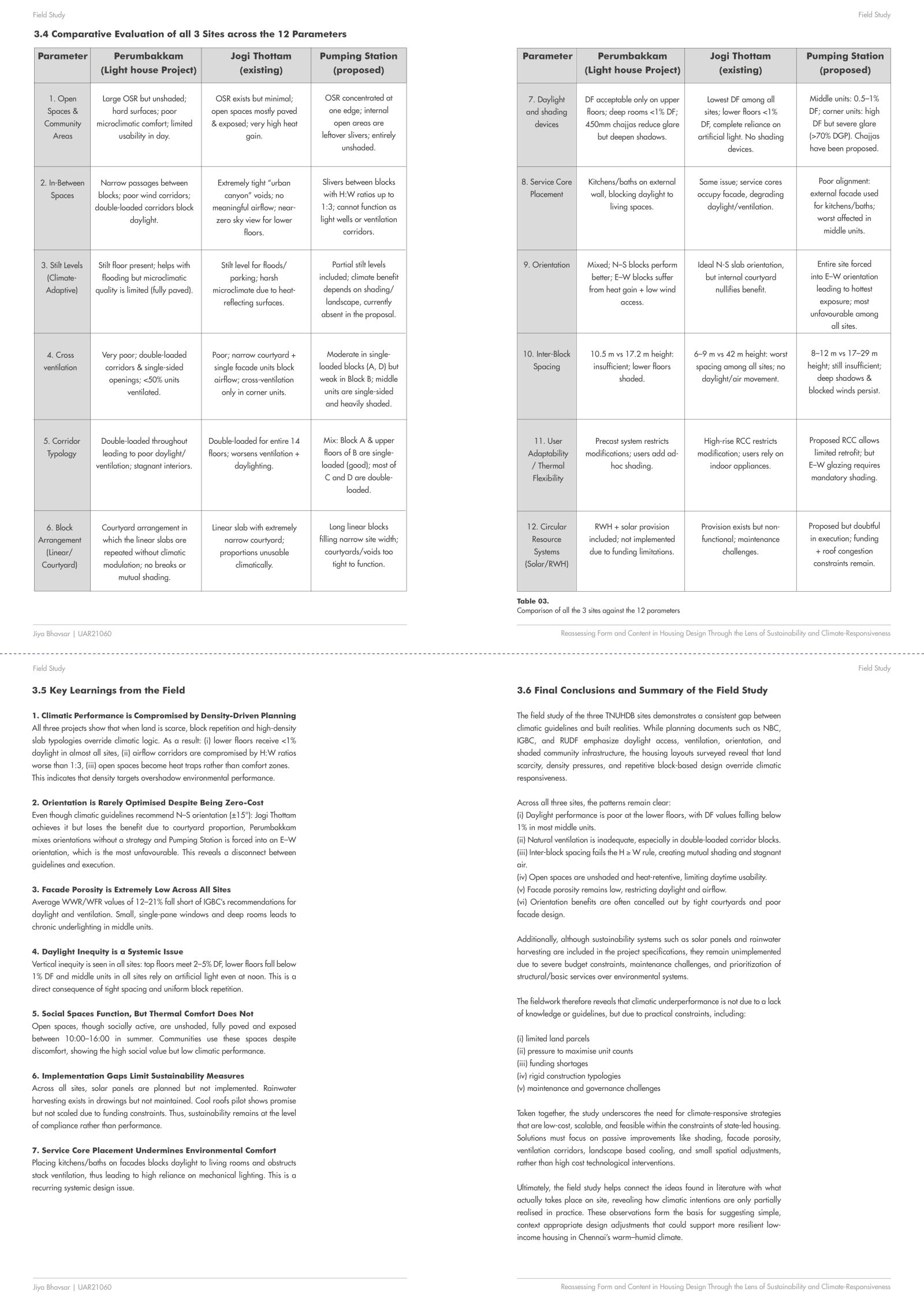
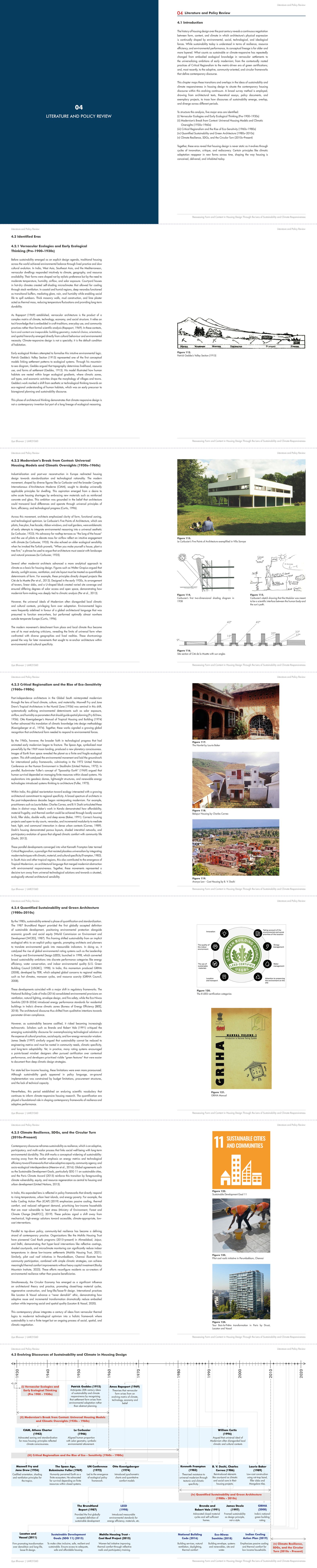
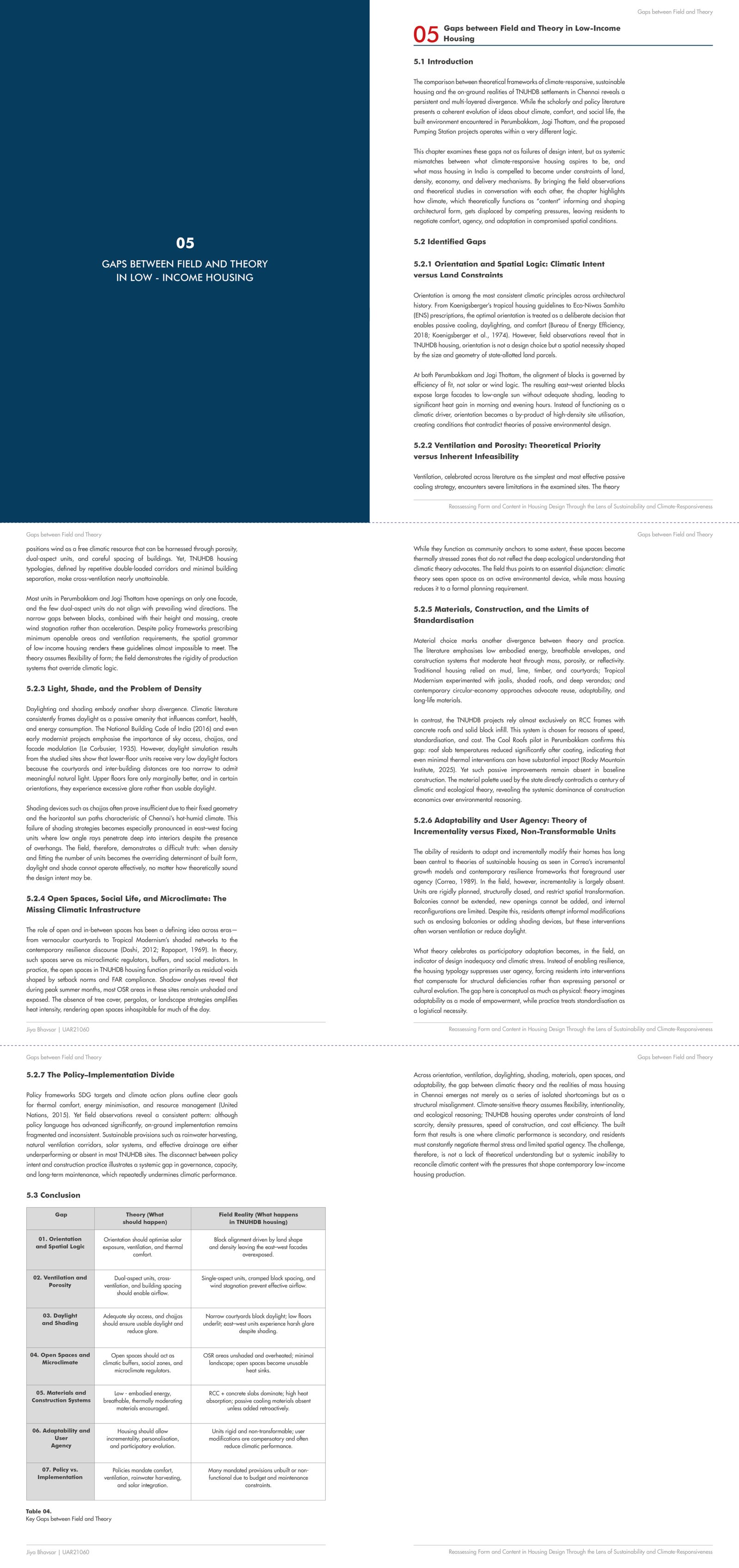
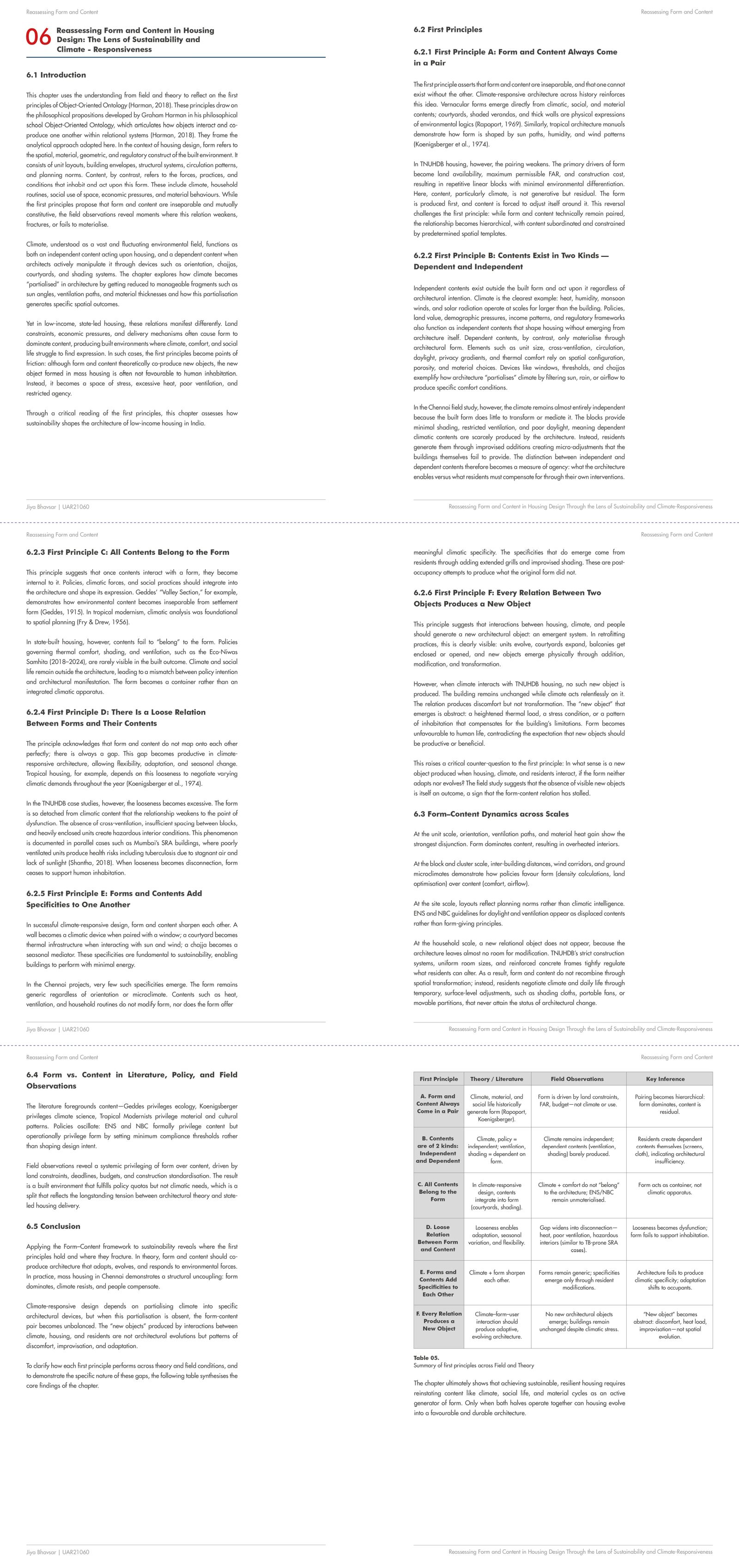
This research, situated within the framework of reassessing form and content in housing design, examines the intersection of policy intentions and realities of practice in Indian social housing. Focusing on TNUHDB slum redevelopment projects in Chennai, it investigates the disjunction between sustainability as articulated in state policies, guidelines, and global frameworks such as the SDGs, and its manifestation in built form. Climate is positioned as a critical content that interacts with form. Yet field observations show that in mass-produced state housing, climate is often marginalised, resulting in overheated units, insufficient ventilation, and limited resident agency. Using comparative analysis across unit, block, cluster, and site level, the study positions sustainability as a bridge between built form and social content. By bringing field evidence into conversation with architectural theory and policy discourse, the research aims to assess the gap between sustainability frameworks and their actualisation in India’s low-cost urban housing sector.