Your browser is out-of-date!
For a richer surfing experience on our website, please update your browser. Update my browser now!
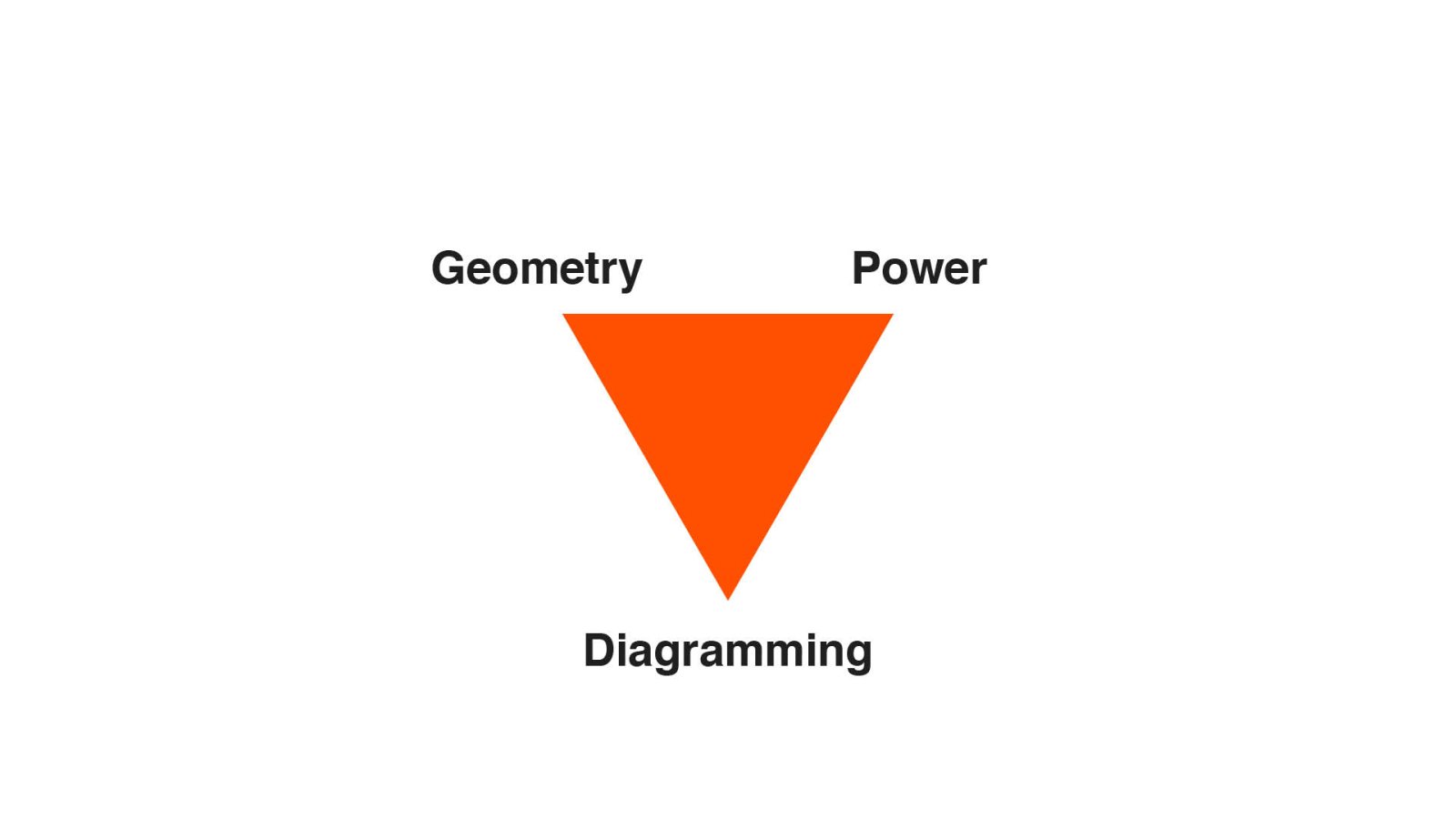
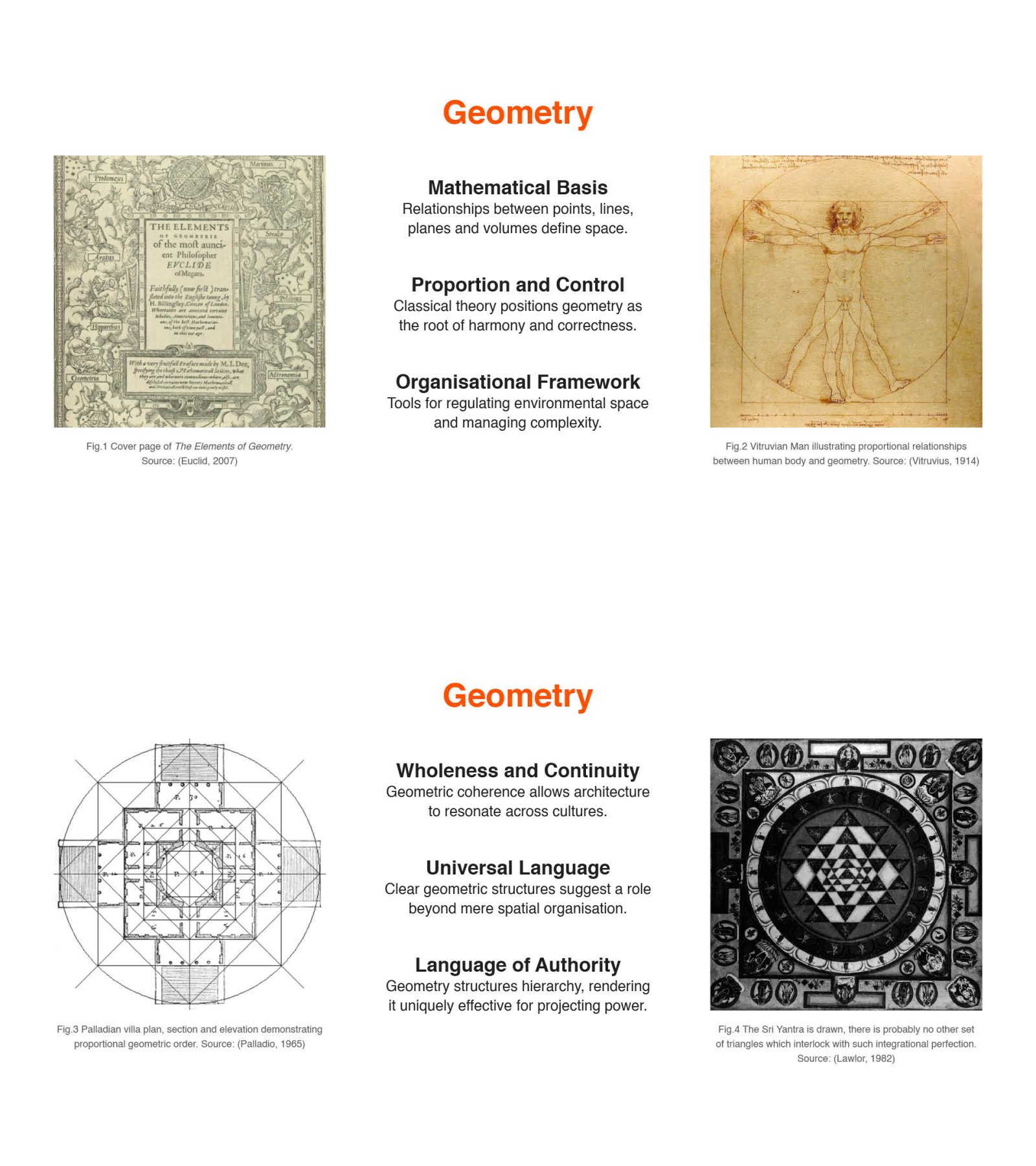
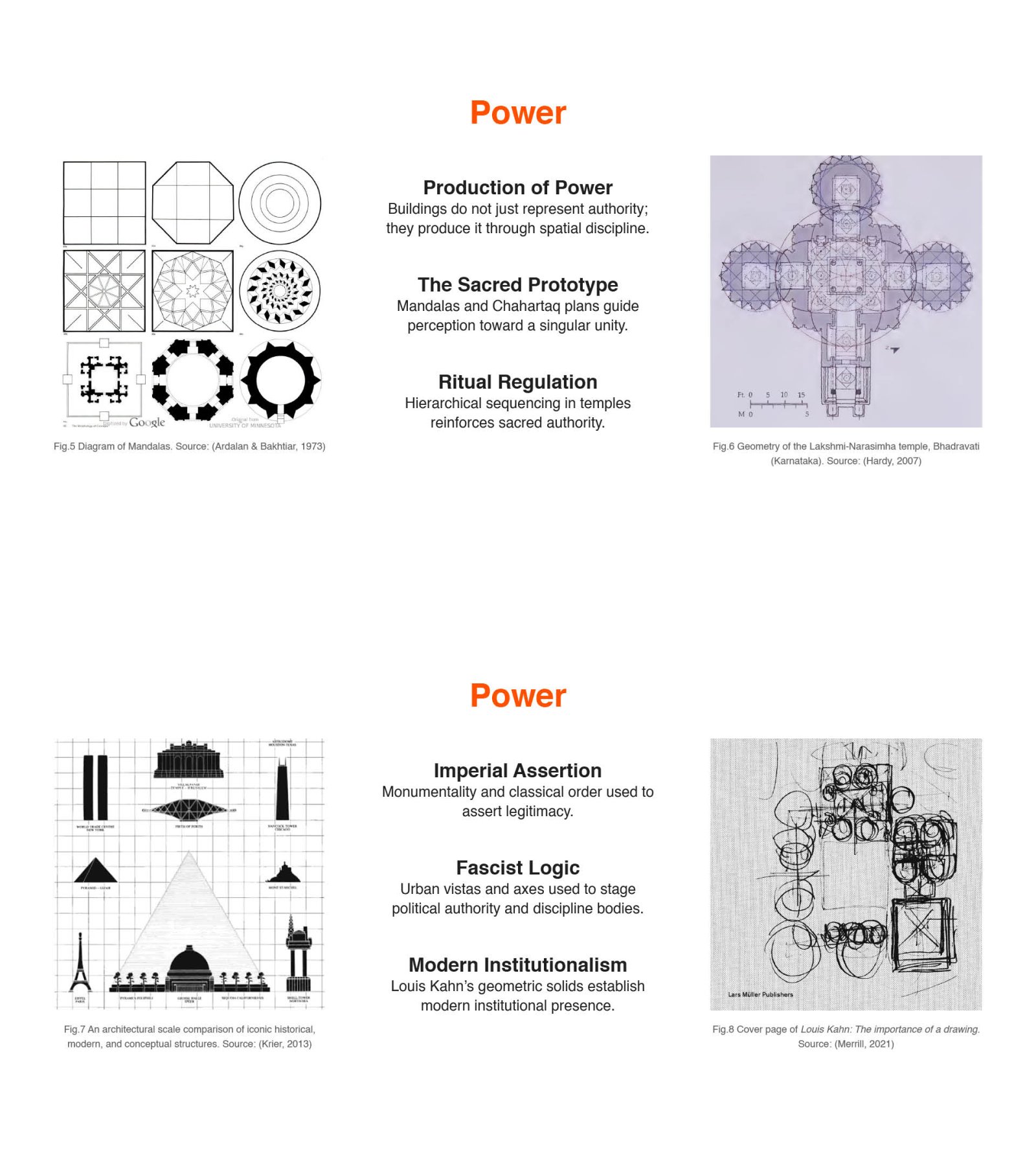
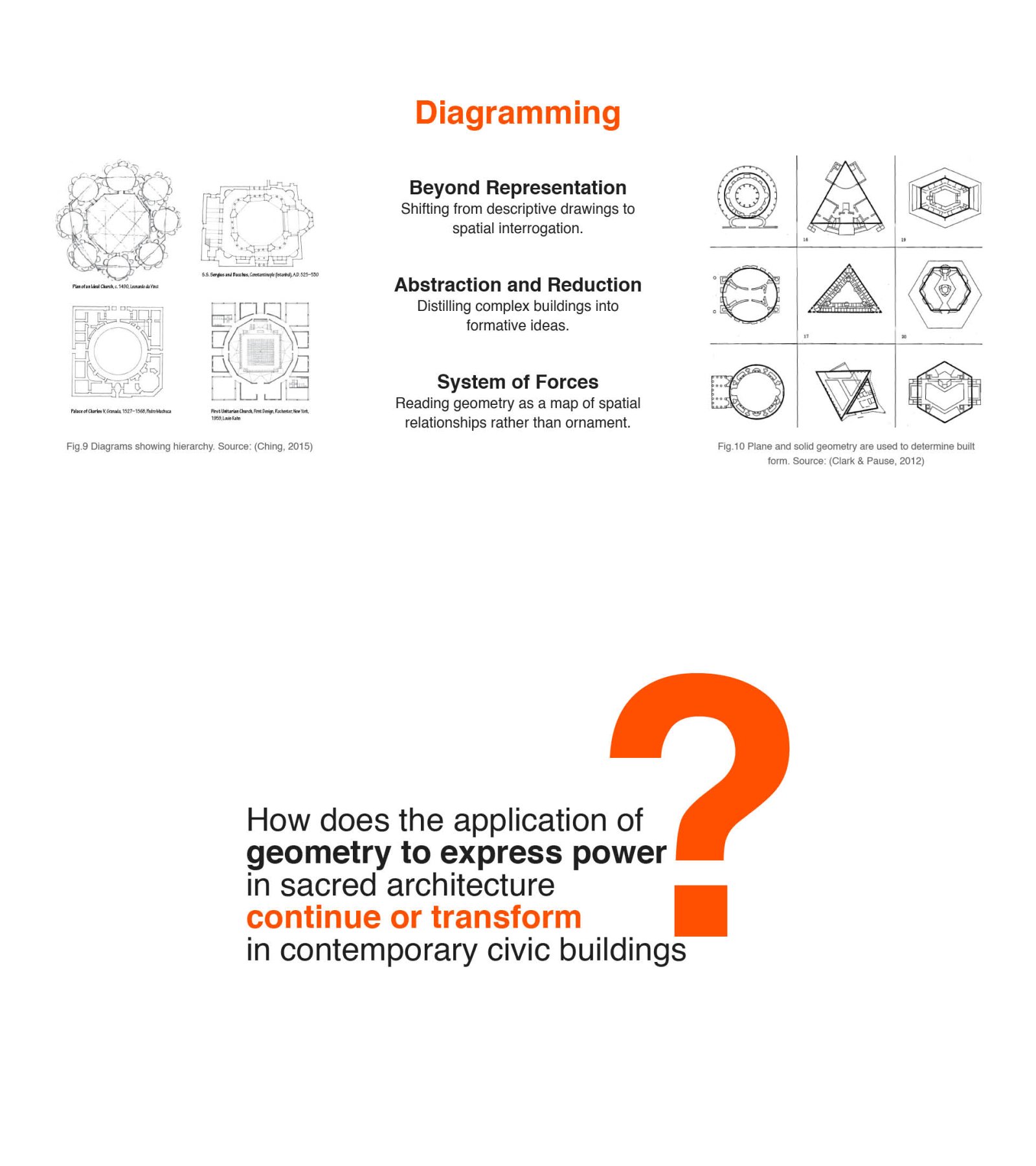
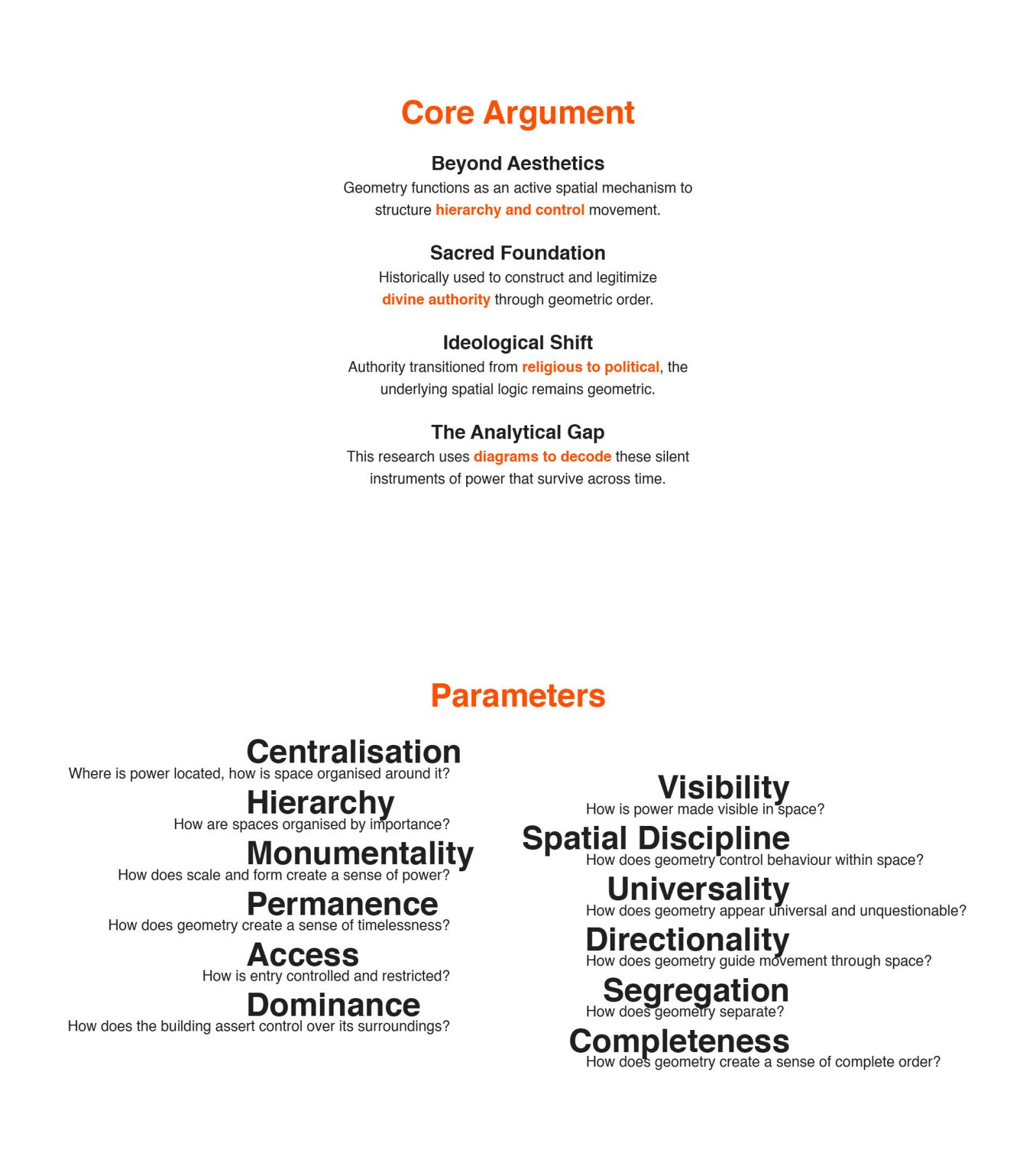
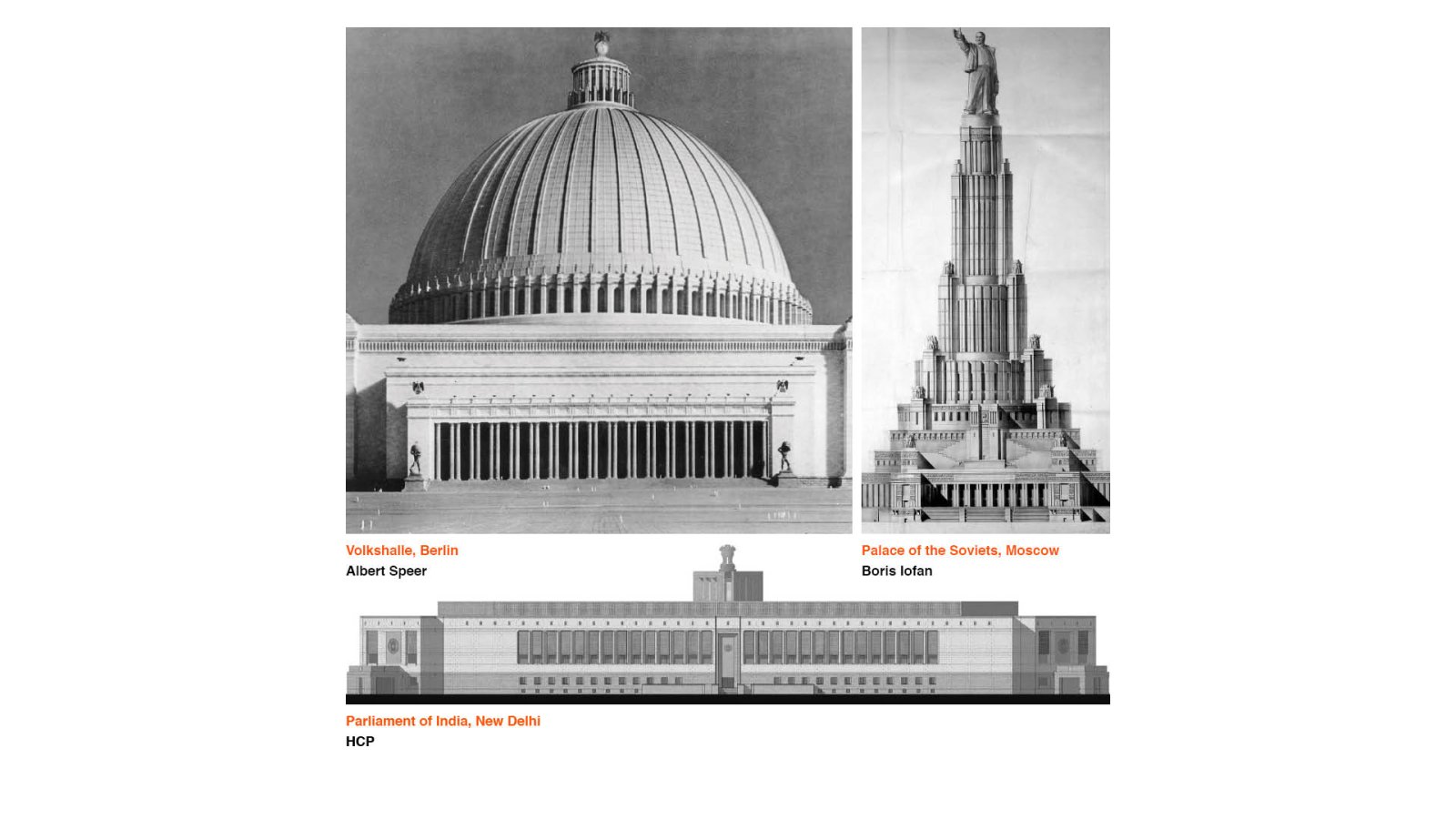
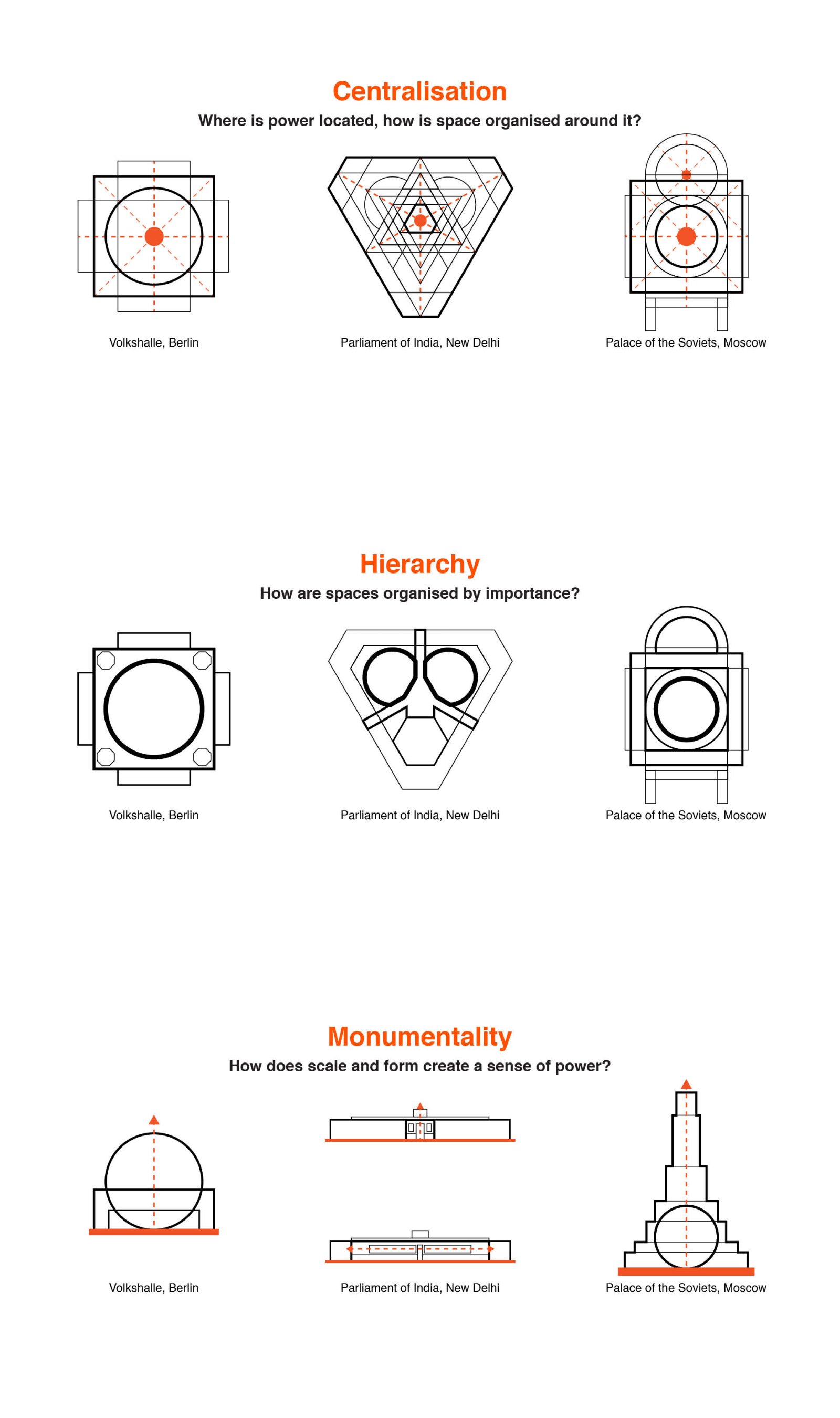
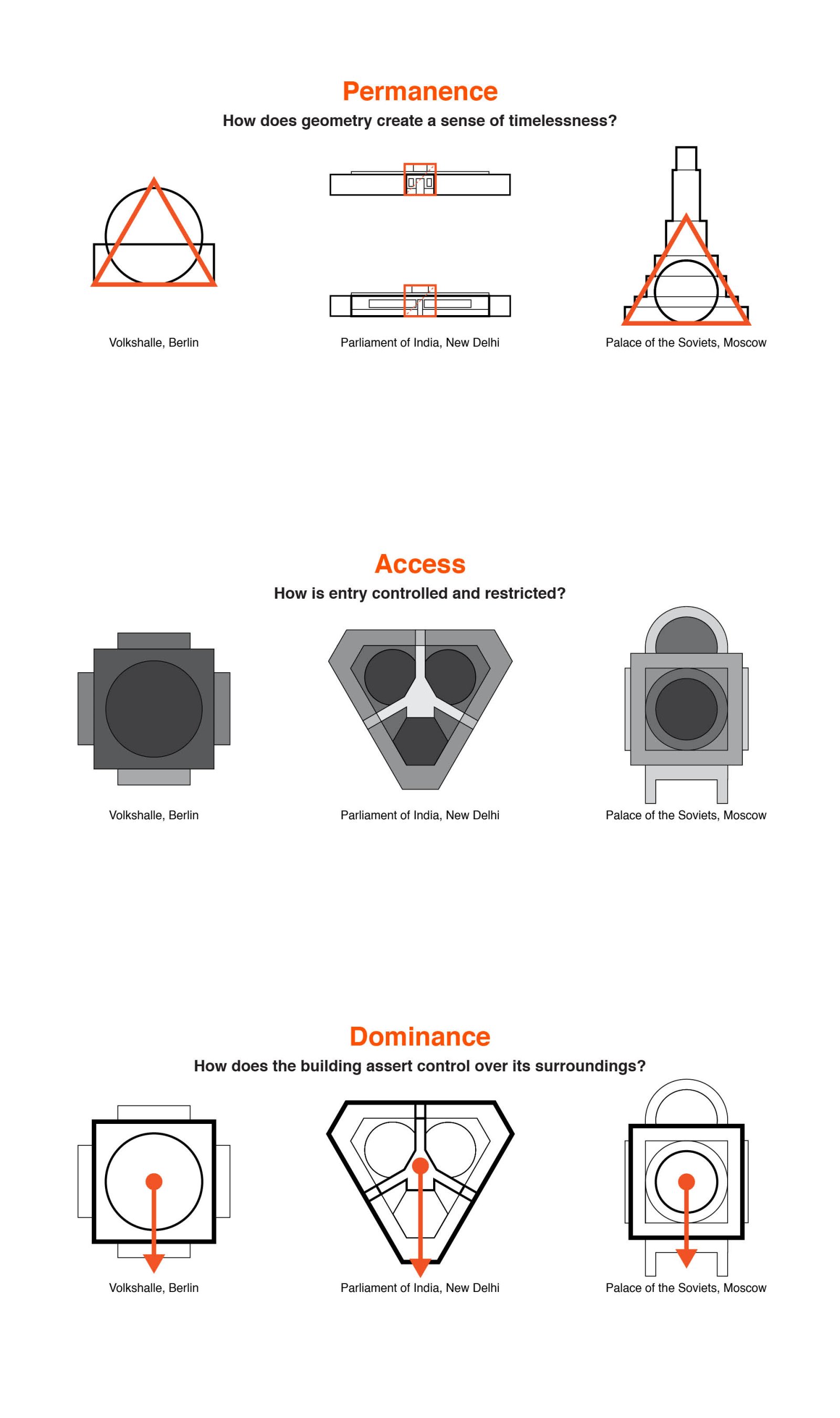
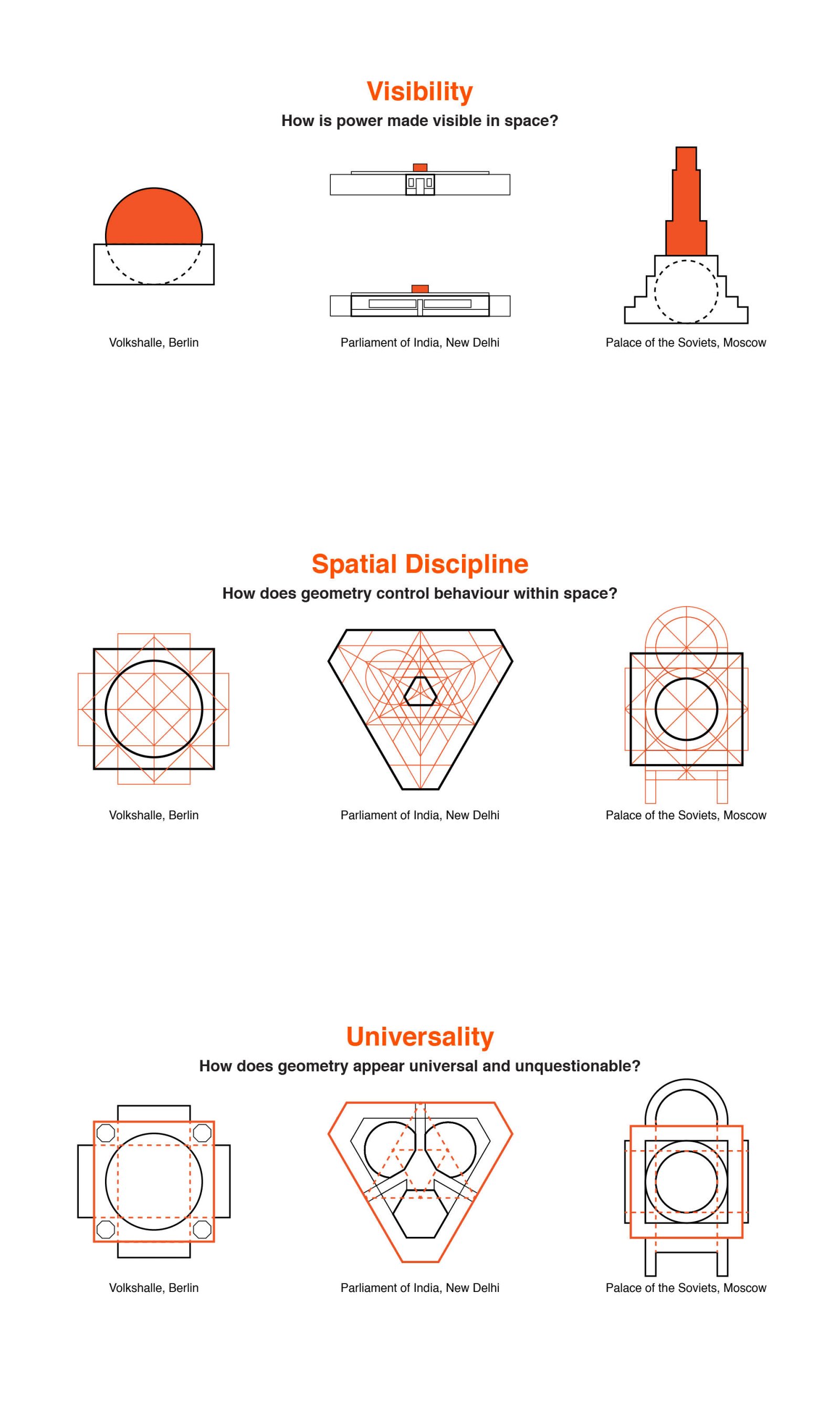
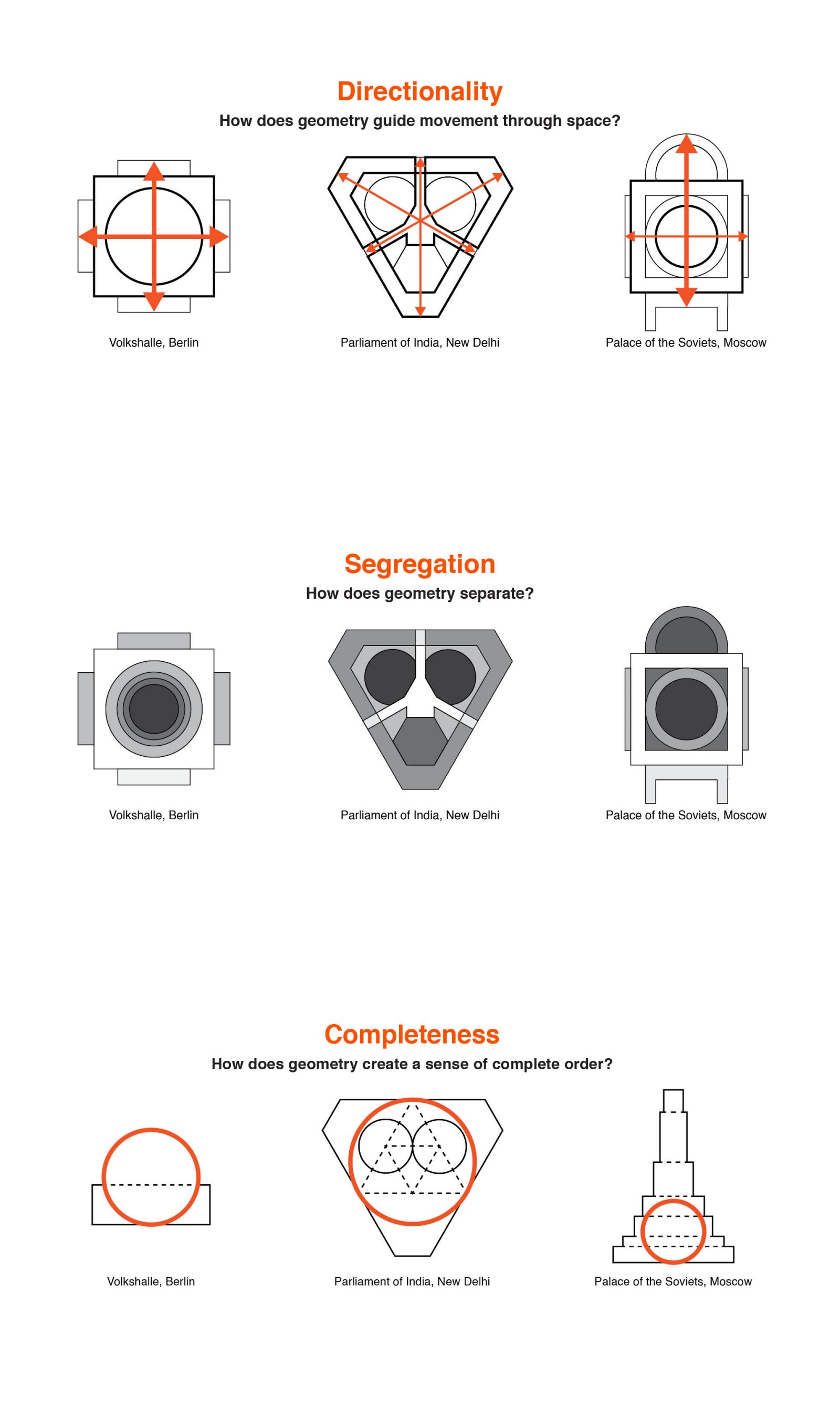
This research examines geometry as a continuous spatial logic through which architecture has expressed power and authority across time. From geometry emerges as a system of order in mathematics and philosophy, to become embedded in architecture as a means of organising space. Its earliest architectural applications are most developed in sacred buildings, where geometry structures spatial dominance in service of religious authority. This research asks whether the geometric logic continues in contemporary civic buildings such as parliaments, capital complexes and state institutions. While architecture and power have been widely discussed, the continuity in the application of geometry remains underexplored. This study analyses it as a spatial instrument that persists across changing ideologies. Diagramming is used as an analytical method to trace this continuity by reducing buildings to their geometric structure and comparing spatial strategies across time and typology.
View Additional Work