Your browser is out-of-date!
For a richer surfing experience on our website, please update your browser. Update my browser now!
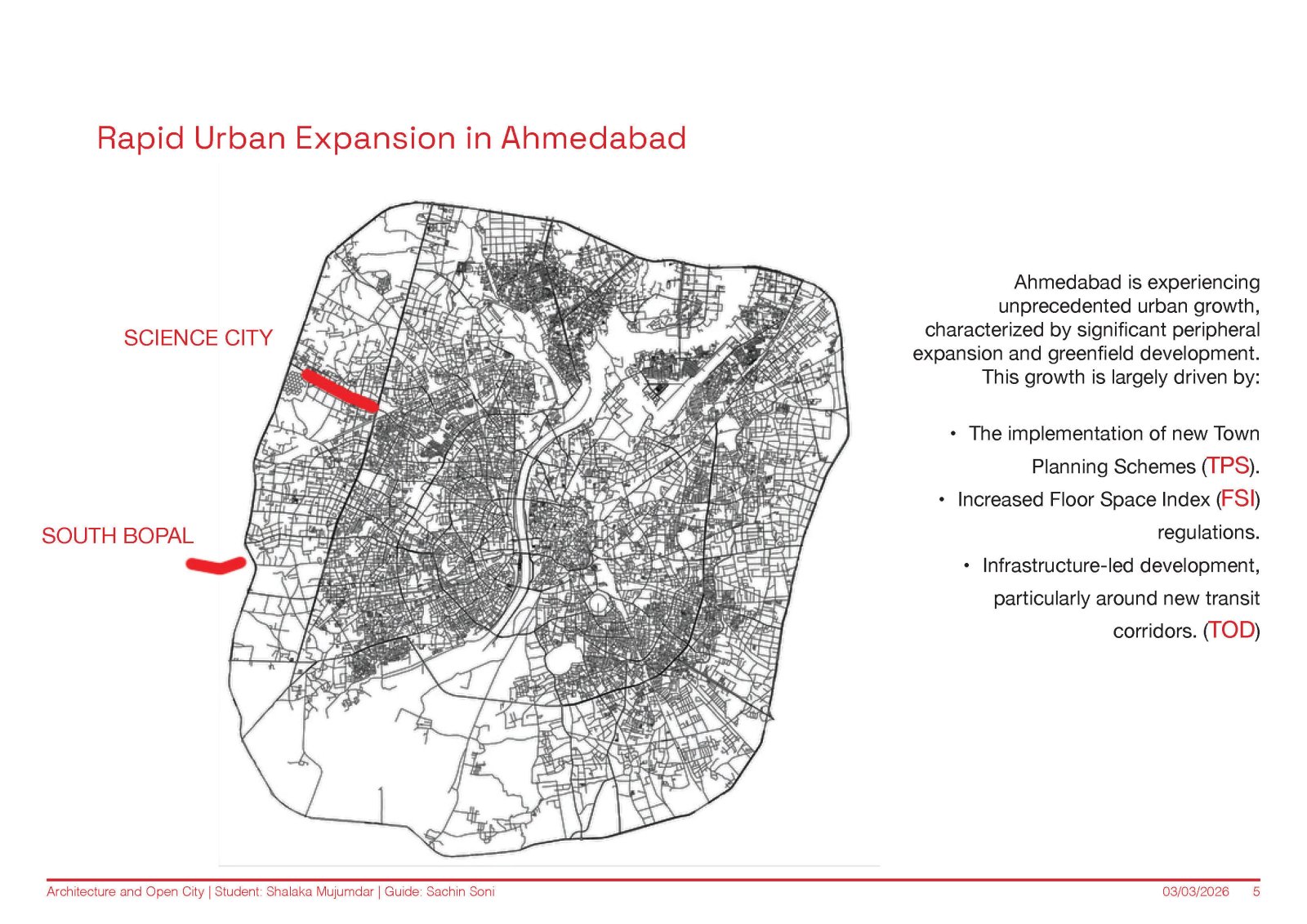
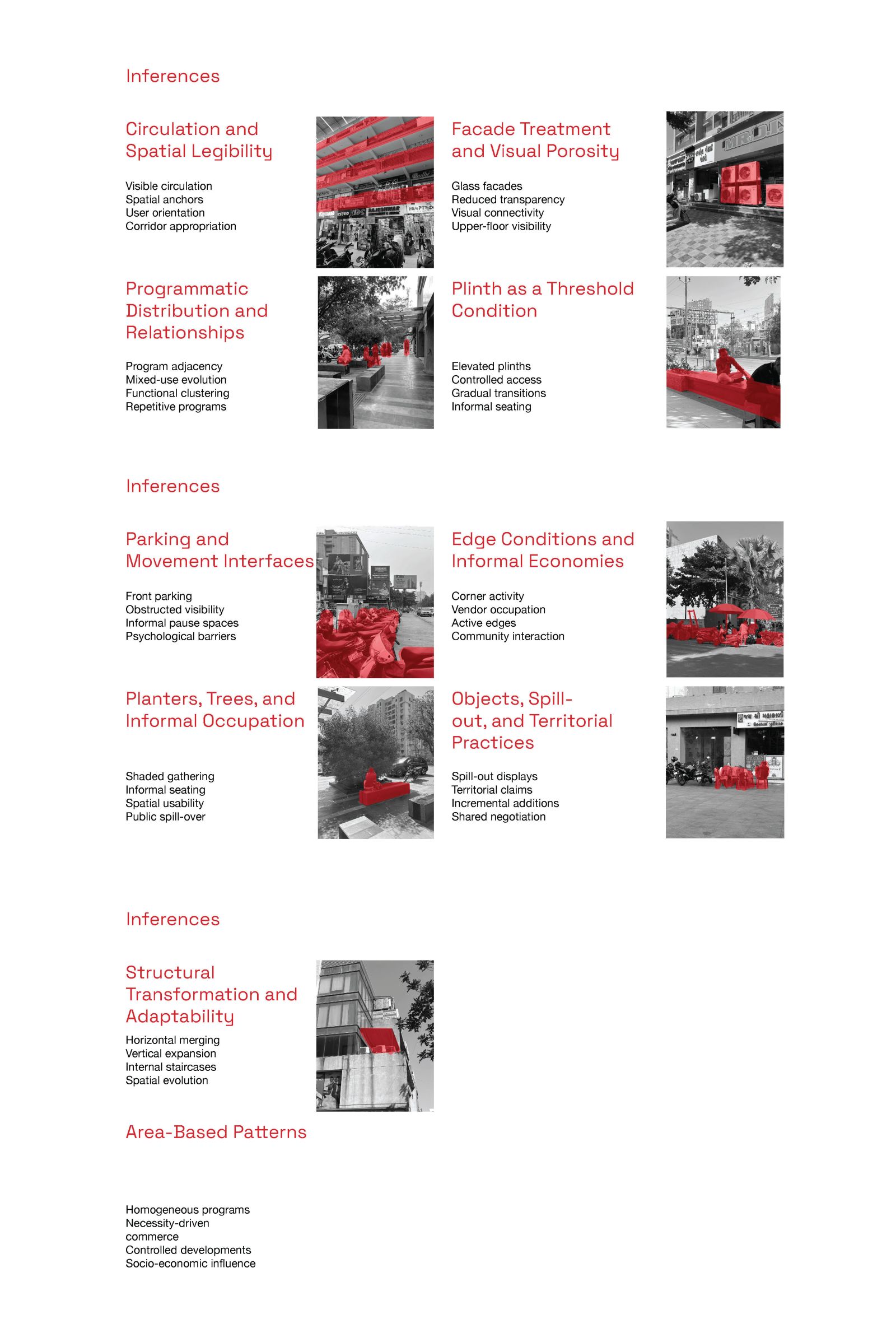
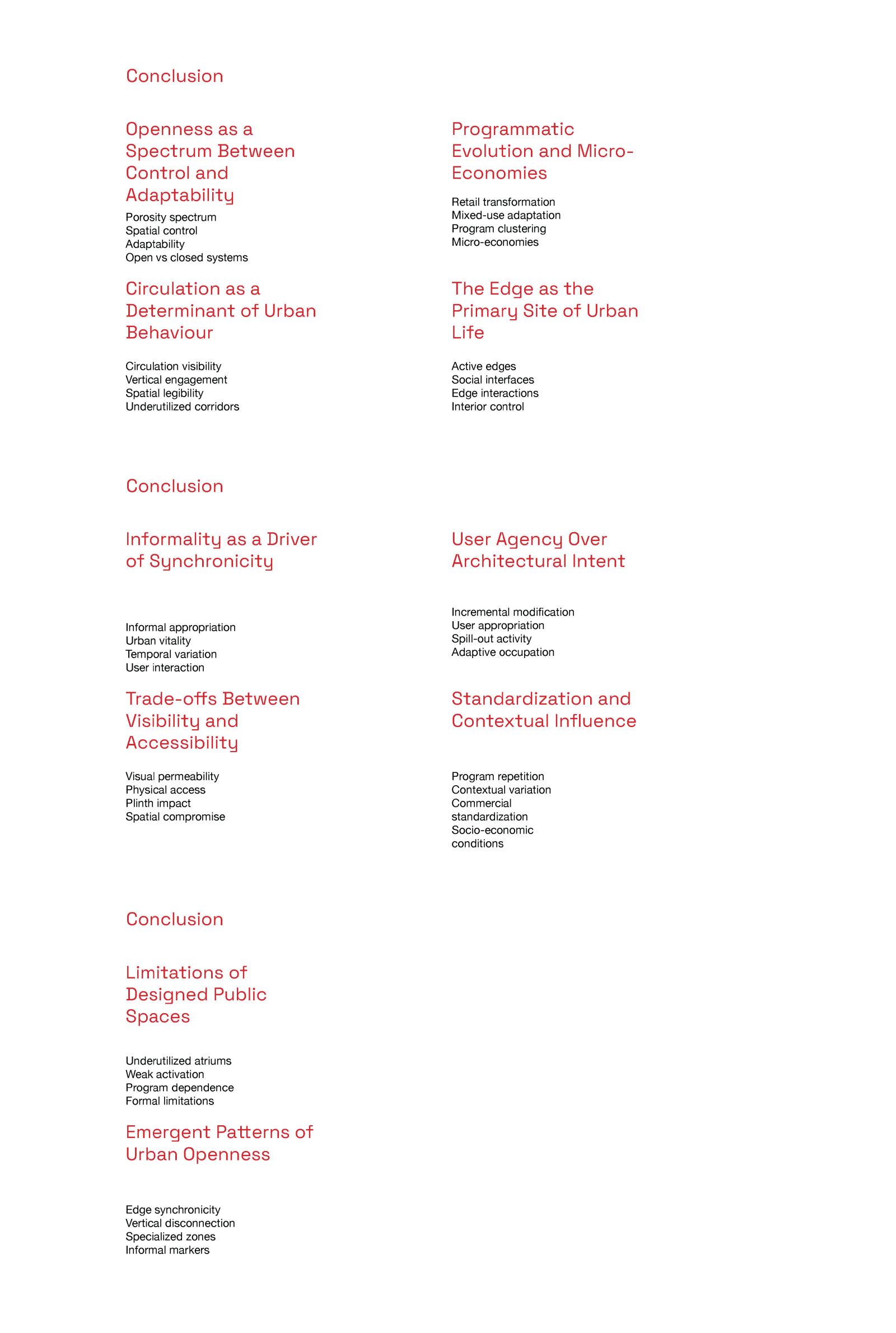
The contemporary city is increasingly shaped by processes of rapid expansion at its peripheries, where large tracts of land are systematically developed through planning mechanisms, infrastructural investments, and real estate-driven growth. In Ahmedabad, this outward expansion has been accelerated through Town Planning Schemes, increased Floor Space Index (FSI), and transit-oriented development corridors, resulting in the emergence of new urban territories that are fundamentally different from the historic core of the city. These areas, often developed as greenfield projects, are characterised by their scale, speed of construction, and reliance on standardised typologies. While such developments promise order, efficiency, and modern infrastructure, they also raise critical questions about the quality of urban life they produce. The formation of self-contained enclaves, inward-looking residential clusters, and commercially driven mixed-use blocks suggests a tendency towards fragmentation, where individual developments operate as isolated units rather than as parts of a continuous urban fabric. Within this context, issues of accessibility, social interaction, adaptability, and spatial openness become central to understanding the nature of these emerging environments. This Design Research Project engages with these questions by examining new urban developments in Ahmedabad, focusing on selected sites such as South Bopal and the Science City corridor. These sites represent distinct conditions of contemporary urban growth, ranging from planned greenfield expansions to areas undergoing transformation through increased development pressure. By studying these contexts across multiple scales, including area, street, and building, the research seeks to critically evaluate the spatial and social qualities of emerging urban forms. Pls Click Here for the complete DRP.