Your browser is out-of-date!
For a richer surfing experience on our website, please update your browser. Update my browser now!
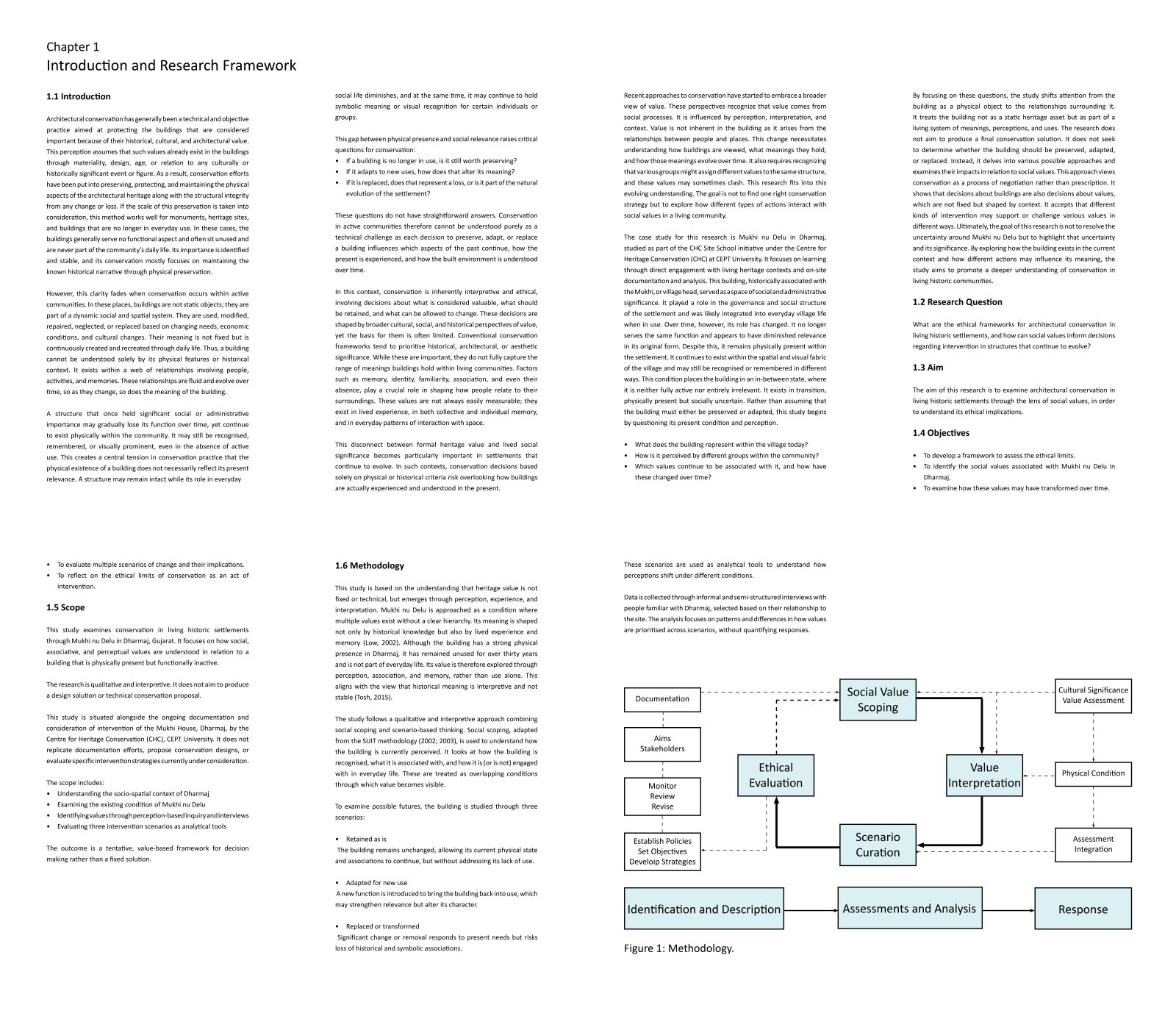
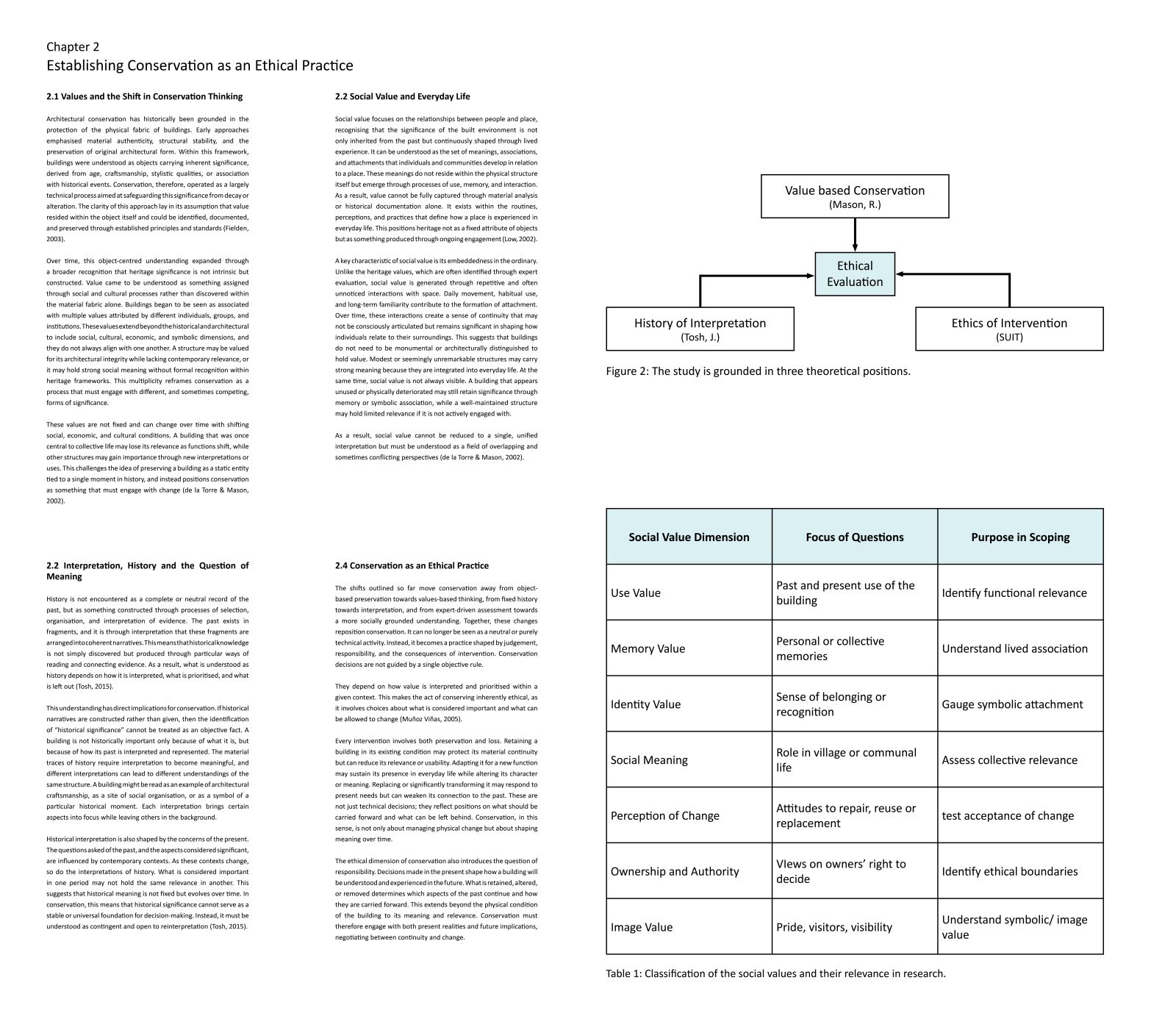
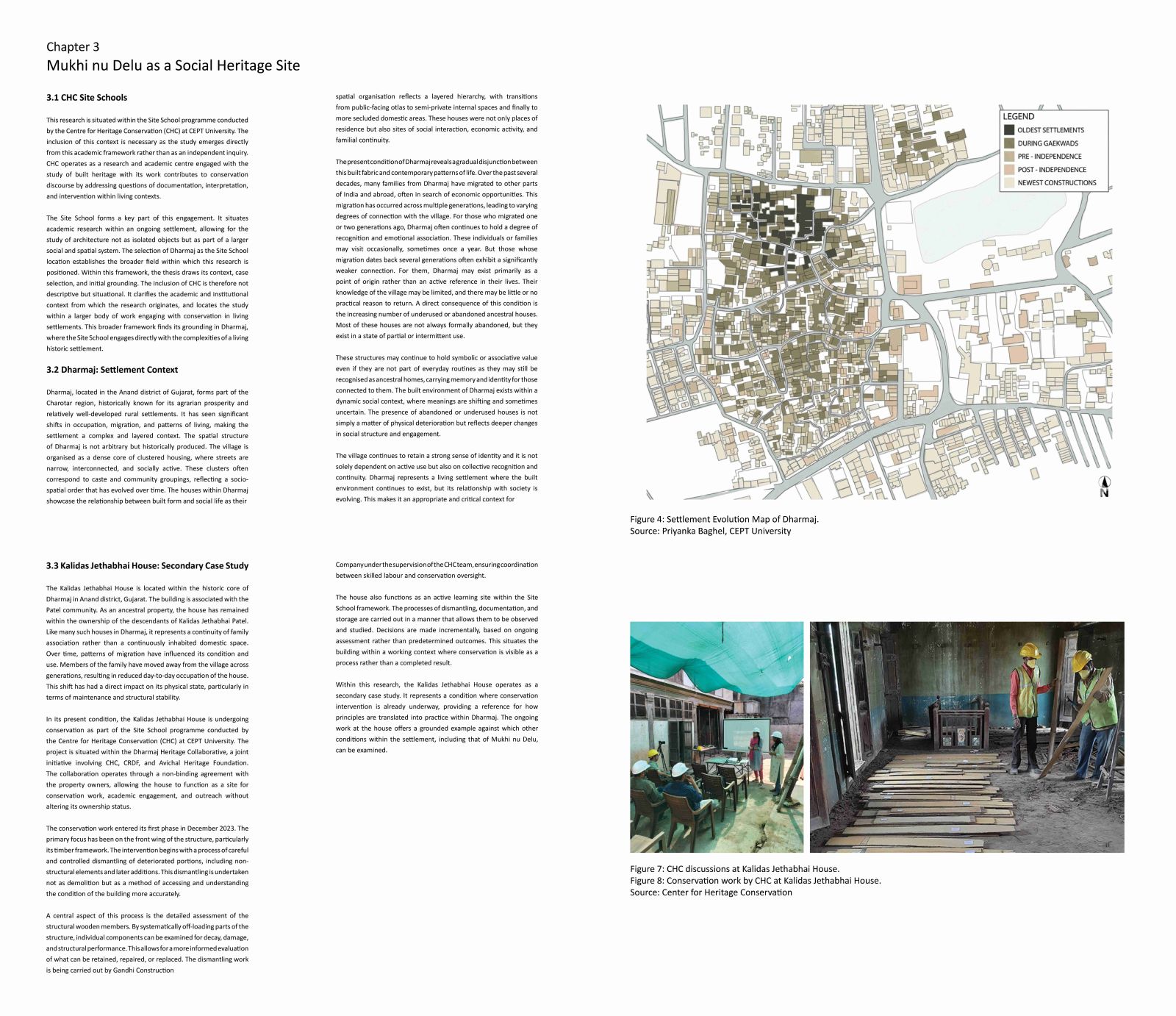
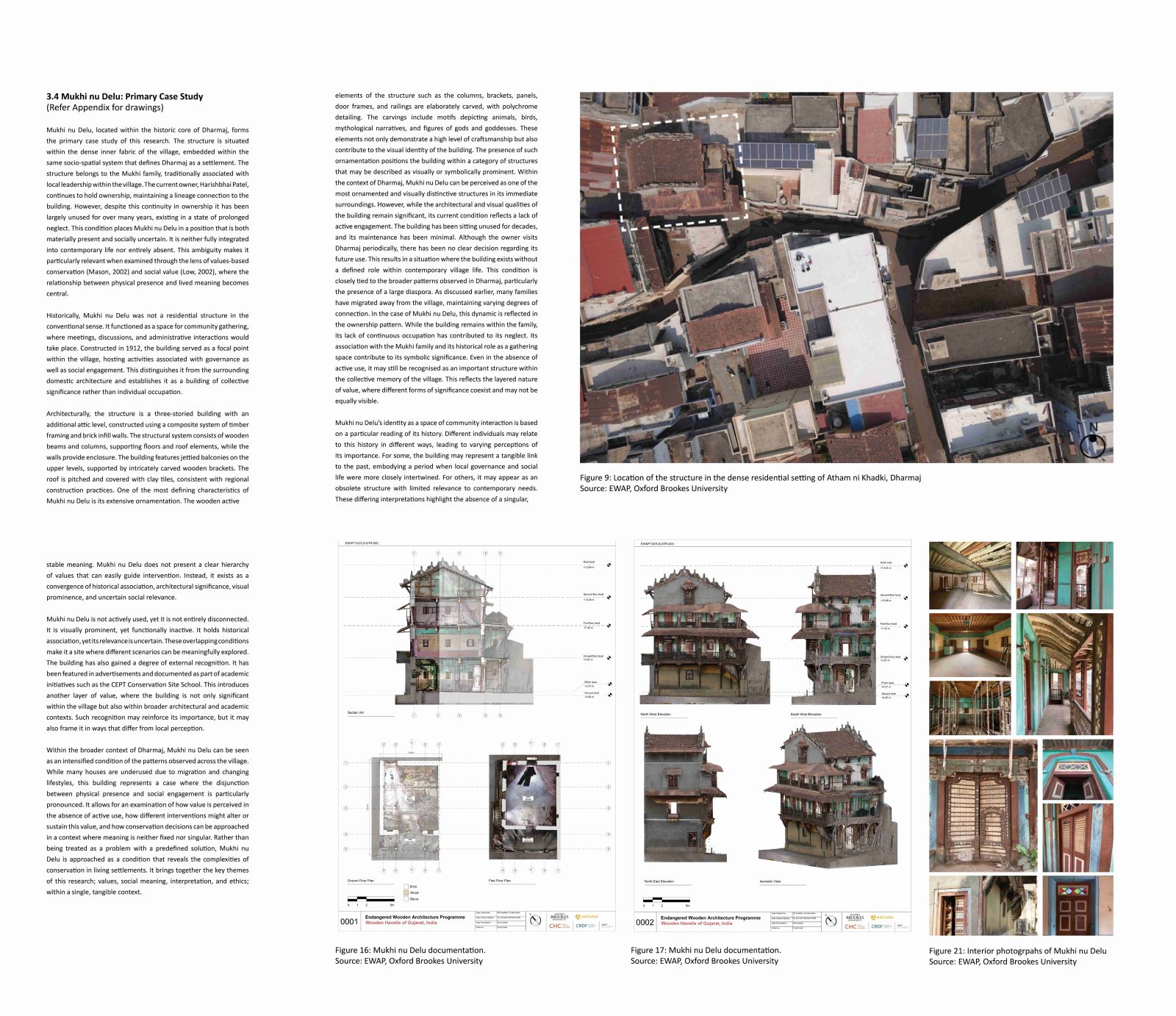
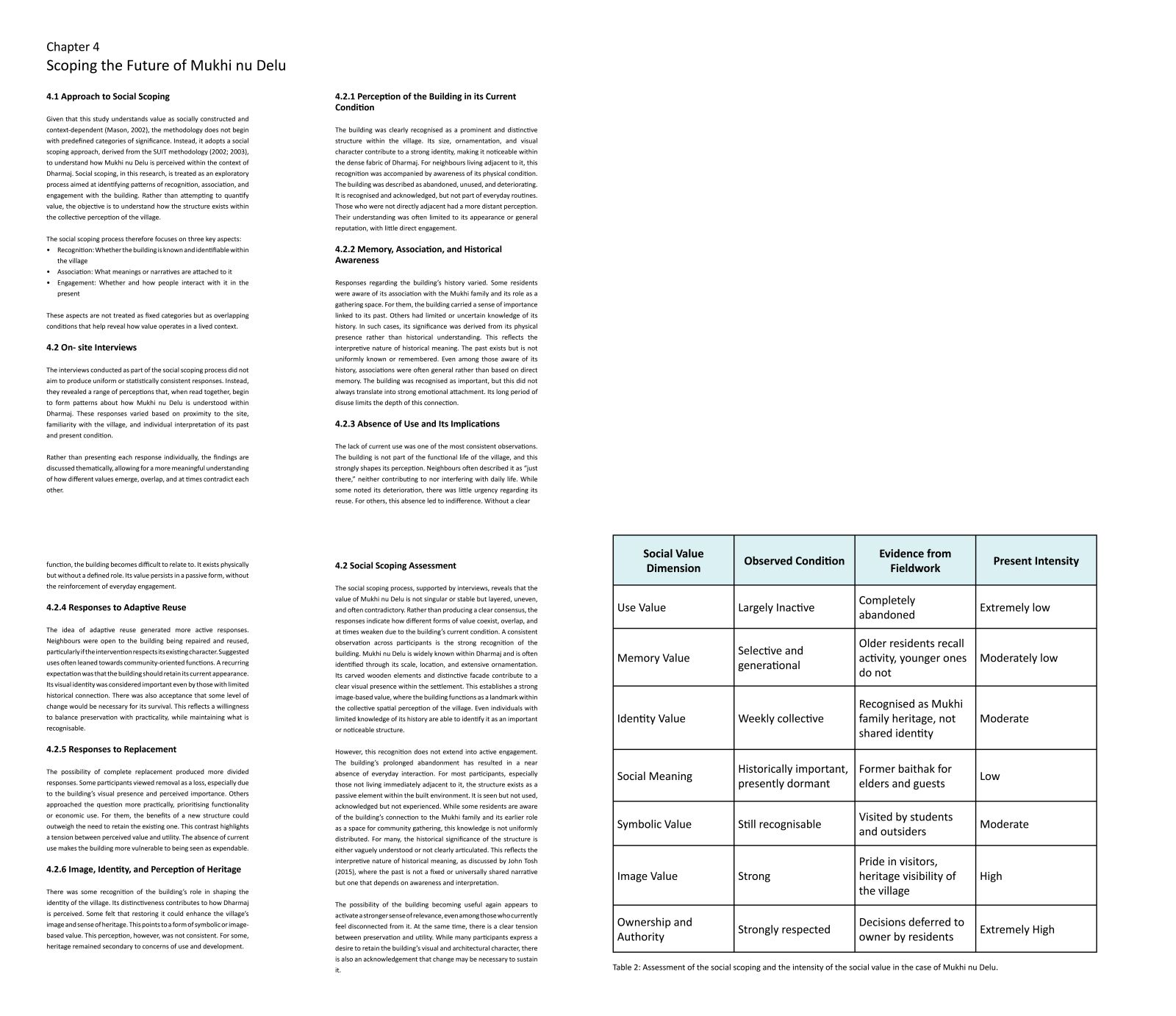
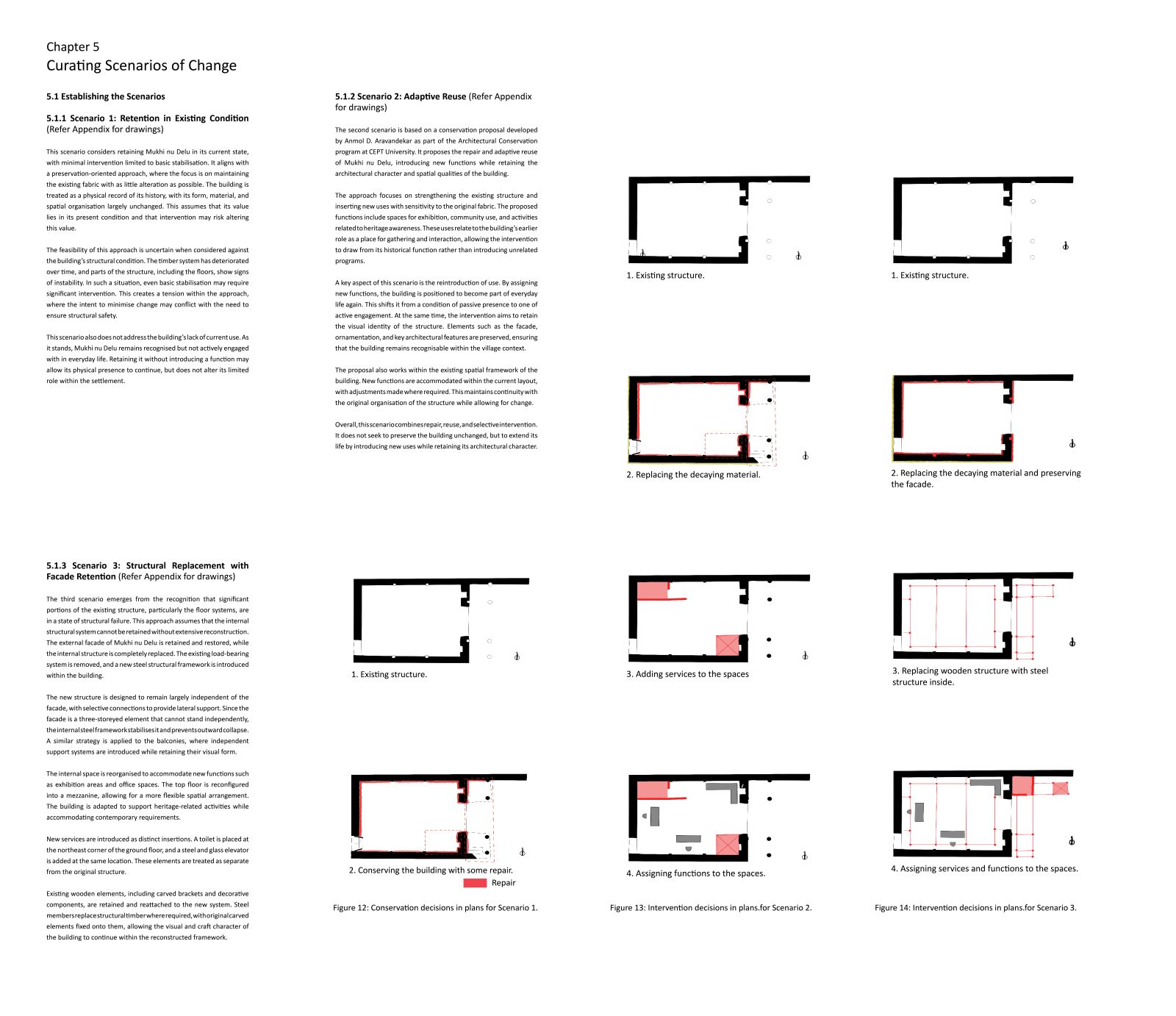
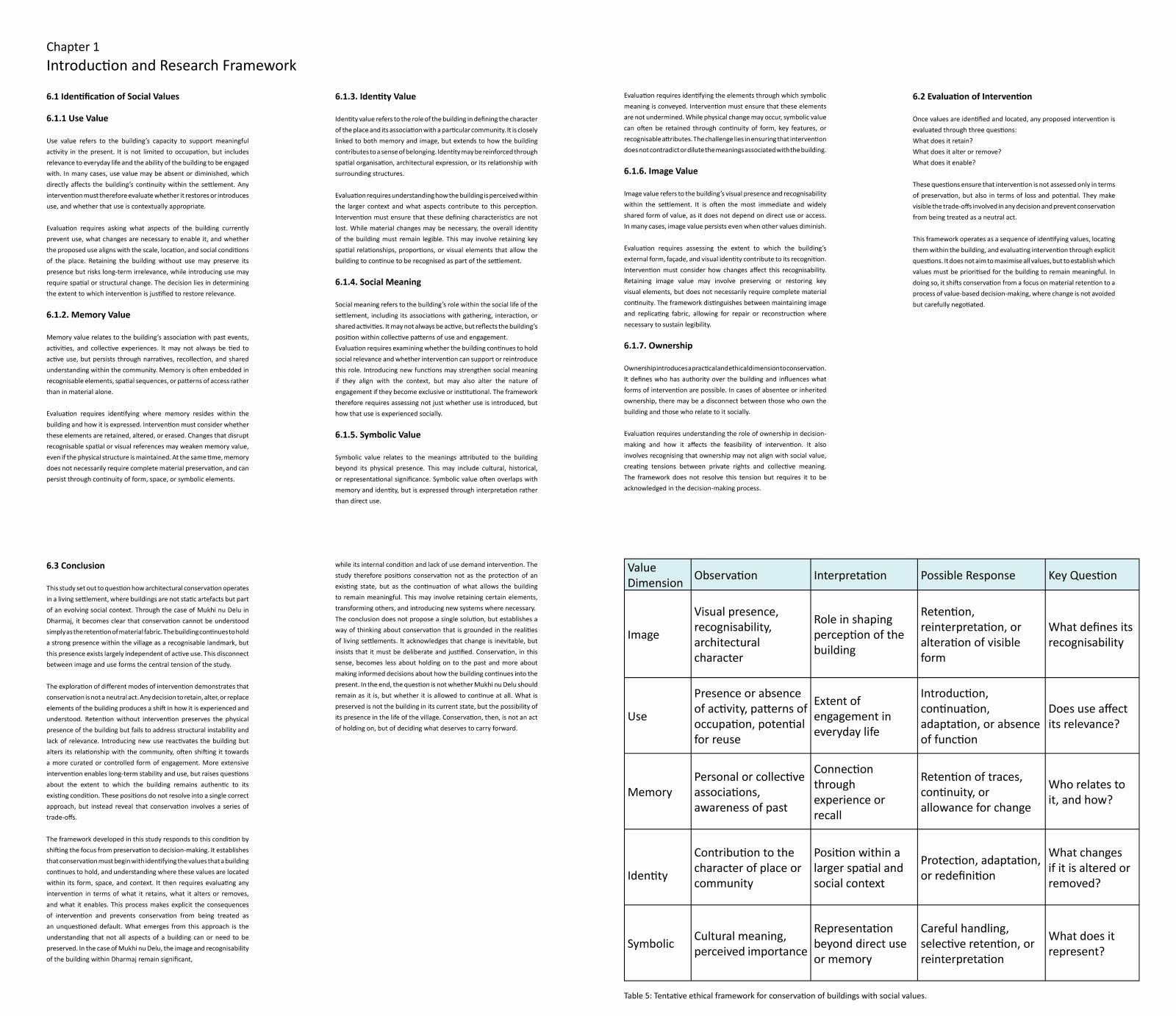
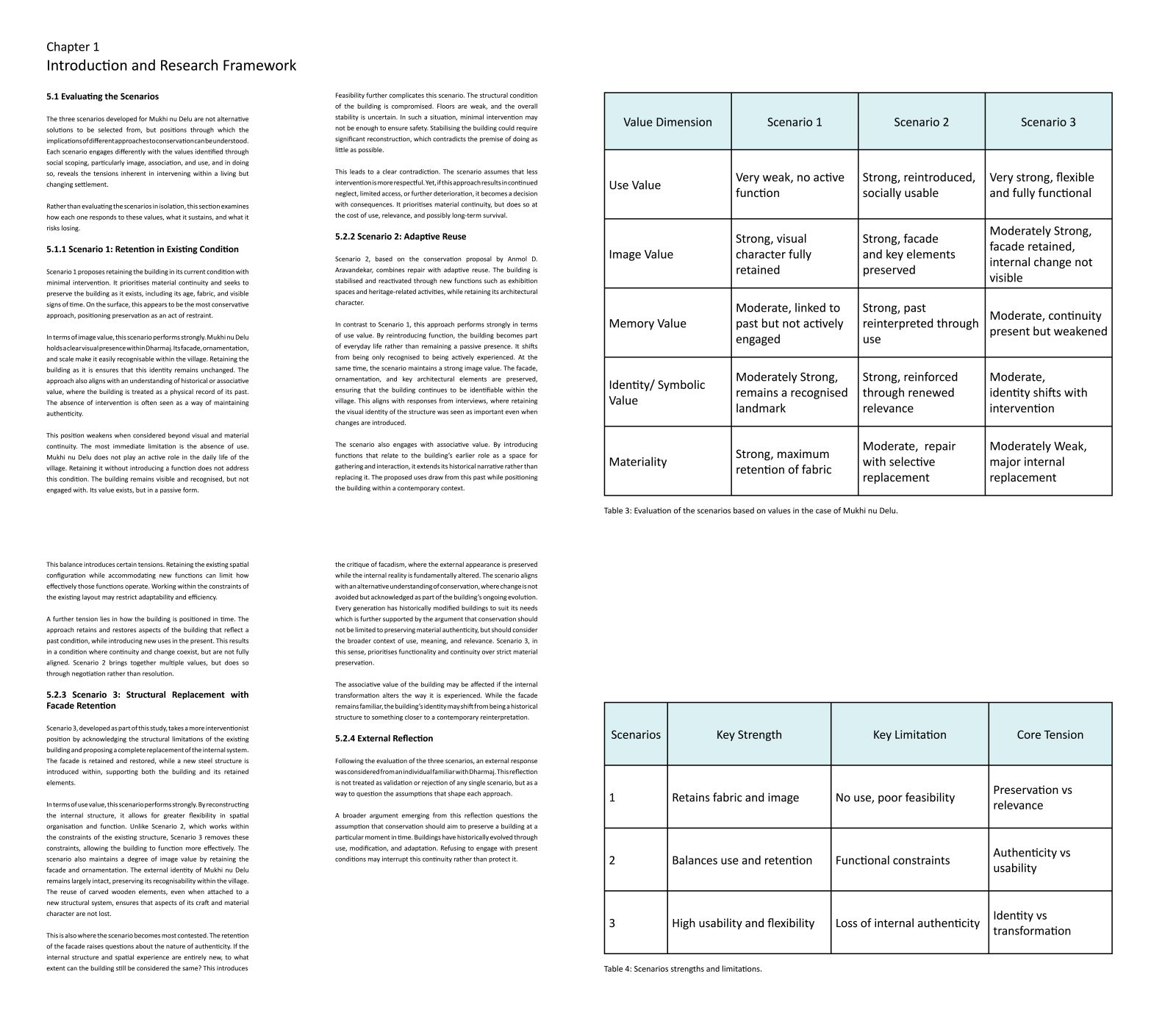
This study examines the question of conservation within living settlements through the case of Mukhi nu Delu in Dharmaj, Gujarat. Rather than treating heritage as a fixed category or a purely material condition, the research approaches it as something shaped by perception, memory, and use. In this context, the building is understood not only as a physical structure, but as a site where different values exist simultaneously, often without a clear hierarchy. Dharmaj provides a setting where the built fabric remains largely intact, yet patterns of occupation and engagement have shifted over time. Mukhi nu Delu reflects this condition. While it retains a strong visual and historical presence, it has remained unused for decades, raising questions about how value persists in the absence of active use. The study engages with this condition through a qualitative, interpretive methodology that combines social scoping with scenario-based exploration. Social scoping is used to understand how the building is currently perceived by individuals within the village, focusing on recognition, association, and engagement. These perceptions are not treated as fixed data, but as overlapping and sometimes conflicting readings through which value becomes visible. Building on this, a set of scenarios is developed to examine how different forms of intervention might influence these values. These scenarios are not proposals, but analytical tools that allow the study to engage with the implications of change. The research is grounded in the idea that conservation is not a neutral or purely technical act, but one that involves choices about what is retained, altered, or replaced. By situating these choices within the lived and interpretive context of Dharmaj, the study seeks to engage with conservation as a process of evaluation rather than prescription.
View Additional Work