Your browser is out-of-date!
For a richer surfing experience on our website, please update your browser. Update my browser now!
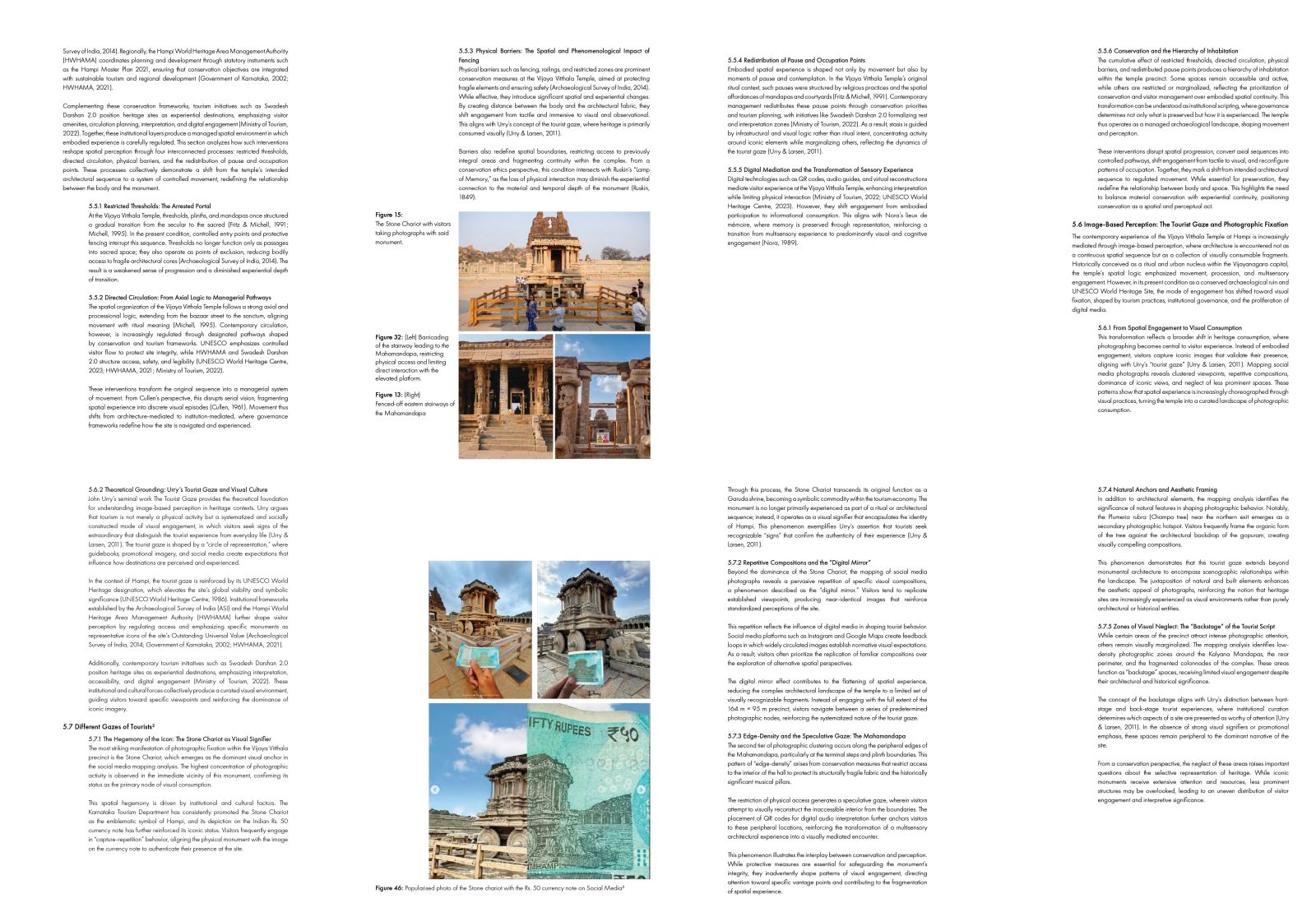
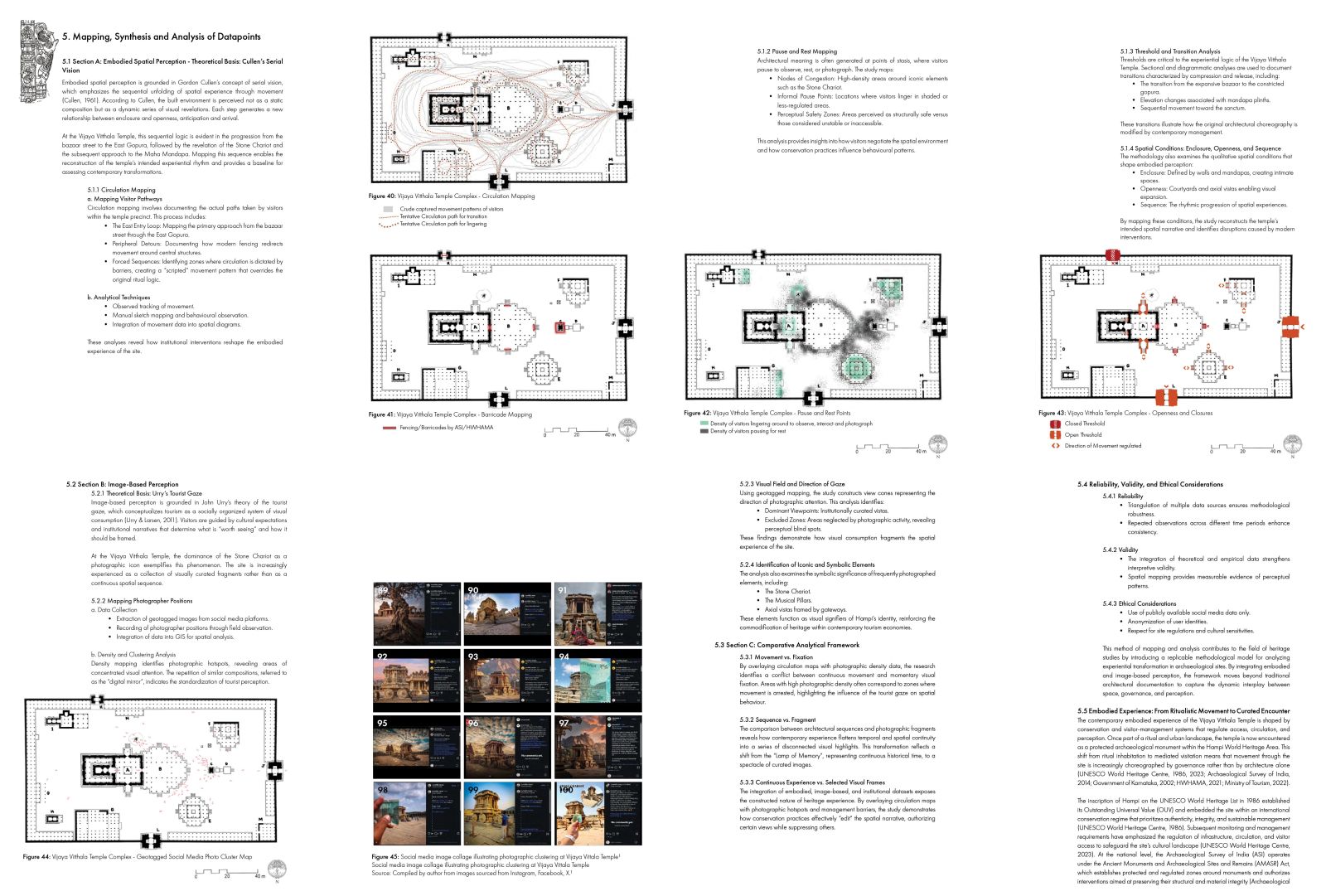
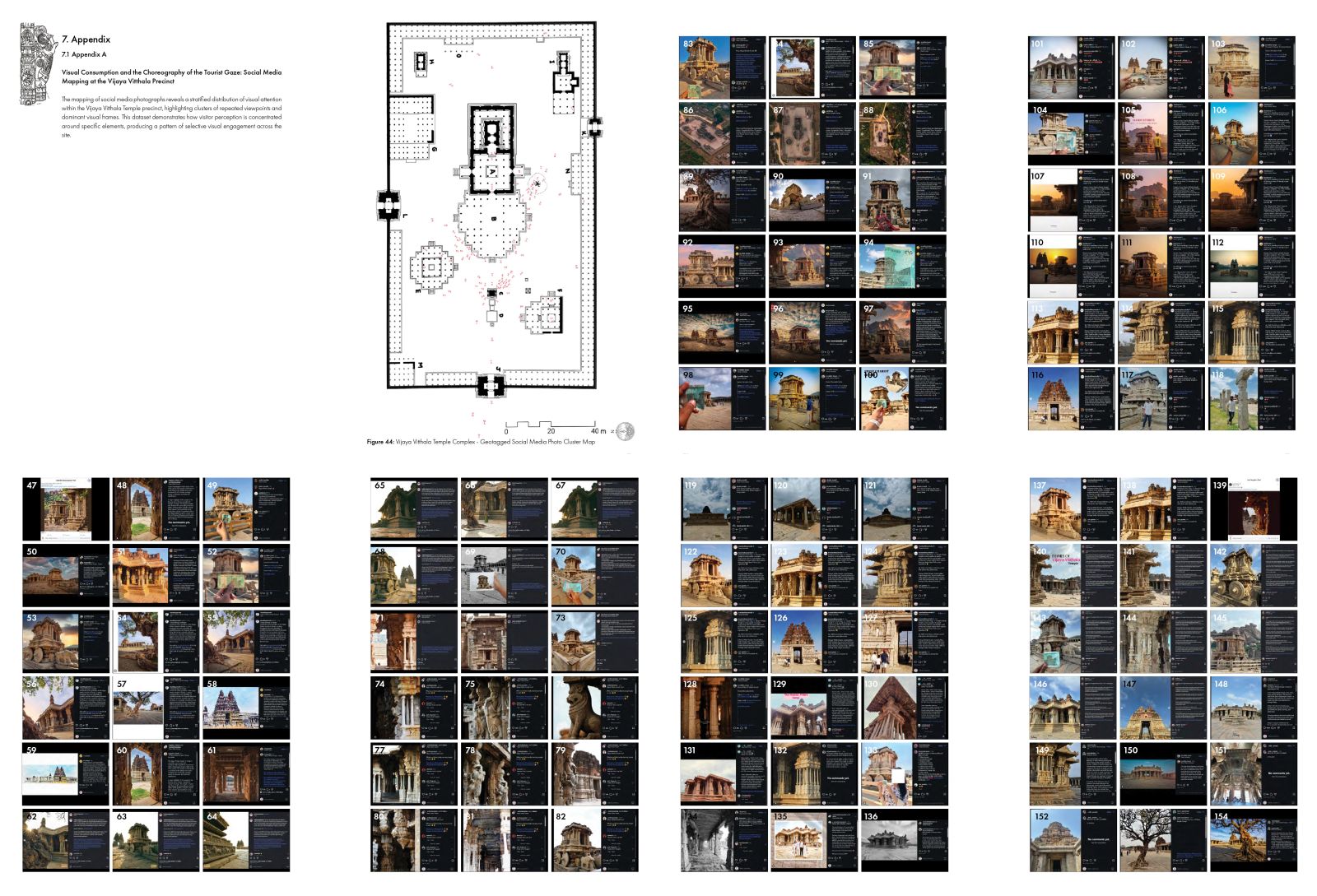
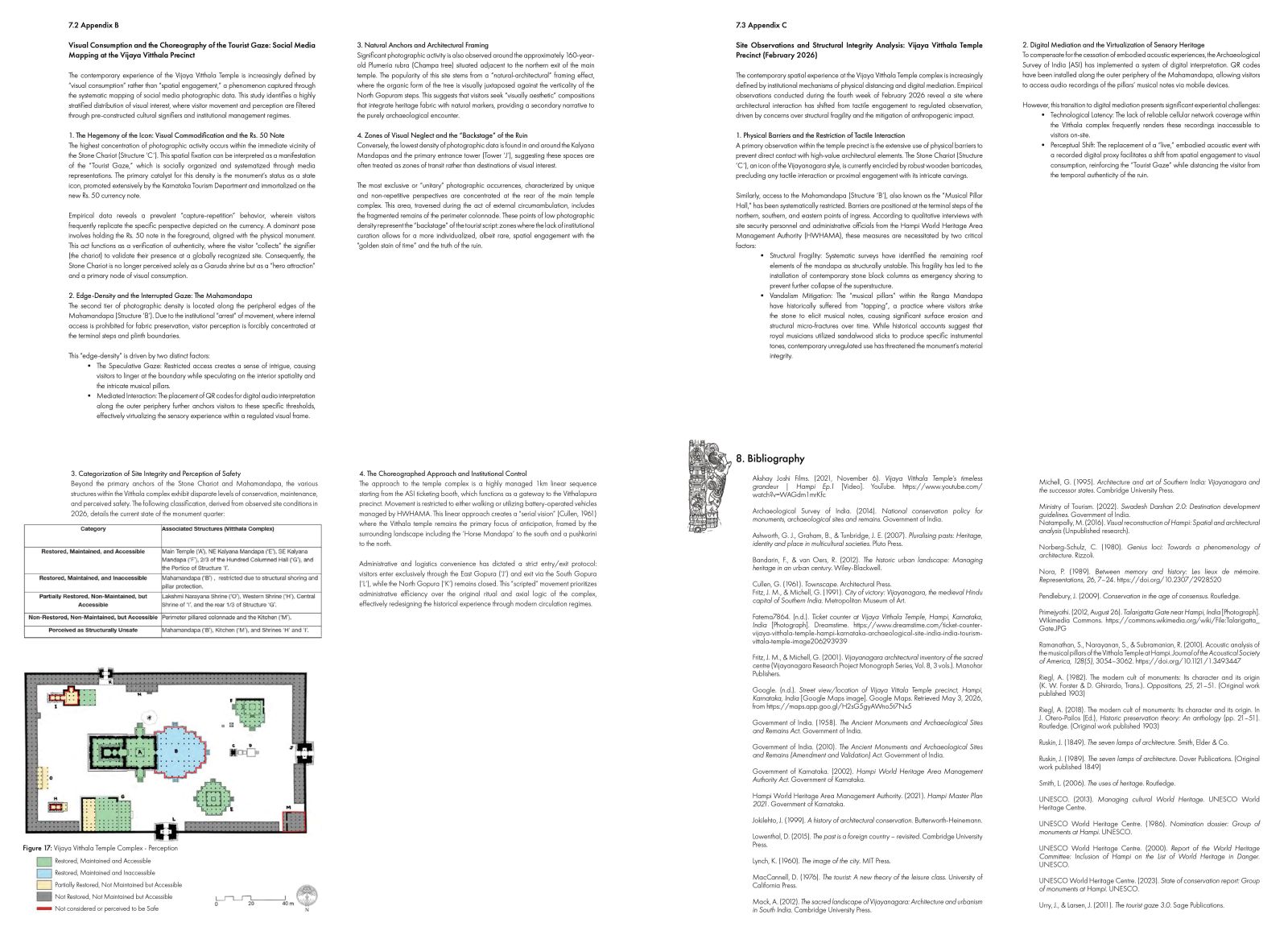
The Vijaya Vitthala Temple at Hampi, one of the most celebrated monuments of the Vijayanagara Empire, is today encountered not as a living ritual landscape but as a curated archaeological ruin within a UNESCO World Heritage Site. This research examines how conservation and visitor-management practices reshape movement and spatial experience, arguing that conservation functions as an active mechanism of experience-making rather than merely a technical process of material preservation. The study reconstructs the temple’s intended architectural logic, characterized by axial progression, circumambulatory movement, and hierarchical thresholds, and investigates how institutional governance by UNESCO, the Archaeological Survey of India (ASI), and the Hampi World Heritage Area Management Authority (HWHAMA) scripts contemporary patterns of access and interpretation. Grounded in the theories of John Ruskin, Gordon Cullen, and John Urry, the research develops a Dual Perceptual Framework distinguishing between embodied spatial perception and image-based perception. Using a mixed-methods approach that includes on-site spatial mapping, institutional policy analysis, and the examination of 100–120 geotagged social media photographs, the findings reveal a shift from continuous ritual movement to fragmented visual consumption dominated by iconic viewpoints such as the Stone Chariot. The study concludes that conservation operates as a form of spatial and perceptual scripting, shaping how heritage is experienced, remembered, and interpreted.
View Additional Work