Your browser is out-of-date!
For a richer surfing experience on our website, please update your browser. Update my browser now!
Ways of living are not static; they shift in response to social organisation, technology, and collective imagination. Yet the reorganisation of living rarely begins with construction. It begins on paper. This research examines how paper architecture has been used to imagine alternate ways of living, arguing that unbuilt proposals constitute a distinct and rigorous form of disciplinary knowledge rather than a preparatory step toward building.
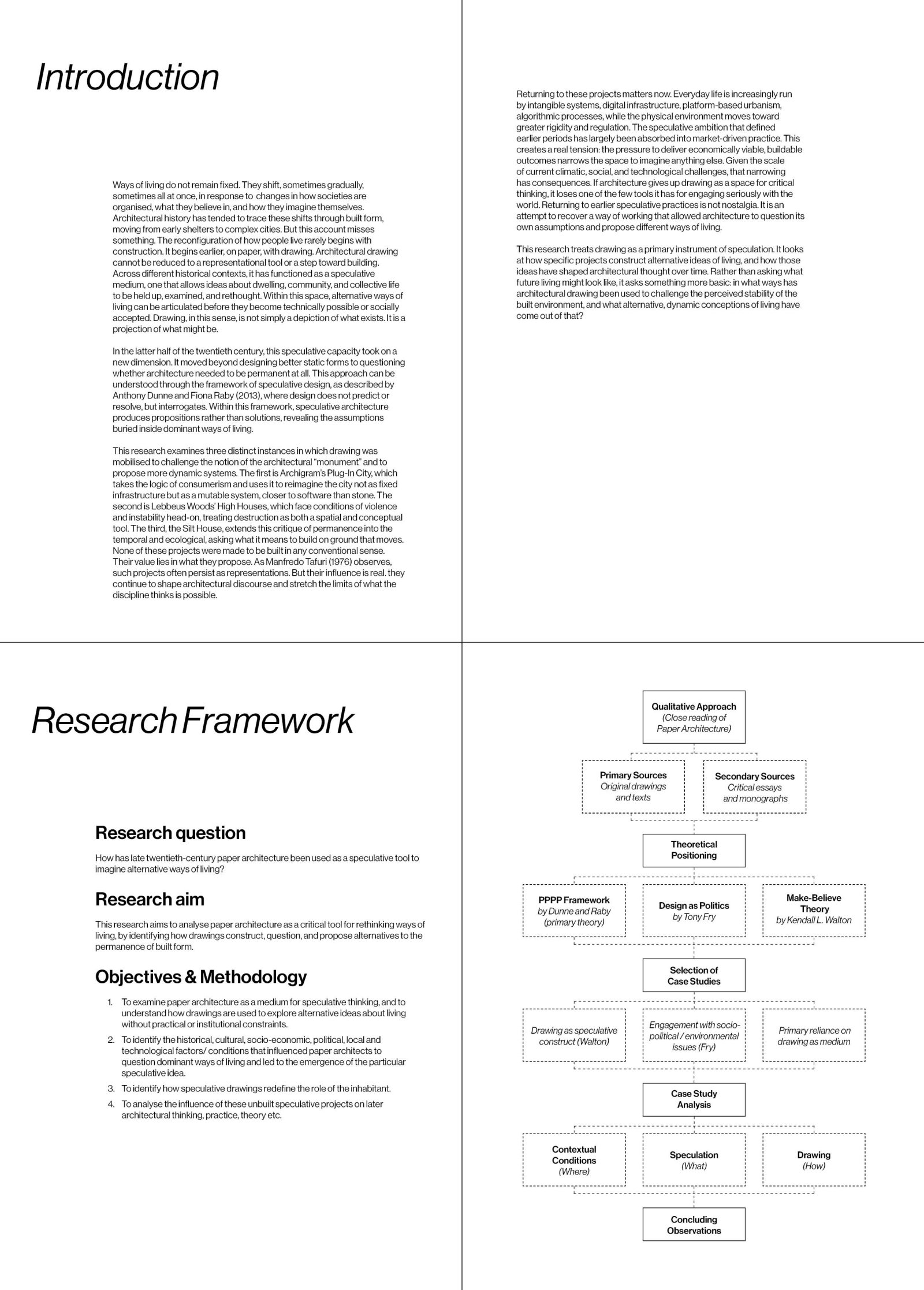
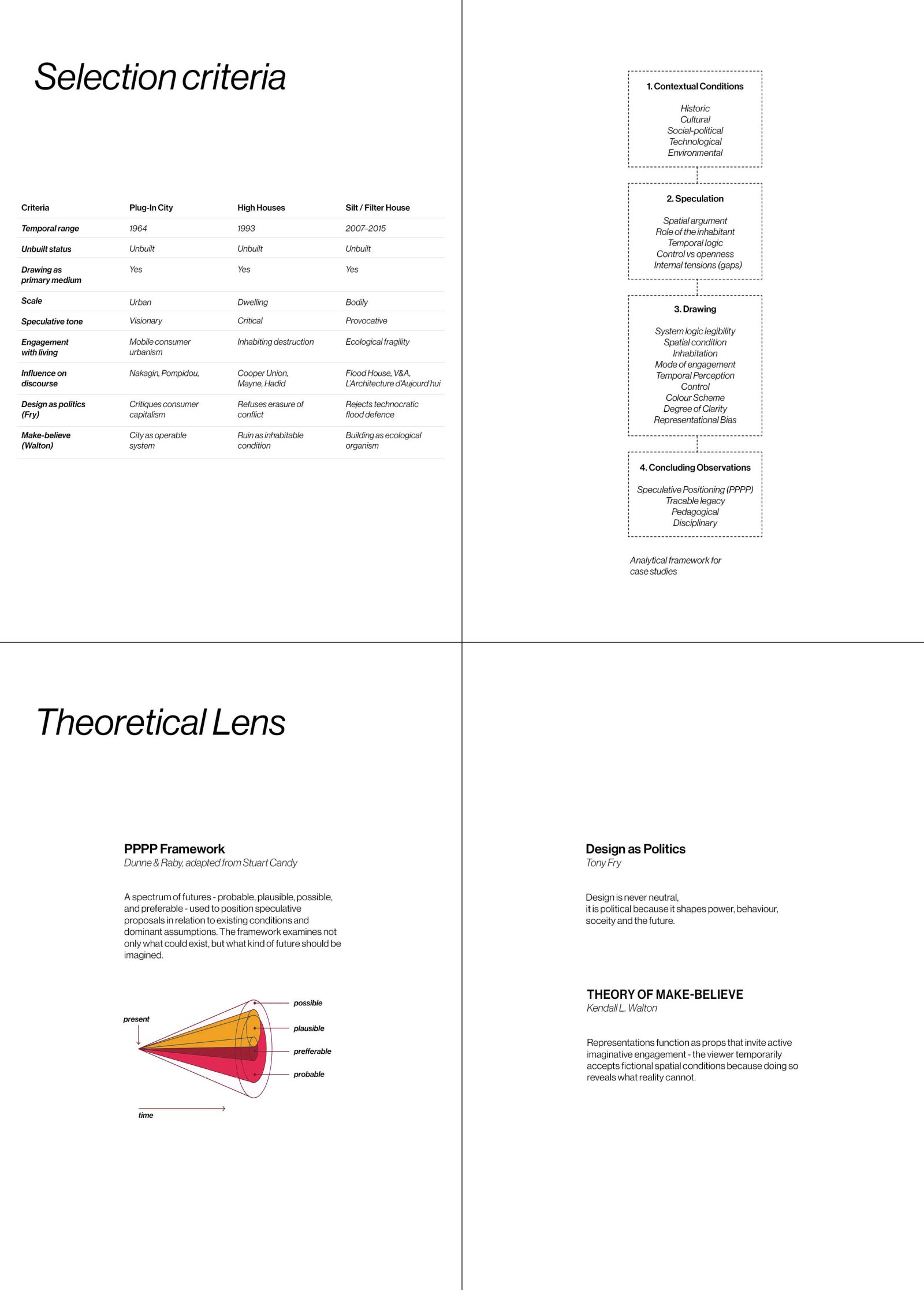
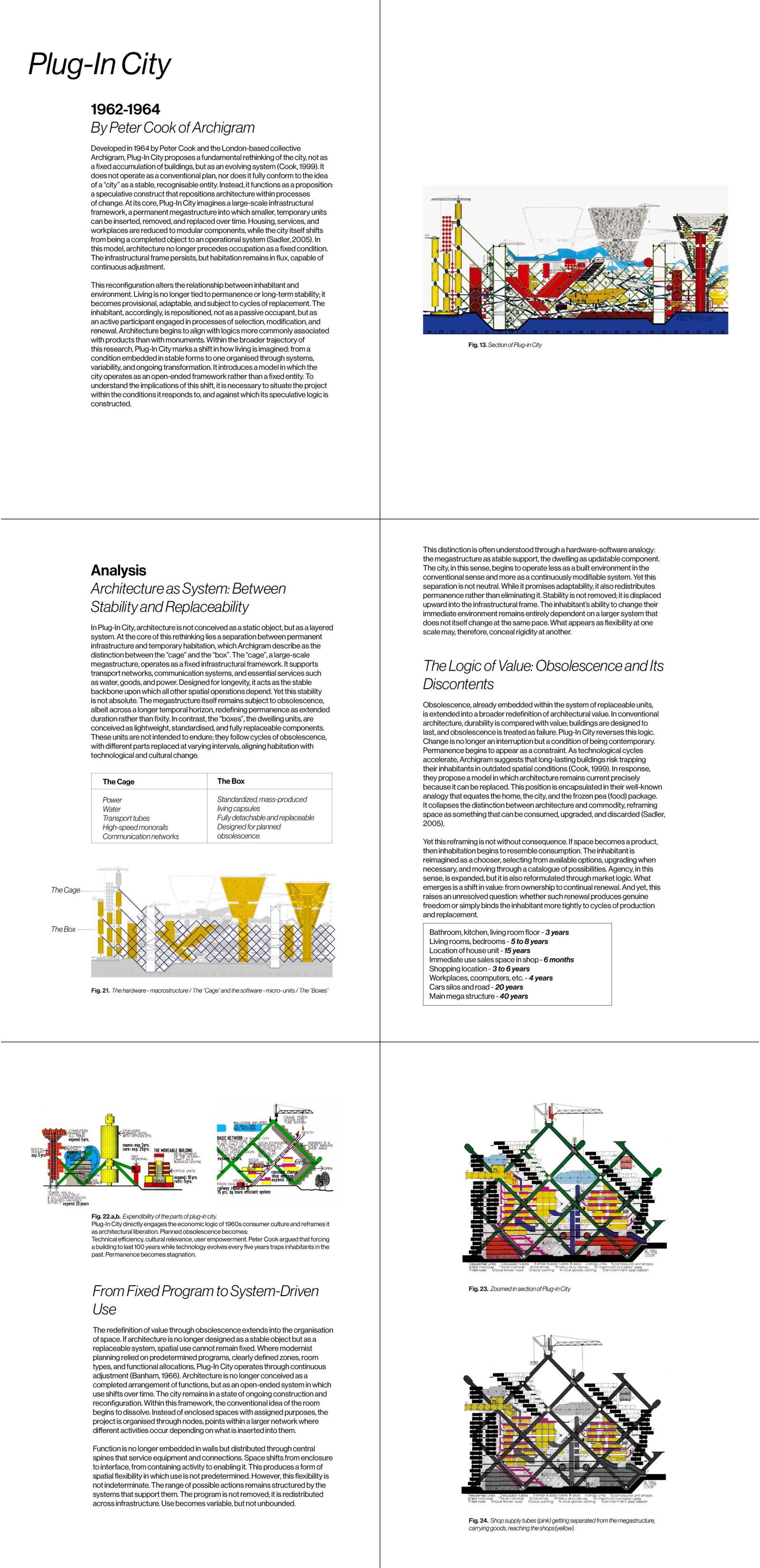
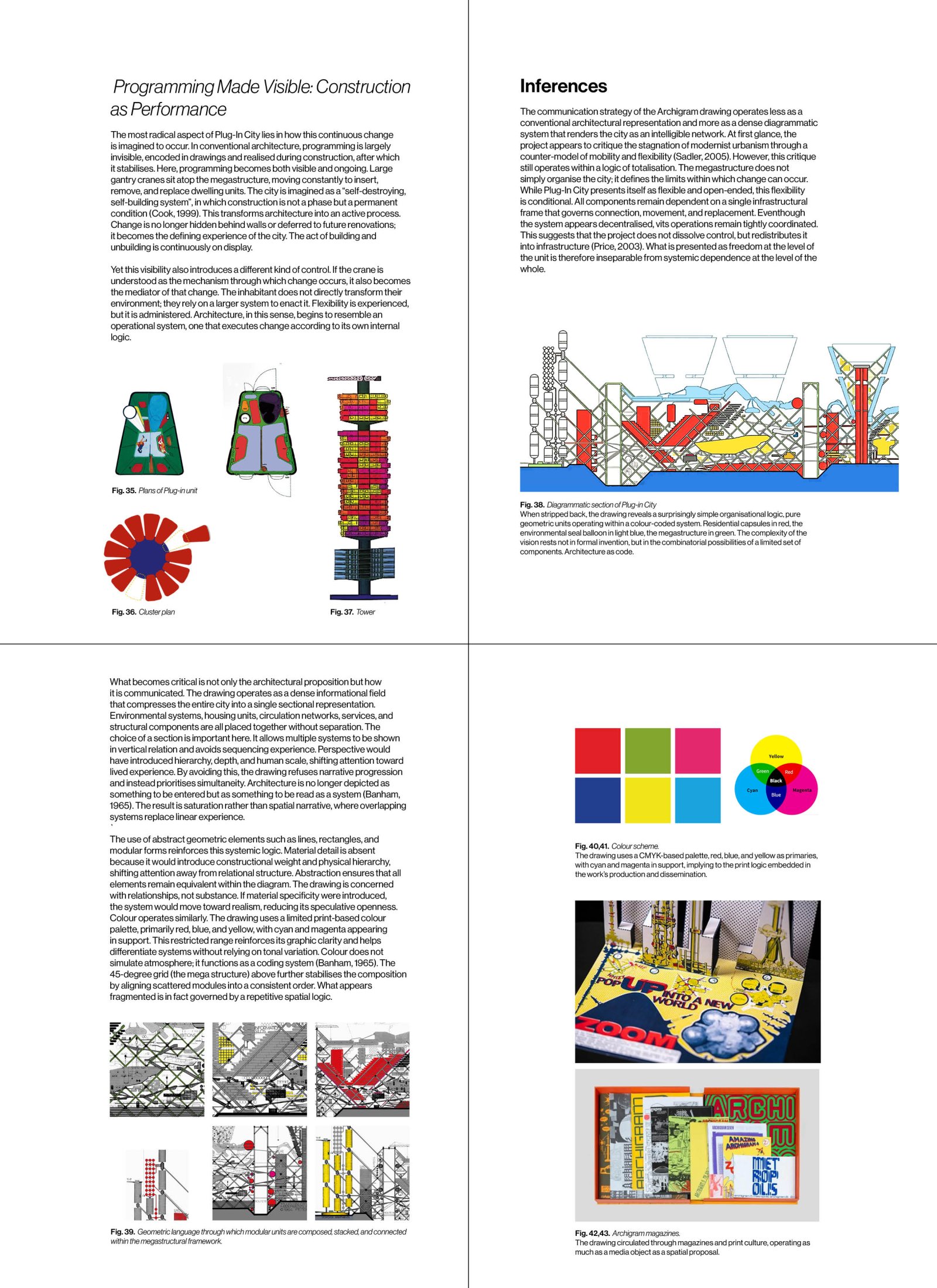
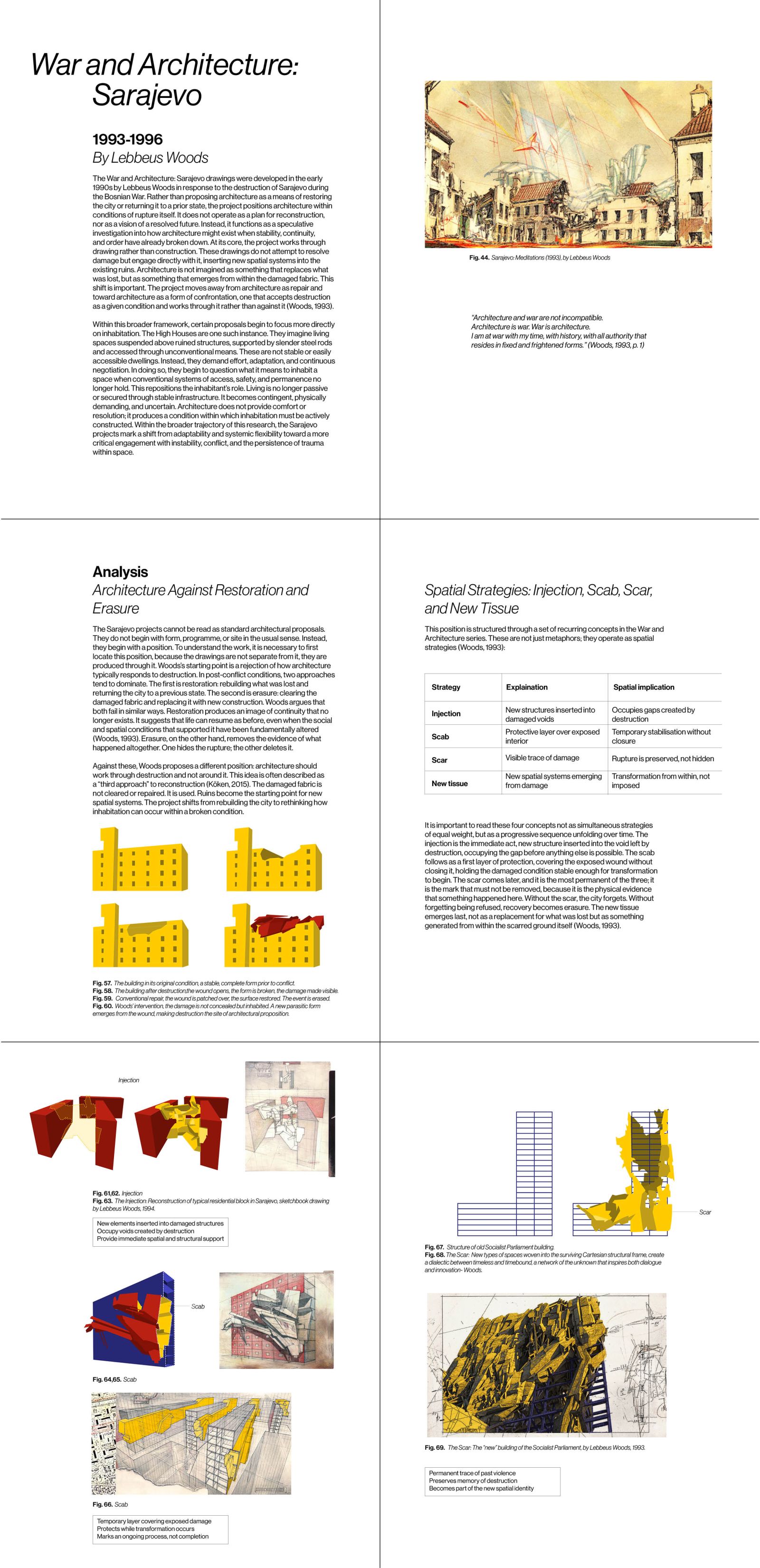
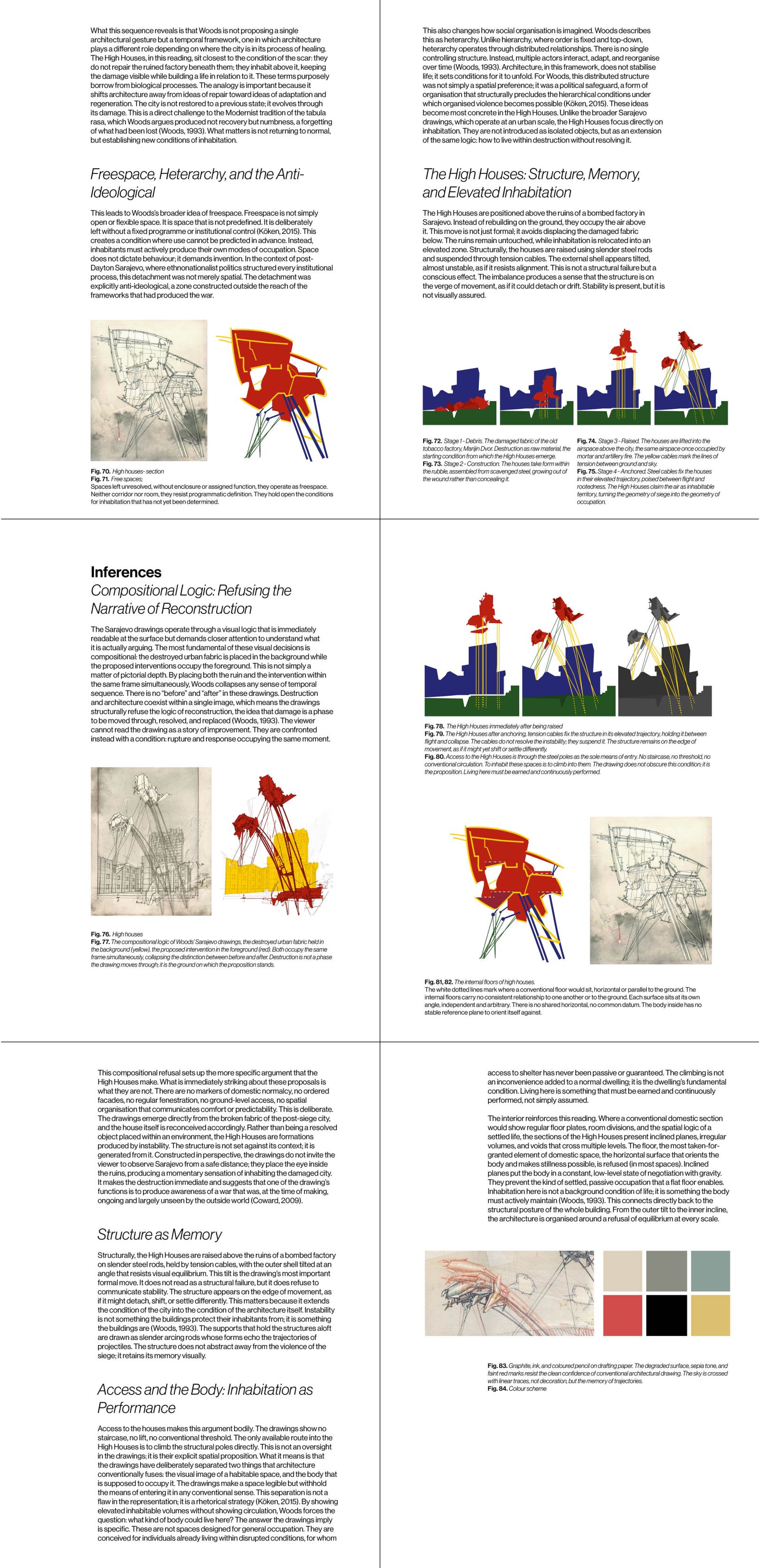
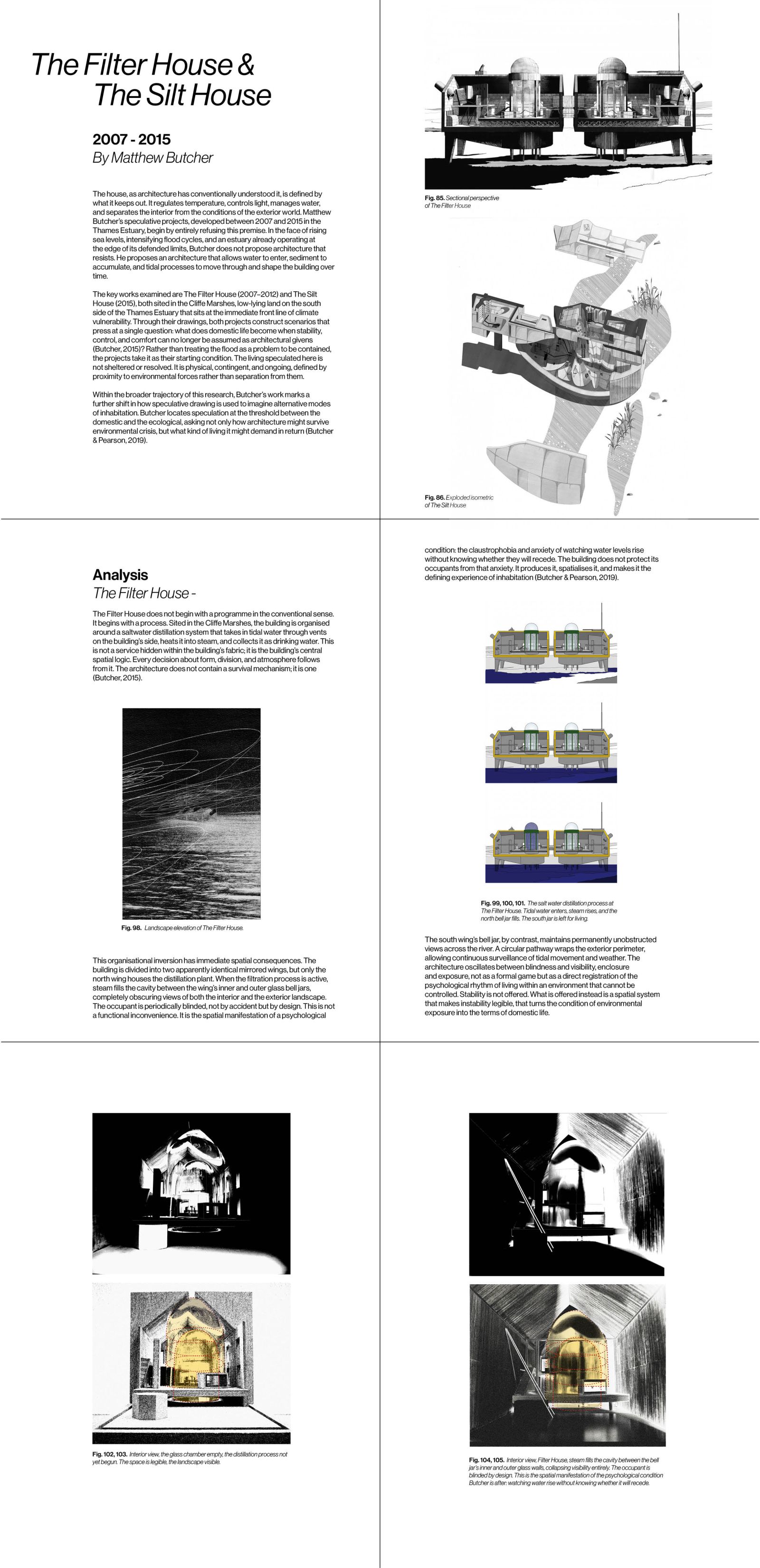
Three case studies are examined through close reading: Archigram's Plug-In City (1964), Lebbeus Woods' High Houses (1993), and Matthew Butcher's Silt House and Filter House (2007–2015). Each project exists only as a drawing. Analysed through six parameters, historical context, scale, subject, role of drawing, nature of speculation, and realisation, and underpinned by Dunne and Raby's PPPP framework, Tony Fry's concept of design as politics, and Kendall Walton's theory of make-believe, the research traces how each project used drawing to question the assumptions embedded in how we build and inhabit space.
The analysis reveals a consistent pattern: each drawing withholds what conventional architecture promises: comfort, stability, and a clear separation between the building and the conditions surrounding it. This withholding is not a limitation. It is the argument. By refusing to deliver what a built project would be required to deliver, speculative drawing keeps critical questions open that construction, by necessity, forecloses.
The research concludes that drawing, when freed from the obligation to build, is not a preparatory act but the primary site where architecture constructs, tests, and holds open its most important ideas about how we live and that the capacity to imagine otherwise remains the discipline's most essential and most enduring tool.