Your browser is out-of-date!
For a richer surfing experience on our website, please update your browser. Update my browser now!
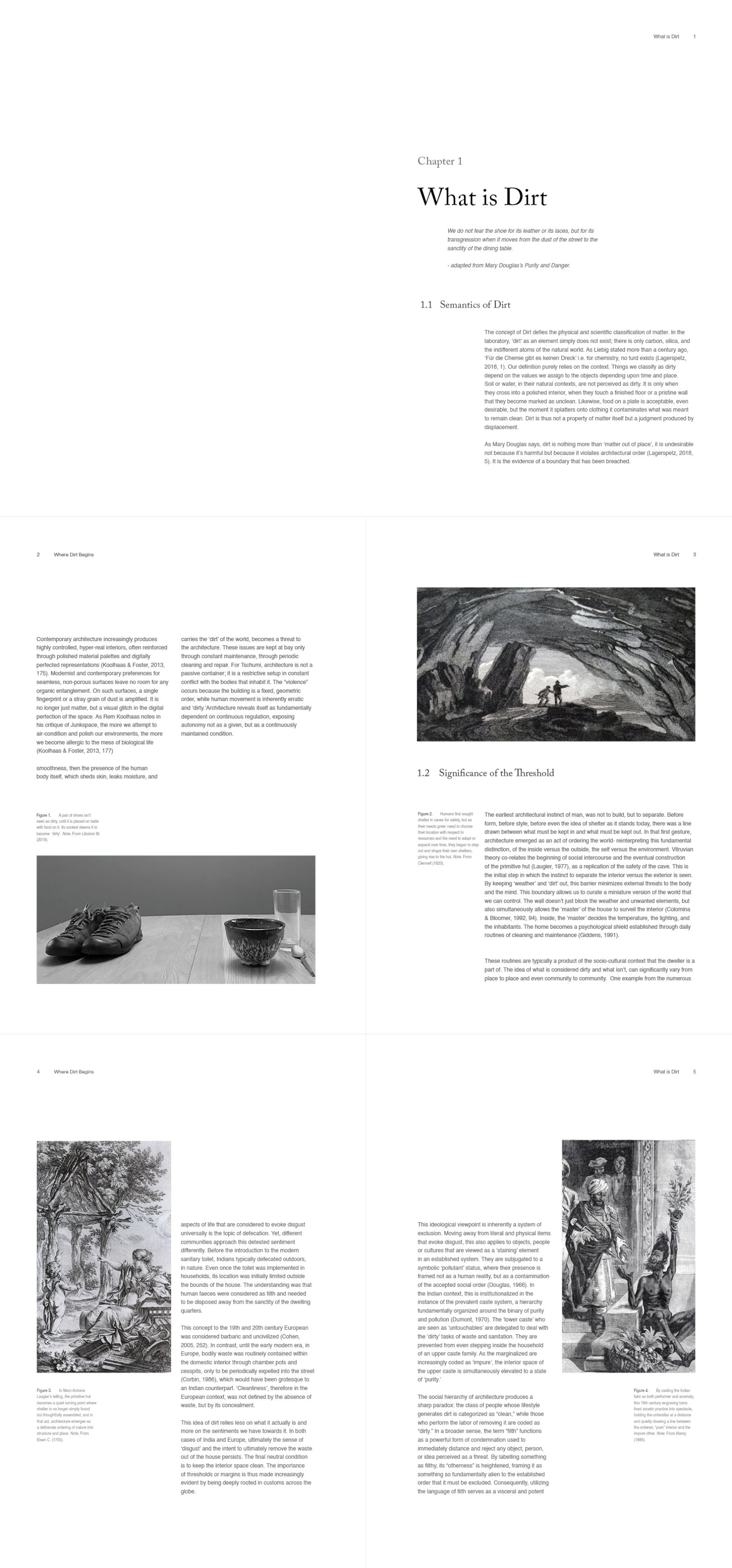
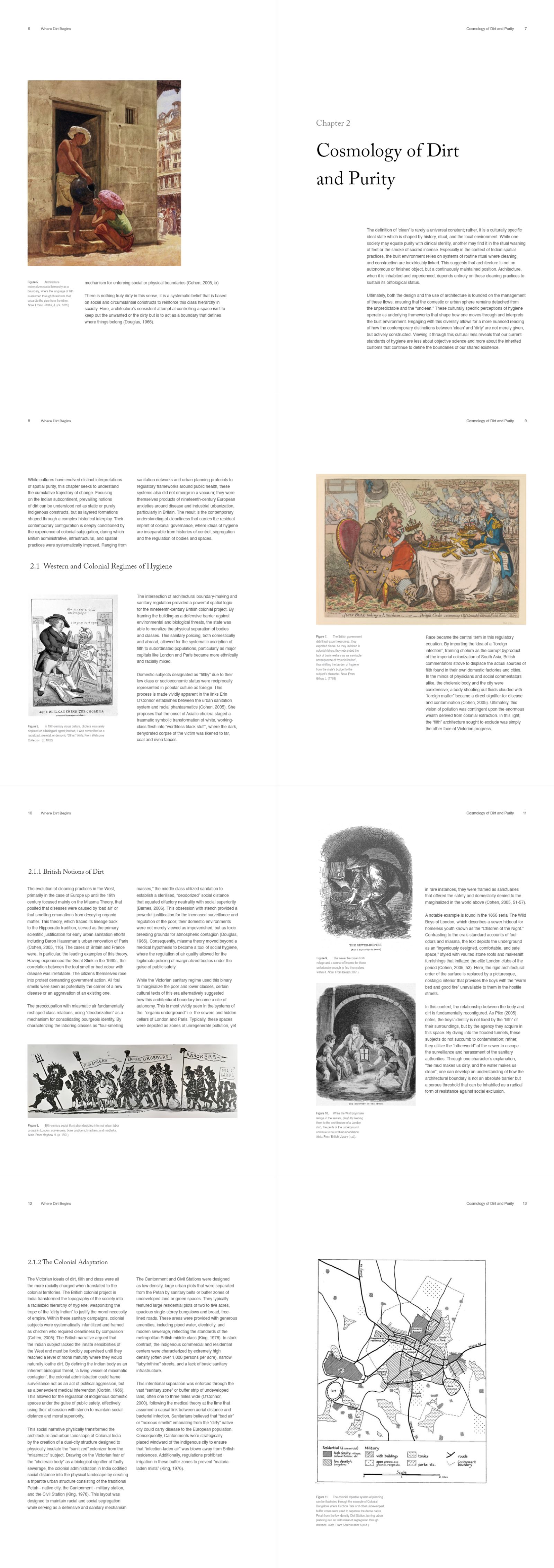
This research examines how the architectural boundary is produced and contested through the regulation of “dirt” and the maintenance of spatial purity. It proposes a framework that positions the built envelope not as a static barrier, but as an active regulatory system mediating environmental, social, and psychological spheres.
Drawing on Mary Douglas’s concept of dirt as “matter out of place,” the paper explores how the concept of ‘cleanliness’ is socially constructed rather than biologically defined. Through illustrations of cases it compares Western sanitary standards with Indian practices of ritual purity to show how different cultures use built space to classify what is deemed as ‘clean’ and ‘unclean’. This comparison is used to highlight how architecture regulates human bodies and reinforces certain social hierarchies through systemized sensitivity to ‘dirt’.