Your browser is out-of-date!
For a richer surfing experience on our website, please update your browser. Update my browser now!
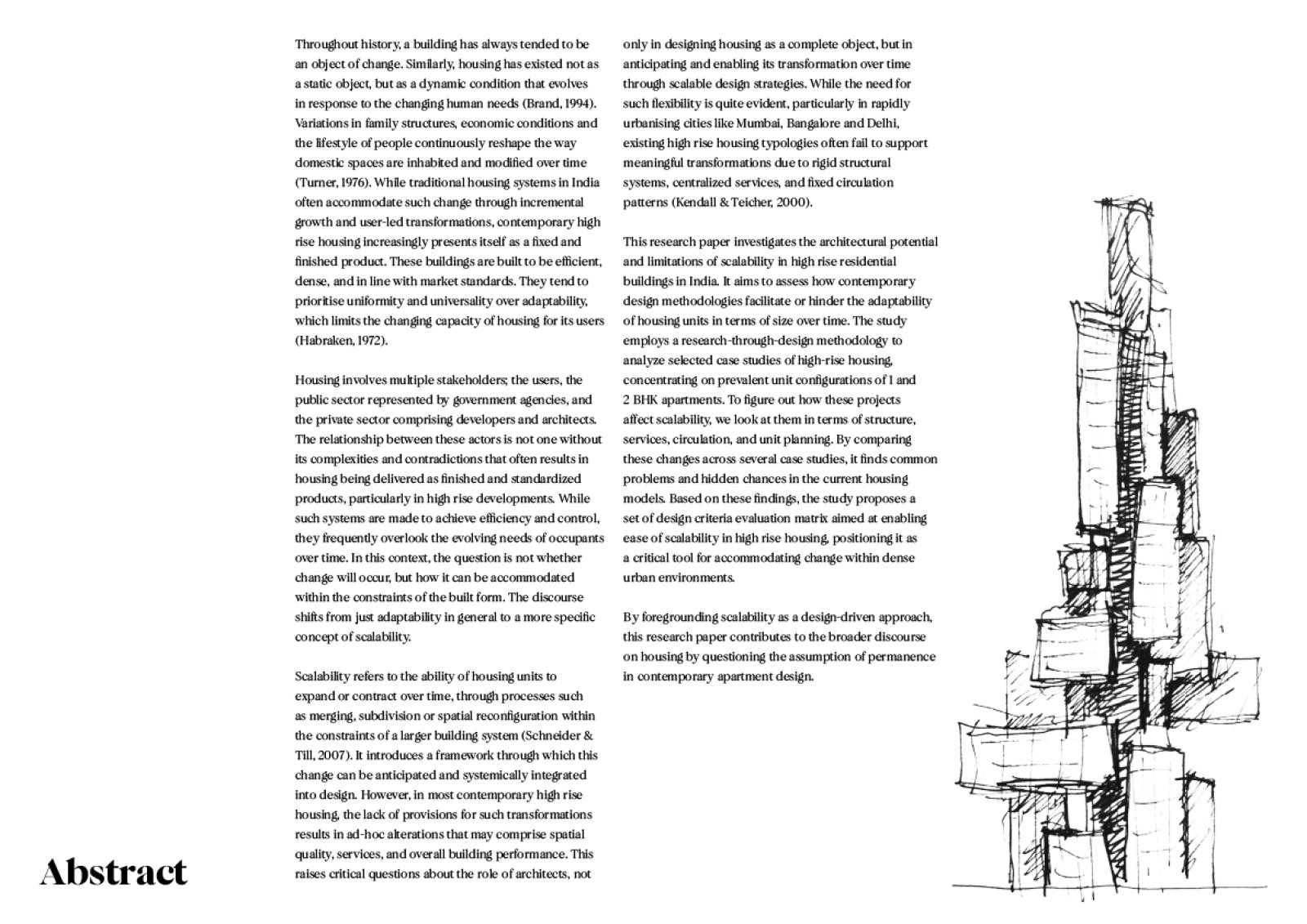
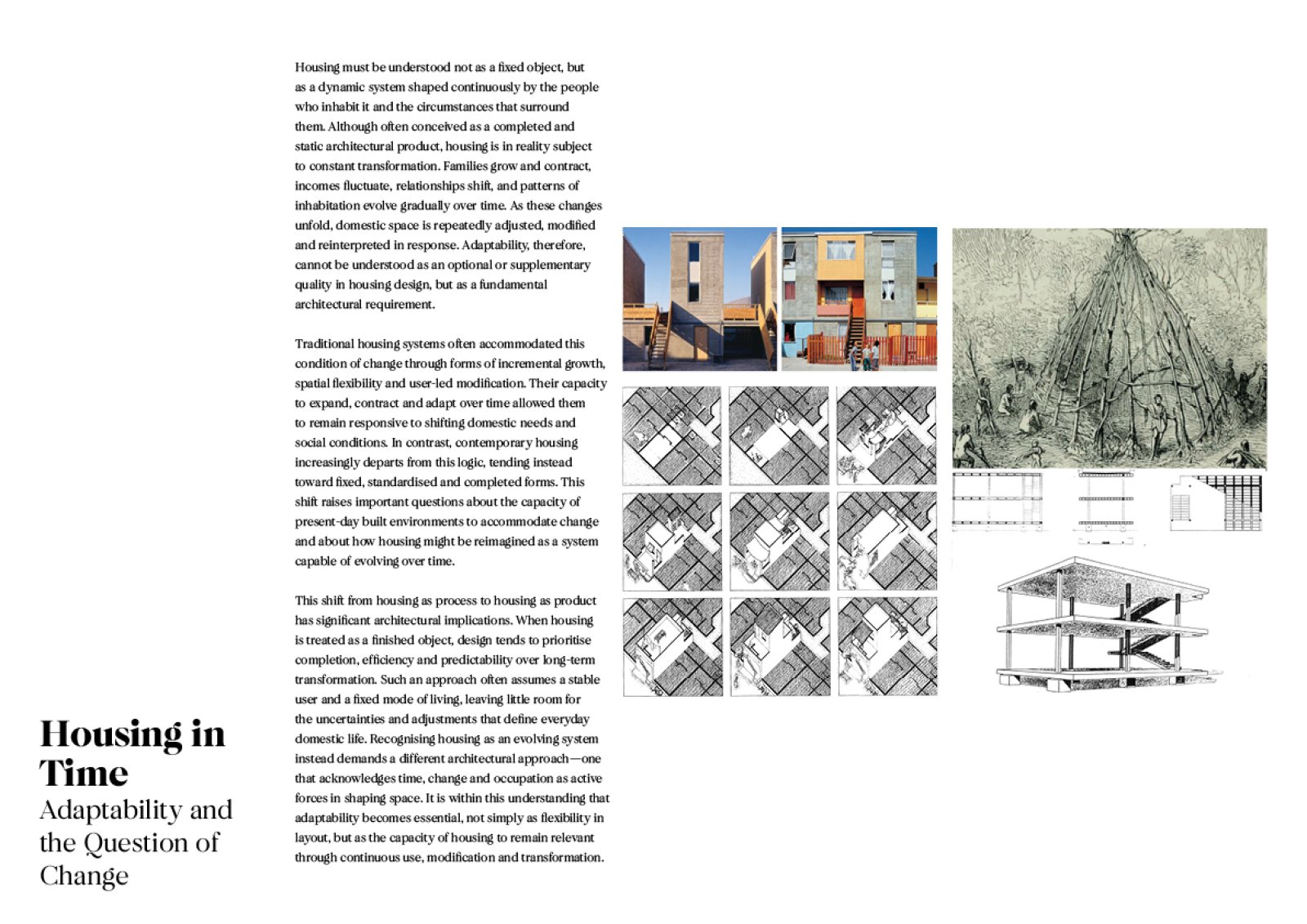
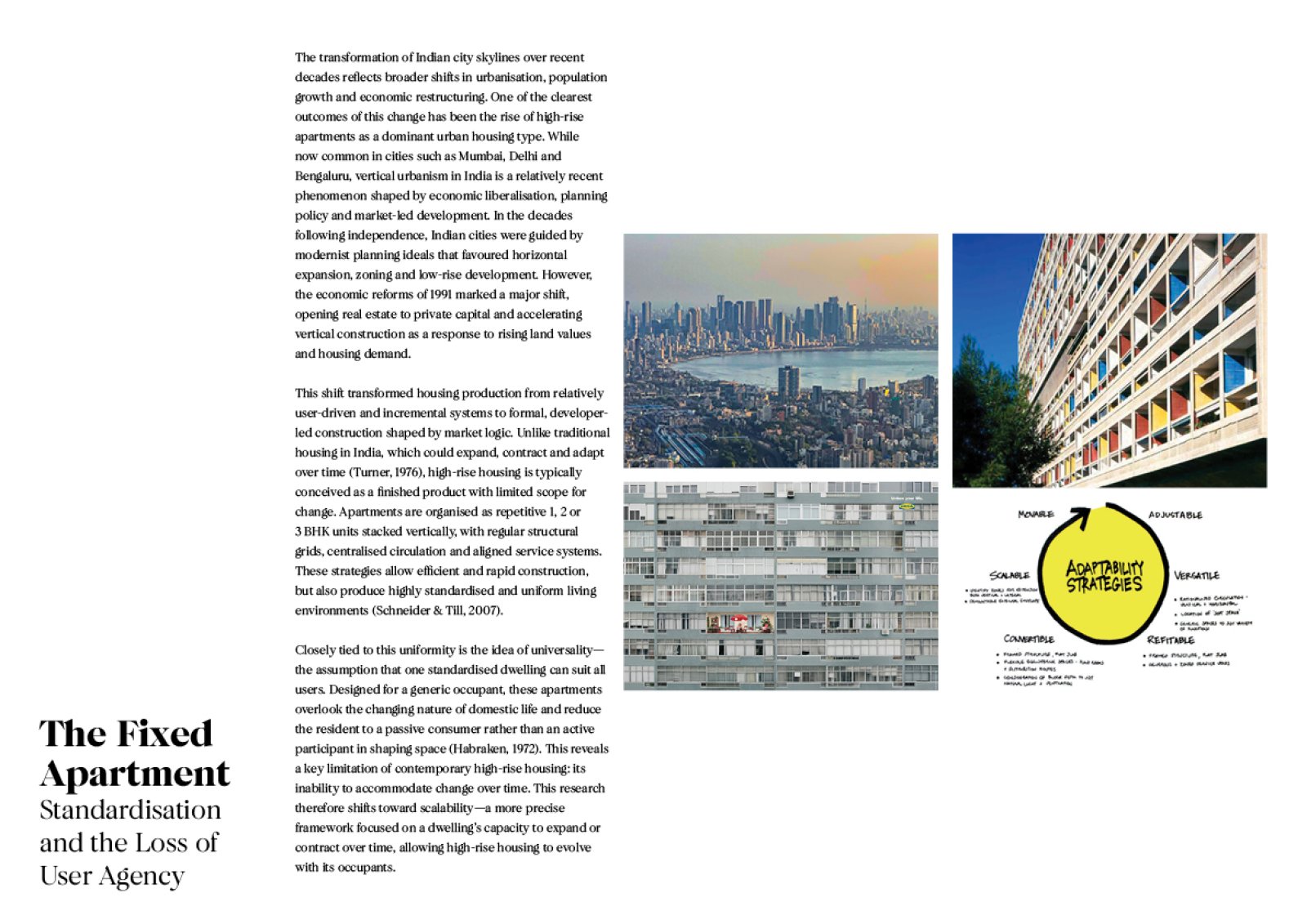
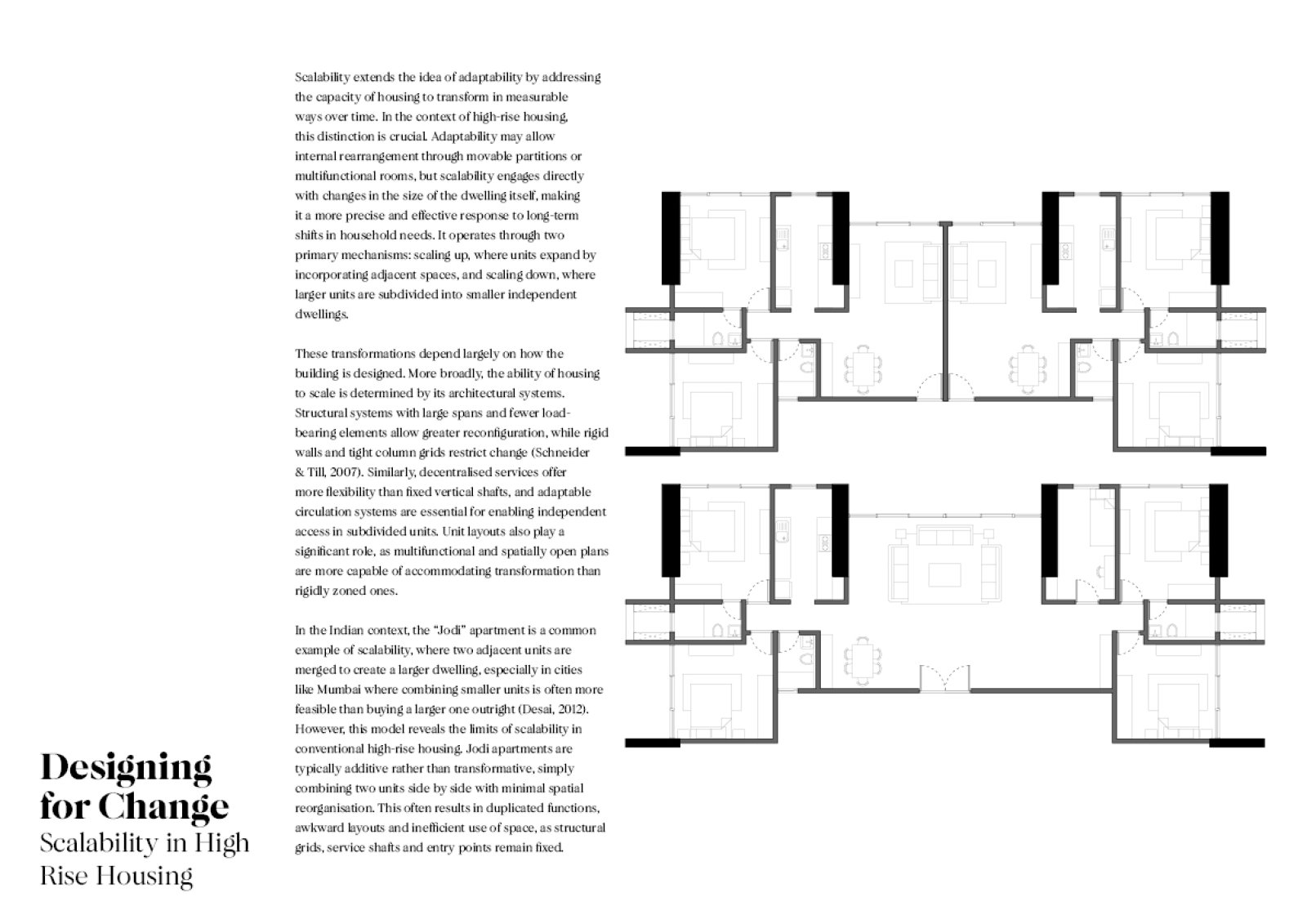
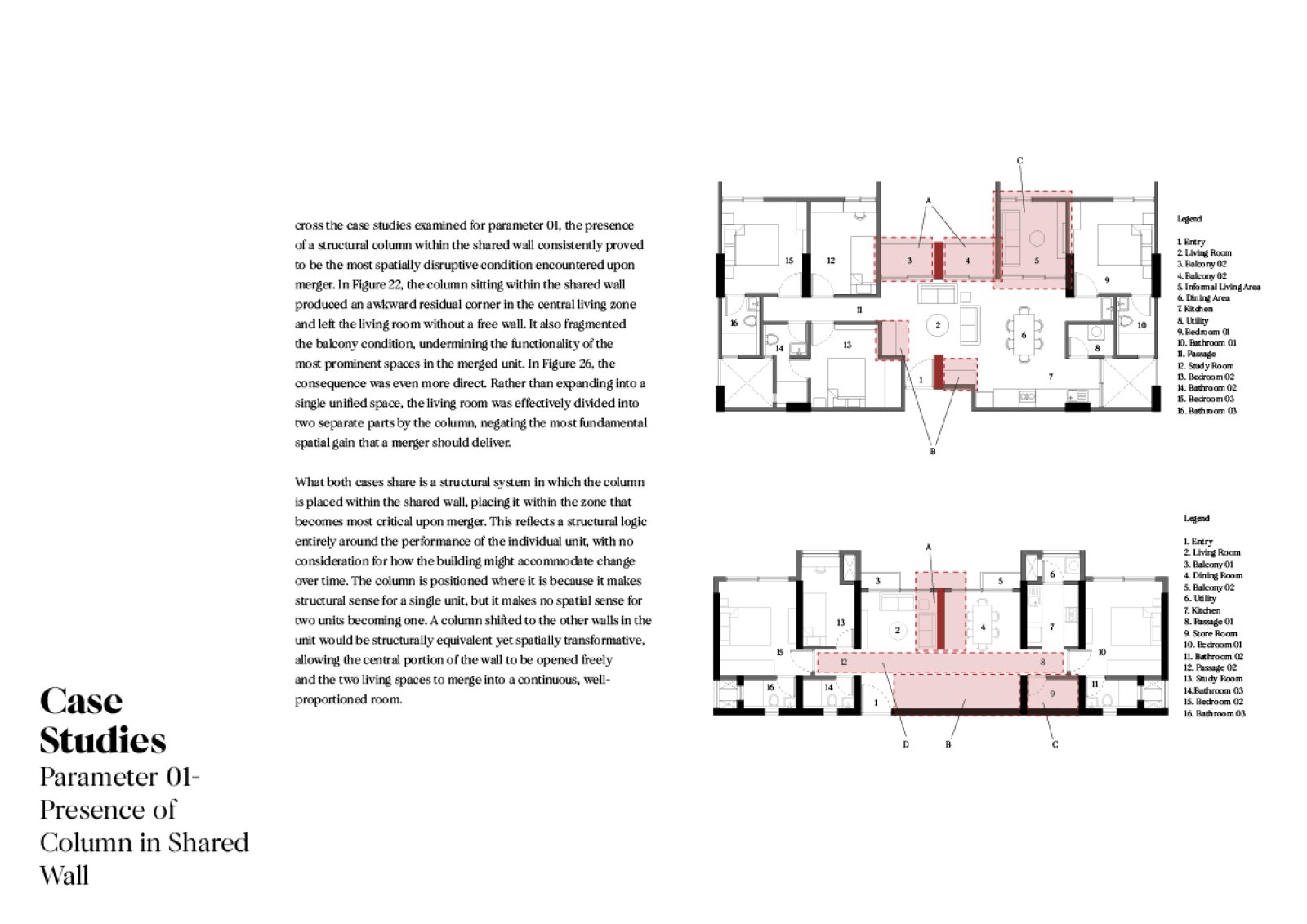
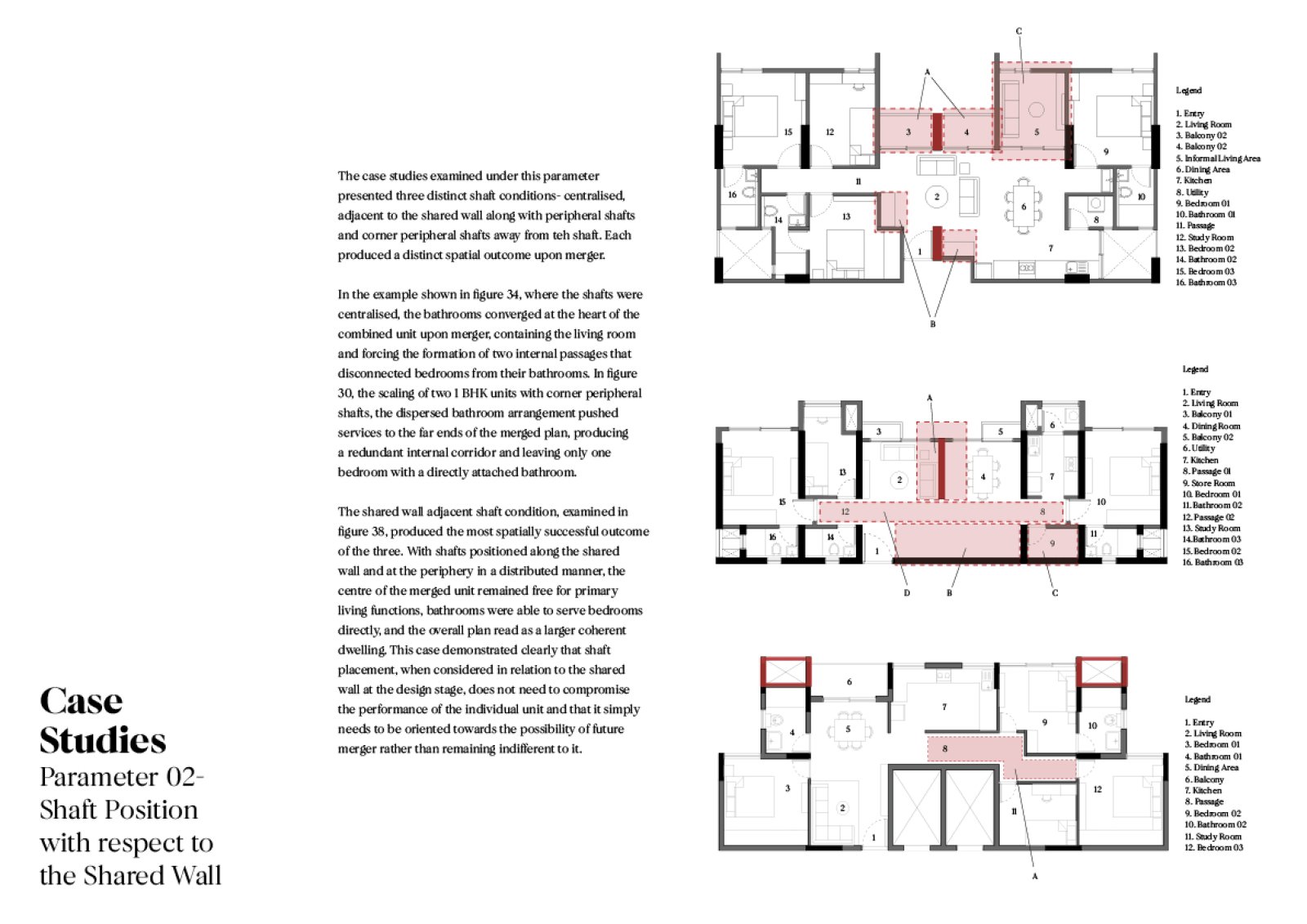
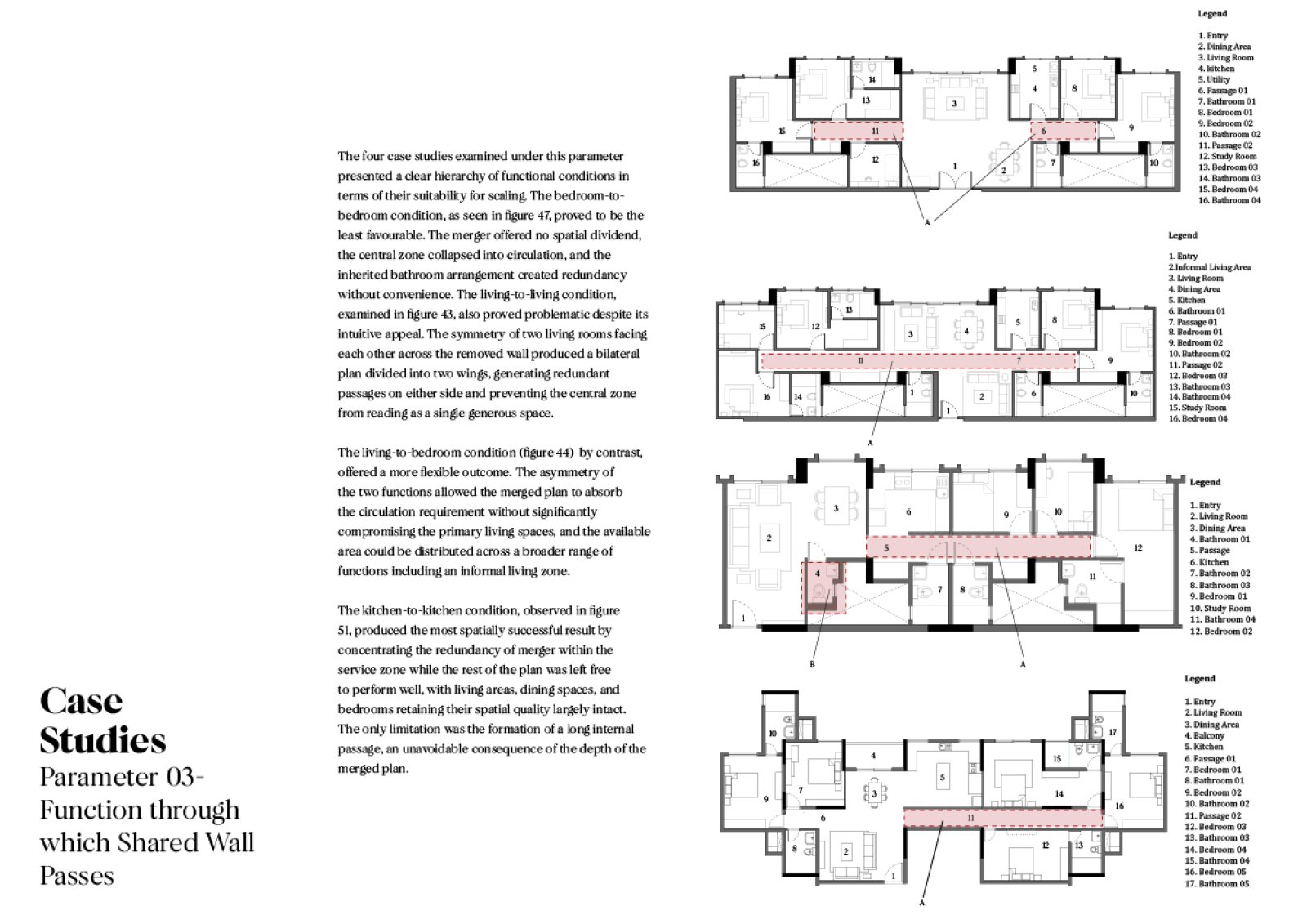
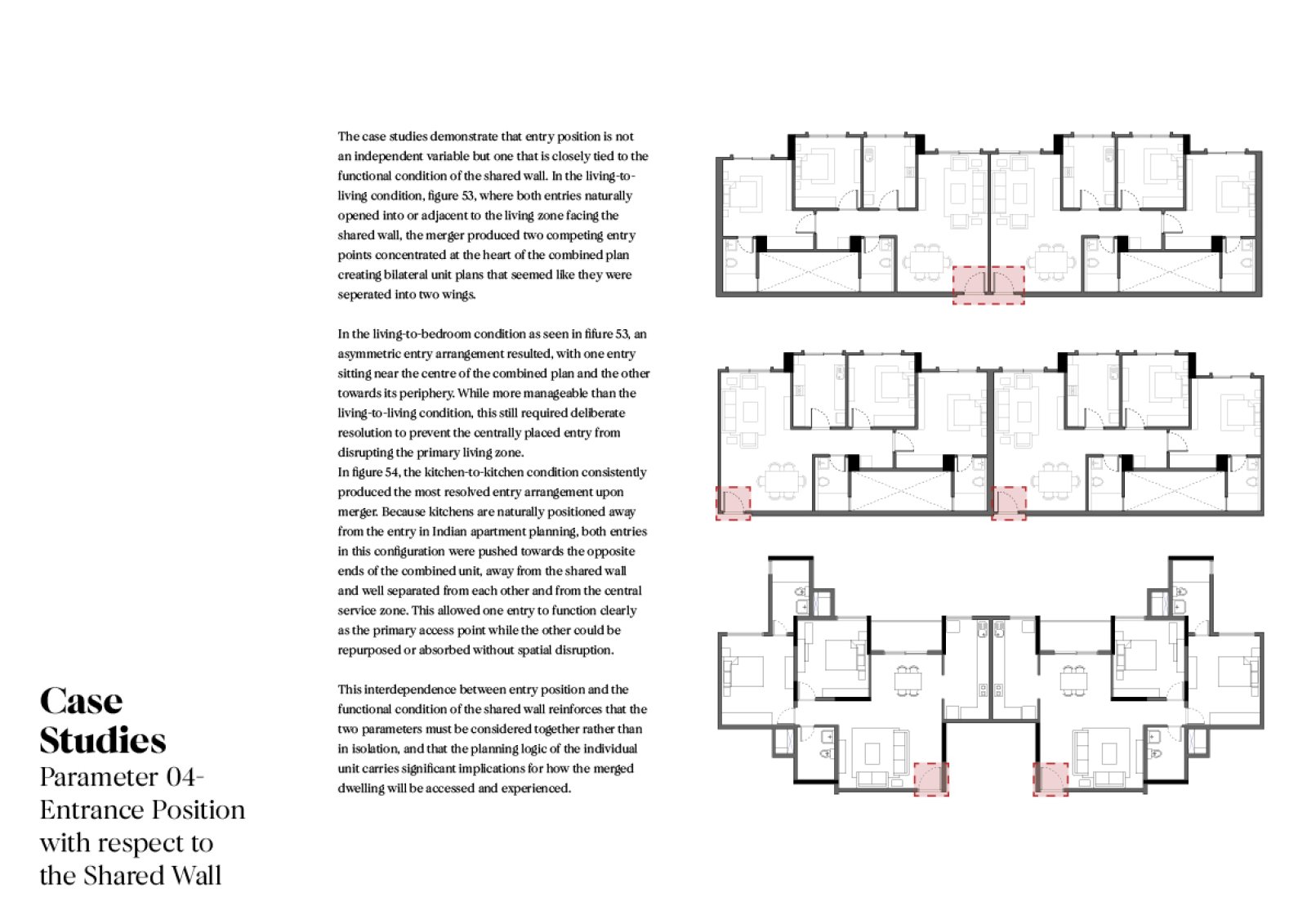
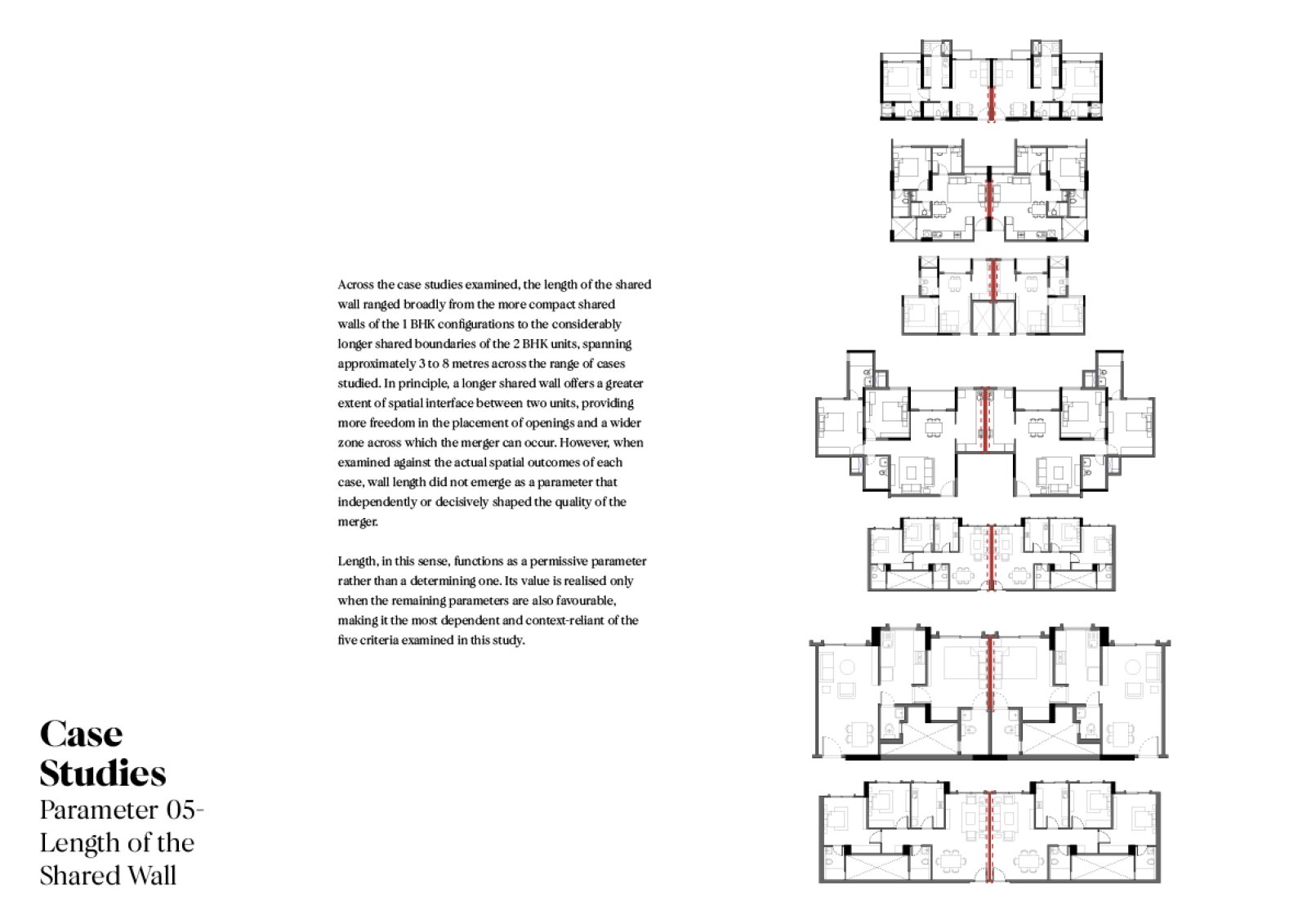
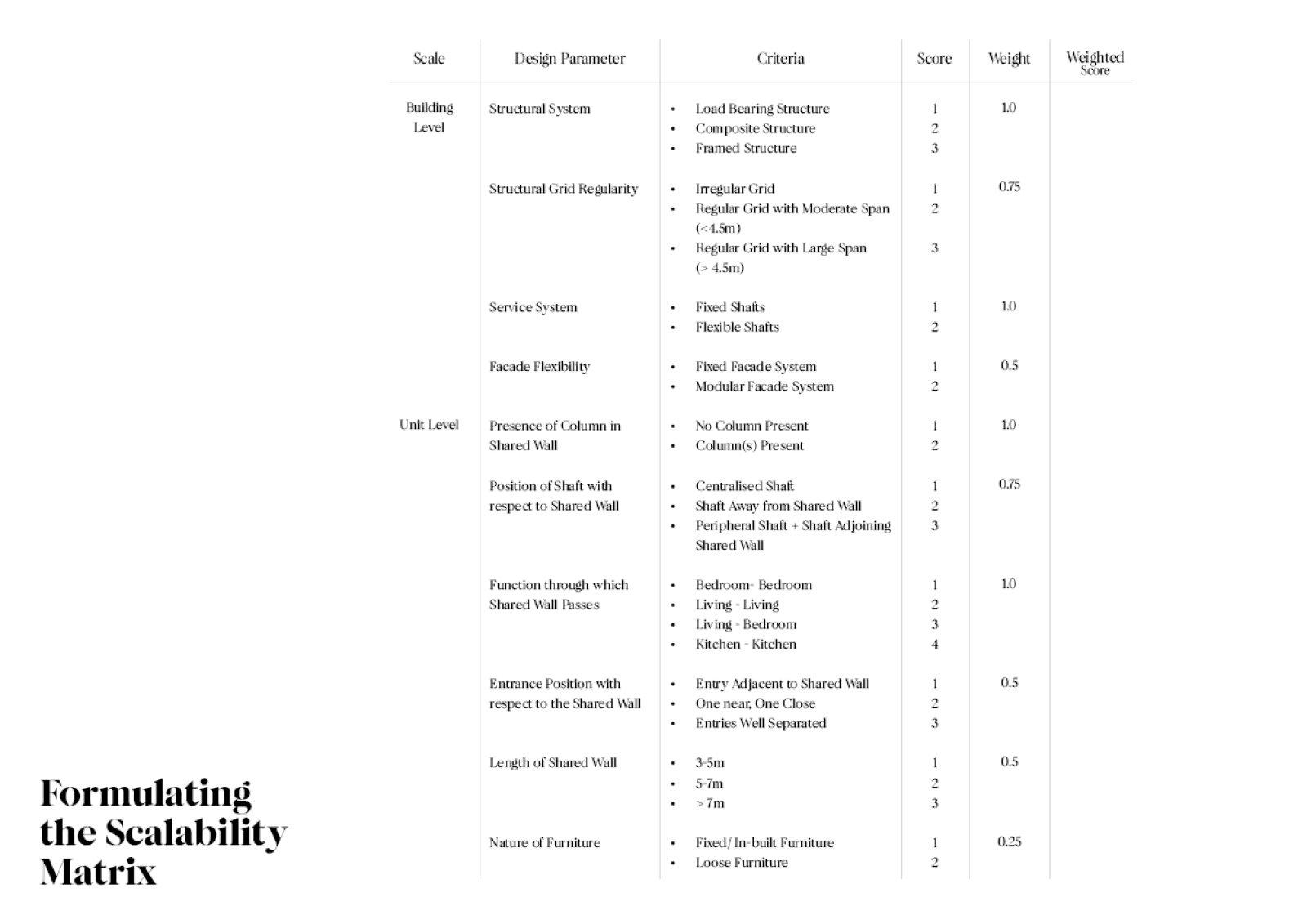
This research investigates how high-rise housing in India can better accommodate change over time through the lens of scalability. It critiques the rigidity of contemporary apartment design, where standardised units are conceived as fixed products with limited capacity for transformation. By distinguishing scalability from adaptability, the study defines it as a dwelling’s ability to expand or contract through spatial reconfiguration without compromising the larger building system. Through case studies of merged apartment units, the research examines how structural walls, service shafts and circulation systems enable or restrict spatial transformation. It argues for scalability as a critical design framework for making high-rise housing more responsive, efficient and long-term adaptable.