Your browser is out-of-date!
For a richer surfing experience on our website, please update your browser. Update my browser now!
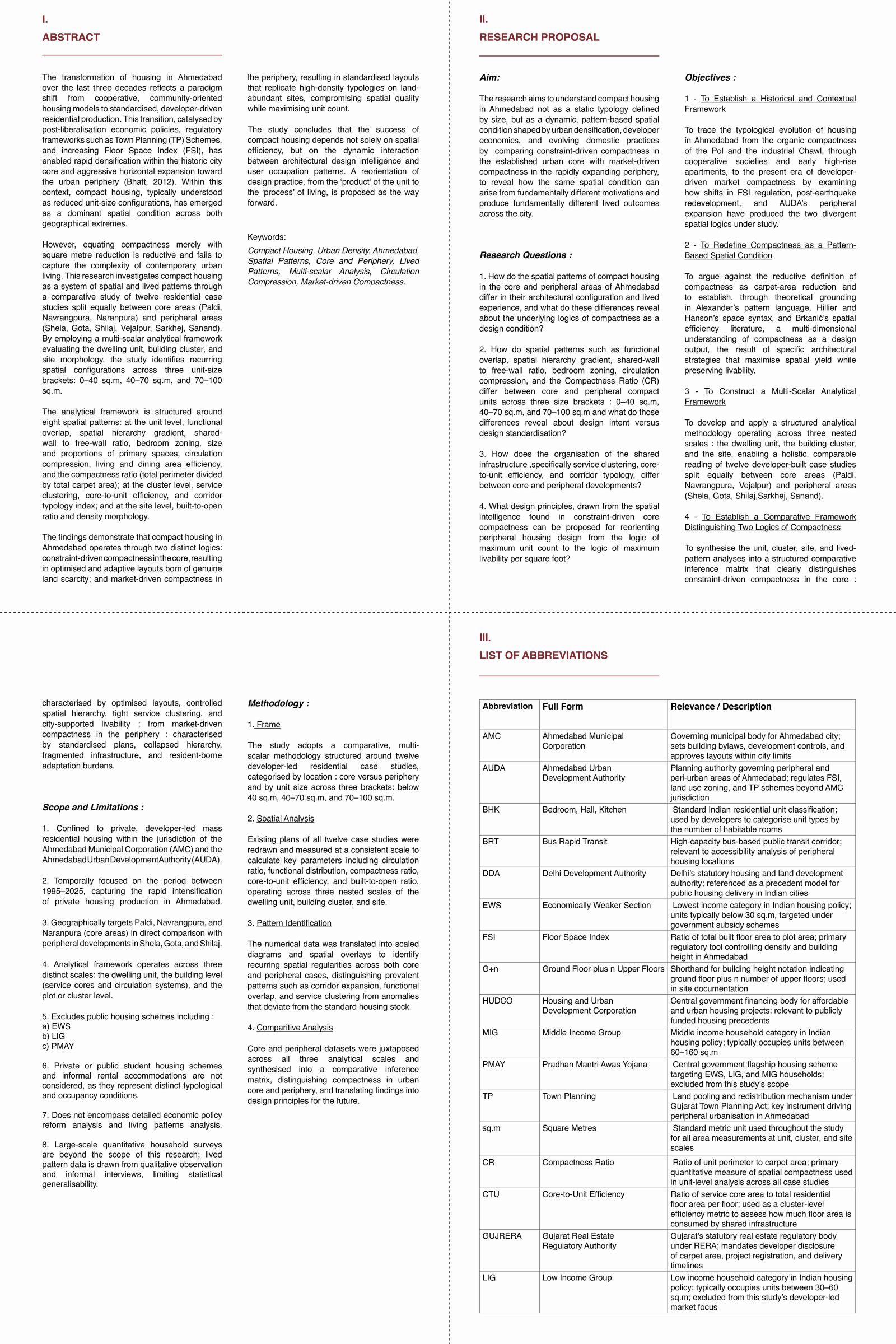
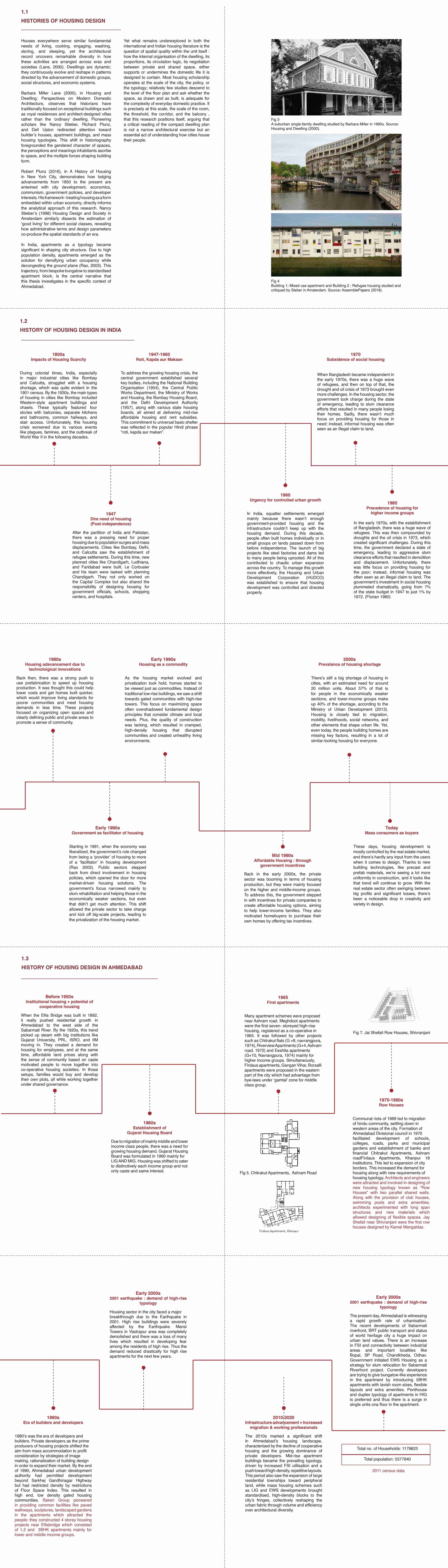
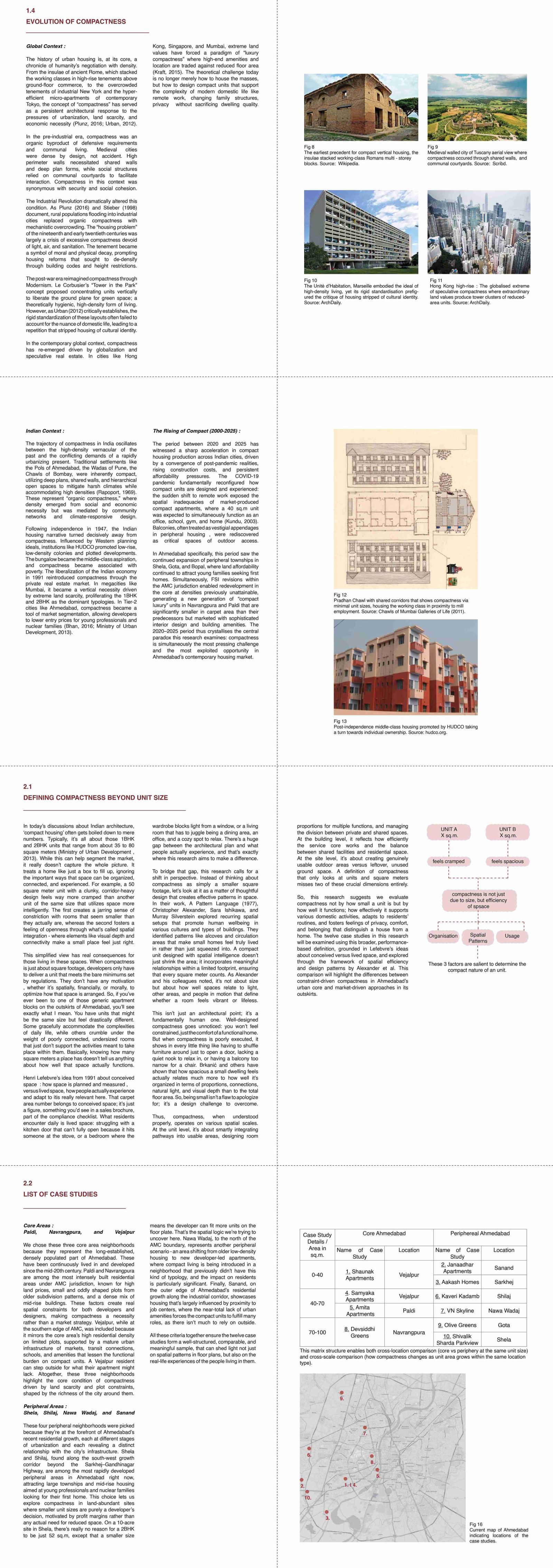
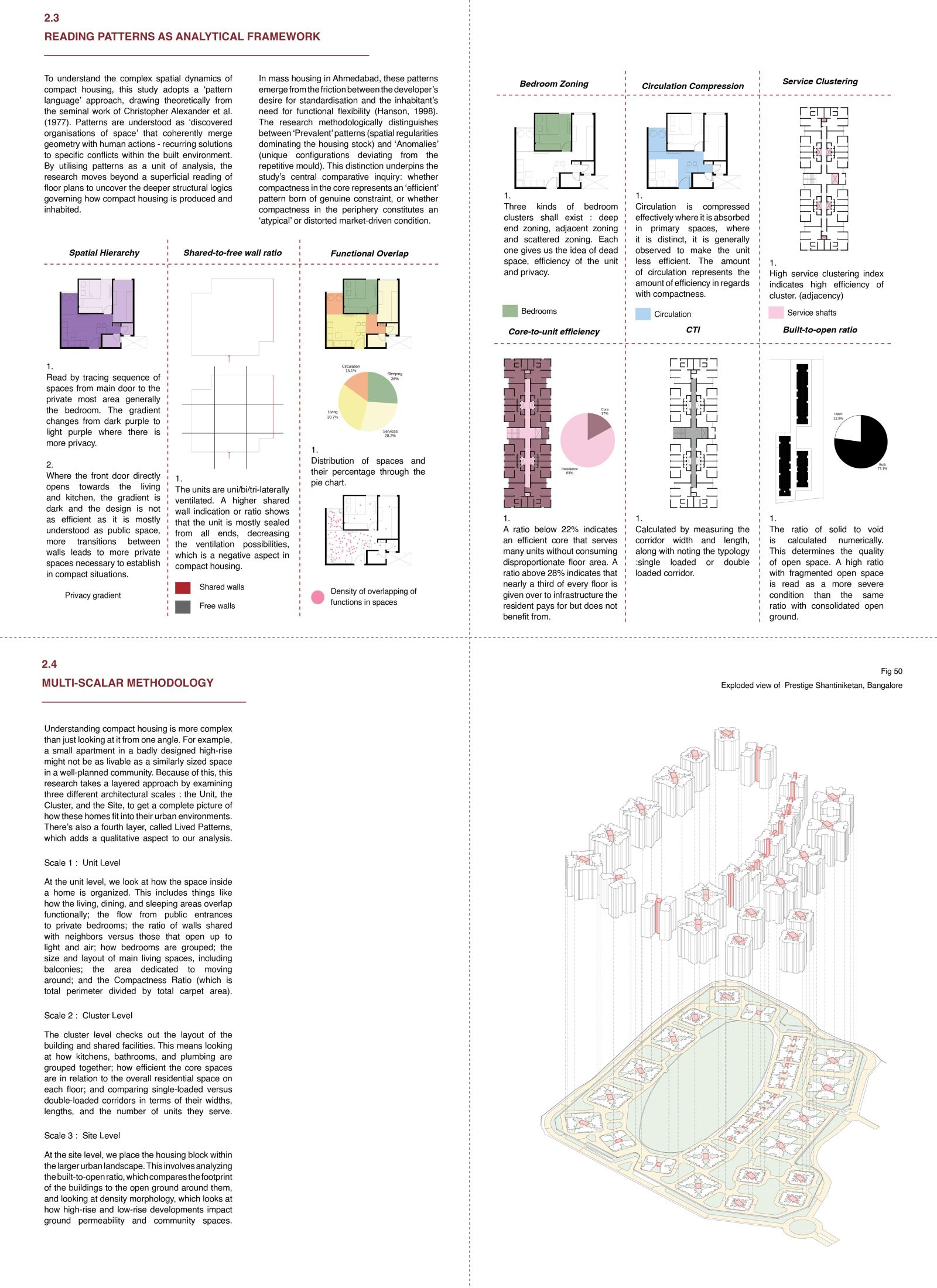
This research examines compact housing in Ahmedabad not as a size category, but as a spatial condition shaped by land economics, developer strategy, and lived domestic practice. Through a multi-scalar analysis of ten residential case studies across the city's core and periphery, the study identifies two opposing logics: constraint-driven compactness in established neighborhoods, such as Paldi and Navrangpura, and market-driven compactness in peripheral areas, including Shela and Sanand. Using spatial patterns as an analytical framework, it argues that livability in compact housing depends on design intelligence, not just square metres.
View Additional Work