Your browser is out-of-date!
For a richer surfing experience on our website, please update your browser. Update my browser now!
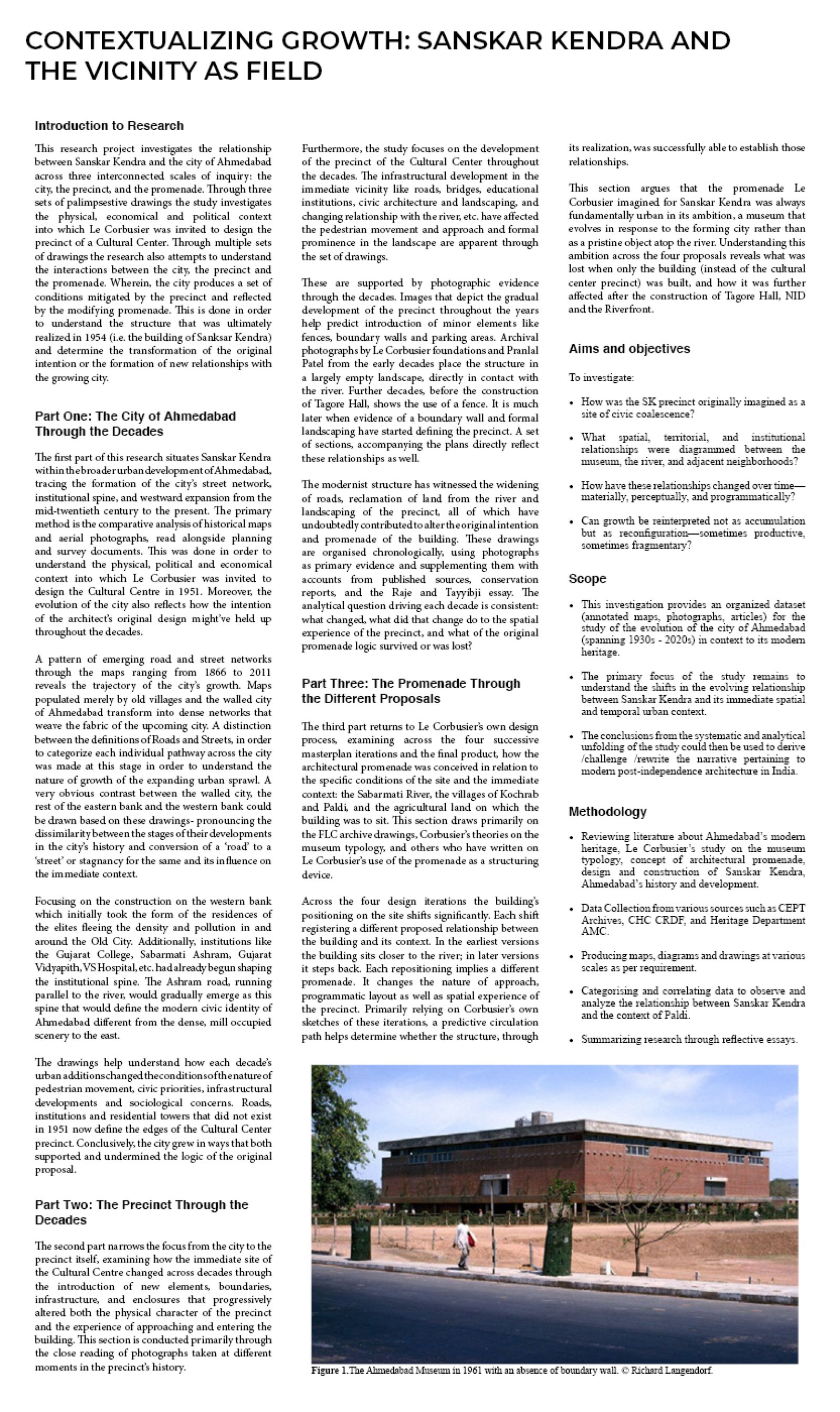
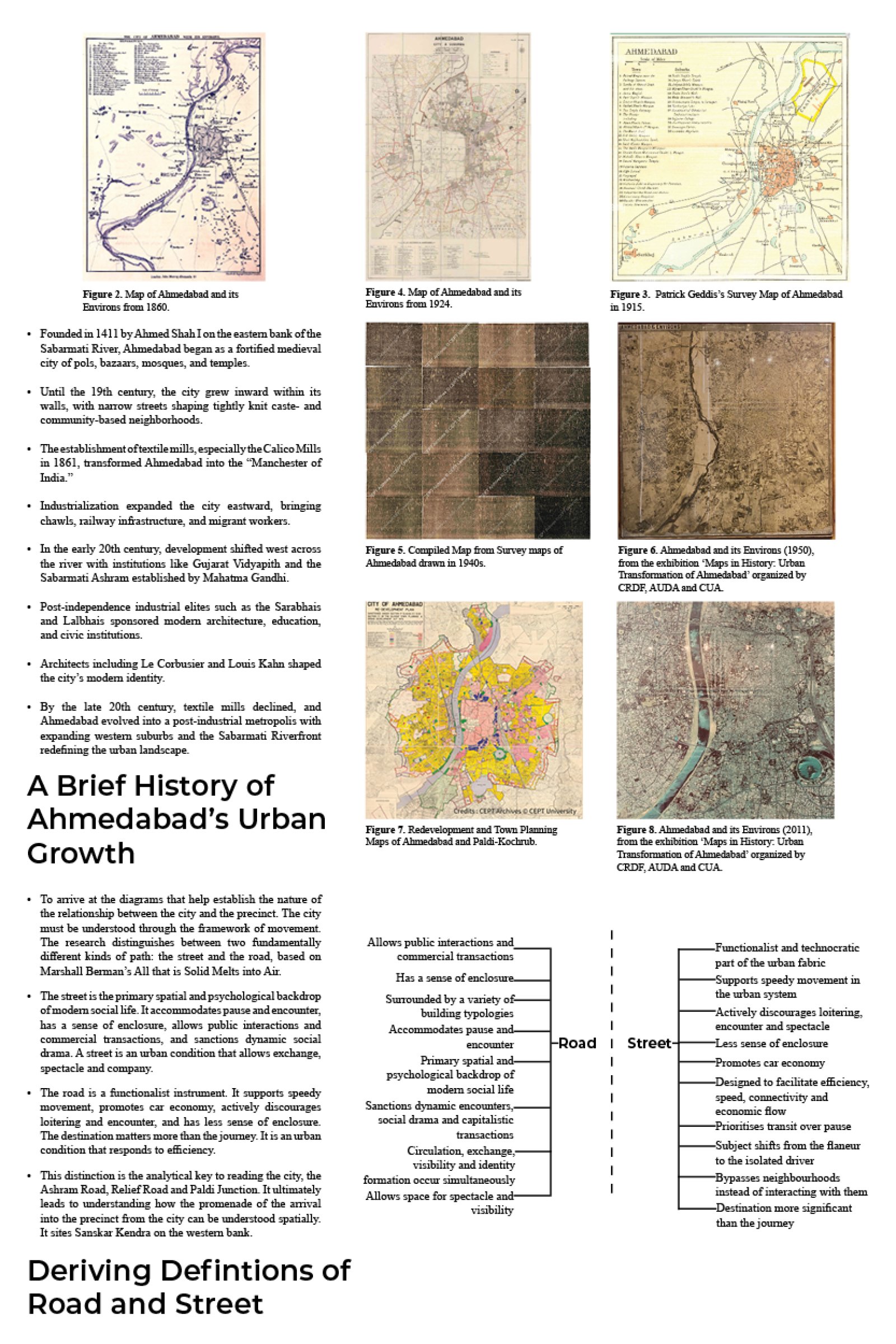
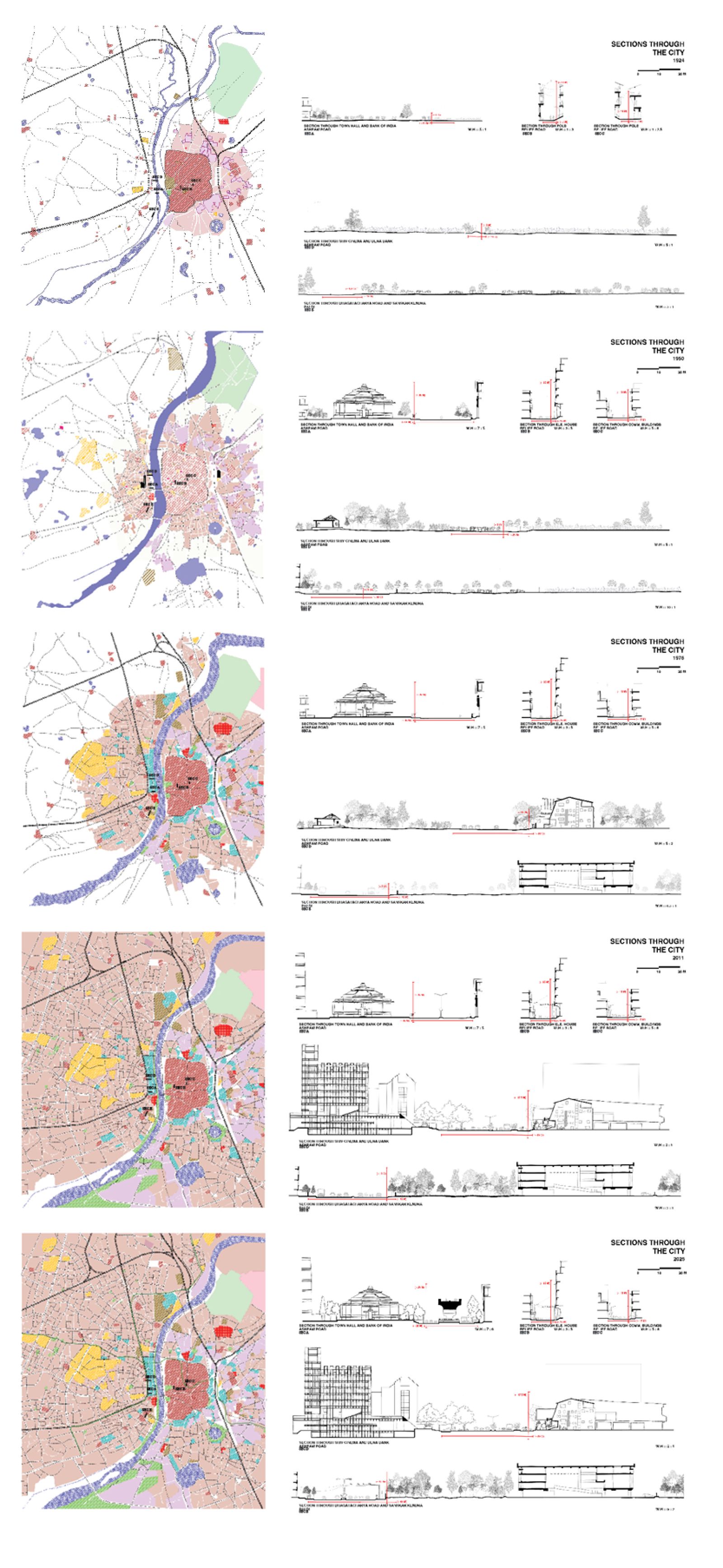
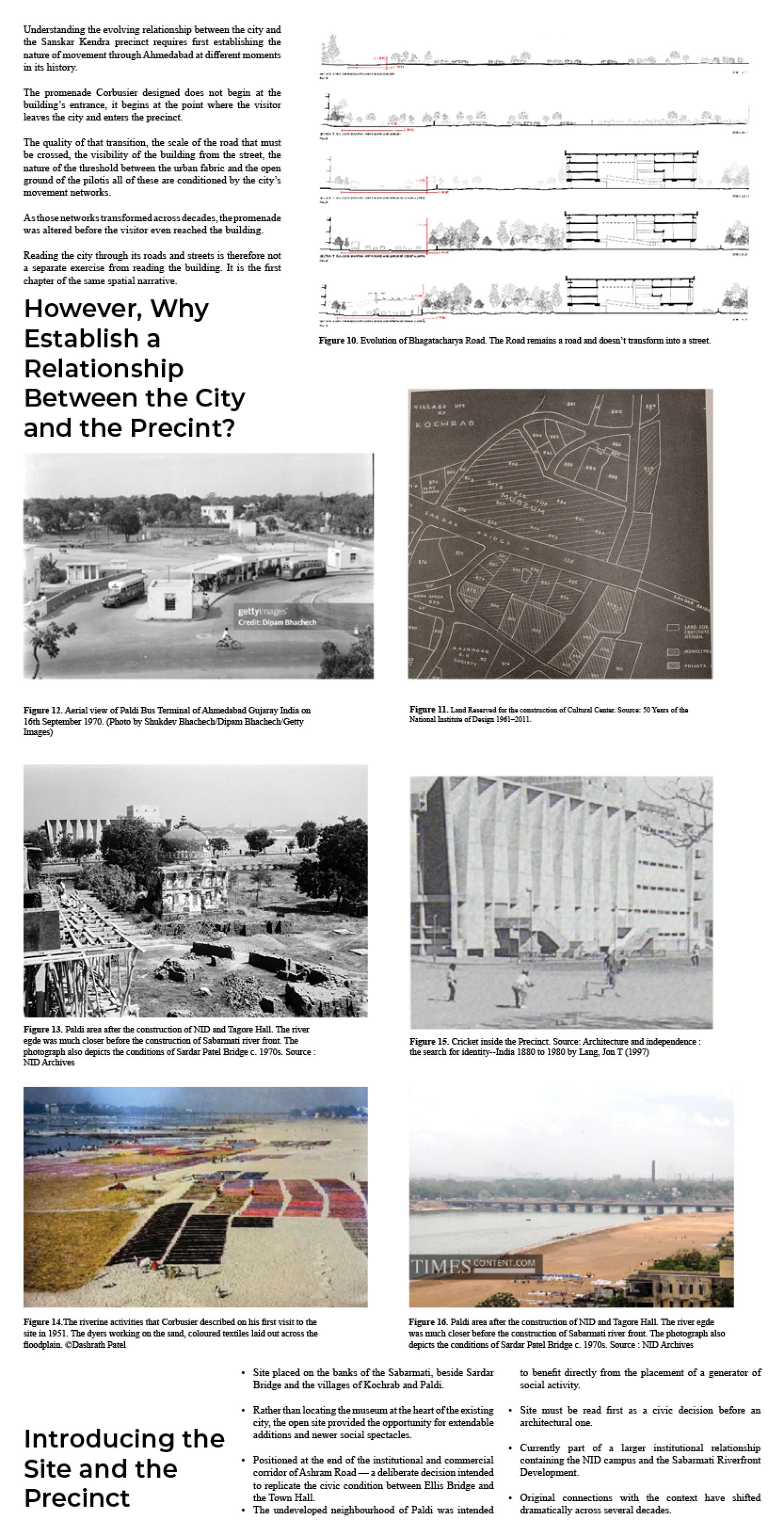
This DRP investigates the evolving relationship between Sanskar Kendra and its urban surroundings not as a passive backdrop, but as a diagrammatic, programmatic, and territorial field that was, from the outset, central to Corbusier’s conception of the museum typology and the city’s civic future. Drawing from the methodological lens developed by Raje and Tayyibji in their essay Sanskar Kendra: Re-membering the Cultural Centre (forthcoming, 2025), the project seeks to understand how the museum was conceived not as an isolated object, but as a spatial proposition within a larger civic ensemble. The museum precinct was intended to initiate a new kind of civic imagination in post-independence Ahmedabad—one that would coalesce cultural institutions, performance spaces, and workshops into a field of shared public life. Crucially, this field was framed by two historically complex urban villages, Paldi and Kochrab, and the river Sabarmati—a powerful territorial edge and ideological horizon in Corbusier’s masterplan. Rather than treating these neighborhoods and the river as stable or static contexts, the study traces how the site has changed over time, and how the transformations of the precinct and its vicinity can be read as relational shifts—sometimes aligned, often misaligned. In doing so, the DRP interrogates how and why the original civic intent failed to fully materialize, and what this reveals about the relationship between architectural diagrams, urban imagination, and institutional form.