Your browser is out-of-date!
For a richer surfing experience on our website, please update your browser. Update my browser now!
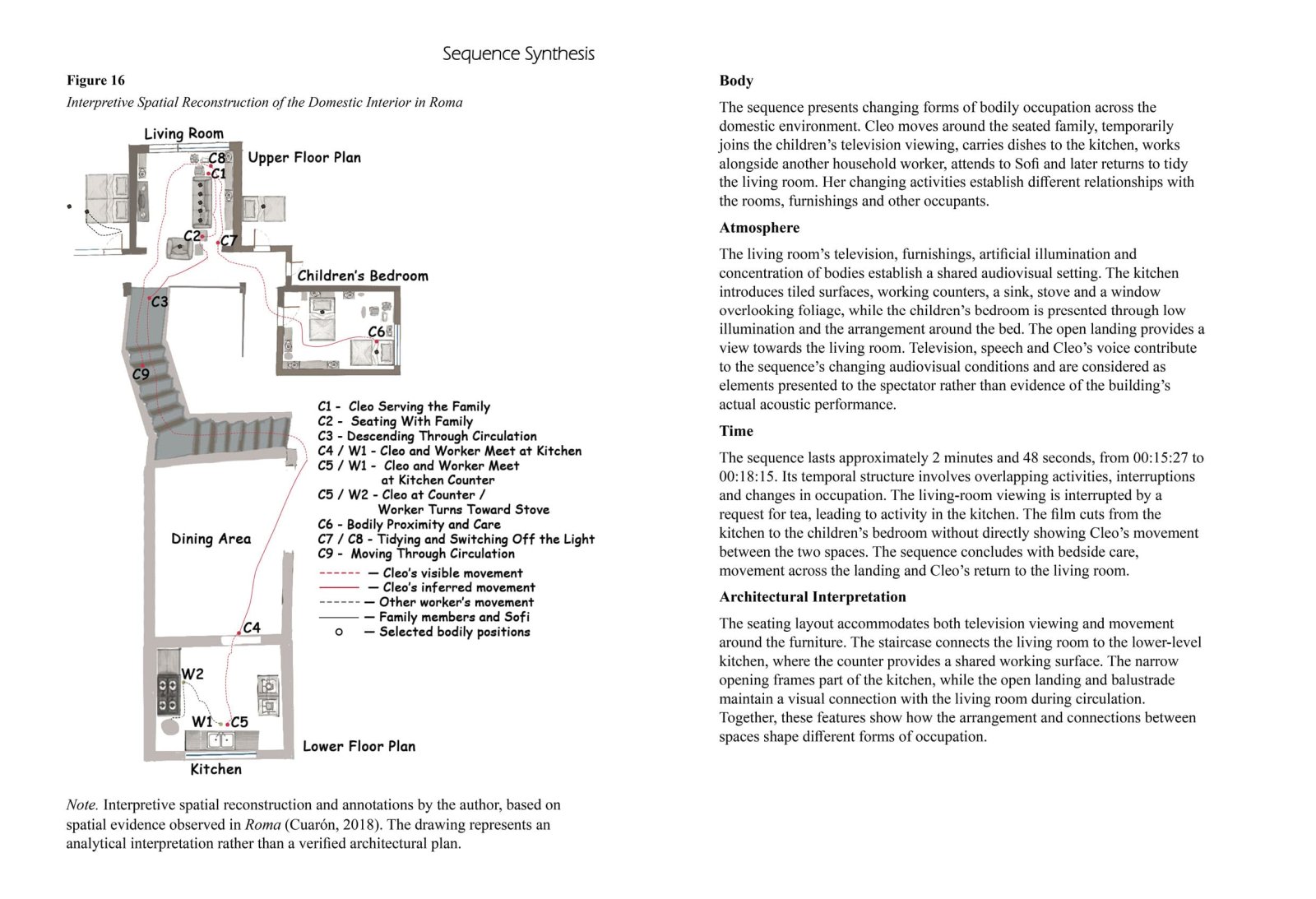
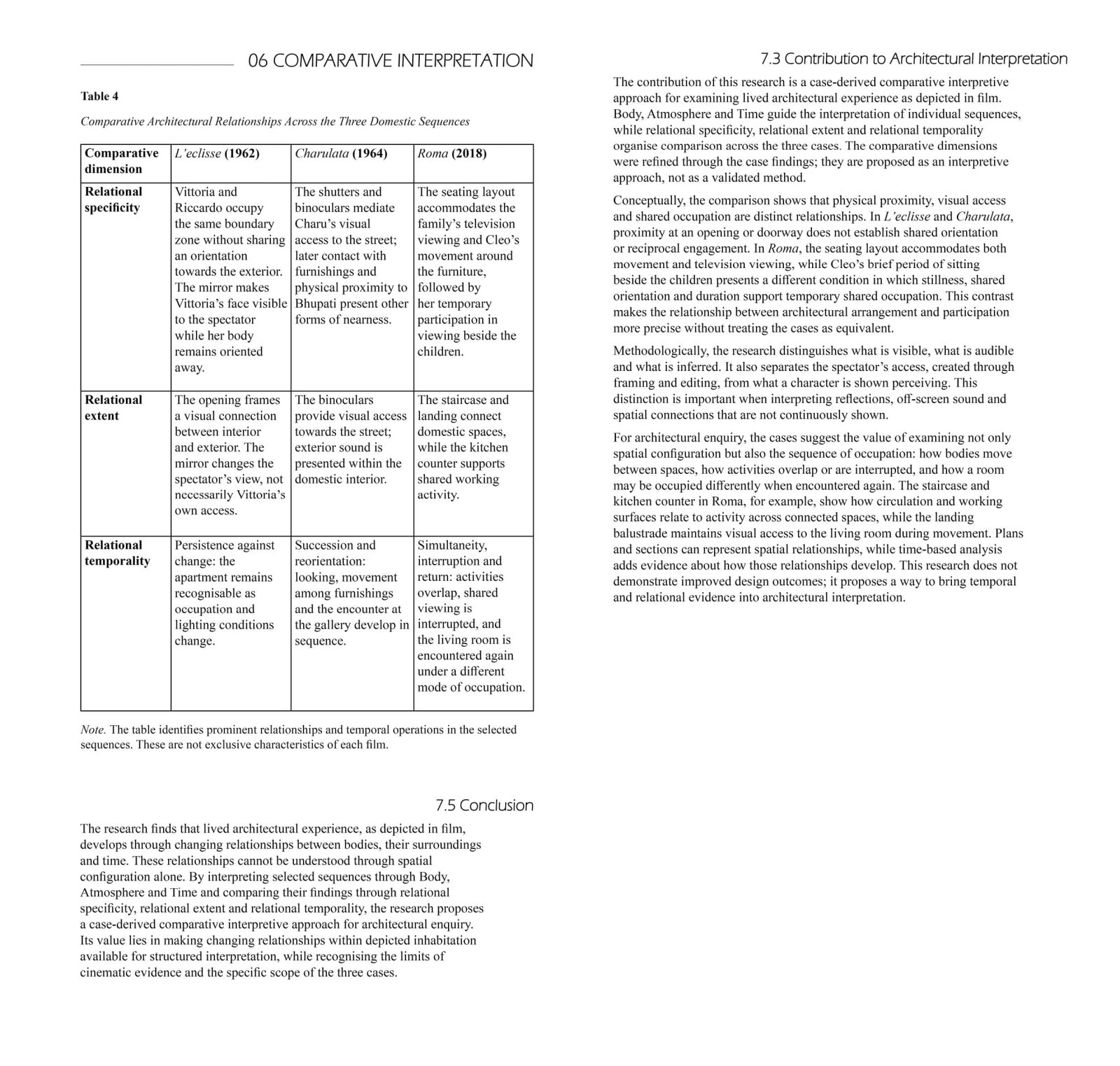
Architecture is experienced not only through spatial arrangement, but through how people occupy, move through, and relate to their surroundings over time. This project examines how such relationships are represented in cinema through one domestic sequence each from Antonioni’s L’eclisse (1962), Ray’s Charulata (1964), and Cuarón’s Roma (2018). Each sequence is examined through Body, Atmosphere and Time, considering bodily occupation, spatial relationships, sensory conditions and their development. Visible and audible evidence is distinguished from spatial inference, informing interpretive reconstructions of the domestic interior. A comparative reading then examines how architectural relationships differ across the three sequences and what cinema makes available for architectural interpretation.