Your browser is out-of-date!
For a richer surfing experience on our website, please update your browser. Update my browser now!
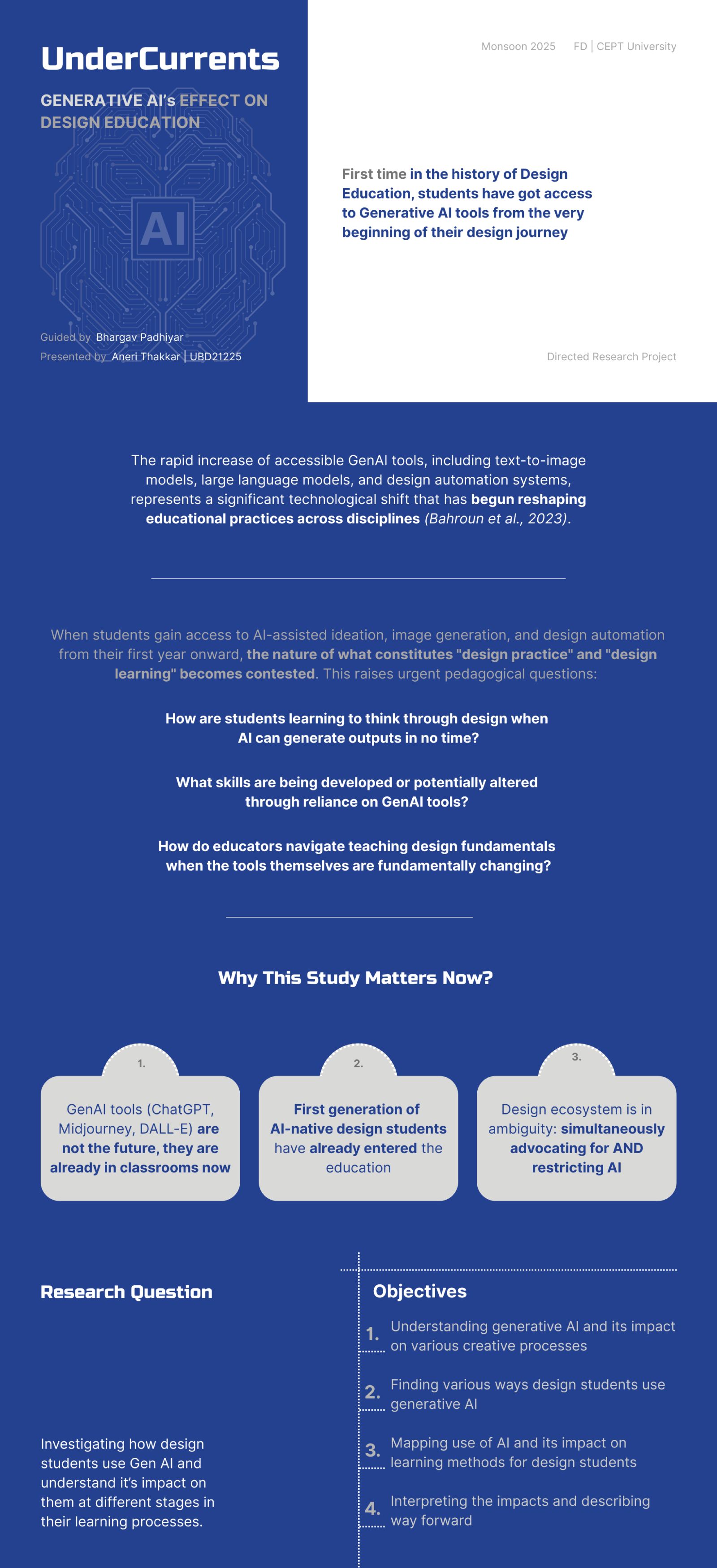
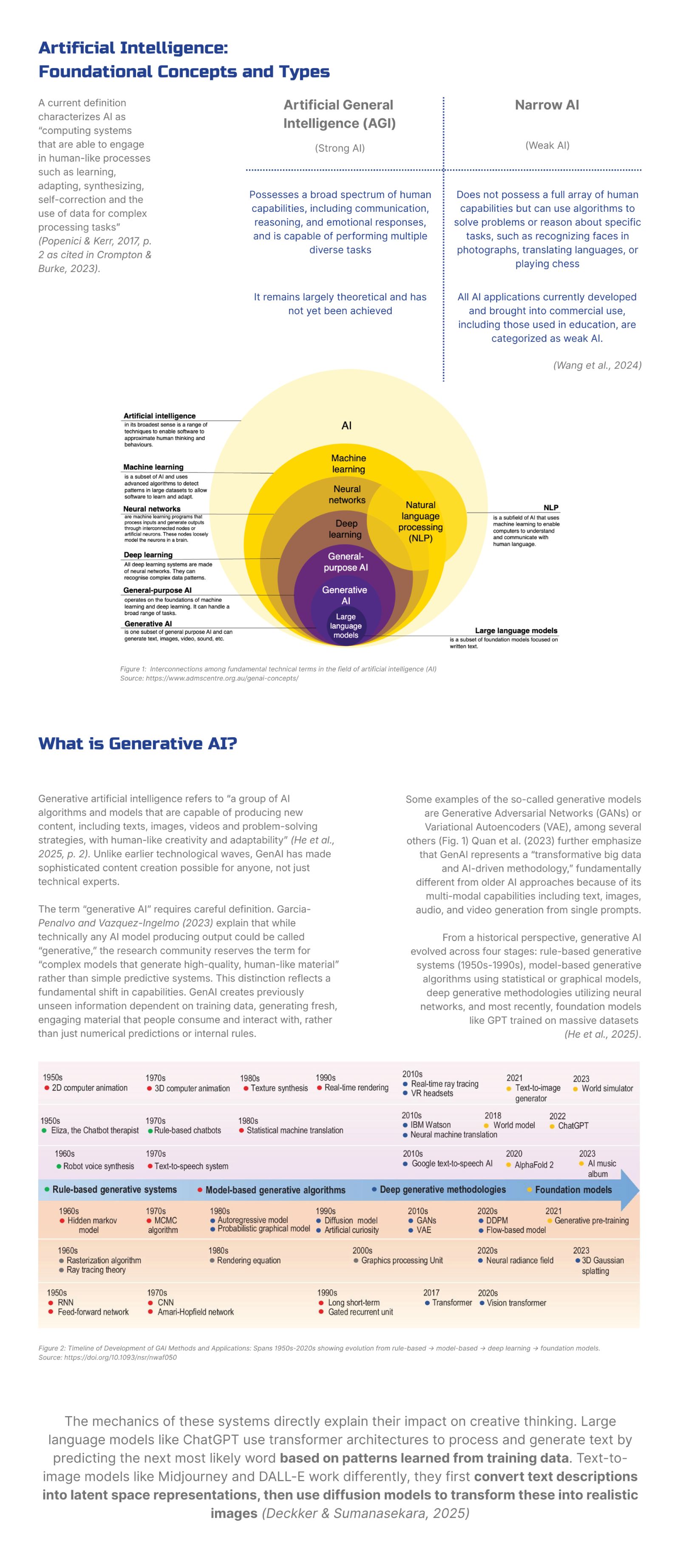
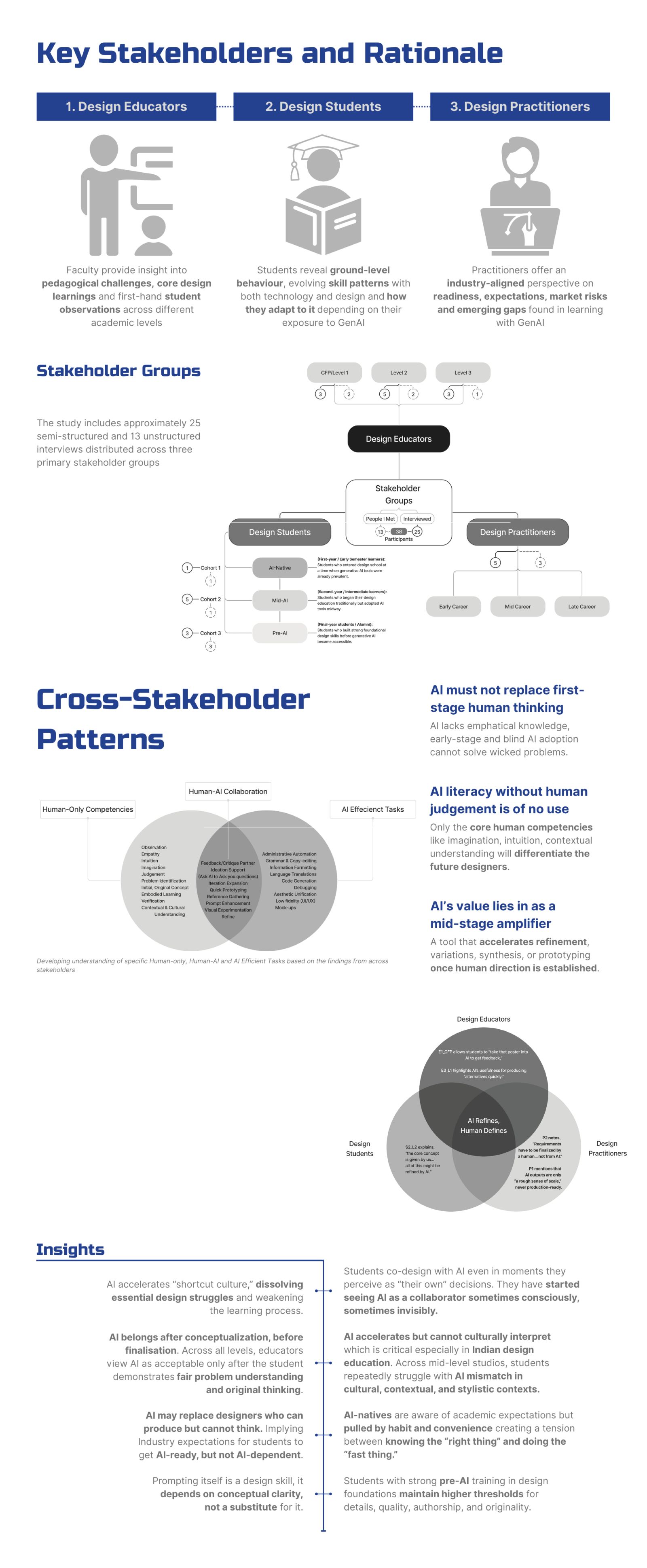
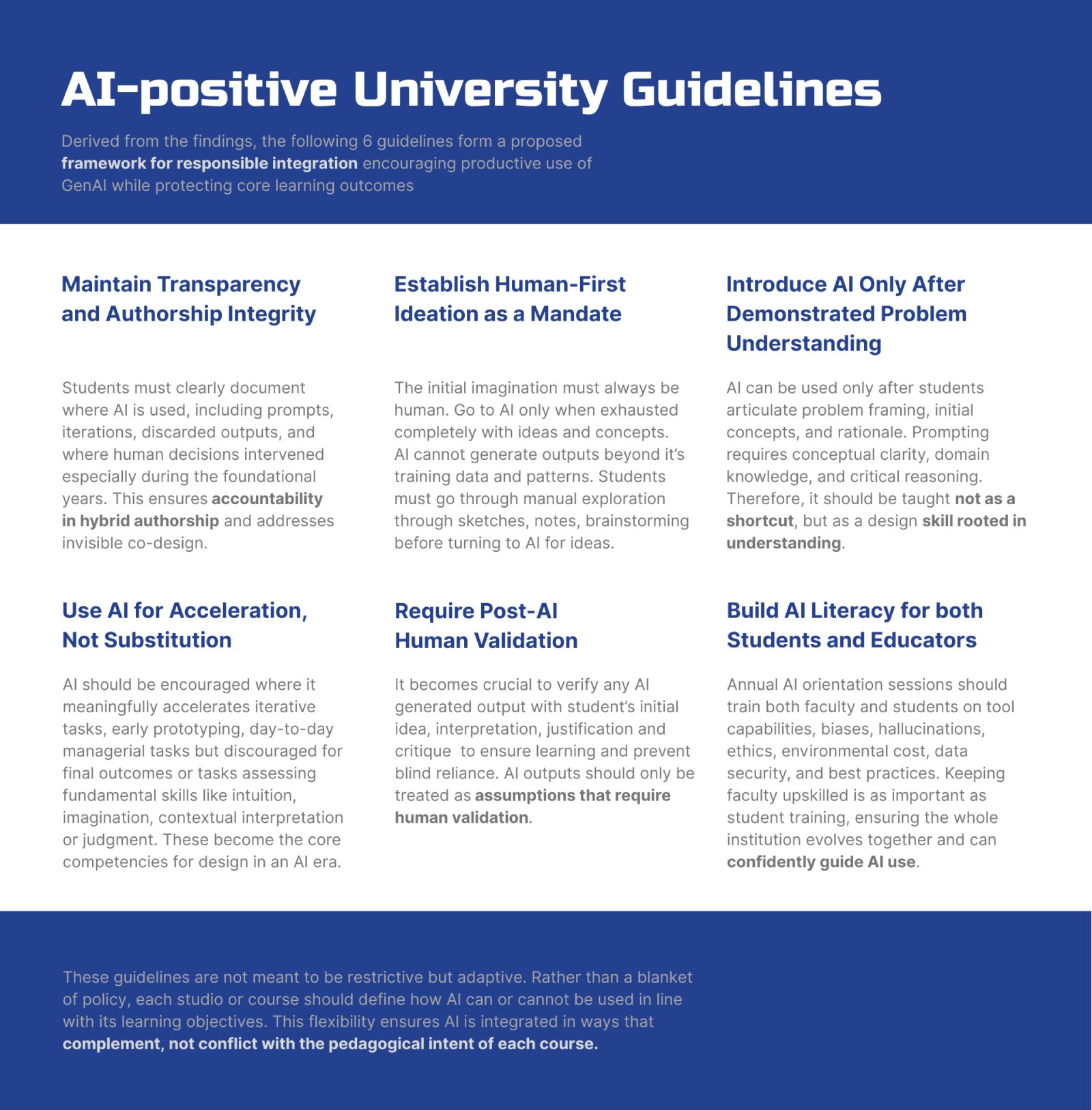
Generative Artificial Intelligence (GenAI) has rapidly transformed design education, giving students instant access to automated research, ideation, and visualization tools from their earliest semesters. This study examines how such tools are reshaping learning across CEPT University’s five-year design program by analyzing perspectives from 3 stakeholders - Foundation, Level 2, and Level 3 educators; three student cohorts with varying AI exposure; and industry practitioners. A system-wide study emerged across the design ecosystem, GenAI must augment, not replace, human thinking. However, significant gaps exist between pedagogical guidance and actual practice, AI-native students demonstrate high GenAI reliance.
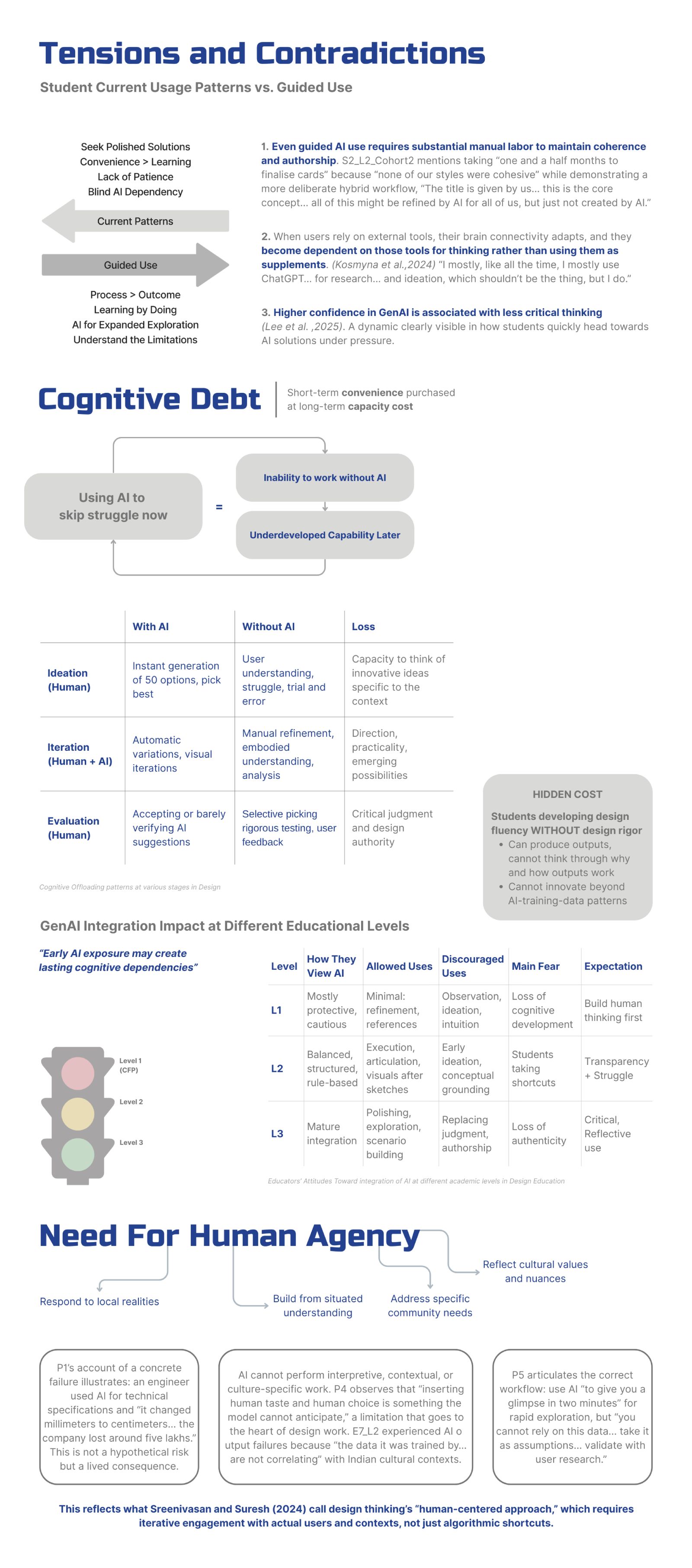
The research identifies cognitive offloading as a central concern. When students delegate thinking to AI, neurological adaptation creates "cognitive debt," a short-term convenience at long-term capacity cost. This exhibits diminished critical thinking, reduced embodied skill development, and erosion of cultural understanding essential to design education. This study provides actionable, evidence-based recommendations for design institutions navigating GenAI integration responsibly.