Your browser is out-of-date!
For a richer surfing experience on our website, please update your browser. Update my browser now!
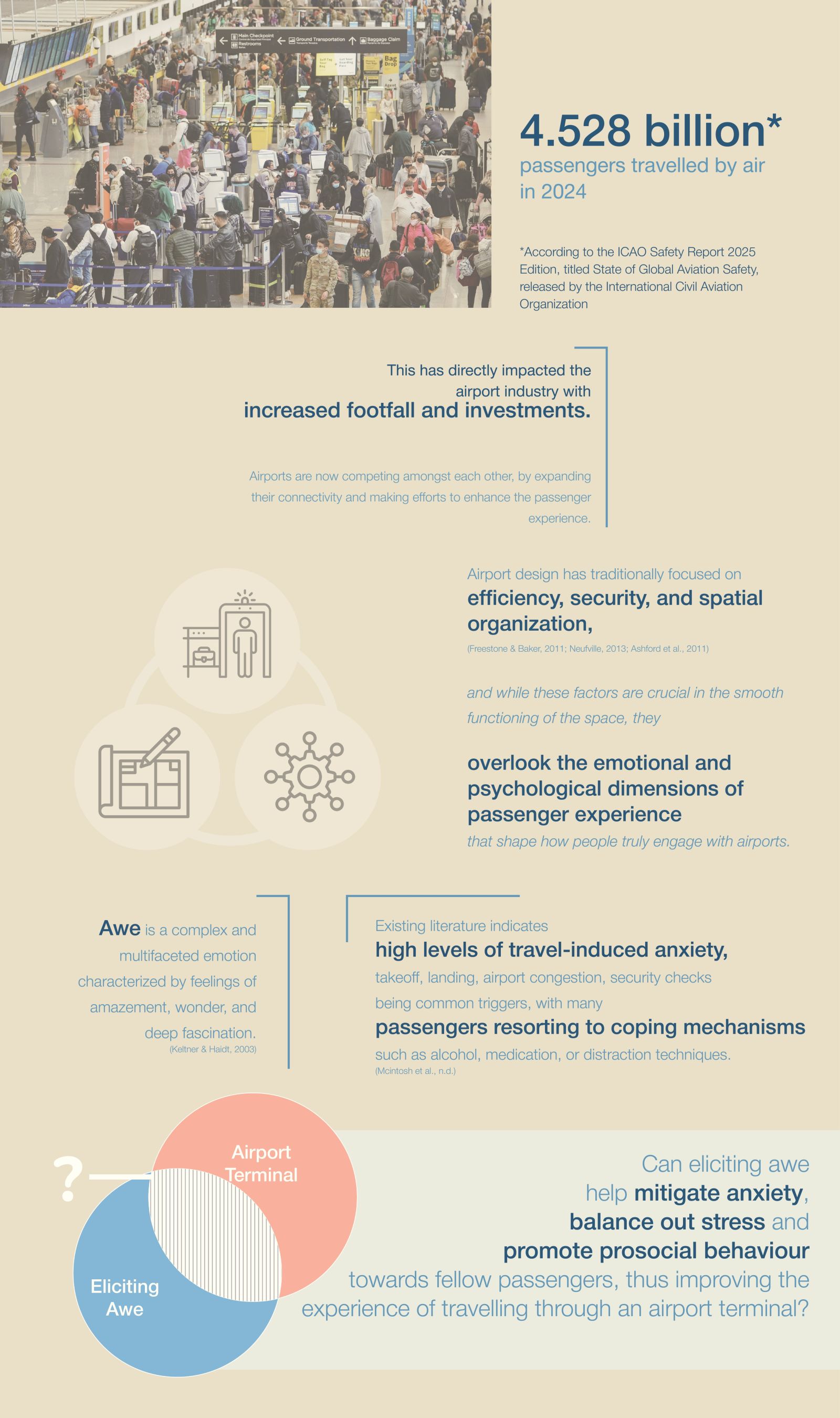
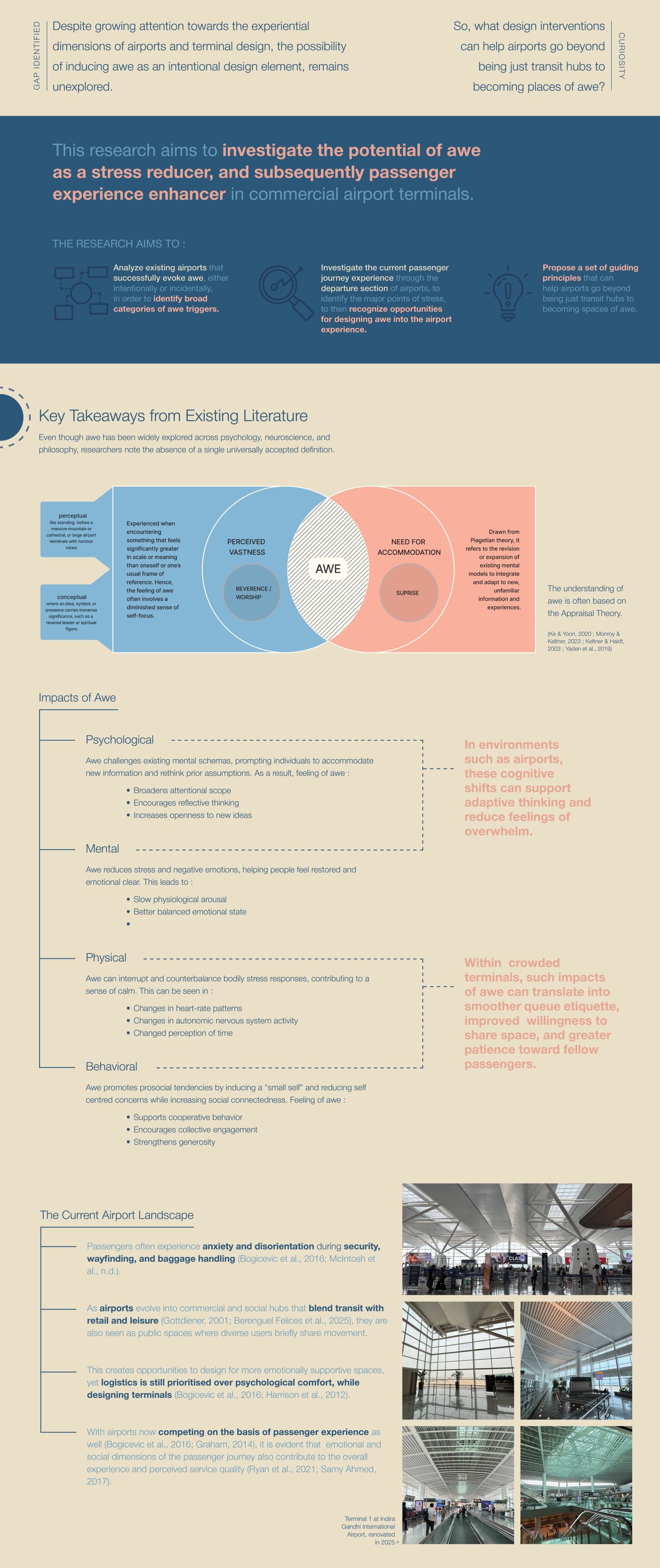
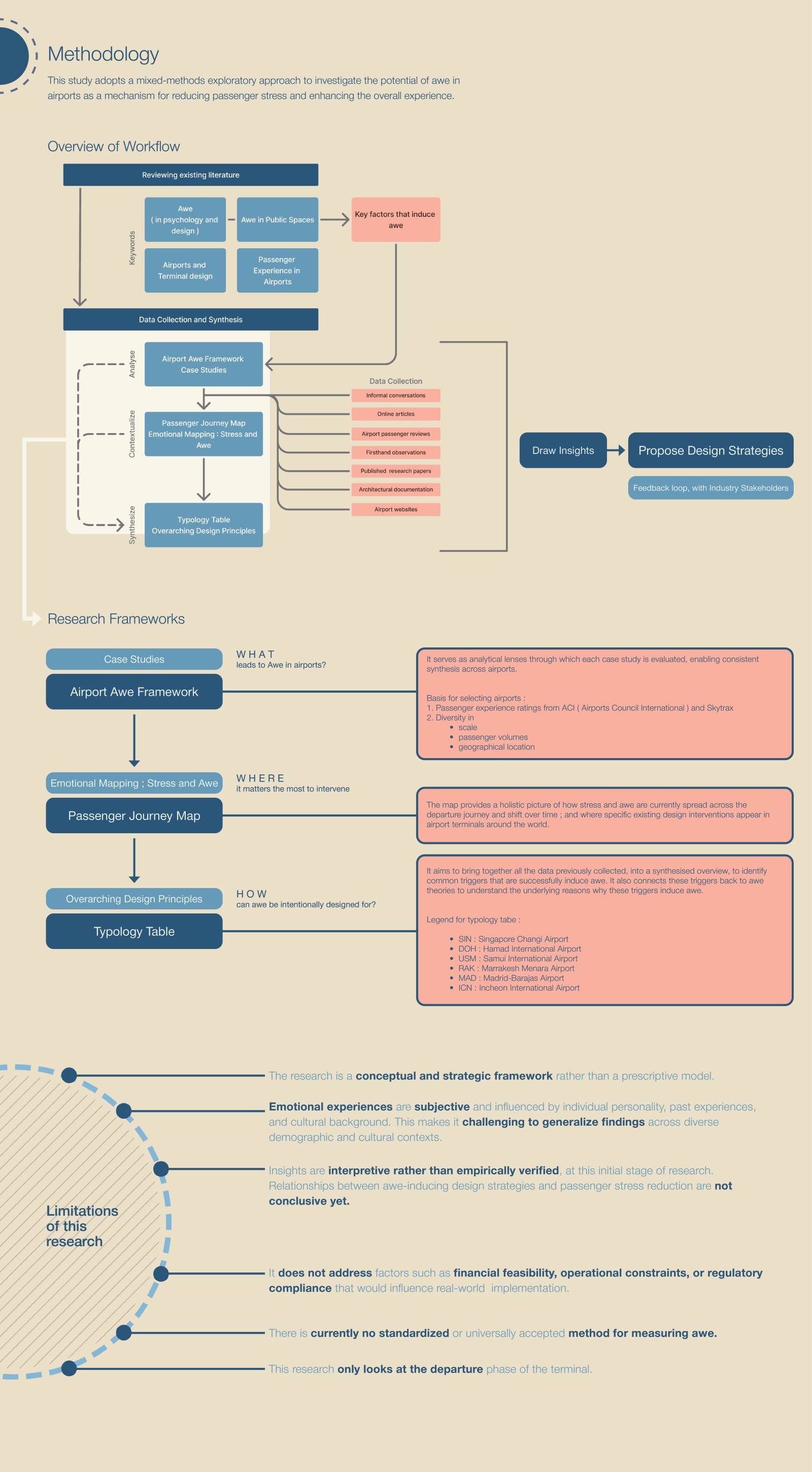
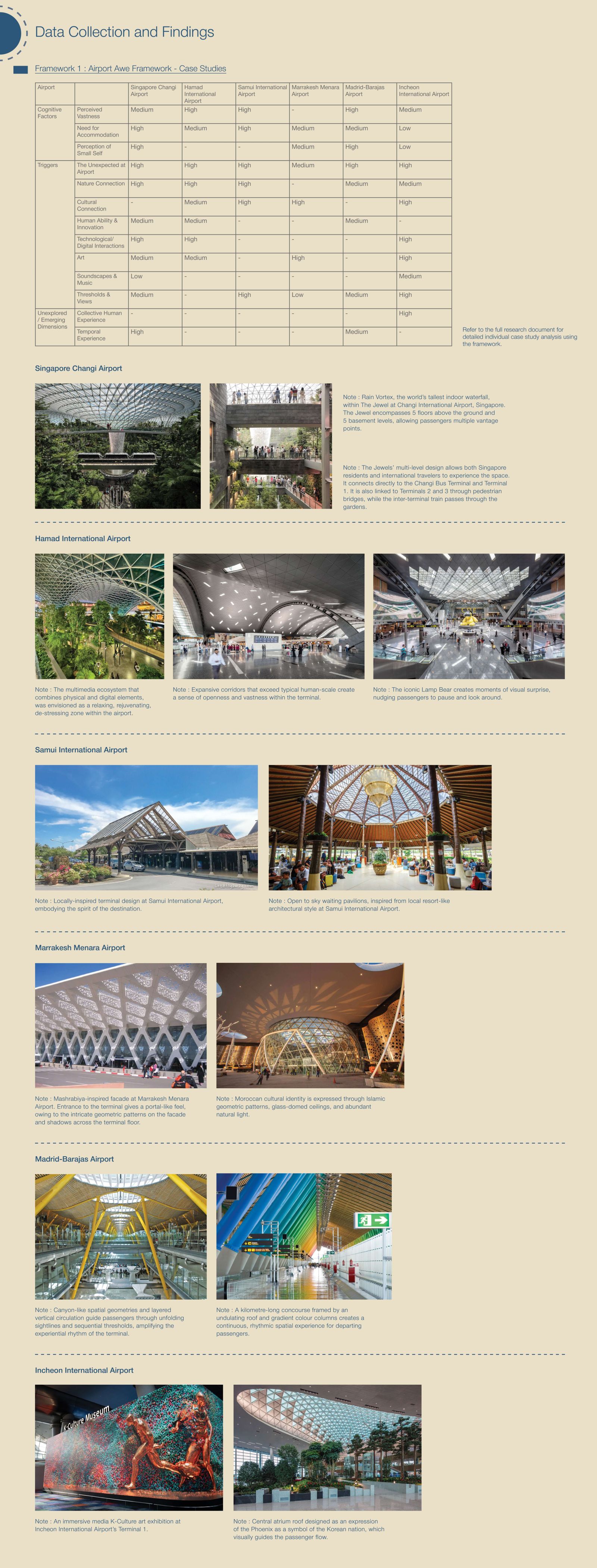
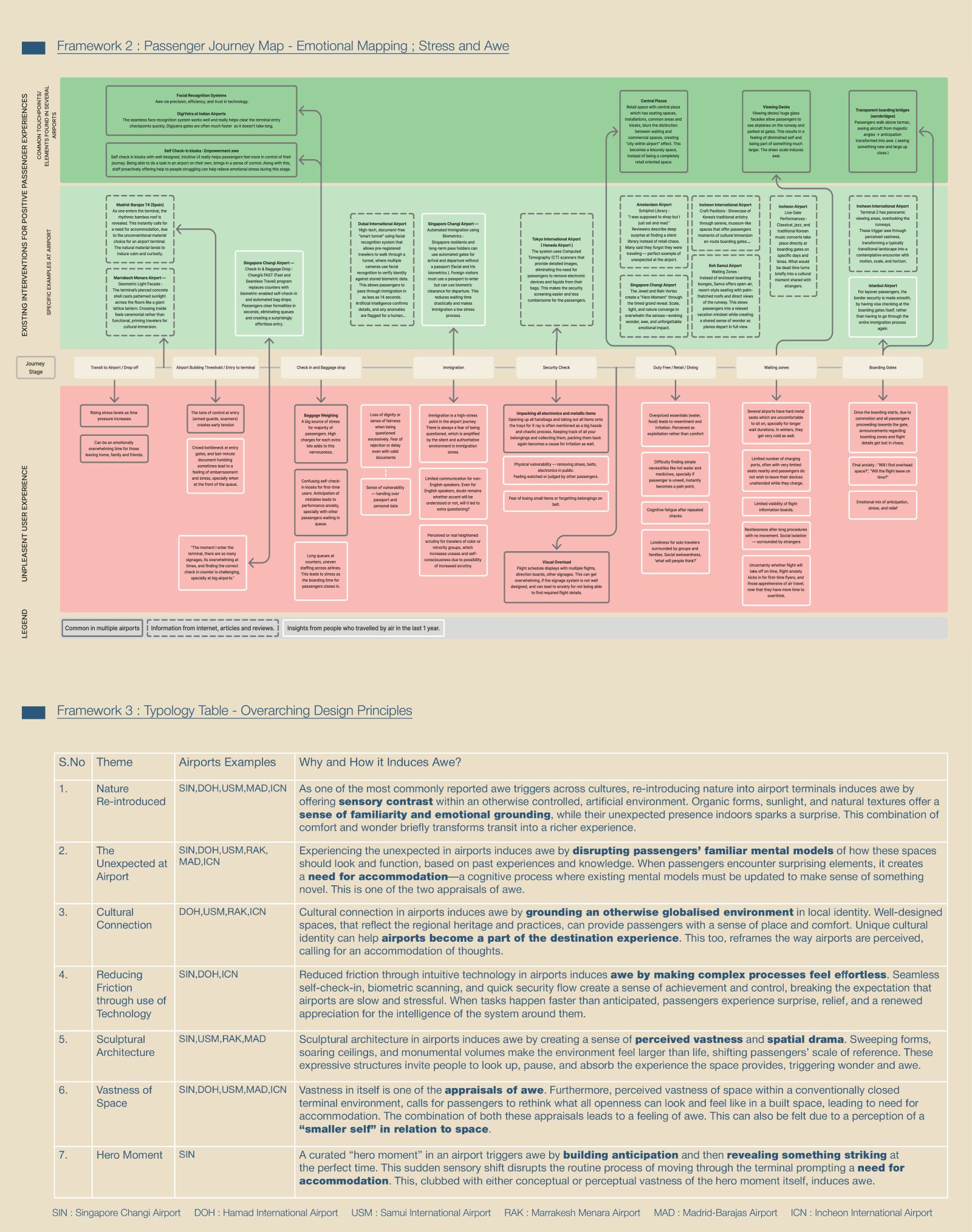
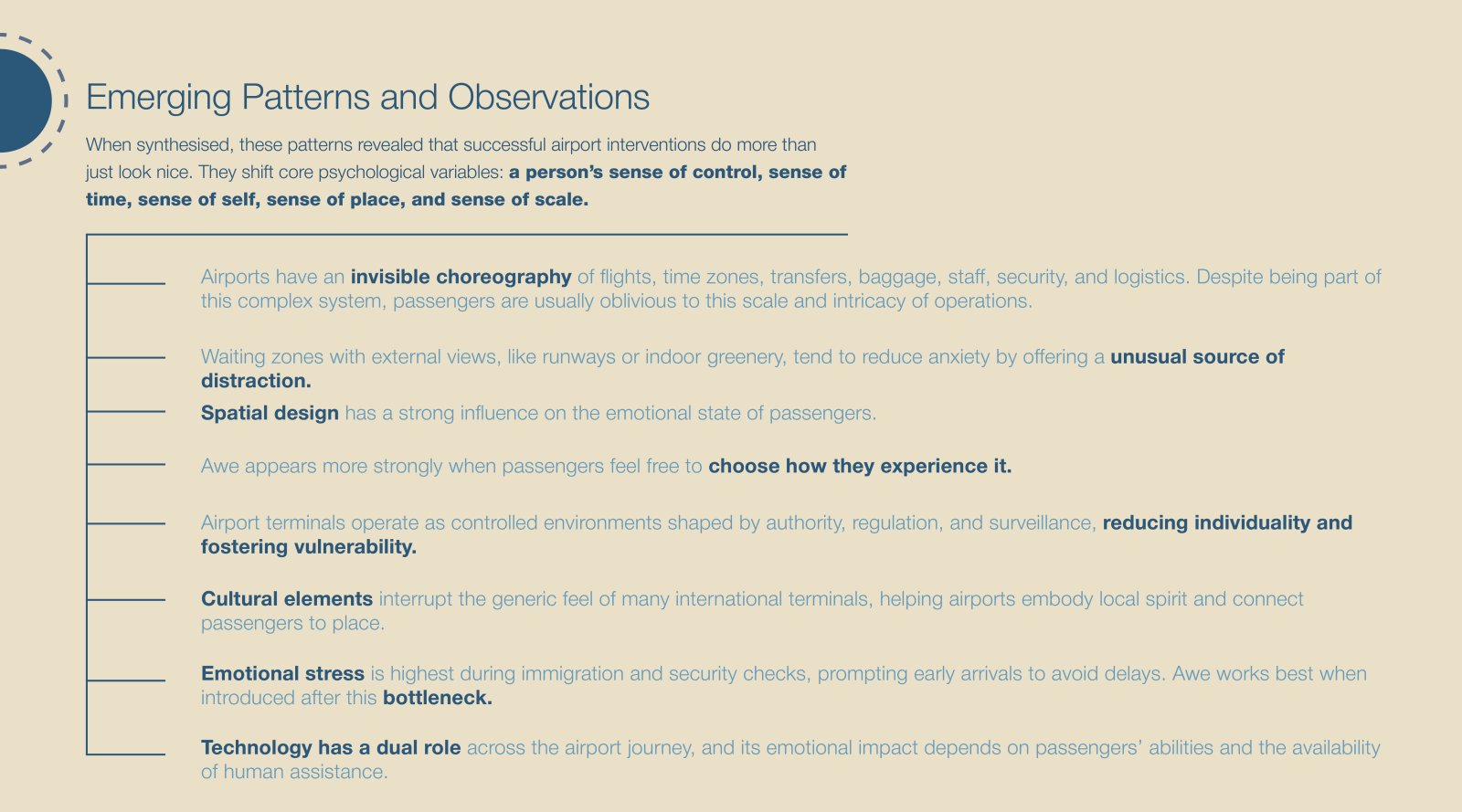
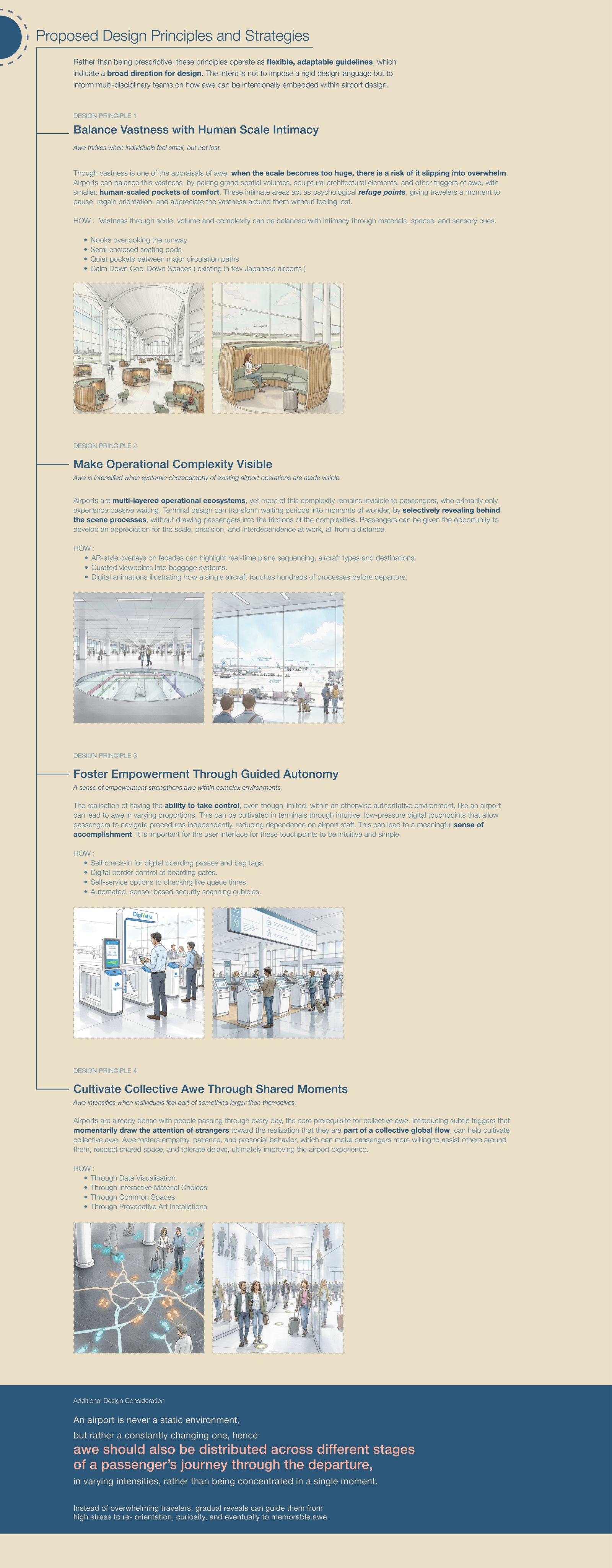
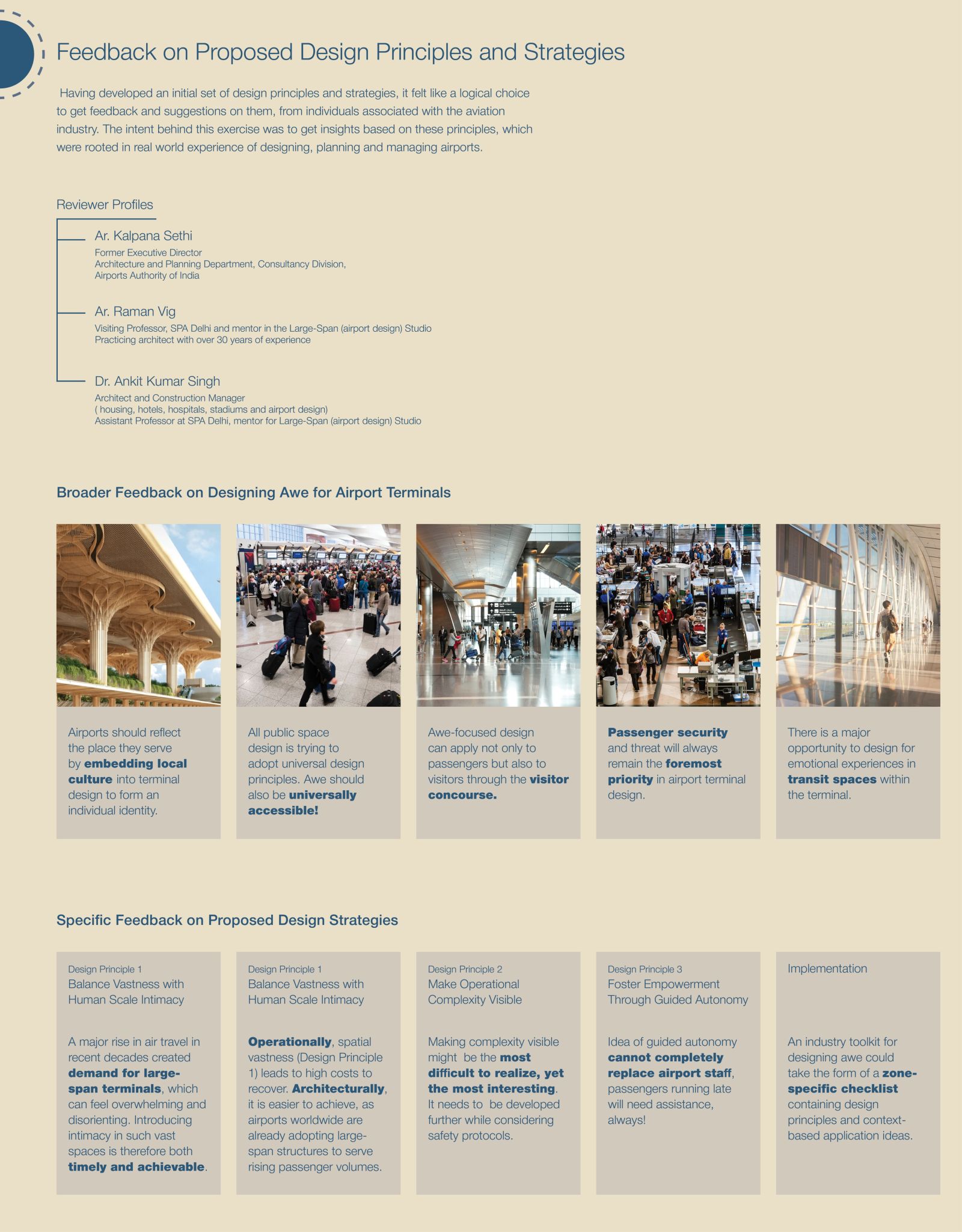
This study investigates the potential of awe to reduce stress and enhance passenger experience in commercial airport terminals during the departure journey. Airport design has traditionally been focused on efficiency, security, and spatial organization, and while these are critical factors, they tend to overlook the emotional dimensions of passenger experience. A mixed-methods exploratory approach was adopted to analyse existing airport terminals, understand passenger experiences and identify key patterns in awe triggers. Data collection methods included six case studies along with secondary data from previous studies, the internet and passenger interactions, which were supported by quantitative data from previous reports. The collected data was then analysed using three frameworks developed for this study. The findings reveal a set of common awe triggers in existing airports across the globe. Building on these insights, the research proposes guiding principles aimed at informing upcoming airport design to go beyond their role as purely transit-oriented hubs and become spaces of awe. These principles emphasise balancing vastness with human scale comfort, revealing operational complexity without burdening passengers, enabling guided autonomy, and fostering shared moments of awe. Together, they offer a direction for designing terminals that create emotionally resonant and uplifting travel experiences. The full research paper can be viewed here.
View Additional Work