Your browser is out-of-date!
For a richer surfing experience on our website, please update your browser. Update my browser now!
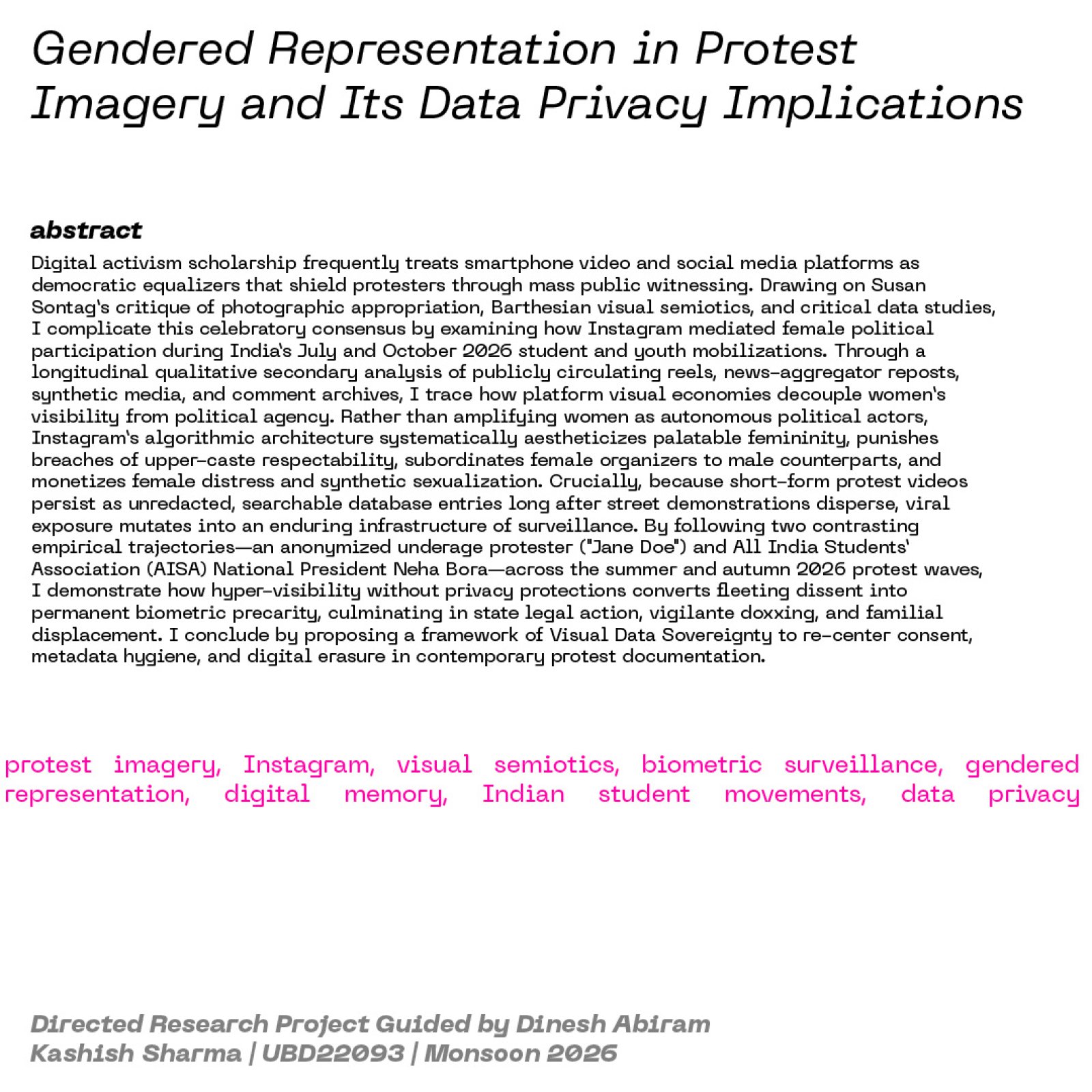
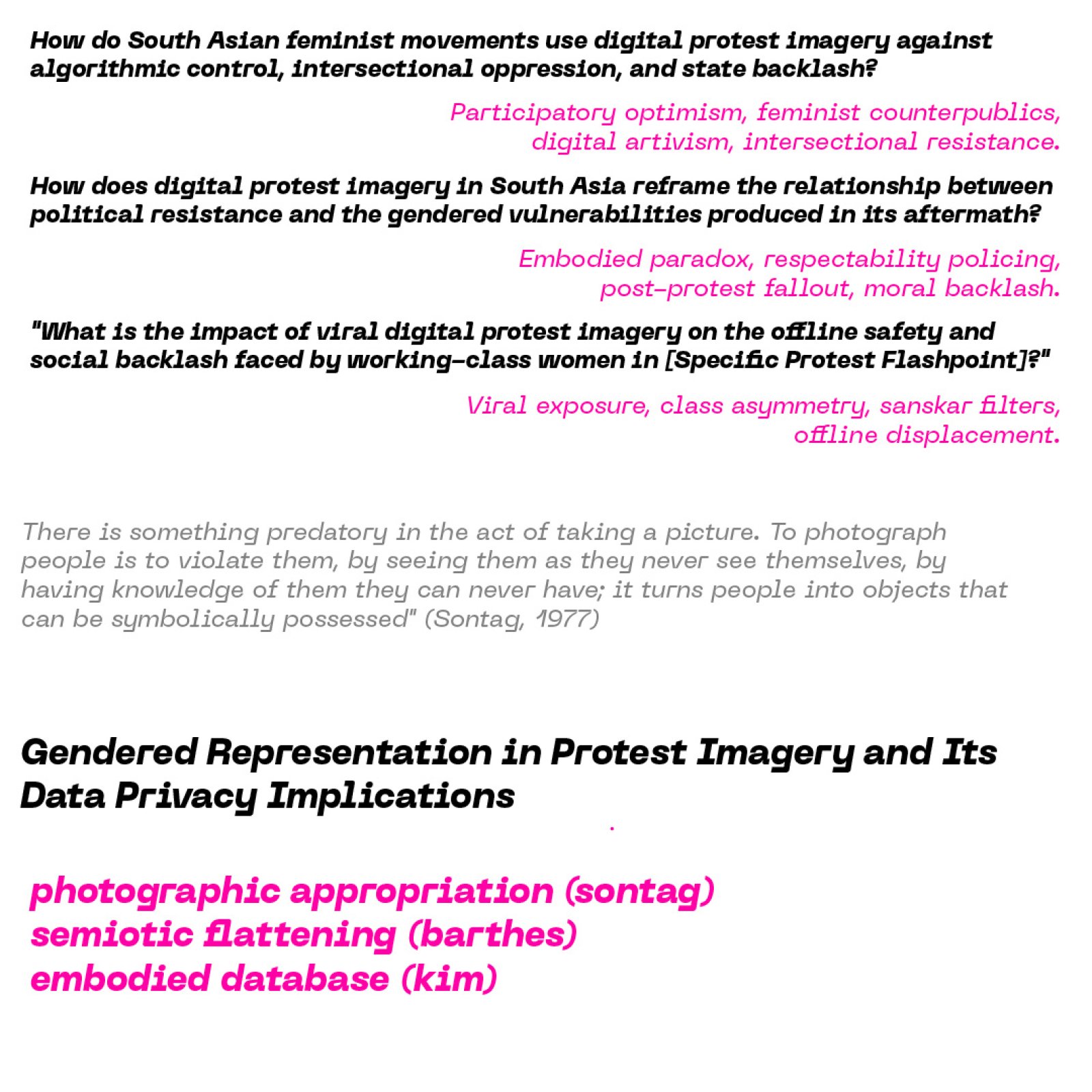
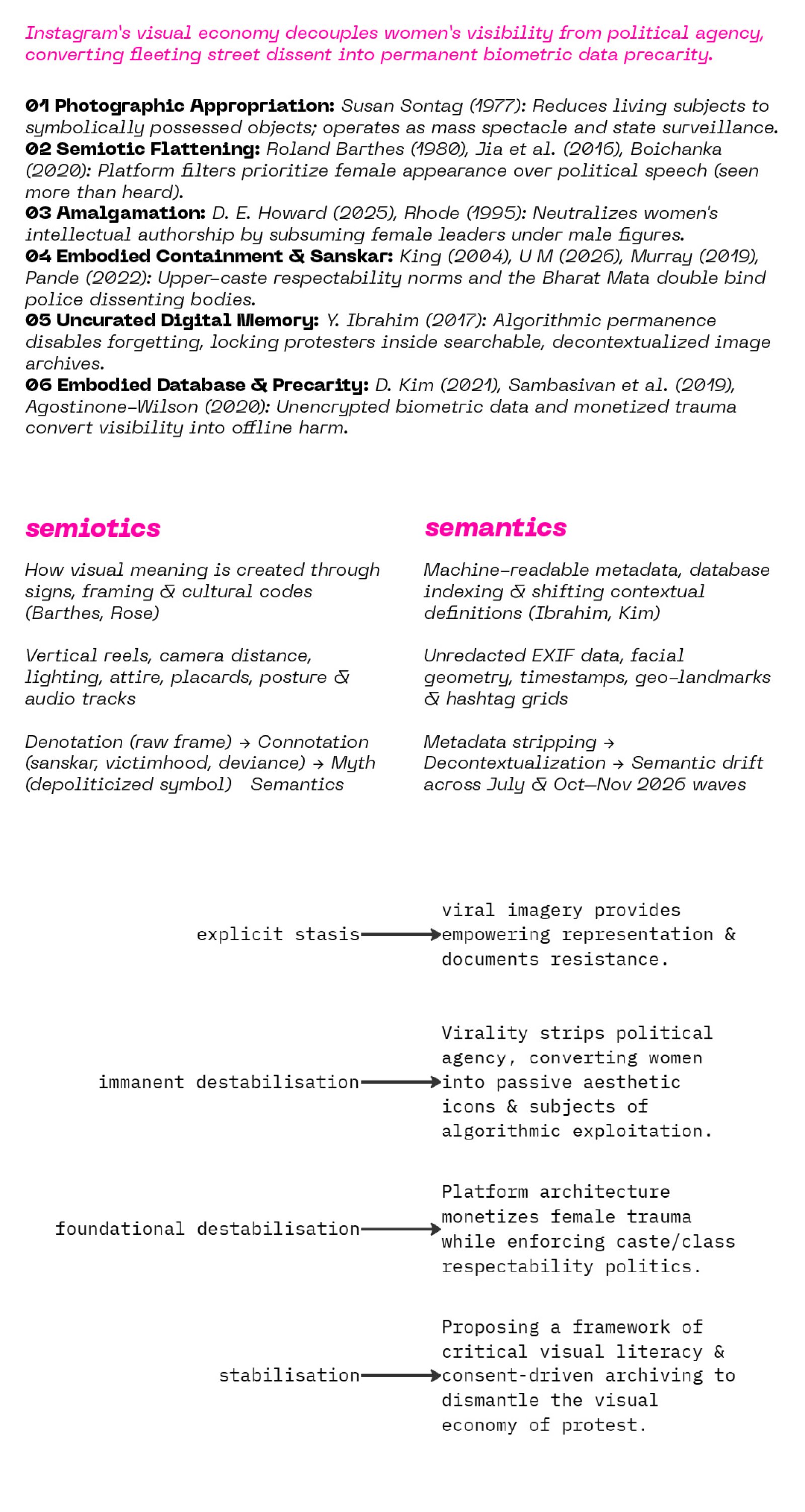
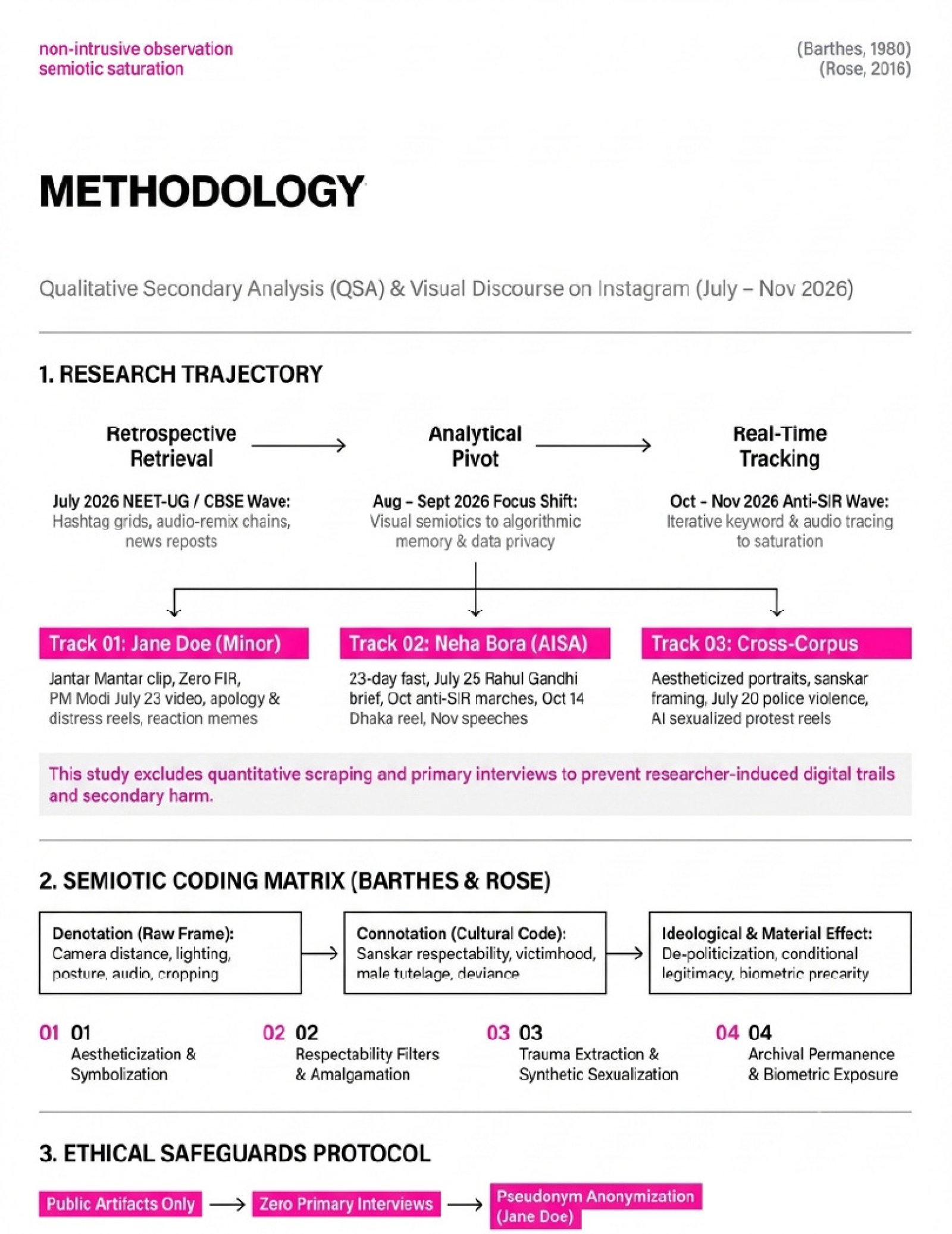
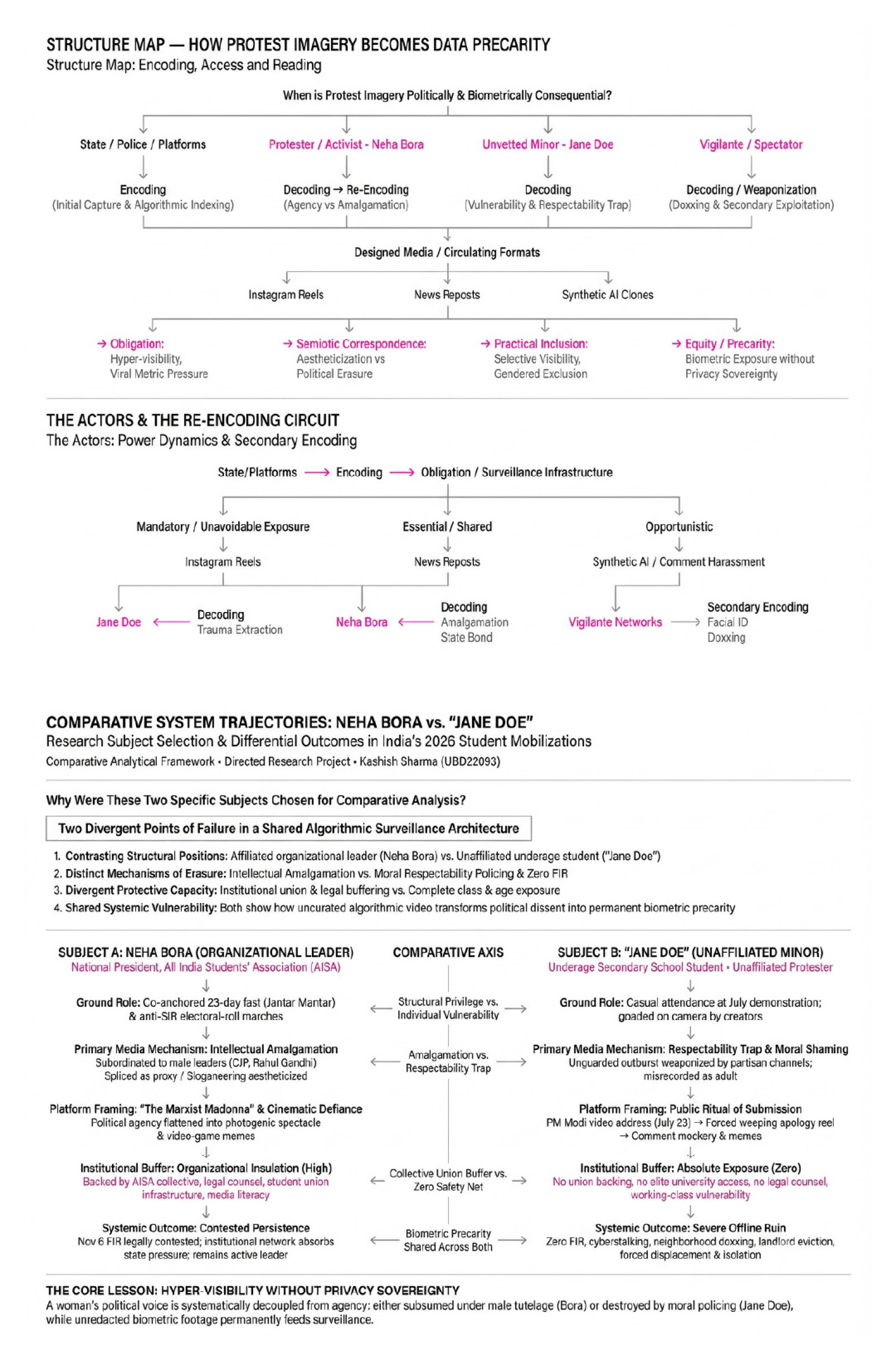
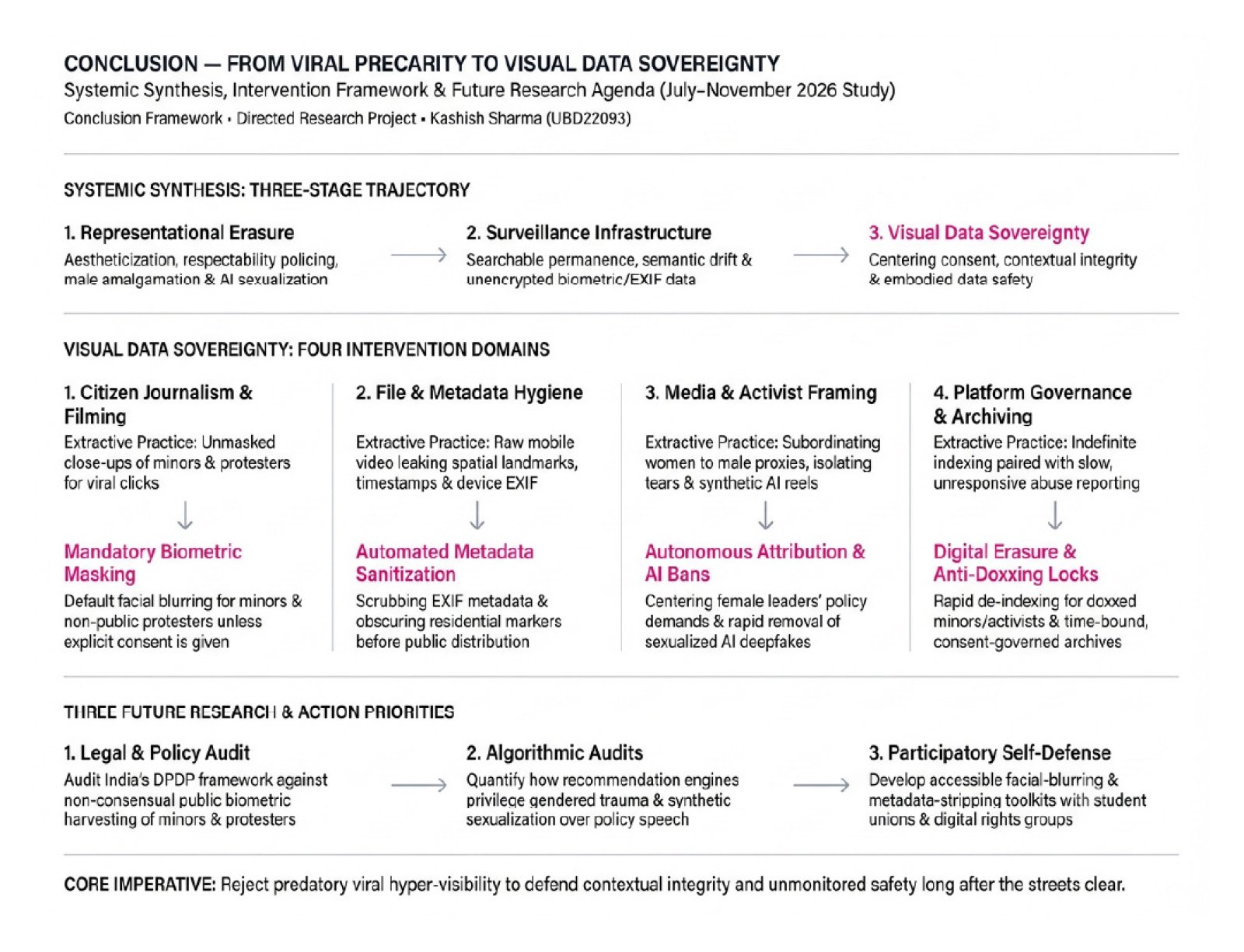
Digital activism scholarship frequently treats smartphone video and social media platforms as democratic equalizers that shield protesters through mass public witnessing. Drawing on Susan Sontag’s critique of photographic appropriation, Barthesian visual semiotics, and critical data studies, I complicate this celebratory consensus by examining how Instagram mediated female political participation during India’s July and October 2026 student and youth mobilizations. Through a longitudinal qualitative secondary analysis of publicly circulating reels, news-aggregator reposts, synthetic media, and comment archives, I trace how platform visual economies decouple women’s visibility from political agency. Rather than amplifying women as autonomous political actors, Instagram’s algorithmic architecture systematically aestheticizes palatable femininity, punishes breaches of upper-caste respectability, subordinates female organizers to male counterparts, and monetizes female distress and synthetic sexualization. Crucially, because short-form protest videos persist as unredacted, searchable database entries long after street demonstrations disperse, viral exposure mutates into an enduring infrastructure of surveillance. By following two contrasting empirical trajectories—an anonymized underage protester ("Jane Doe") and All India Students’ Association (AISA) National President Neha Bora—across the summer and autumn 2026 protest waves, I demonstrate how hyper-visibility without privacy protections converts fleeting dissent into permanent biometric precarity, culminating in state legal action, vigilante doxxing, and familial displacement. I conclude by proposing a framework of Visual Data Sovereignty to re-center consent, metadata hygiene, and digital erasure in contemporary protest documentation.