Your browser is out-of-date!
For a richer surfing experience on our website, please update your browser. Update my browser now!
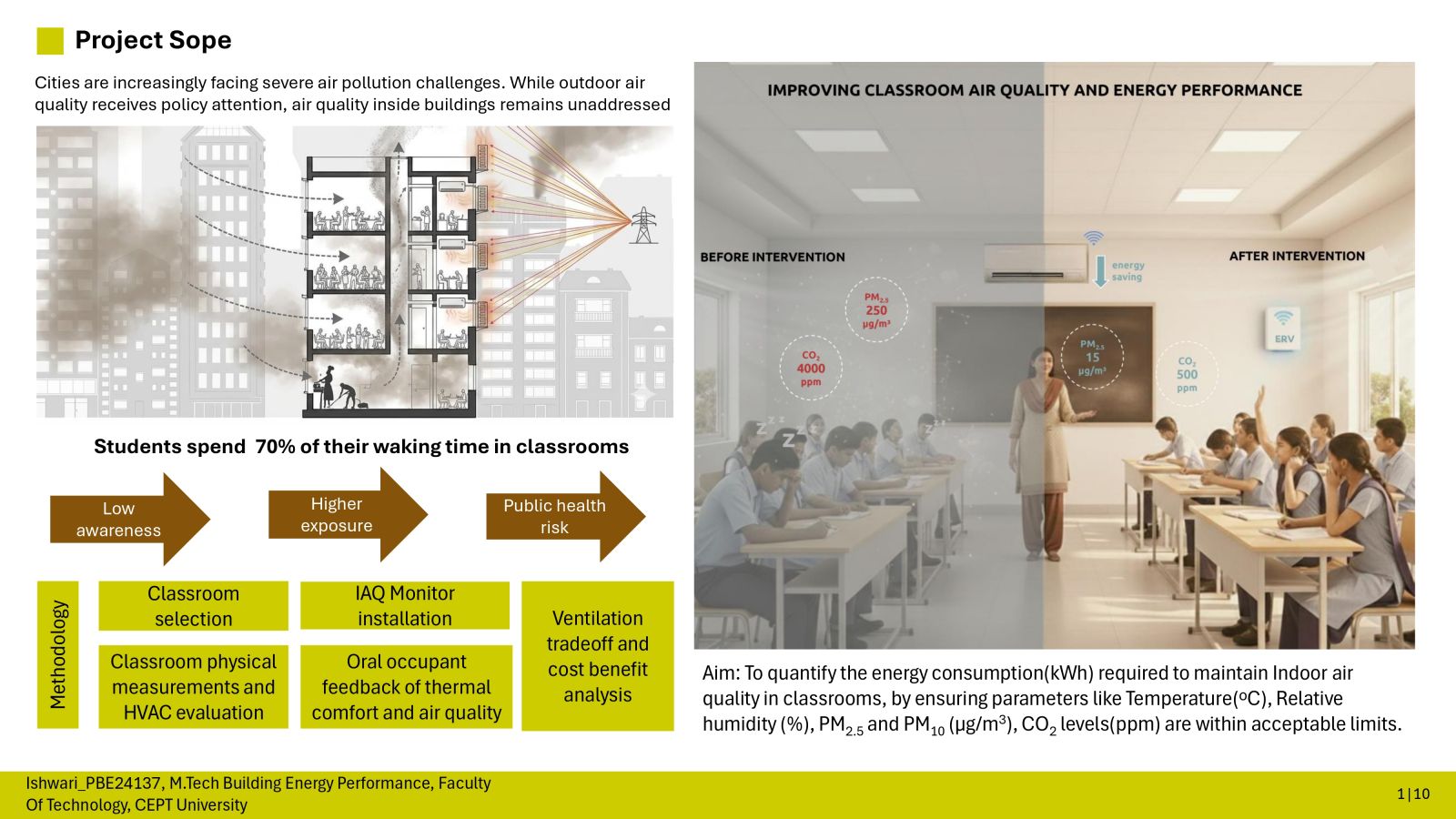
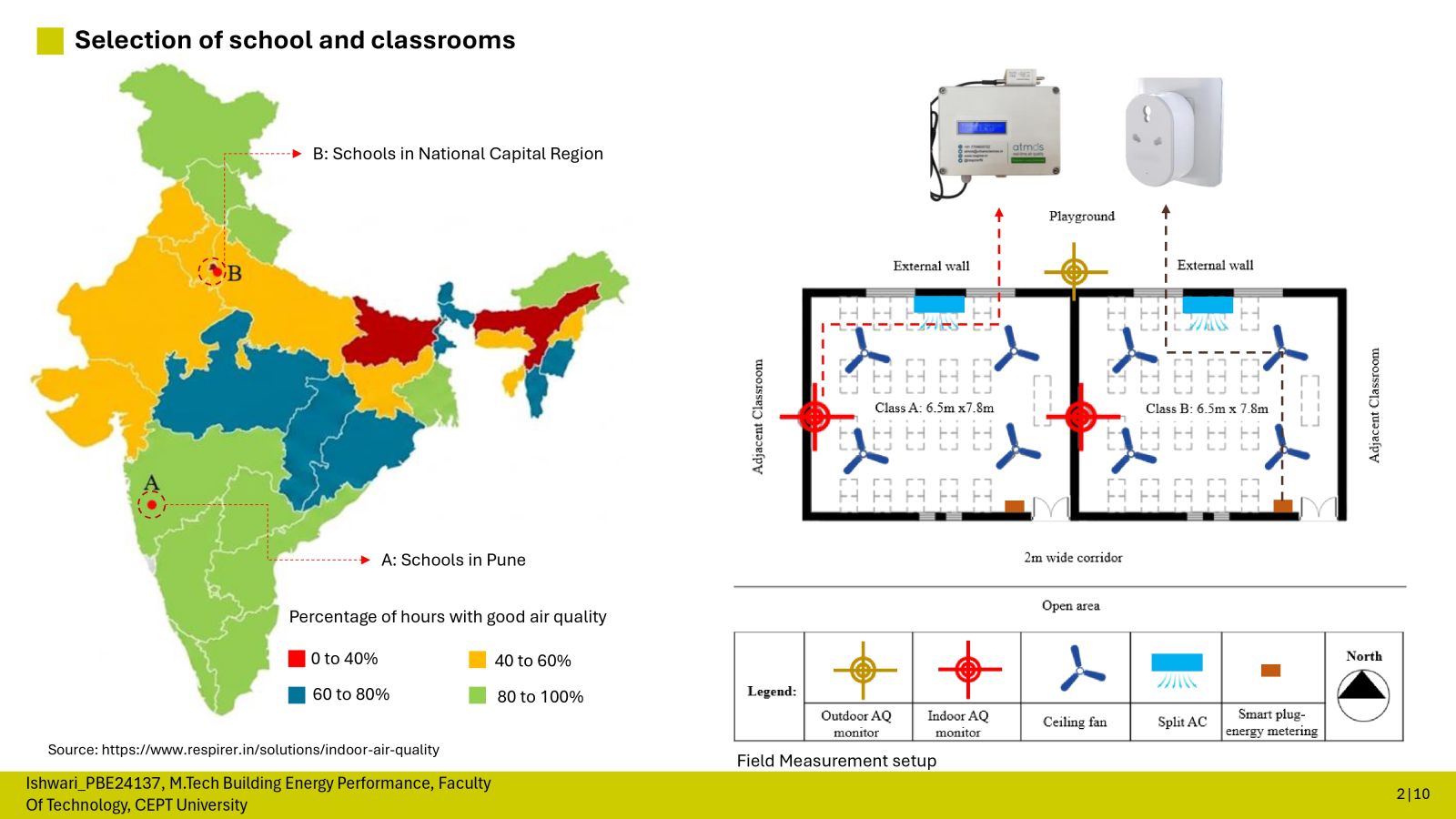
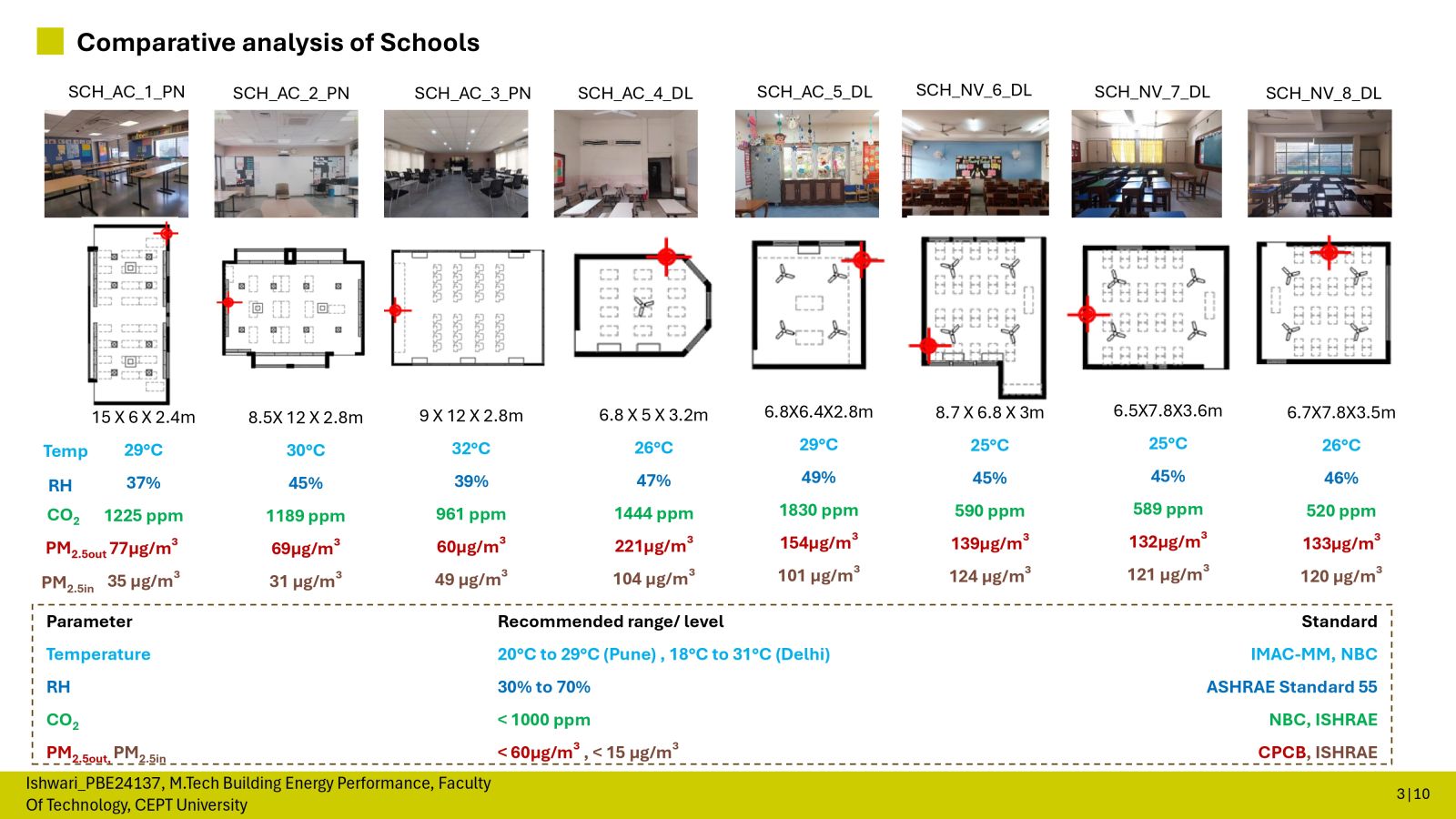
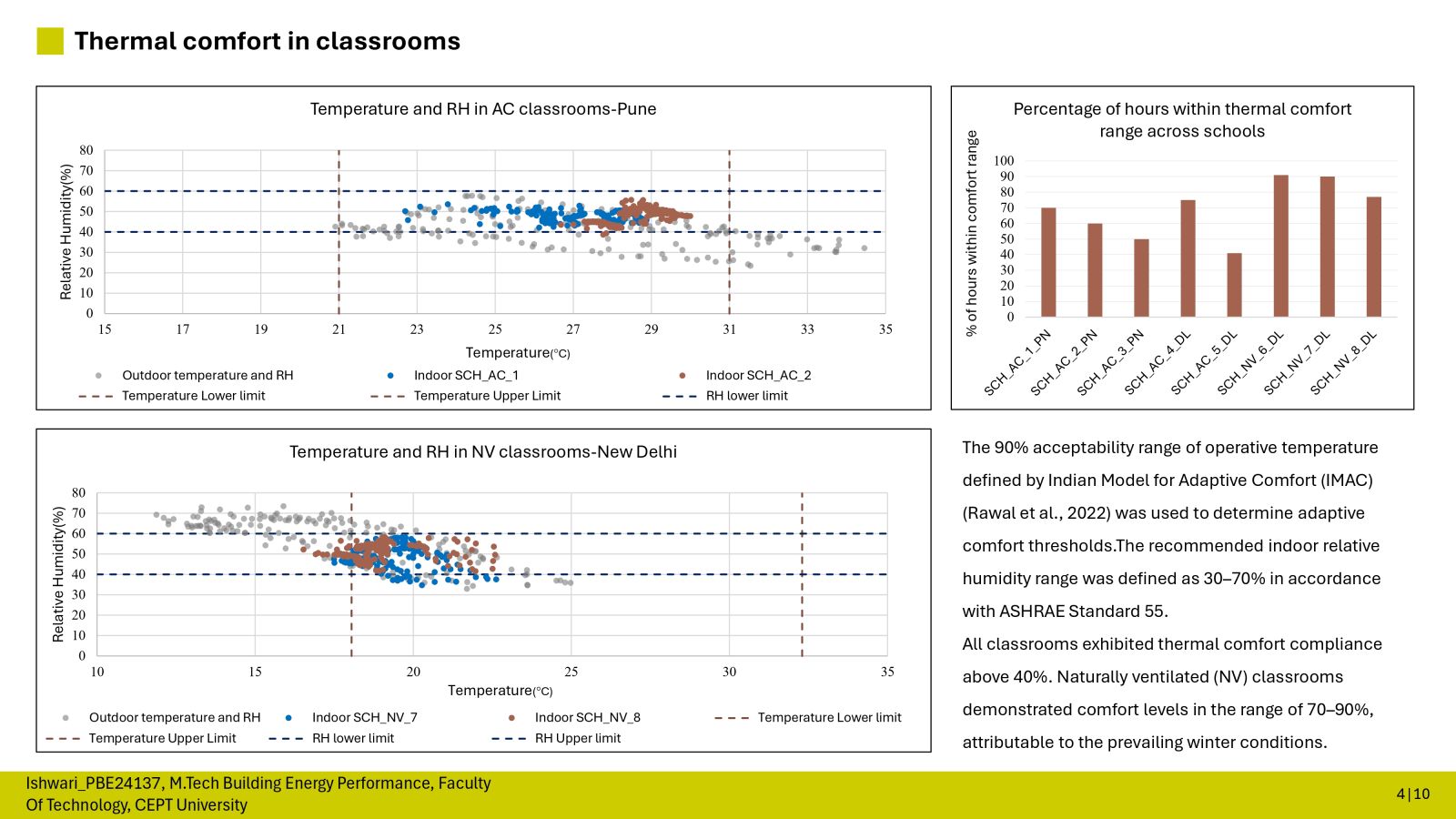
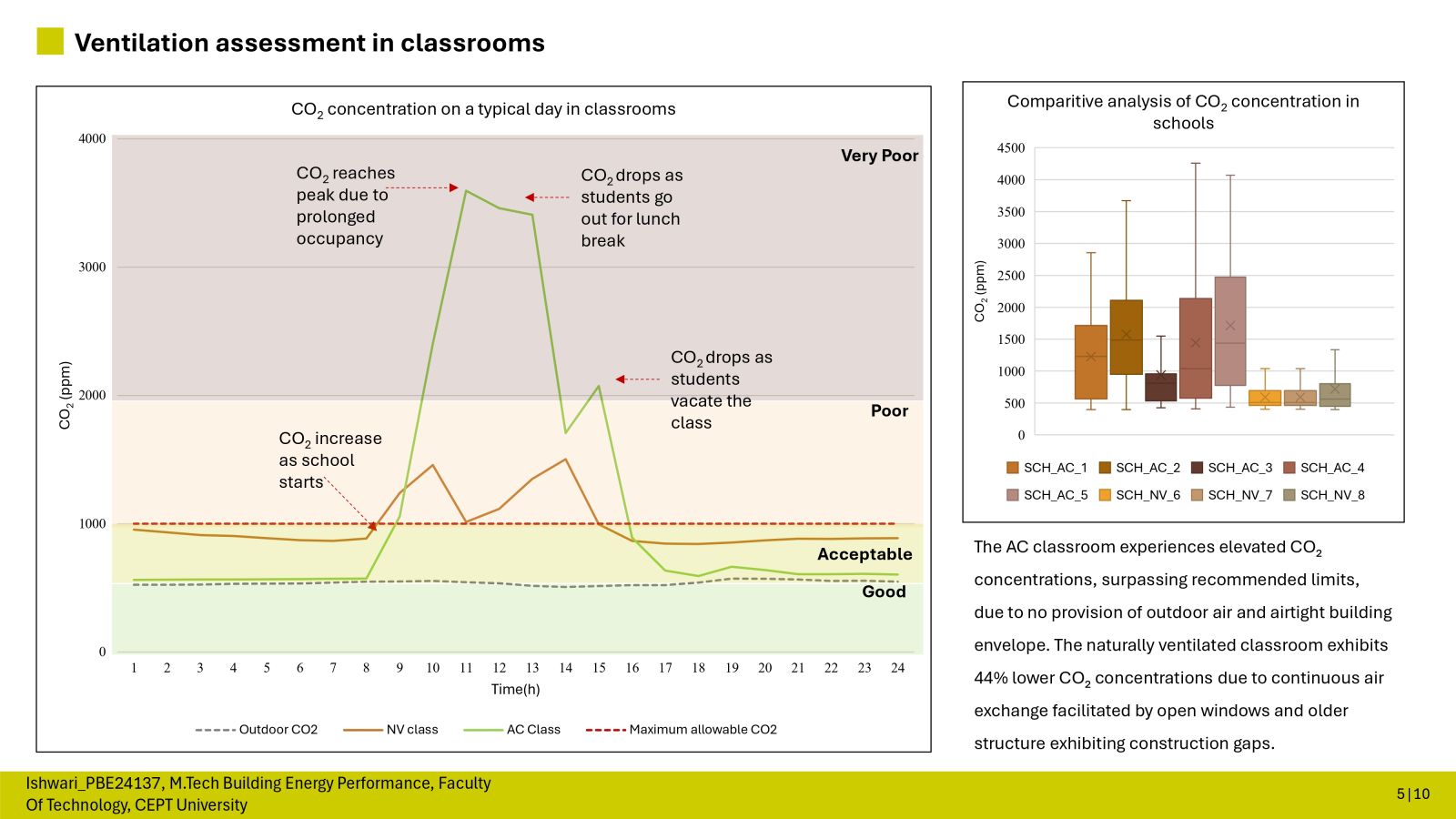
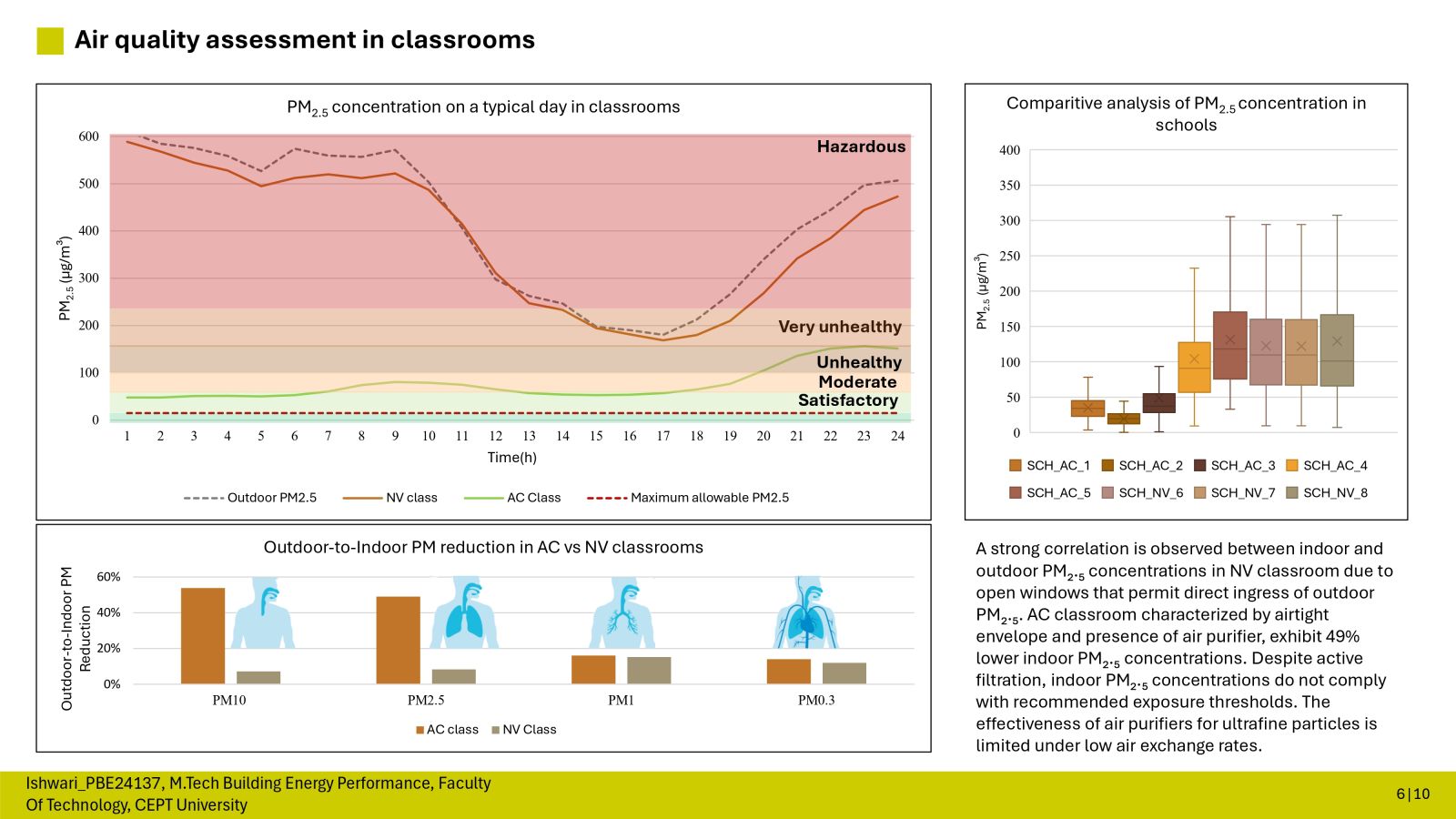
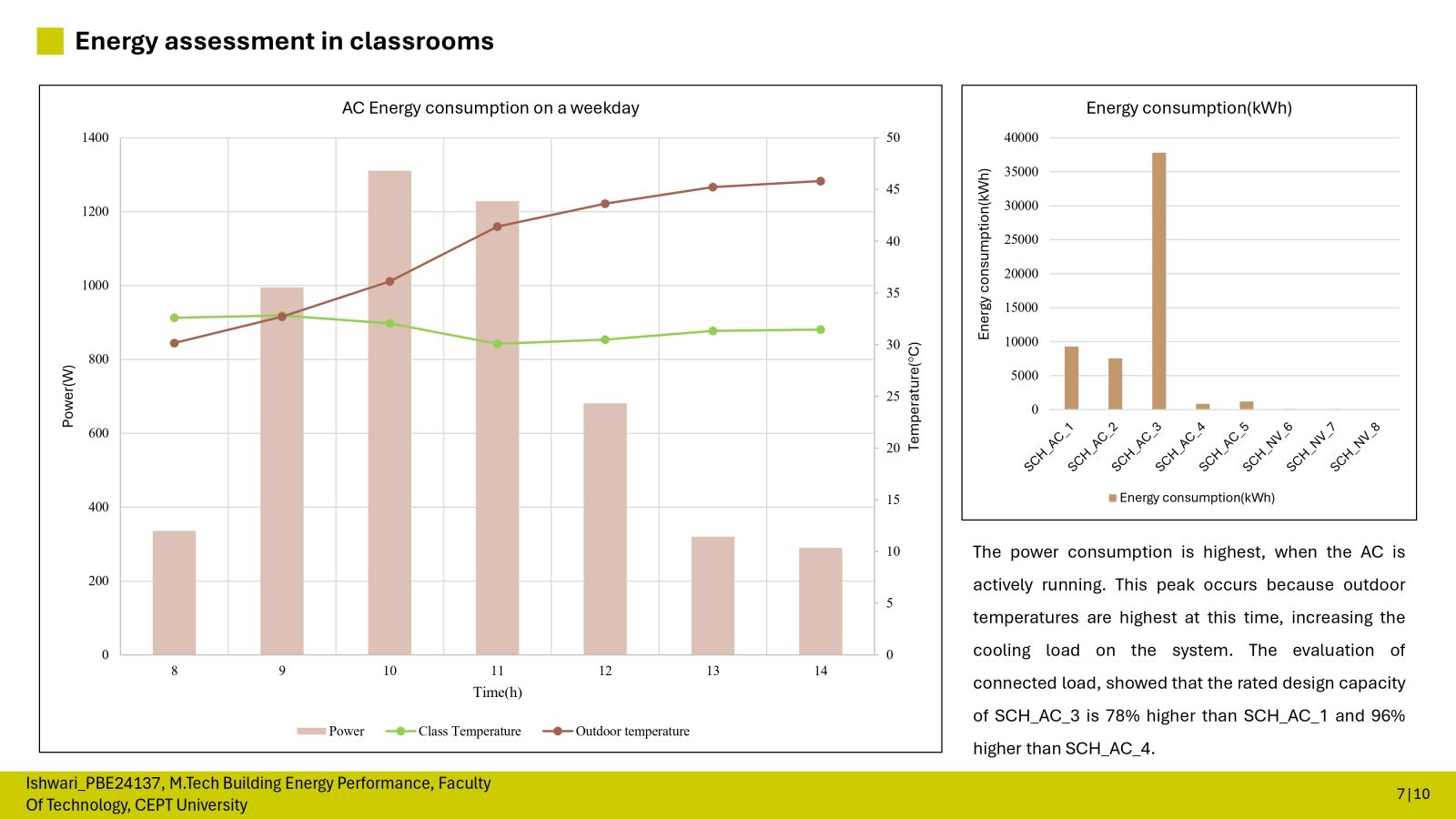
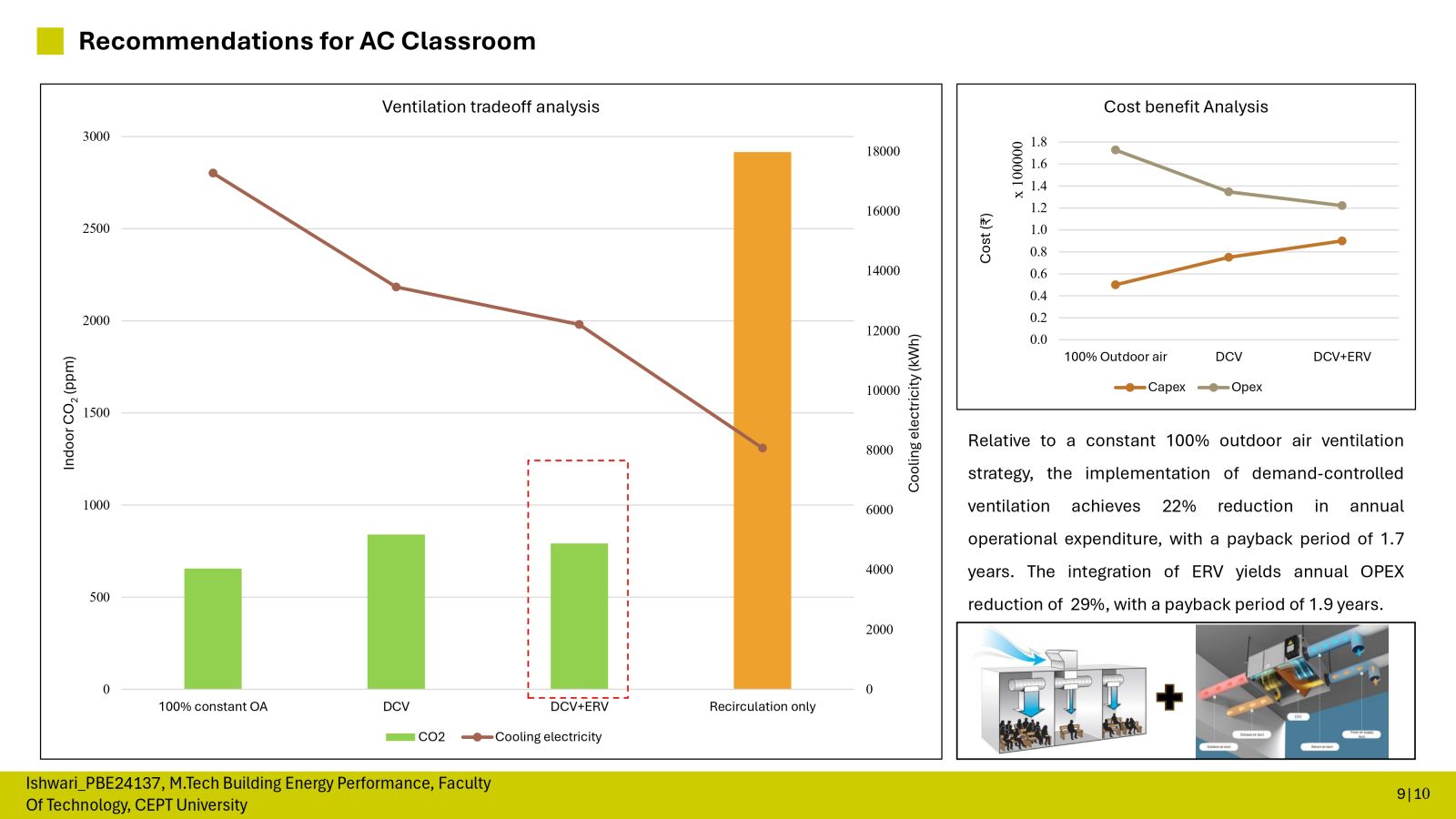
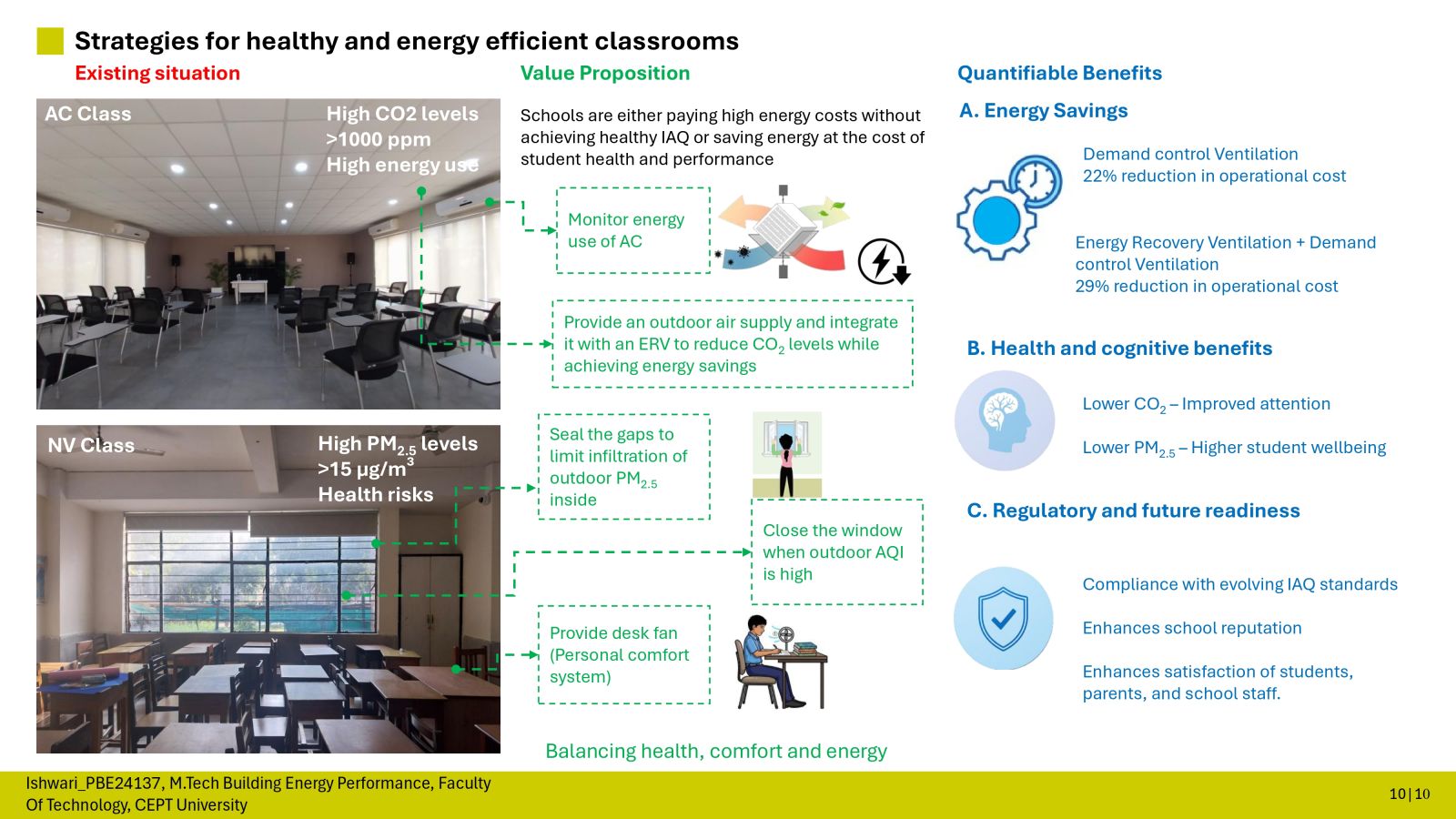
Indoor air quality cannot be ignored in the design of a school facility, as it directly affects students’ health, well-being and hence, cognitive performance. Students spend nearly 70% of their waking time in classrooms, placing them at higher risk of poor air quality. Drawing on primary Indoor Air Quality (IAQ) data gathered from 8 schools in India, over a three-month period, this study integrates multi-domain datasets to establish correlations between indoor environmental conditions and building energy consumption. The analysis incorporates continuous measurements of key parameters, including indoor and outdoor meteorological conditions, relative humidity, temperature, carbon dioxide (CO2) levels, and particulate matter PM2.5 and PM10.