Your browser is out-of-date!
For a richer surfing experience on our website, please update your browser. Update my browser now!
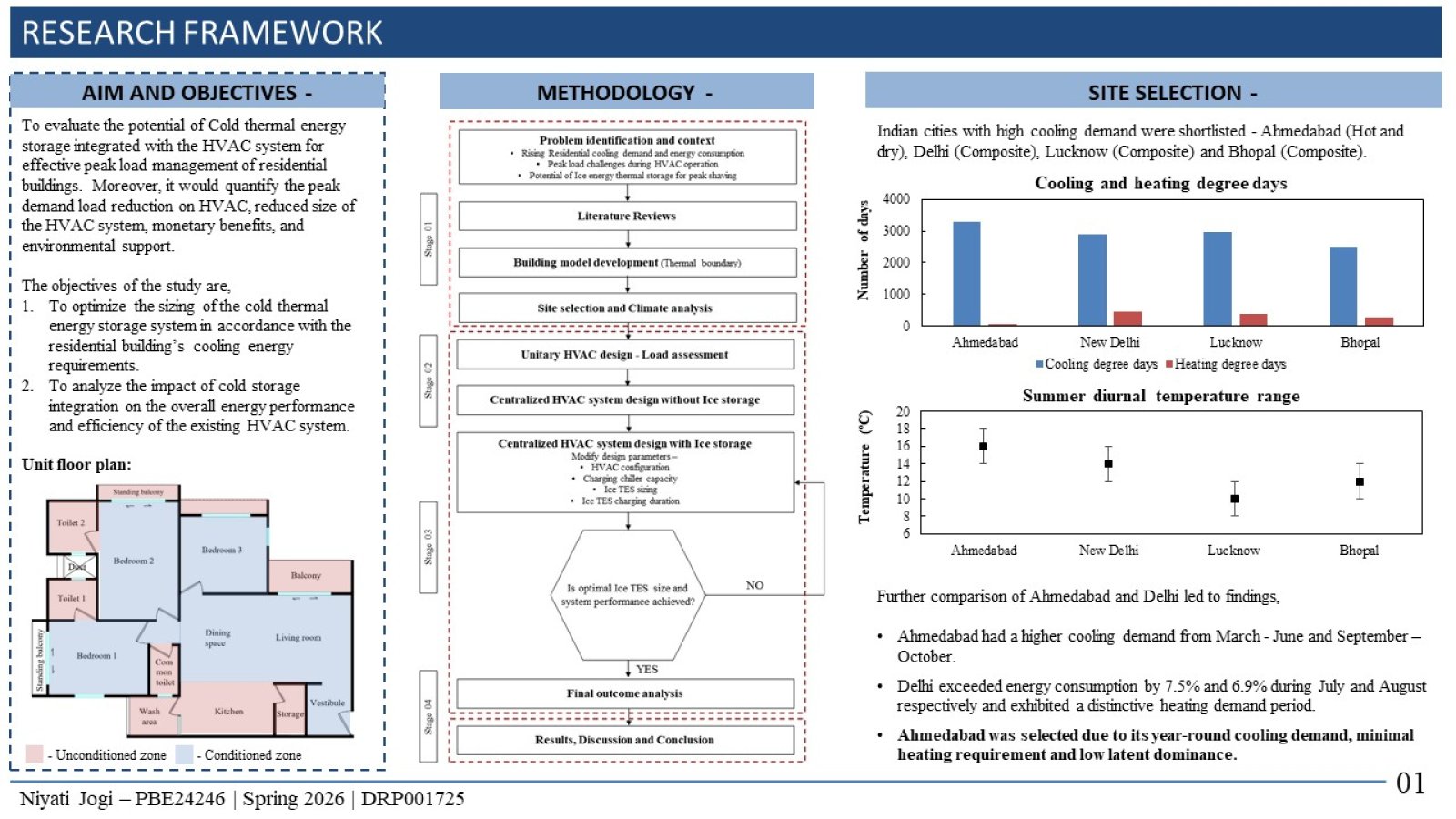
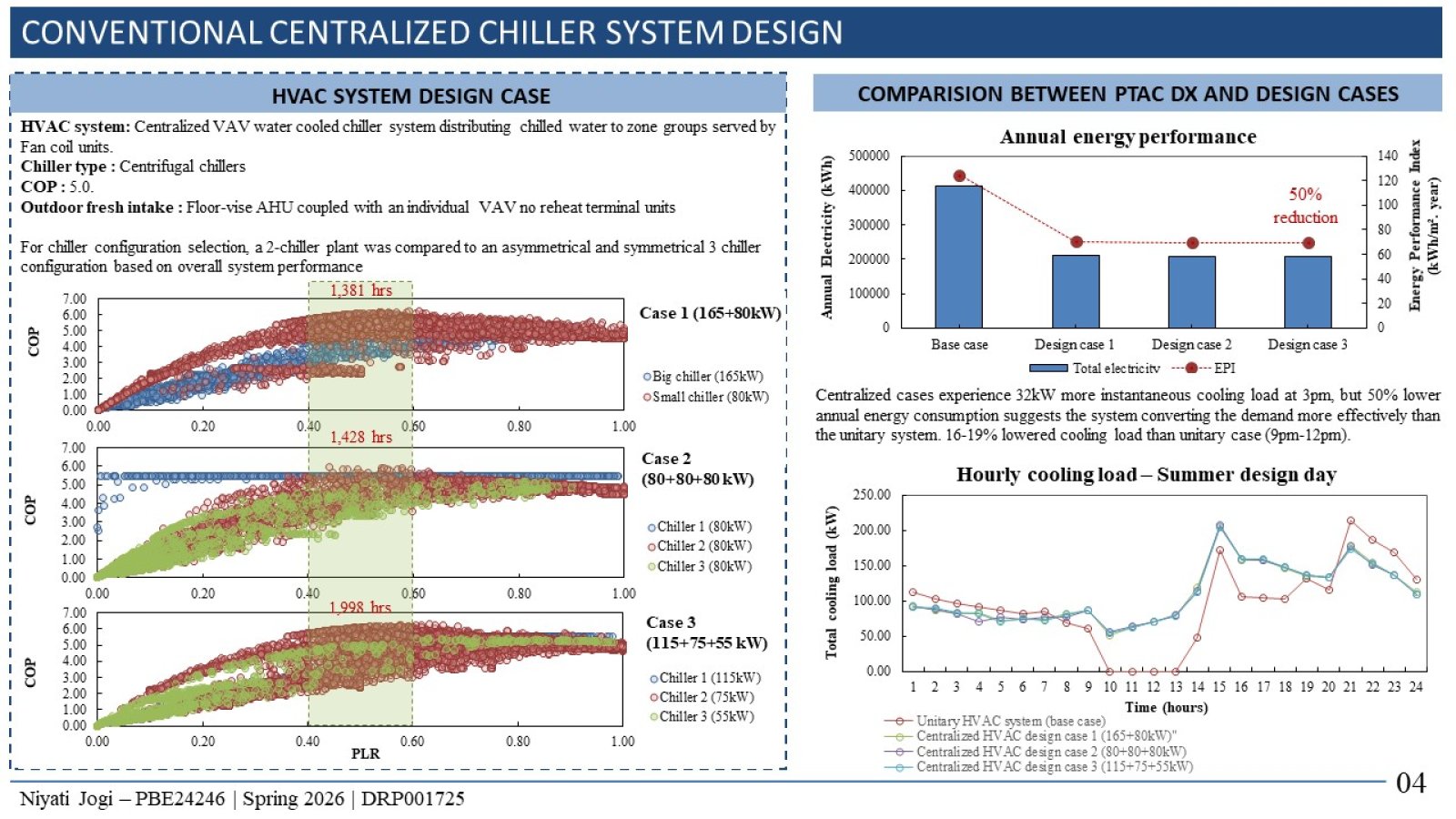
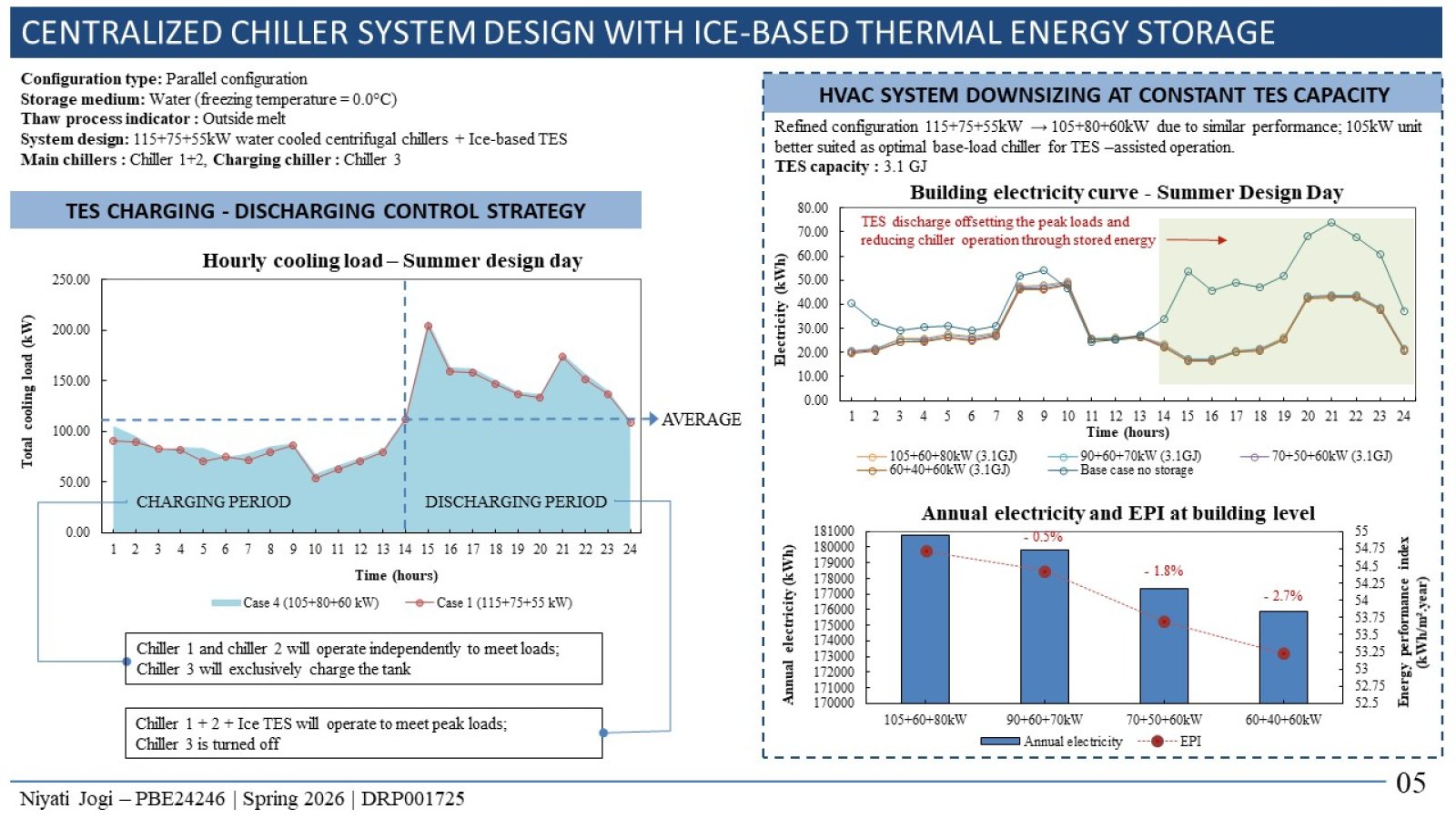
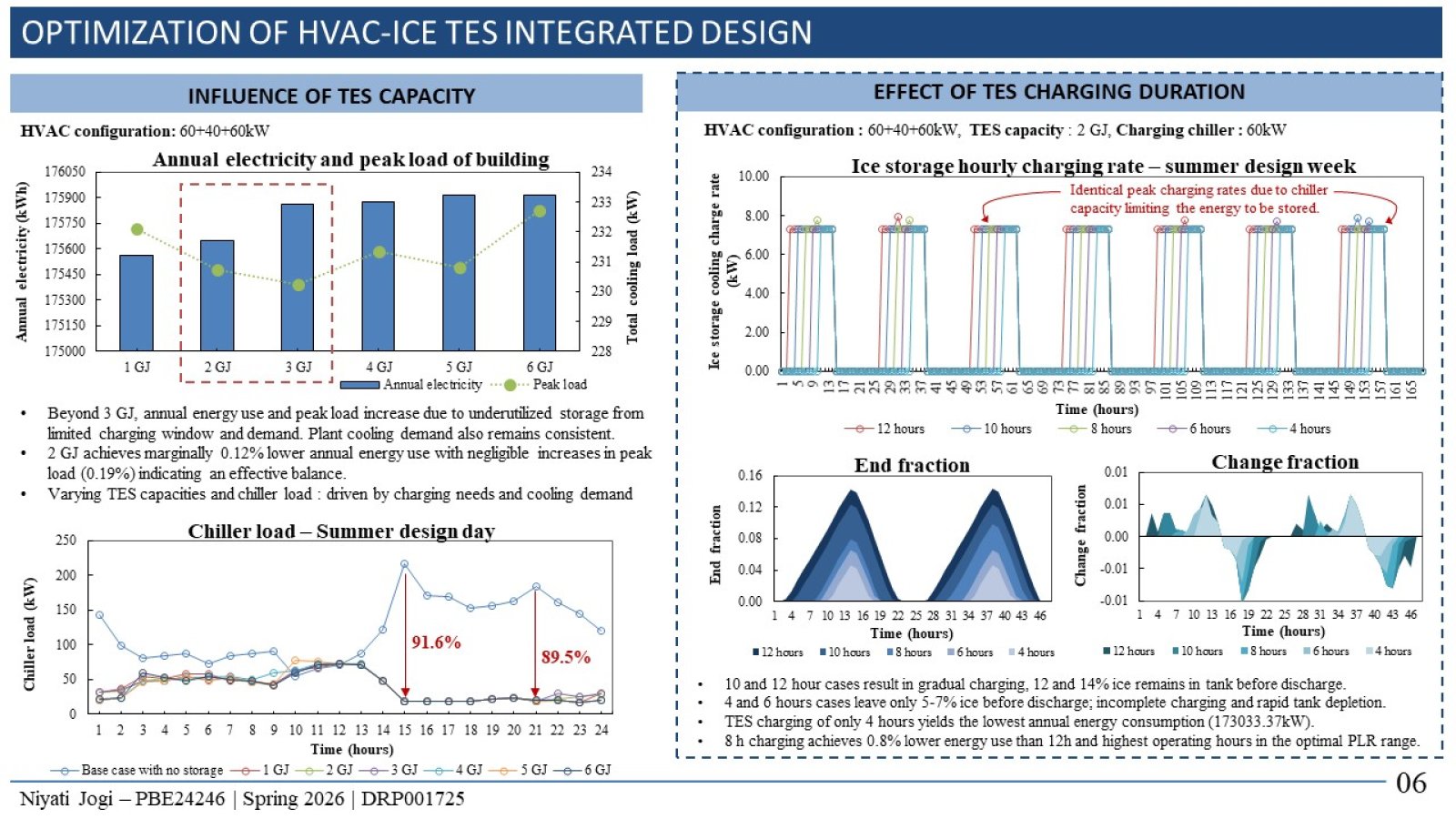
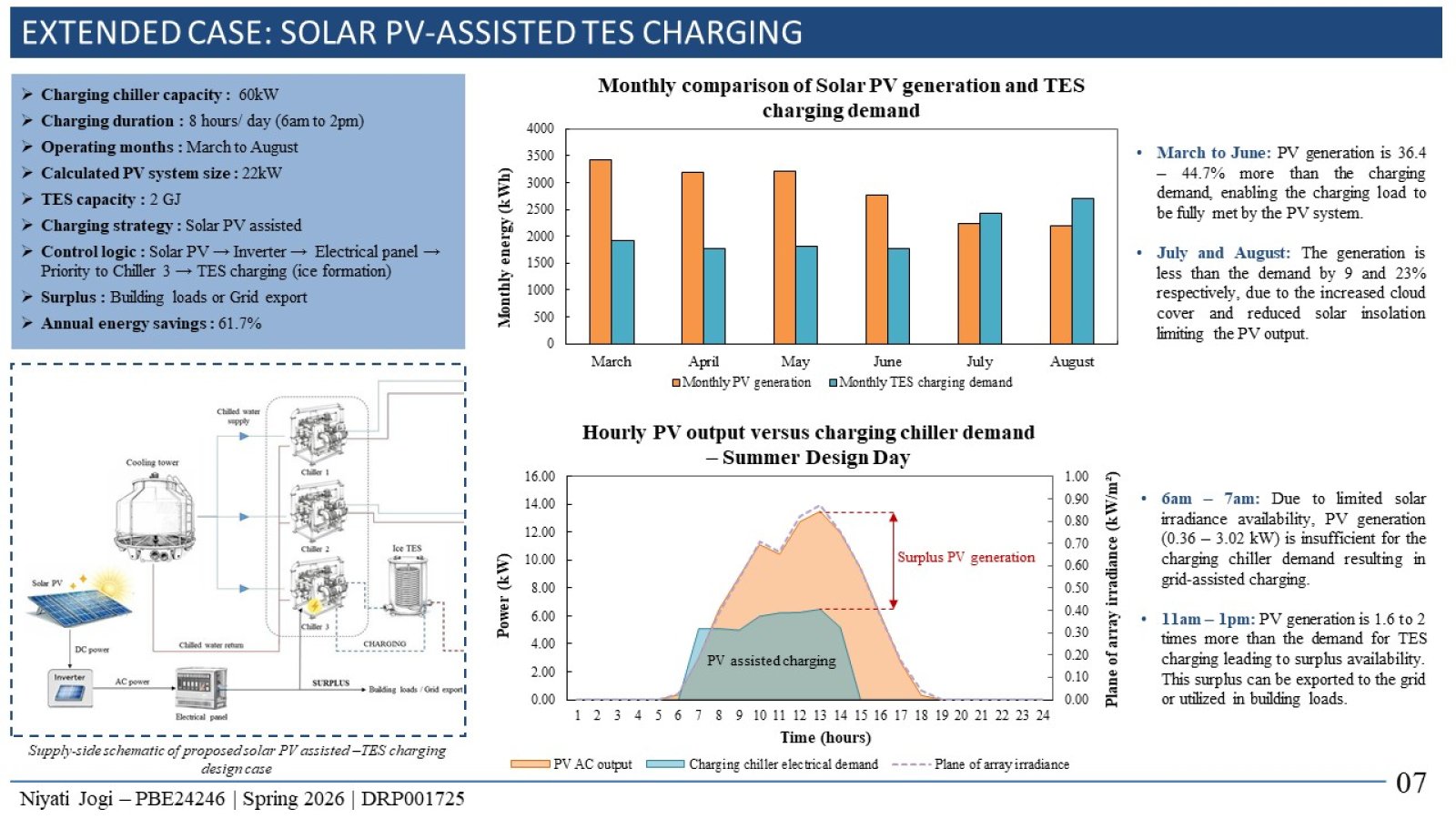
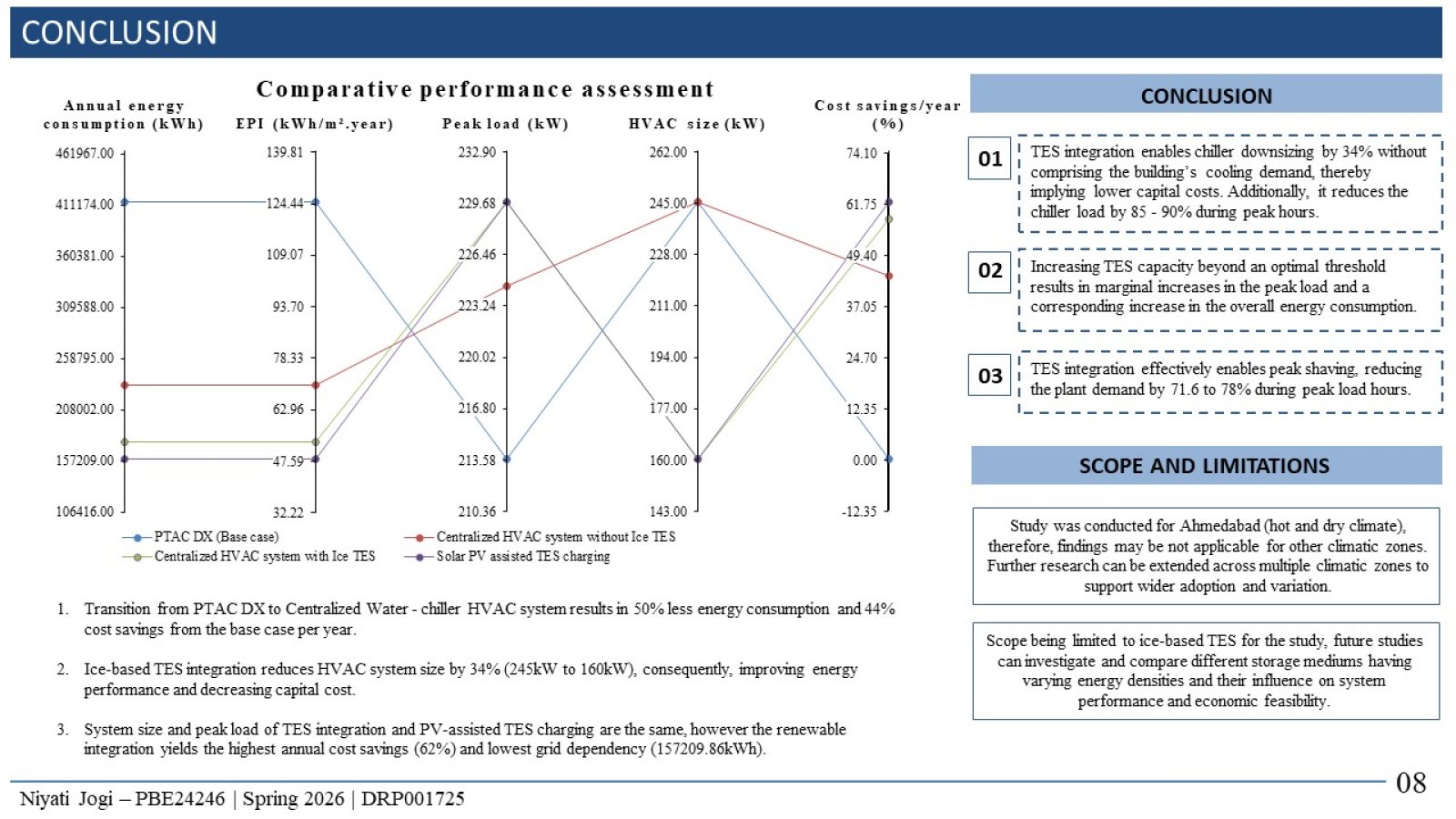
The building sector alone accounts for nearly 35–40% of total electricity consumption across the globe, primarily driven by thermal energy needs to achieve thermal comfort, such as space heating, cooling, and air conditioning. In residential buildings, the energy demand is highly influenced by the Heating, Ventilation, and Air-conditioning (HVAC) systems as the operation of HVAC systems dominates end-use electricity consumption and exhibits variability in load profiles across daily, weekly, and monthly cycles. During peak load hours, the HVAC system operates at high capacity to meet demand. This significantly increases the energy consumption, places substantial stress on the grid, and increases operational costs for occupants due to peak demand charges. This study models and simulates using building energy simulation tools to assess the peak shaving potential of a cold storage–integrated HVAC system in residential buildings. Moreover, the findings aim to evaluate the scalability of cold storage functioning as a thermal energy storage, and its role in effective energy management in residential buildings. Integrating a cold storage with the HVAC systems can enable energy storage during off-peak hours and deployment during the peak hours. In the residential buildings sector, this strategy improves energy efficiency by delivering up to 57.2% energy savings, while also offering economic and environmental benefits. This study may be useful for the stakeholders working on building energy management.