Your browser is out-of-date!
For a richer surfing experience on our website, please update your browser. Update my browser now!
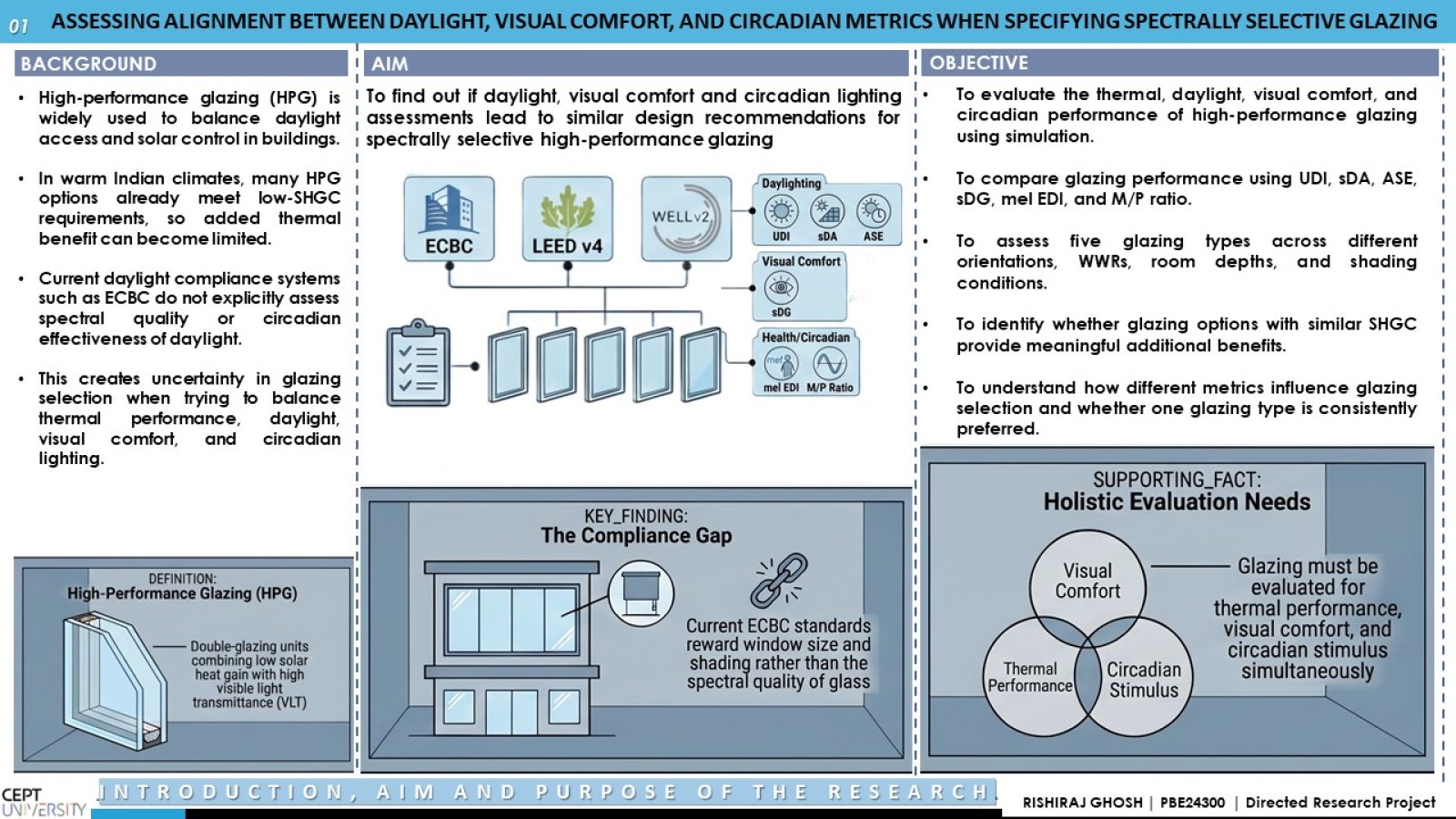
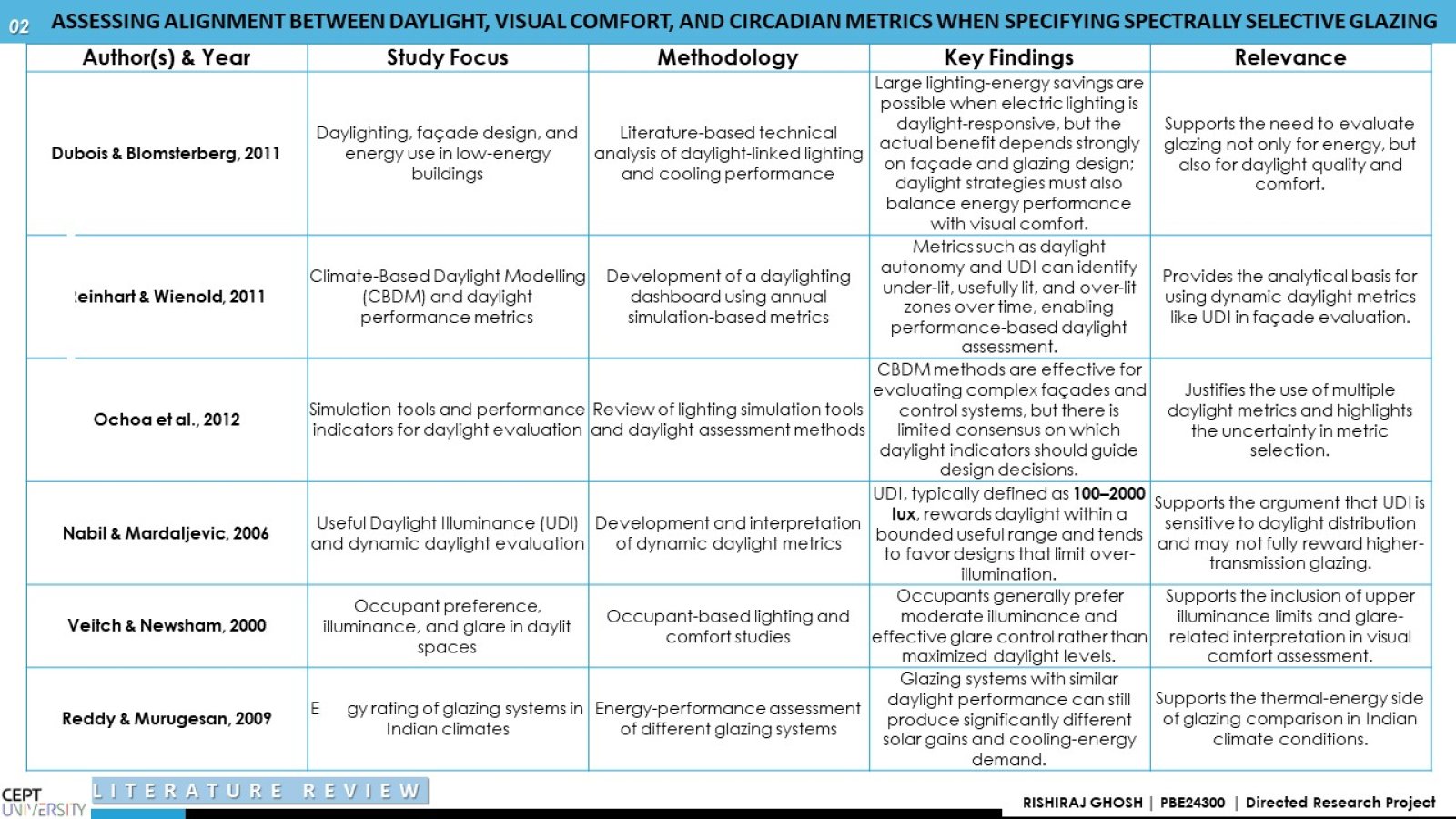
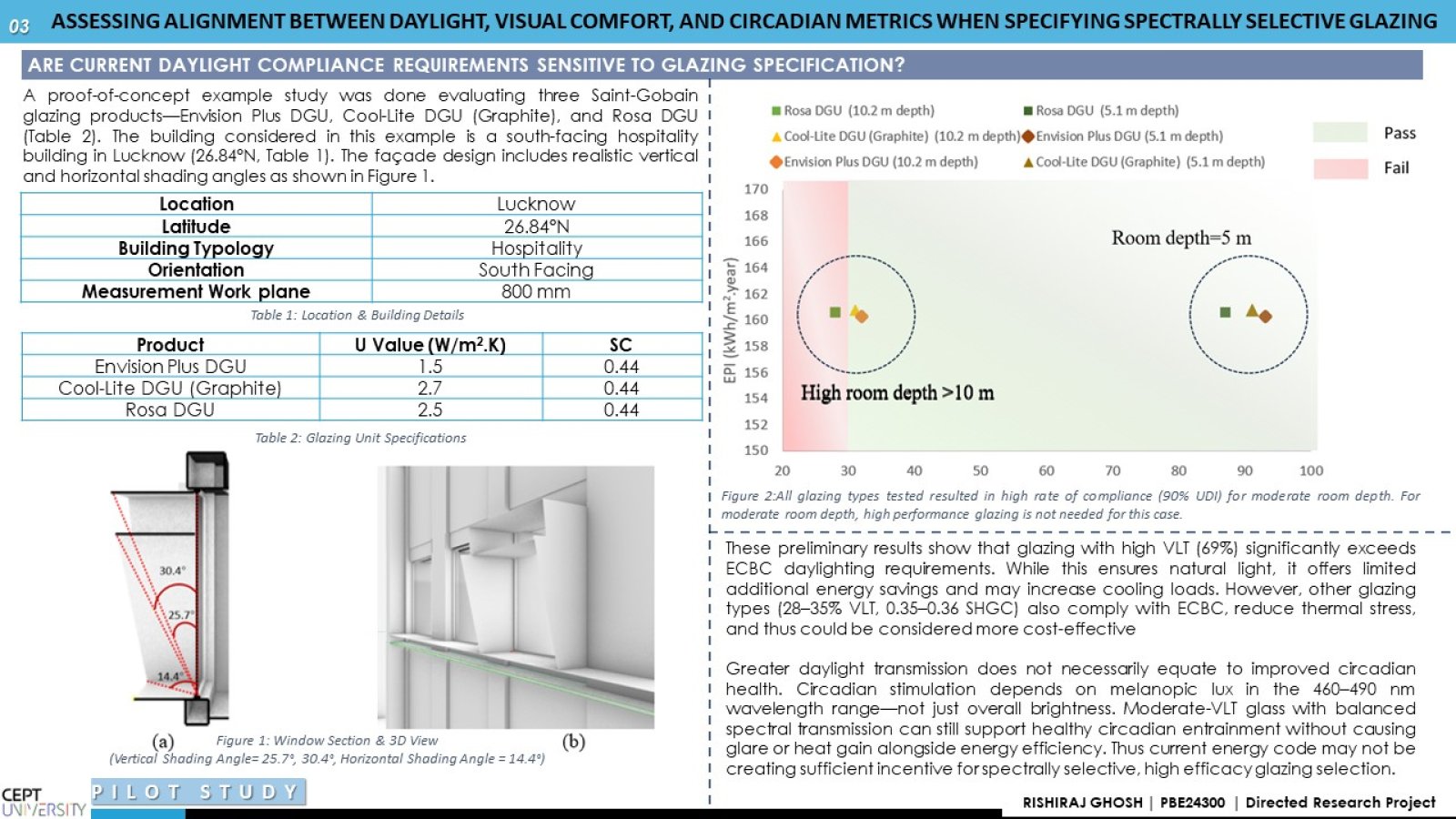
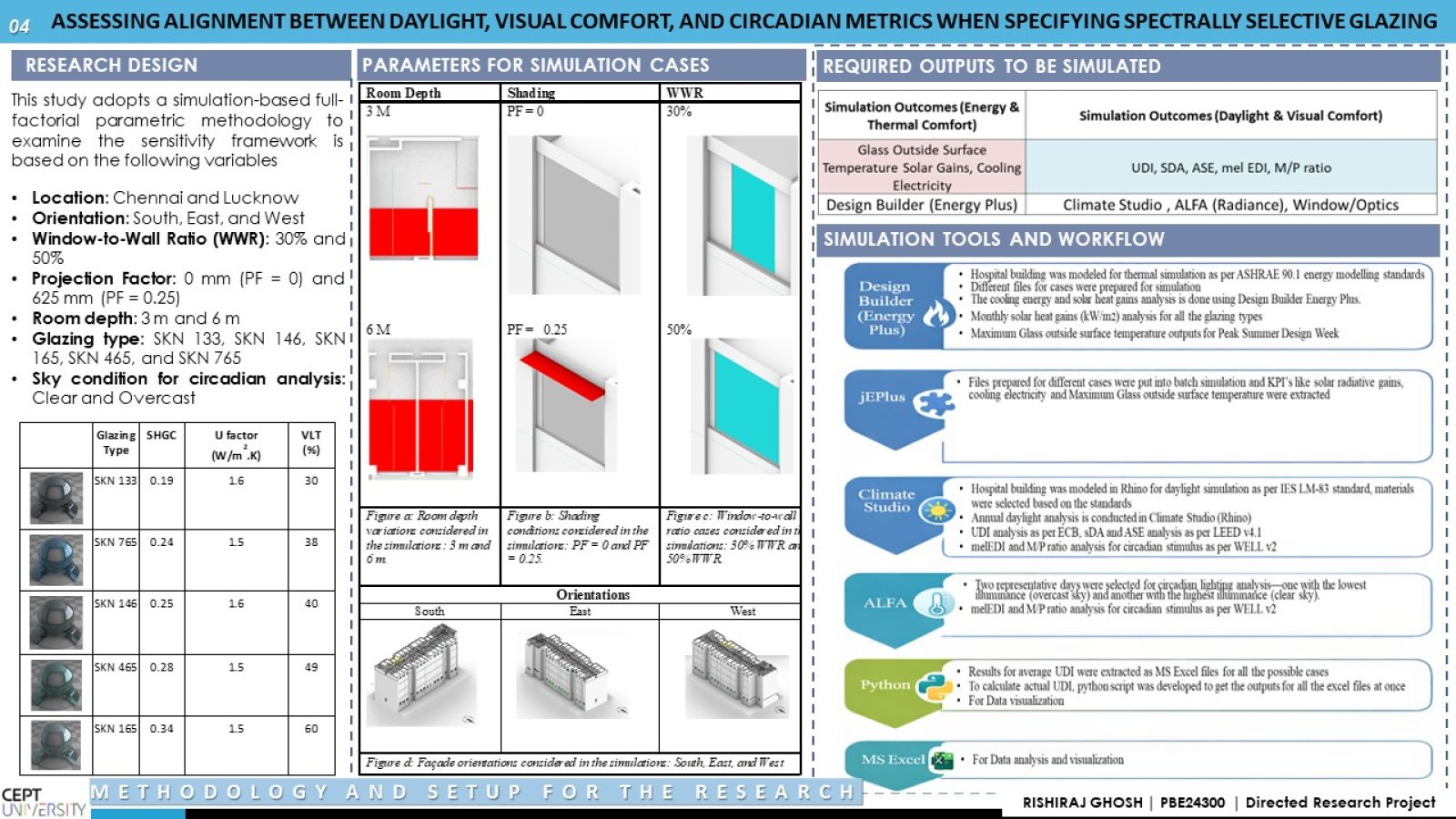
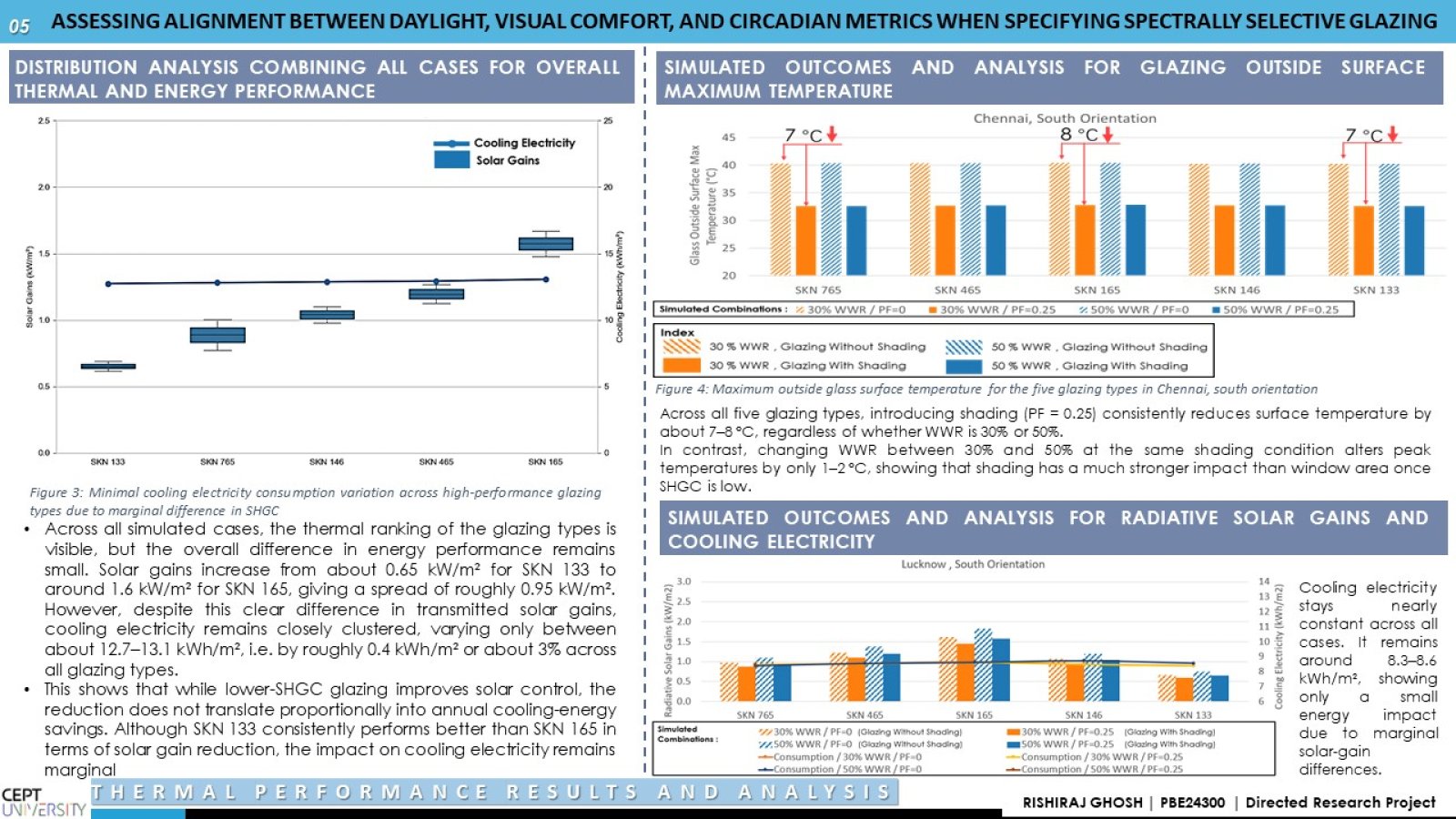
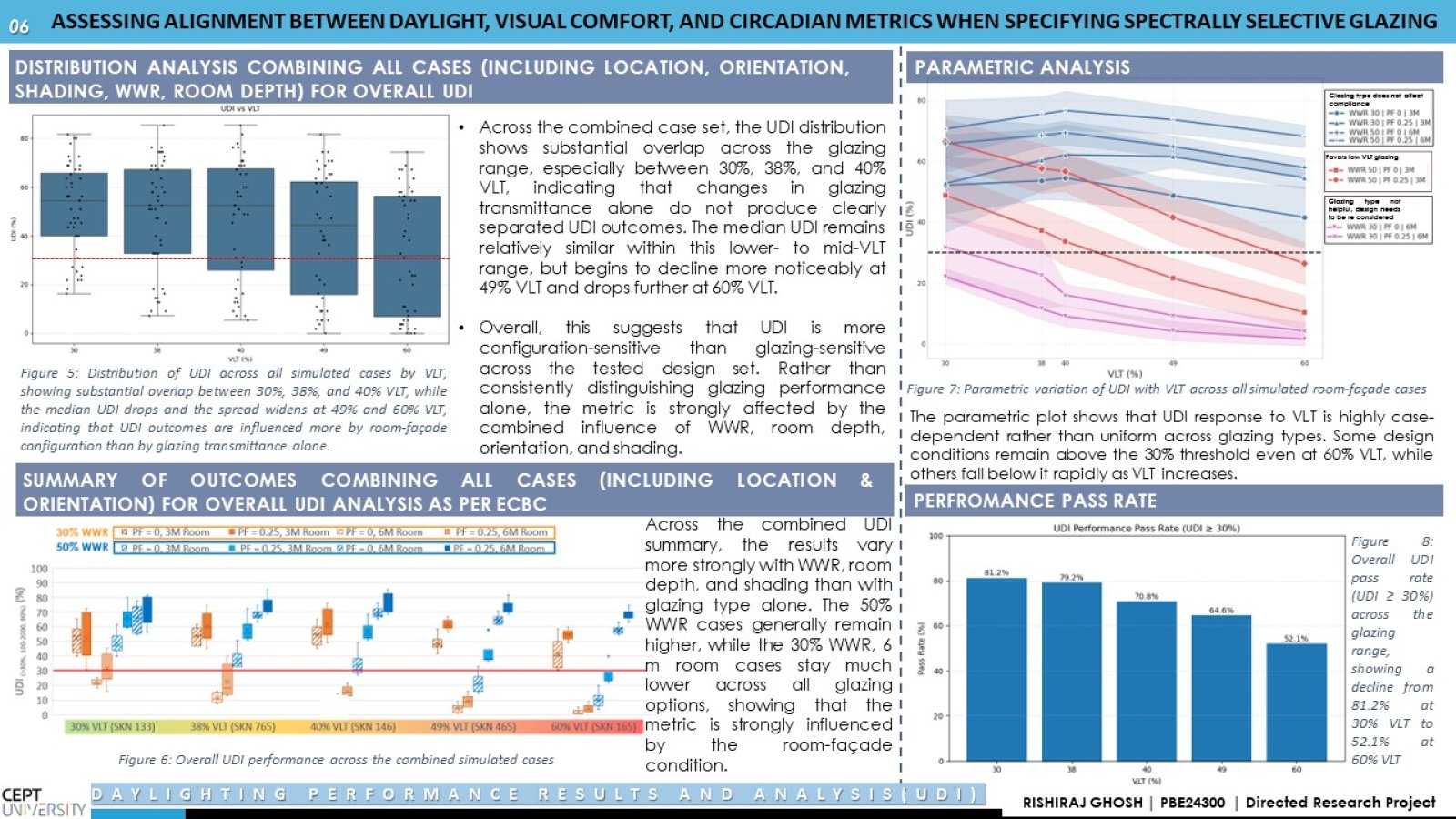
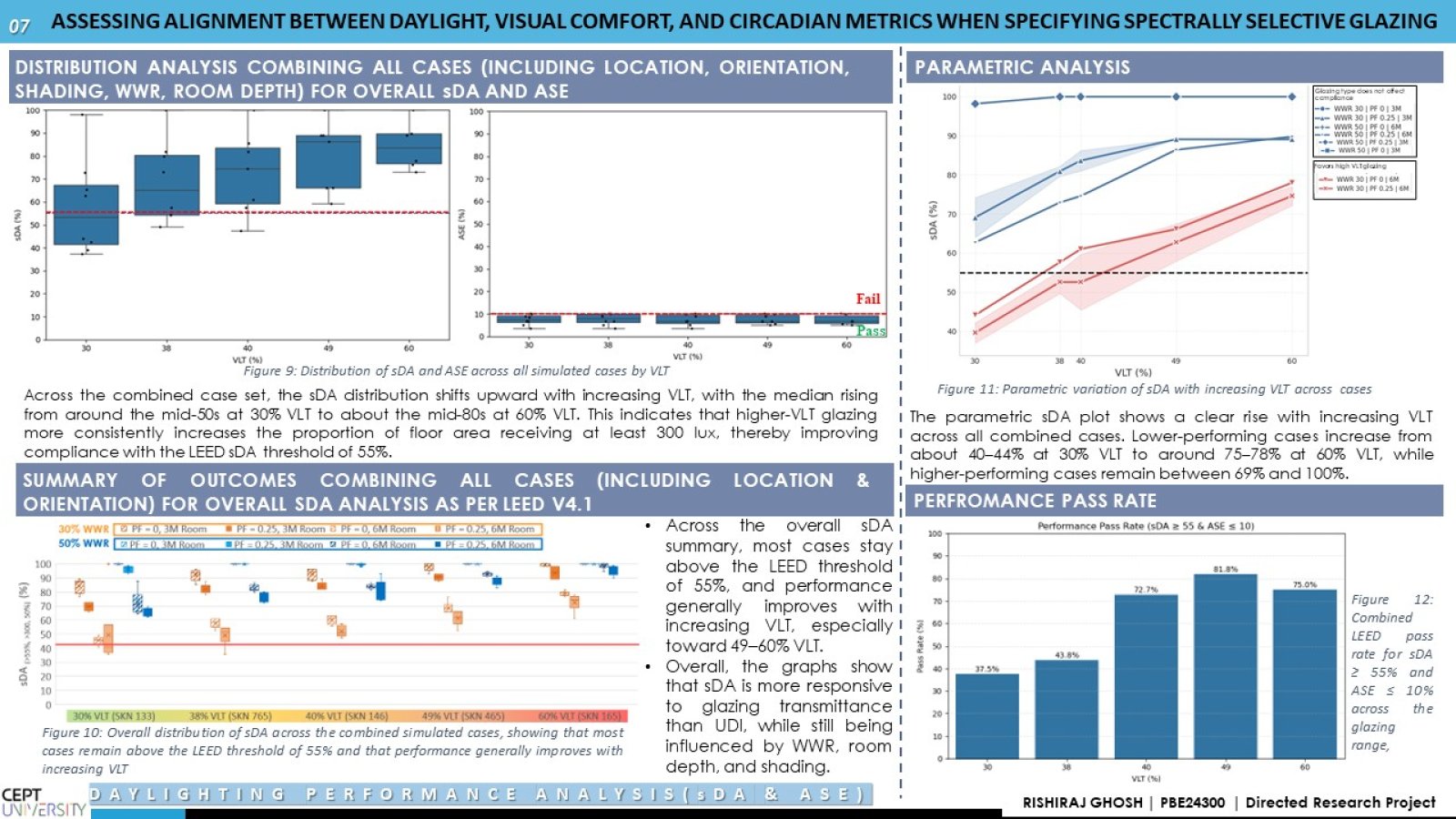
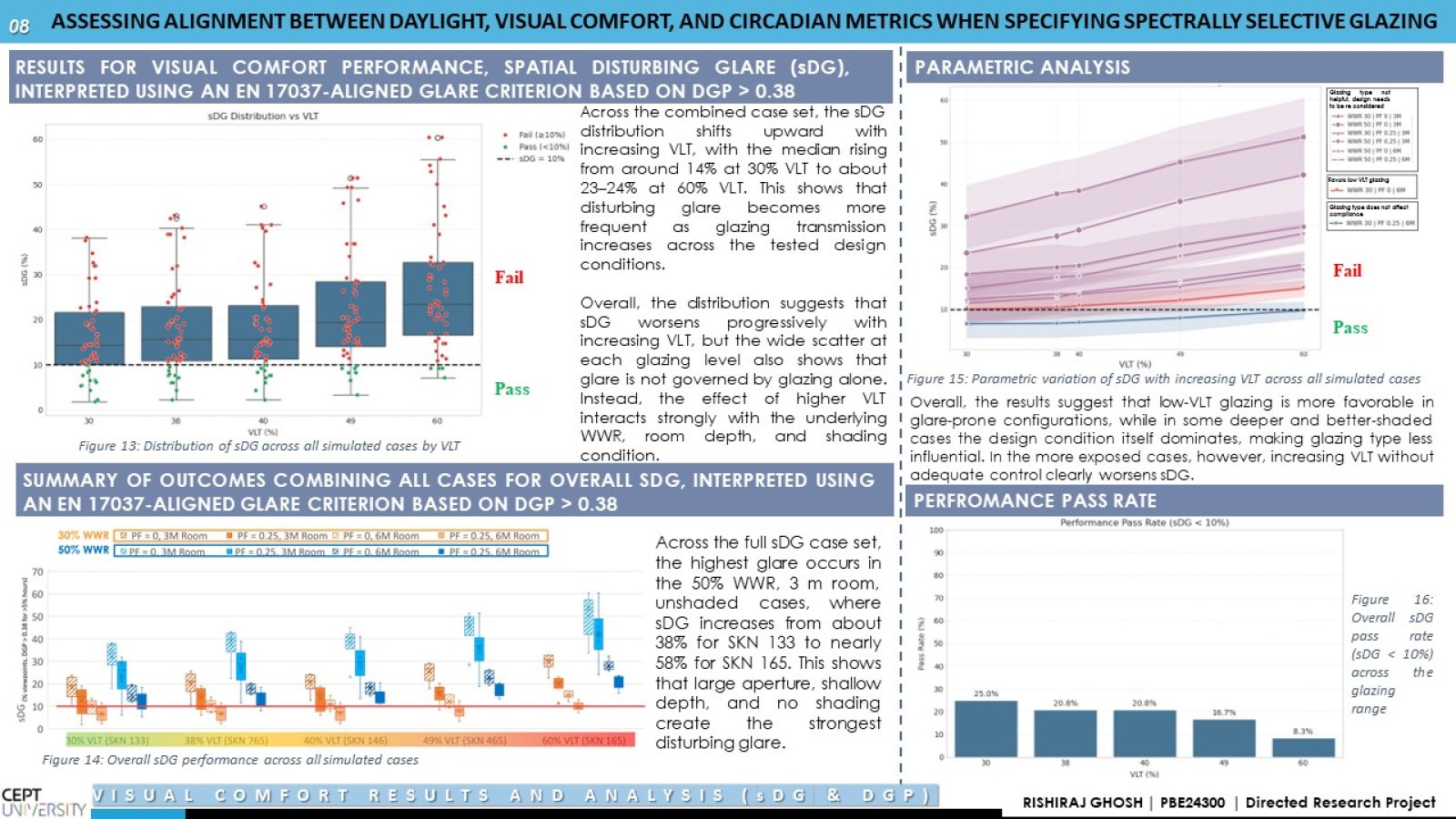
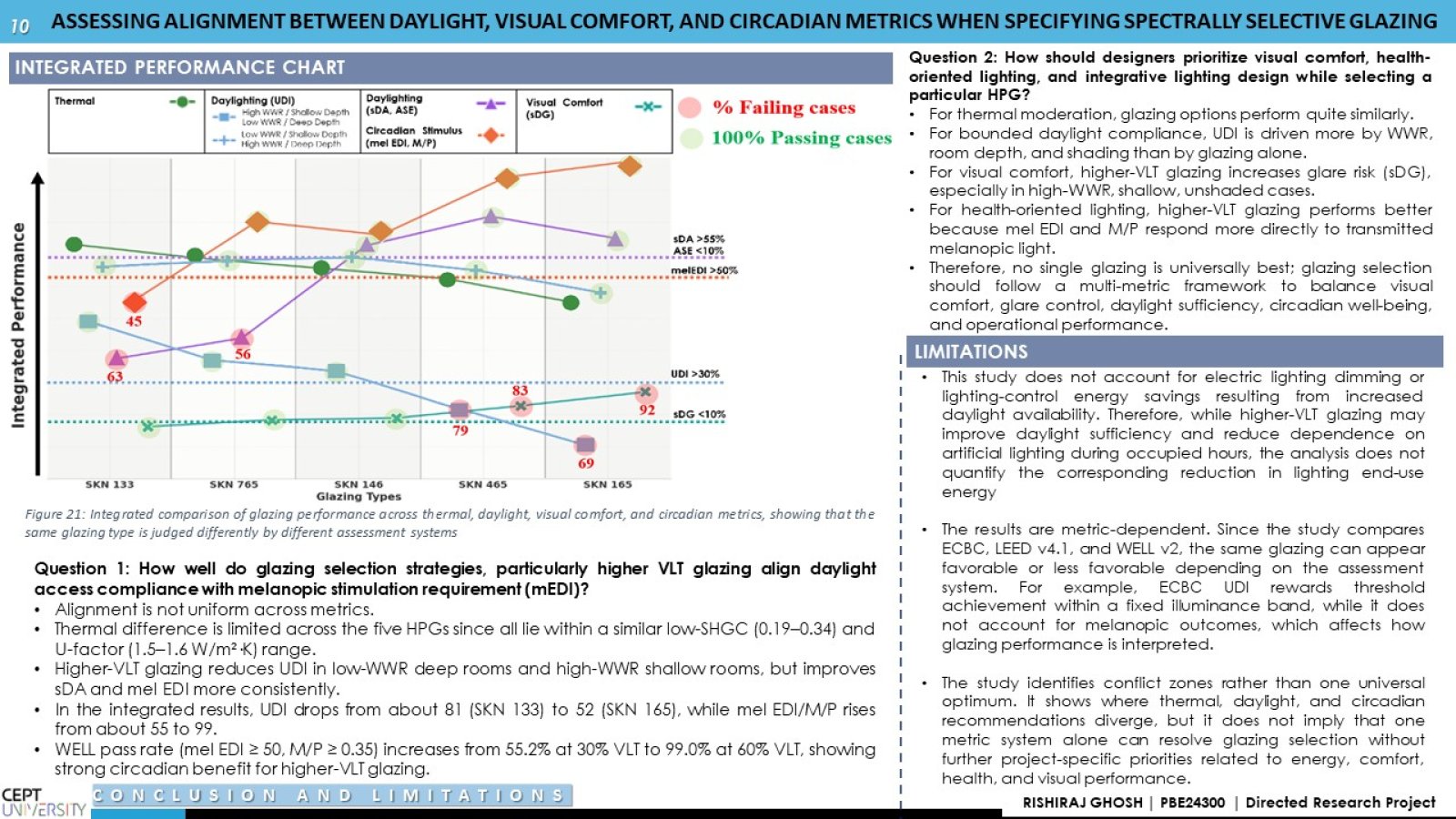
Existing studies show that glazing with different Visual Light Transmittance (VLT) can achieve similar Useful Daylight Illuminance (UDI) compliance, despite differing thermal and spectral performance. ECBC’s UDI criteria (100–2000 lux, 90% time) favour moderate WWRs and fixed shading, limiting VLT influence and reducing the advantage of spectrally selective High-Performance Glazing (HPG). This study evaluates thermal, daylight, and melanopic performance of spectrally selective glazing in hospital spaces across Indian hot–humid and composite climates. Results show high-VLT glazing often worsens UDI in non-uniformly daylit spaces, while consistently improving sDA and melanopic EDI, creating uncertainty in balancing visual comfort, health-oriented lighting, and integrative façade design.
View Additional Work