Your browser is out-of-date!
For a richer surfing experience on our website, please update your browser. Update my browser now!
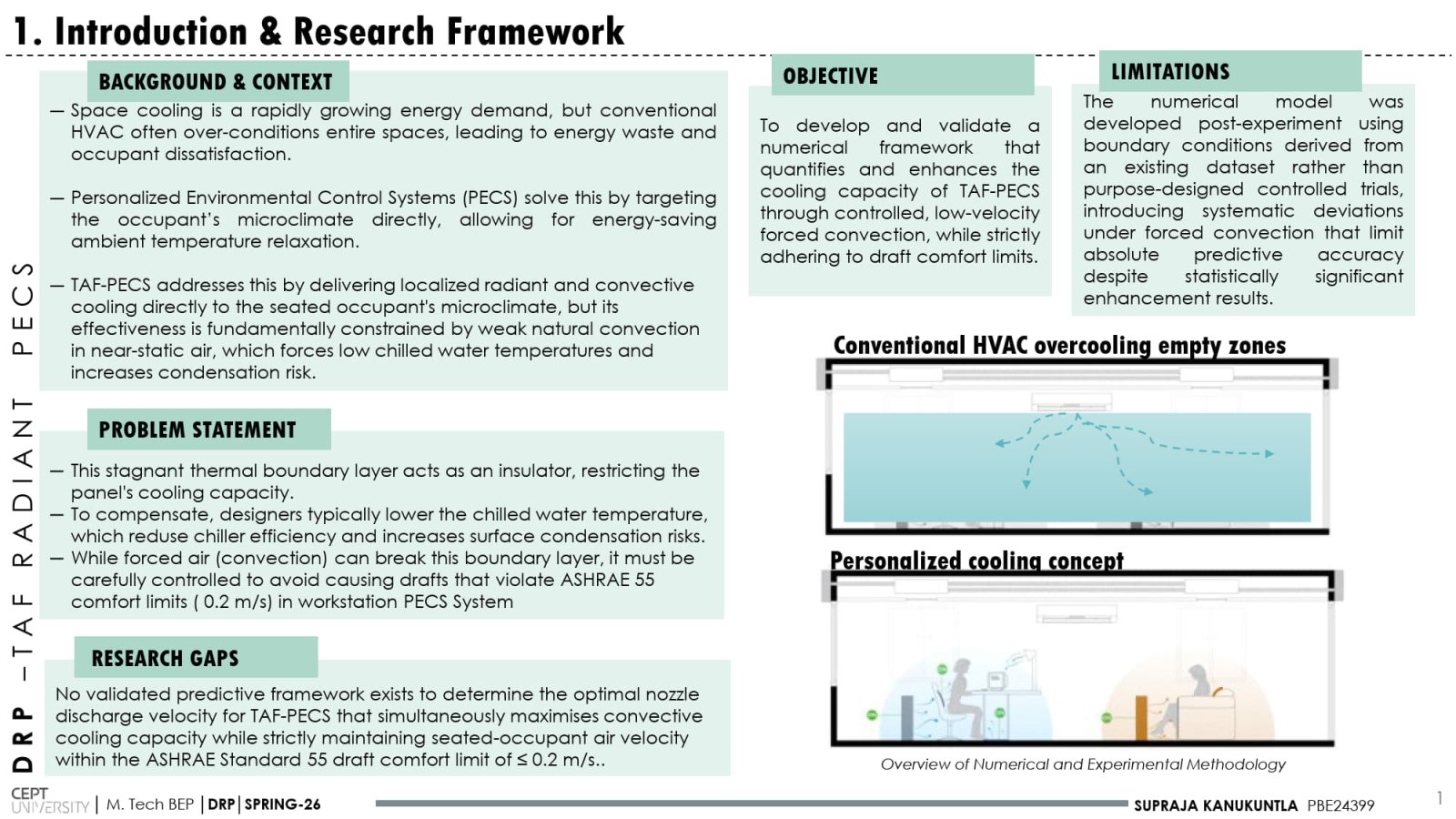
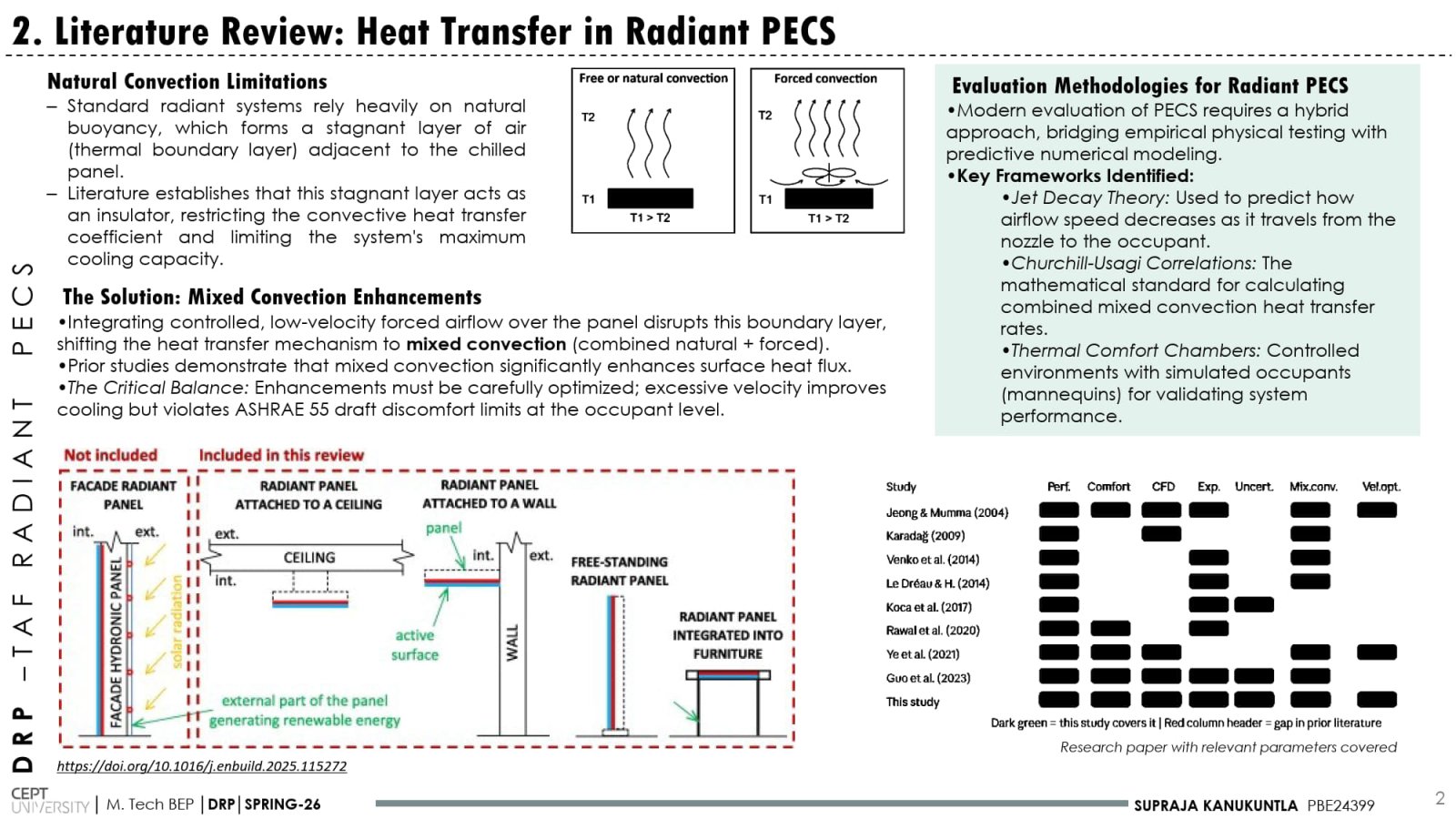
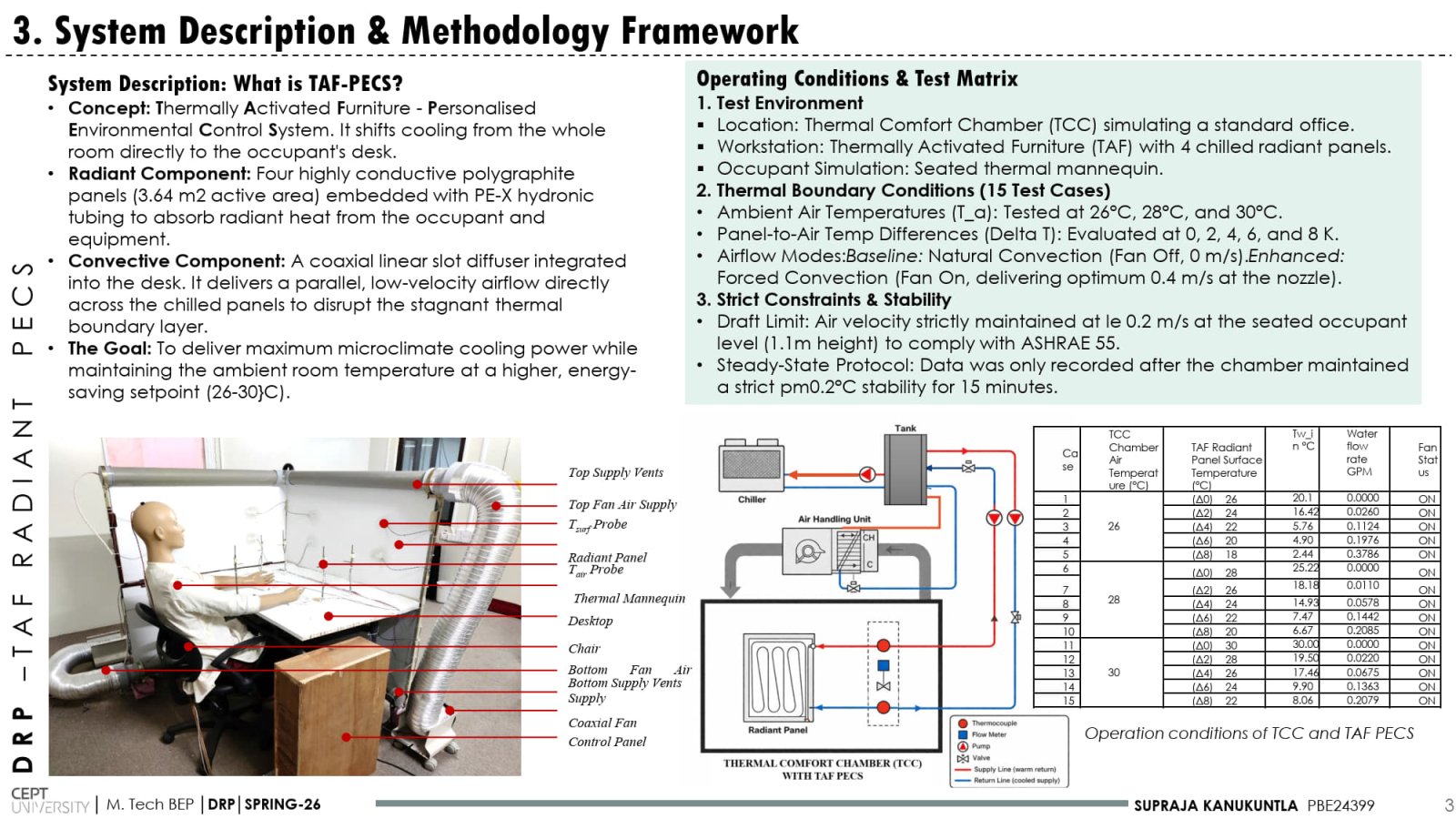
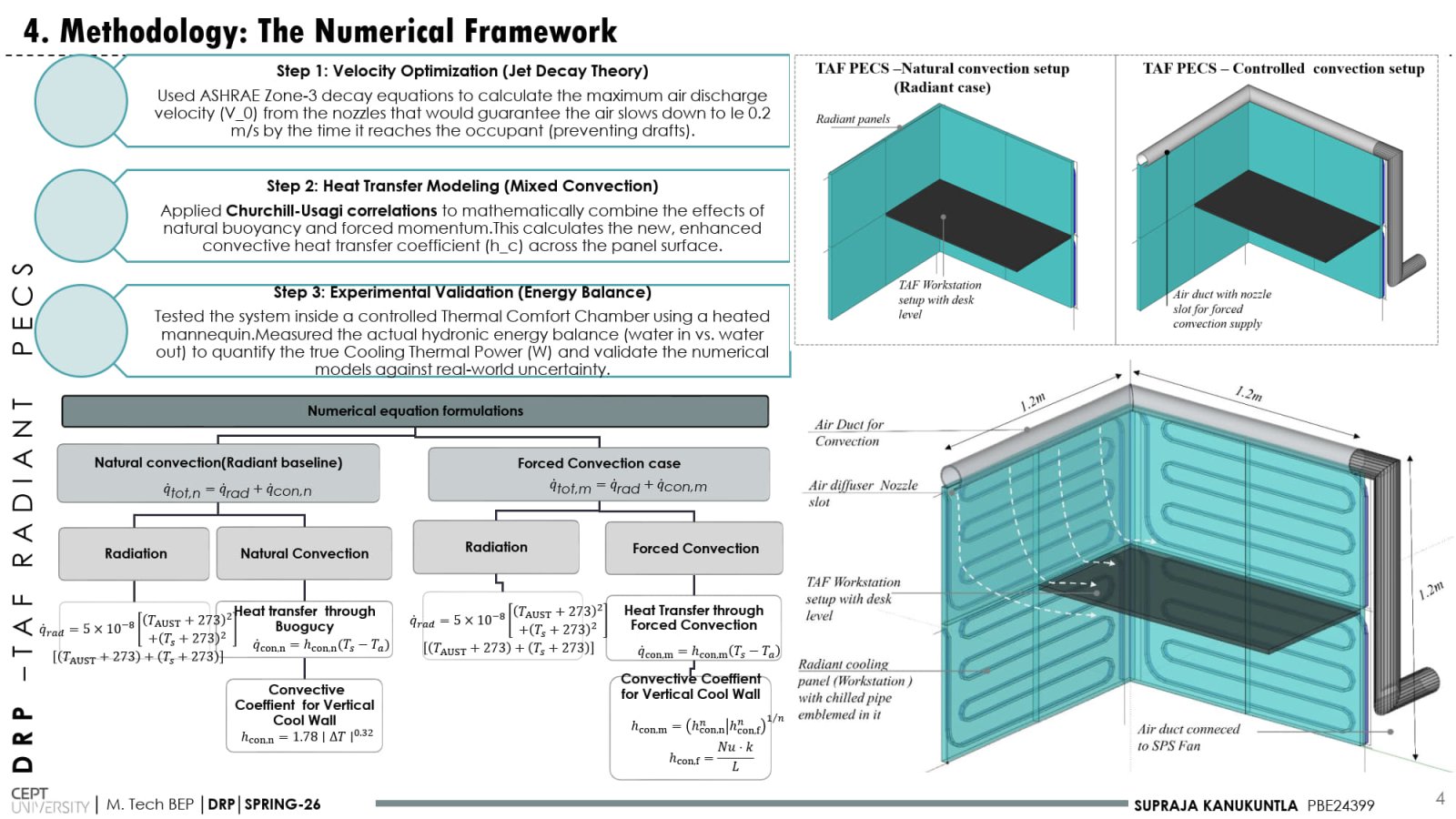
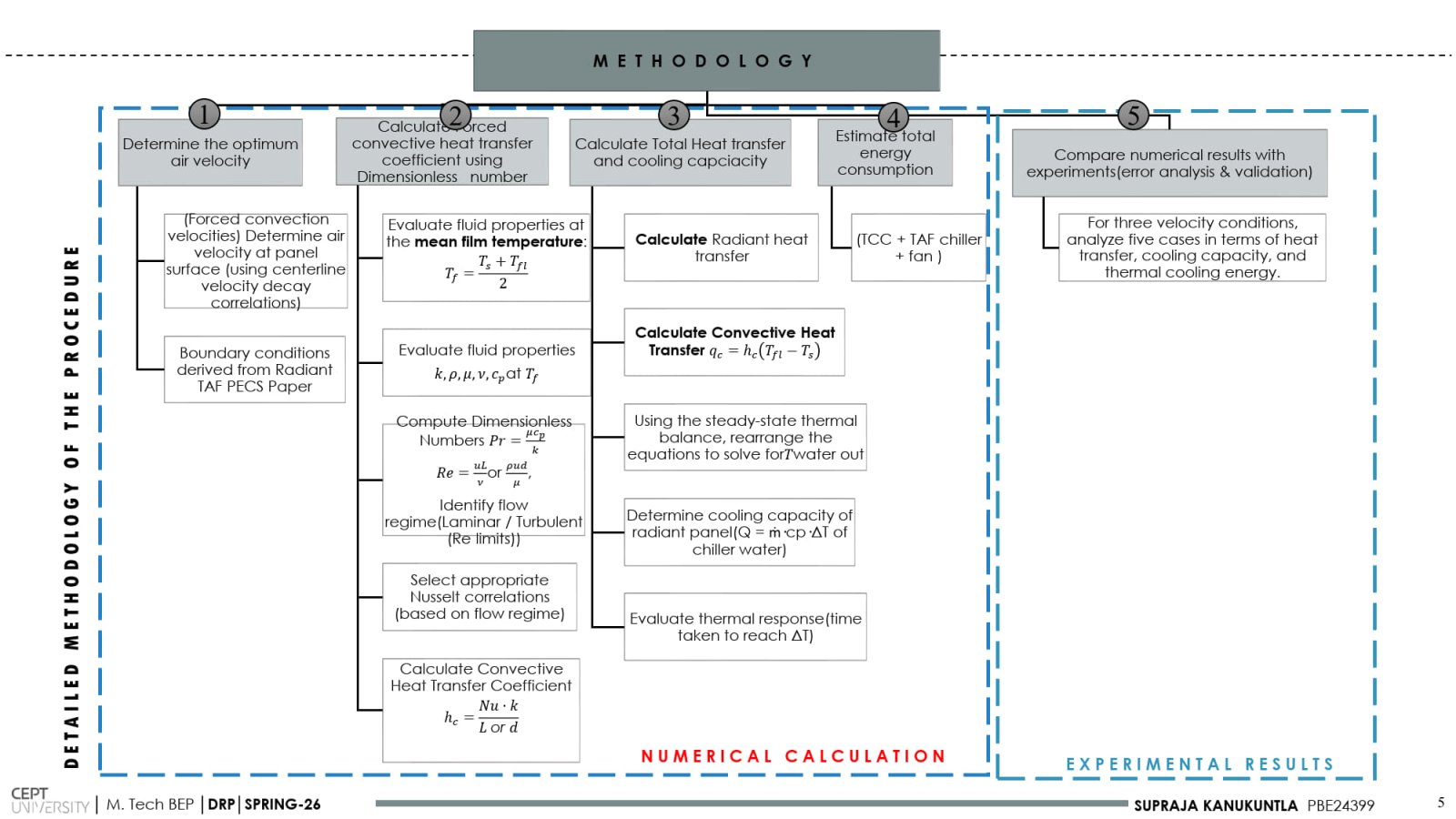
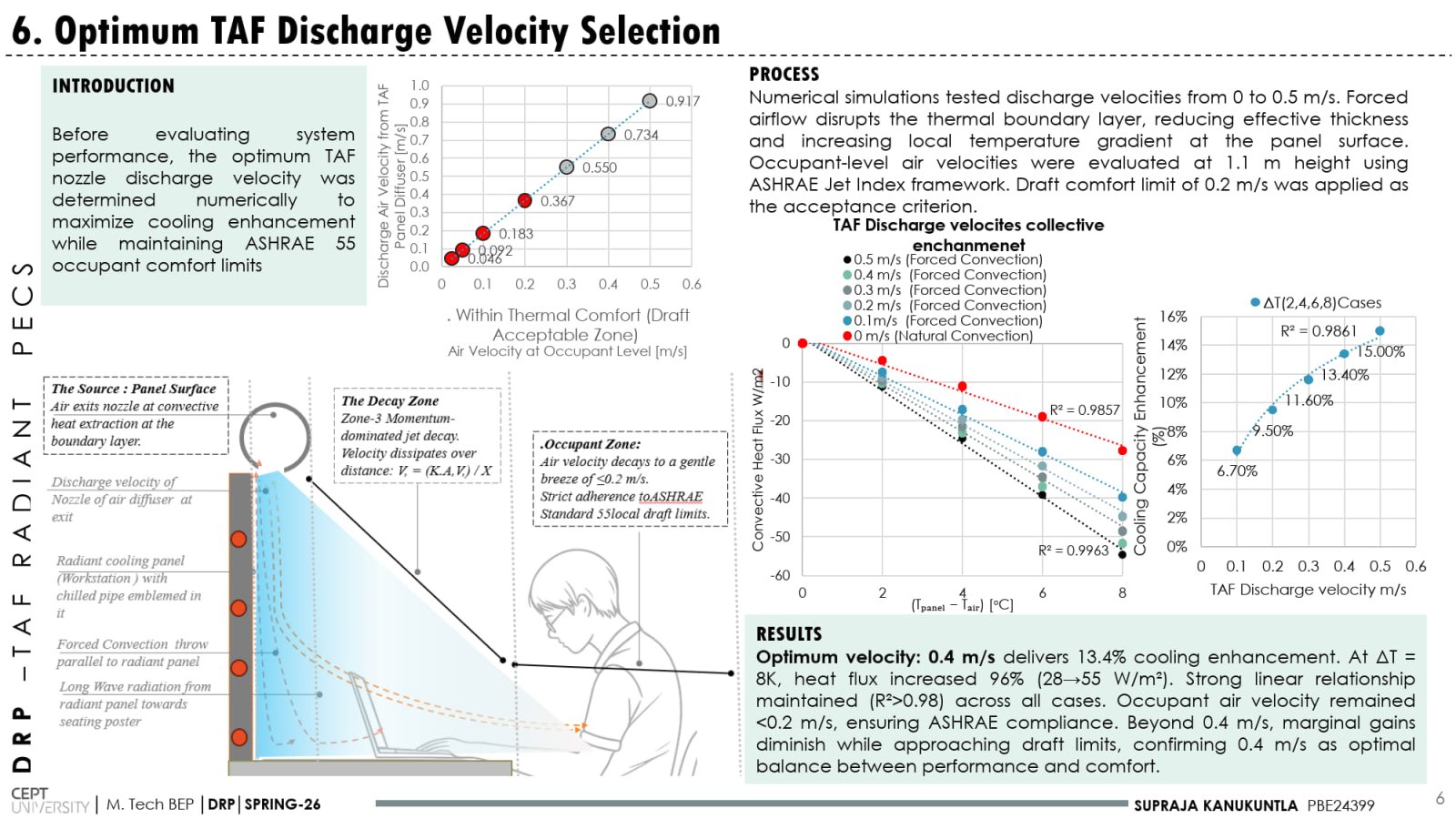
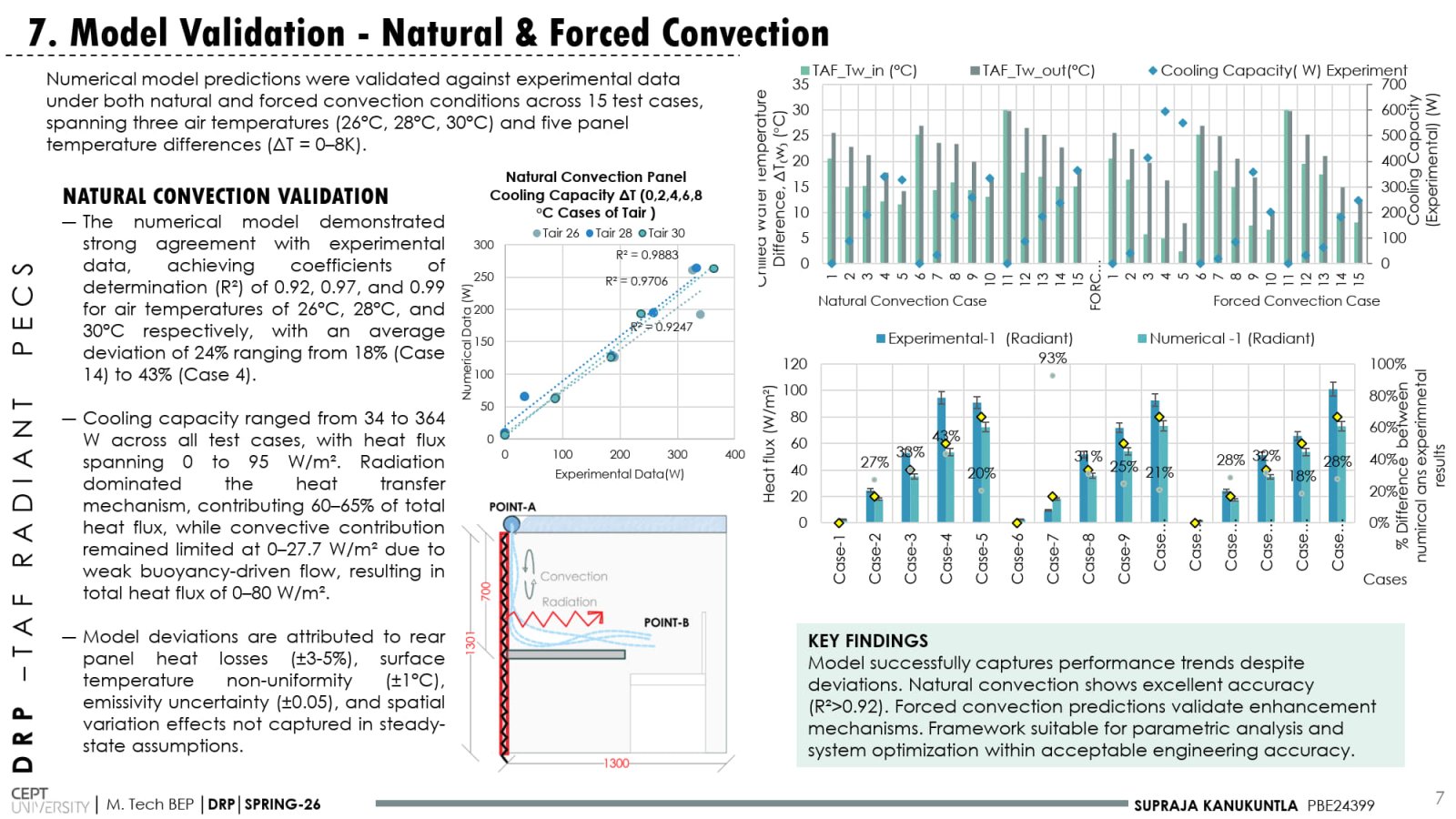
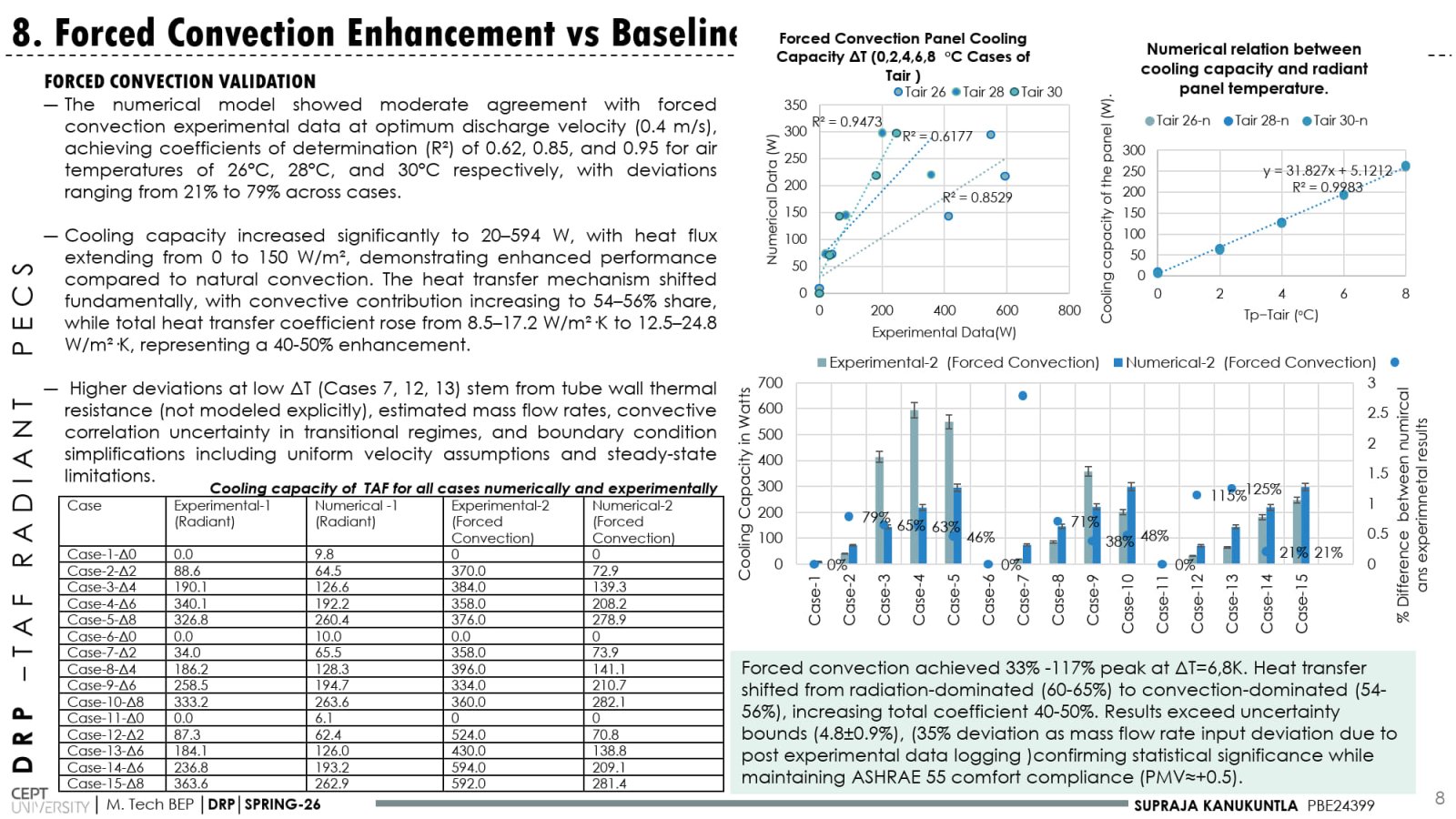
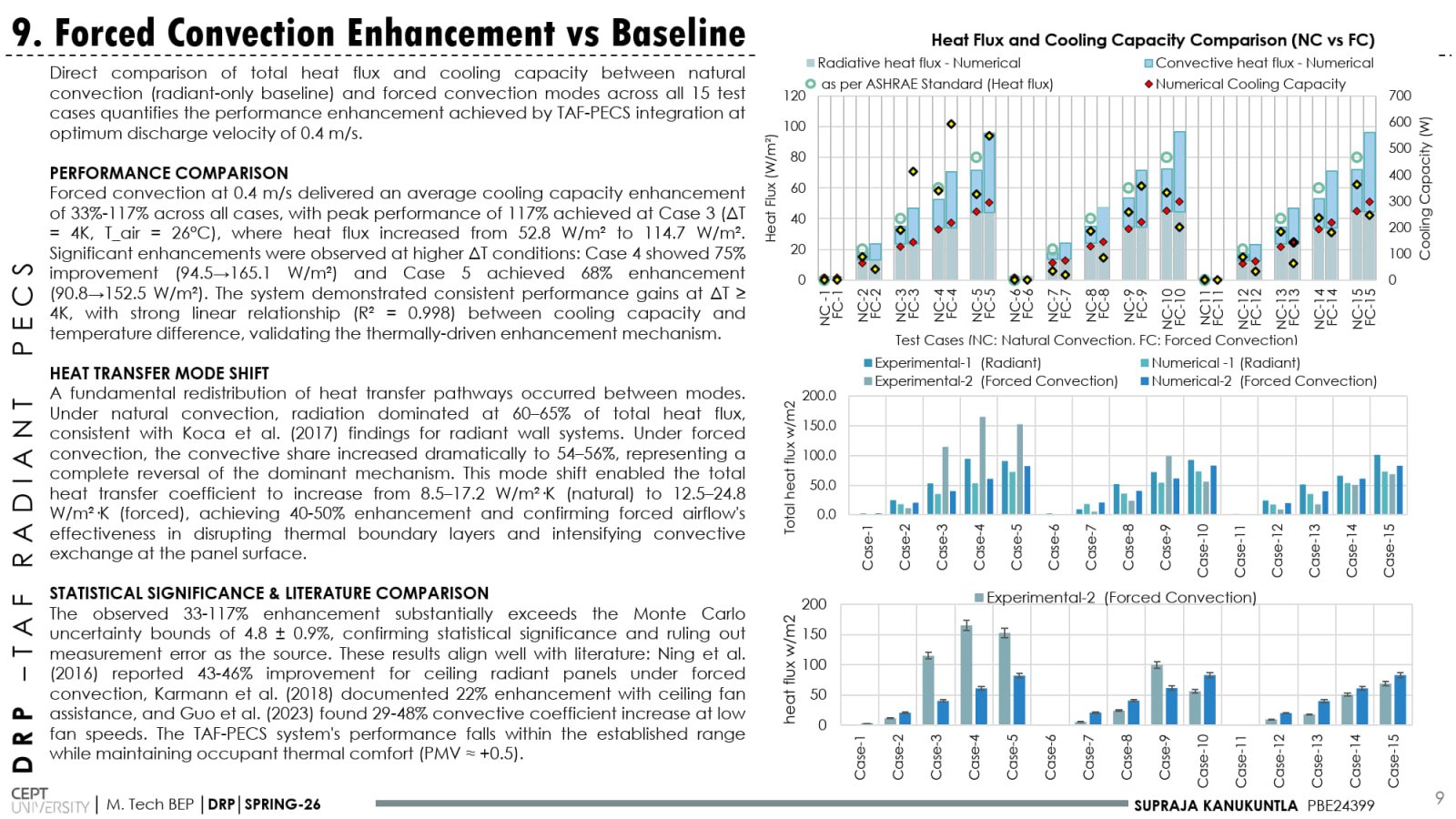
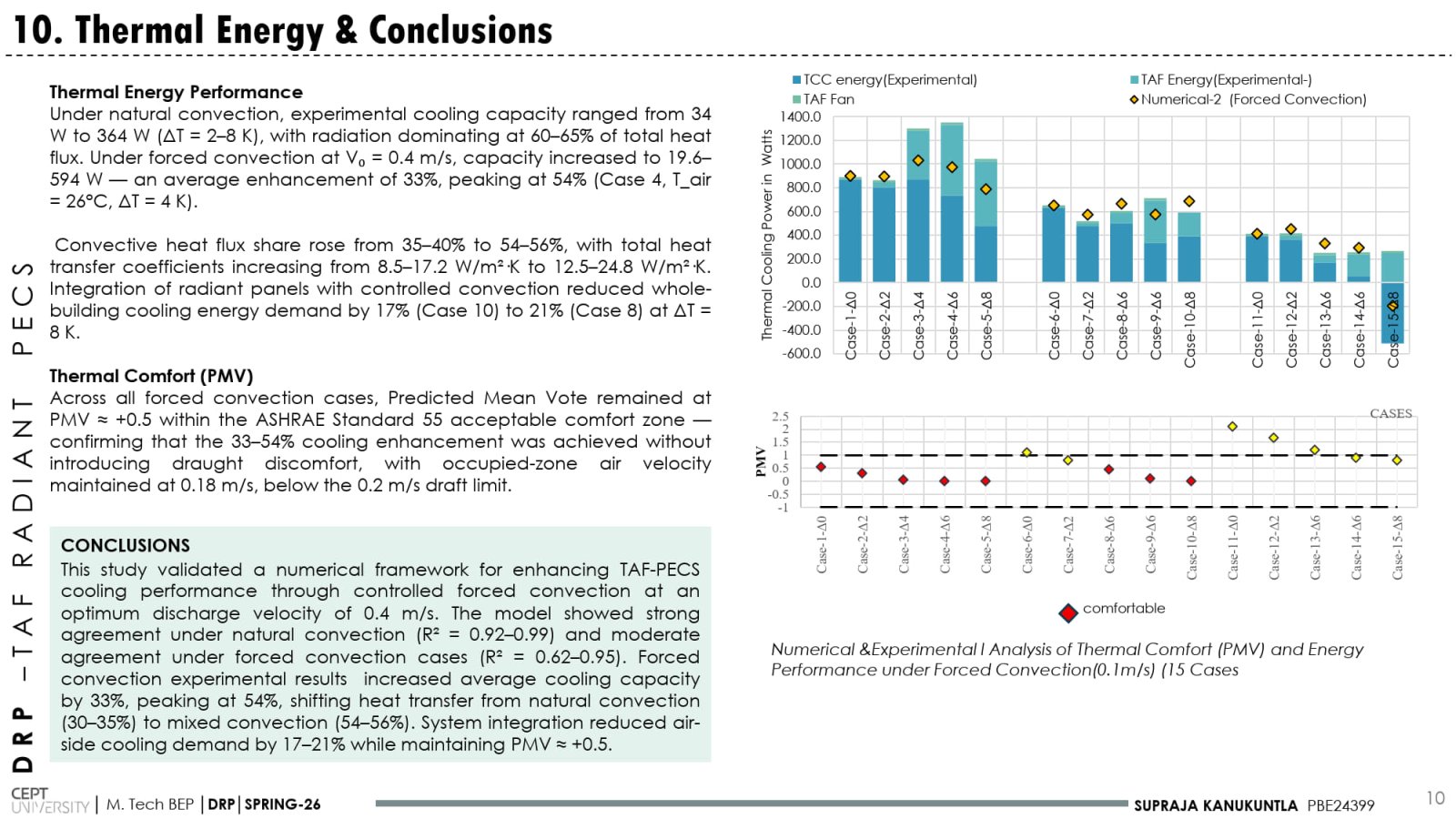
This study investigates thermal performance enhancement of Thermally Activated Furniture–Personalized Environmental Control Systems Radiant (TAF-PECS) through controlled low-velocity forced convection. A predictive numerical framework integrating ASHRAE jet decay theory with mixed convection correlations was developed to identify optimal TAF nozzle discharge velocities that maximize cooling capacity while maintaining seated-level air velocities within ASHRAE Standard 55 draft limits (?0.2 m/s). The framework was validated against experimental data across 15 test cases spanning ambient temperatures of 26°C, 28°C, and 30°C, and panel-to-air temperature differences of 2–8 K. Results demonstrate that experimentally forced convection at the optimum velocity of 0.4 m/s increases average cooling capacity by 33% of all cases, with peak experimental capacity reaching 594.35 W compared to 363.62 W under natural convection alone. Numerical Model agreement was strong for natural convection (R² = 0.86–0.99) and moderate for forced convection (R² = 0.63–0.94). These results demonstrate that low-velocity integrated radiant systems can provide equivalent comfort with reduced energy use and condensation risk.