Your browser is out-of-date!
For a richer surfing experience on our website, please update your browser. Update my browser now!
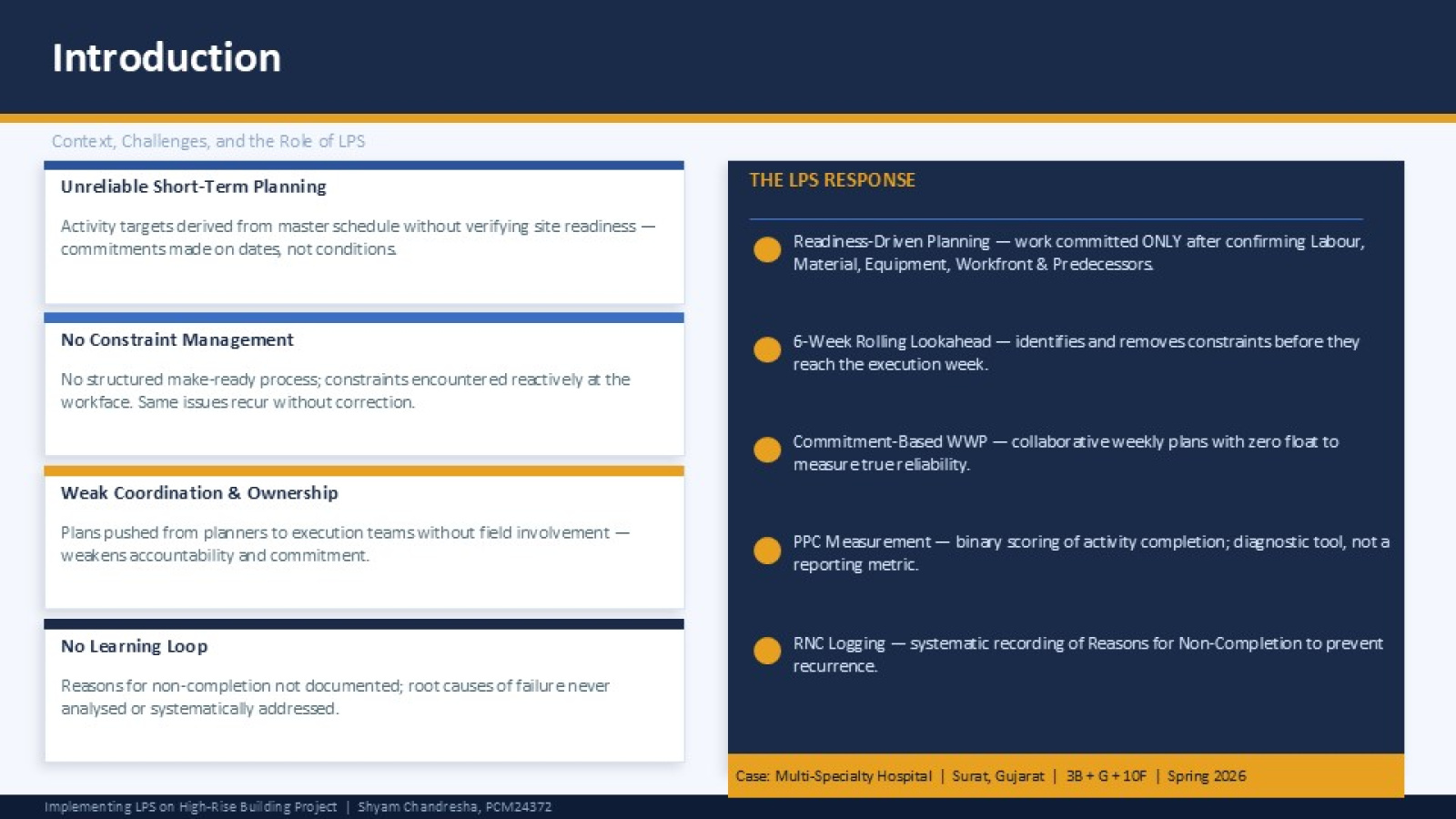
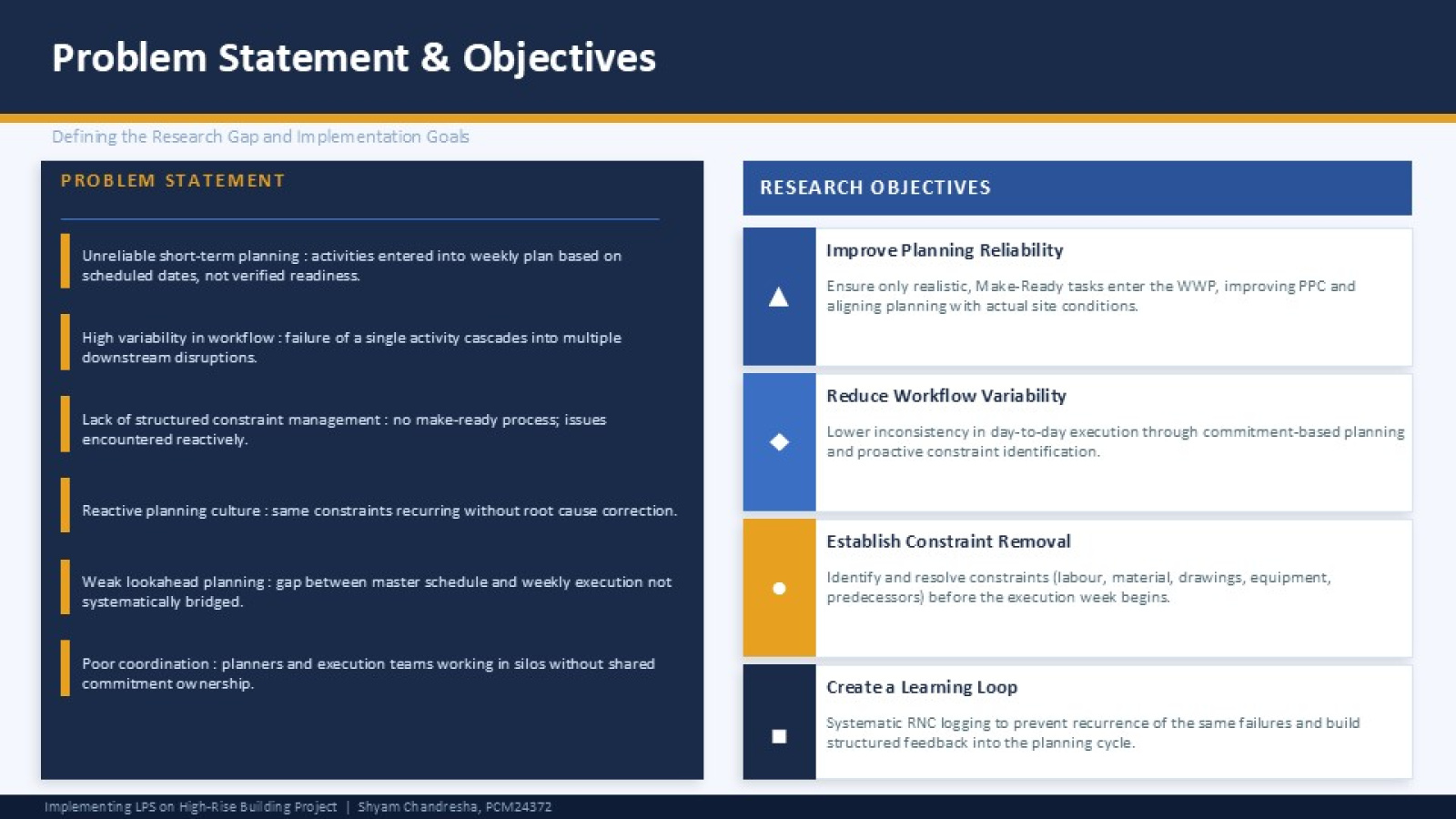
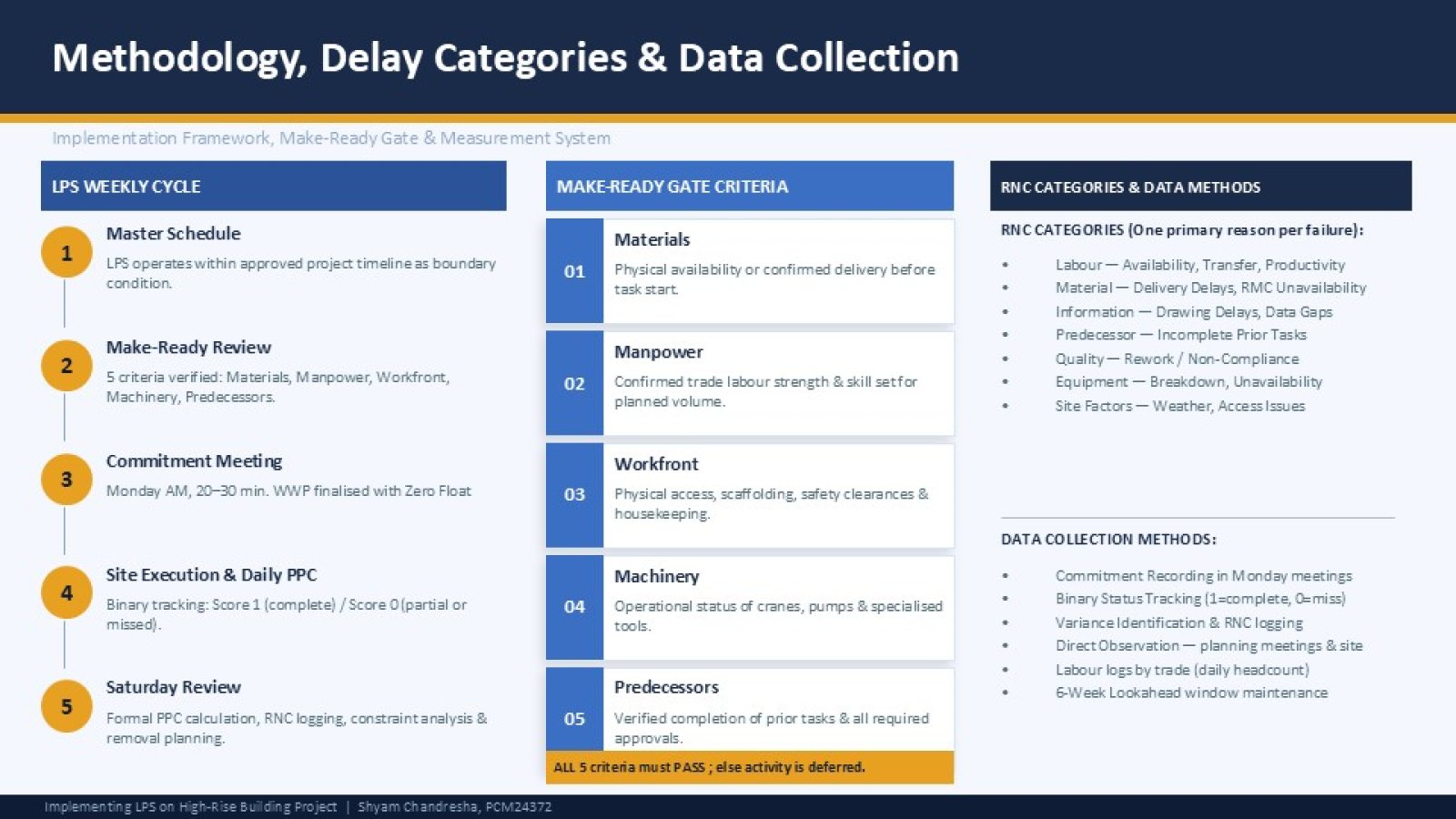
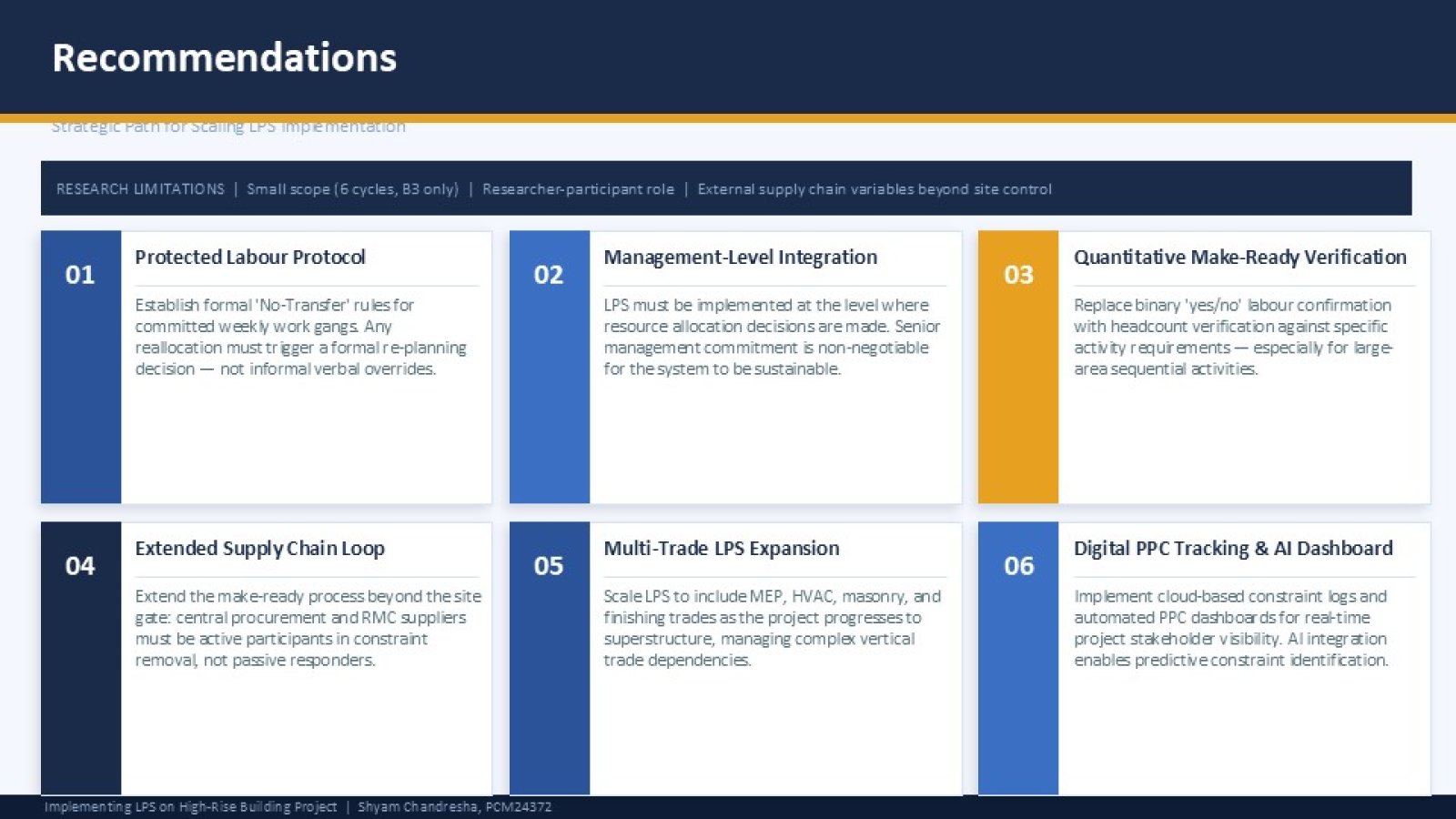
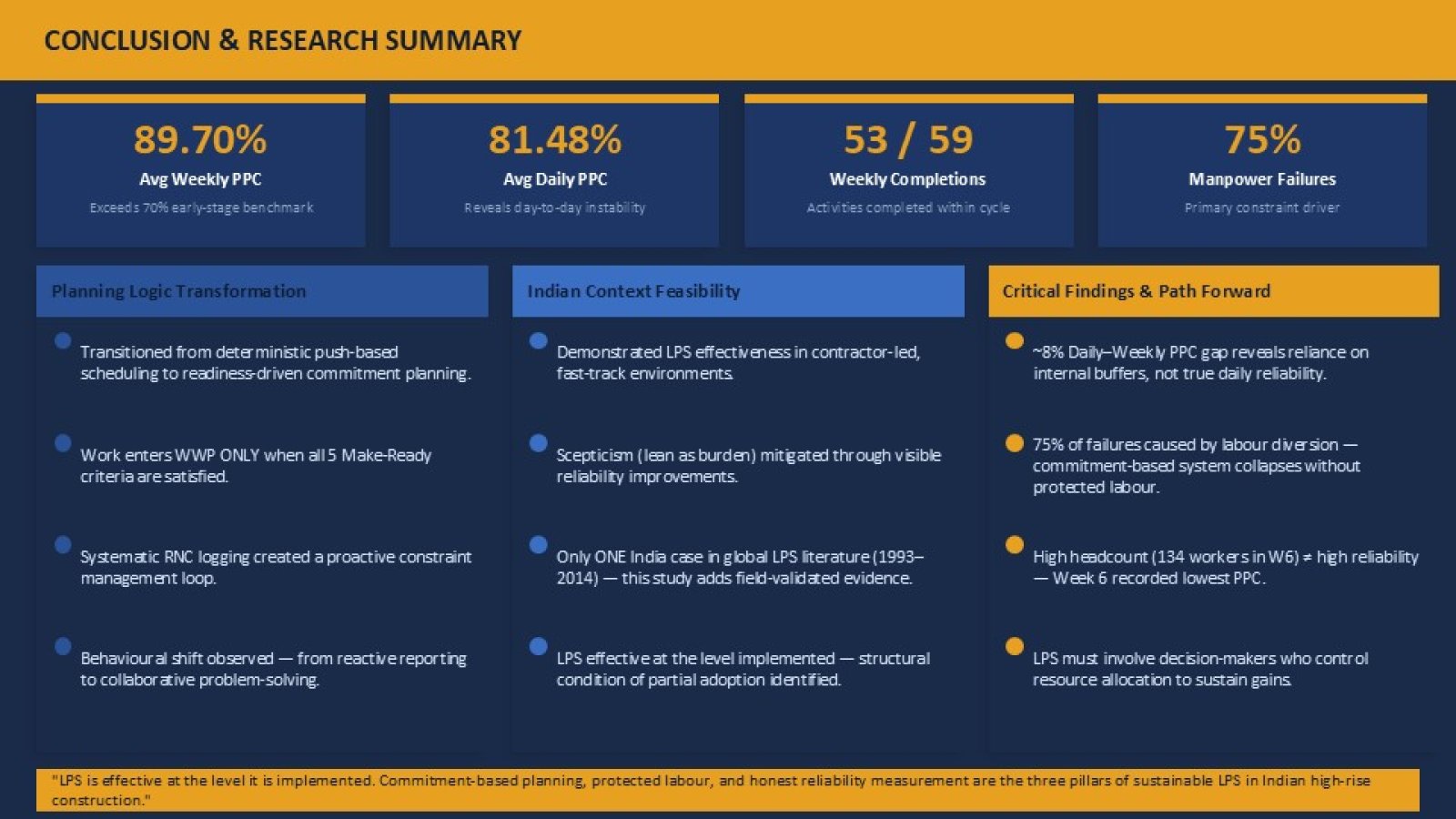
Construction projects often struggle with delays caused by coordination issues, unclear work fronts, material shortages, and frequent changes in plans. While these challenges are usually attributed to technical or managerial gaps, a major reason for such inefficiencies is the lack of reliable planning at the site level. The Last Planner System (LPS), a lean construction approach, directly addresses this concern by involving the people who actually manage and execute the work—site engineers, supervisors, and subcontractors. Through collaborative planning, constraint identification, and commitment-based scheduling, LPS helps create a smoother and more predictable workflow. Although LPS has shown strong results in improving planning reliability across international projects, its practical use in Indian construction is still emerging. This study aims to explore the implementation of LPS on a real construction site to understand how weekly planning, lookahead schedules, and Percent Plan Complete (PPC) influence day-to-day progress. By analysing constraints and reasons for variance, the research hopes to identify where planning breaks down and how it can be improved. Ultimately, this project aims to introduce lean thinking at the work-front level and support better coordination, clearer communication, and more consistent progress on site.