Your browser is out-of-date!
For a richer surfing experience on our website, please update your browser. Update my browser now!
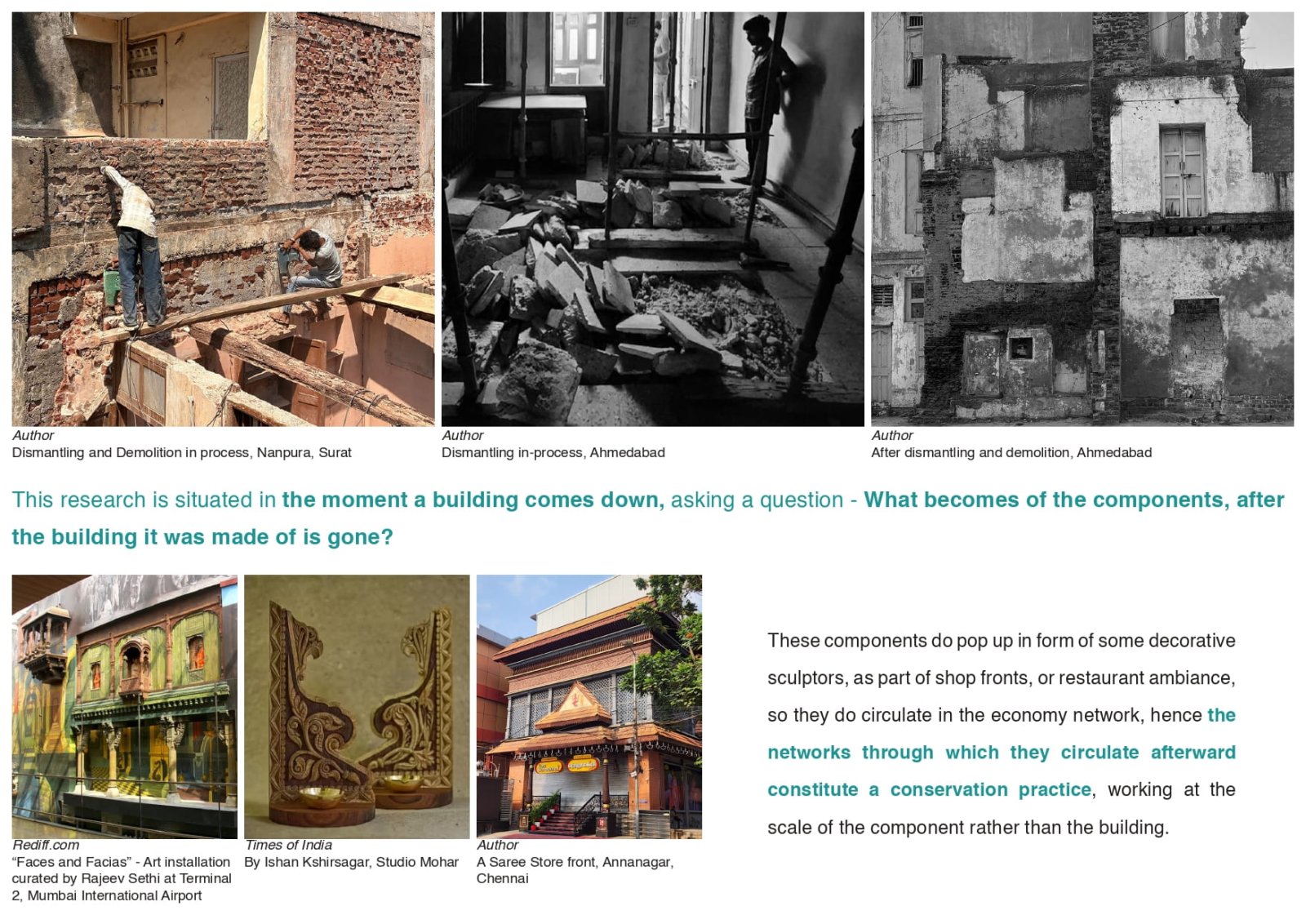
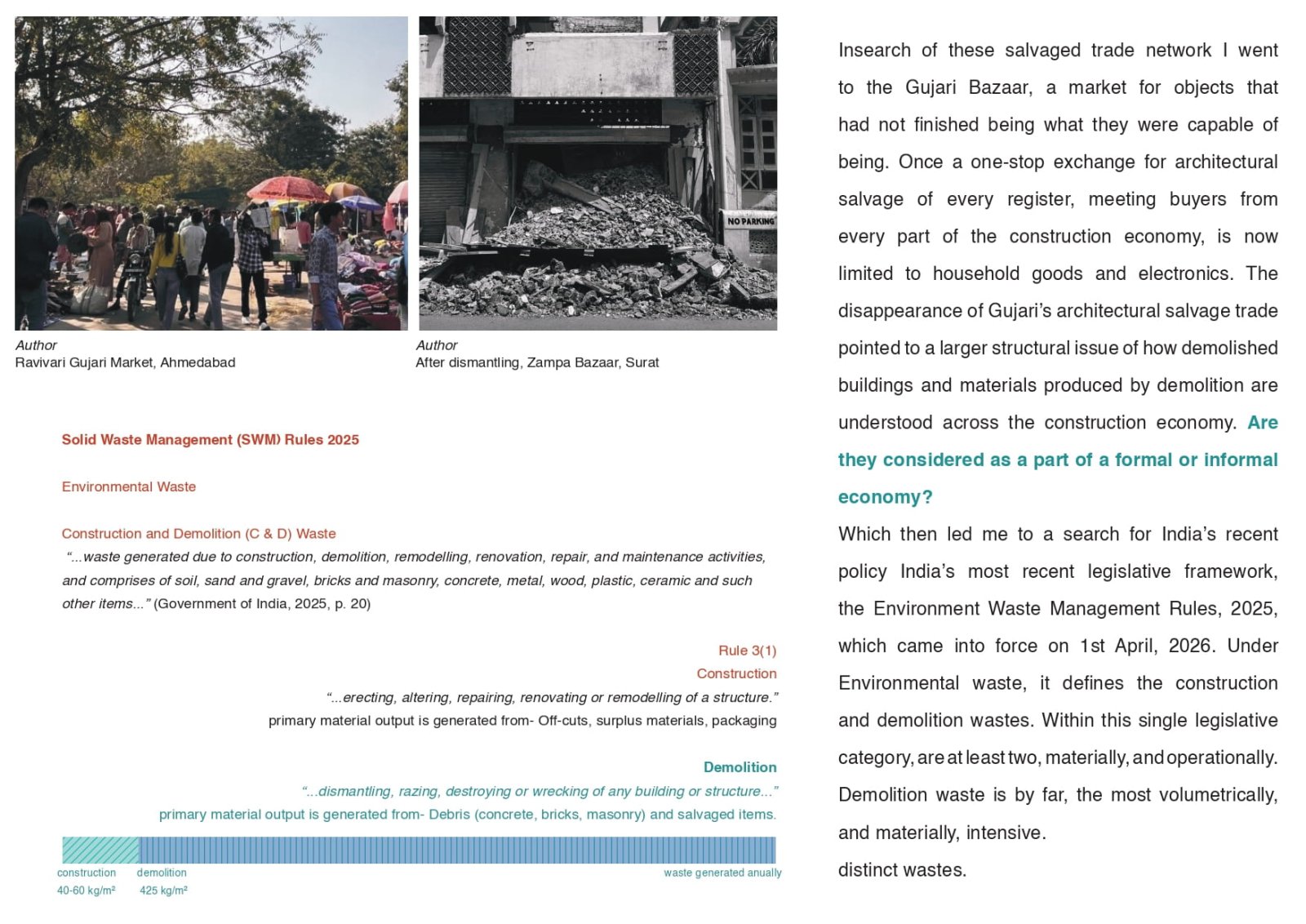
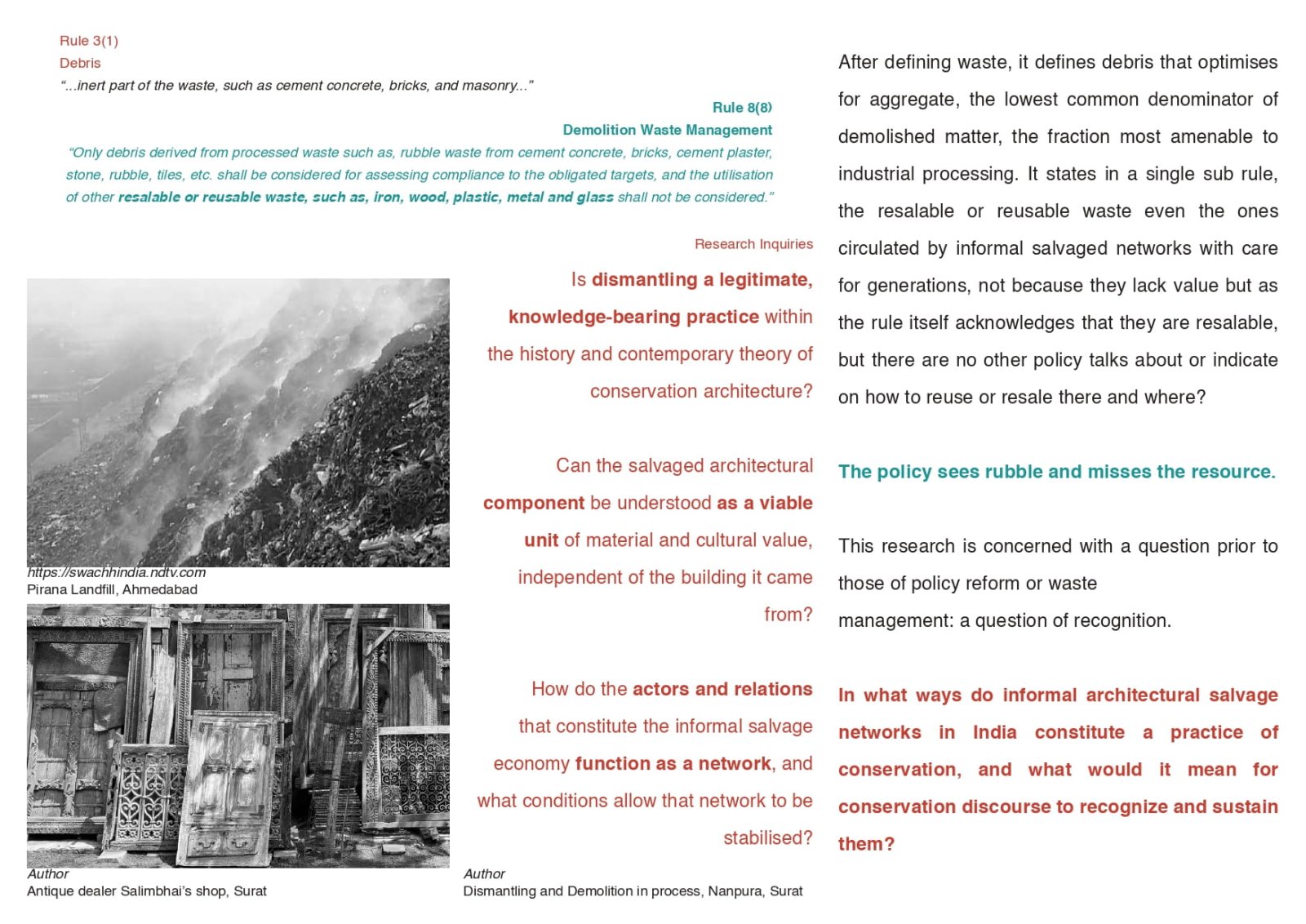
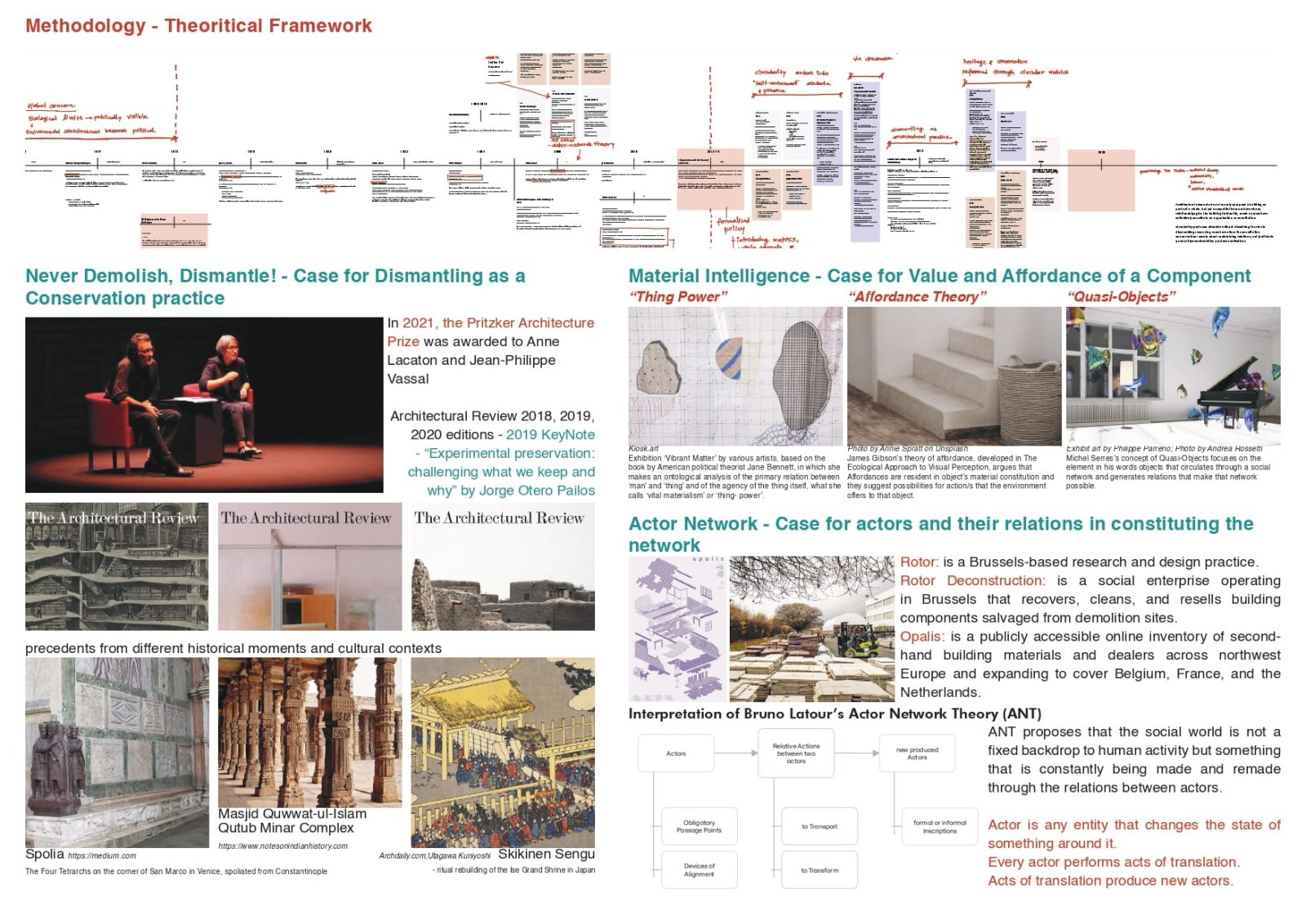
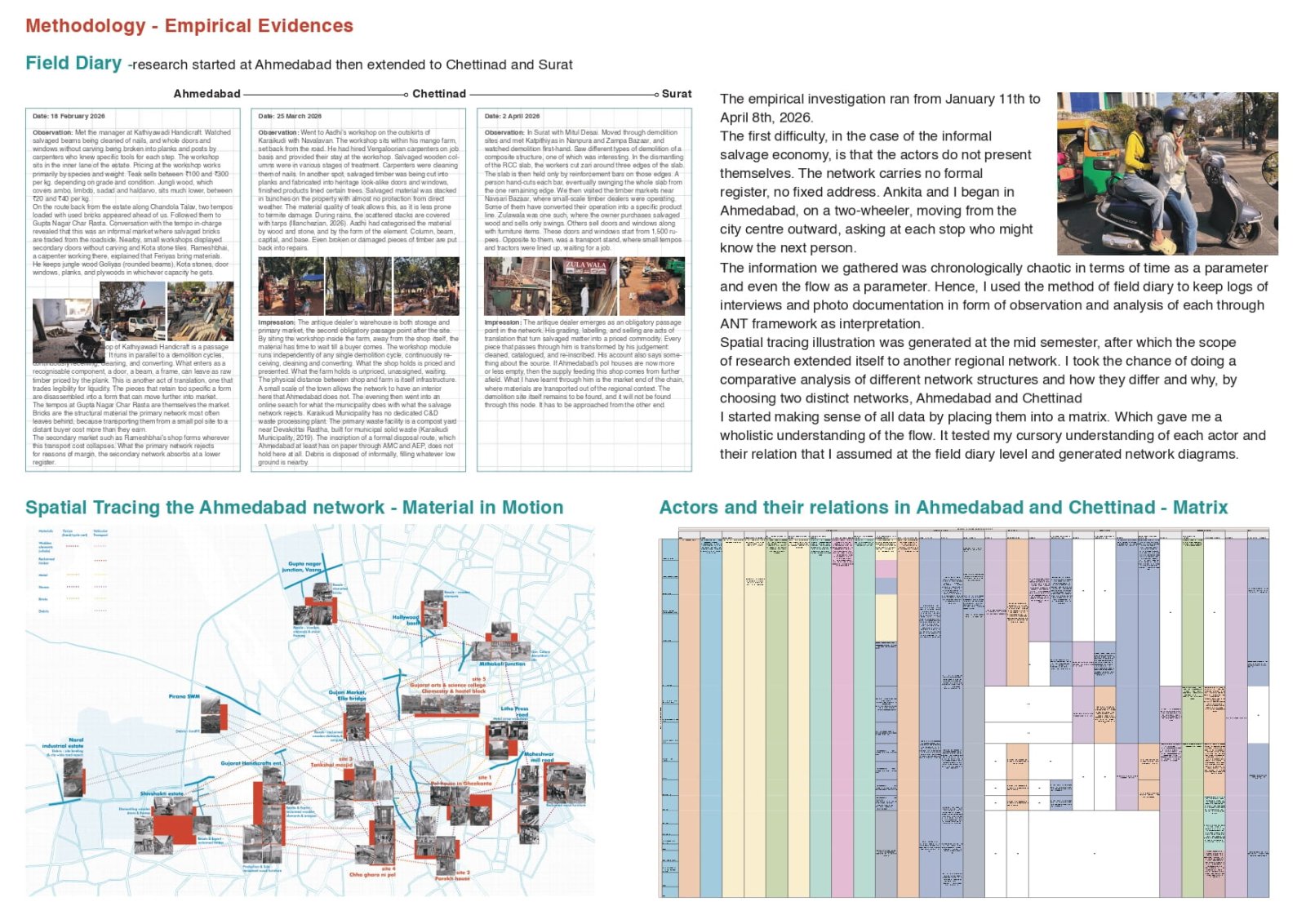
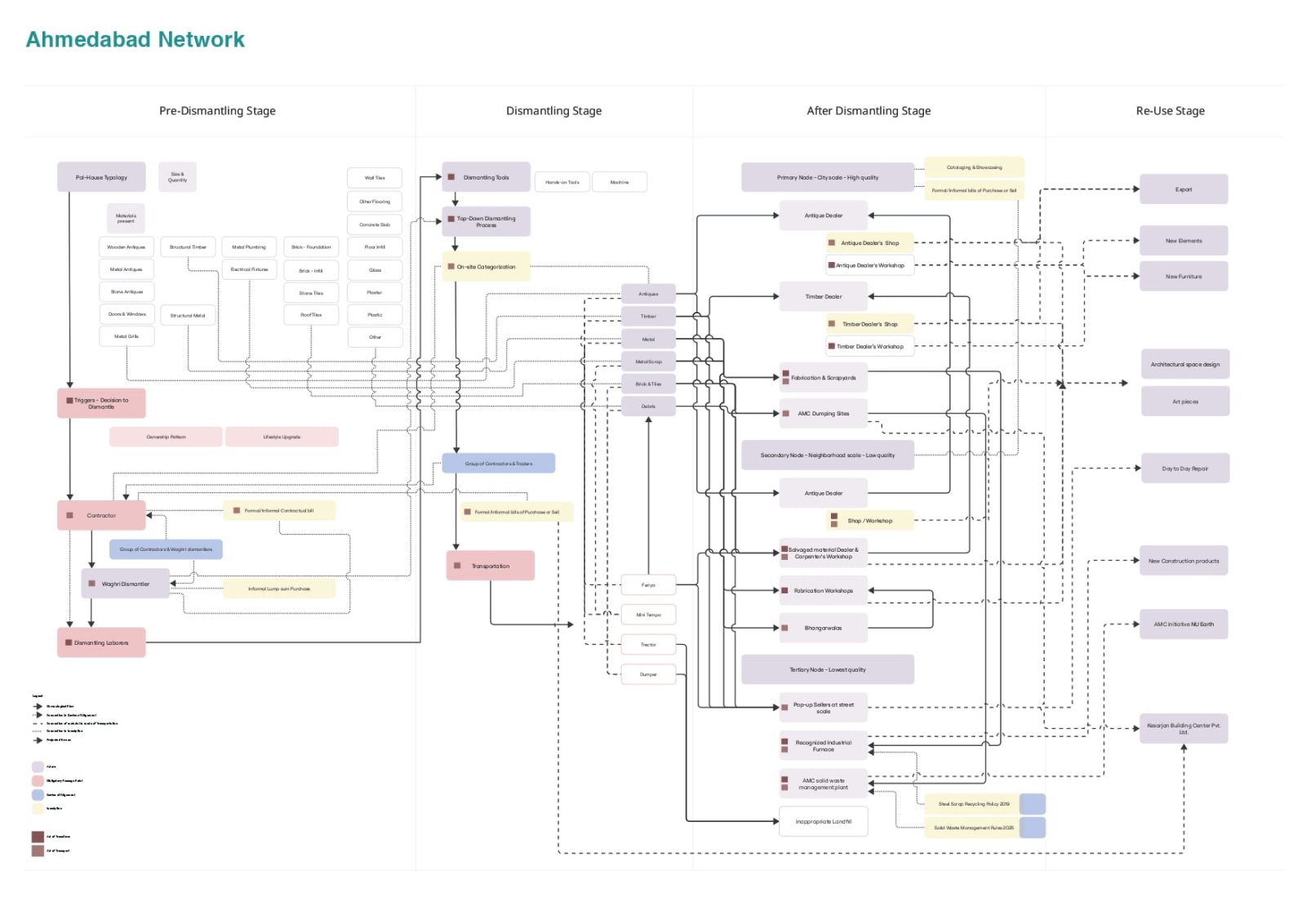
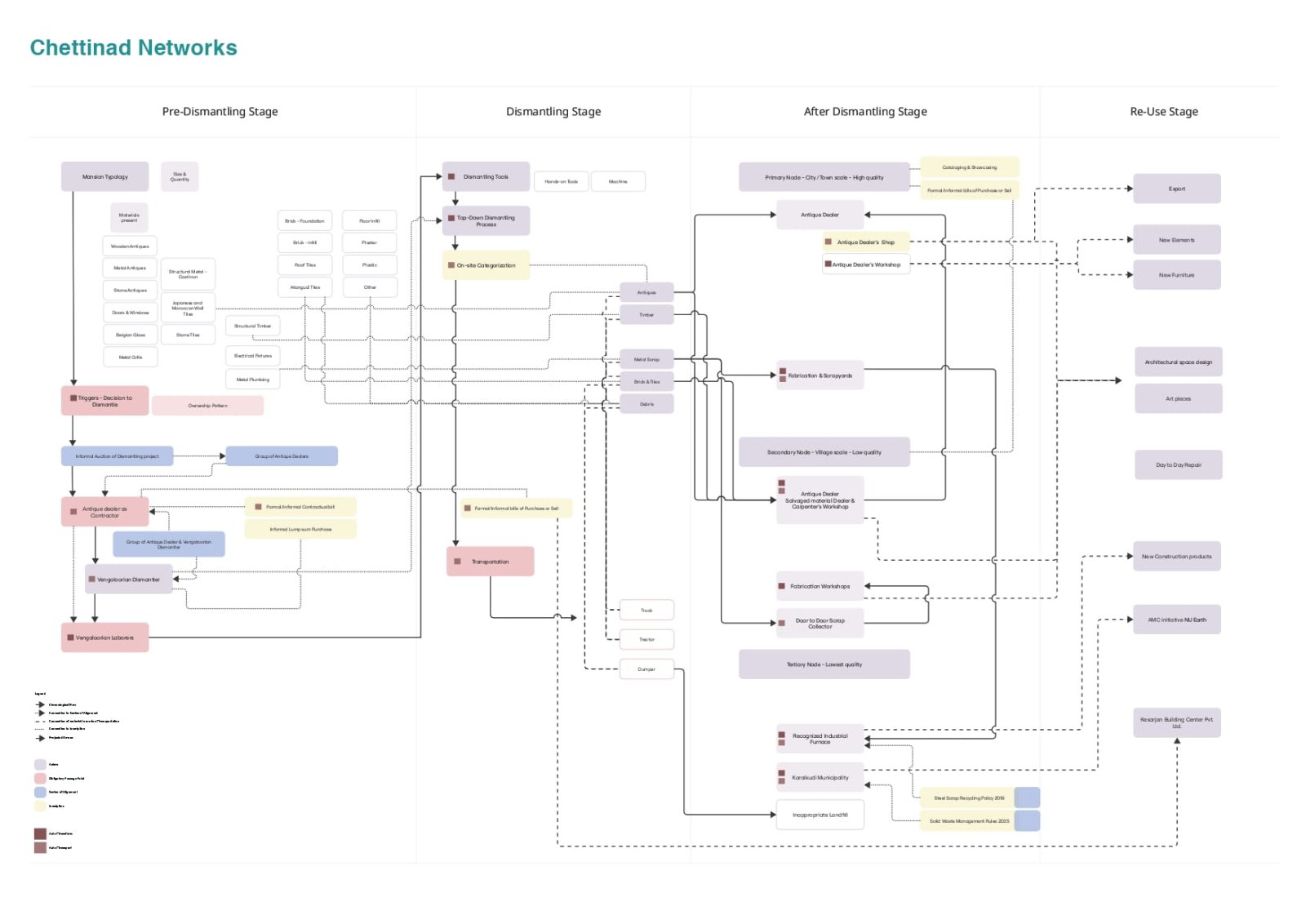
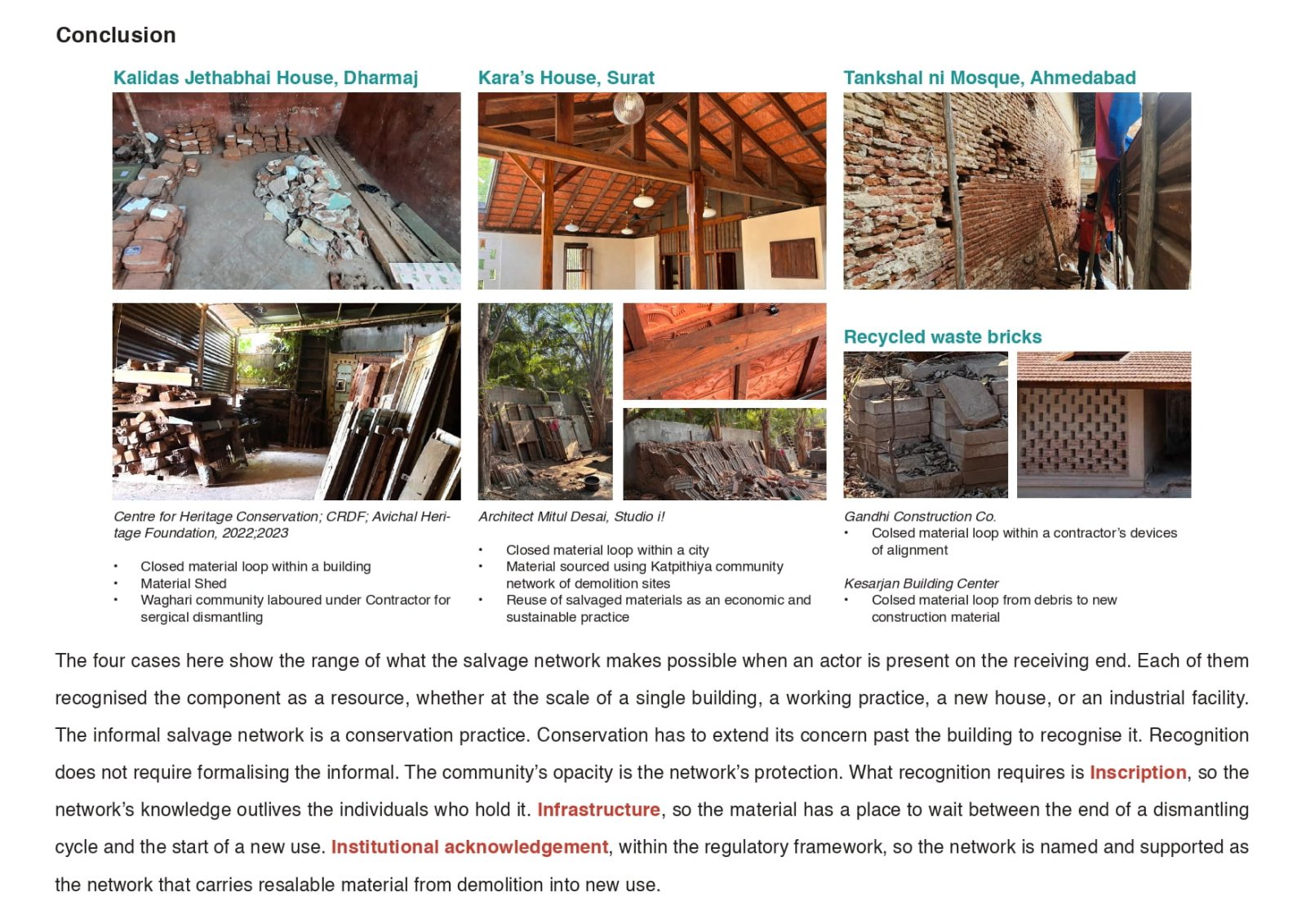
This research examines informal architectural salvage networks in India as a practice of conservation. It begins at the moment a building comes down and follows what happens to the components afterward-where they travel, who handles them, and how they return to use. The study argues that dismantling, done with care and knowledge, is a form of material production, and that the networks circulating salvaged components constitute a conservation practice at the scale of the component. The argument rests on three theoretical frames. The first situates dismantling within the history of conservation, drawing on Spolia, the Quwwat-ul-Islam Mosque, and the Shikinen Sengu ritual of Ise Shrine. The second reads the salvaged component as a unit from material intelligence through Bennett's Thing Power, Gibson's Affordance, and Serres' Quasi-Objects. The third applies Actor-Network theory following Latour and Callon-to map the actors, translations, and inscriptions that hold the networks together. Fieldwork was conducted across Ahmedabad, Chettinad, Surat, and Dharmaj, tracing the Waghari, Katpithiya, Vengaloorian, and Chettiar communities, along with contractors, antique dealers, Feriyas, and transporters who sustain the trade is traced through a field diary stating observation and impressions. The fieldwork is then concluded in the diagrams derived from actor network analysis of the data to make the network legible at each node. Four cases close the argument-the Kalidas Jethabhai House in Dharmaj, Gandhi Construction Co. in Ahmedabad, Kara's House in Dumas, and Kesarjan Building Center in Ahmedabad where each is acknowledging and treating the component as a resource. Eventually concluding that what the network requires is inscription, infrastructure, and institutional acknowledgement that extends conservation's concern past the building, to the part, the practitioner, and the practice.