Your browser is out-of-date!
For a richer surfing experience on our website, please update your browser. Update my browser now!
Between Ritual and Spectacle : Spatial Influences on Formality in Qawwali Performance
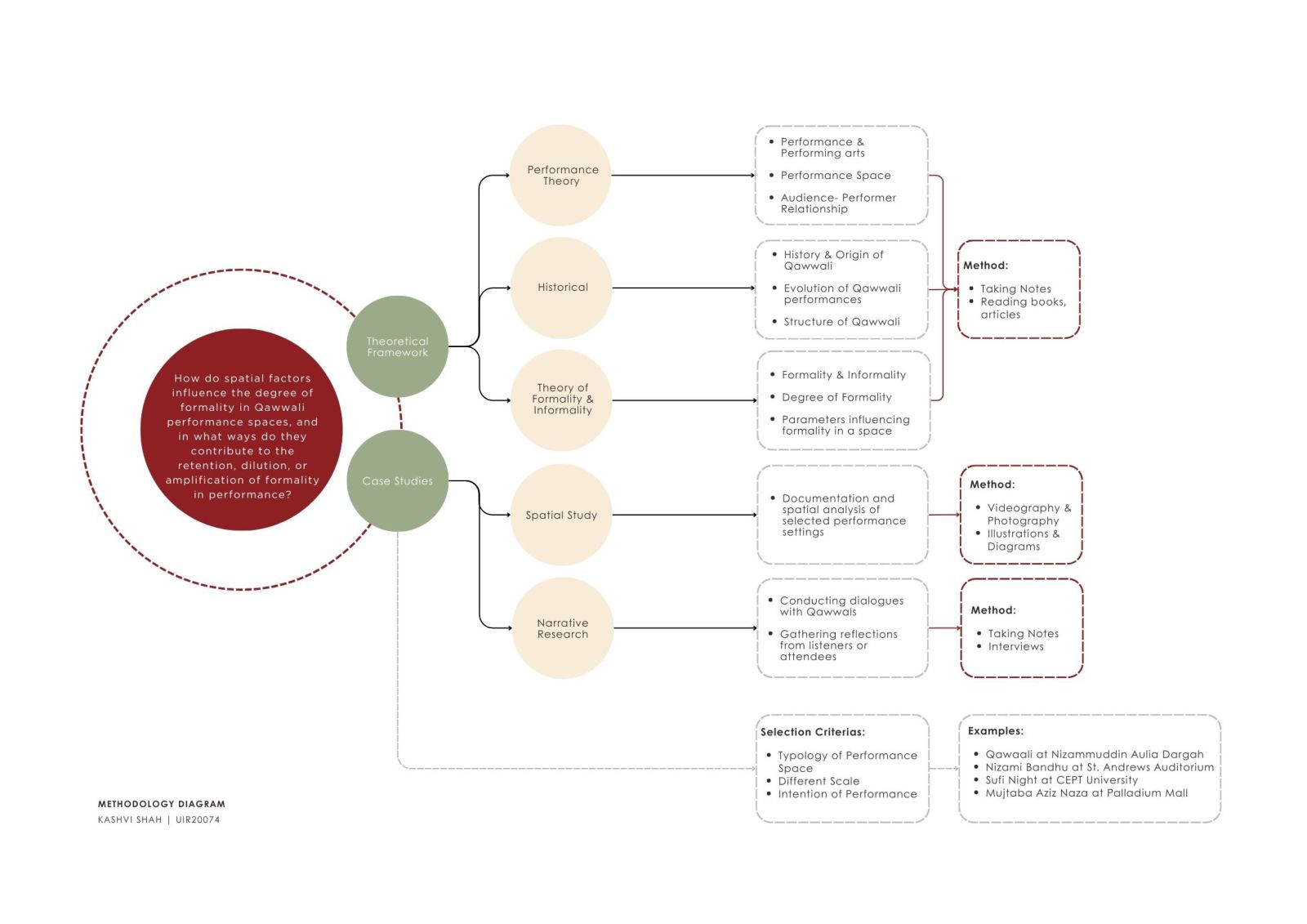
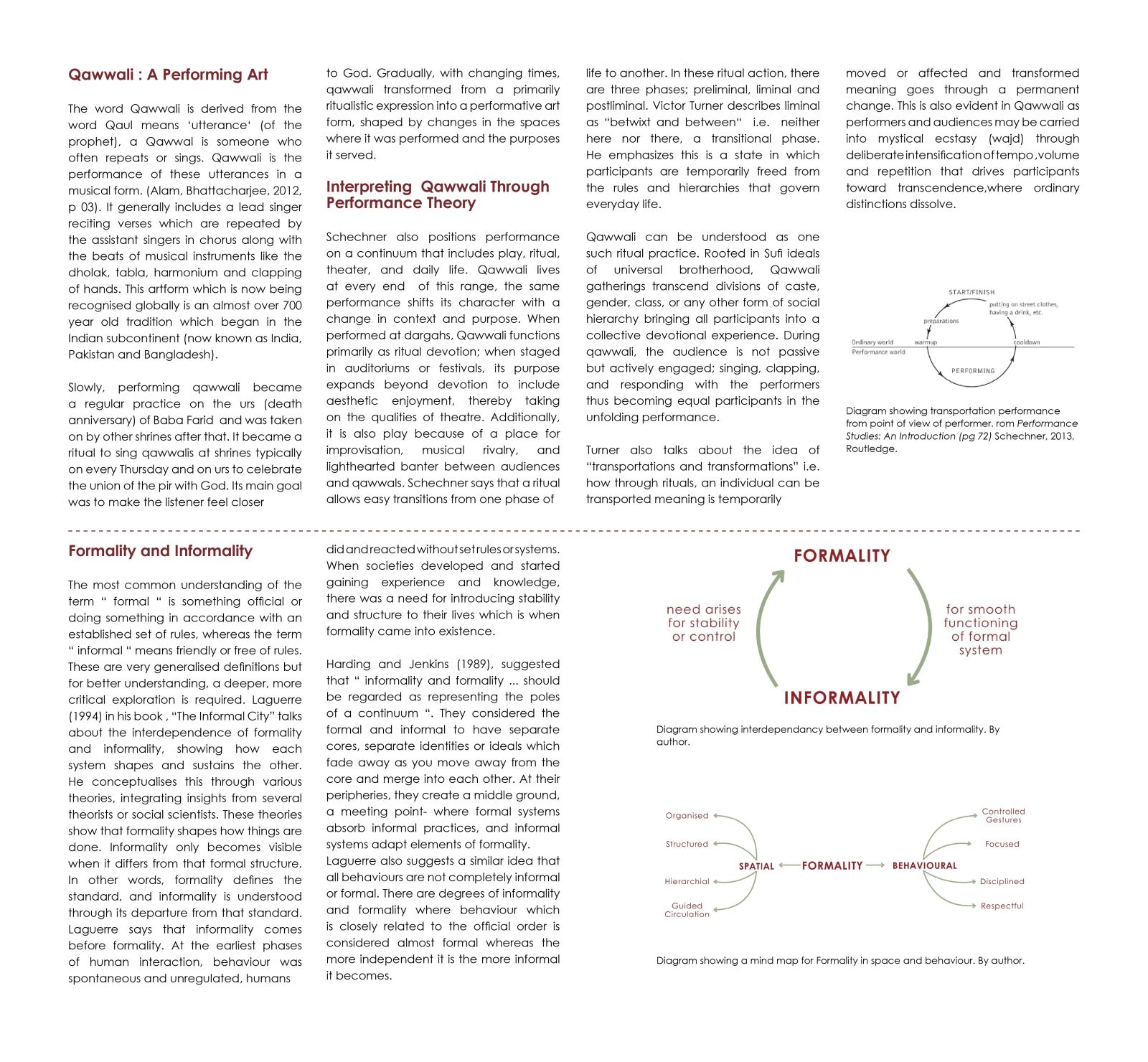
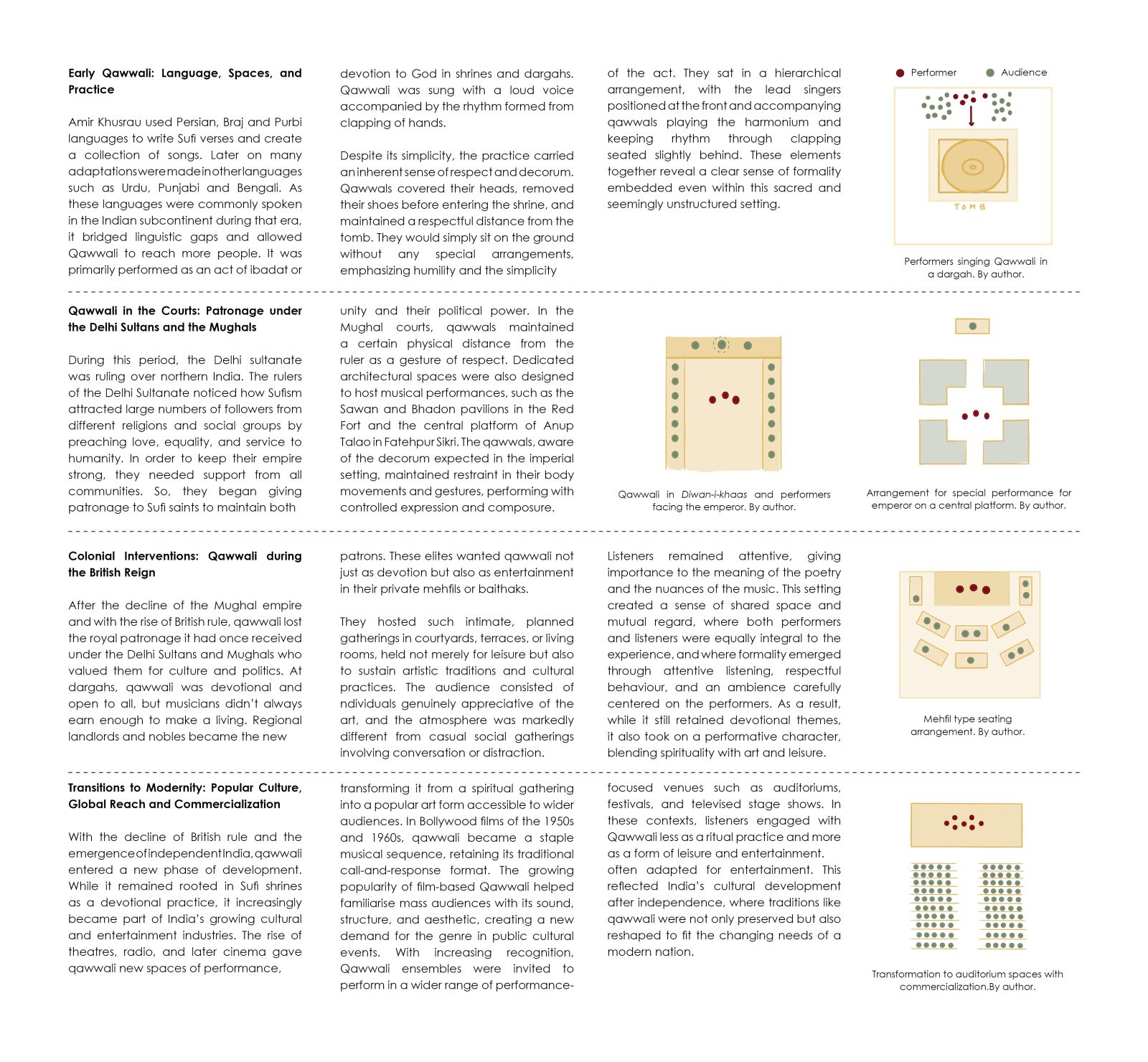
This research investigates how spatial conditions shape the degree of formality in Qawwali performances, and examines Qawwali across settings that range from traditional ritual spaces to contemporary entertainment venues. Beginning with an overview of Qawwali’s historical trajectory, the study traces the art form’s evolution alongside shifts in socio-political contexts and performance environments. Drawing upon Richard Schechner’s performance theory, Victor Turner’s concepts of ritual and liminality, and J. Barrett’s frameworks of performativity, the paper establishes Qawwali as a dynamic and continuously evolving performative tradition that nonetheless retains an inherent formal quality shaped by its devotional purpose and long-standing performance conventions. Through four case studies, the research analyses how spatial typologies influence formality across parameters such as performer conduct, spatial organization, movement patterns, lighting, acoustics, and material expression. By mapping how these elements contribute to the retention, dilution, or amplification of formality, the paper demonstrates that space is not merely a backdrop but an active agent in shaping the experiential, symbolic, and affective dimensions of Qawwali.