Your browser is out-of-date!
For a richer surfing experience on our website, please update your browser. Update my browser now!
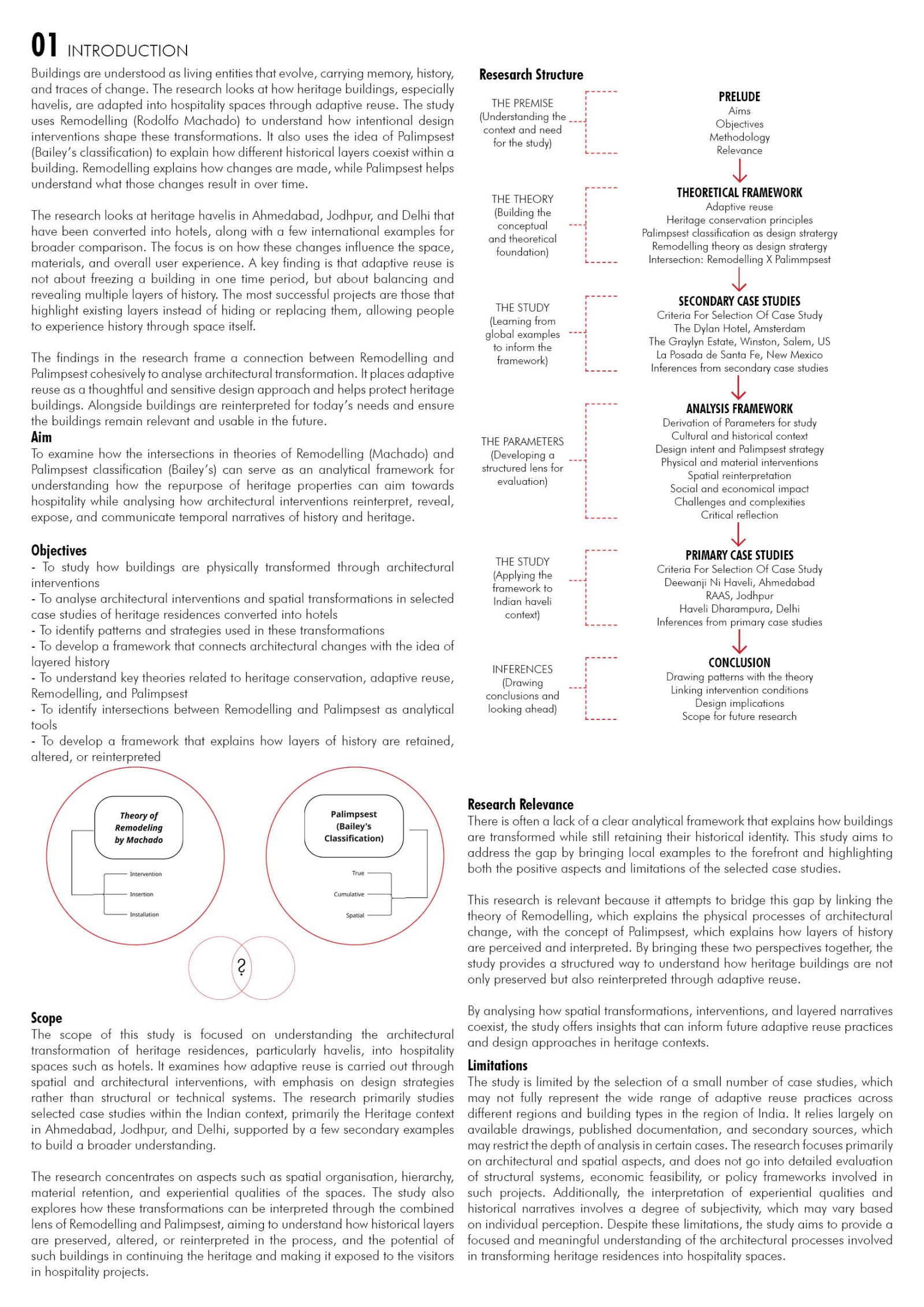
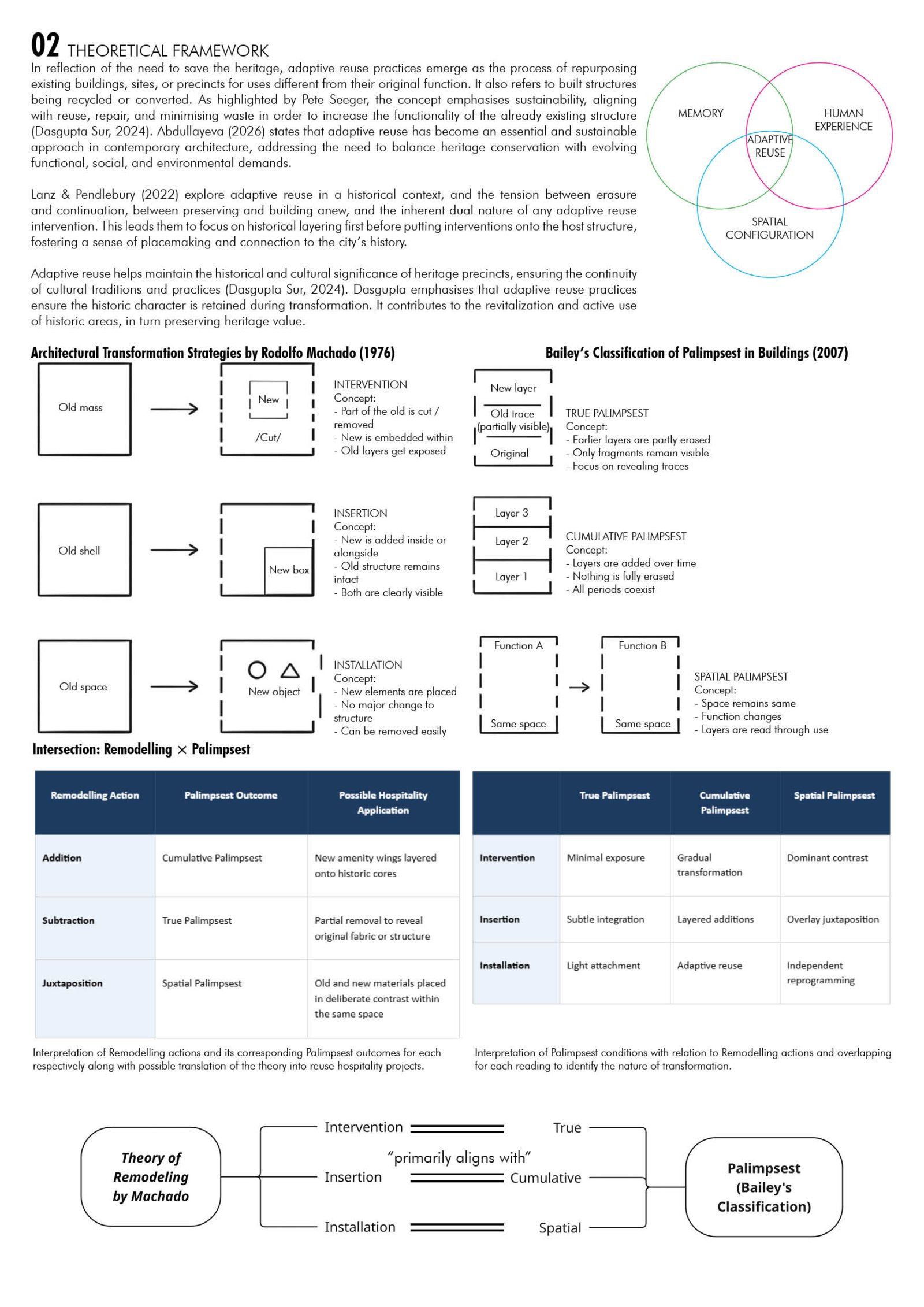
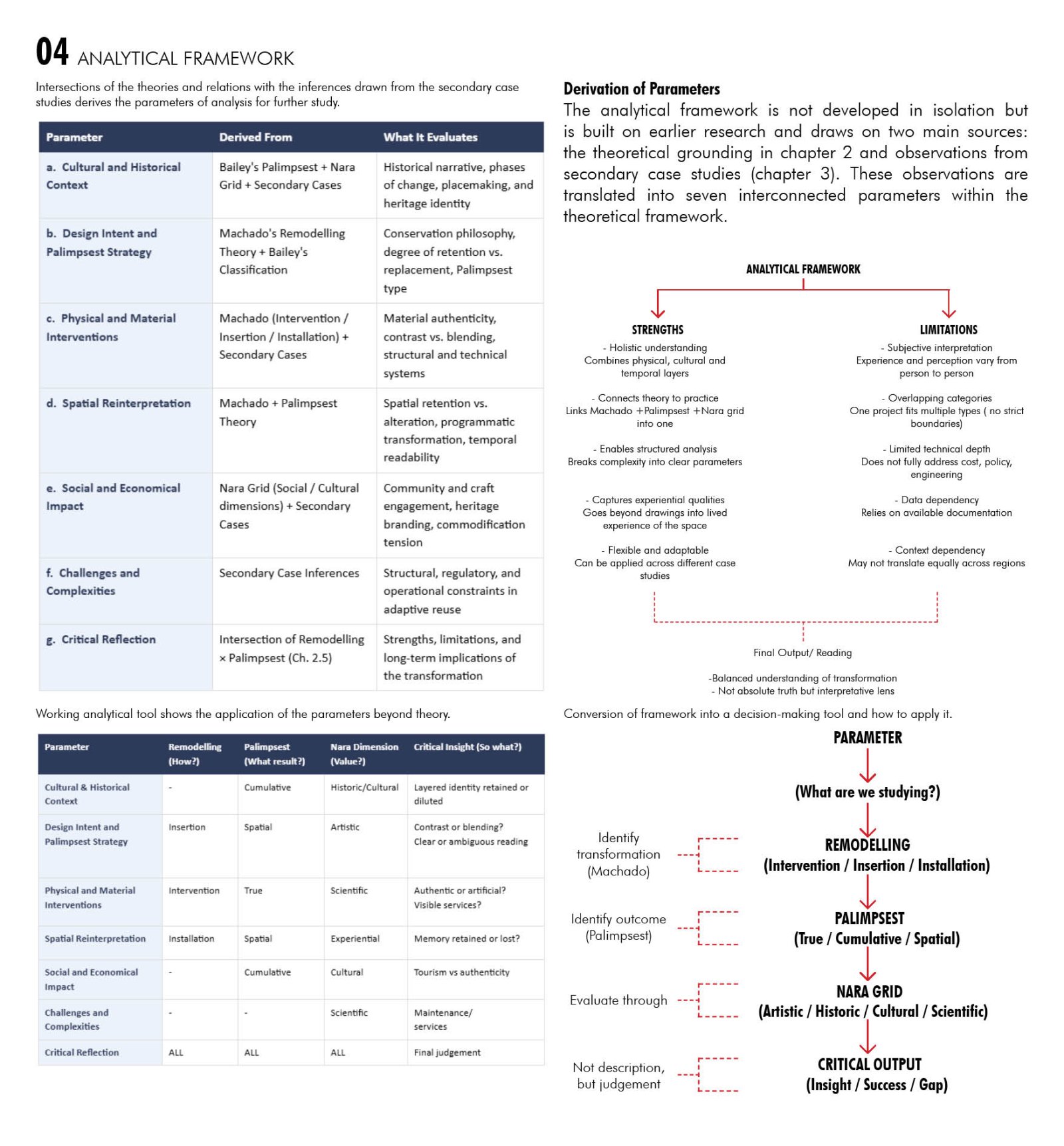
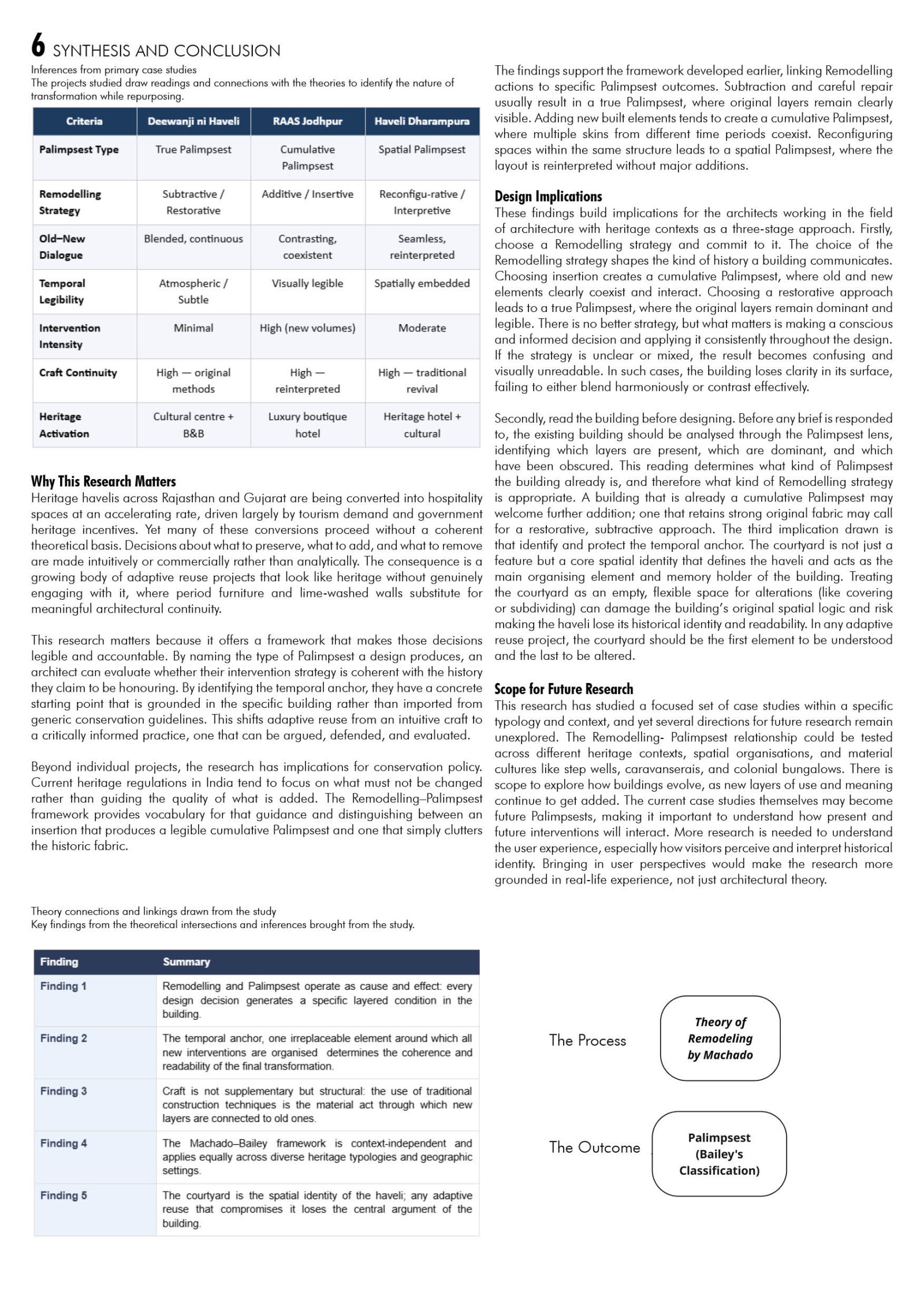
Buildings are treated as evolving entities that carry memory and history. The study examines how heritage havelis in Ahmedabad, Jodhpur, and Delhi are adapted into hospitality spaces through layered transformations. It connects Rodolfo Machado’s Remodelling theory with Bailey’s Palimpsest concept to form an evaluation framework. Remodelling explains how changes occur, while Palimpsest explains their outcomes. Through spatial analysis, the research shows that interventions shape user experience and historical perception. Successful adaptive reuse reveals multiple layers rather than erasing them, creating different palimpsest conditions and ensuring heritage buildings remain relevant, usable, and meaningful over time.