Your browser is out-of-date!
For a richer surfing experience on our website, please update your browser. Update my browser now!
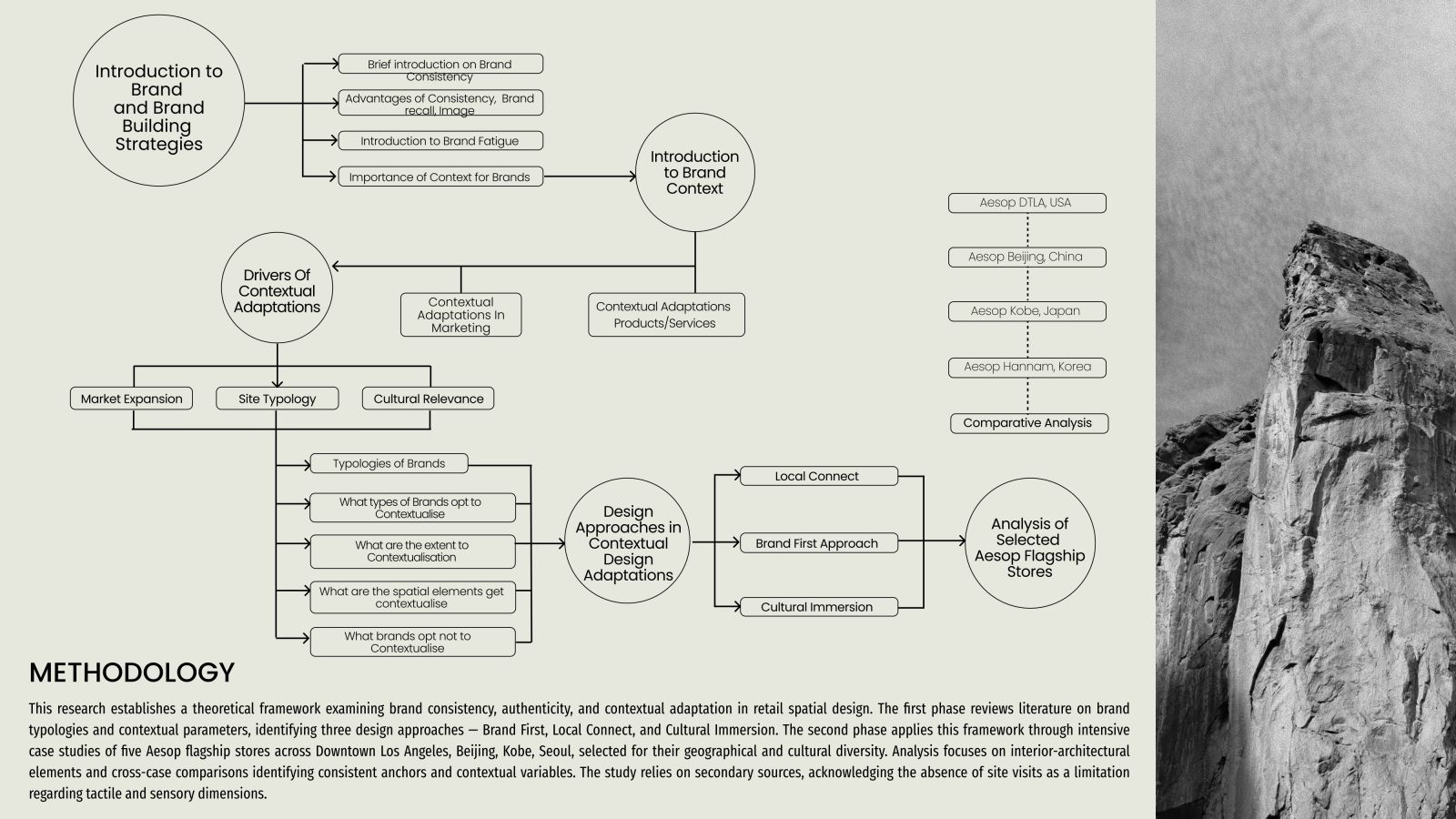
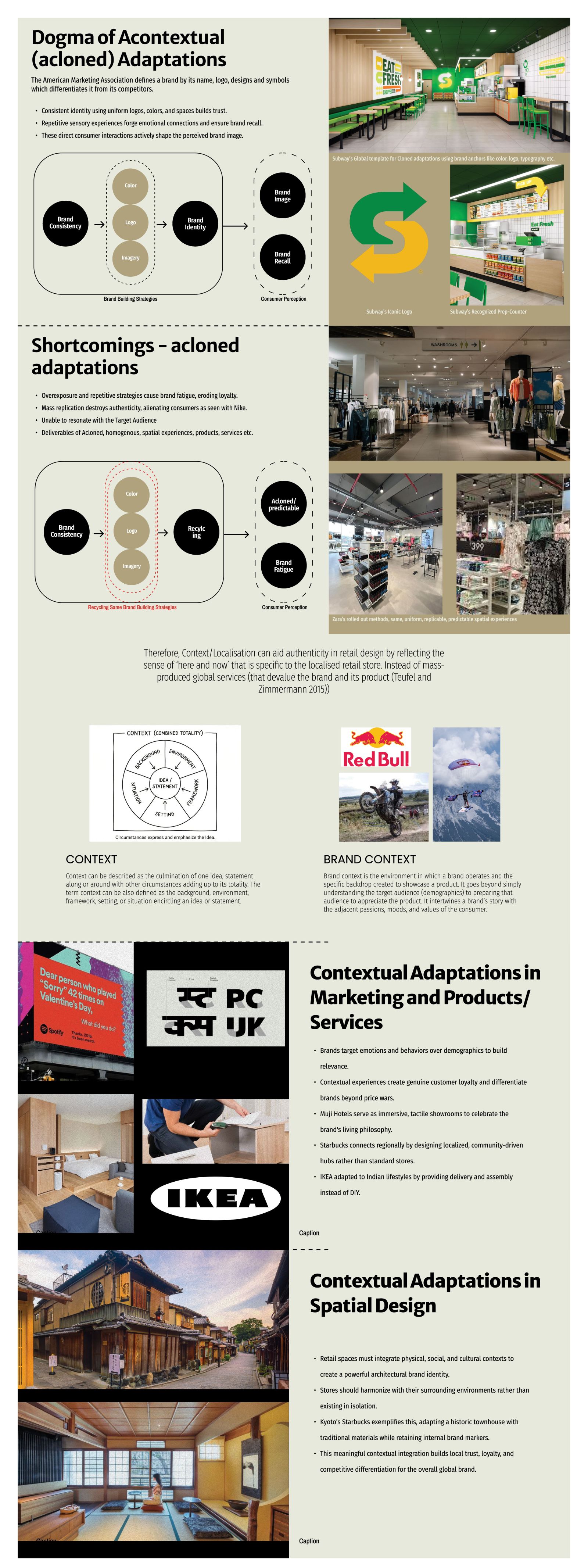
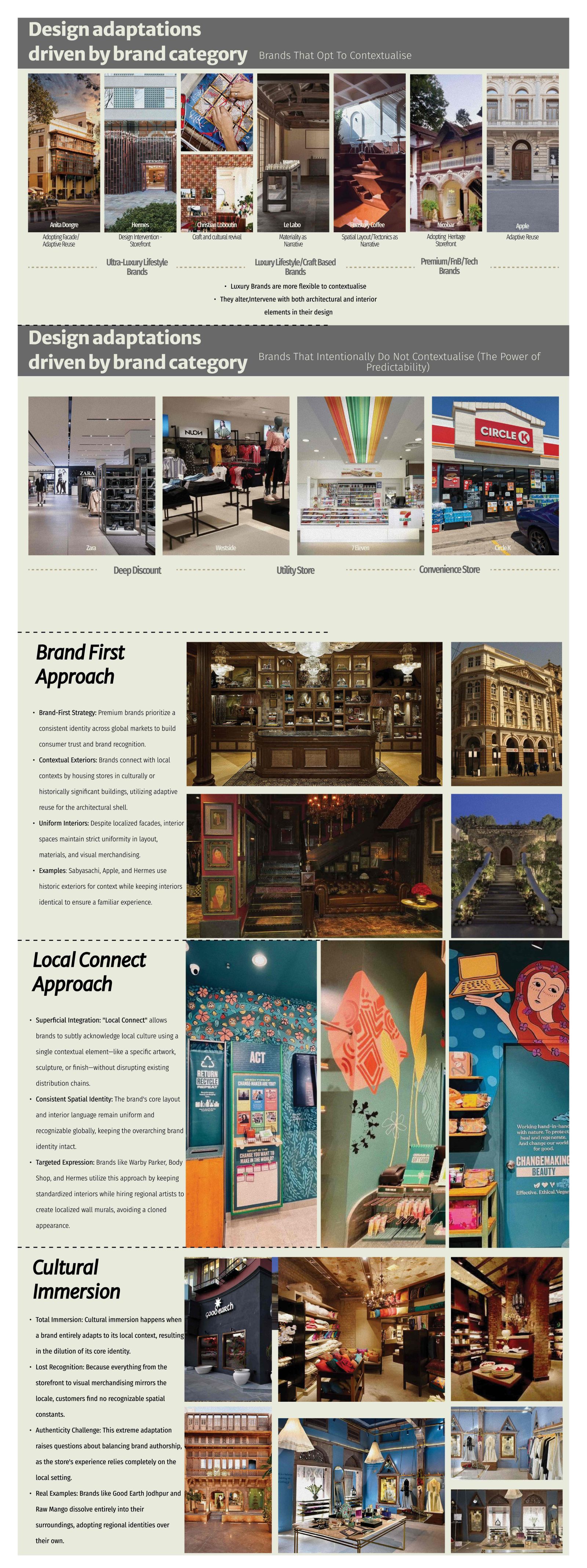
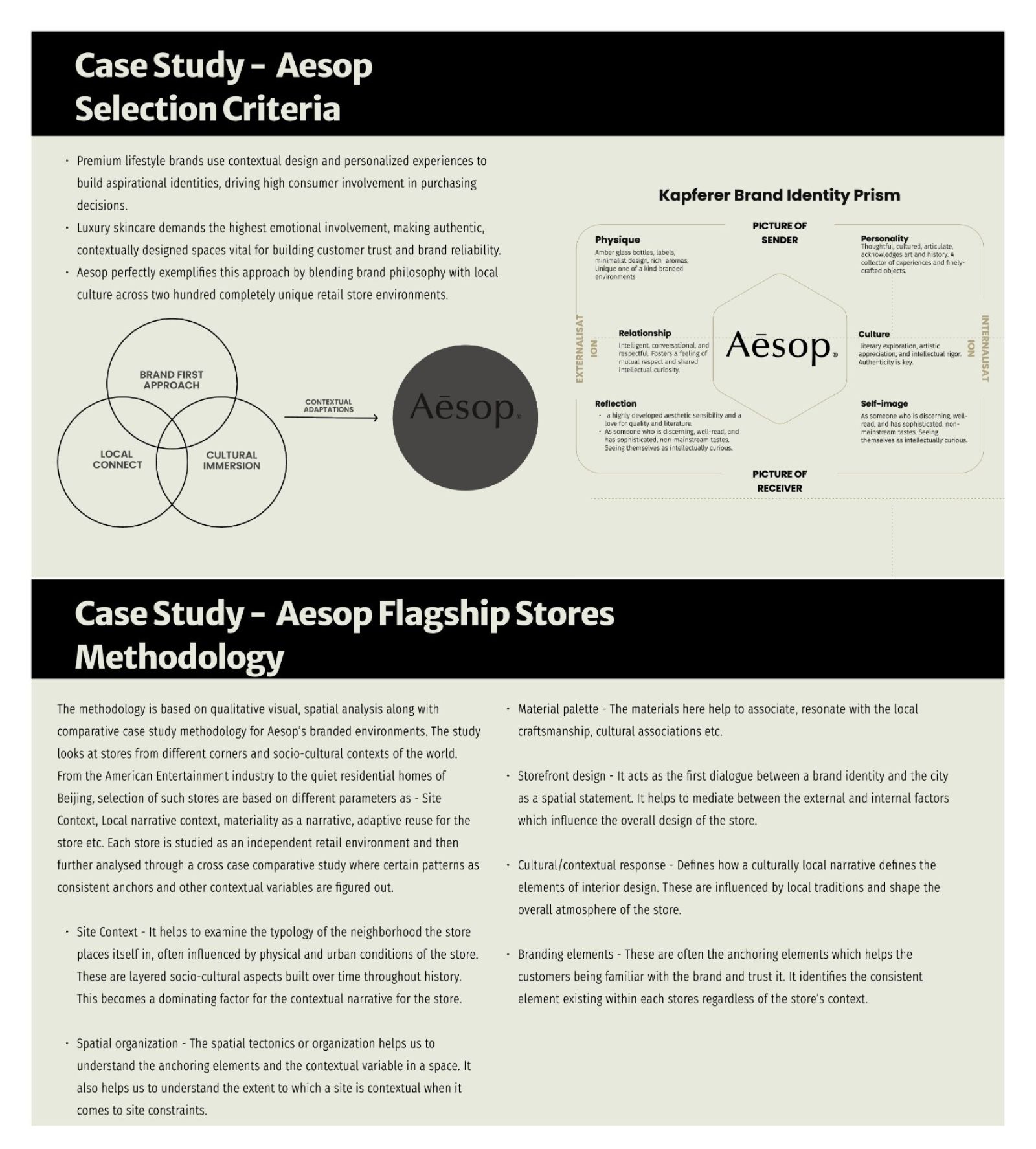
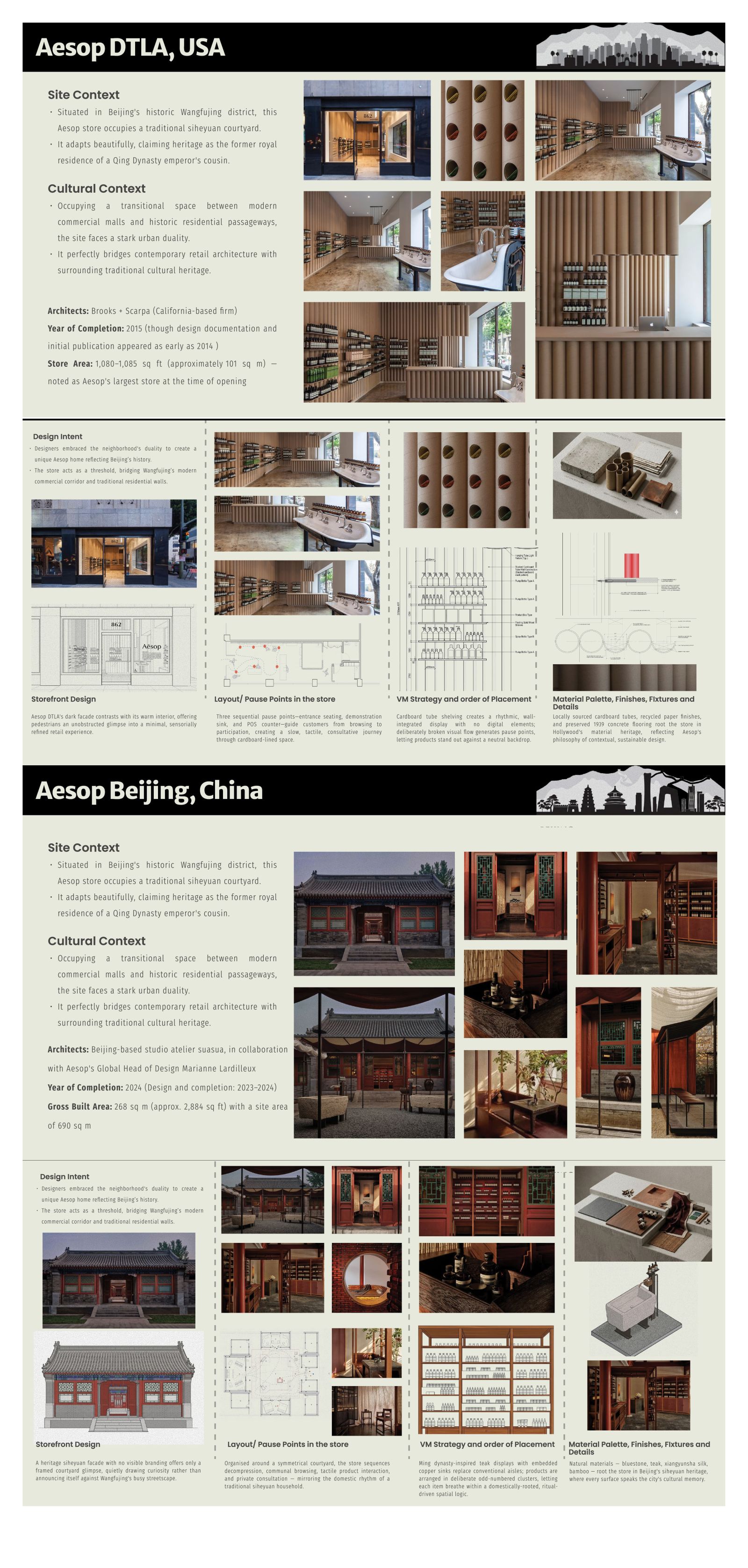
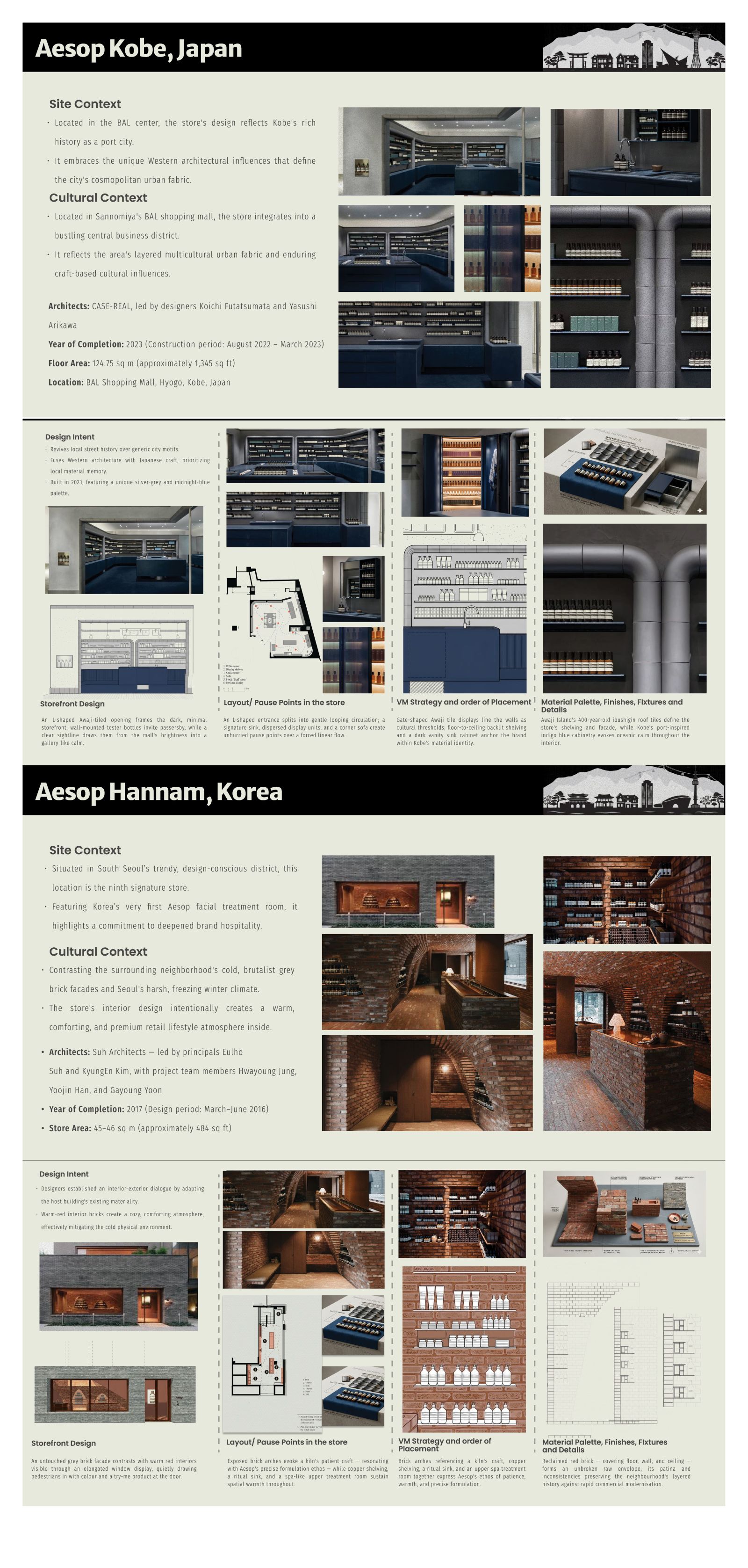
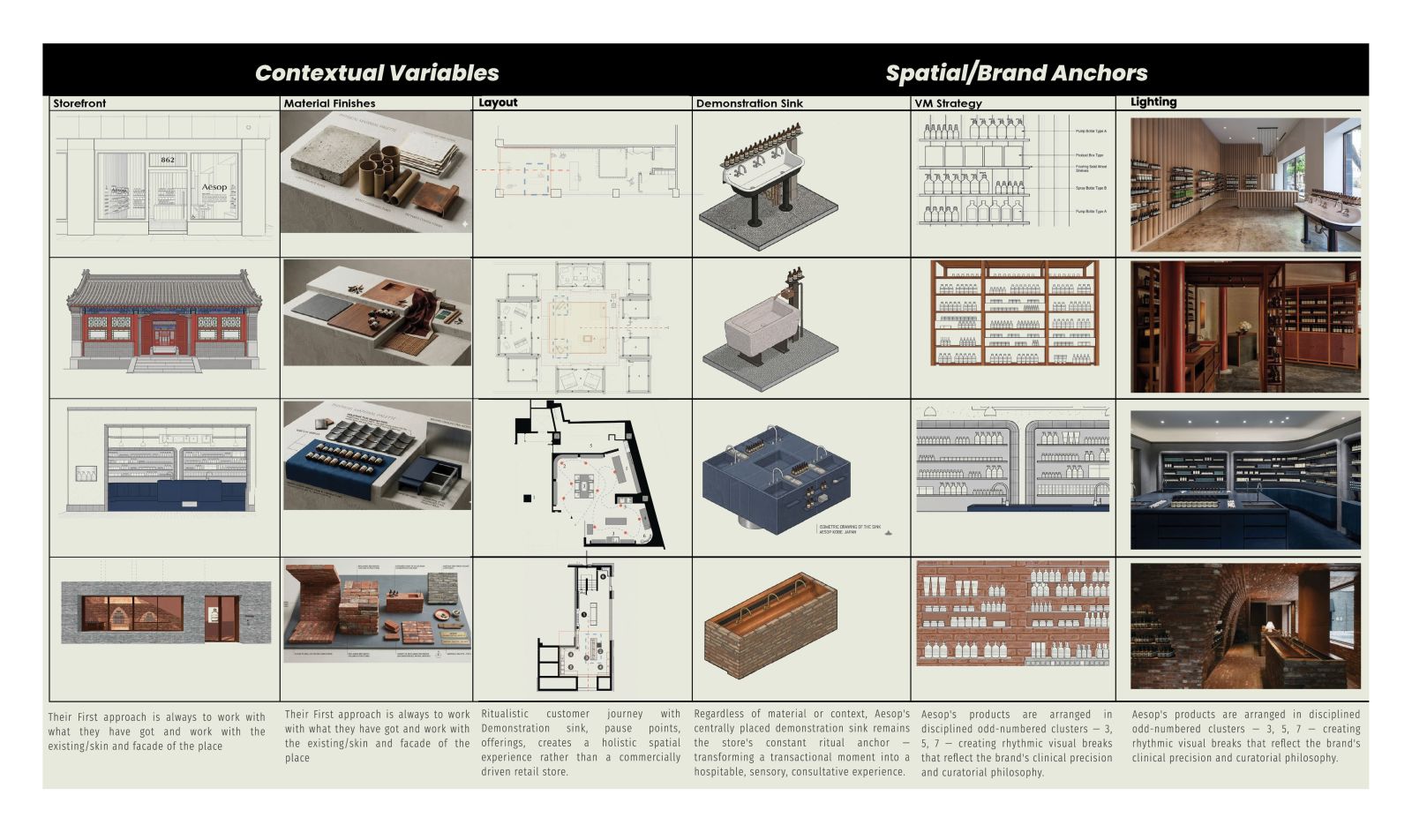
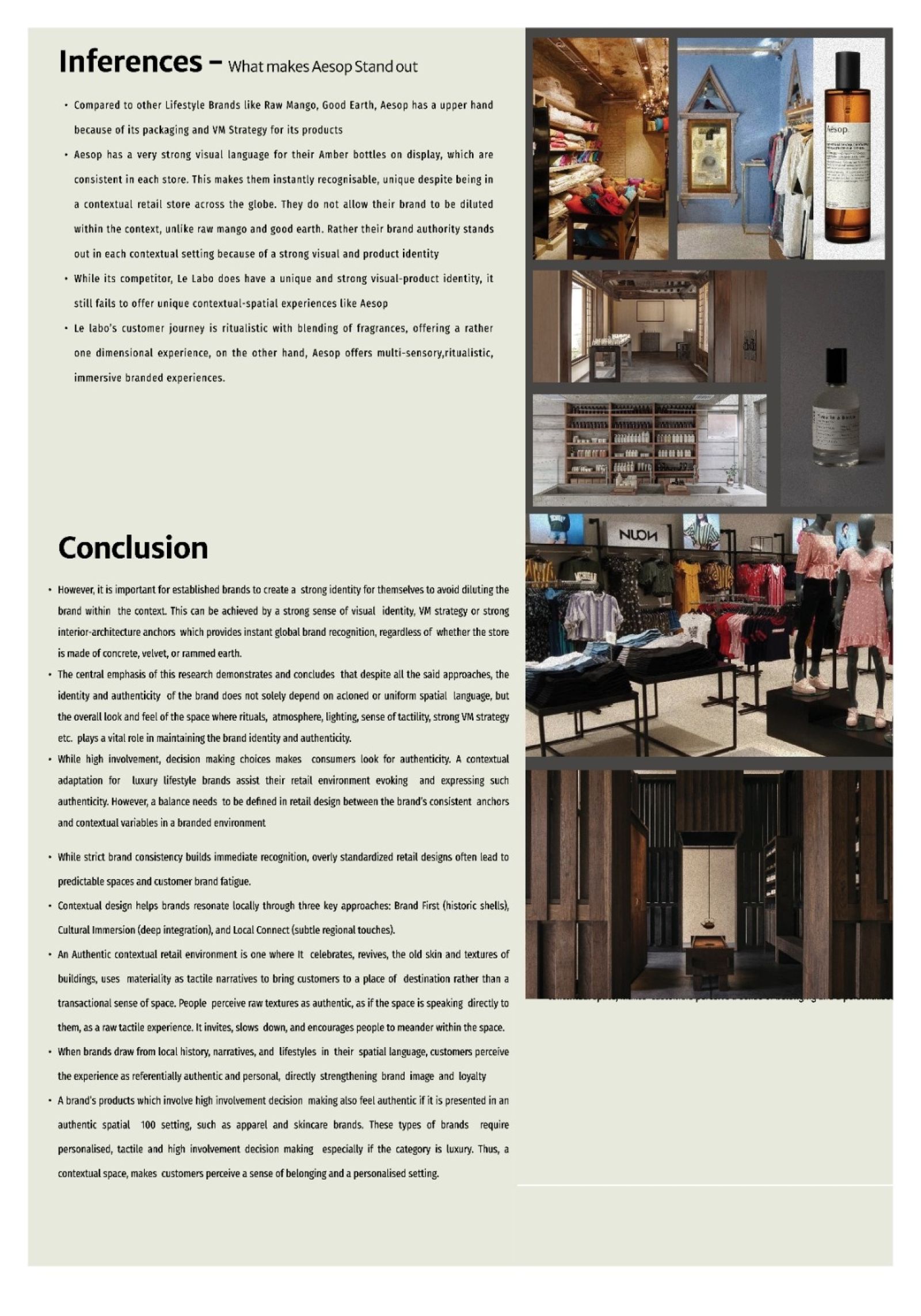
A brand in its retail environment becomes a 3 dimensional reflection of a brand’s motives, goals and objectives in a physical state. With the onset of globalisation, people opting for better lifestyles, brands are now more than ready to expand their business and gain profits. However, they face a fundamental tension. The need for reform and transformation for social-cultural and political aspects, accordingly while responding to the context but also maintaining a consistent, recognisable brand identity. This thesis draws the tension through the lens of branded environments and the changing landscape of retail design. A brand identifies itself through a unique name, logo, which differentiates itself from its competitors in a saturated market. The practice of maintaining a consistent brand identity is known as brand consistency. However, the paper argues that such practices often strip away the value of context. When such a consistent approach is translated into retail design, it creates a homogenous, predictable and mundane physical environment. Citing Pine and Gilmore’s (2007) paradox and Zimmerman’s critique of branded environments, such a practice of replication stores, thus creating acontextual or cloned environments of a brand often erodes away the brand’s authenticity and further diminishes the contextual value of a place. This research further labels the different approaches to contextual adaptations by the brands. These are Brand first approach, Local connect, and finally cultural immersion. Through a detailed overview of varied design adaptations to address the social and cultural nuances, this forms an analytical framework for our detailed case study on the brand Aesop. These frameworks are applied through a qualitative, comparative case study of Aesop — a global lifestyle brand that commissions entirely unique, site-specific interiors for each of its 400+ stores worldwide. Through the study of five Aesop stores across Los Angeles, Beijing, Kobe, Seoul, and Copenhagen, this research identifies the spatial constants and contextual variables that enable the brand to remain globally coherent while being locally irreducible. The thesis ultimately argues that contextual adaptation in retail design is not a dilution of brand identity, but its most authentic and enduring form of expression.