Your browser is out-of-date!
For a richer surfing experience on our website, please update your browser. Update my browser now!
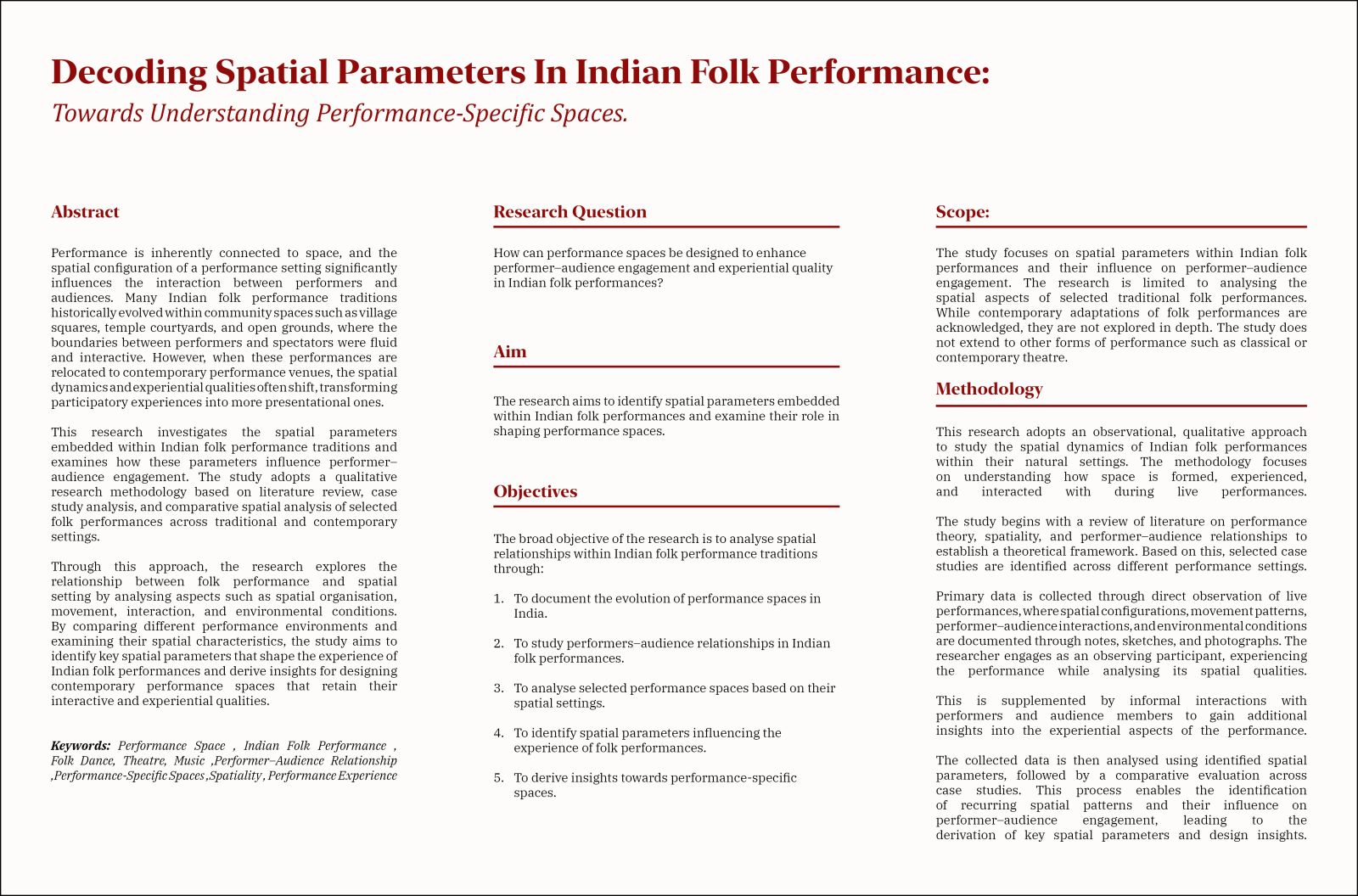
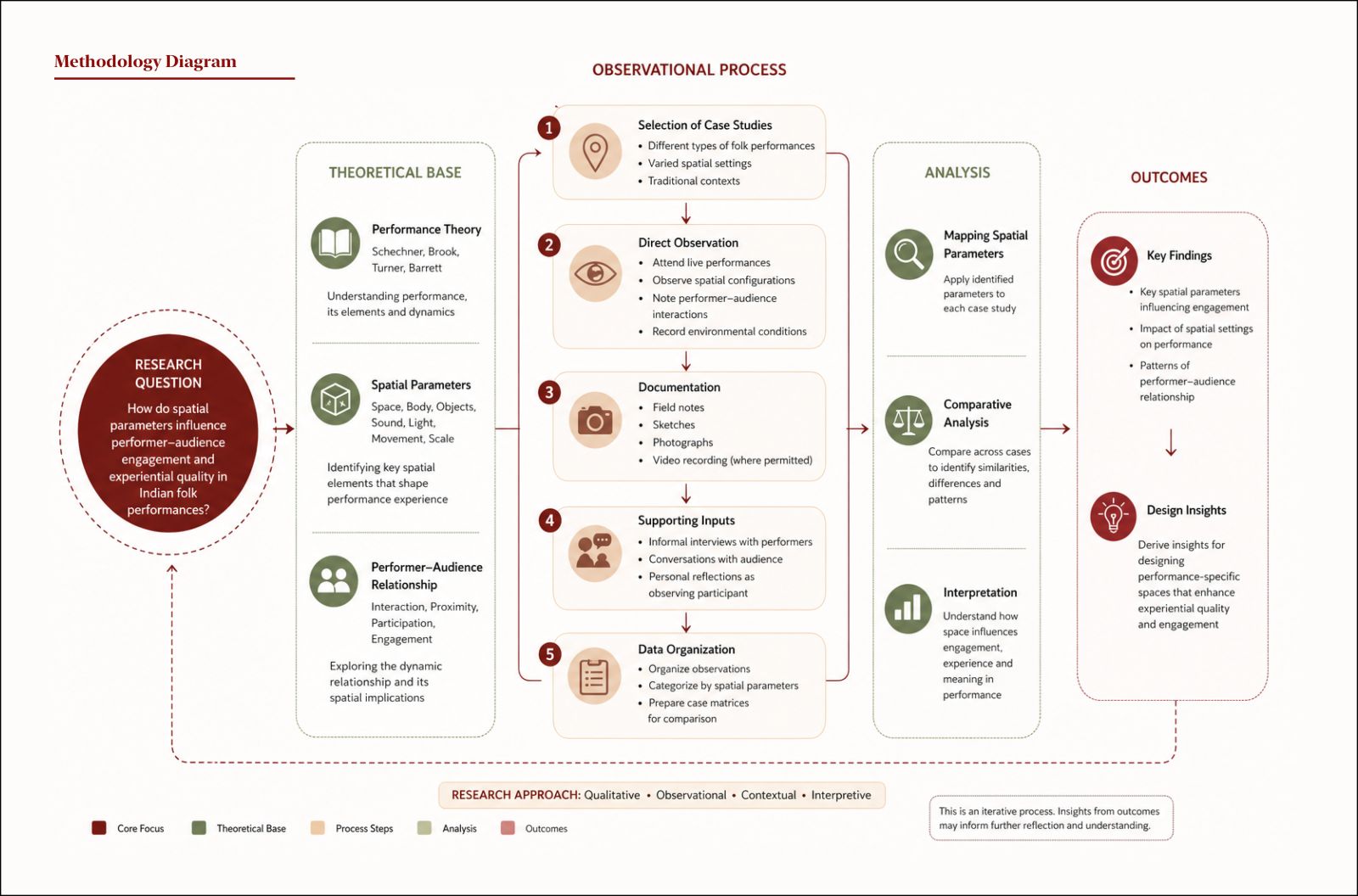
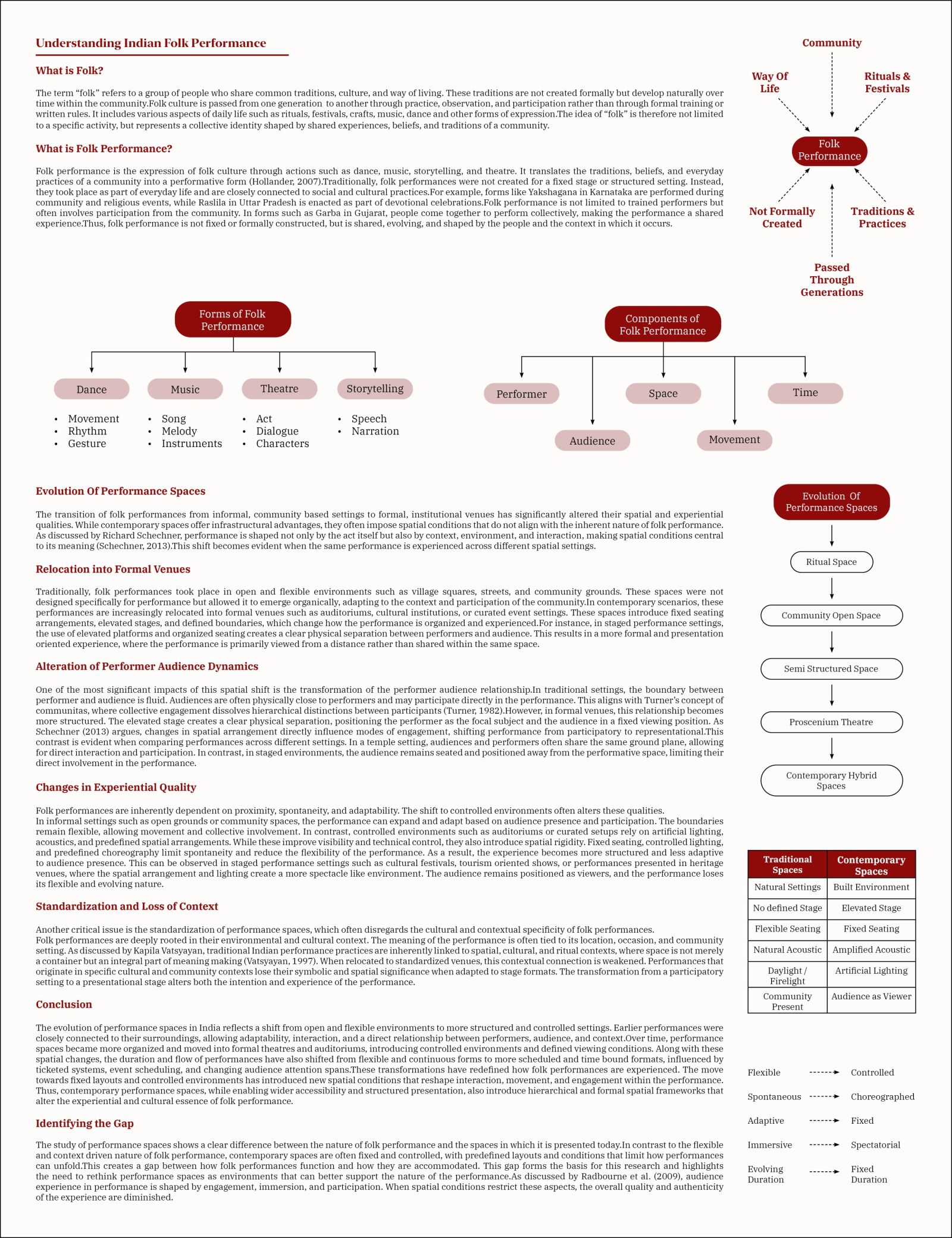
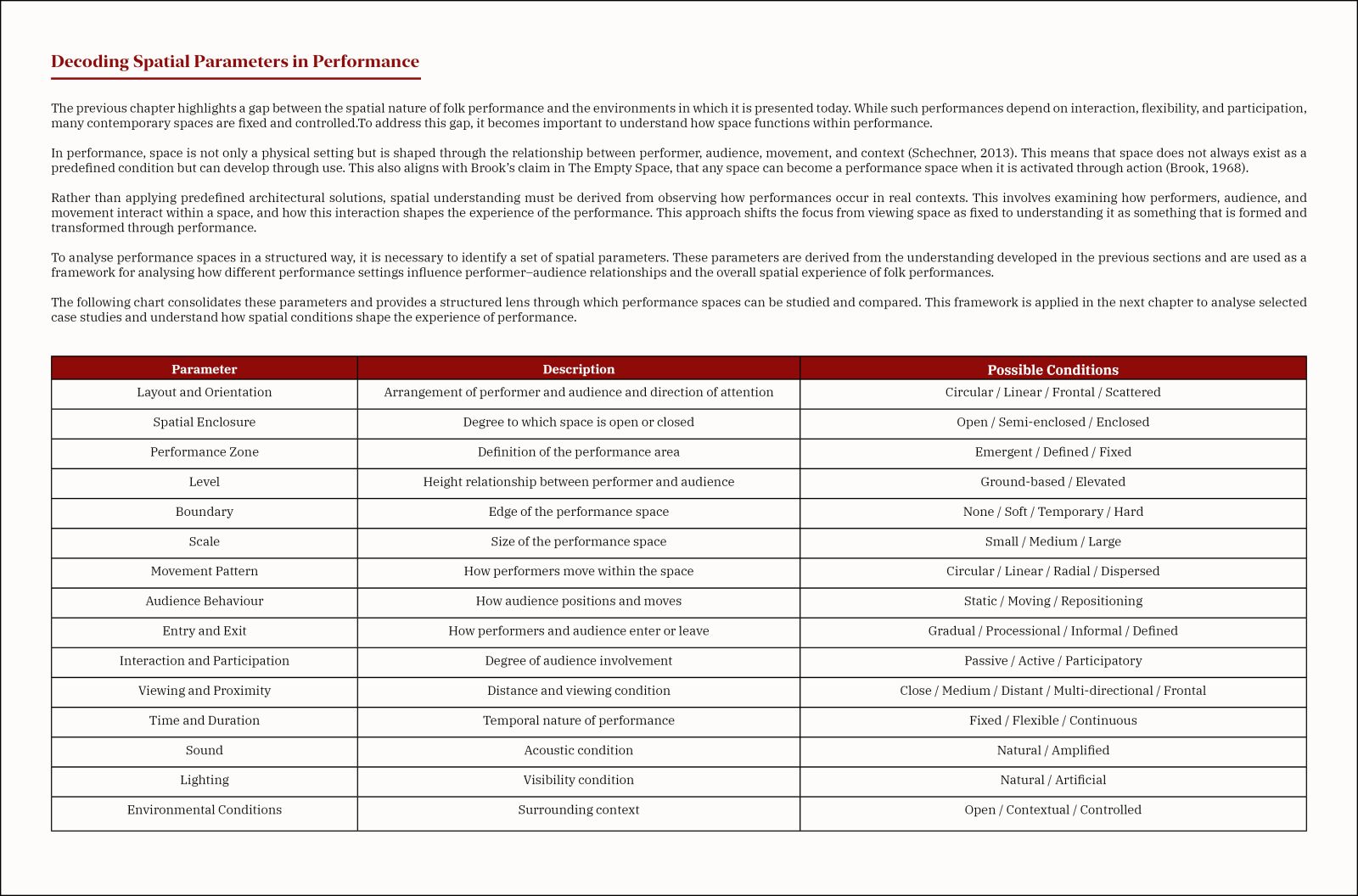
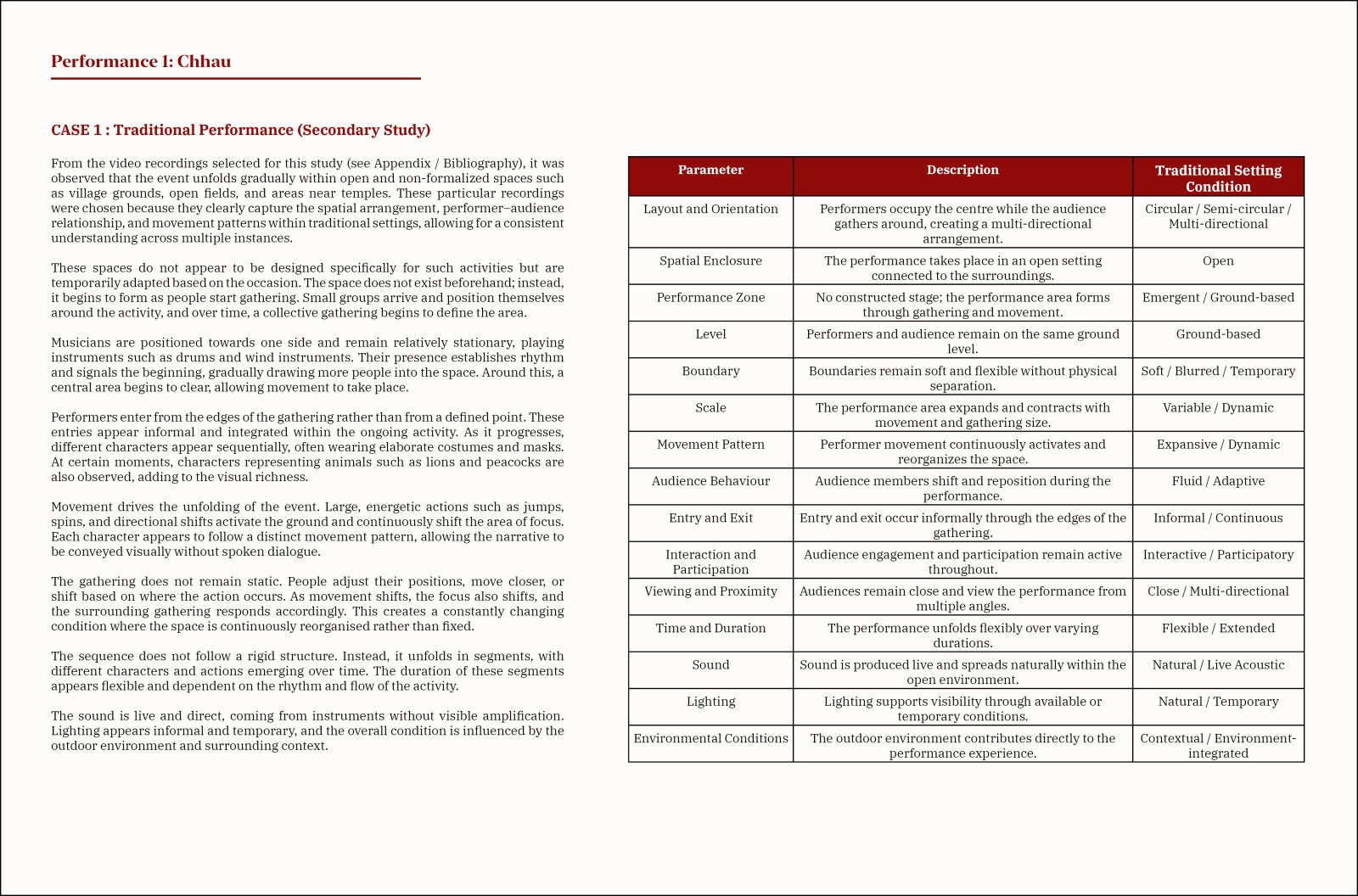
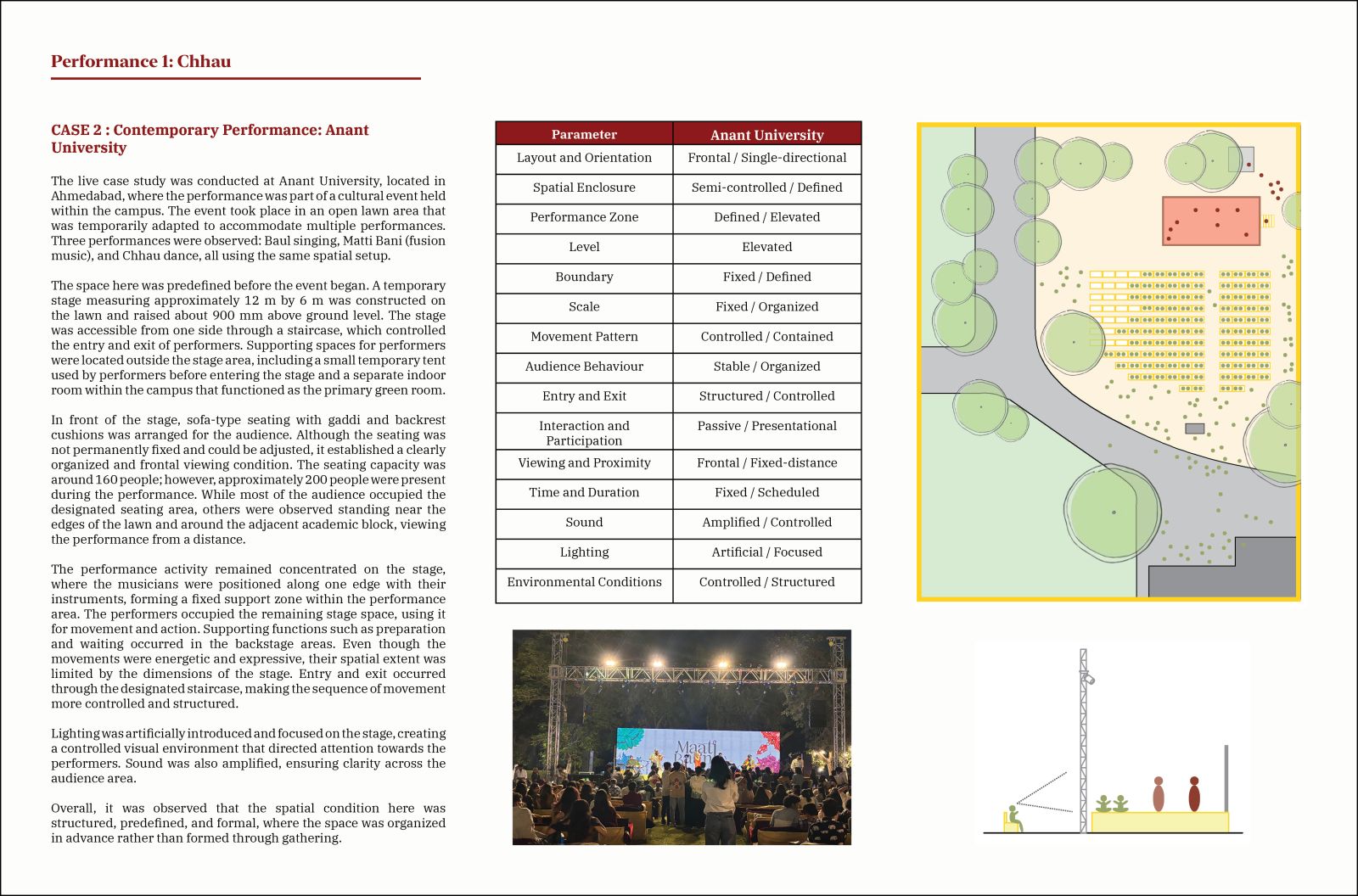
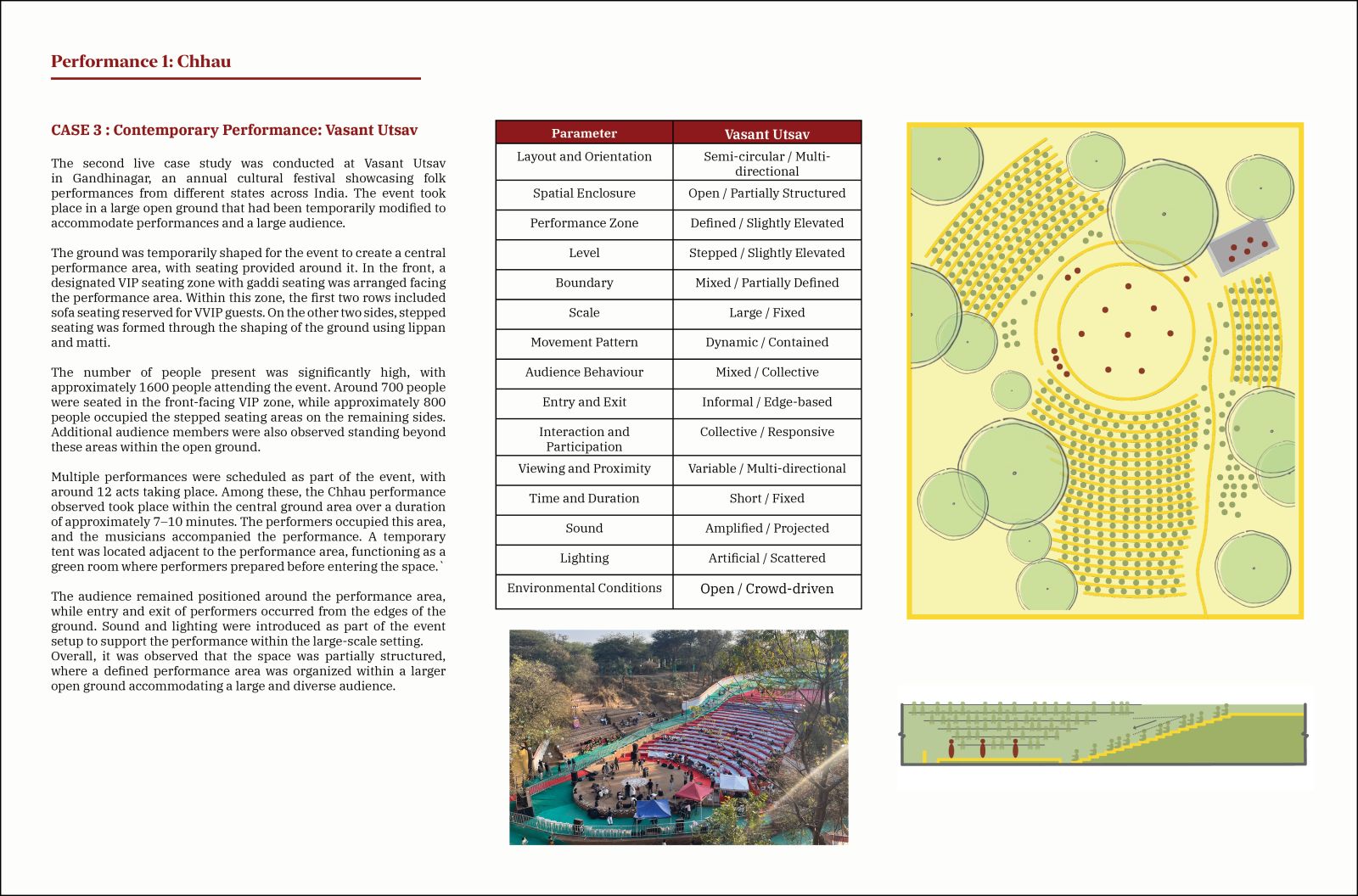
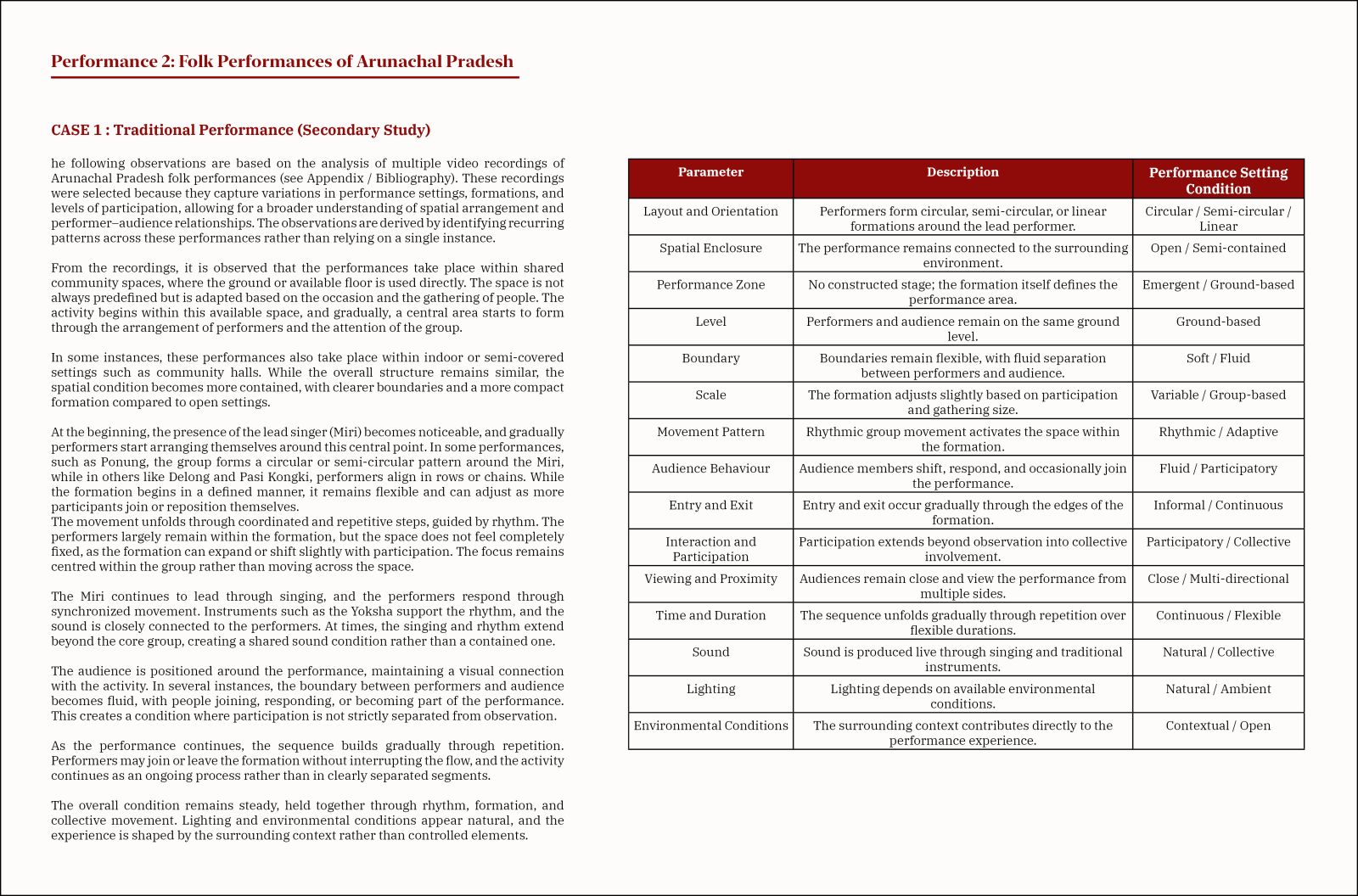
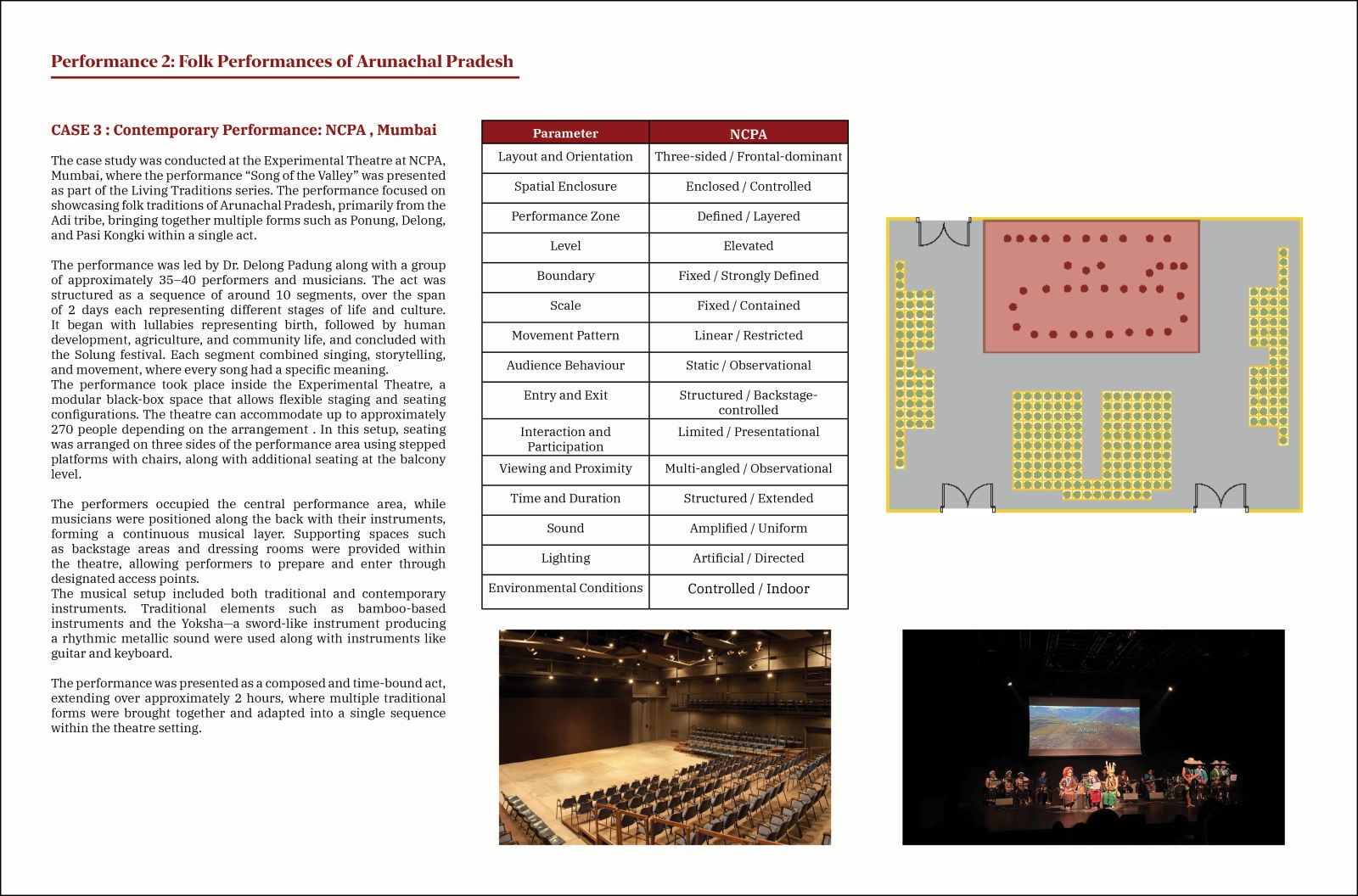
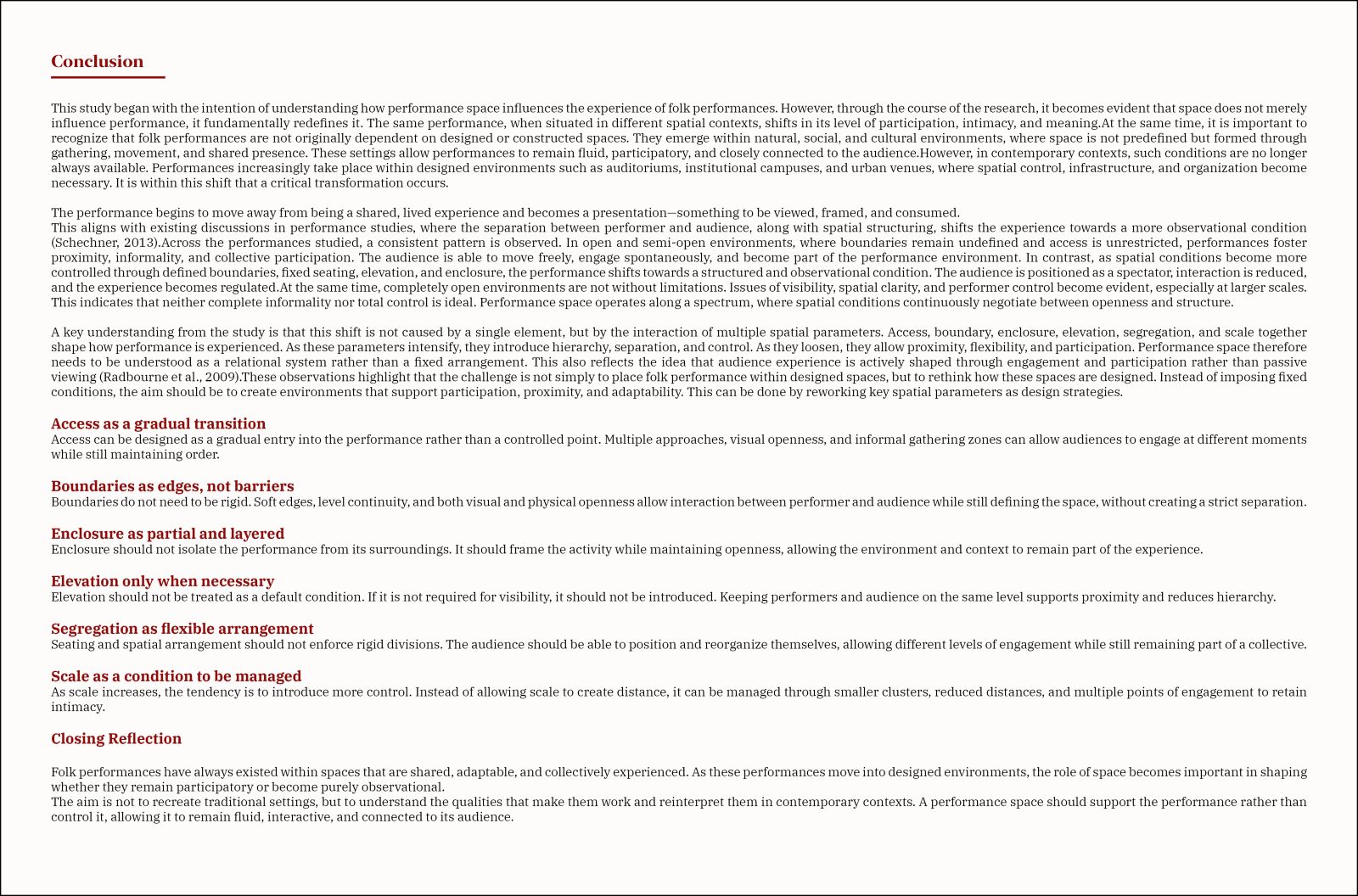
This research investigates how spatial settings influence performer–audience relationships and experiential qualities in Indian folk performances. Focusing on traditional and contemporary performance environments, the study analyses how spatial parameters such as layout, movement, boundaries, proximity, sound, and participation shape the experience of performance. Through literature review, live observations, video analysis, and comparative case studies of folk performances including Chhau and Arunachal Pradesh traditions, the research identifies recurring spatial patterns embedded within these performances. The study ultimately aims to derive insights towards performance-specific spaces that support interaction, immersion, and the collective nature inherent in Indian folk performance traditions.
View Additional Work