Your browser is out-of-date!
For a richer surfing experience on our website, please update your browser. Update my browser now!
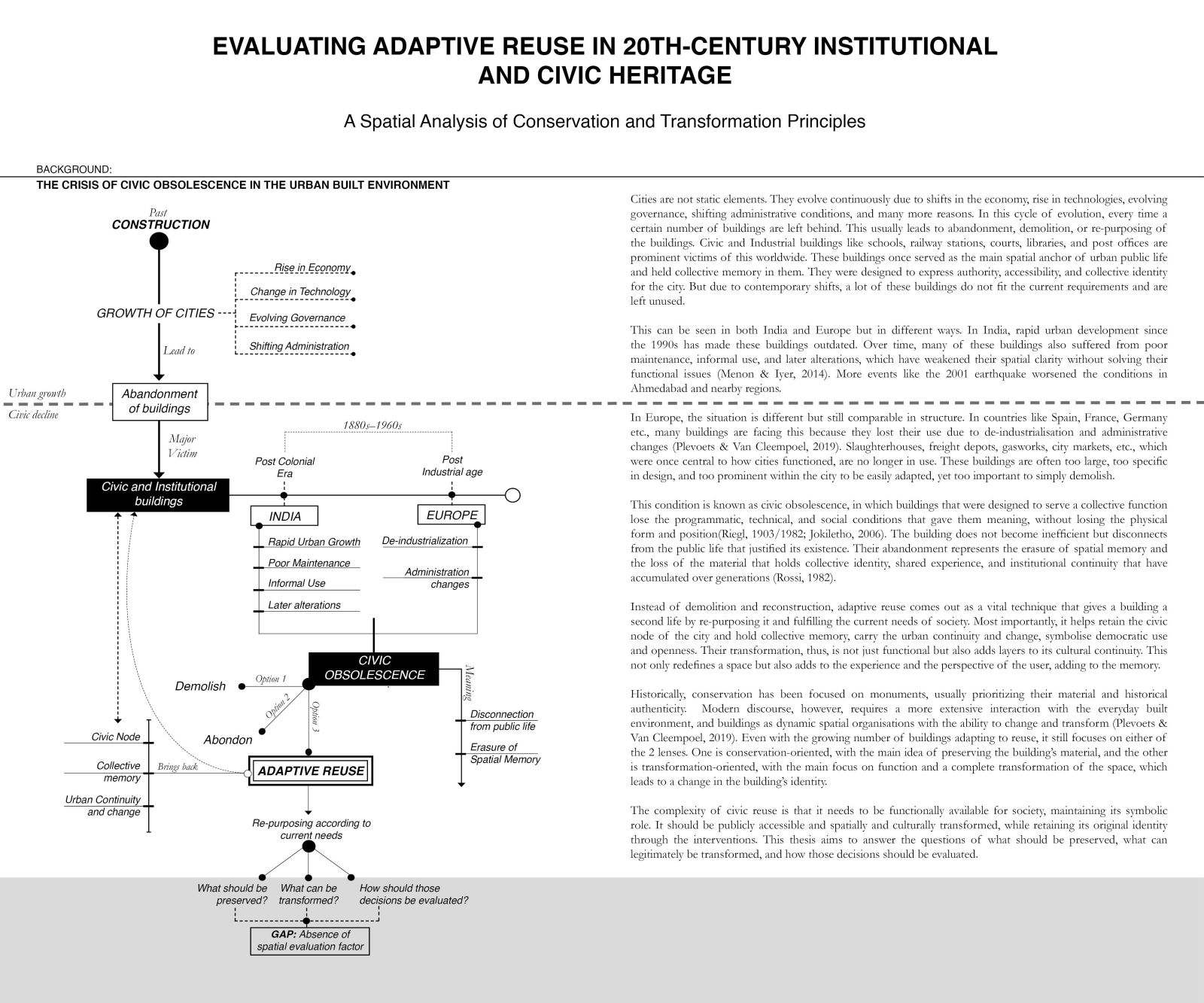
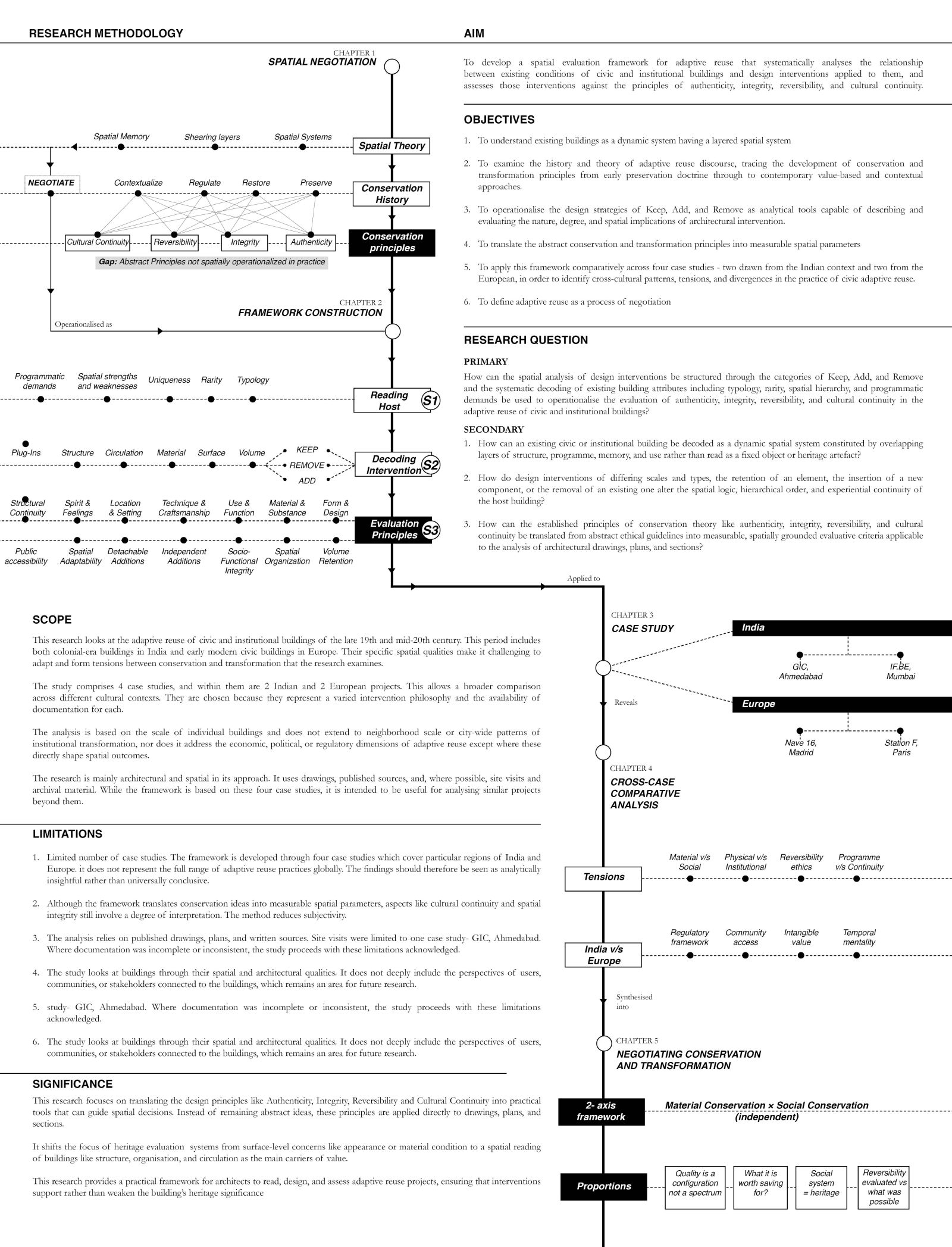
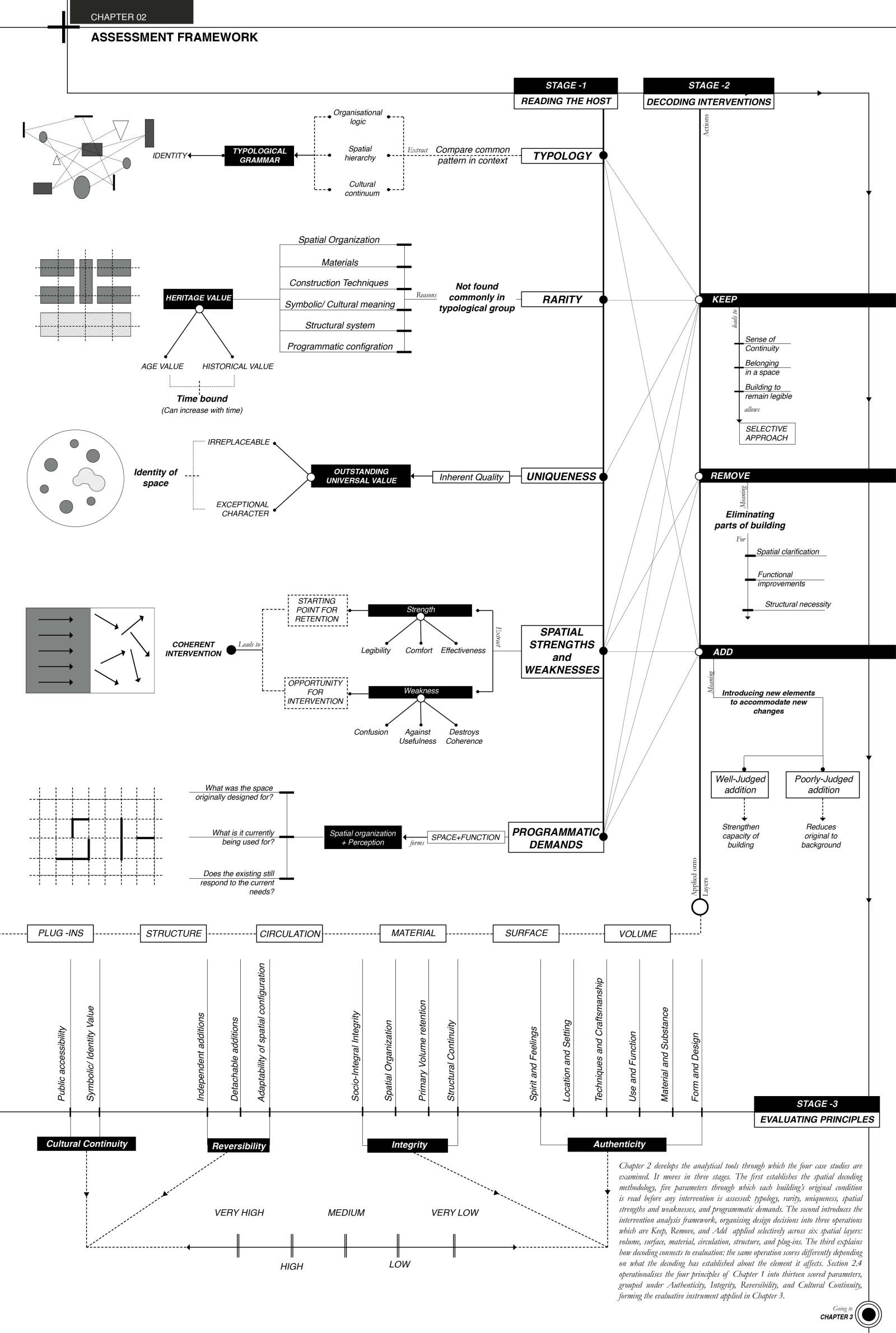
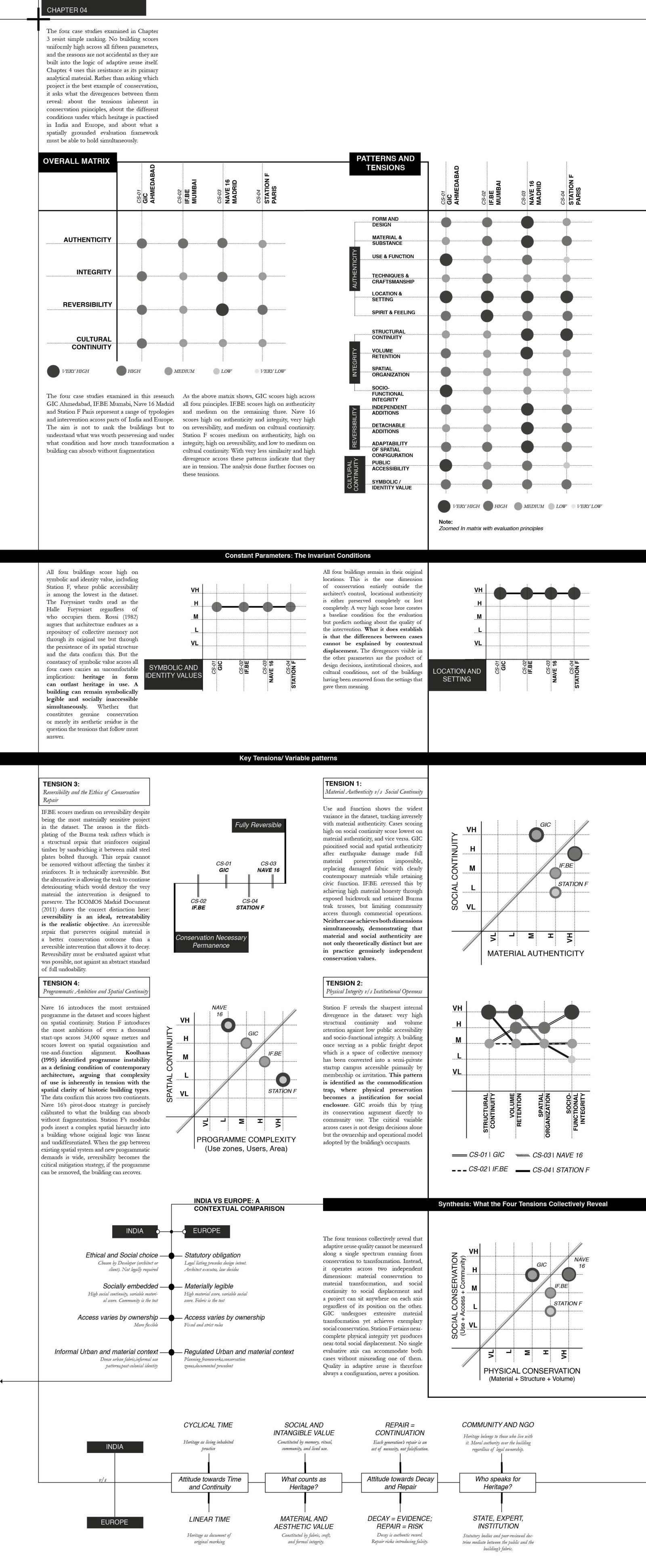
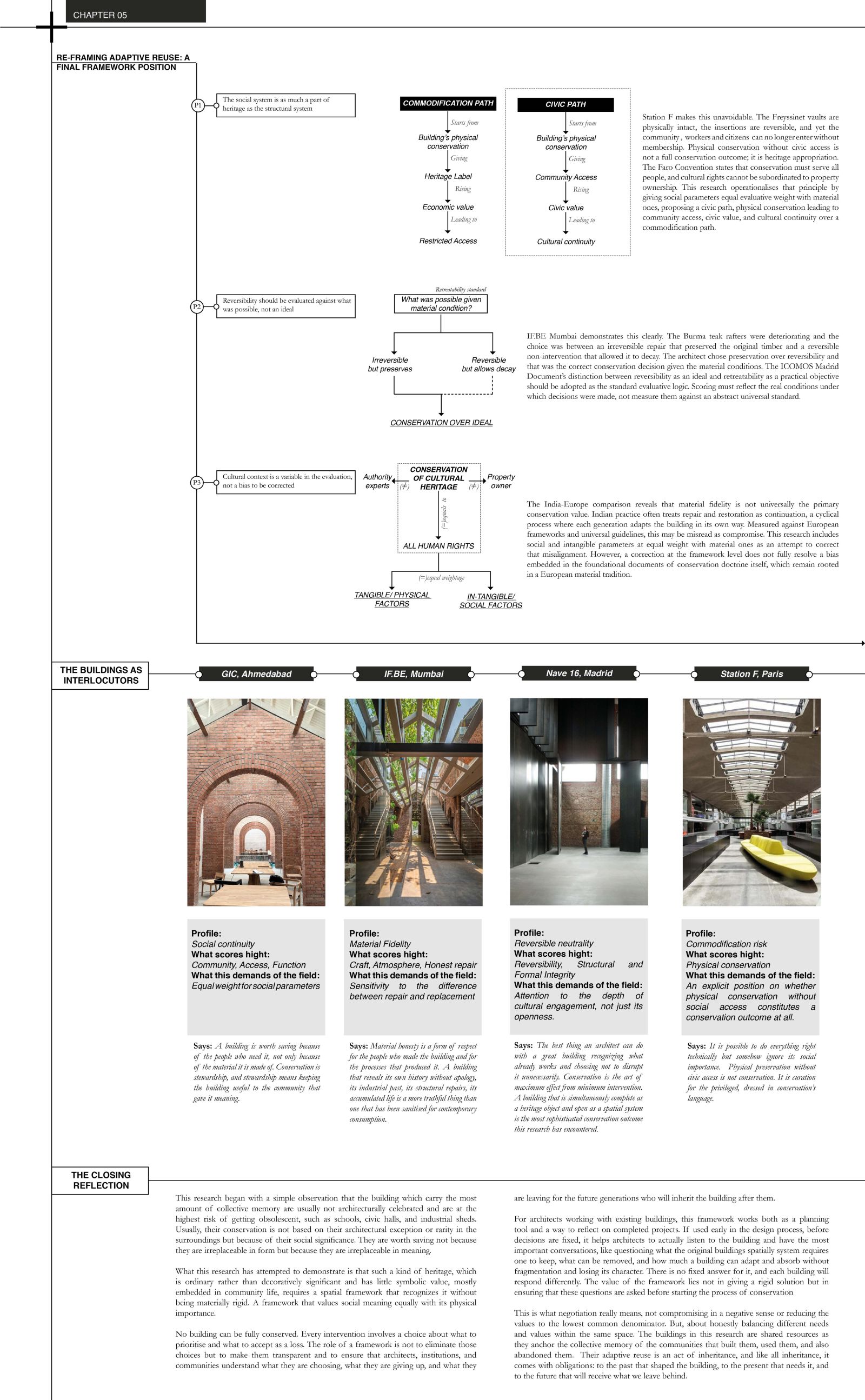
Civic and institutional buildings of the 20th century, like schools, freight depots, courts, and industrial halls, are losing programmatic relevance without losing physical presence, producing a condition of civic obsolescence. This research develops a spatial evaluation framework for adaptive reuse that measures interventions against four principles: authenticity, integrity, reversibility, and cultural continuity. Applied comparatively across four case studies, GIC Ahmedabad, IF.BE Mumbai, Nave 16 Madrid, and Station F Paris, the framework reveals that adaptive reuse quality operates across two independent dimensions: material conservation and social continuity. A building can be physically exemplary and socially failed. Evaluation must account for both.