Your browser is out-of-date!
For a richer surfing experience on our website, please update your browser. Update my browser now!
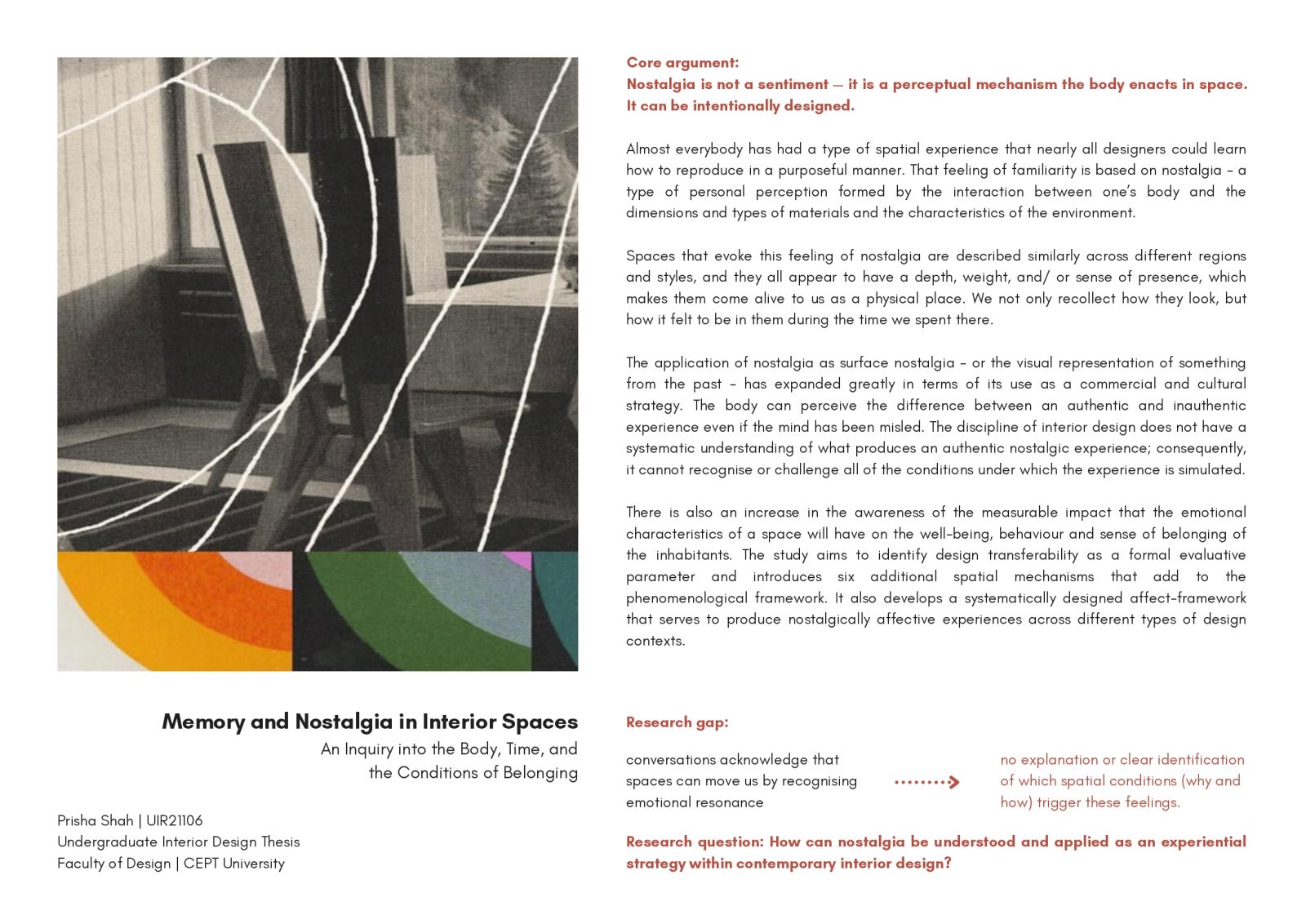
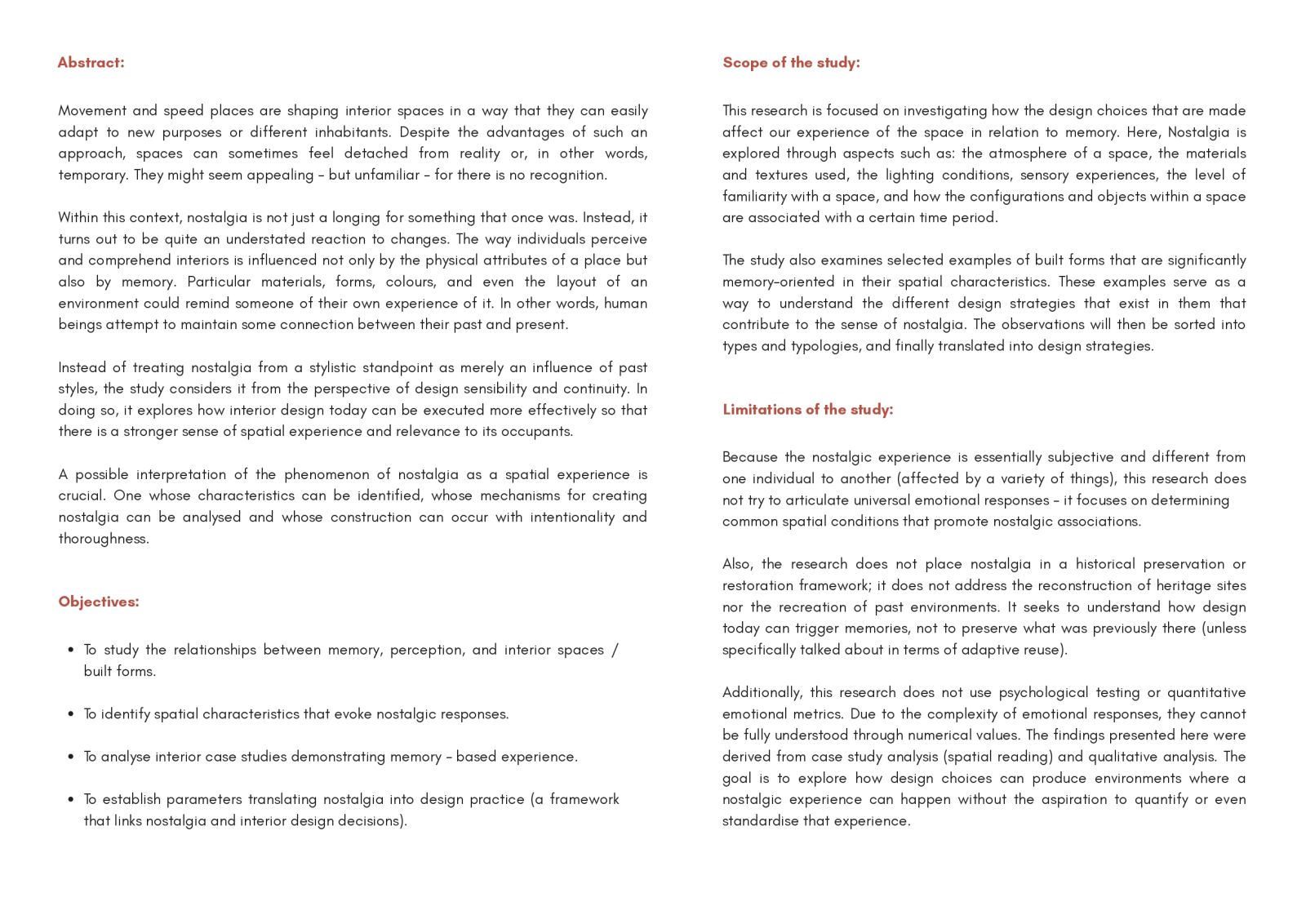
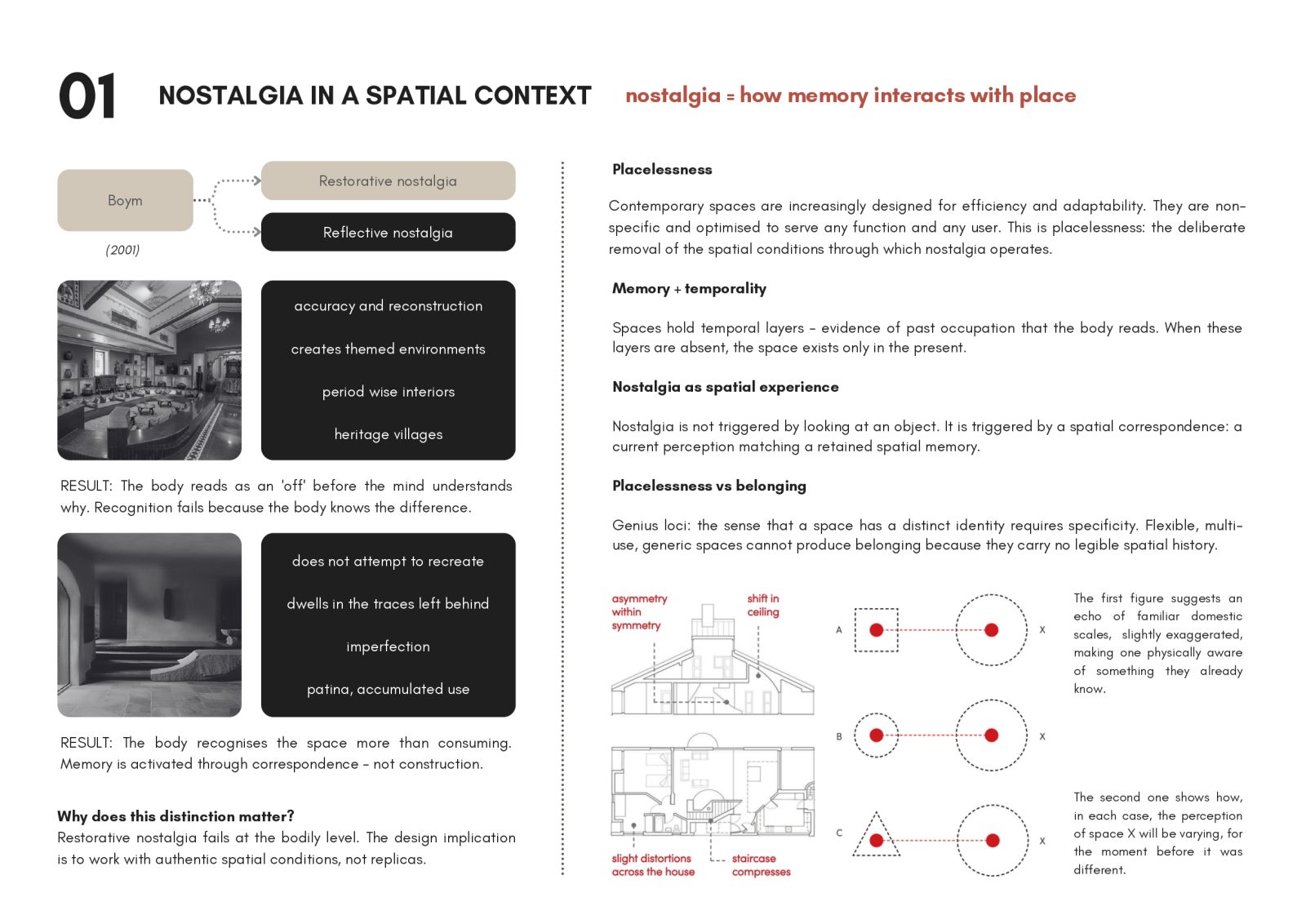
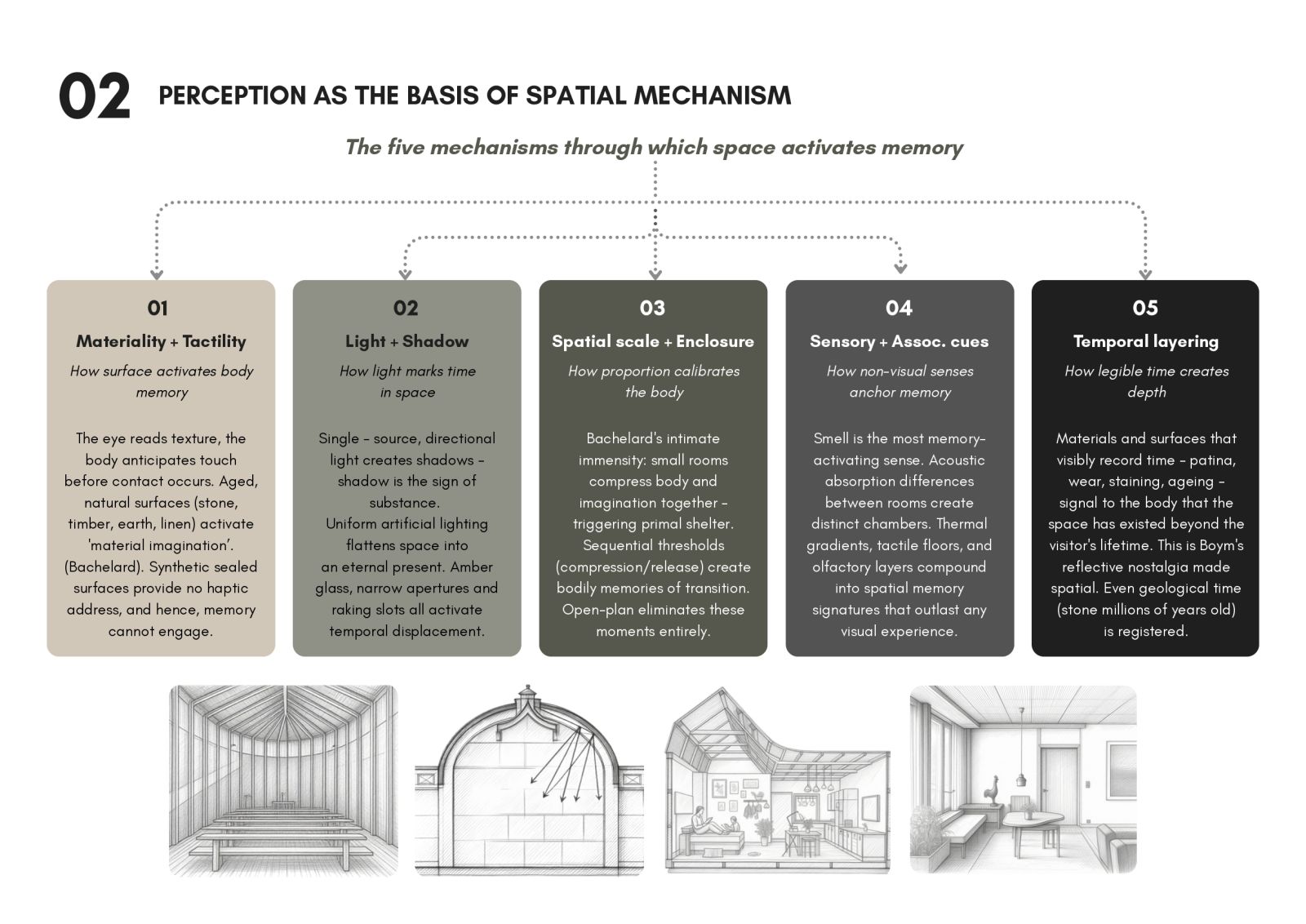
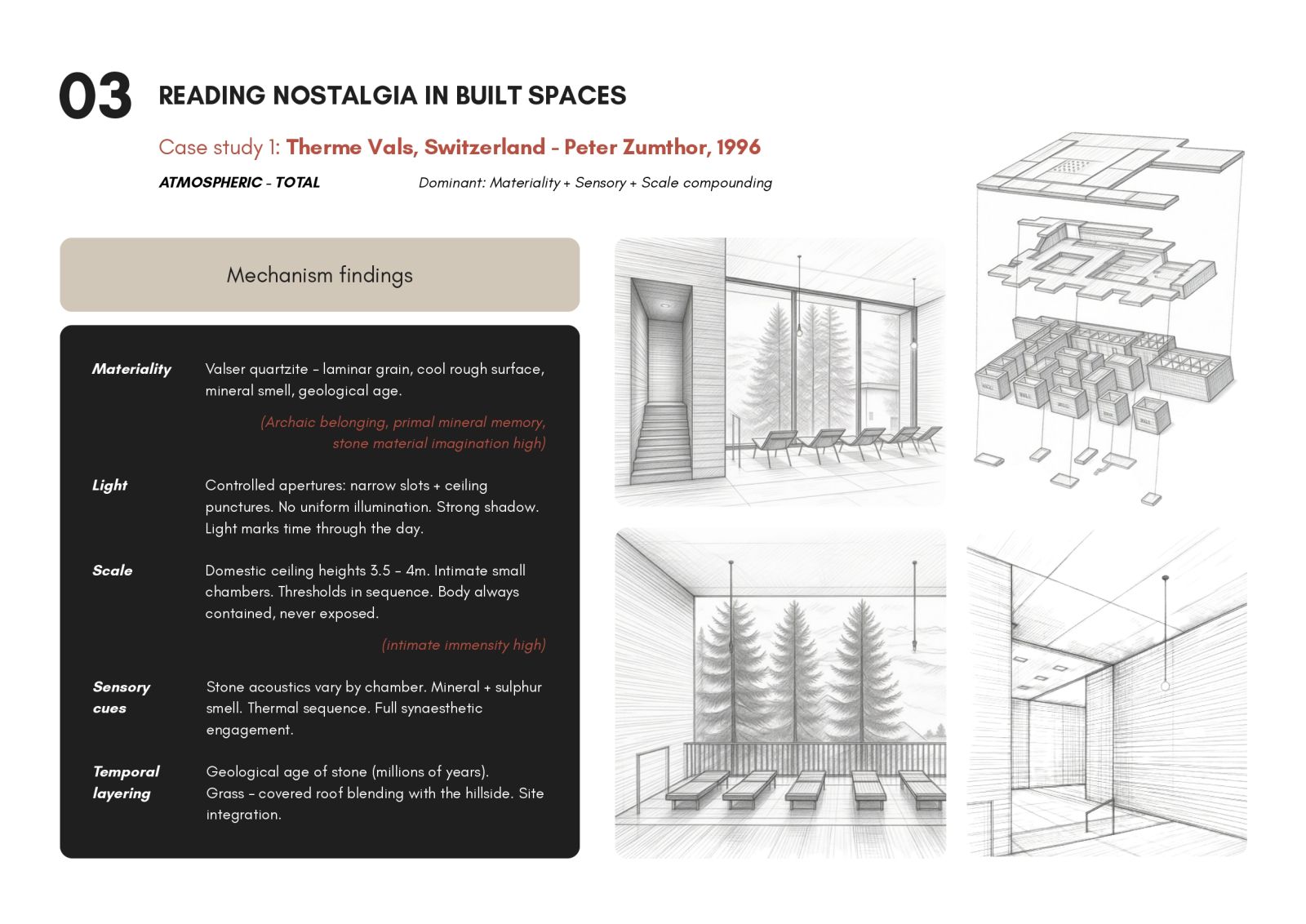
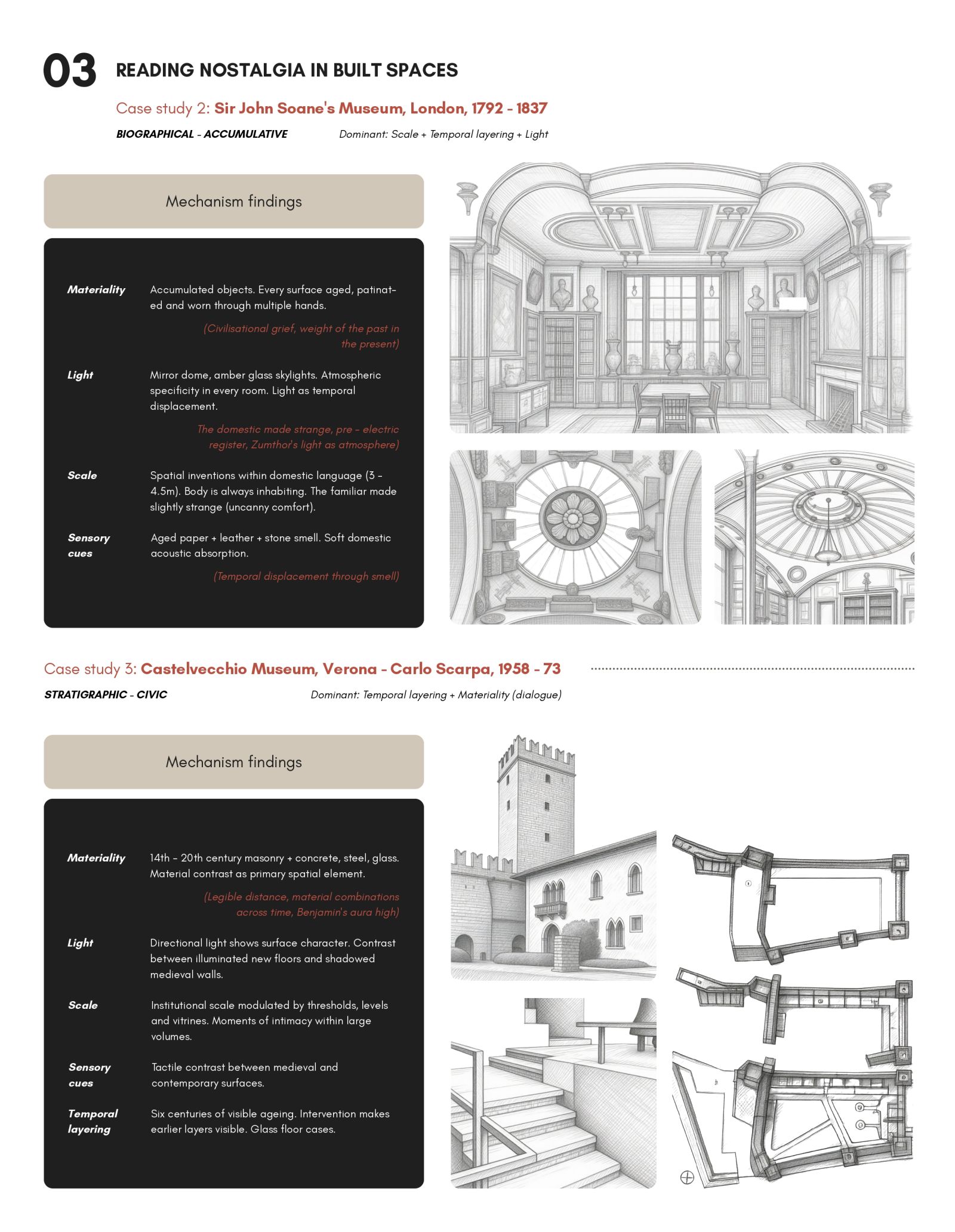
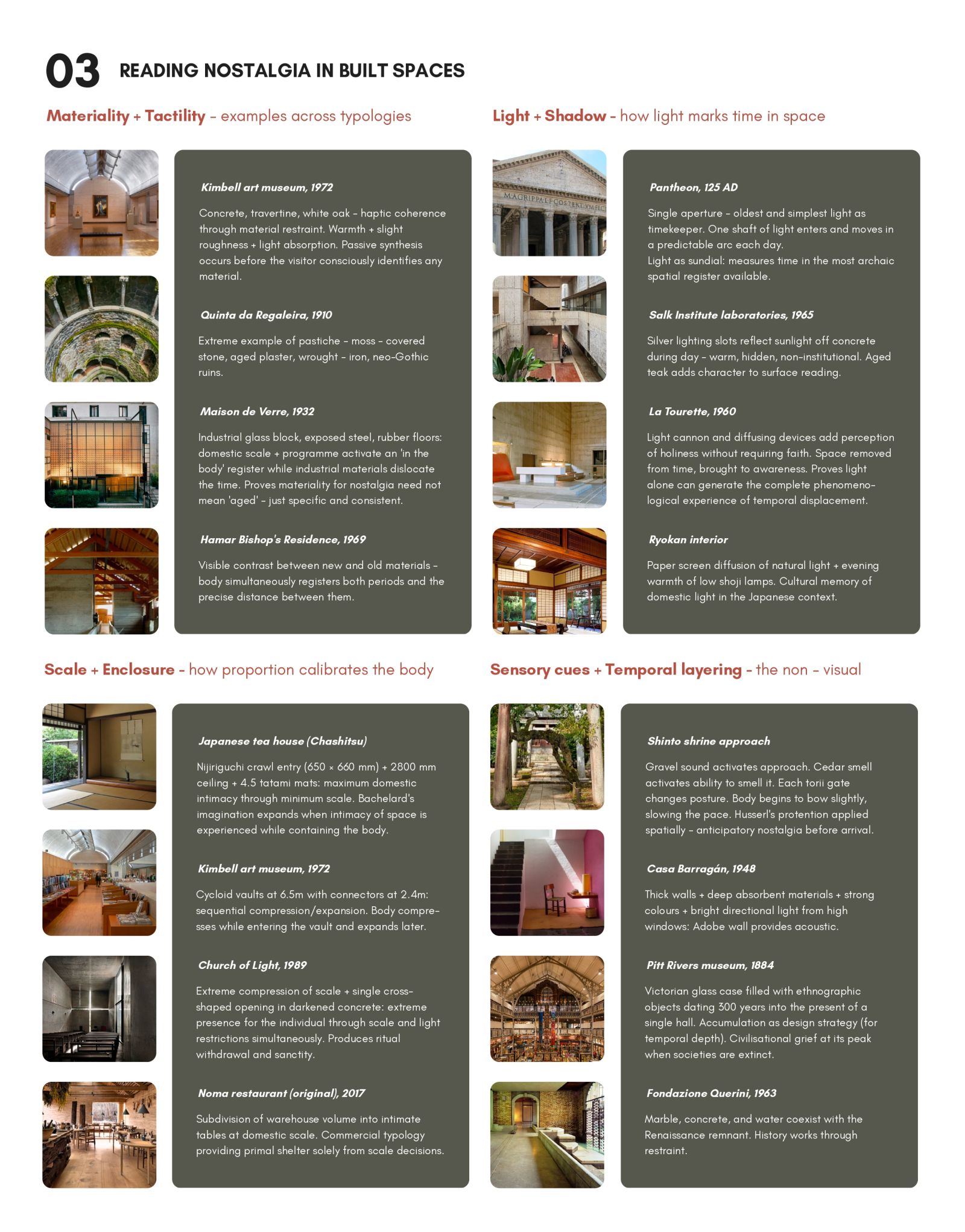
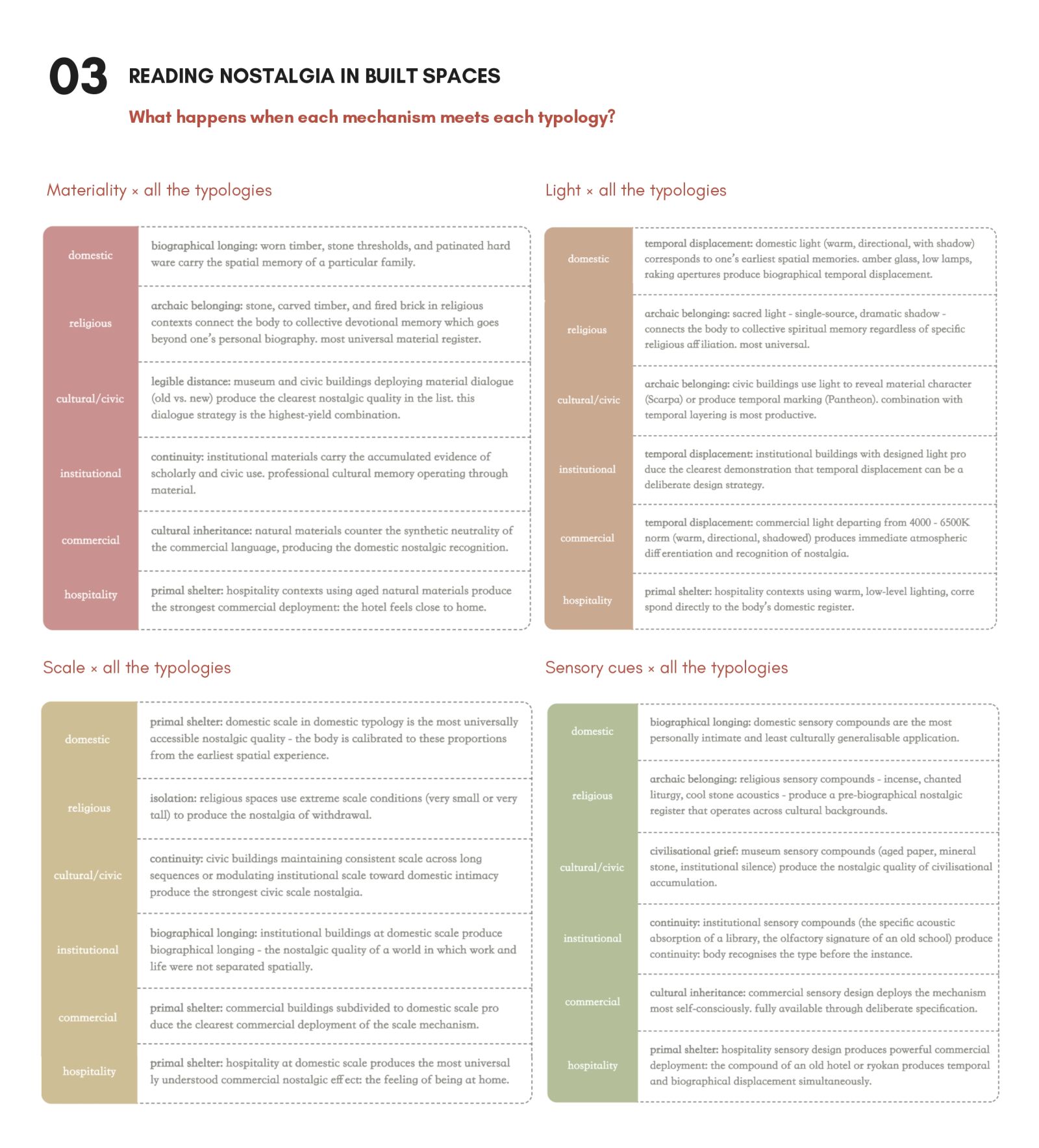
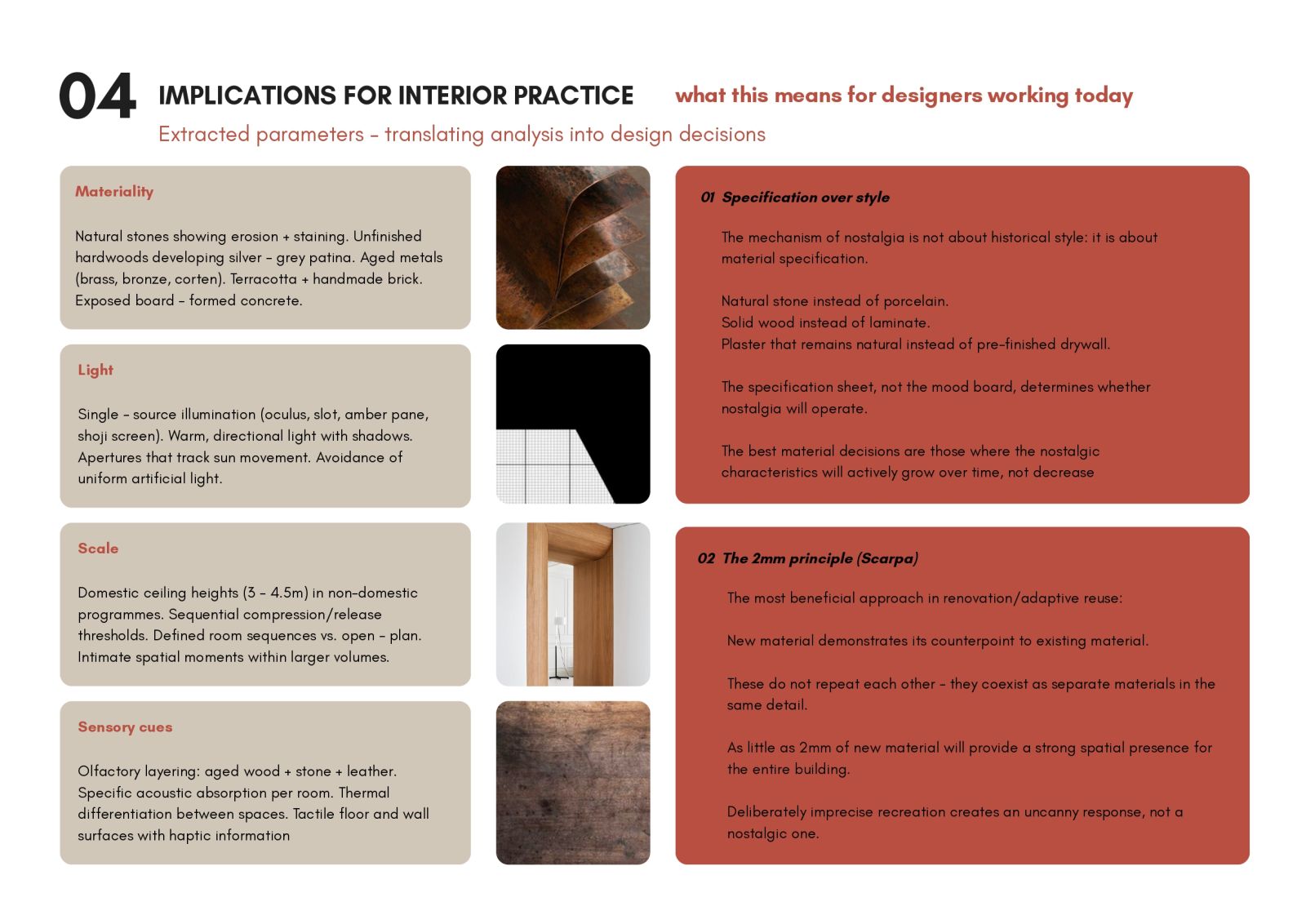
The study argues that nostalgia is not a sentiment. It is a perceptual mechanism the body enacts in space, which is triggered by material, light, scale, and time made visible in surfaces. Contemporary interiors are increasingly generic (placeless) and efficient. They function well but feel like nowhere. This thesis identifies the spatial conditions that produce genuine nostalgic experience, studies the buildings that do it best, and translates those findings into a design framework - so that belonging, depth, and memory are not accidents of age but deliberate outcomes of design. Nostalgia can be designed. This is how. Click here.