Your browser is out-of-date!
For a richer surfing experience on our website, please update your browser. Update my browser now!
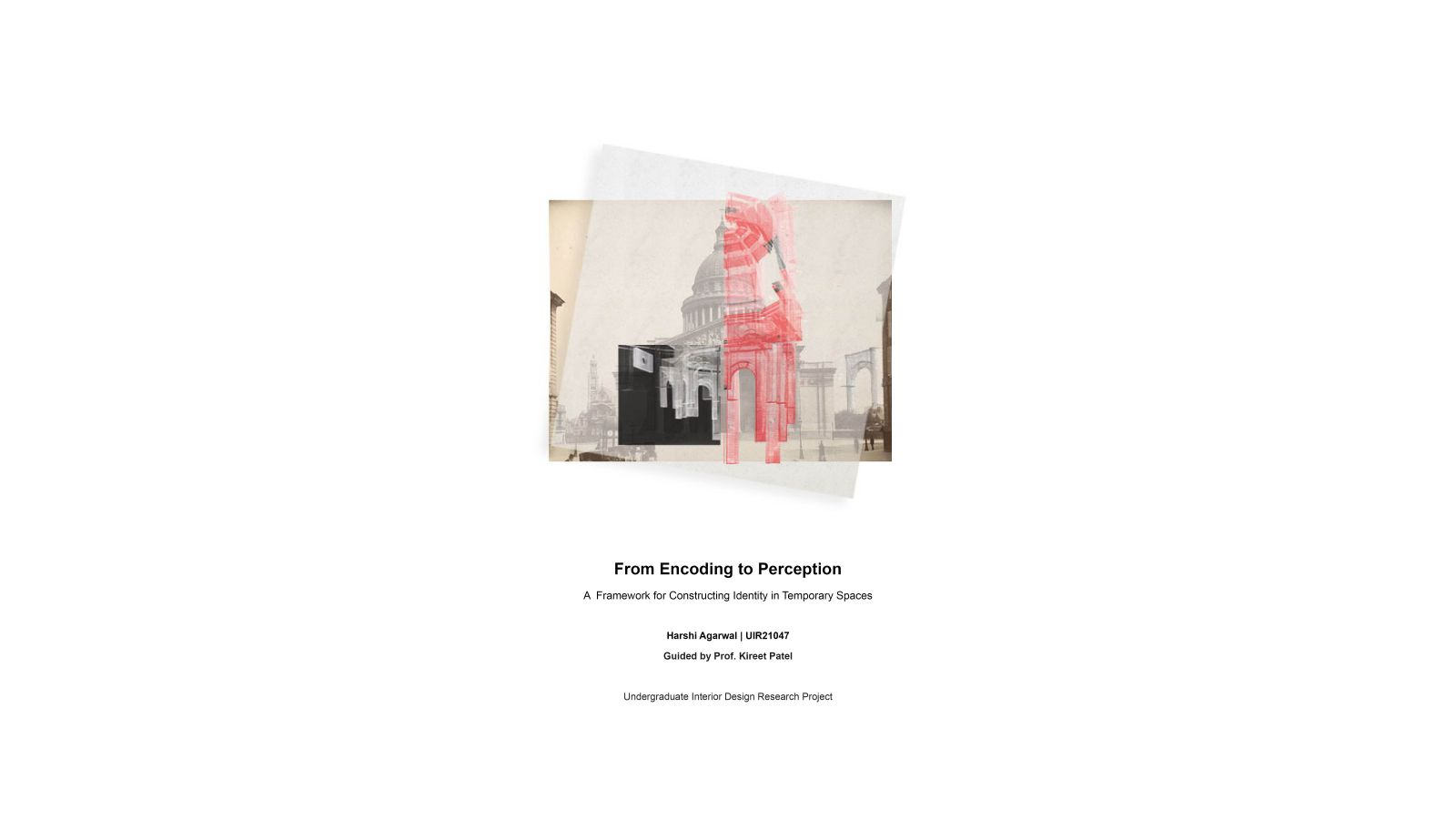
From Encoding to Perception: A Framework for Constructing Identity in Temporary Spaces
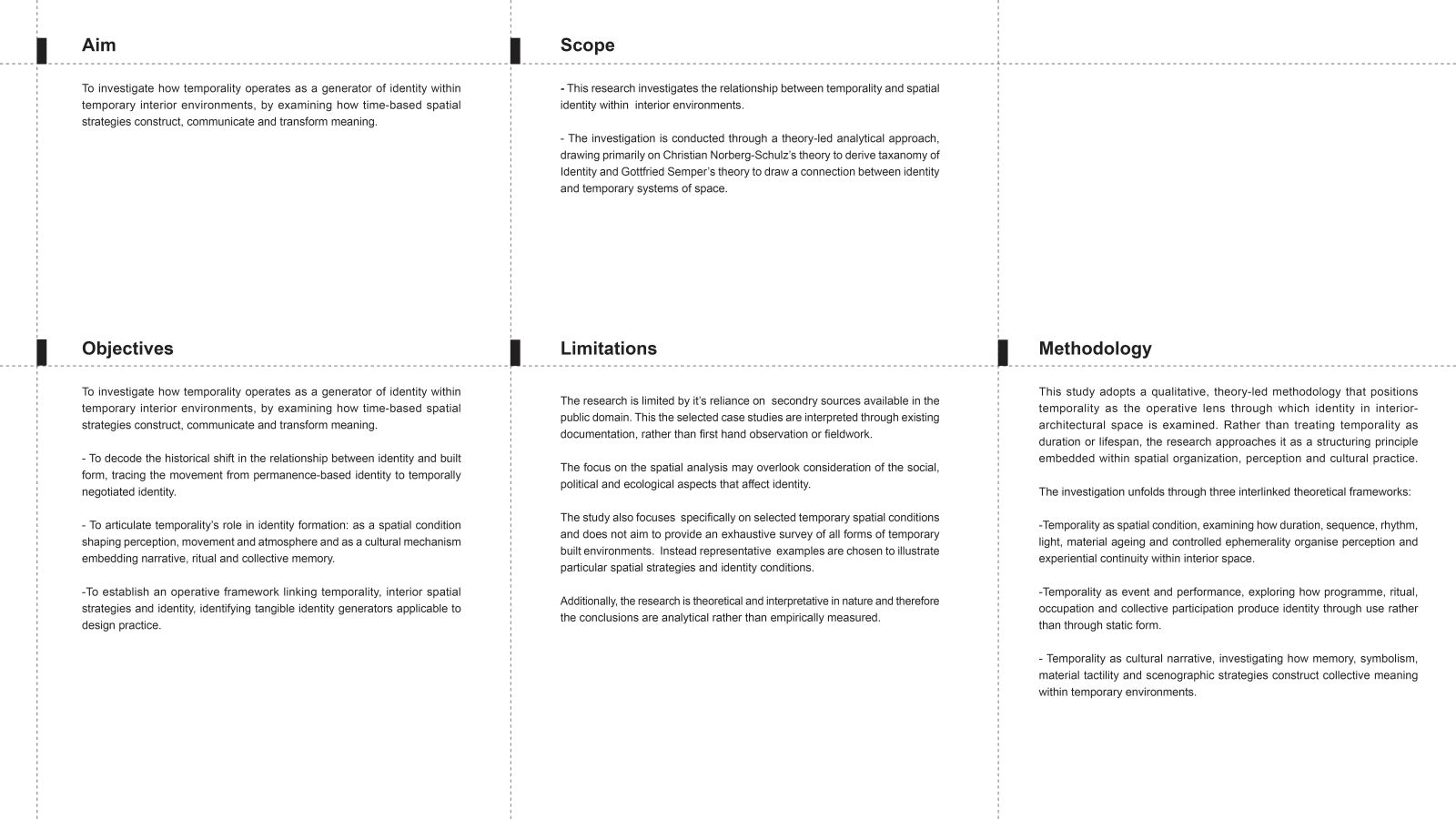
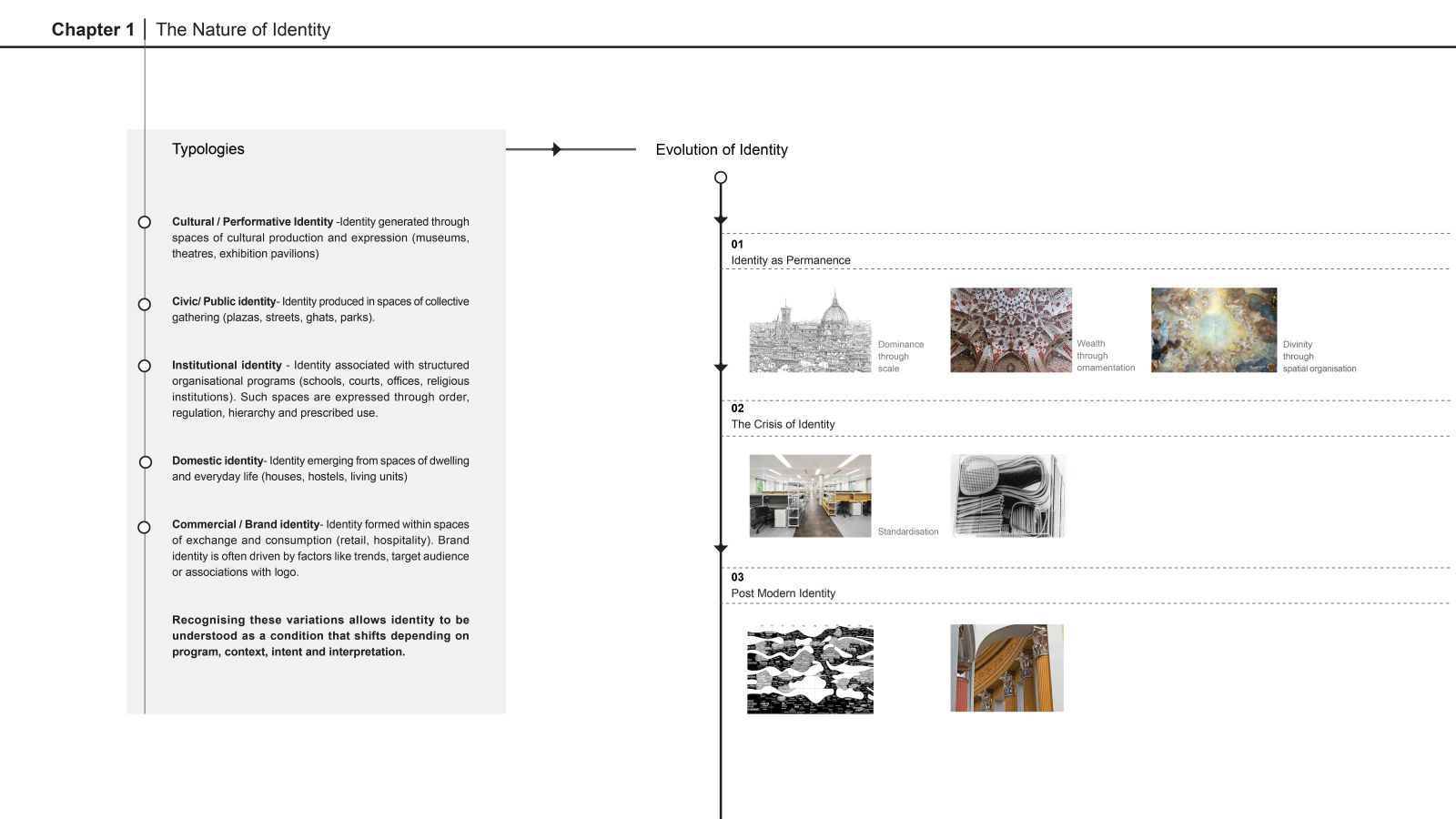
This research investigates how identity is constructed within temporary spatial environments, with a specific focus on interiors, pavilions, installations and event-based systems. Conventionally, identity in space has been associated with permanence, continuity and long-term occupation. This study questions that assumption by examining how identity can be produced, communicated and perceived within environments that are transient, mobile and continuously reconfigured.
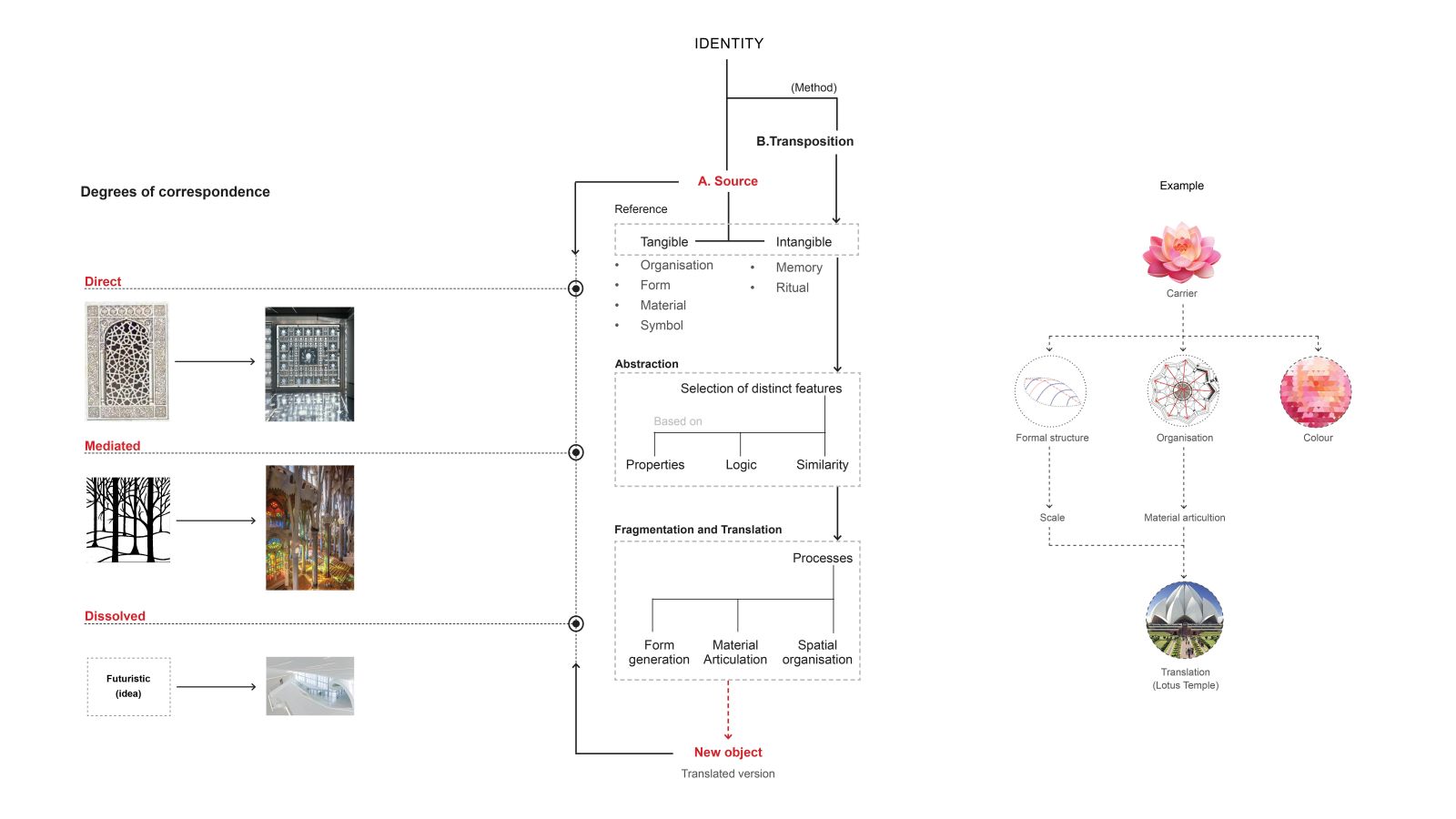
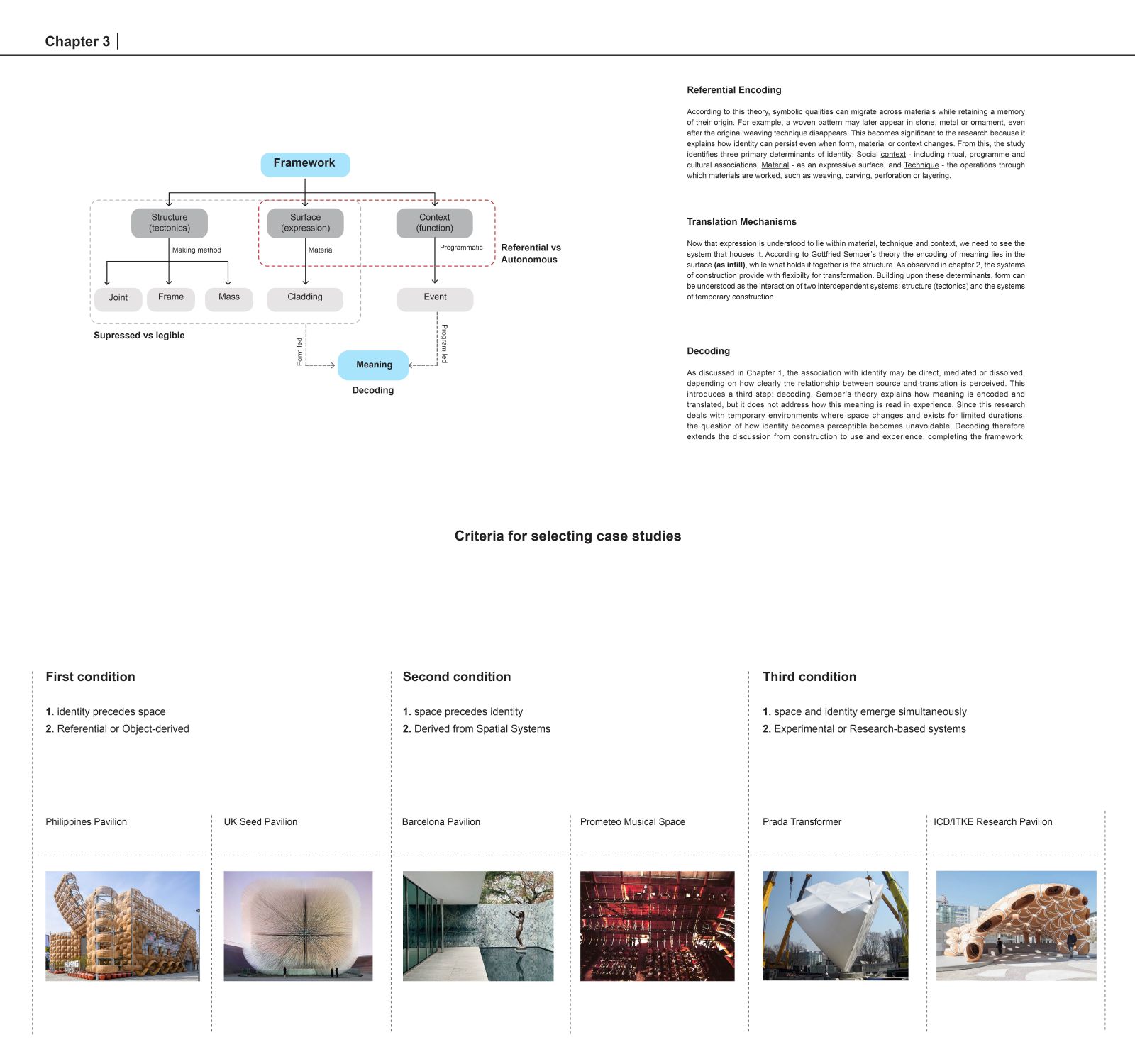
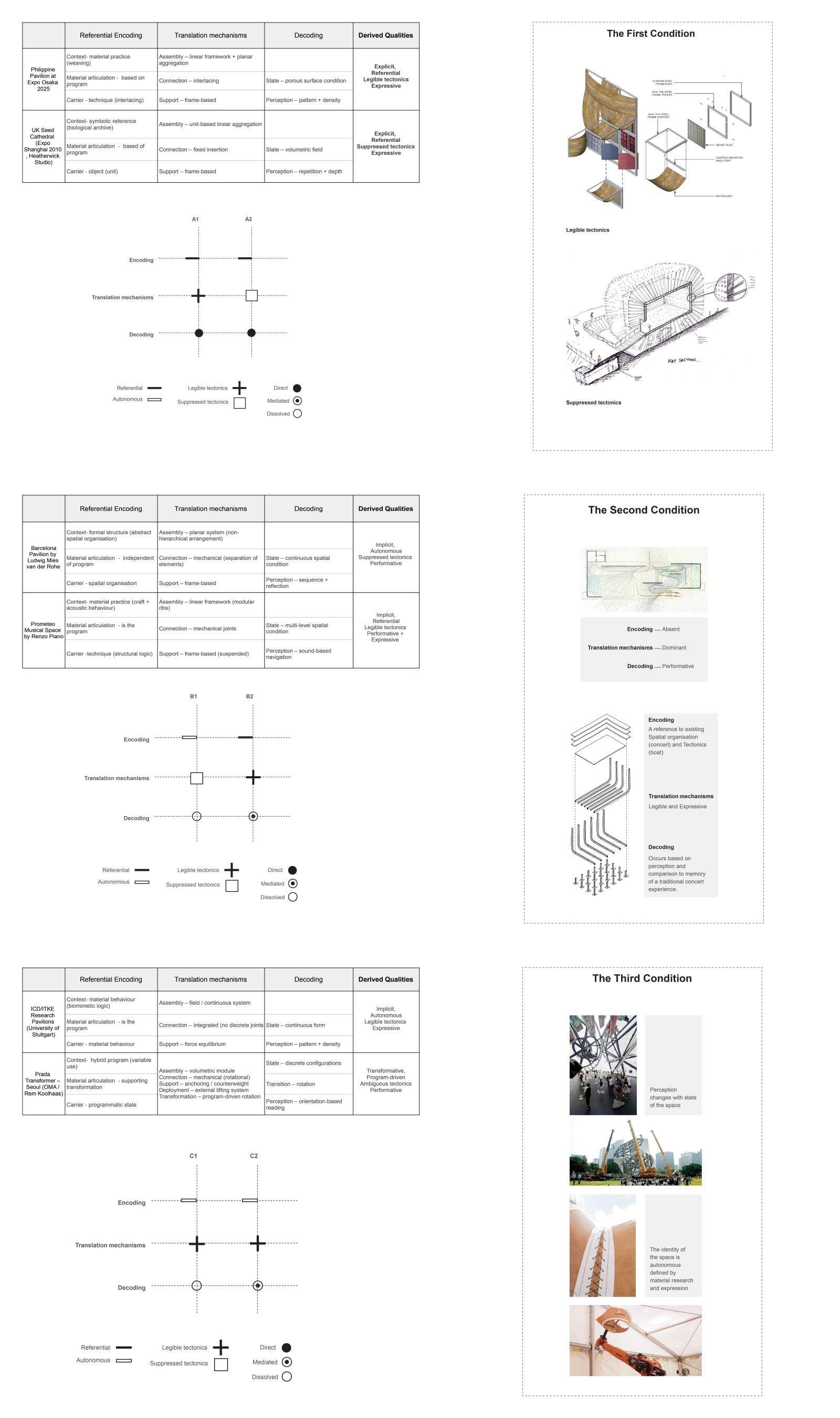
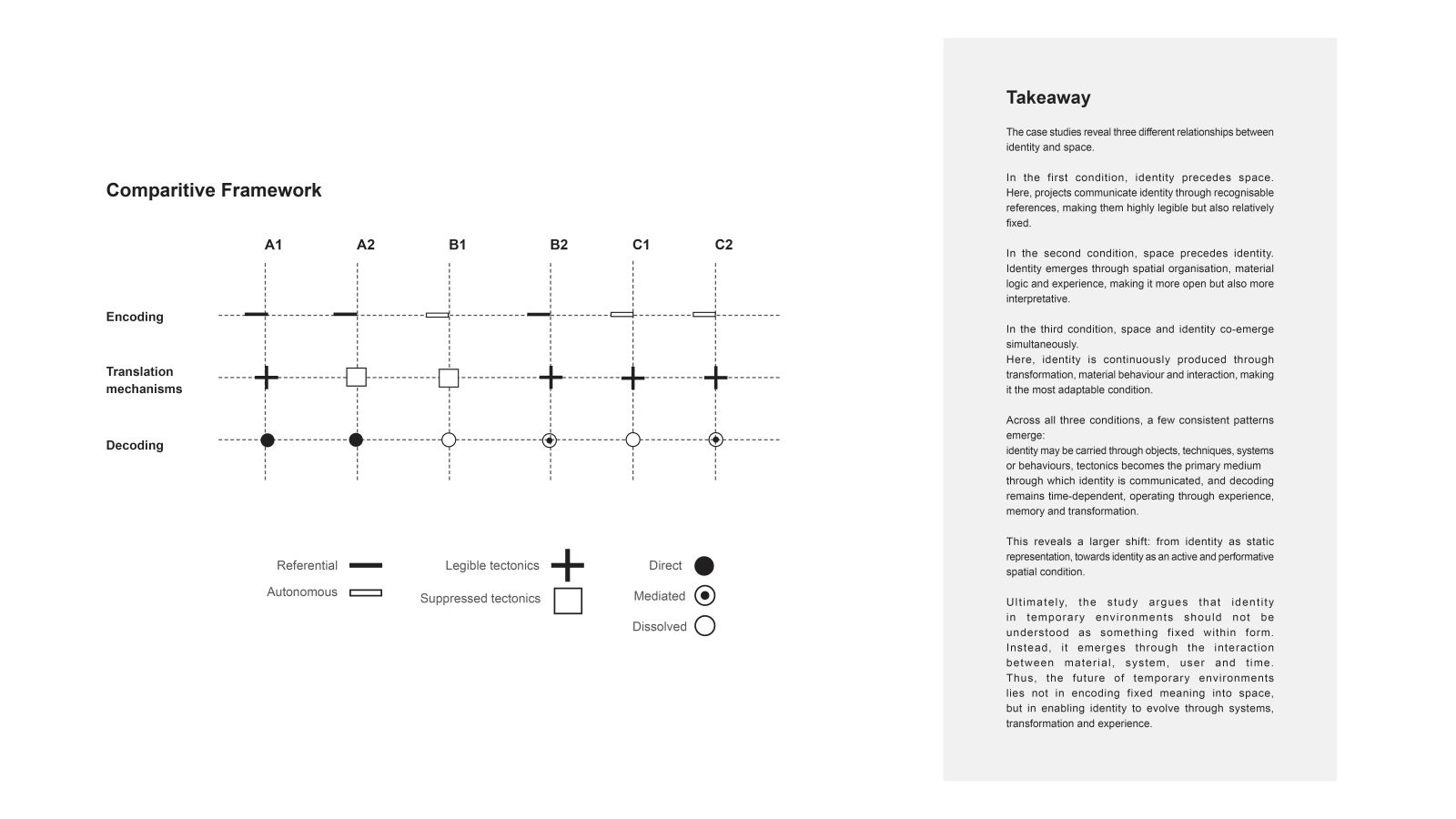
Drawing from theories such as Christian Norberg-Schulz’s concept of Genius Loci and Gottfried Semper’s theory of Stoffwechsel (metabolic transformation), the research frames identity as a relational and process-driven condition rather than a fixed attribute embedded within form. The study identifies three primary parameters through which identity operates in temporary environments: Referential Encoding, where meaning originates through cultural, material or symbolic carriers; Translation Mechanisms, where identity is spatially constructed through tectonics, systems of making and transformation; and Decoding, where identity becomes perceptible through perception, occupation and temporal experience.
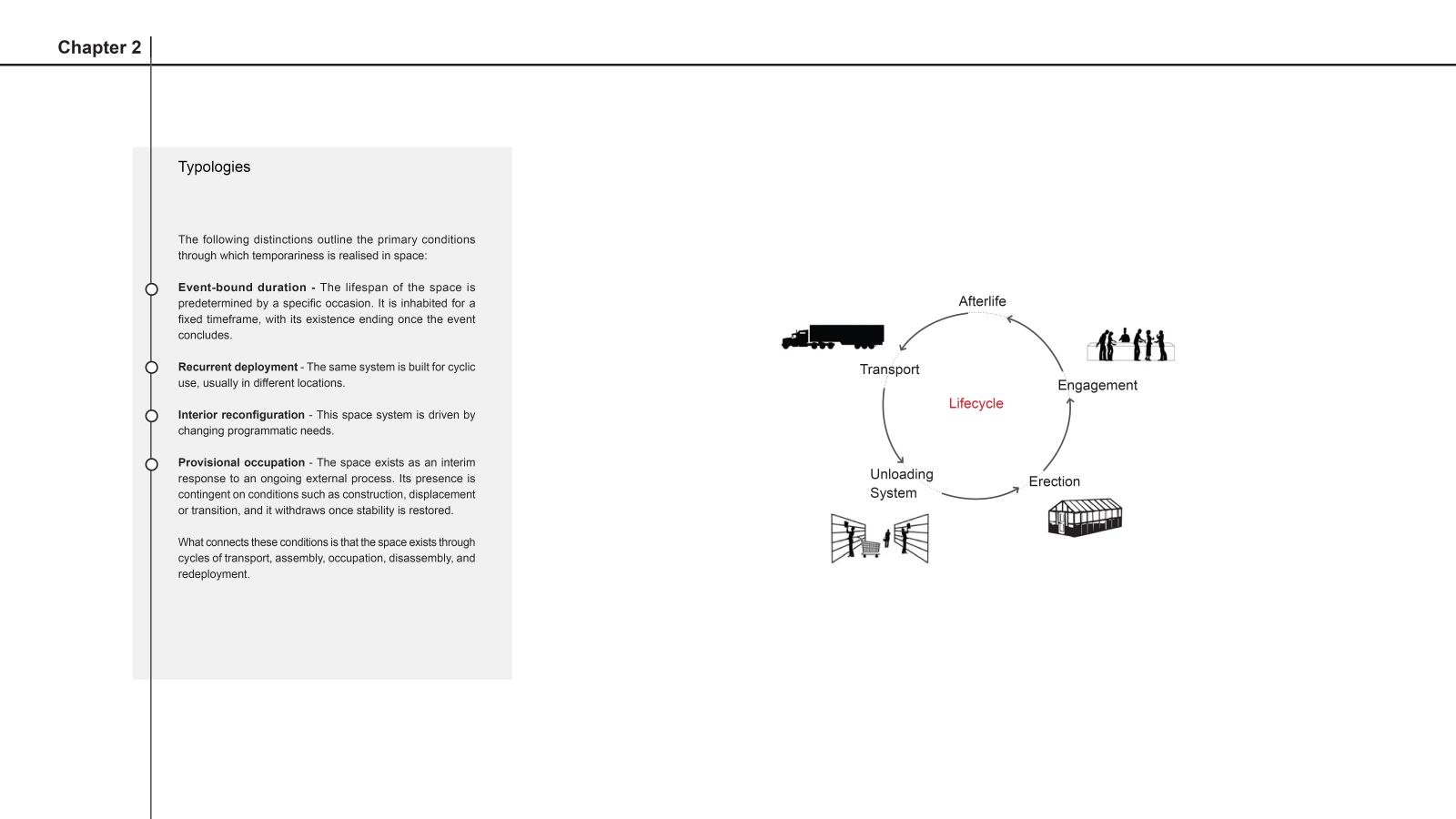
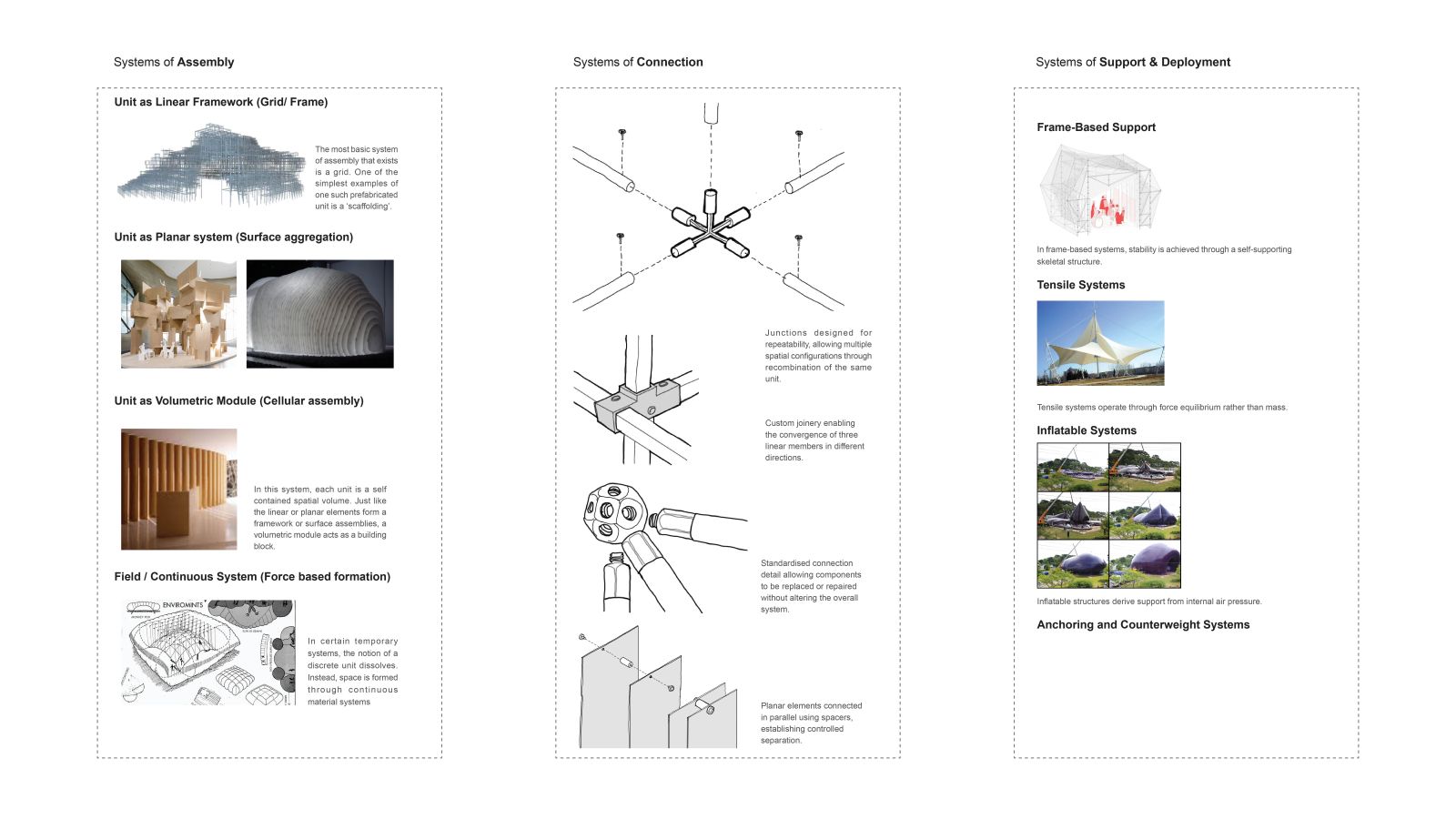
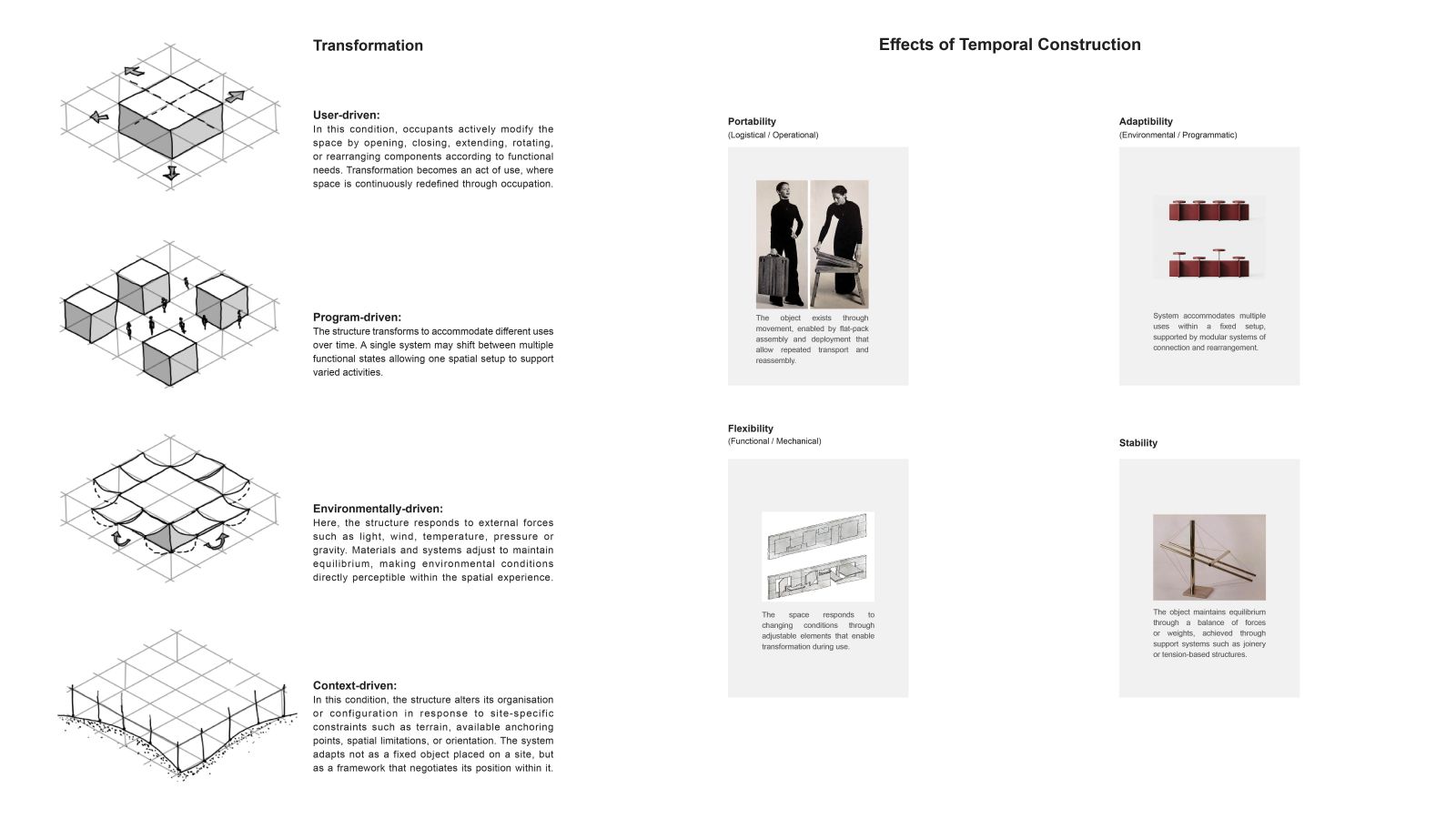
Through the study of temporary systems such as assembly, adaptability, portability and reconfiguration, the research examines how temporality reshapes the relationship between identity and spatial form. These ideas are tested through comparative case studies including the Philippines Pavilion, UK Seed Pavilion, Barcelona Pavilion, Prometeo Musical Space, Prada Transformer and ICD/ITKE Research Pavilions.
The study demonstrates that identity within temporary environments may emerge through symbolic references, spatial systems, material behaviour or transformational processes. It further argues that tectonics acts as the primary medium through which identity becomes perceptible, while perception and experience determine how identity is decoded over time.
Ultimately, the research proposes that identity in temporary environments should not be understood as a static or representational condition, but as an adaptive, performative and evolving phenomenon constructed through the interaction between material, system, user and time.