Hirani Ashvin Bhaveshbhai

UH4051

PUH24052

Ahmedabad represents a unique and underexplored case in India's luxury residential market. While traditionally known for its affordable and mid-income housing, the city has undergone a significant transformation over the past decade, shifting toward luxury and ultra-luxury segments. Despite offering larger luxury homes at relatively lower price points compared to tier-1 metros like Mumbai and Delhi, Ahmedabad's luxury market dynamics remain understudied. This research gap motivated a comprehensive inquiry into how the luxury housing market has evolved spatially, financially, and strategically, as well as its projected trajectory through 2030.

View Additional Work
Report Content

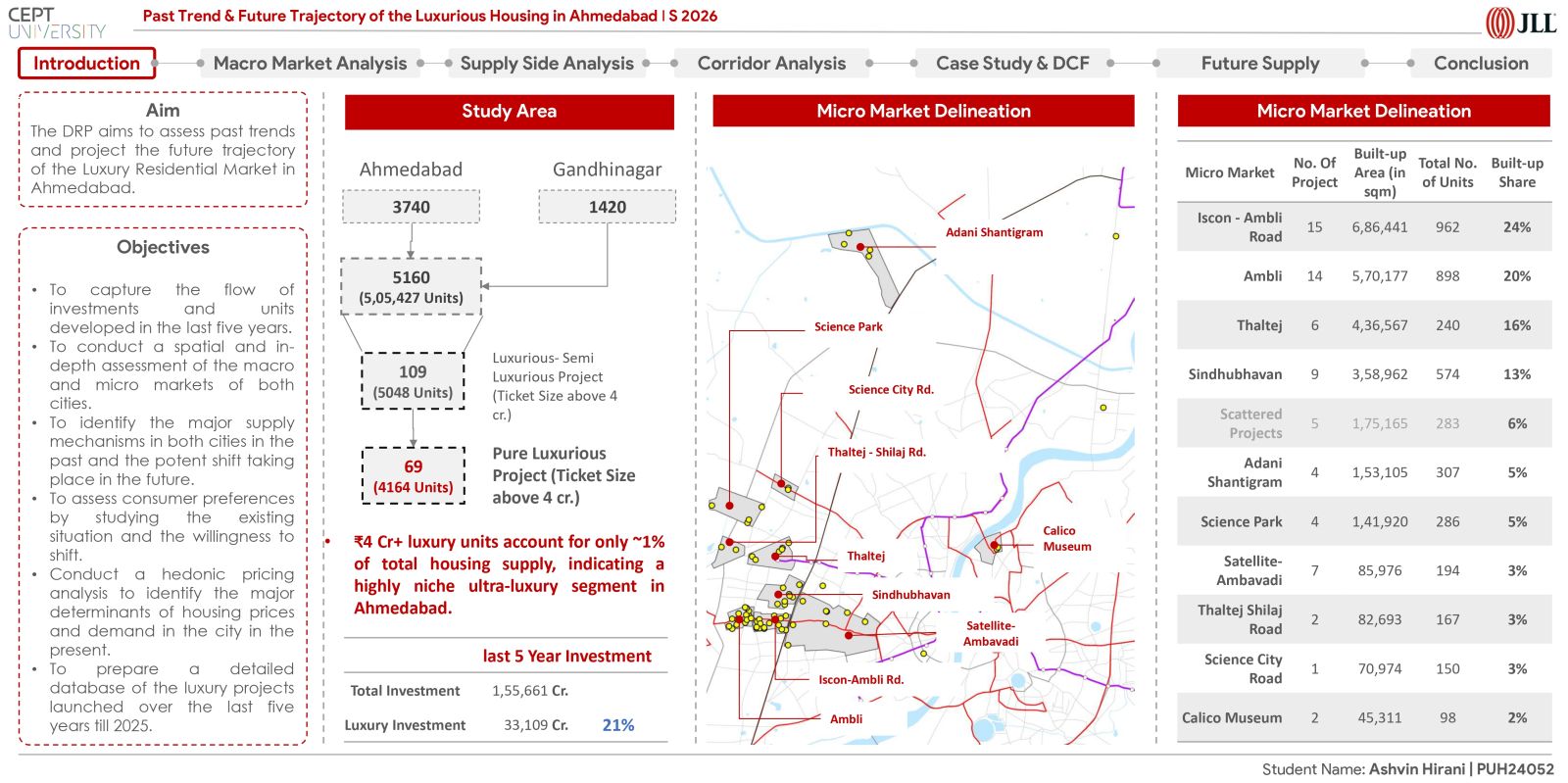
Although ?4 Cr+ luxury housing forms only around 1% of Ahmedabad’s total housing supply, the segment has attracted nearly 21% of total residential investment over the last five years, indicating strong premium market potential concentrated within western corridors.

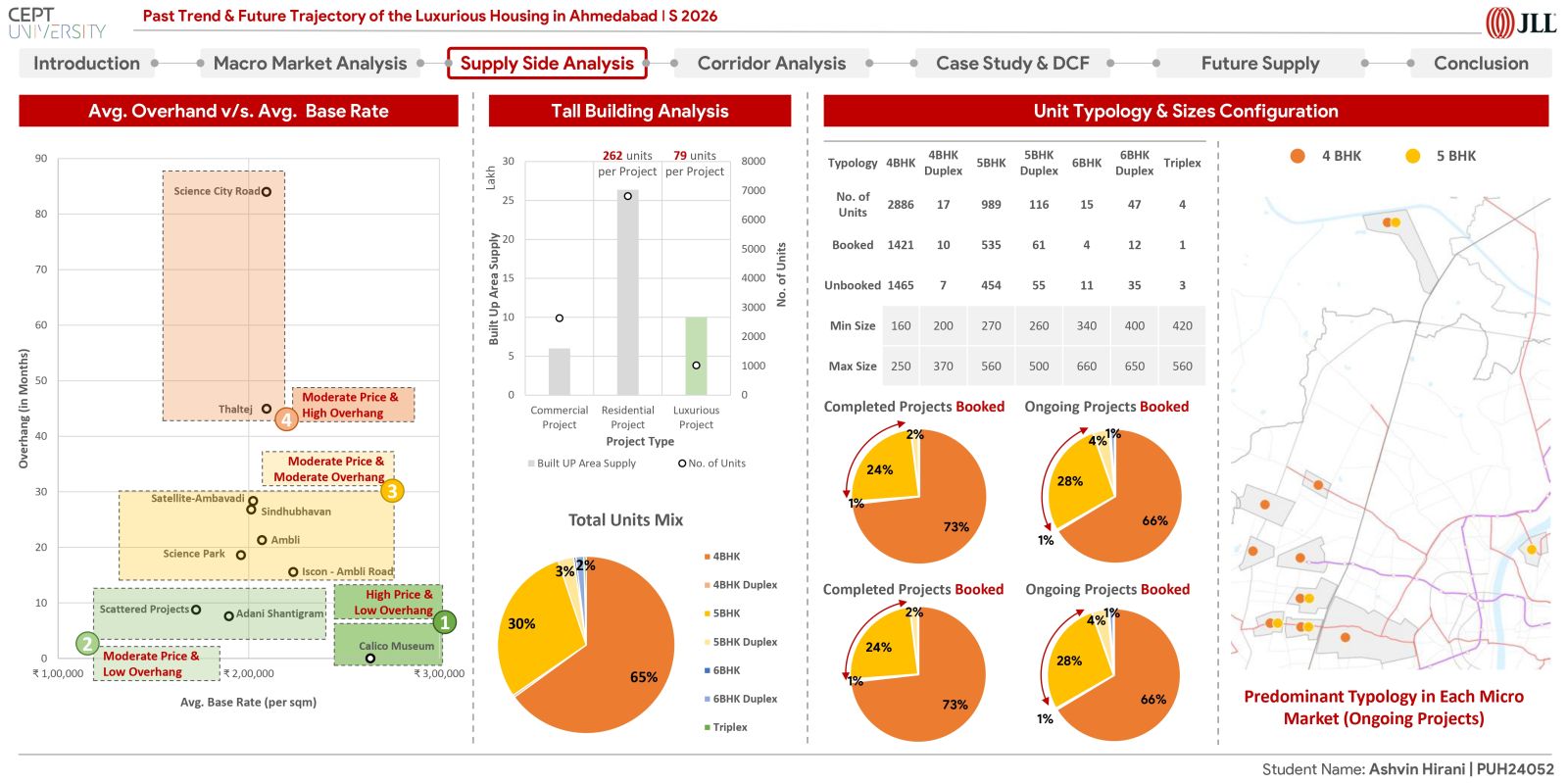
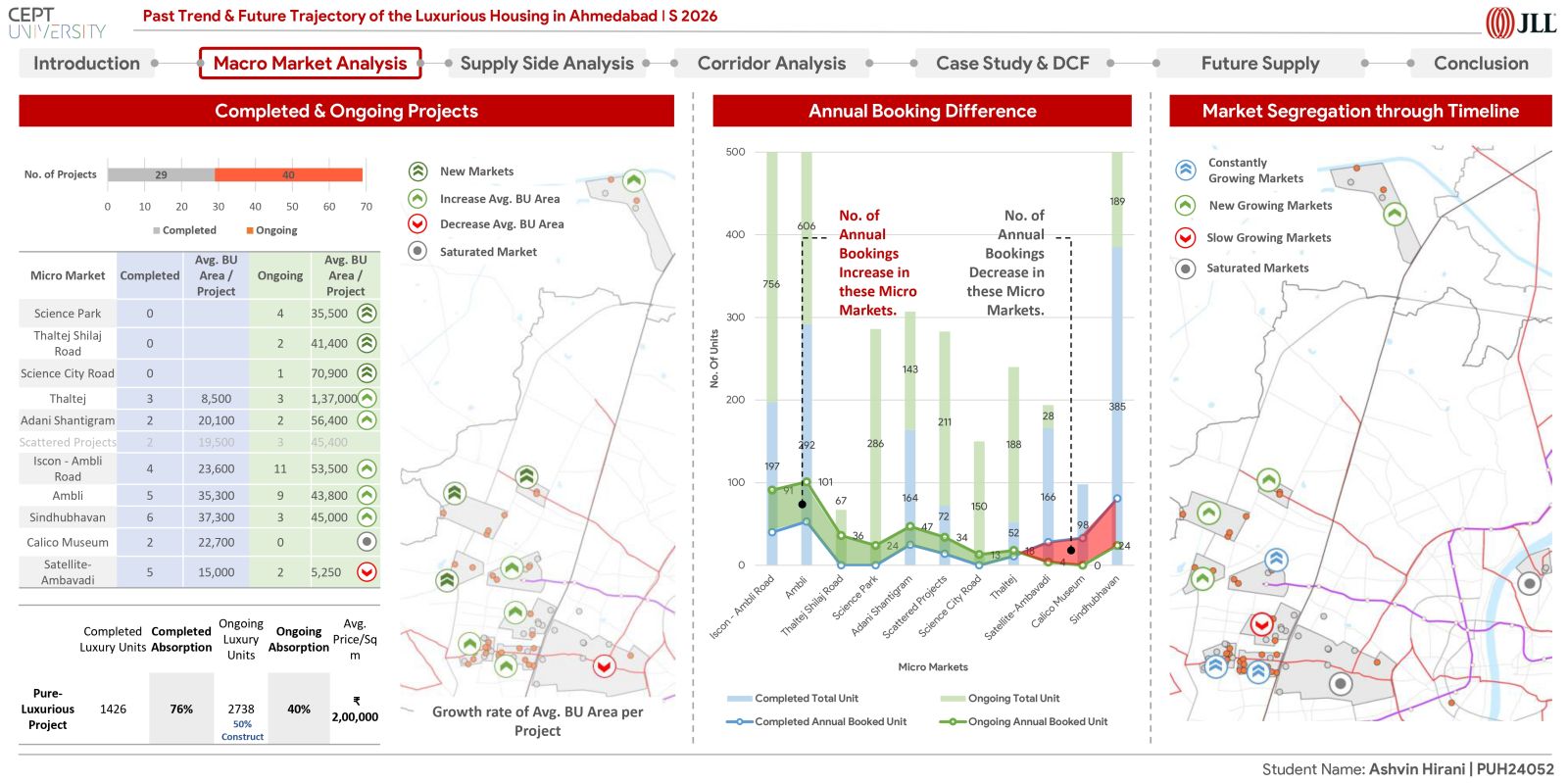
The market analysis reveals a clear shift toward larger ongoing projects and growing western micro-markets, while mature inner-city locations show signs of saturation and slower expansion.

Despite relatively similar pricing across micro-markets, variations in overhang and unit absorption indicate that connectivity, market positioning, and project scale influence demand more strongly than price alone.

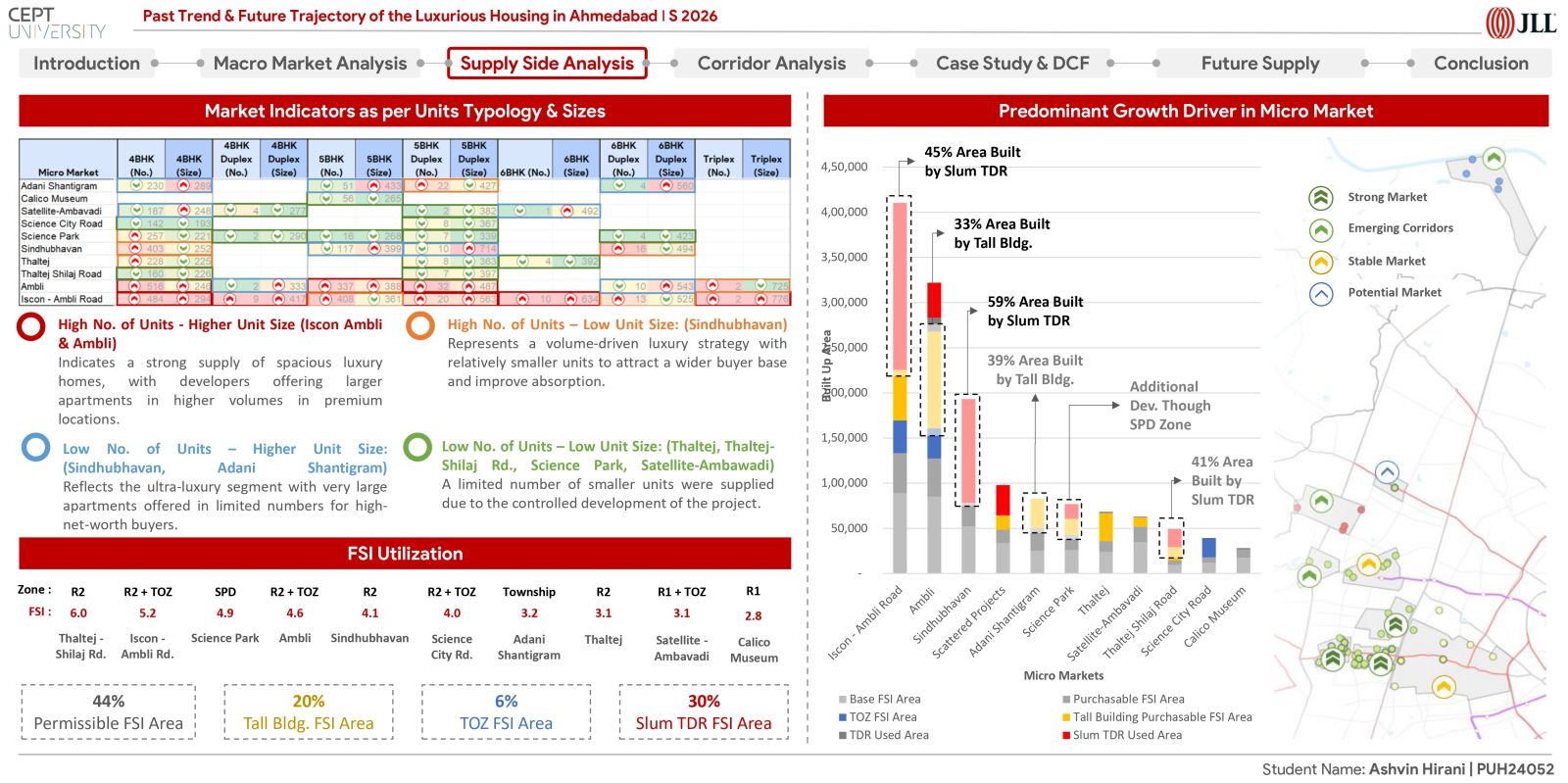
Luxury housing growth in Ahmedabad is strongly shaped by FSI-driven development mechanisms such as TOZ, SPD, and Slum TDR, which enable higher densities and influence the emergence of new premium corridors.”

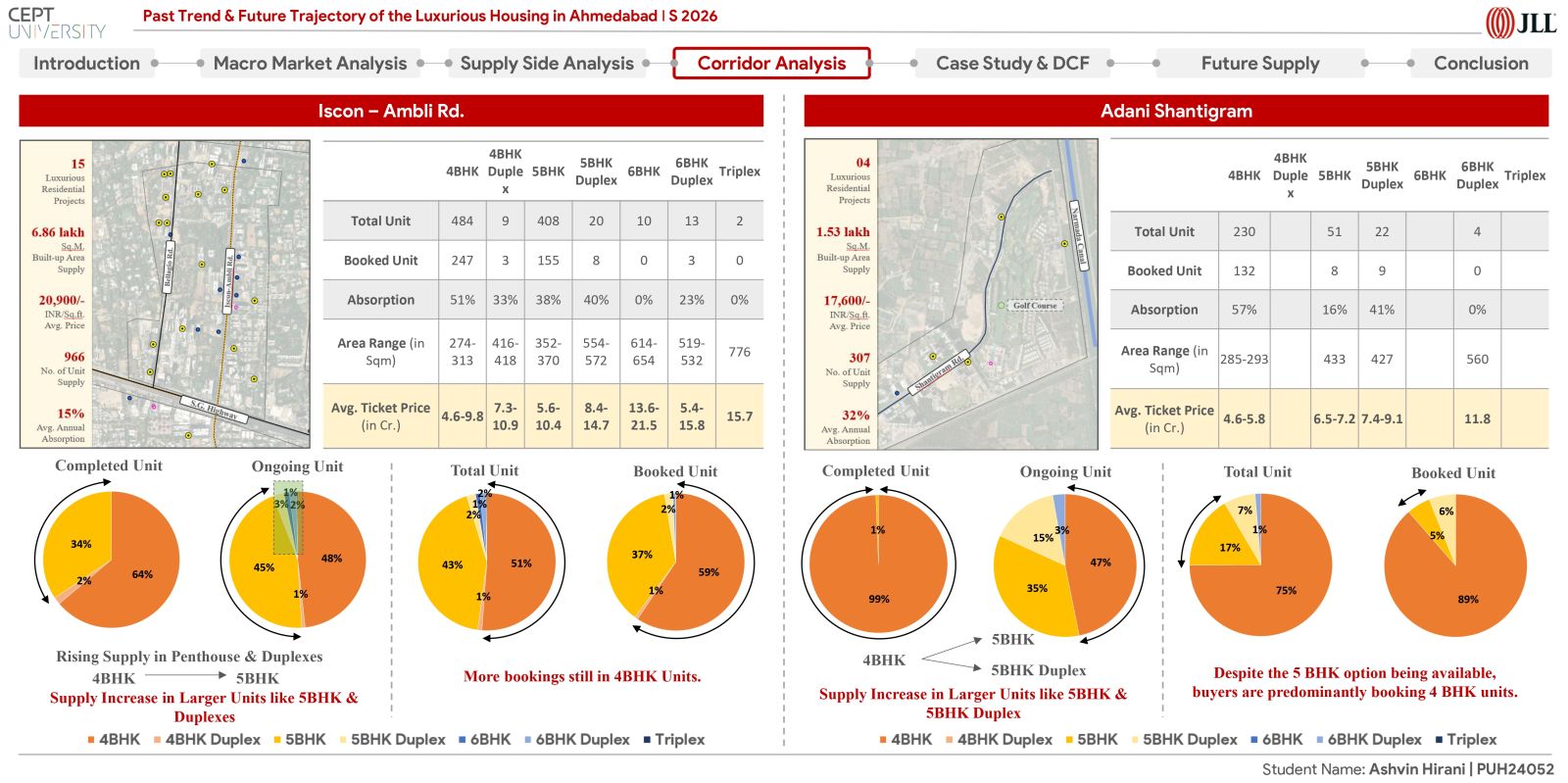
The corridor-level analysis highlights that while developers are increasing the supply of larger 5BHK and duplex configurations, buyer preference continues to remain predominantly focused on 4BHK units.

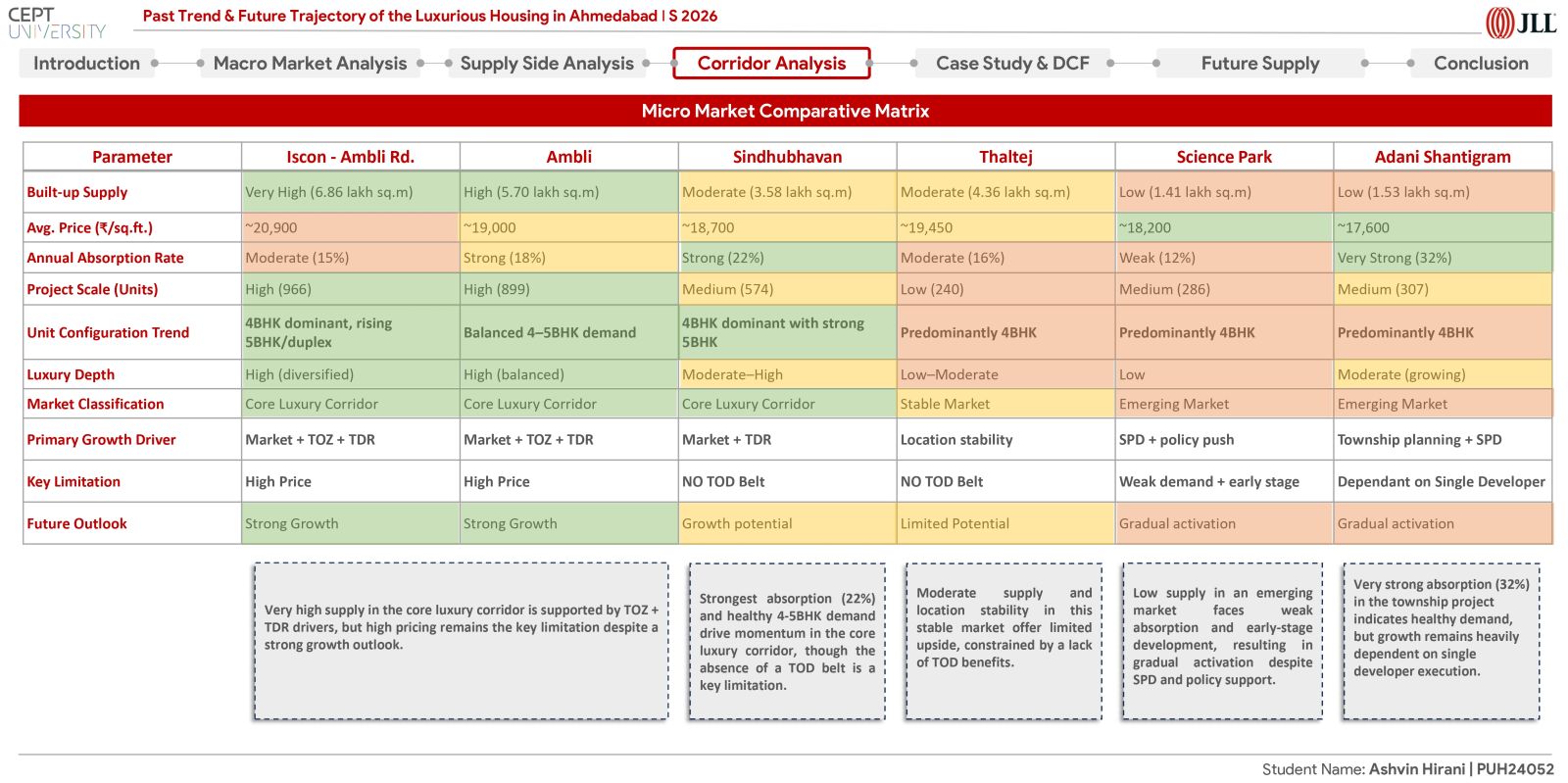
Each luxury micro-market demonstrates distinct growth dynamics, where core corridors benefit from strong demand and policy support, while emerging markets rely on infrastructure development and gradual market activation.

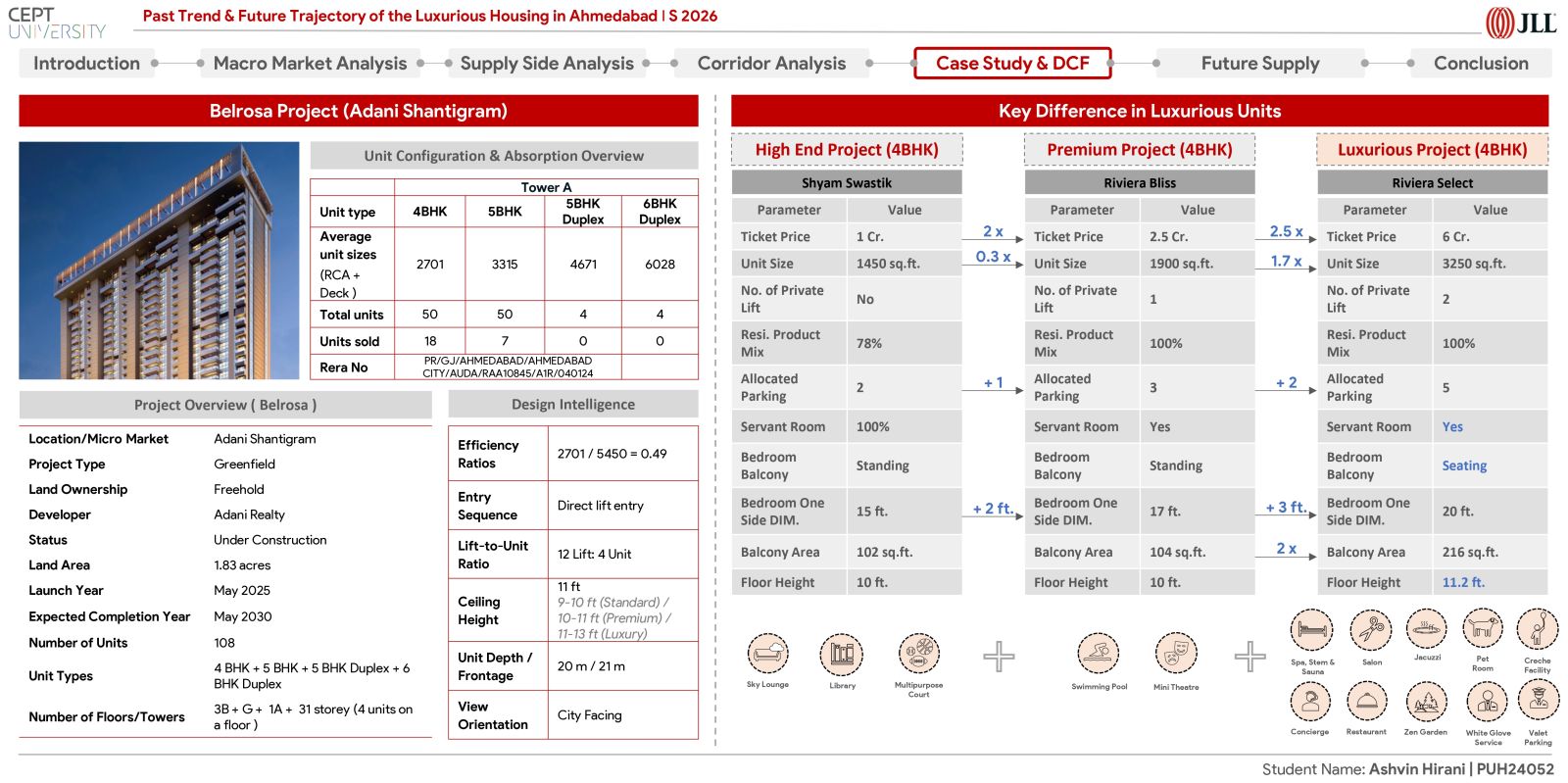
The Belrosa case study reflects the transition from premium to ultra-luxury housing through larger unit sizes, private access, enhanced amenities, and increased exclusivity within integrated township development.

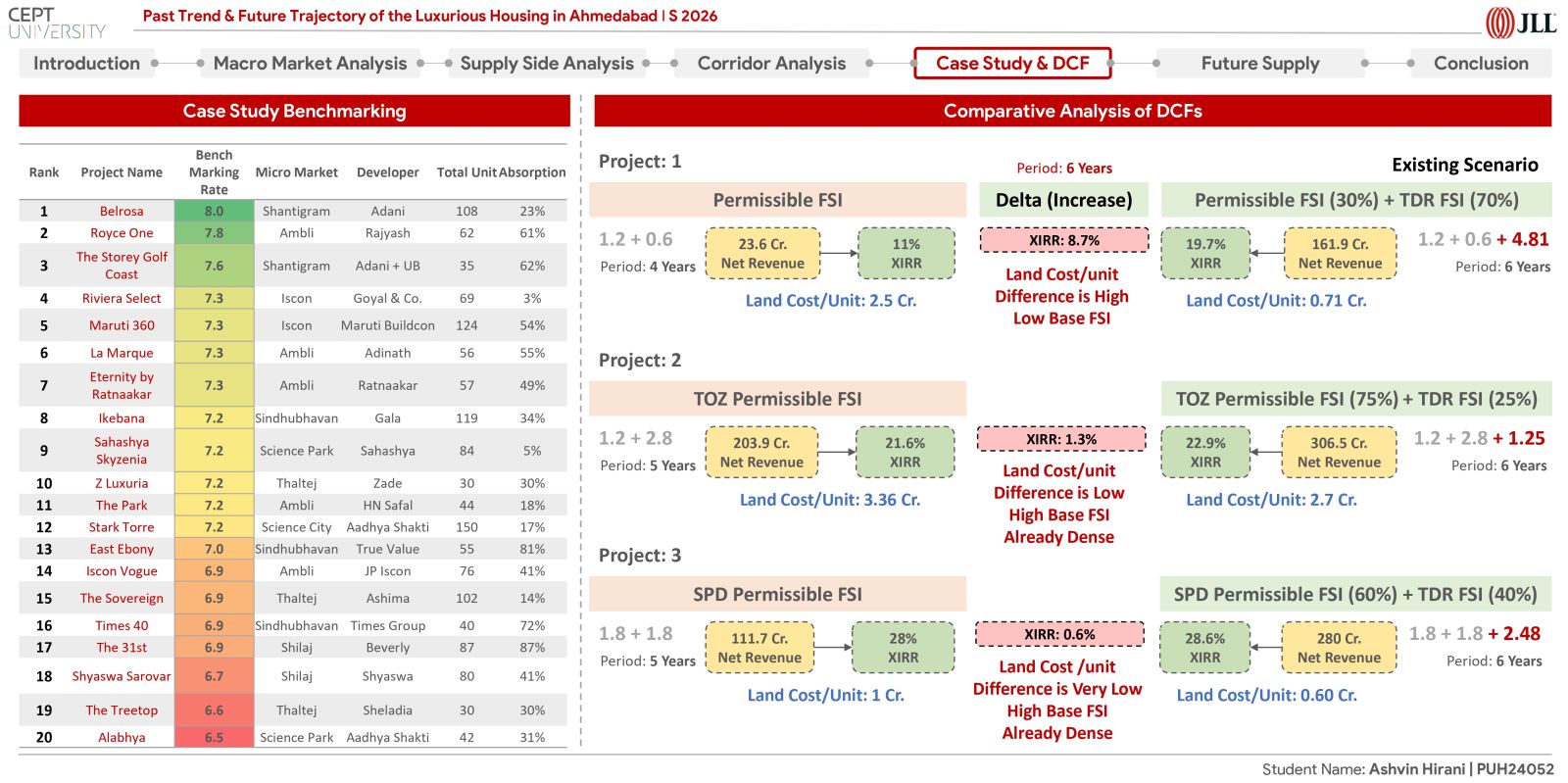
The Delphi-based benchmarking and DCF analysis indicate that projects leveraging higher FSI and policy tools such as TDR achieve stronger financial feasibility and improved development potential.

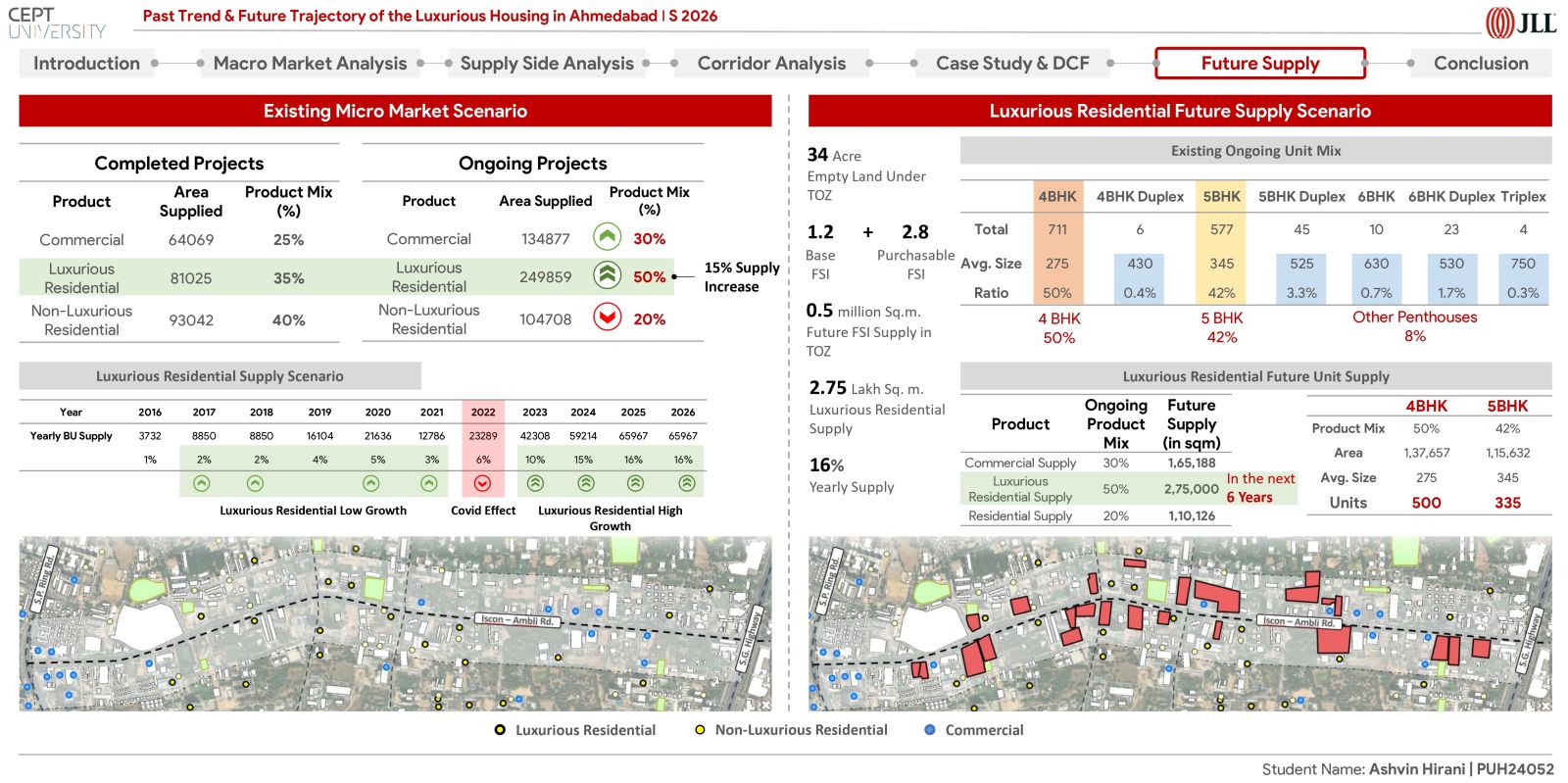
Future luxury housing growth is expected to intensify along TOZ corridors, where rising yearly supply and dominant 4BHK–5BHK configurations indicate sustained demand in the premium residential segment.

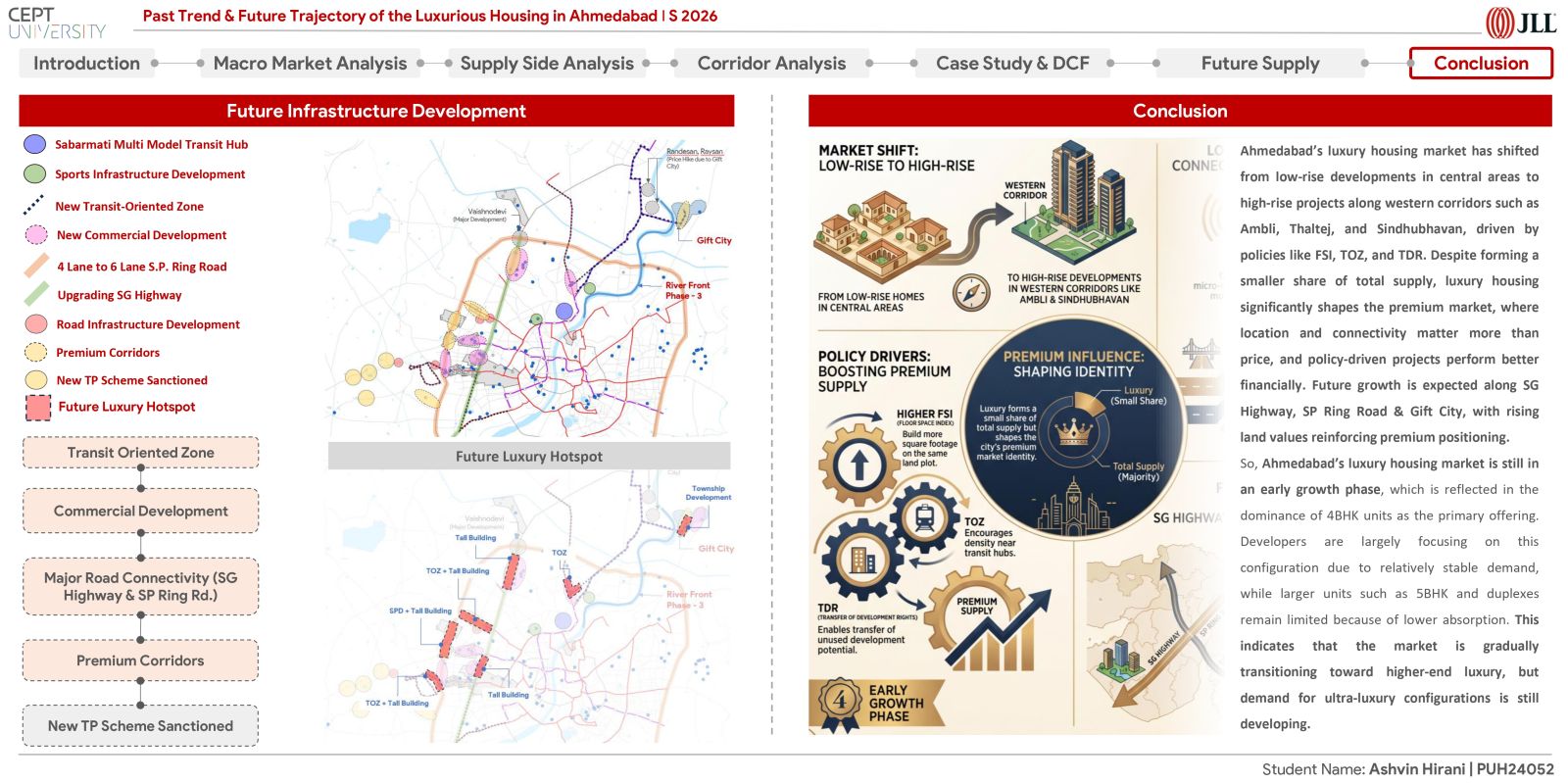
Ahmedabad’s luxury housing market is evolving toward high-rise, infrastructure-driven western corridors, where policy support, connectivity, and larger unit demand are collectively shaping the city’s future premium growth trajectory.